-
-
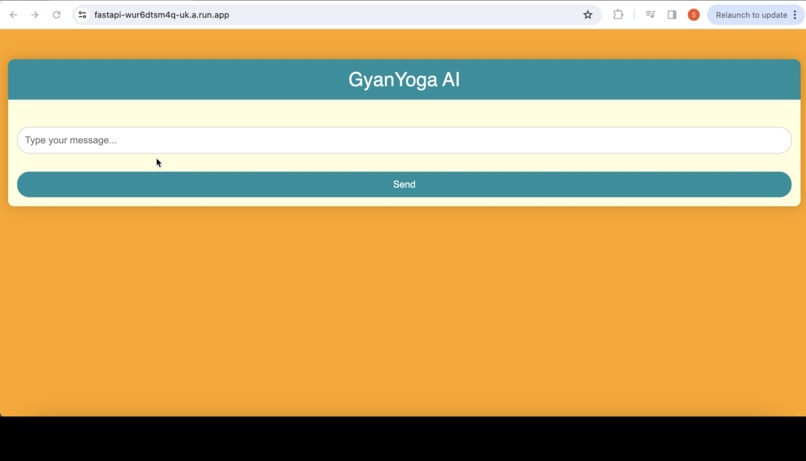
GyanYogaAI

Inspiration
I've always been fascinated by the Bhagavad Gita, how it seems to apply to so much of my everyday life even in this modern time. But, it felt like it was too long sometimes, like everyone wouldn't have the time to flip through to find quotes or texts for each specific situation. So, I thought, why not combine the Gita and Large Language Models to make it simpler for people who want to get advice from the Gita for their situation.
What it does
GyanYoga AI is a ChatBot that uses the power of GPT 3.5 and the texts from the Bhagavad Gita to provide a response to user input utilizing the most applicable quotes from the Gita. This is possible via Vector Embedding to find the most relevant quotes, as well as fine-tuning to ensure the AI responds appropriately.
How we built it
The code was completed in Python, utilizing modules such as Langchain and OpenAI. The entire application is deployed in Google Cloud and the Web Dev portion used HTML, CSS, and Javascript.
Challenges we ran into
There were a lot of performance and state management issues, as well as problems with Vector Embedding not working properly. Implementing chat history with stateless APIs was also quite creatively challenging.
Accomplishments that we're proud of
Implementing chat history without the use of databases by using a creative client-side array that was sent in a special format. This was so that it was more cost effective, as I did not use any databases.
What we learned
I learned a lot about making websites look better while creating the website. I also learned a lot about the way these LLMs work, and how to effectively incorporate data expertise into them.
What's next for GyanYoga AI
I want to make the website look better, and I'd like to, in the future, incorporate other philosophical texts as well.
Built With
- google-cloud
- html
- javascript
- langchain
- openai
- python

Log in or sign up for Devpost to join the conversation.