-
-
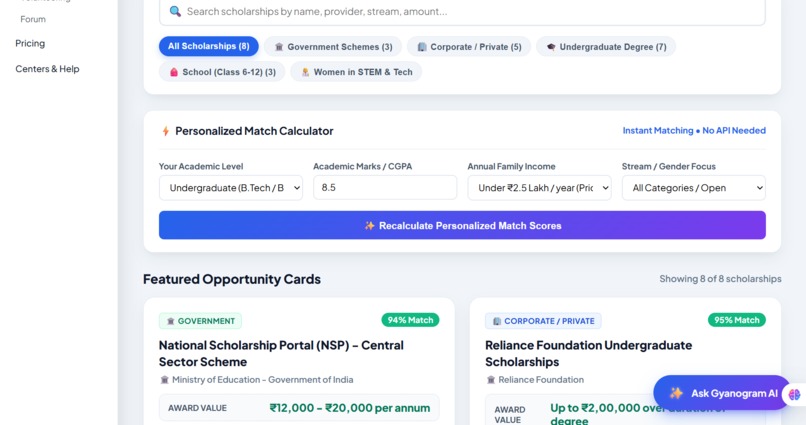
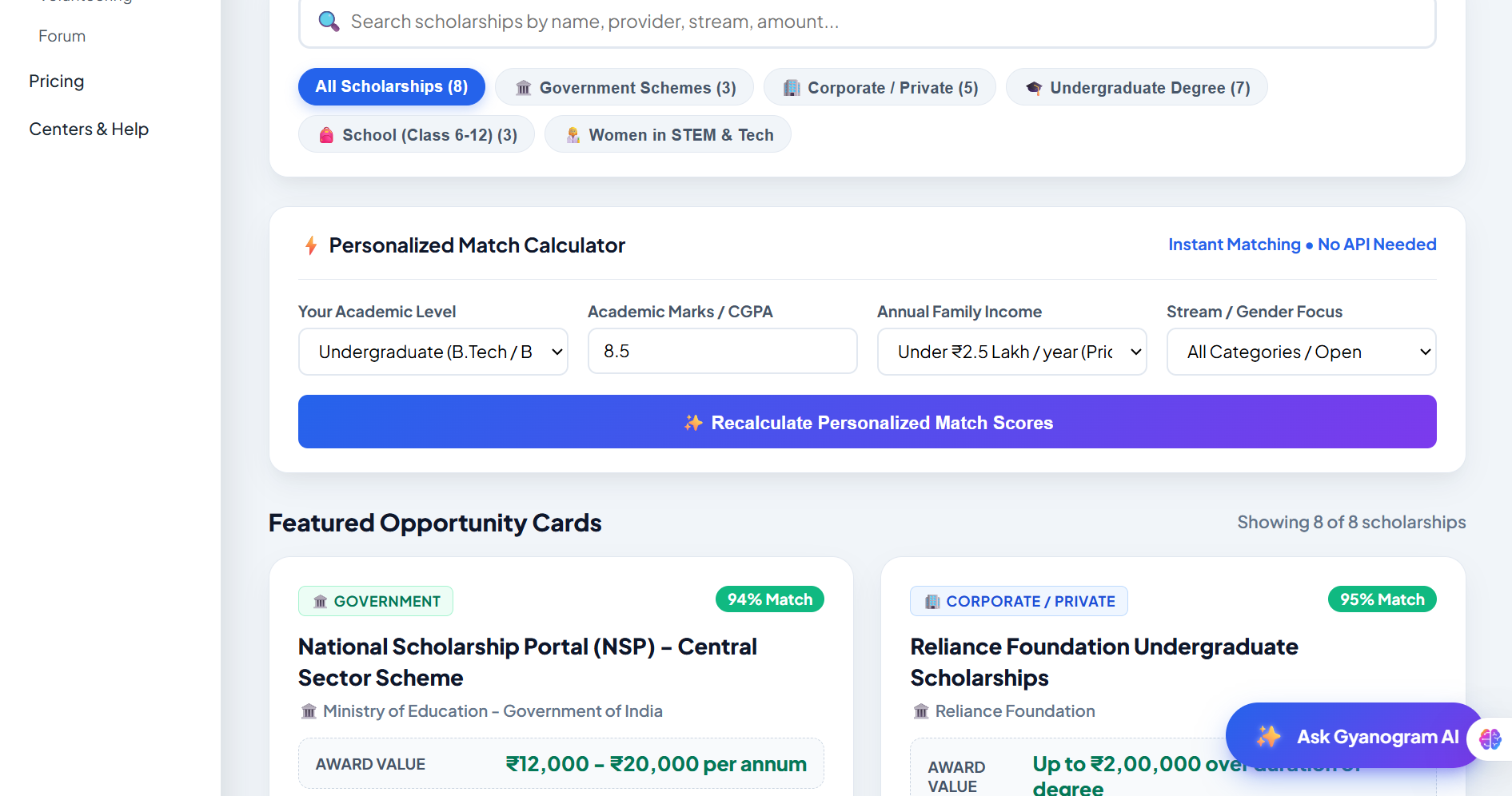
Personalised Scholarship Portal
-
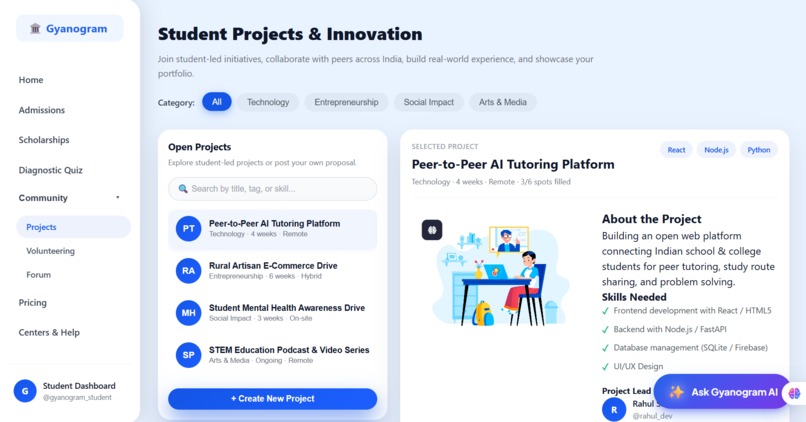
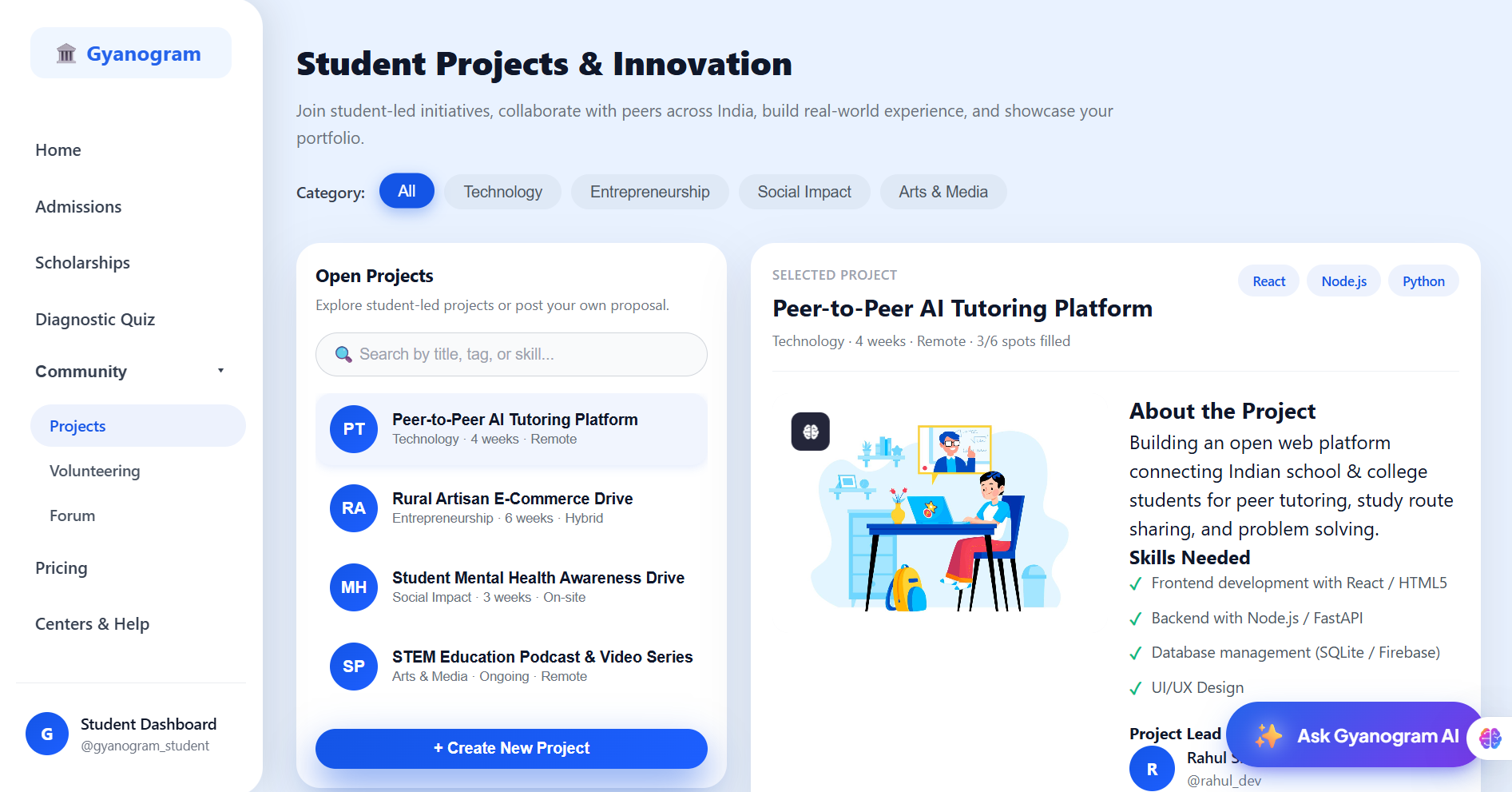
Community Portal for students
-
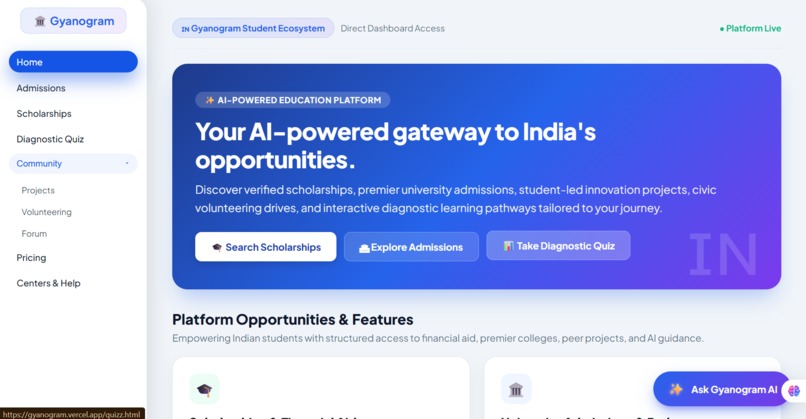
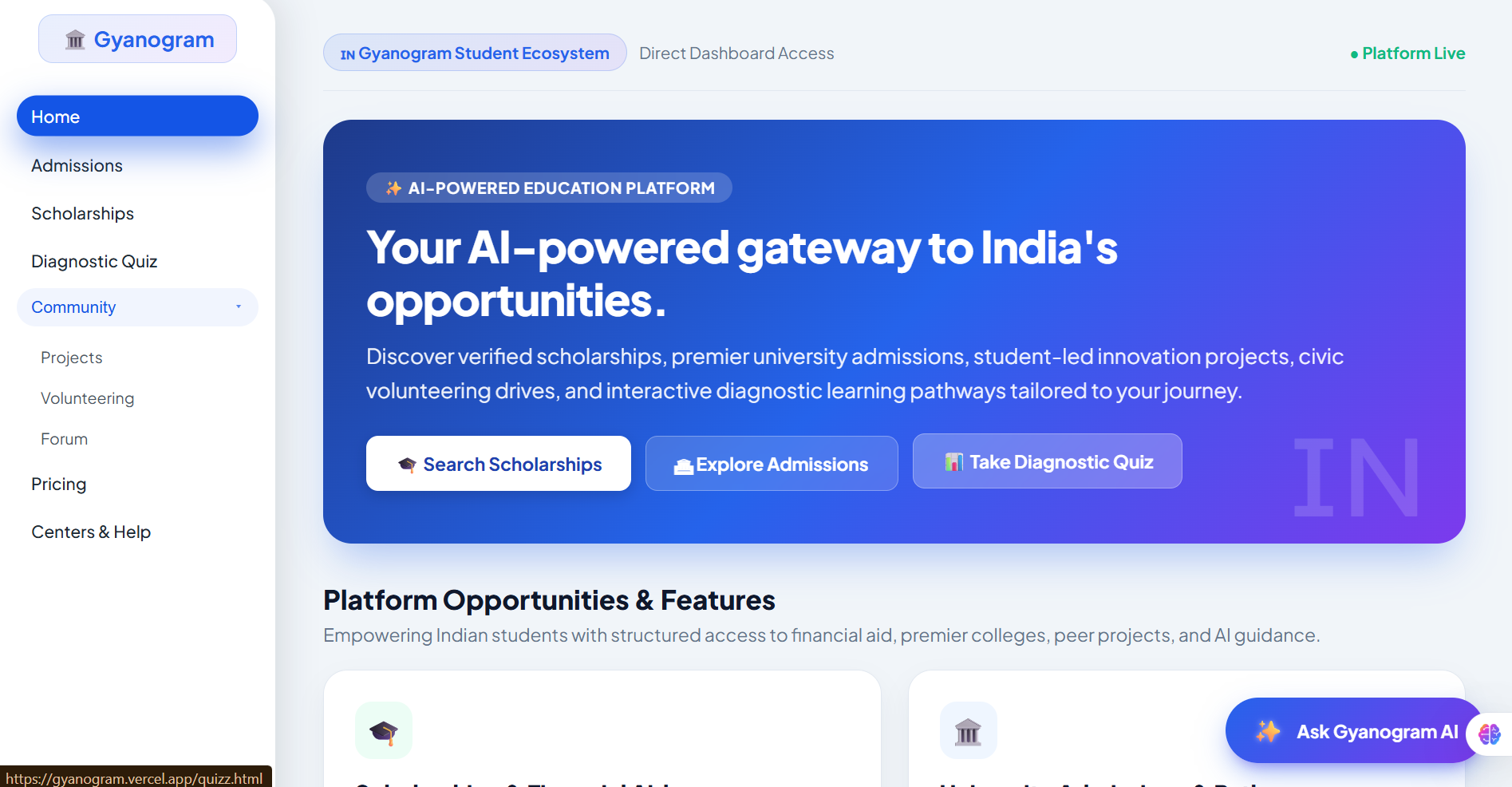
Main Dashboard
-
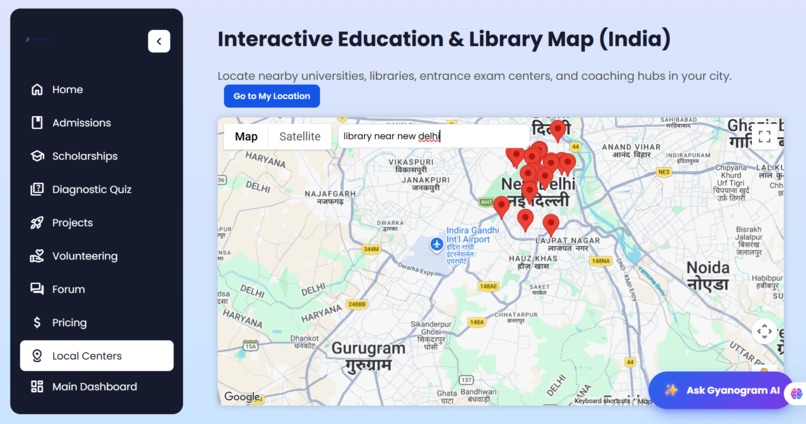
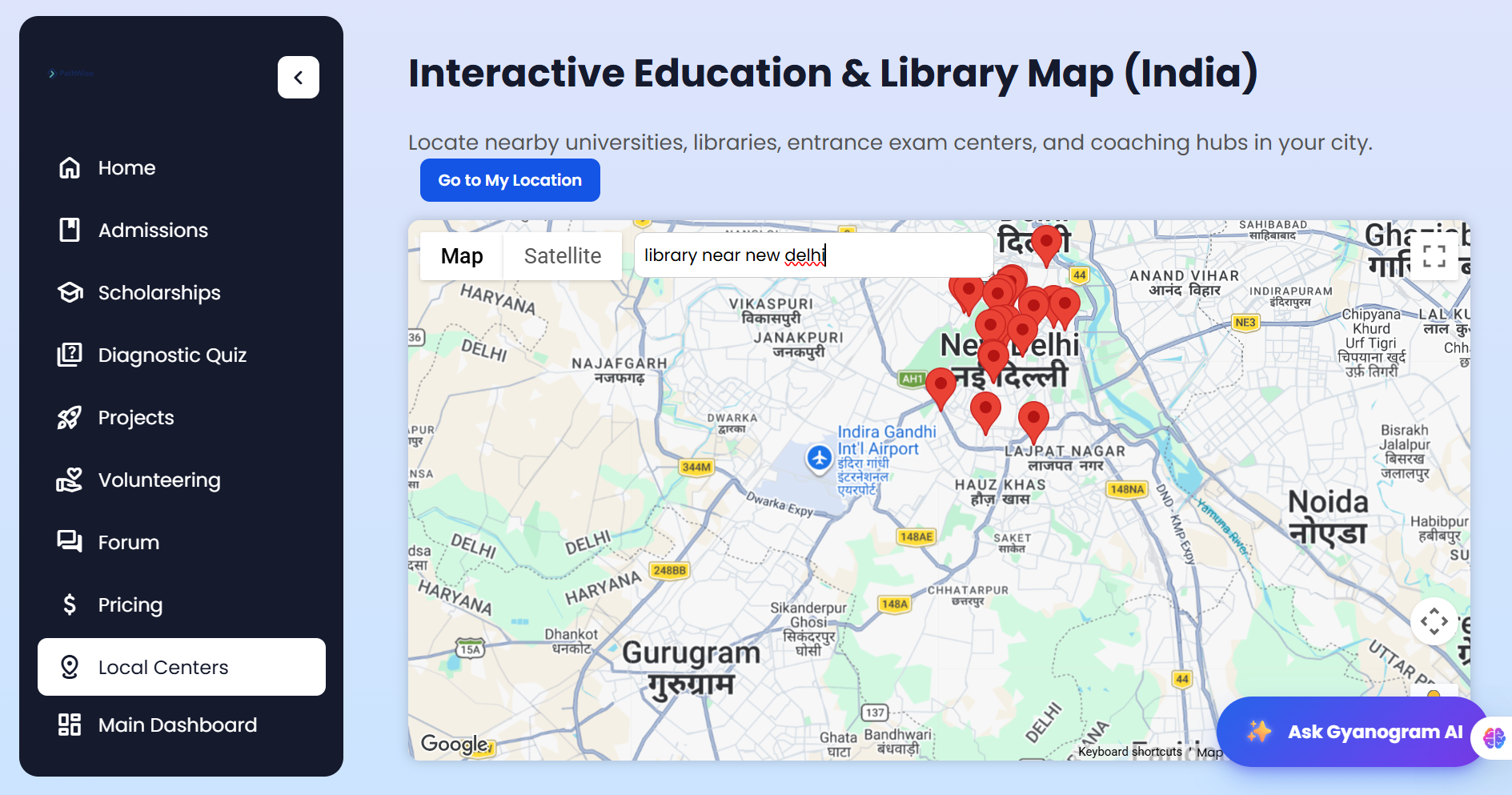
Students can search Libraries, Institutes etc. near them.
Inspiration
Students today have access to an enormous amount of educational information, yet finding the right information at the right time remains difficult.
Scholarships are spread across different websites. Educational resources are scattered across documents and platforms. Opportunities have different eligibility requirements, deadlines, and application processes. Students often have to search through multiple sources, understand complex information, and figure out what actually applies to them.
Traditional search engines can find information, and AI chatbots can generate answers — but neither truly understands the student's context, intent, and individual needs.
I wanted to build something different.
My vision was an AI system that could understand what a student needs, retrieve the right knowledge, reason over it, and turn information into personalized guidance instead of simply generating another generic answer.
That vision became Gyanogram.
What it does
Gyanogram is an Agentic AI-powered education platform designed to make educational guidance more intelligent, reliable, and personalized.
Instead of treating AI as a simple chatbot, Gyanogram uses AI agents and Retrieval-Augmented Generation (RAG) to understand a student's query, identify the information required, retrieve relevant knowledge, reason over the context, and generate an actionable response.
A student can ask questions about learning, scholarships, admissions, eligibility, educational opportunities, and other academic needs through a natural conversational interface.
The RAG layer grounds the AI in relevant knowledge before generating a response, helping reduce hallucinations and making answers more context-aware and trustworthy.
But the core idea goes beyond retrieval.
Gyanogram is designed around an agentic workflow, where AI can determine what information is needed, select the appropriate knowledge, reason over the retrieved context, and provide guidance based on the student's intent.
Instead of giving students another chatbot, Gyanogram aims to become an AI education companion that helps students move from "I don't know where to look" to "I know what to do next."
How I built it
I built Gyanogram around an Agentic RAG architecture, making AI the core functionality of the platform rather than an afterthought.
The platform combines LLMs, AI agents, Retrieval-Augmented Generation, vector search, FastAPI, Python, and a modern web interface.
The core RAG pipeline processes educational information into a searchable knowledge base. Relevant information is retrieved based on the student's query and provided as context to the language model before generating the final response.
On top of this retrieval layer, I designed an agentic workflow that allows the AI to understand the user's intent, determine what information is required, retrieve relevant context, reason over that information, and generate a response tailored to the student's needs.
This creates a pipeline where:
Student Query -> Intent Understanding -> Knowledge Retrieval -> AI Reasoning -> Personalized Guidance
The architecture is designed to keep responses grounded in relevant information while giving the AI enough reasoning capability to handle different types of educational queries.
The goal was not simply to connect an LLM to a database, but to build a system where retrieval, reasoning, and intelligent decision-making work together.
Challenges I ran into
Building Gyanogram required combining multiple AI components into one coherent system.
One of the biggest challenges was making the AI reliable rather than simply fluent. Large language models can generate convincing answers even when the underlying information is incorrect, so designing an effective RAG pipeline and grounding mechanism was critical.
Another challenge was designing the agentic workflow. The system needed to understand different student queries and determine how to use the available knowledge instead of following a single fixed question-answering path.
Maintaining the right balance between retrieval quality, reasoning, response accuracy, and latency was another challenge.
I also wanted the AI to feel like the core of the product rather than a chatbot placed on top of a conventional website. This required designing the entire experience around the idea of AI understanding -> retrieval -> reasoning -> guidance.
Accomplishments I'm proud of
• Built a complete AI-powered education platform around Agentic AI and RAG.
• Designed and implemented an Agentic RAG workflow combining retrieval, reasoning, and personalized response generation.
• Built a knowledge retrieval system to ground AI responses in relevant educational information.
• Made AI the core functionality of the product rather than an afterthought.
• Created a conversational experience capable of turning complex educational information into clear, actionable guidance.
• Integrated educational information, scholarships, and opportunities into a single AI-driven experience.
• Built the system with a foundation that can evolve into a long-term AI education companion.
What I learned
Building Gyanogram taught me that building useful AI is not simply about choosing a powerful language model.
The real challenge is creating a system that knows when to retrieve, what to retrieve, how to reason over it, and how to communicate the result to the user.
I learned that RAG provides knowledge, but agentic workflows provide intelligence around that knowledge.
A good AI system should not just answer questions. It should understand the user's intent, work with the available information, reason through the problem, and help the user decide what to do next.
That became the core philosophy behind Gyanogram.
What's next for Gyanogram
Gyanogram is only the beginning.
Future improvements include:
- Specialized AI agents for scholarships, admissions, learning, and career guidance.
- Long-term student memory for more personalized interactions.
- Continuously updated knowledge sources to keep information current.
- Multilingual and regional-language AI tutoring for greater accessibility.
- Intelligent scholarship and opportunity matching based on student profiles.
- Personalized learning paths generated by AI.
- More advanced agentic reasoning and decision-support capabilities.
- Integration with more educational platforms and trusted information sources.
The long-term goal is to build an AI education companion that grows with every student — one that understands their context, connects them with the right knowledge, and helps turn information into meaningful action.
Gyanogram is not just about answering a student's question. It is about helping them figure out what to do next.
Built With
- css
- deepgram
- embeddings
- gemini
- generation
- heartmula
- javascript
- markdown
- next.js
- node.js
- pgvector
- postgresql
- pyodide
- python
- react
- retrieval-augmented
- search
- shadcn/ui
- speech
- supabase
- tailwind
- typescript
- vector
- vercel


Log in or sign up for Devpost to join the conversation.