-
-

-
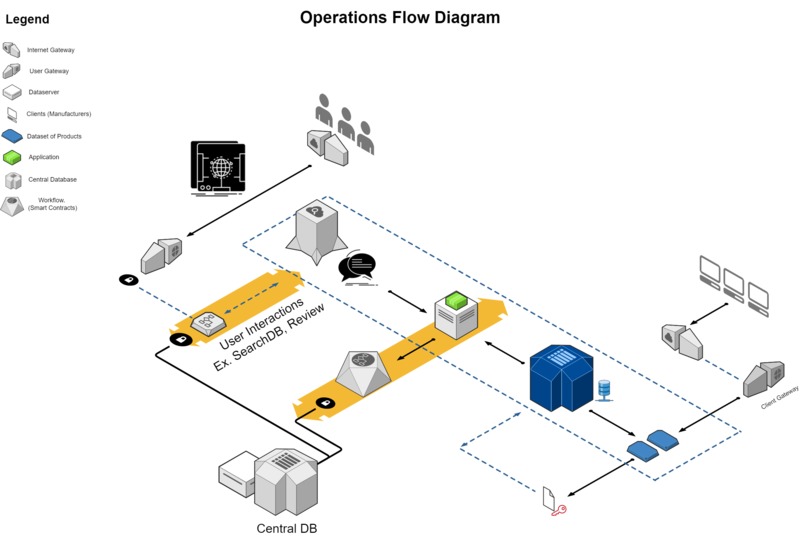
Operations flow diagram
-
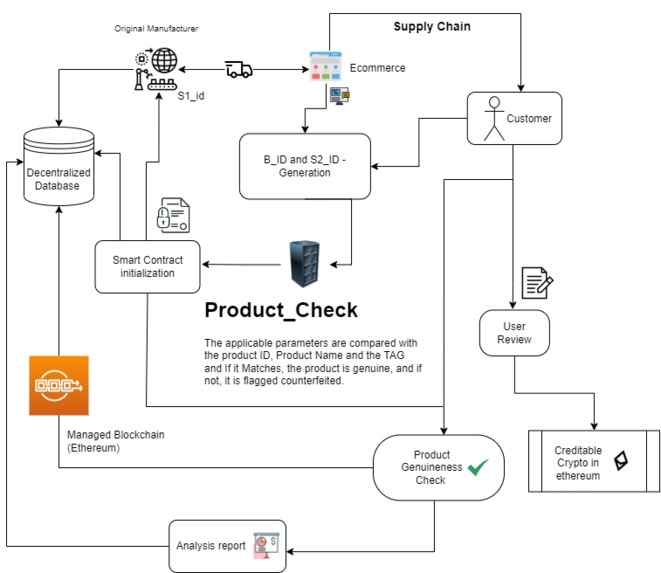
Architecture Diagram
-
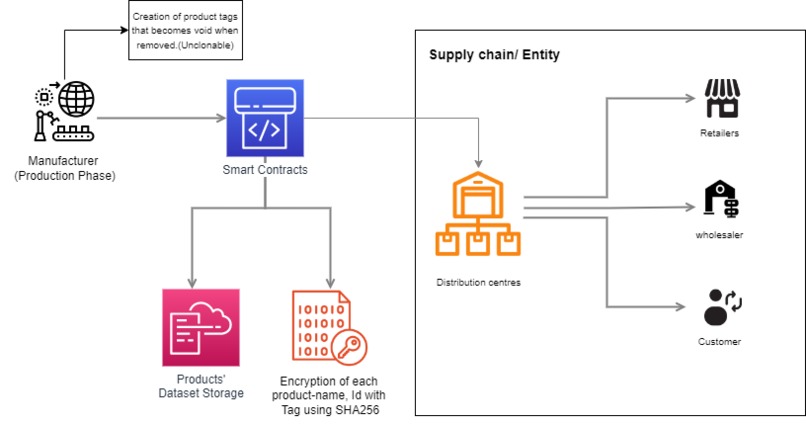
Entity Diagram
-
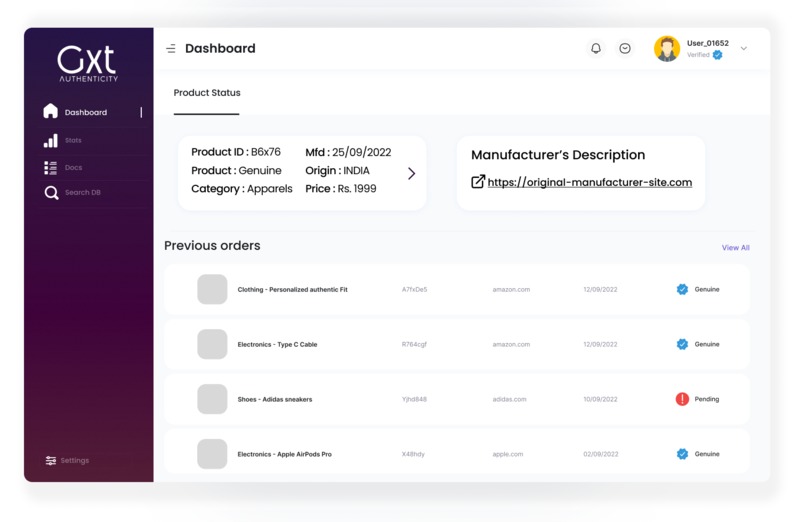
UI - Main - Dashboard
-

UI - Main - Docs
-
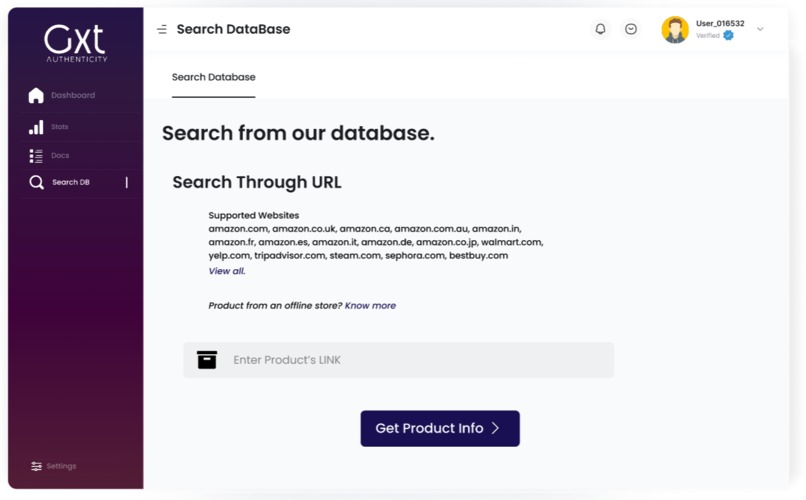
UI - Main - SearchDB
-
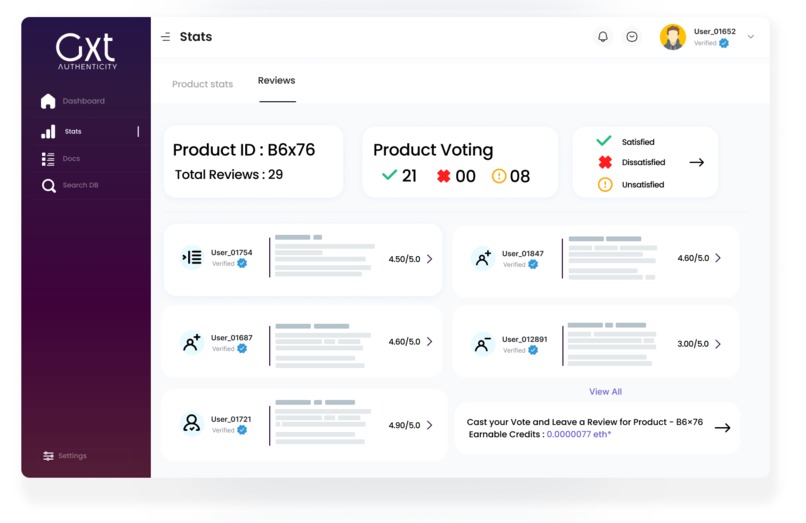
UI - Main - stats-review
-
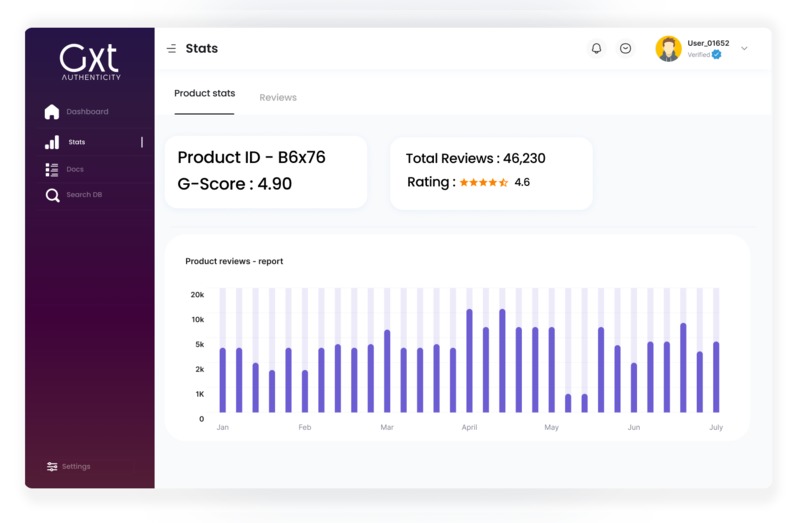
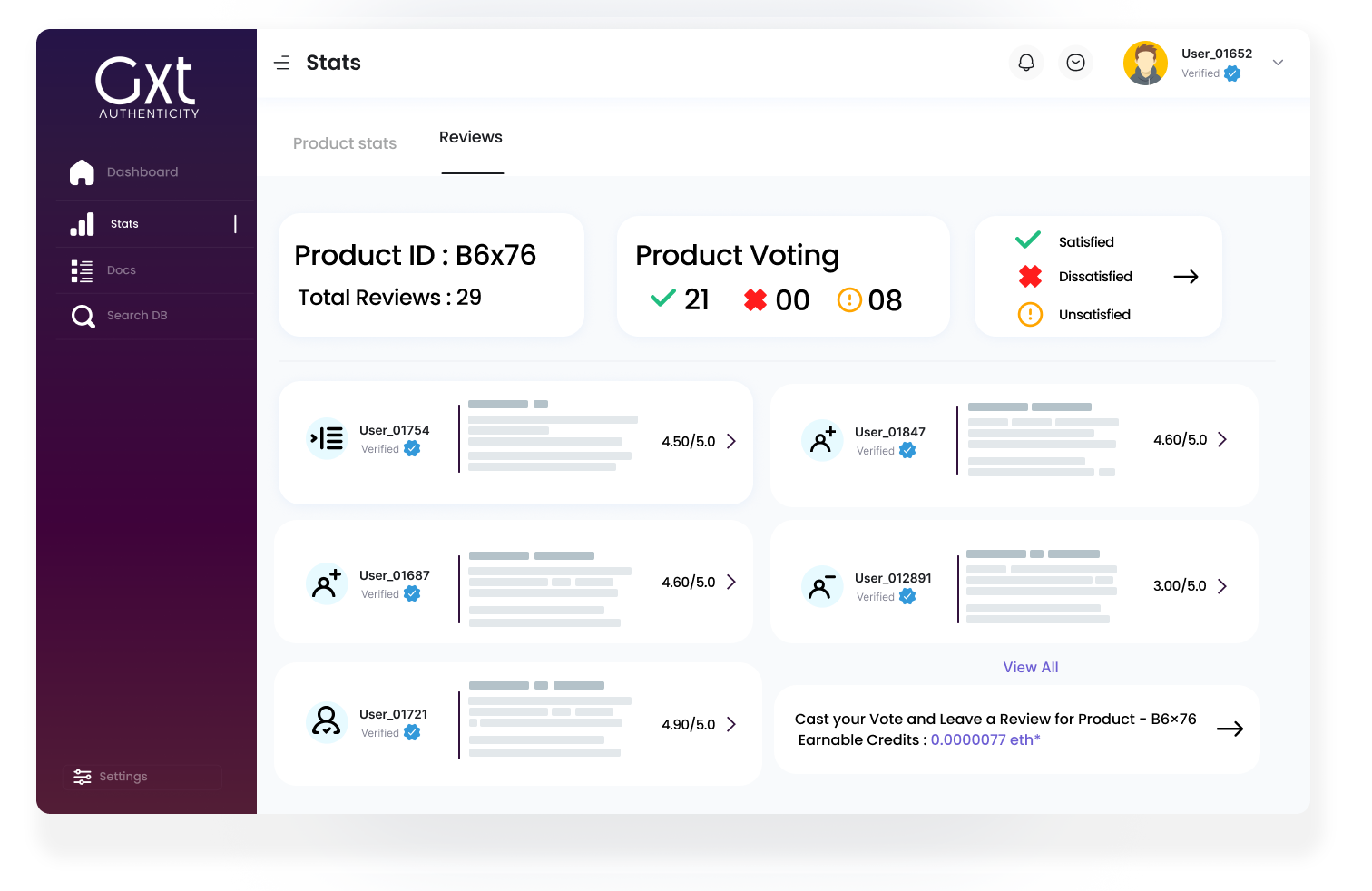
UI - Main - stats
-
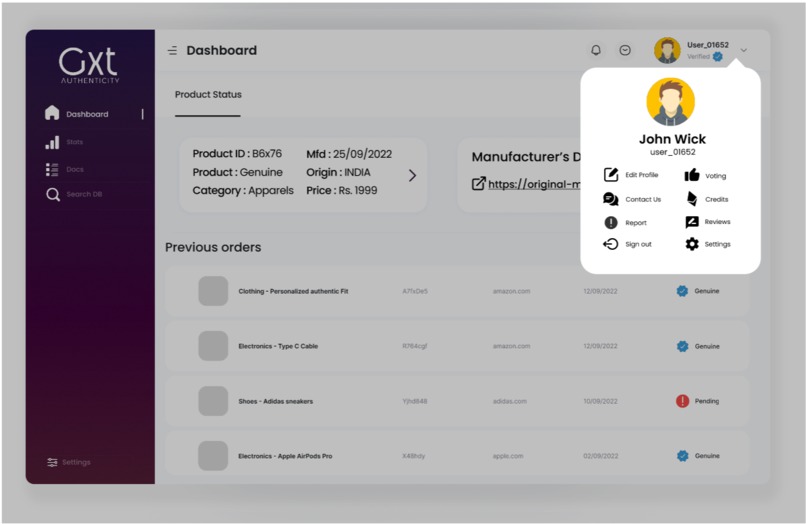
UI - Main - user-dropdown

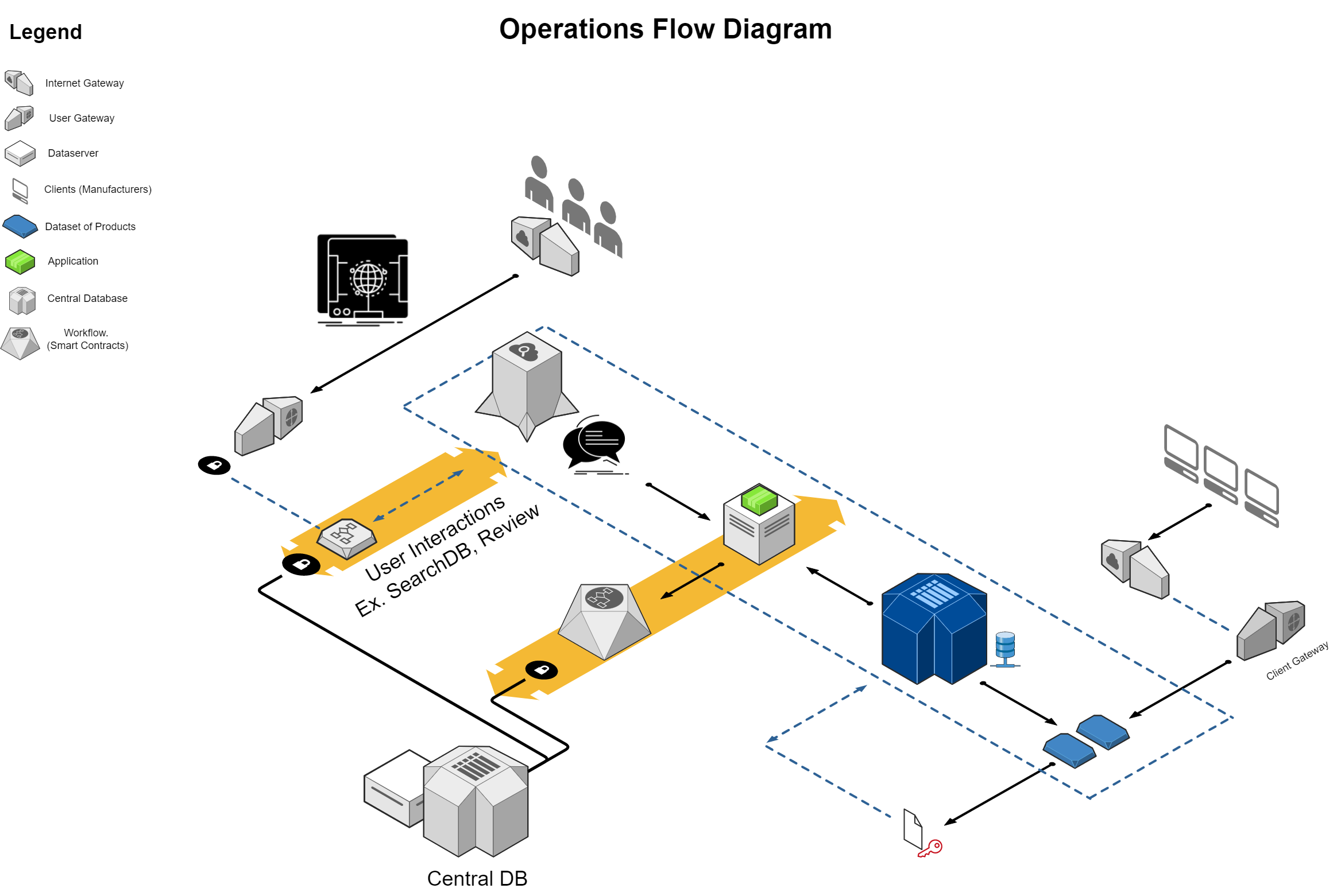
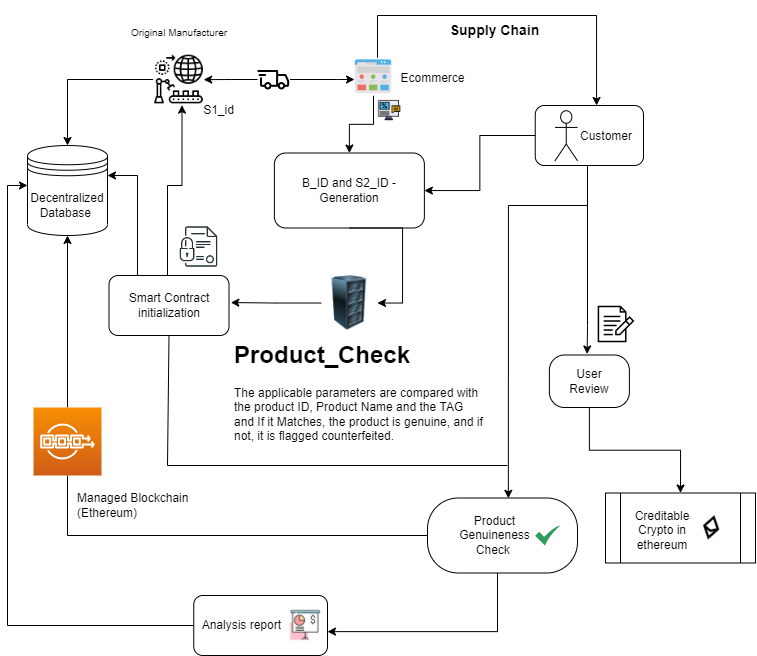
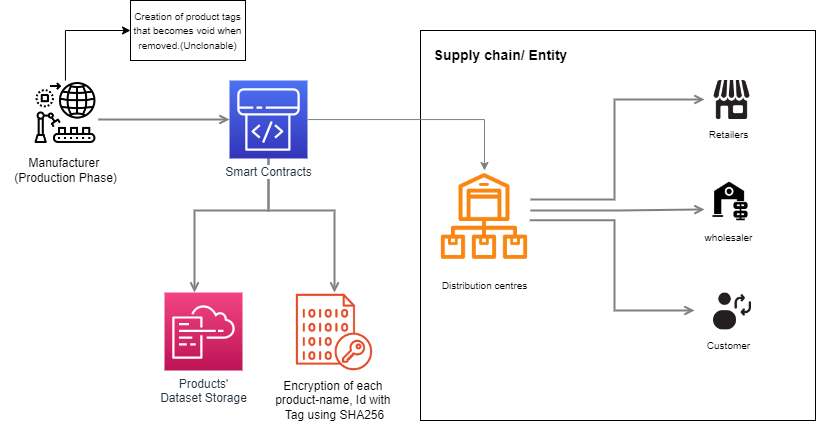


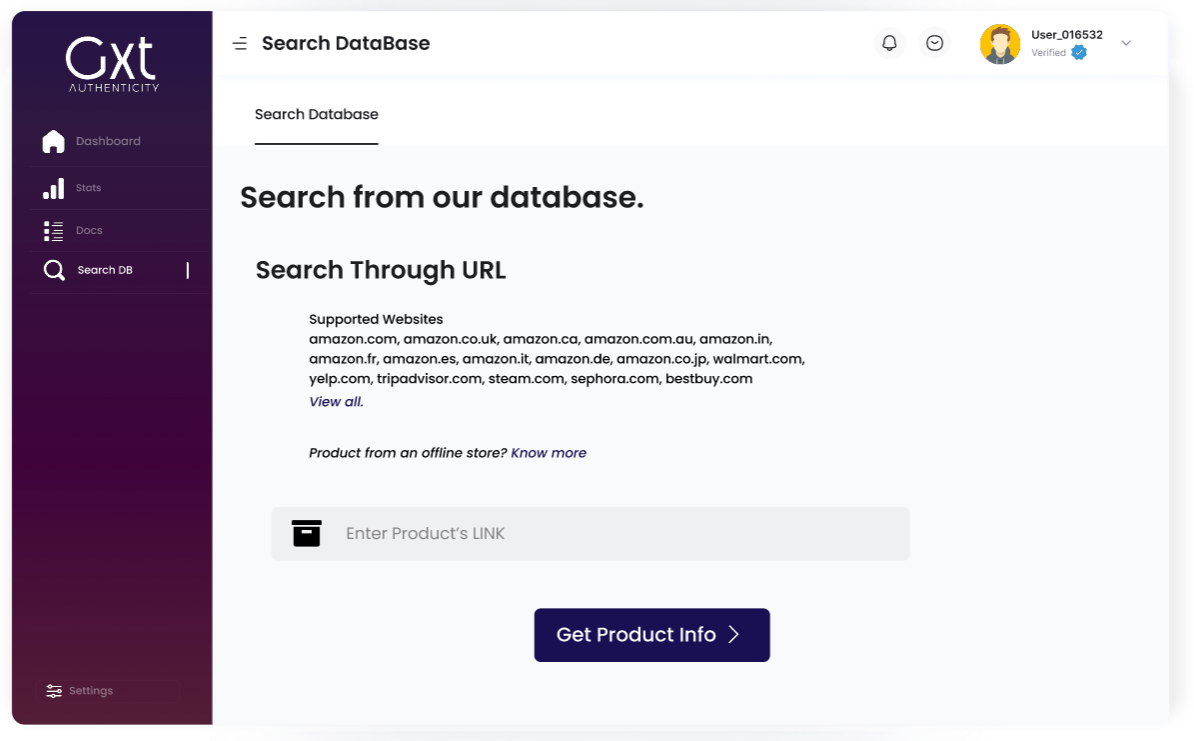


Inspiration
The internet has made our lives easier and more comfortable; however, you can become anyone or anything online- at least for a while. We have often heard stories about catfishing an individual, for instance. But it's not just people; even goods can be "catfished." Sometimes people order a certain product from an online website and end up with lower quality products or, worse, something completely different. In the last several years, the cost of return deliveries has grown by 75%, reaching an estimated $550 billion in 2020. It is a waste of not only the time of the customer but also various resources.
What we learned
Counterfeiting products or catfishing products, as branded goods, is one of the most important and difficult issues to deal with in national/international markets. With the rapid development of e-commerce and i-commerce, it is clear that the development of anti-counterfeiting systems is urgently needed. Return of online purchases has adverse consequences on the environment as well as the ecommerce industry.
Literature Survey
Global e-commerce sales are expected to reach $5 trillion by the End of 2023 and $6 trillion by 2024. Merchants continue to follow consumer demand online, with flocks of e-commerce in record numbers. Online stores are popping up daily, with an estimated 12–24 million ecommerce sites across the globe. It is estimated that trade in counterfeit goods is now worth more than 5 percent of world trade. Up to 30% of all products ordered online become returns, placing an insurmountable burden on reverse logistics. Only 54% of all packaging gets recycled, and an estimated 5 billion pounds of returned goods end up in landfills each year. Packages leave a trail of pollution, and some end up in landfills. Every year the e-commerce industry generates 84 million tons of carbon emissions due to product returns. In which, counterfeited products accounts for over 42% of it. Global retail sector sales losses due to counterfeit goods, clothing accounted for a loss of 26.3 billion euros. A survey on what kinds of goods people are returning the most shows that clothing tops the list by 88%. It is evident that the most counterfeited goods are clothing.
What's our solution
To overcome this issue of counterfeiting products, we propose developing a Decentralized application powered by smart contracts that can detect and reduce counterfeit goods in the e-commerce industry and the post-supply chain. The Methodology we are using is similar to that of POMS (Product Ownership Management System), but with the updated technology and in a more user-interactive manner.
The Methodology implied here:
Phase 1: Manufacturer’s Phase
The Manufacturer will be given a Unique Company id and Only the legitimate manufacturers are able to claim the initial ownership of products after due verification. The Products are given a Unclonable TAG, that becomes void when removed. Products’ Information dataset is collected from the manufacturer (M1). A Unique Random Secret (URS), S1 ID (Seller1 ID) is generated for every product before transportation. After the products enters the supply chain, the Genuineness check for the product is done. The URS is Compared with the product ID and S1 ID, if it matches the product is termed Genuine else it is flagged Counterfeited.
Phase 2: Supply Phase
In this Phase, B-ID (Buyer ID) and S2 ID (Seller2 ID) is generated for future analytics of product’s Genuineness and stored in our Database.
All the application interactions, like getting data from the client (manufacturer), user review, etc., are done by smart contracts.
Client Phase:
In this phase, the datasets of products are retrieved from the clients, encrypted using AES encryption algorithms, and stored in a decentralized database. which are then used in the supply phase for checking the product’s Genuineness.
How is our proposed solution being different from similar kind of solutions by the competitors in the current market
For more than a decade, RFID (Radio Frequency Identification) has attracted a lot of attention as a key technology in the world of IoT (Internet of Things) because it can be used to detect counterfeit products. Though it is operational, RFID technology isn't efficient, and it has various flaws in its systems and standards. To overcome the drawbacks of RFID, a new protocol was proposed named POMS (Product Ownership Management System) using Blockchain, but it was not commercially developed into a system that was proven in an operational environment. We propose to overcome the operational and functional drawbacks of the current solution(s) surrounding the problem.
What's so novel in our idea and how is the idea different from others?
The uniqueness and distinctive features of the solution:
Using Blockchain to maximize data sharing securely.
The formulation of smart contracts, which is entirely dedicated to checking product authenticity and identifying counterfeited goods.
Depicting the original description of products from the manufacturer rather than intermediates.
A manufacturer-based approach to increase product outreach in a secure and reliable manner.
A crypto-credit system for users to encourage genuine reviews of products.
A decentralized database of previously Genuineness-checked products.
Using encryption algorithm, Advanced Encryption Standard (AES) to protect data in transit.
Conclusion
Gxt - Authenticity, weeds out the Fake/duplicate/cloned products that aren’t from the original Manufacturer. This can be extremely useful in buying a product with utmost knows and don’t knows of it. It also provides a market for new suppliers, clients, customers to find out more options to carry out their process in a Genuine way. Our application is estimated and could possibly create an impact on the ecommerce industry as well as the post supply chain.
Built With
- aes-encryption
- alchemyapi
- ethereum
- ethers.js
- ganache
- github
- githubpages
- ipfs
- metamask
- polygon
- react
- remix-ide
- solidity
- spheron
- truffle-suite
- vs-code

Log in or sign up for Devpost to join the conversation.