Inspiration
As AI systems take on more work, people need to see what is proposed, what they have authorized, and what actually happened. Clear Lens explores how a spatial interface can make those distinctions visible.
What it does
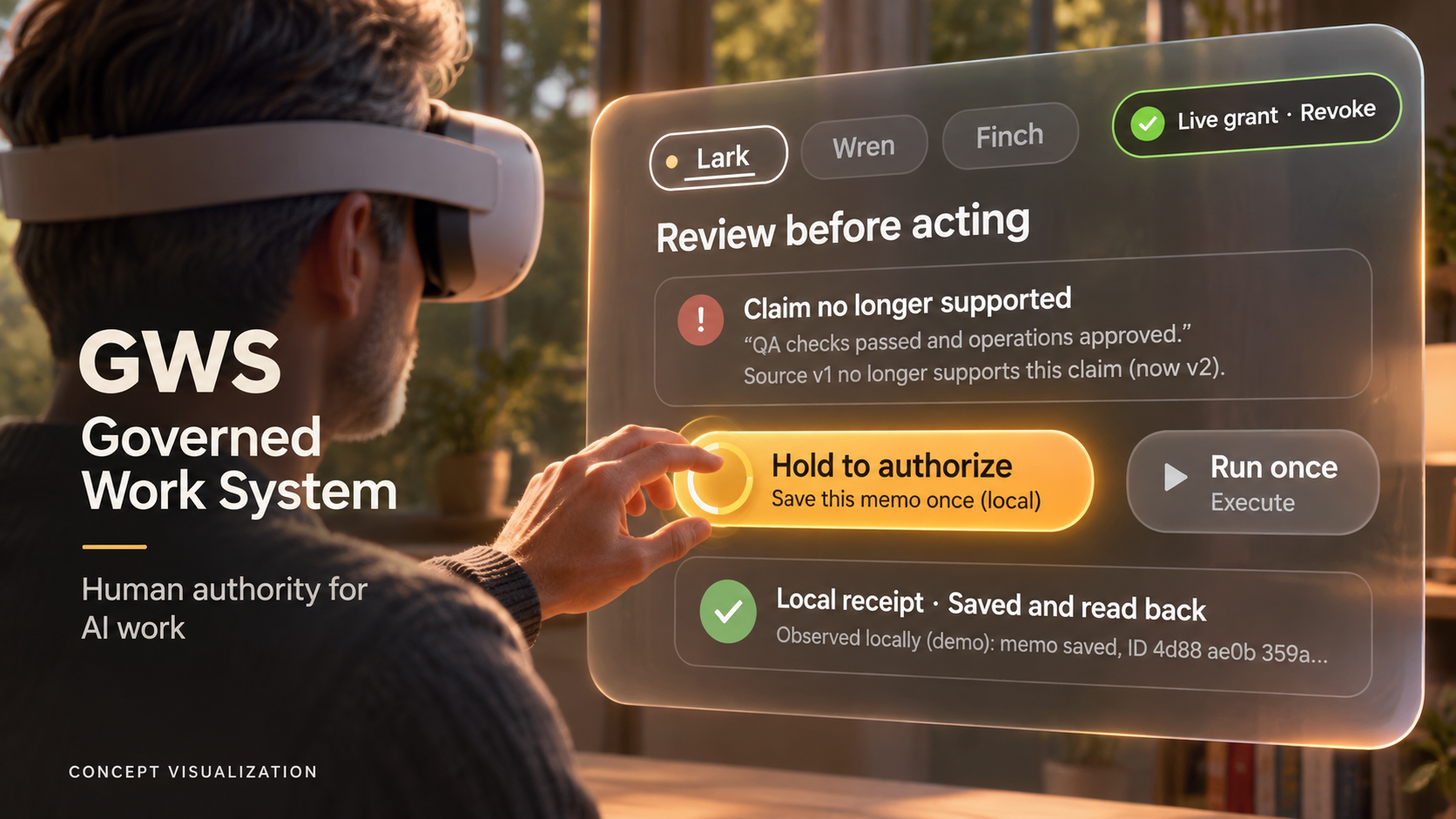
A seated workspace presents three local memo scenarios. Choose a task, assign the demonstration worker, inspect its draft and evidence, and decide whether to permit a save. One scenario deliberately includes an unsupported claim so the correction and review process can be inspected.
Holding the authorization control creates a single-use permission for the specified memo and destination, valid for 60 seconds. Running the save is a separate action. You can revoke an unused permission, including while the main card is put away. A successful result includes a receipt after the written bytes are read back and compared.
How it is built
C# and Unity 6.6 provide the spatial interface and deterministic local workflow. Meta XR Core and OpenXR connect the Android build to Quest head and hand tracking. The hand adapter feeds the existing interaction router; it does not grant authority itself. The prototype keeps proposal review, authorization, execution, and outcome evidence separate.
What the video shows
The video is actual Unity Editor PlayMode footage with simulated hand input. The agent work uses deterministic fixtures, rather than a live cloud AI service. The Editor effect backend is explicitly labeled as an uncontained development demo. This footage is not a headset recording or a device-performance measurement.
Challenges and lessons
The central interaction challenge was making authorization understandable without making it look like execution. Early release, lost tracking, low confidence, cancellation, expiry, and revocation require clear feedback. A room-level attention cue and a visible unused grant let the person put the card away without losing the decision context.
Scope and next steps
This is a local prototype, not production GWS authority or a general-purpose security sandbox. It does not recognize household objects, sense physical actions, or run live frontier AI workers. Next steps are Quest 3/3S performance and usability validation, stronger device evidence, and carefully scoped live-worker integration. A public launch date is not yet committed.

