-
GWC Bot Logo
-
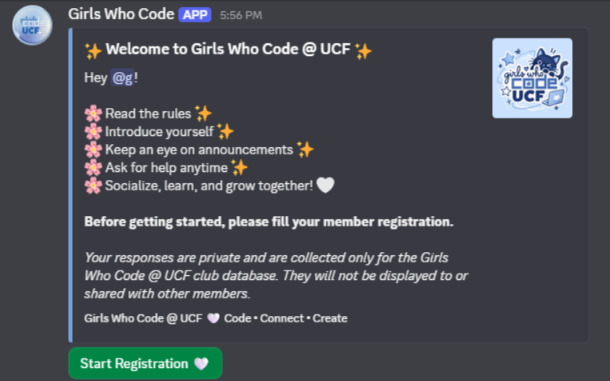
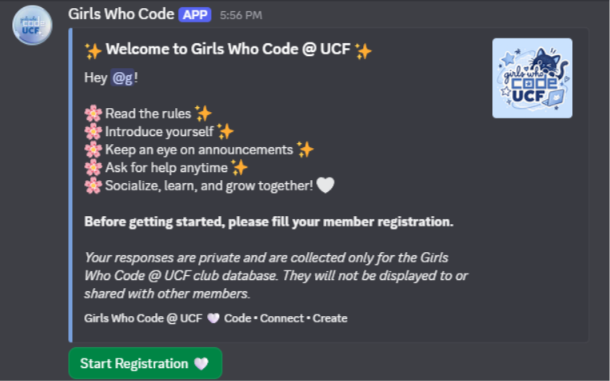
Welcome Message
-
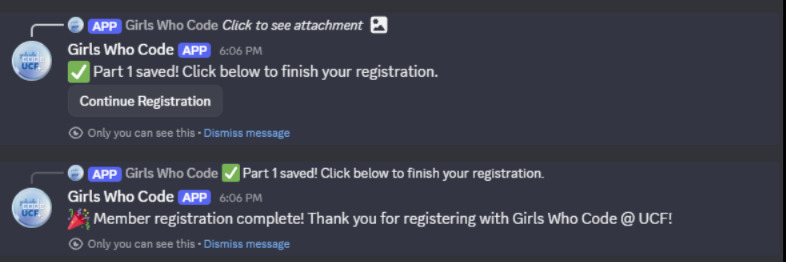
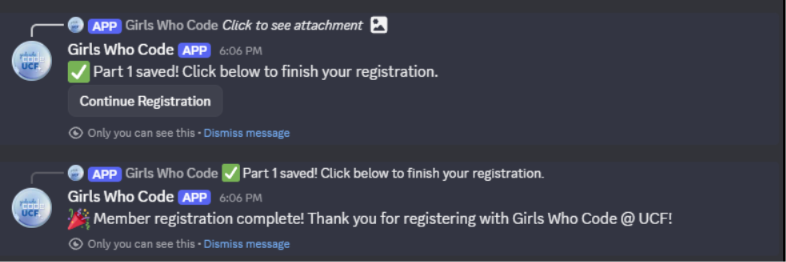
Registration Complete
-
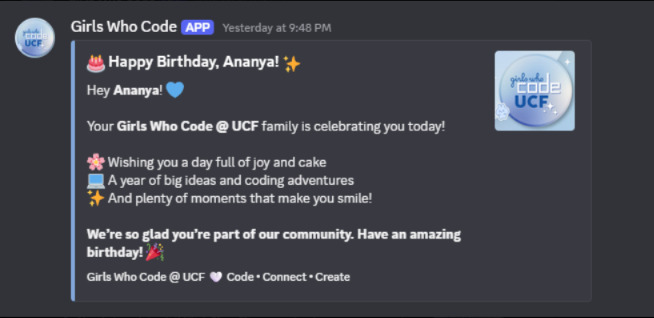
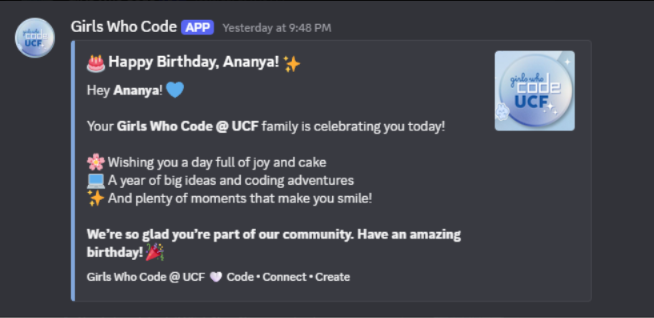
Birthday Message
-
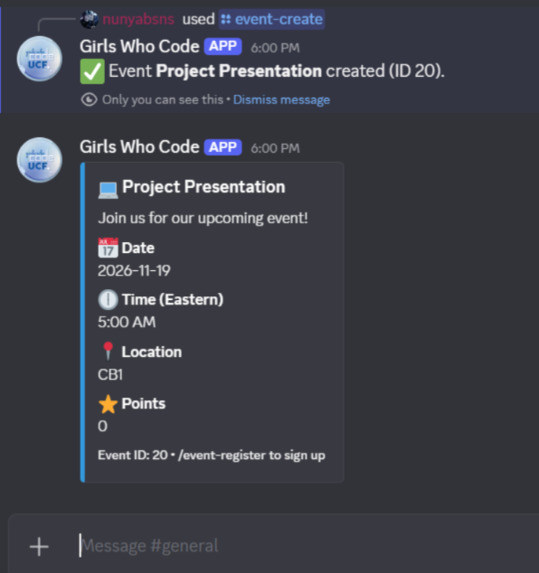
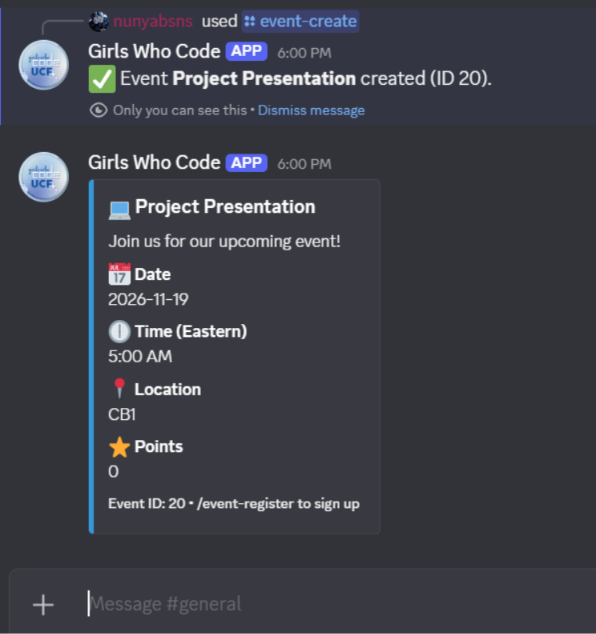
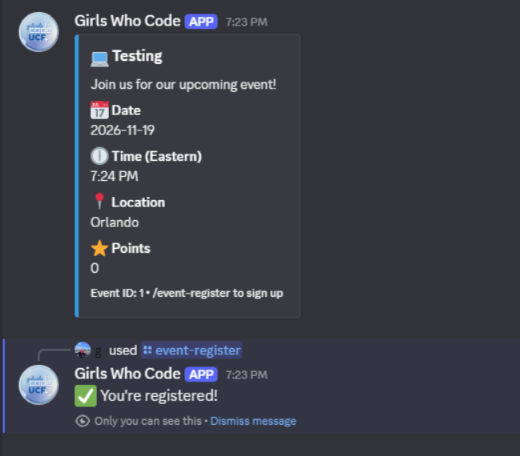
Event Creation
-
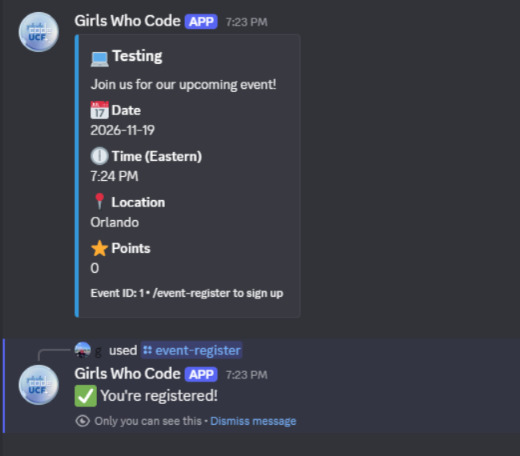
Registered For Event
-
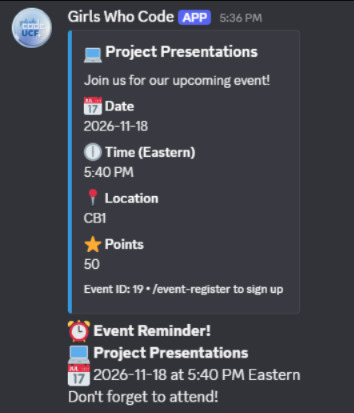
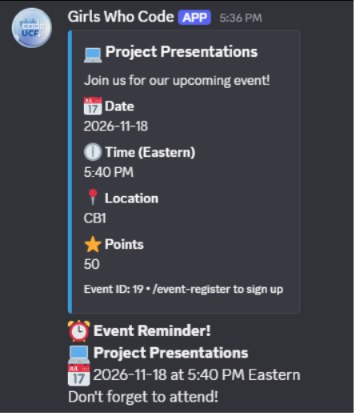
Event Reminder
-
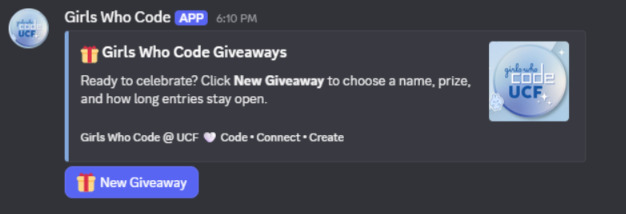
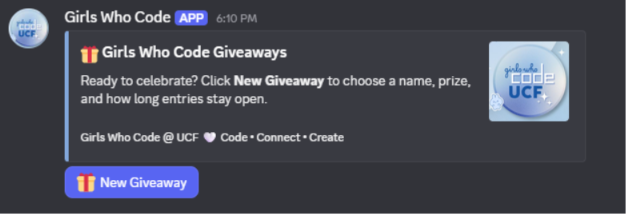
Create Giveaway
-
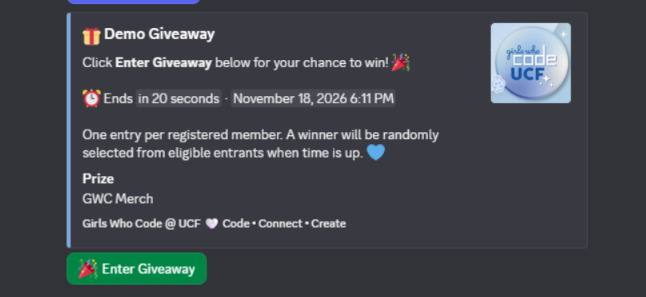
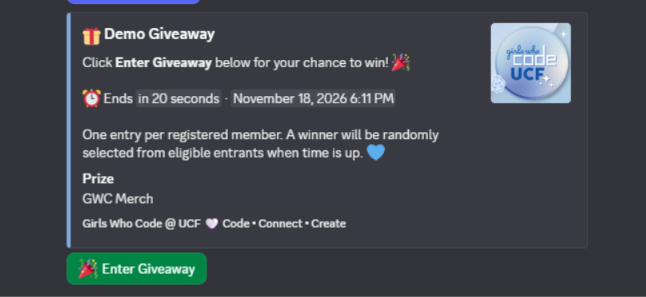
Enter Giveaway
-
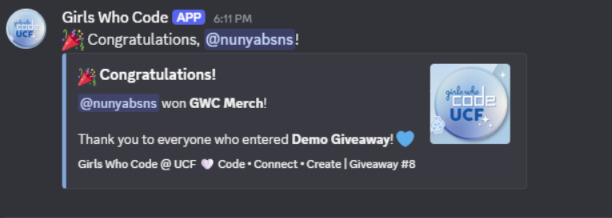
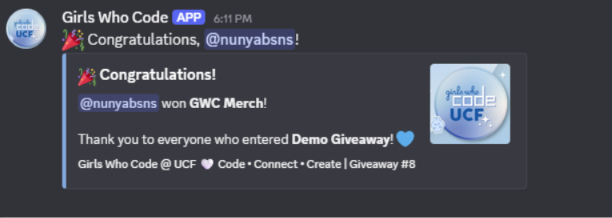
Giveaway Winner
-
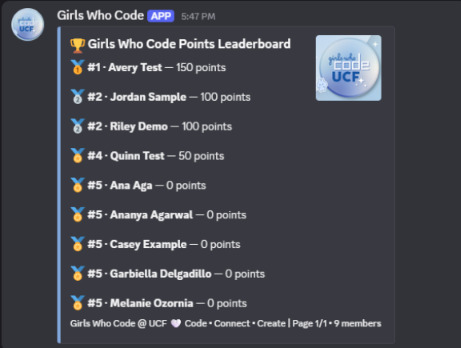
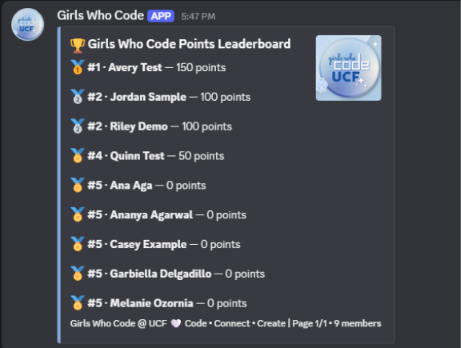
Leaderboard
Inspiration
Our Girls Who Code chapter at the University of Central Florida already had a Discord server and existing bots, but we wanted to build something specifically designed around our club's needs.
As students, we know how important it is to stay connected with our organizations while balancing classes, assignments, and other responsibilities. We also recognized that managing a student organization involves a lot of work behind the scenes, from welcoming new members and collecting registration information to organizing activities and keeping track of participation.
We wanted to bring these tasks together in one place while making the server more interactive and welcoming. Instead of building another general-purpose Discord bot, we decided to create one that could grow with our Girls Who Code community.
Our goal was simple: make it easier for members to connect, participate, and stay involved while reducing repetitive administrative work for club officers.
What it does
The GWC Discord Bot is a Python-based application that helps automate club activities and improve the member experience directly within Discord.
We developed several features designed around how our organization operates:
Welcome Messages: When someone joins the server, the bot greets them in the welcome channel and sends a private message to help them get started.
Member Registration: Members can use /registration to complete a private registration form. Their information is stored in a SQLite database, and each new member receives a unique four-digit registration ID.
Birthday Celebrations: The bot automatically sends personalized birthday messages for active members who provide their birthdays, helping make the server feel more like a community.
Giveaways: Authorized organizers can create timed giveaways using /giveaway. Registered members enter through an interactive button, and the bot randomly selects an eligible winner when the giveaway ends.
Points Leaderboard: Members can view a leaderboard displaying participation point balances and rankings using !leaderboard.
Together, these components are intended to make the Girls Who Code server more useful for both members and officers.
How we built it
We built our Discord bot using Python and the discord.py library, which allows us to communicate with the Discord API, respond to commands, and create interactive experiences using buttons, forms, and embedded messages.
For data storage, we used SQLite to maintain member information, Discord account links, giveaway entries, participation points, and other records. We used SQL queries to retrieve and update information while implementing safeguards against duplicate registrations and giveaway entries.
We organized the bot into separate modules for features such as member registration, welcome messages, birthdays, giveaways, and the leaderboard. The shared application uses one Discord client and command tree to coordinate these components.
Throughout development, we used Git and GitHub to collaborate, manage branches, organize files, and combine individual contributions into a larger application.
Challenges we ran into
Coordinating schedules: One of our biggest challenges was balancing development with university coursework, exams, and personal responsibilities. Finding times when everyone could meet wasn't always easy, especially as deadlines approached. We had to stay flexible, communicate our progress, and adjust our priorities.
Integrating separate features: Our team worked on different parts of the bot, which made combining everything more complicated than developing individual modules. As the project grew, we reorganized the code to use a shared Discord client and command tree, helping prevent conflicting bot instances, event handlers, and commands.
Handling scheduled and interactive features: Features such as giveaways and birthdays required us to think beyond immediate command responses. We had to consider what would happen if the bot restarted, someone entered a giveaway twice, a member had already received a birthday greeting, or a Discord message failed to send.
Testing without disrupting the server: Since the bot interacts with an actual Discord community, we needed ways to test features without interfering with existing members or creating duplicate messages. We introduced a test mode, fictional test records, and automated tests to help verify functionality more safely.
These challenges taught us that creating software isn't just about getting individual features to work. It's also about making sure those features work together reliably.
Accomplishments that we're proud of
Building a custom Discord bot designed around the needs of our own Girls Who Code chapter.
Creating a private registration process that connects Discord accounts to member records.
Developing a giveaway system with timed drawings, entry validation, and winner selection.
Adding automated birthday celebrations and a points leaderboard to encourage community engagement.
Learning to coordinate independent contributions and organize them into a shared software project.
One of our biggest accomplishments is that this project goes beyond a simple bot that responds to messages. We created a foundation for a club management system that combines Discord interactions, persistent data storage, and automation.
We're especially proud that the project was created for a community we're part of and has the potential to continue being developed by future Girls Who Code members.
What we learned
Python and Discord development: We gained experience with asynchronous programming, Discord API interactions, slash commands, embeds, buttons, forms, event listeners, and scheduled tasks.
Database design: We learned how to organize information using SQLite, connect records through database relationships, prevent duplicate entries, and handle changes to an existing database structure.
Software testing: We gained a better understanding of automated testing, mocking Discord interactions, validating user input, and checking edge cases before relying on features in a live server.
Git and GitHub: We practiced using branches, commits, pushes, and collaborative workflows. We also learned how important it is to maintain a consistent project structure when multiple people are contributing code.
Teamwork and problem-solving: We learned to communicate across different schedules, adapt when plans changed, prioritize essential features, and work through integration problems together.
Most importantly, we learned that software development is an ongoing process of designing, building, testing, debugging, and improving.
What's next
We'd love to continue expanding the bot into a more complete management tool for Girls Who Code at UCF.
Our next priorities include:
Completing the integration of our event creation, registration, check-in, and attendance features.
Connecting event attendance to participation points in the shared database.
Refining the bot's user experience and administrative tools.
Continuing to test features in a live Discord environment.
Making the codebase easier for future Girls Who Code members to understand and contribute to.
Our long-term goal is to build something that can continue growing with our organization, even after this project is submitted.

