Inspiration
Guru represents a number of disparate thoughts that have existed in my head for the last few years.
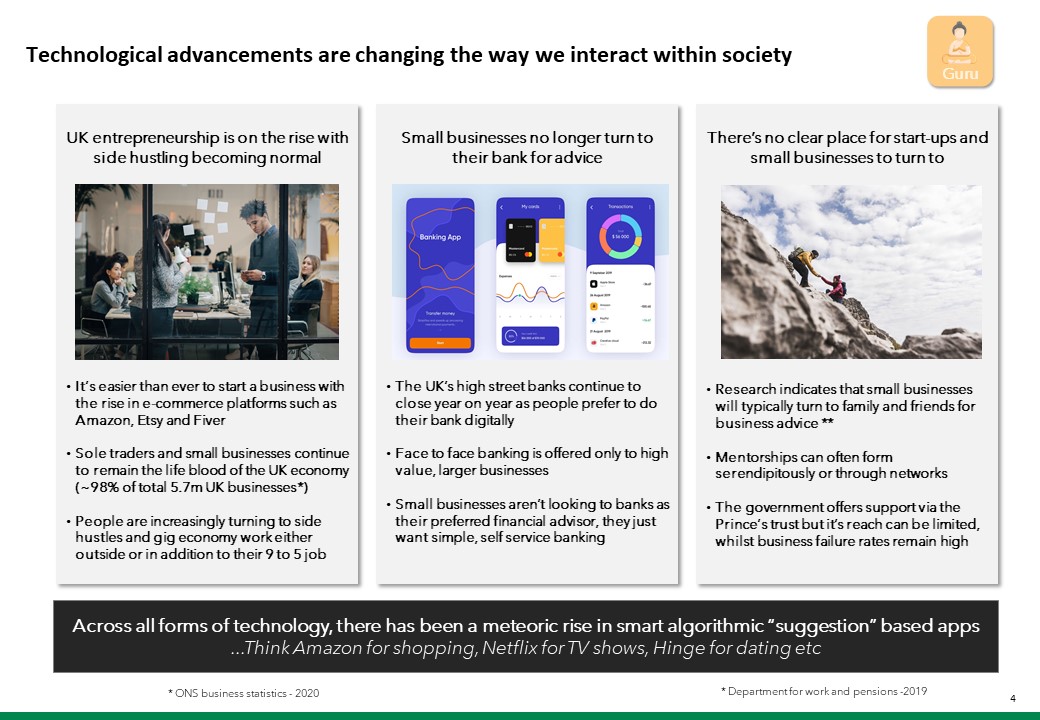
I work at Lloyds Banking Group and have spent significant time supporting start-ups and small business customers. I've seen first hand how hard it can be to run a small business, one day your the marketer, the next you're running the books. Over this time, the banking model has shifted increasingly toward a digital proposition whilst advice is limited to a script in front of banking colleagues. It makes it hard for a small business to know who to really turn to.
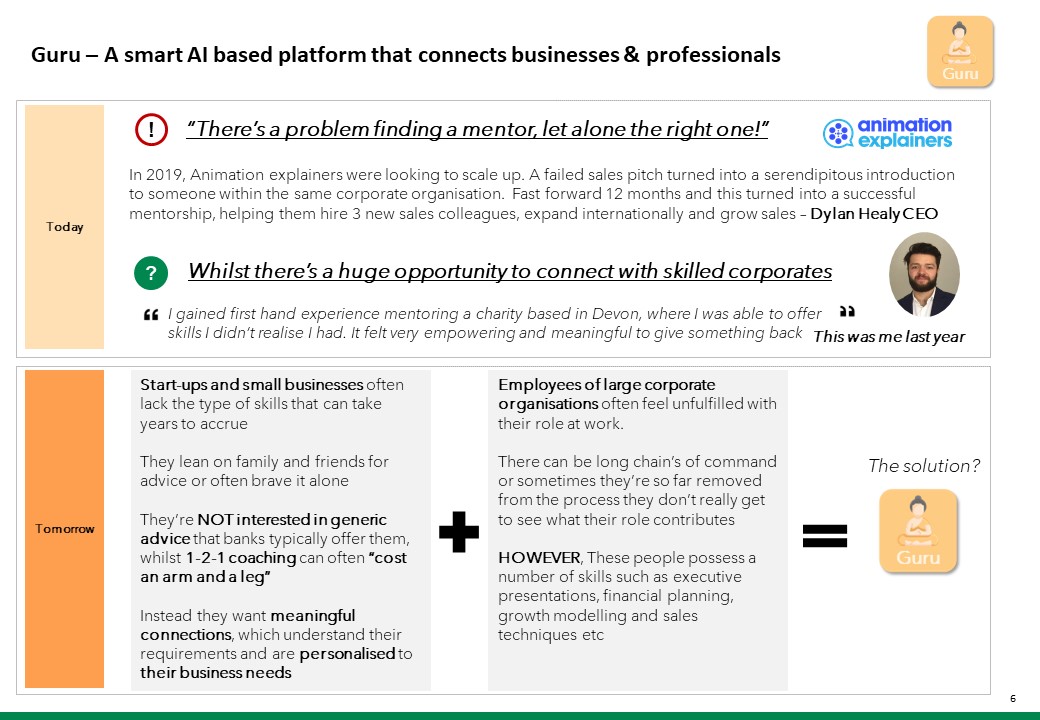
In addition to this, a childhood friend runs his own business. I often hear of the trials and tribulations he faces going into the unknown or figuring out what to do next. In 2019 he was looking to scale the business and grow. A failed sales pitch turned into a serendipitous introduction to someone within the same corporate organisation he'd just pitched to. Fast forward 12 months and this had turned into a successful mentorship, helping him hire 3 new sales colleagues, expand overseas and grow his sales as a result.
Finally there's myself. Last summer, I gained first hand experience to mentoring supporting a charity based in Devon, England. I was able to offer skills I didn’t realise I had. It felt incredibly empowering and meaningful to give something back outside of work. I became passionate and vested into her business
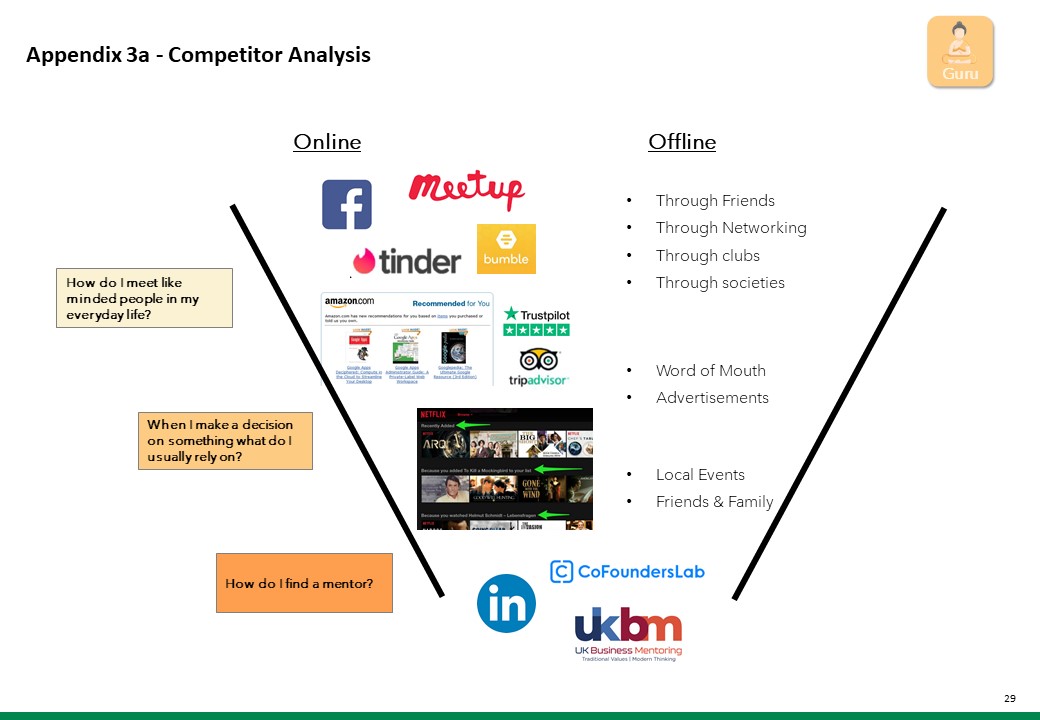
During this time, I've noticed that I now spend a significant portion of my time using technology that gives me suggestions. It tells me where to eat out, what to watch on television, who to go on dates with...
The ideas slowly but surely converged into one, Guru.
What it does
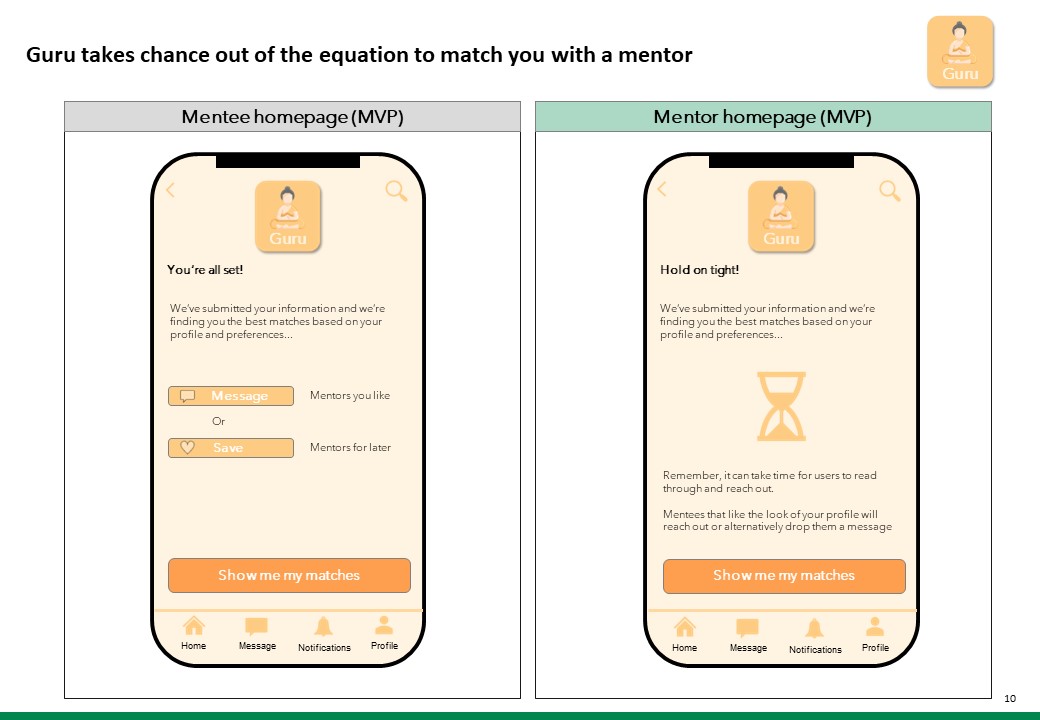
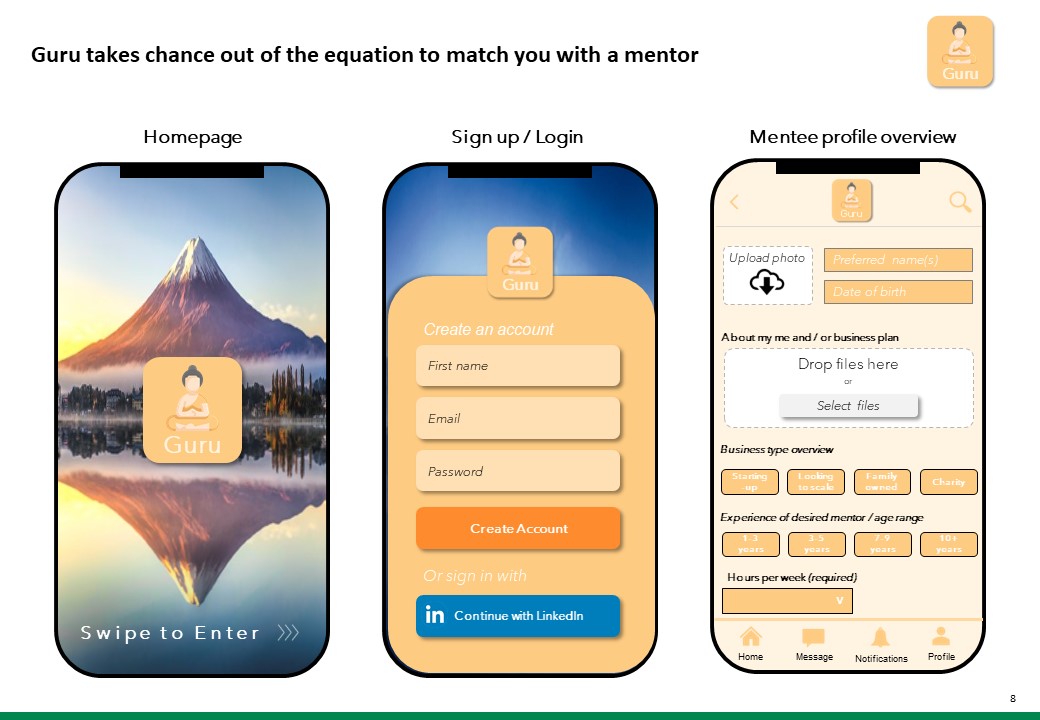
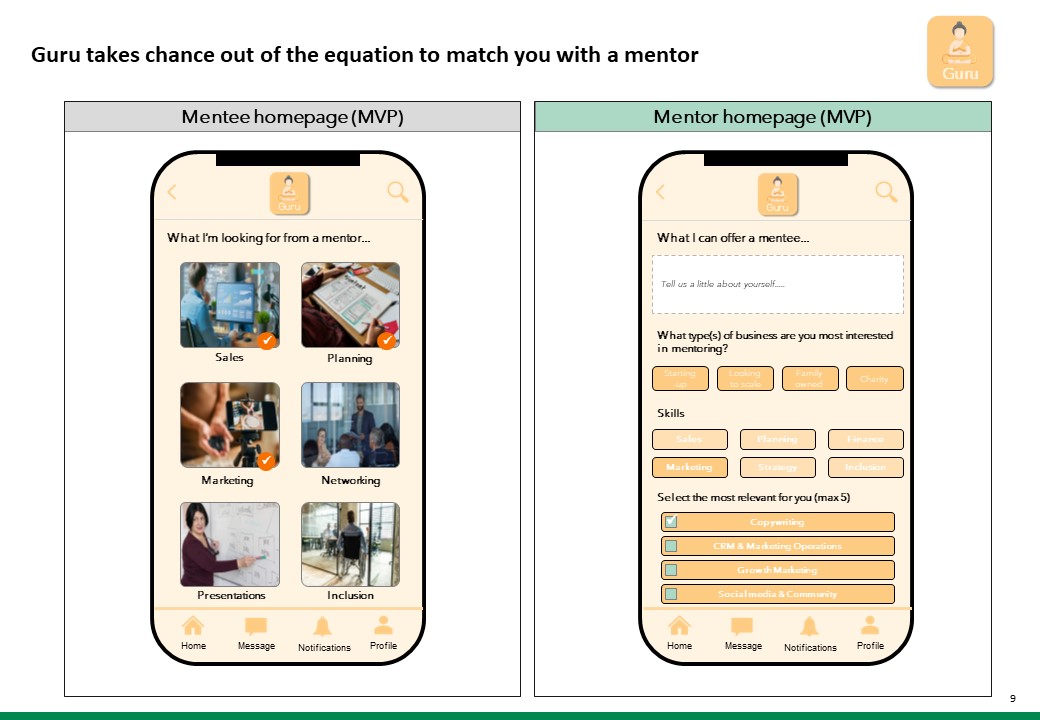
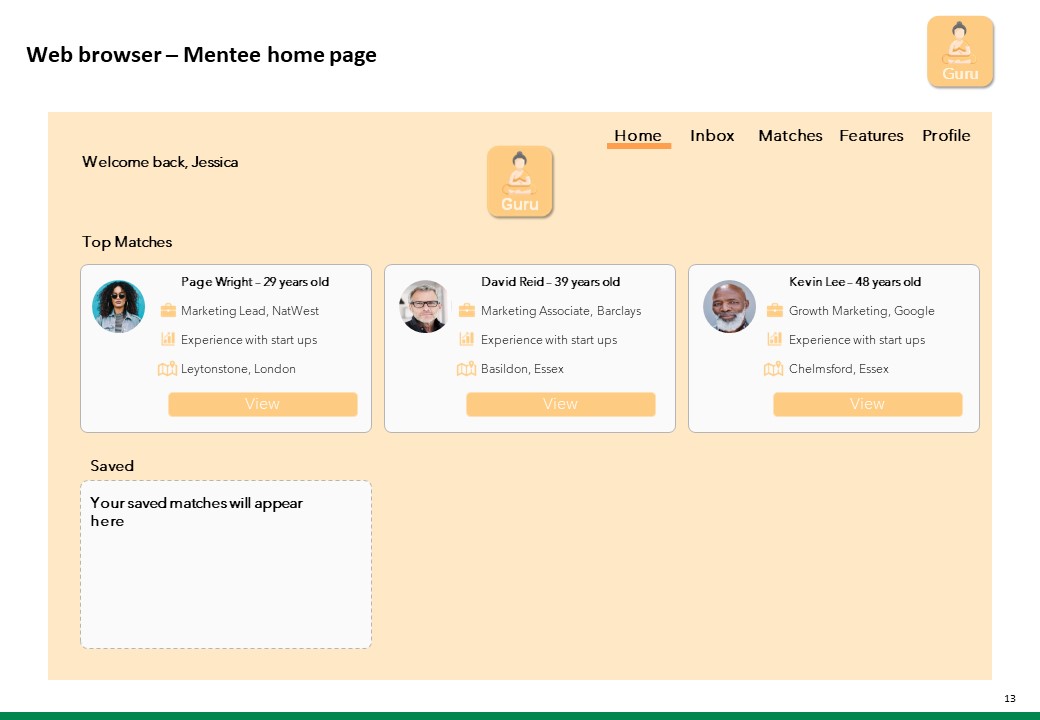
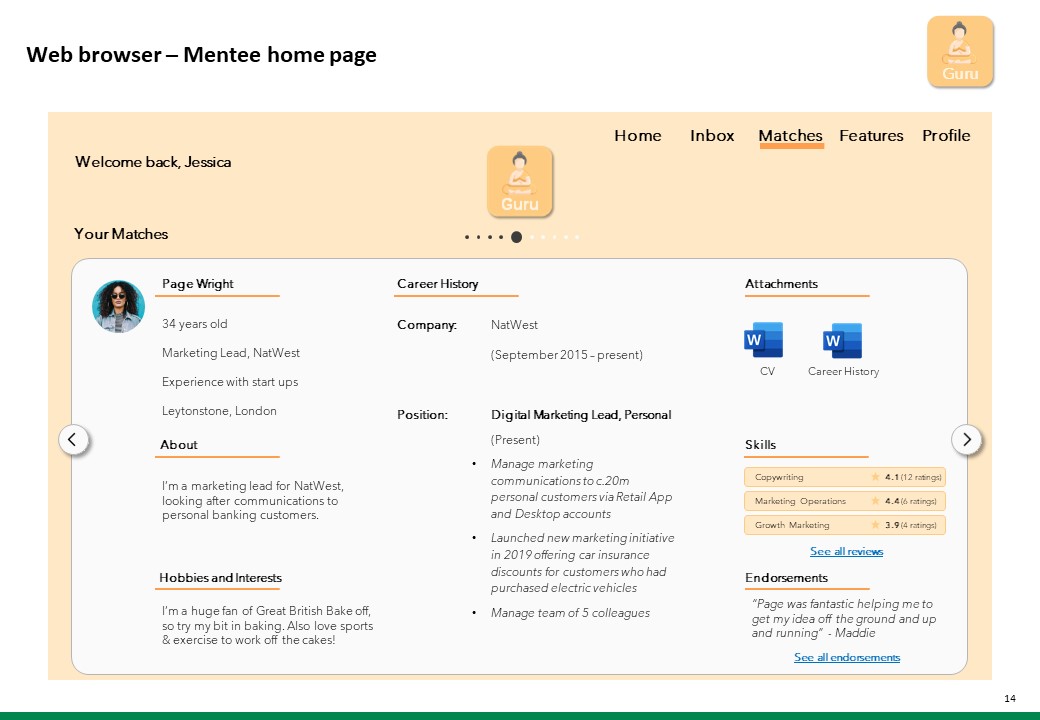
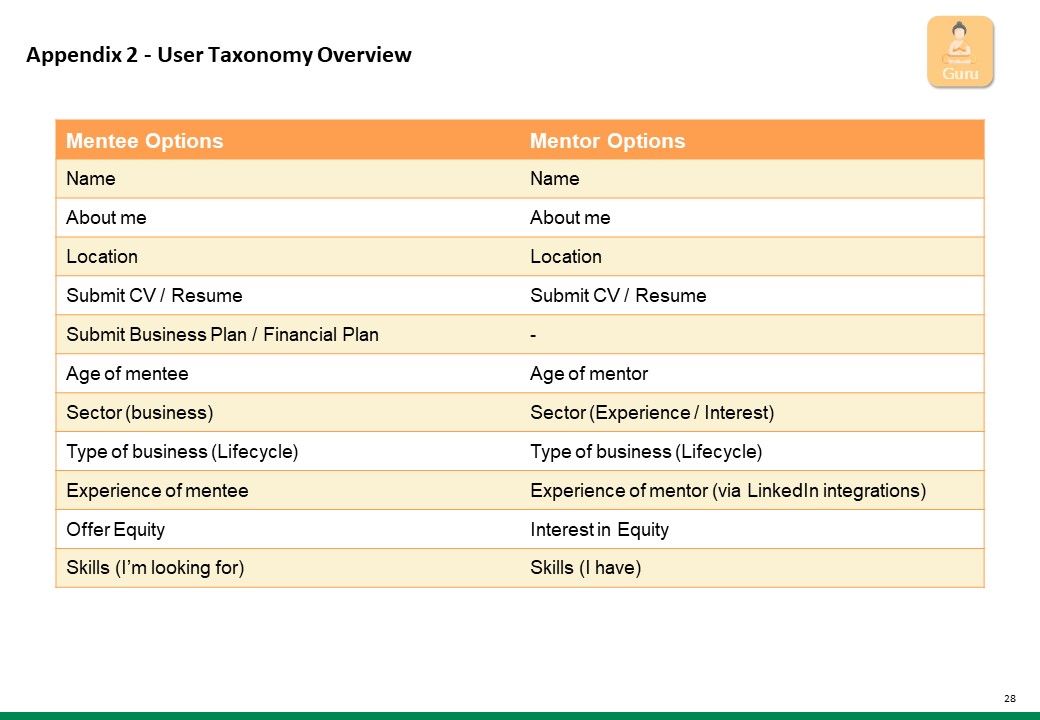
Guru uses a smart algorithm to match small businesses (mentees) with professionals (mentors). Users will complete a series of questions such as the age of their business, the type of business they operate and the age of the desired mentor. The mentor will complete similar questions as well as noting the skills they can provide when filling in their user profile. Once complete, the mentee will select the skills / areas of expertise they are looking for from a mentor.
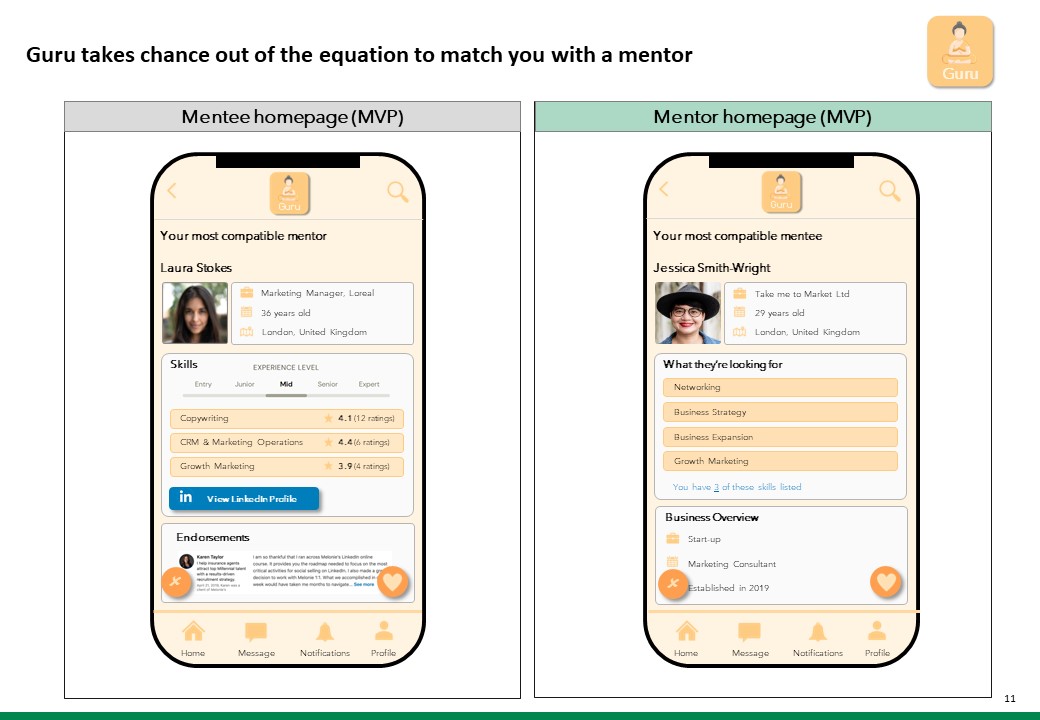
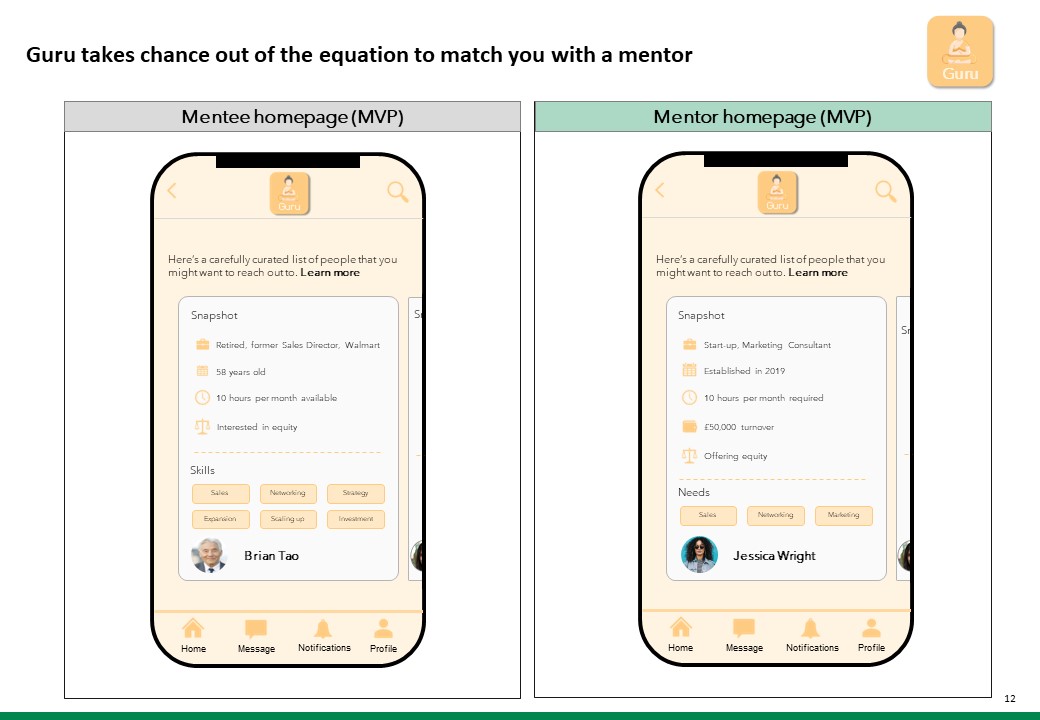
Once completed, they are given suggestions for compatible mentors and vice versa.
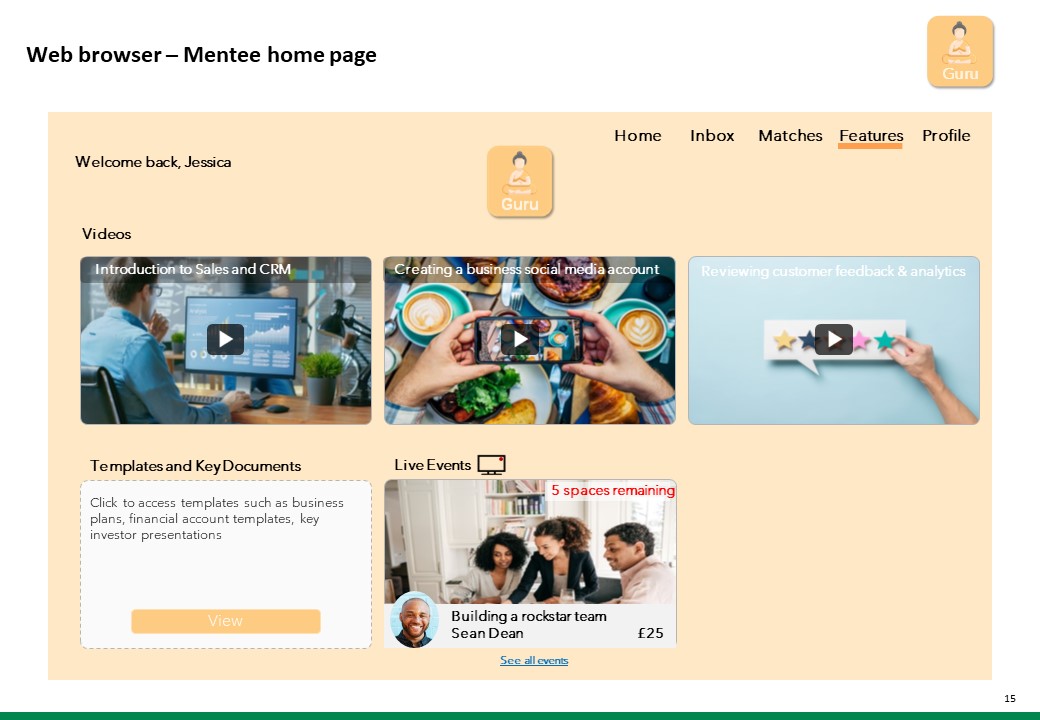
Users can or keep looking on the app. Once they get to talking, we'll suggest some intro topics, times and dates and off they go. Additional features and services will be built inside of the platform to encourage further usage and user retention. More detail is included within the presentation submission (below).
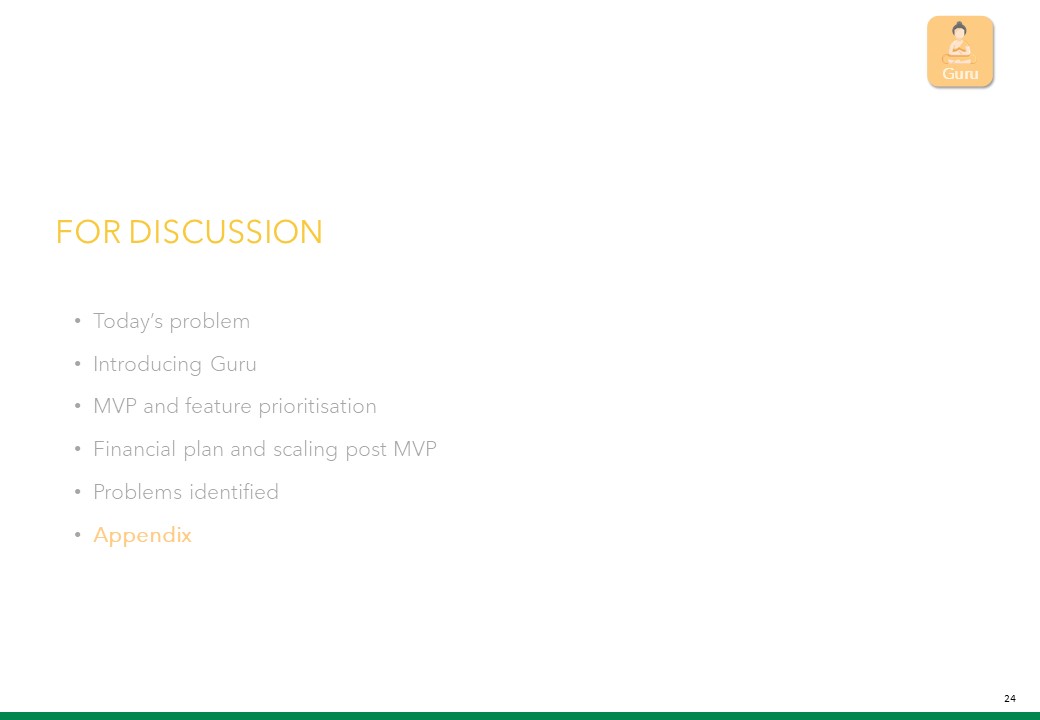
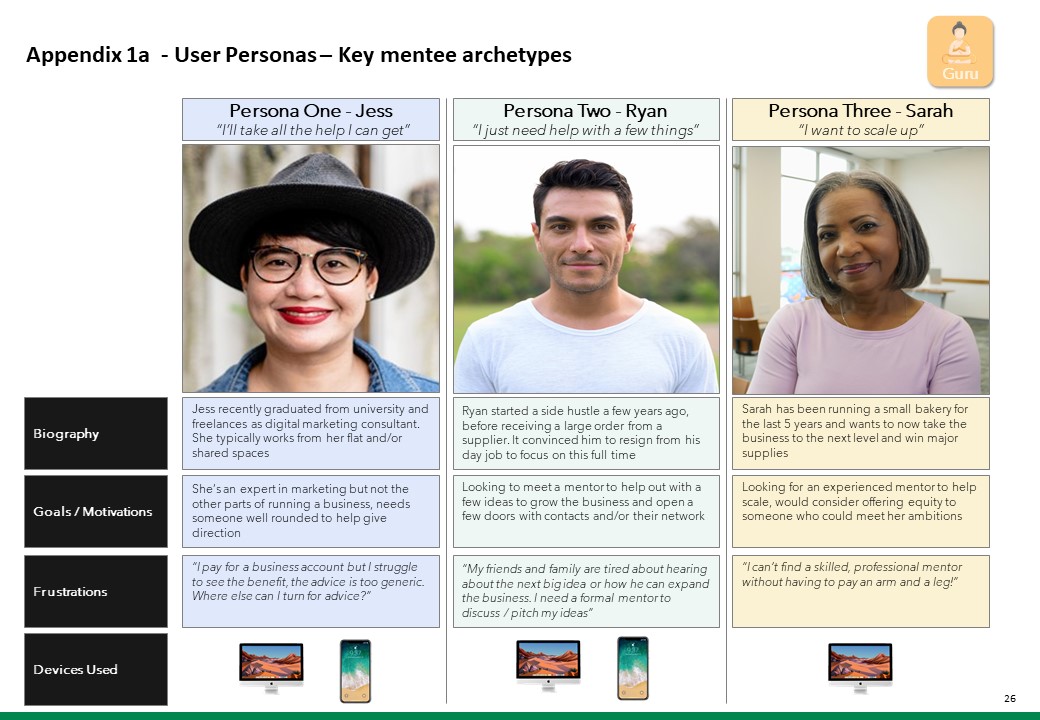
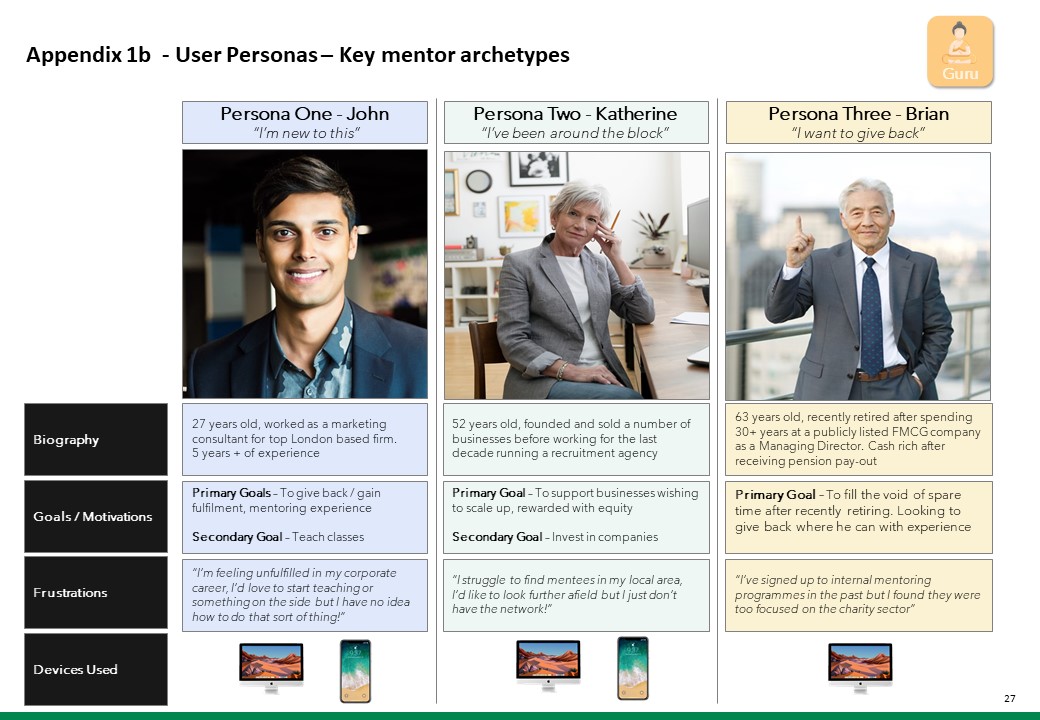
Guru targets a range of personas (see pack submission) from start-ups who want all the help they can get to businesses looking to scale or with specific needs in mind. The same can be said for mentors. We will target corporate professionals looking to re-ignite their passion outside of the day job or looking to give back to others. As well as experienced professionals who can offer their expertise and potentially look to invest / rewarded with equity.
How we built it
I am not a coder, nor an engineer. I've worked in strategy for most of my career so have used Microsoft PowerPoint to create my presentation along with some key screens for what I believe the solution would look like.
Challenges we ran into
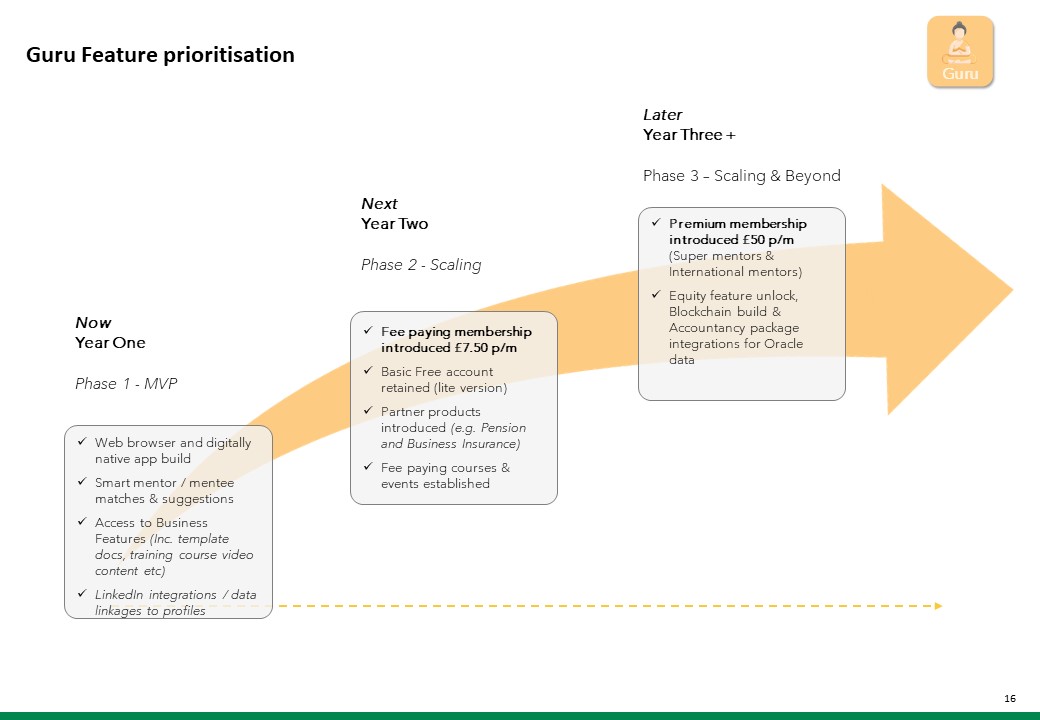
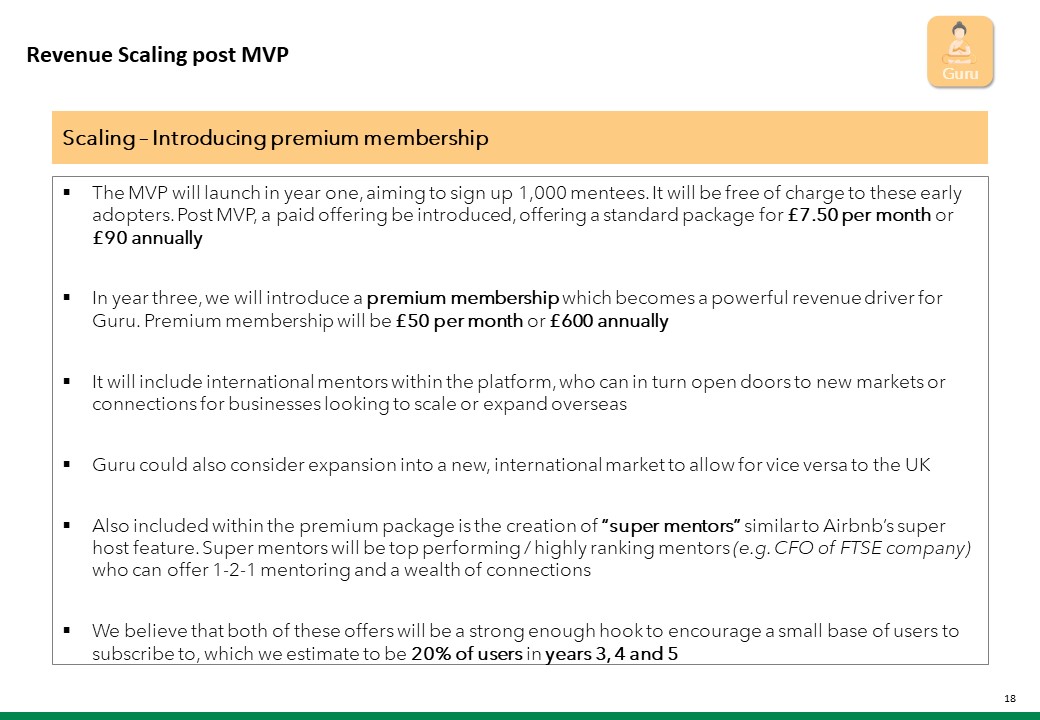
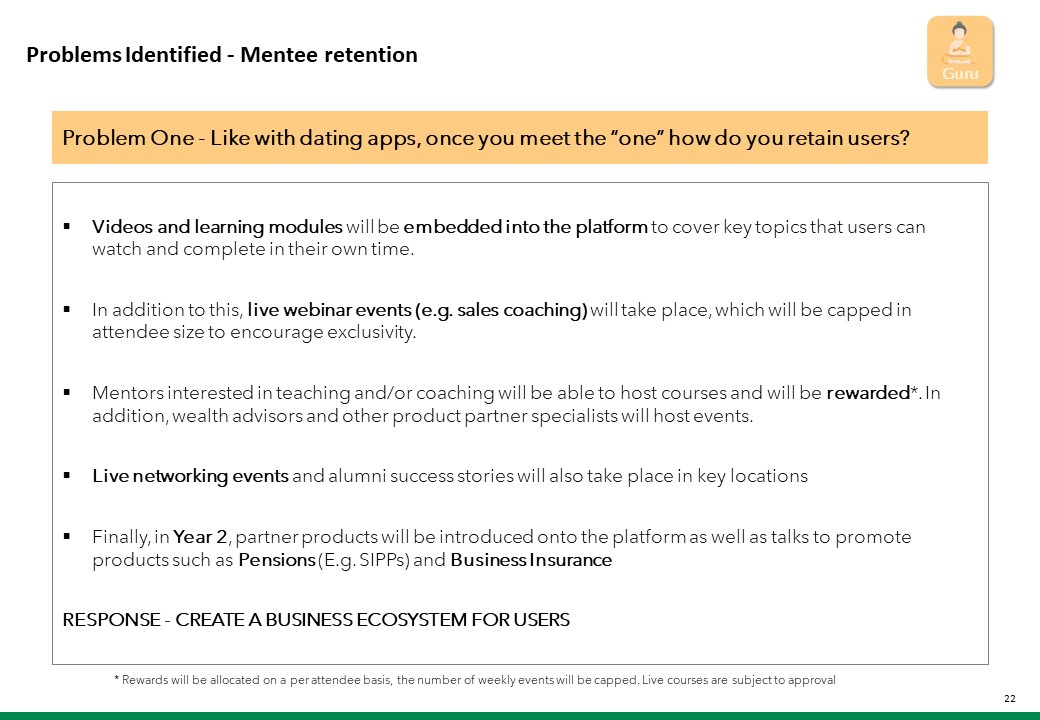
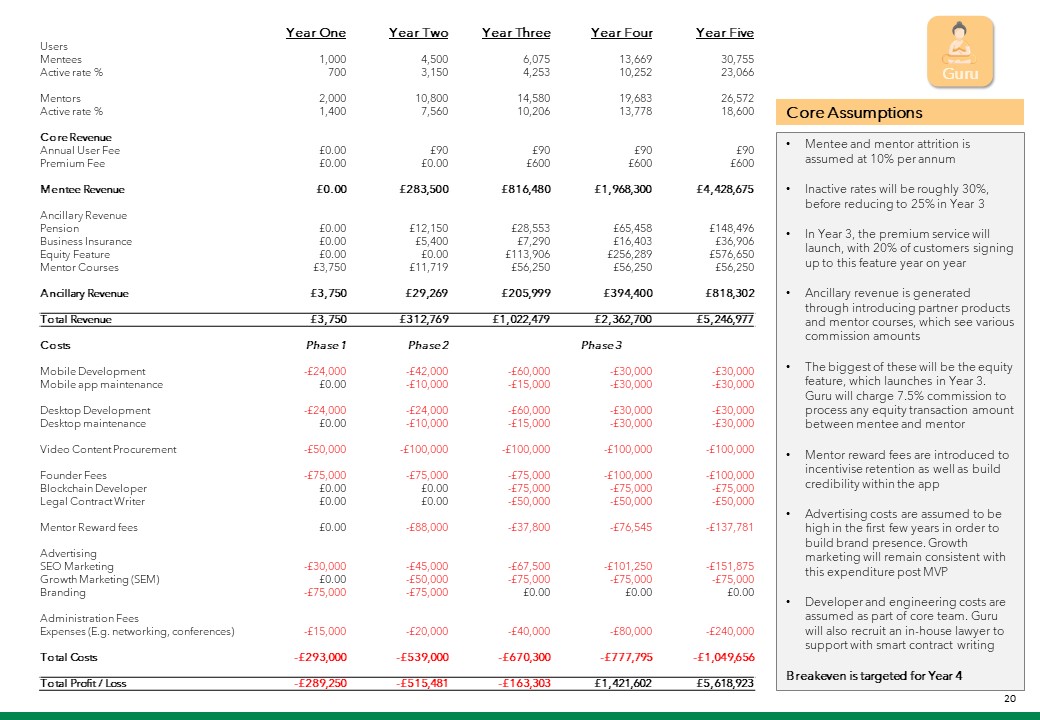
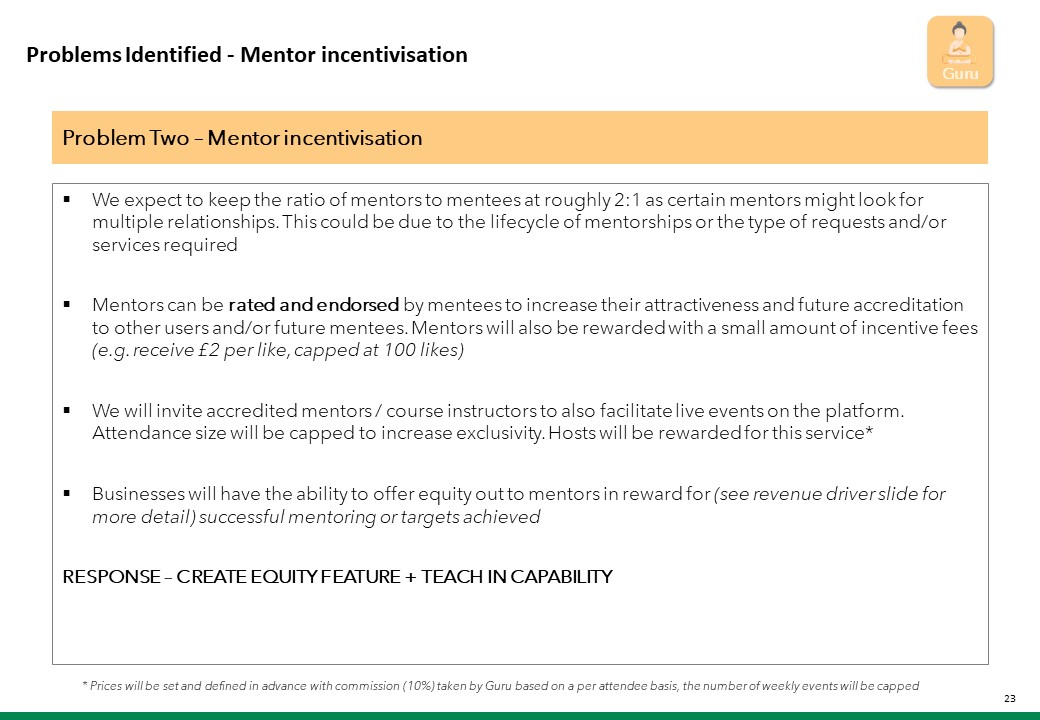
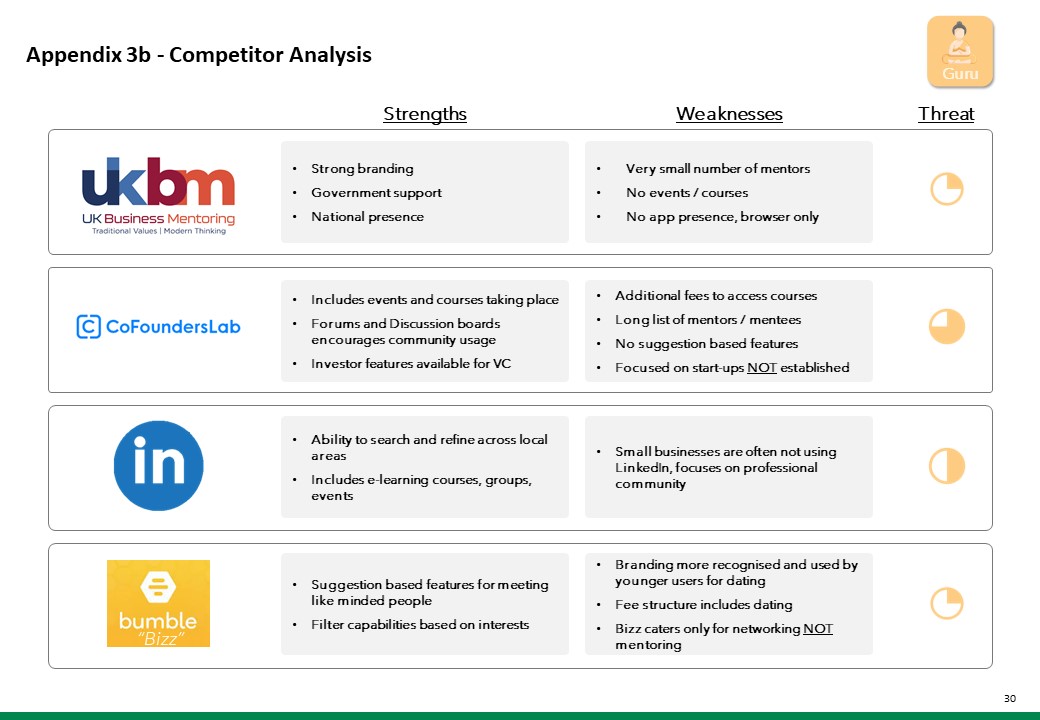
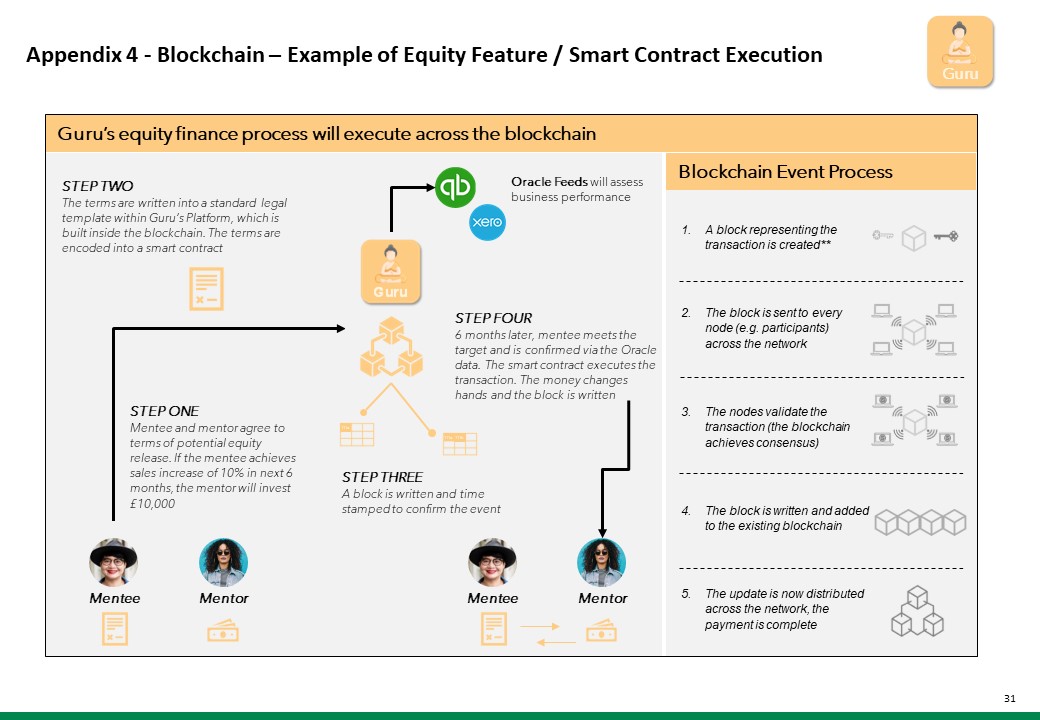
Guru follows similar principles to dating apps in that it suggests compatible users. However, if mentees match then will they simply leave the app? My initial thoughts were to build an ecosystem into the platform, embedding courses and videos as well as introducing partner products like insurance and pensions. Additionally, it's important to incentivise mentors. This is solved for by allowing accredited mentors to run courses and be rewarded with the fees. As the proposition expands, the platform would also build an equity feature allowing mentors to be rewarded and/or look to invest. This would be facilitated on the platform using blockchain technology (for more on this see submission document).
Accomplishments that we're proud of
I have had this idea in my head for a number of years so I'm proud that this hackathon gave me the proverbial "kick up the backside" to put this idea on paper.
What we learned
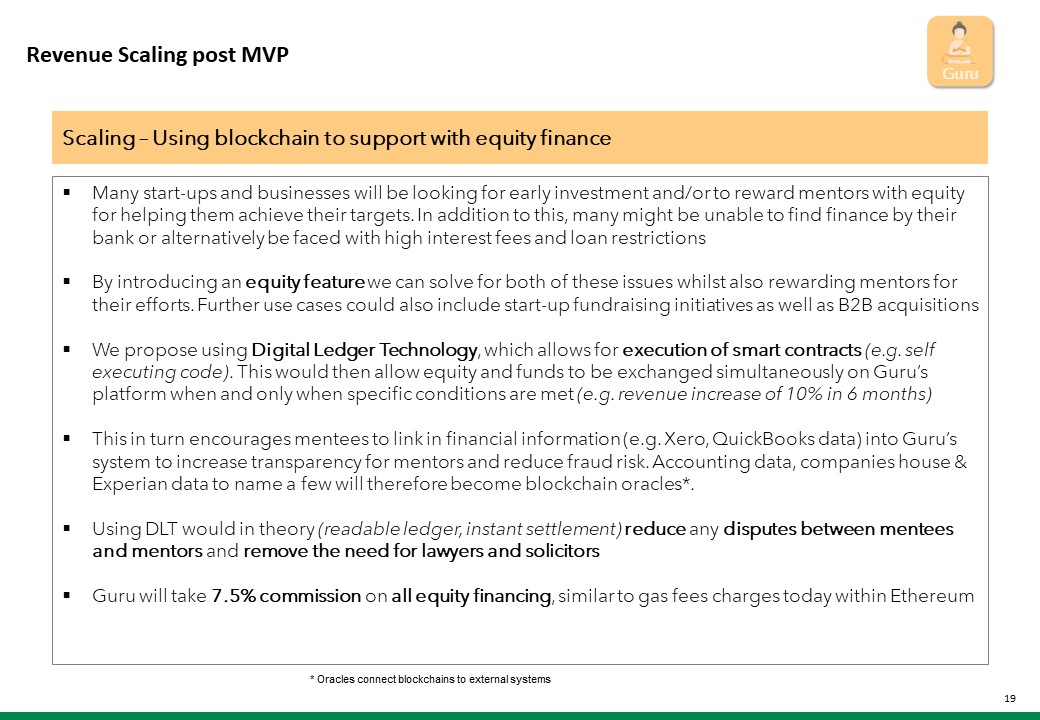
Using blockchain to release equity / transfer of ownership could revolutionise small business financing / fundraising. Smart contract capability could be built inside legal documentation to agree instantaneous release based on certain conditions agreed by both parties e.g. release equity investment once business hits certain target. This data could be corroborated from audited financial accounts, which would become the Oracle feed in this instance.
What's next for Guru
Firstly i'd really like to share this idea out amongst the Hackathon and to friends and family to get feedback. Is this really a feasible idea? Next i'd like to refine my assumptions into more detail and see how viable would this be. Finally, i'd like to interview potential users to see if there is interest in something like?
Thank you for reading and I hope you enjoy the presentation
Dan


Log in or sign up for Devpost to join the conversation.