-
-
Logo
-
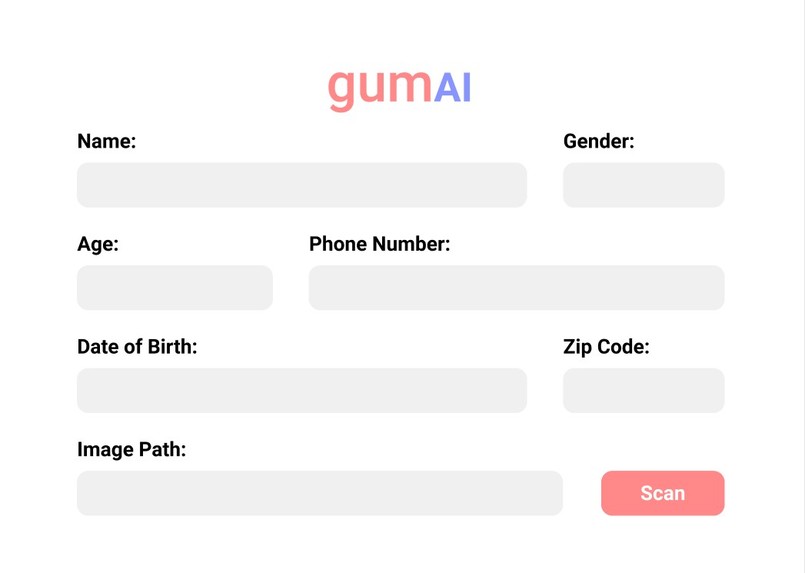
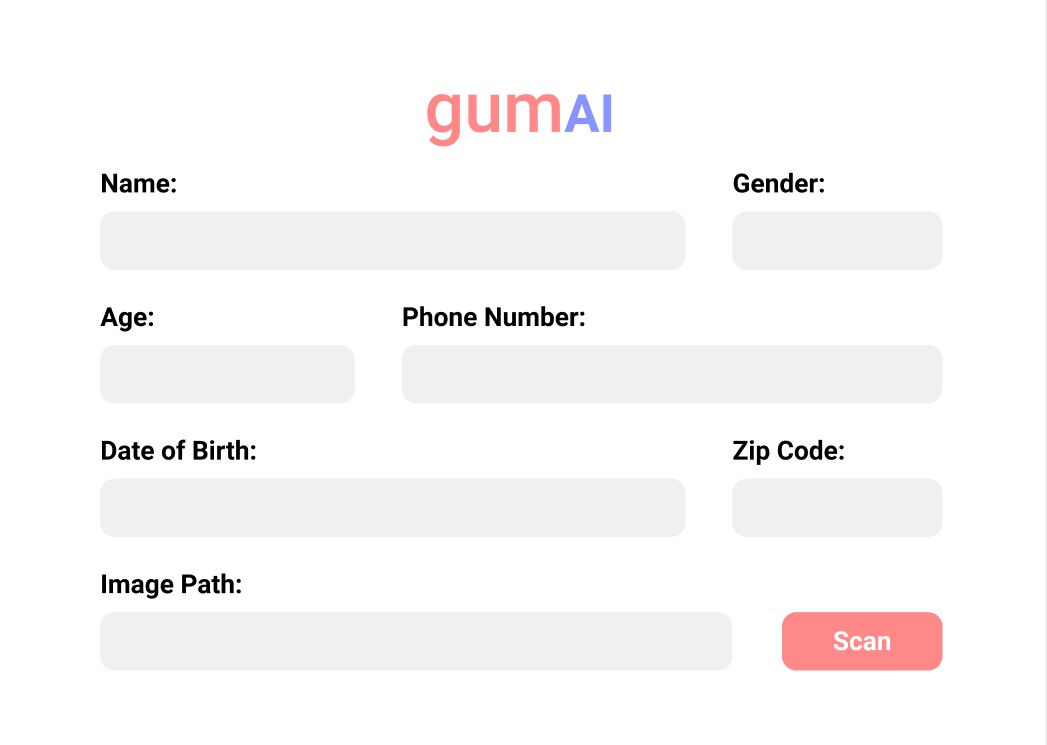
Initial data entry screen for the gum.AI interface.
-
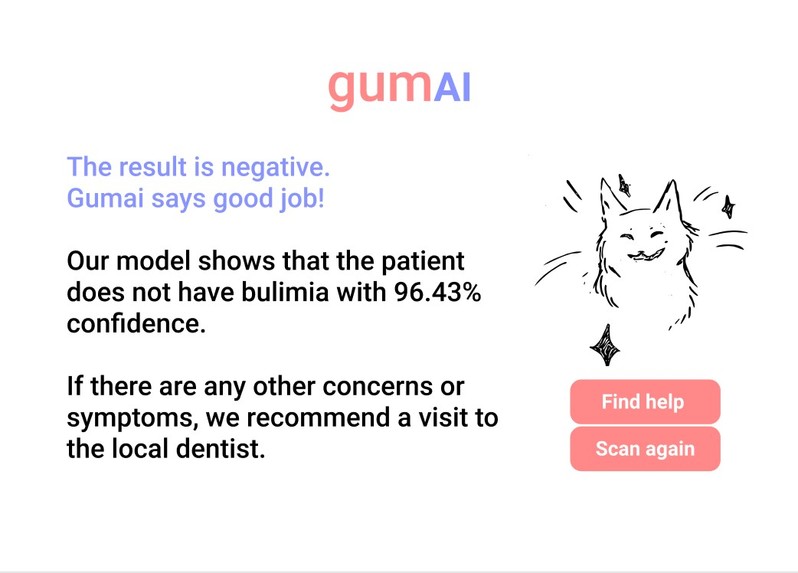
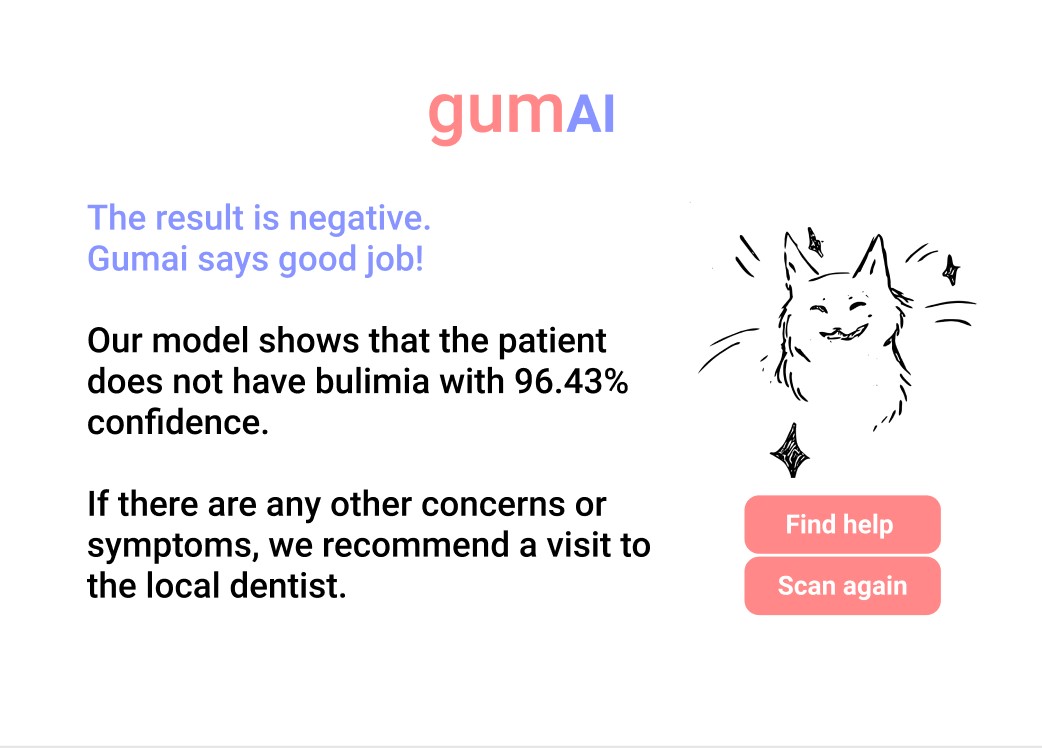
A negative result, indicating that the patient is healthy.
-
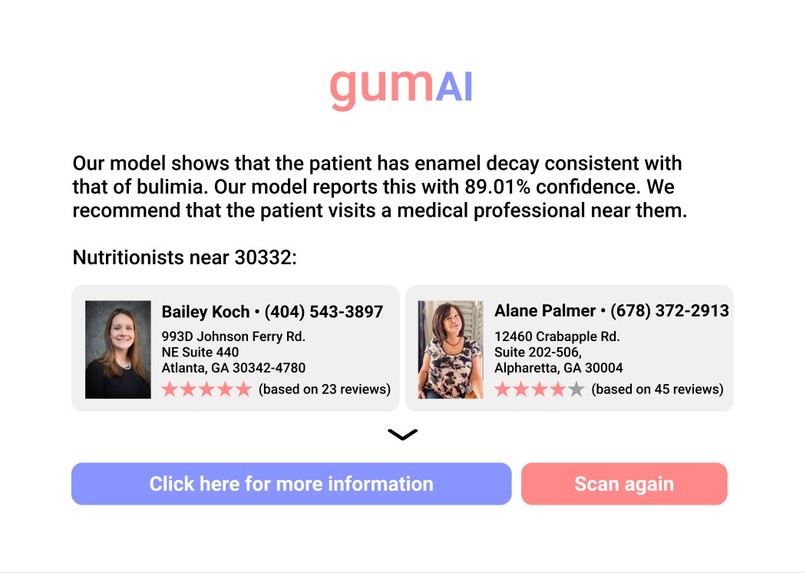
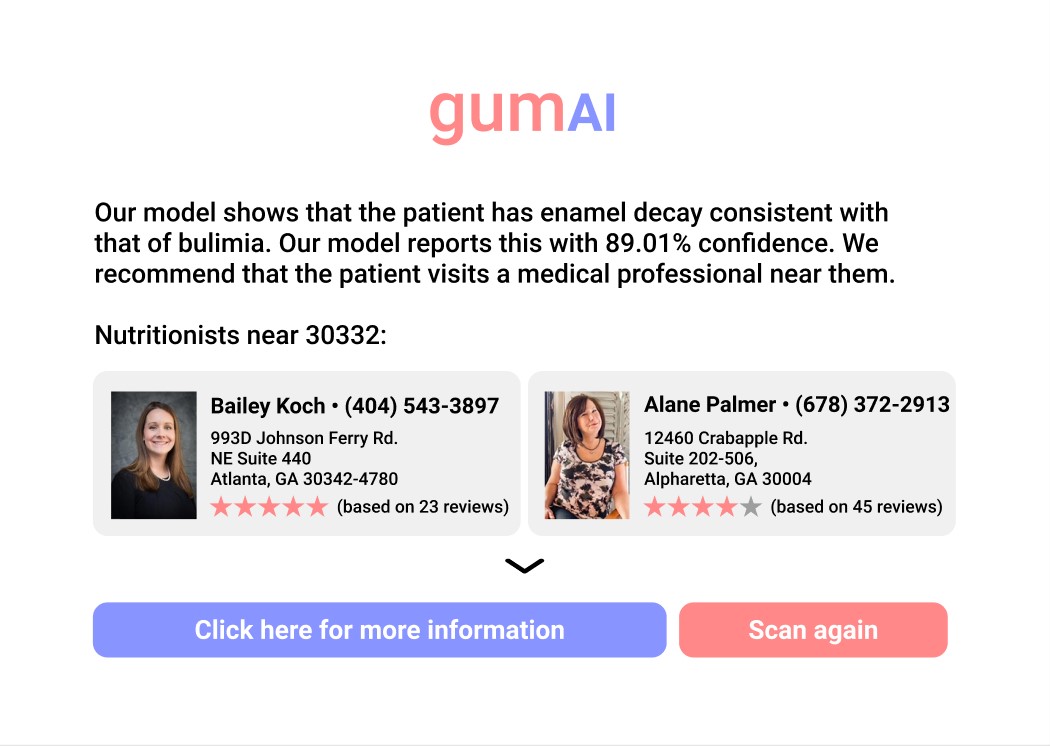
A positive result meaning that the computer vision model detected symptoms consistent with bulimia.
Inspiration
We wanted to help change the outcomes of people who are struggling to manage certain aspects of their lives, especially when it comes to disadvantaged communities. Furthermore, we wanted to implement computer vision in a way that was exciting and innovative. Finally, we wanted an app with cute animals in it. So, we thought of gum.AI; a fun way to use computer vision to see the quality of your teeth and get people interested in their dental hygiene, an issue that affects millions of people every day. gum.AI also includes a cute cat mascot, Gumai. Gumai reports your results to you, and celebrates when your teeth look healthy.
What it does
Our app is meant to help its users manage their dental hygiene by allowing them to take a picture of their mouths to get a very basic report back on the quality of their mouth’s health. For this hackathon, we picked a disease--in this case, bulimia--as a proof of concept for detecting specific illnesses. Our app intakes a picture of someone’s mouth and reports whether or not they have bulimia.
How we built it
Our app used Python and TensorFlow with (name of packages) to develop the CV model. We developed our frontend with Figma.
Challenges we ran into
Our project and its scope had to be adjusted numerous times throughout the process. Developing iteratively is obviously not an option during a hackathon, so issues were harder to anticipate and we had to act quickly when we realized we were faced with an insurmountable problem.
We came into a hackathon looking for a crash course in new skills--and we definitely got this--but despite our backend coding expertise, our lack of frontend experience served as a significant roadblock, especially as we were starting out. We began to think we may not even develop a front end. Looking back, it is great we were able to find ways around our issues and still achieve our original goal.
Accomplishments that we're proud of
We have achieved a very good accuracy on our computer vision model; it detects bulimia with 99% accuracy. We believe we can do even better with marginally more data.
For the amount of time we had, we are pleased with our front end; we believe it is concise, visually appealing, and lends itself to ease of use.
Gumai is great and we are very pleased to have a cute animal mascot.
What we learned
All team members were exposed to front-end development, which was very new for all of us. We explored many different possibilities for creating a front end for our model, and learned so much about the pros and cons to different frameworks and factors that go into deciding things like whether to make an app or website. Essentially, all of our team members got a crash course in front end development.
Half of our team was new to computer vision, so we got excellent exposure to how CV models work and are trained. Most notably, we observed the powerful impacts that even marginally different training datasets have on the quality of our model.
What's next for gum.AI
gum.AI has proven that it is not just viable, but fairly straightforward to make a basic CV algorithm which checks for the dental health of its users. In the future, instead of just checking for one arbitrary illness, gum.AI can be taught the differences between a whole host of dental ailments and raise red flags to the user in case it sees any issues. Gumai’s purpose is to help people generally maintain their teeth, so it could even potentially also send notification reminders to brush one’s teeth or give suggestions on improving dental care based on the recent images sent in. We believe gum.AI has real potential to help people establish routines and become very dedicated towards maintaining the health of their mouths and teeth.


Log in or sign up for Devpost to join the conversation.