-
-
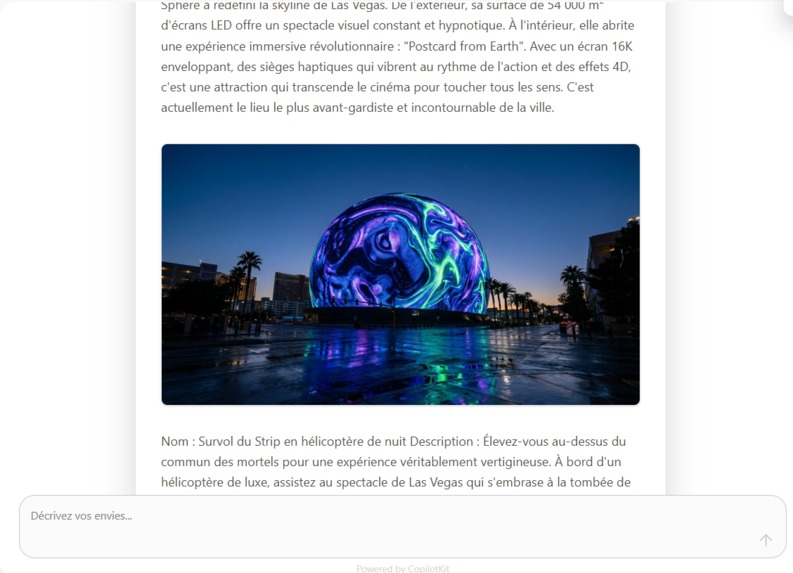
Place to visit presentation with text and image in one go
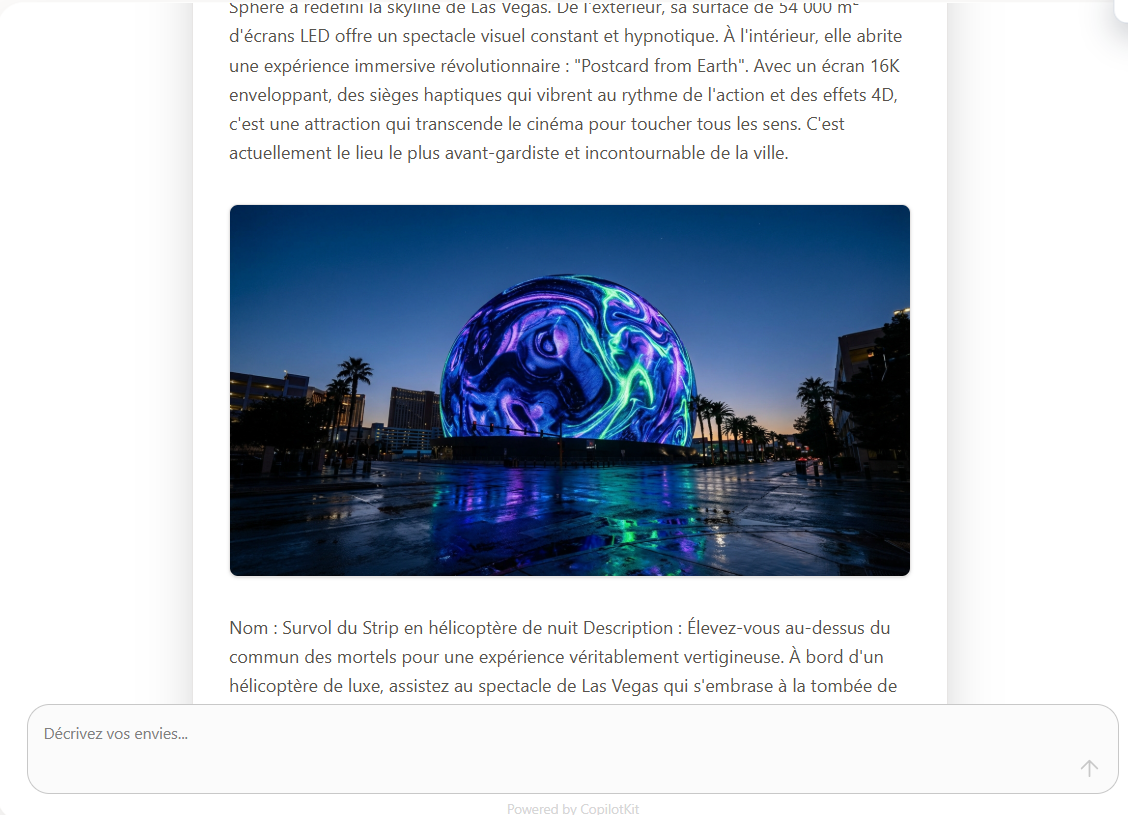
Guido — AI Cognitive Travel Concierge
Inspiration
Travel planning is often a logistical burden that detracts from the magic of discovery.
We envisioned a “Cognitive Concierge” — an agentic system that doesn't just list destinations but visually stages them.
Our goal was to create an immersive pre-trip experience where AI acts as a digital scout:
- Finding hidden gems
- Illustrating them in real time
- Bridging the gap between imagination and departure
Instead of browsing dozens of travel websites, users receive a curated digital travel magazine generated instantly by AI.
What It Does
Guido is an AI-powered travel consultant that transforms natural language queries into a high-fidelity interactive digital magazine.
It can:
- Research authentic travel locations using live web data
- Generate cinematic photography matching the user's aesthetic
- Drive a dynamic React interface
- Turn a static chat into an Agentic UI
The interface evolves dynamically based on what the AI agents discover.
How We Built It
Multi-Agent Architecture
We implemented a multi-agent orchestration system using:
- Google Agent Development Kit (ADK)
- CopilotKit
Intelligence Layer
Orchestrated via:
SequentialAgentParallelAgent
The Agents
The Researcher
A guide_agent using Google Search Grounding to ensure:
- factual information
- up-to-date local insights
- real-world locations
The Visualizers
Parallel agents using:
gemini-3.1-pro-image
They generate:
- high-resolution photography
- architectural imagery
- lifestyle visuals
- consistent cinematic aesthetics
The Editor
A guide_redactor agent that:
- aggregates all outputs
- synthesizes multimodal results
- outputs structured data in a strict JSON schema
Frontend
The UI is built using:
- Next.js
- React
It implements the A2UI protocol (Agent-to-UI) v0.9, allowing the AI agent to:
- control frontend components
- dynamically modify the interface
- transform responses into structured UI elements
This enables the shift from chat interface → agent-driven UI.
DevOps & Infrastructure
Dependency Management
- uv for high-speed Python dependency resolution
Deployment
- Google Cloud Run
Asset Storage
- Google Cloud Storage (GCS)
Used for:
- hosting AI-generated images
- persistent asset delivery
Challenges We Ran Into
Protocol Synchronization
Aligning schemas between:
- Python Pydantic
- React Zod
during the migration to A2UI v0.9.
Even small mismatches caused UI crashes due to invalid streaming data.
Model Versioning Latency
We encountered 404 NOT_FOUND errors due to the rapid evolution of the Gemini 3 API.
Solution:
- built a dynamic model-mapping layer
- automatically resolves v1beta → v1 endpoint transitions
Artifact Visibility
AI-generated images initially streamed as base64 strings, which caused instability.
Solution:
- implemented custom middleware
- registered images as ADK Artifacts
- served via authenticated persistent URLs
Accomplishments We're Proud Of
Latency Optimization
We parallelized:
- research
- visual generation
This drastically improved:
Time to First UI Render
The system feels responsive despite heavy AI workloads.
Seamless State Management
Successfully propagated:
- API keys
- service accounts
through a secure .env pipeline to Google Cloud production infrastructure.
Visual Coherence
We engineered a shared style constraint injected into every visual agent.
Result:
- consistent editorial look
- cinematic visual identity
- magazine-style image cohesion
What We Learned
The Power of Agentic UI
AI is evolving beyond chat interfaces.
Agents that control UI components directly provide:
- better usability
- clearer results
- richer experiences
Infrastructure Reliability
We learned that the plumbing matters as much as the AI.
Switching to:
- uv
- GCS
significantly improved stability.
Grounding Is Non-Negotiable
For travel applications:
ungrounded generation is dangerous.
Google Search Grounding ensures:
- real locations
- current availability
- factual data
Without it, hallucinations would break the experience.
What's Next for Guido
Native Video Integration
Integrating Google Veo to generate:
- cinematic 4K travel clips
- immersive destination previews
MCP Expansion
Implementing Model Context Protocol (MCP) to access:
- user calendar
- past travel history
- preferences
This enables hyper-personalized itineraries.
Voice-First Mode
Using Gemini Live Mode to enable:
- real-time voice conversation
- dynamic UI updates while speaking
Users will plan trips hands-free while watching the UI evolve visually.

Log in or sign up for Devpost to join the conversation.