-
-
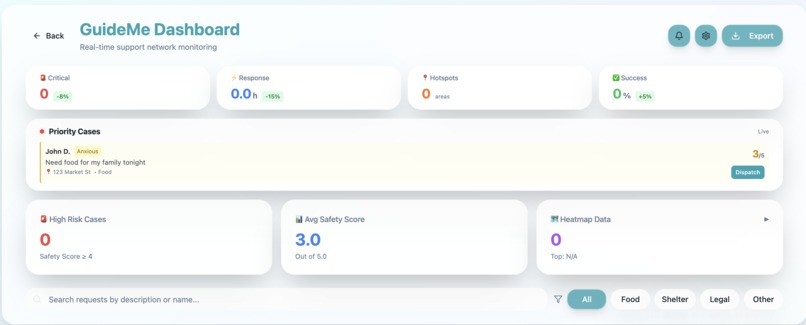
Organization Dashboard
-
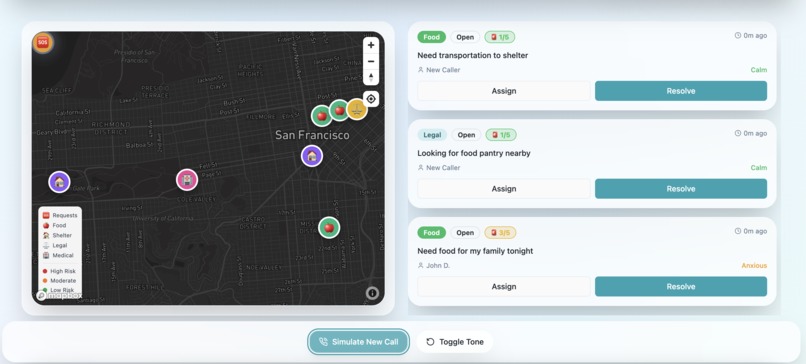
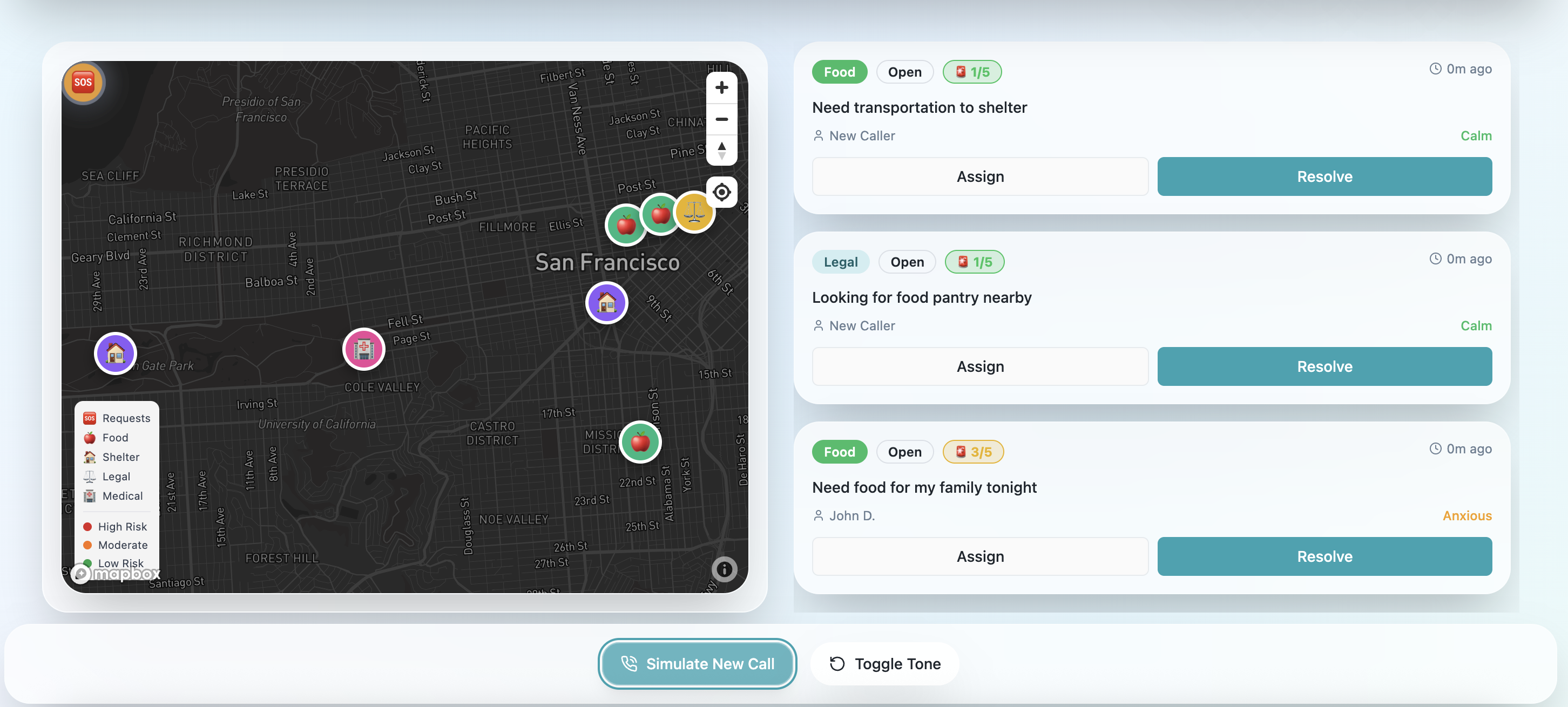
Live Map and cases
-
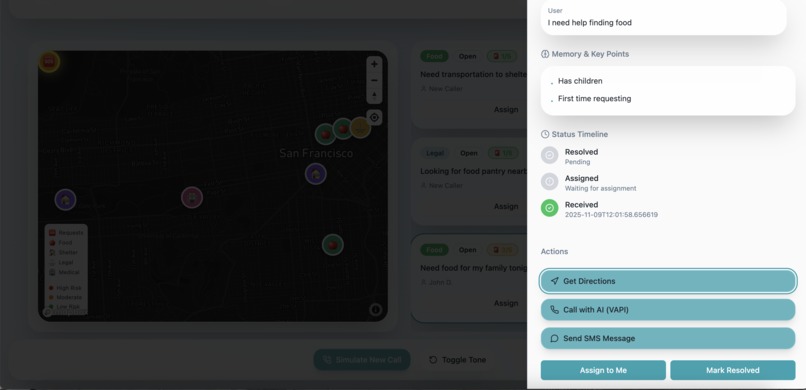
More info for each case


Inspiration
GuideMe was inspired by a simple but painful truth: when someone is homeless or in crisis, they rarely need information — they need guidance, care, and a voice that treats them like a human being. During research, I learned how often people experiencing homelessness feel invisible, forgotten, and forced to repeat their trauma to strangers who never remember them. That emotional weight made me want to build something that doesn’t just respond, but remembers, follows up, and genuinely cares.
What it does
GuideMe is an AI-powered support system that helps individuals in need find nearby food, shelters, and essential services with empathy and clarity. It provides personalized guidance, remembers past conversations, assigns a safety risk score, and can dispatch volunteers when urgent help is needed. It also performs 24–48 hour follow-up calls to check on users, ensuring they are supported beyond the first interaction.
How we built it
GuideMe combines AI voice technology, geolocation, and compassionate design. We built an AI calling agent that uses a Memory Engine to store important details for personalized continuity of care. A Safety Scoring Model evaluates risk based on factors such as weather, time of day, and distress levels. We integrated volunteer matching logic for urgent support and created a data system to generate heatmaps showing high-need areas. The goal was to make the experience feel human, caring, and reliable.
Challenges we ran into
One of the major challenges was designing an AI that speaks to people in crisis with the right balance of empathy and clarity. Ensuring safe, accurate suggestions was critical — a wrong shelter or time could put someone at risk. Another challenge was preventing the AI from sounding robotic or transactional; we had to iterate on tone, pacing, and conversation flow to make it truly feel comforting. Emotionally, it was difficult to confront the reality of how many people feel unseen every day.
Accomplishments that we're proud of
We’re proud that GuideMe doesn’t just answer people — it remembers them. Building a system that shows continuity of care, follows up, and recognizes someone’s past struggles is a meaningful step toward dignity-based support. Creating a safety-first design, not just a tech tool, is something we value deeply.
What we learned
We learned that empathy in AI is not a feature — it’s a design discipline. Tiny details like tone, silence, reassurance, and choice of words can make a huge difference. We also learned how to combine AI tools, data signals, and real-world safety logic to create a system that is both helpful and human-centered. Most importantly, we learned that technology becomes powerful when guided by compassion.
What's next for GuideMe
Next, we aim to expand GuideMe beyond crisis support into long-term stability pathways. This includes adding mental-health micro-support, partnerships with shelters and NGOs, multi-language support, and an SMS/offline mode for those without phone minutes or data. Our goal is to make GuideMe a nationwide companion that walks beside people on their journey from crisis to safety — and eventually, to stability.
Built With
- and
- eudiaai
- express.js
- gemini-api
- google-gemini
- google-maps
- javascript
- node.js
- vapi

Log in or sign up for Devpost to join the conversation.