-
-
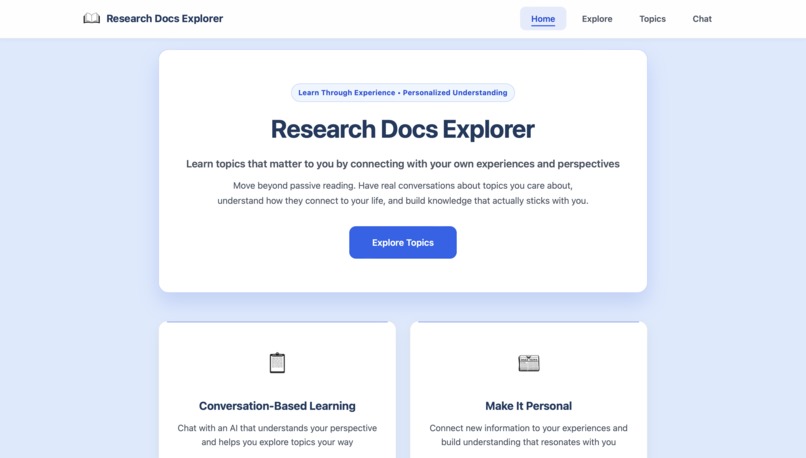
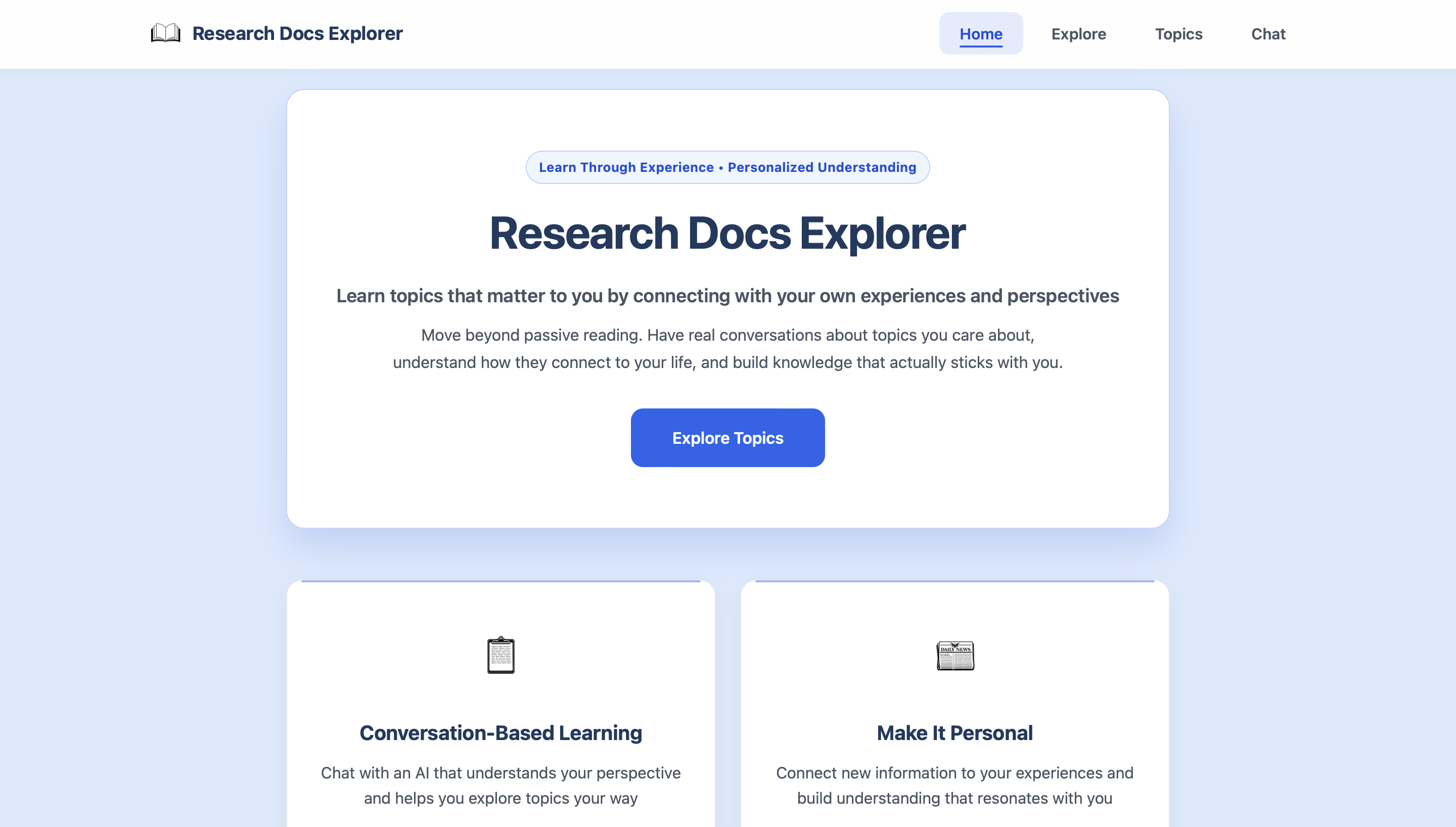
Home page
-
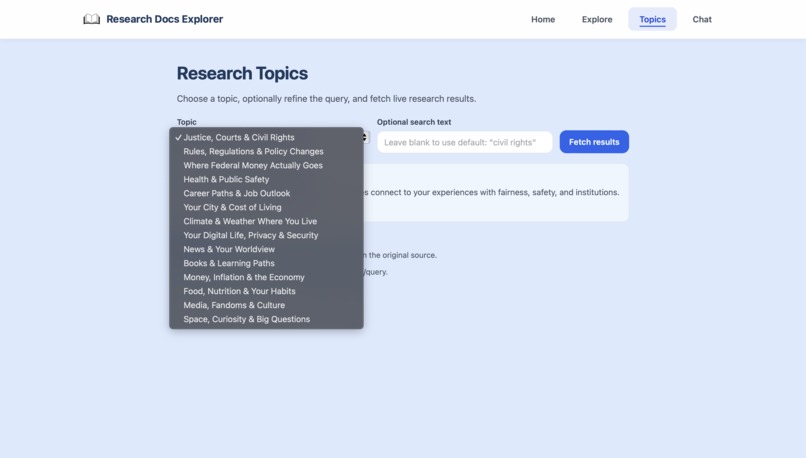
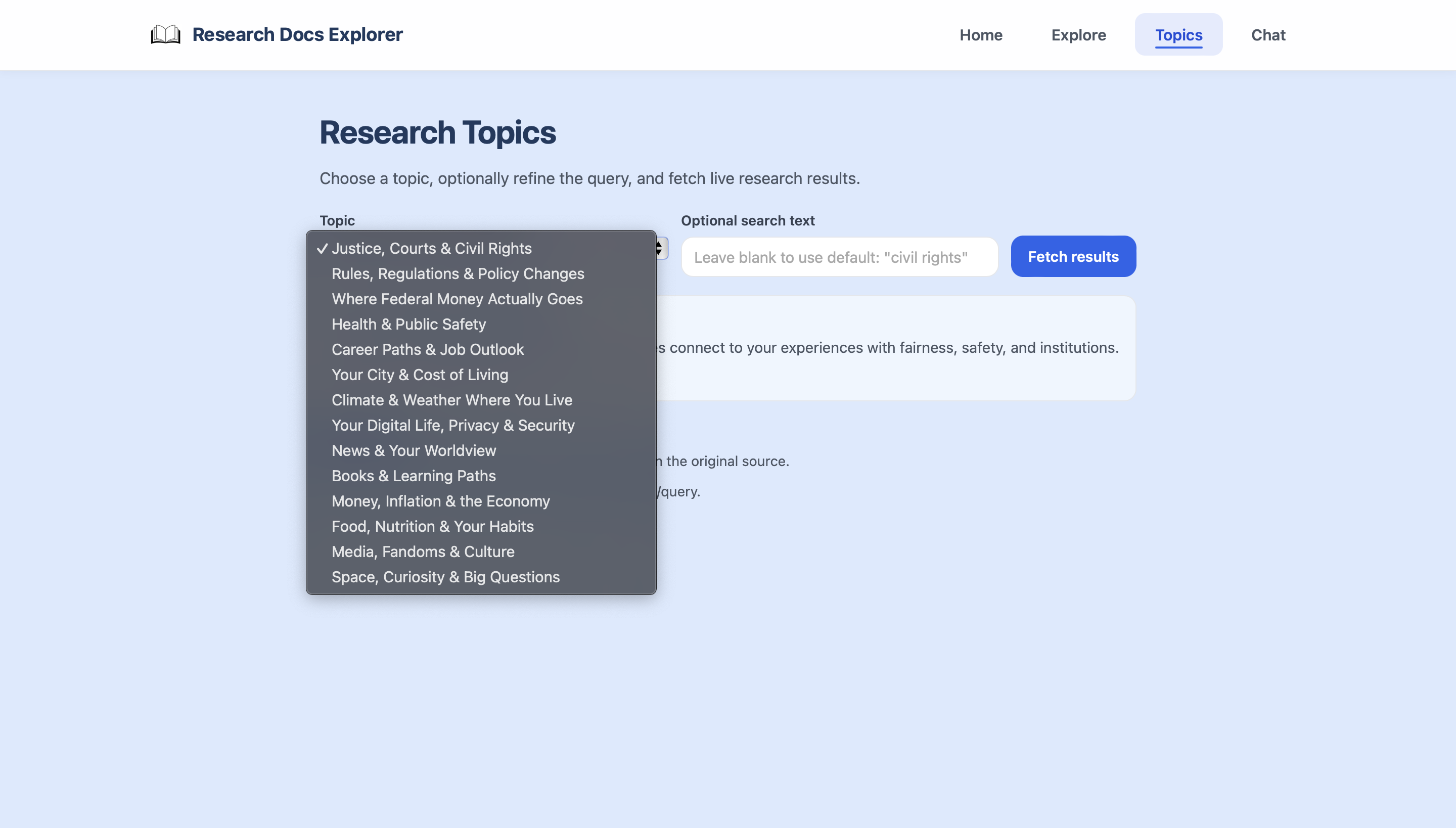
Guided topic search
-
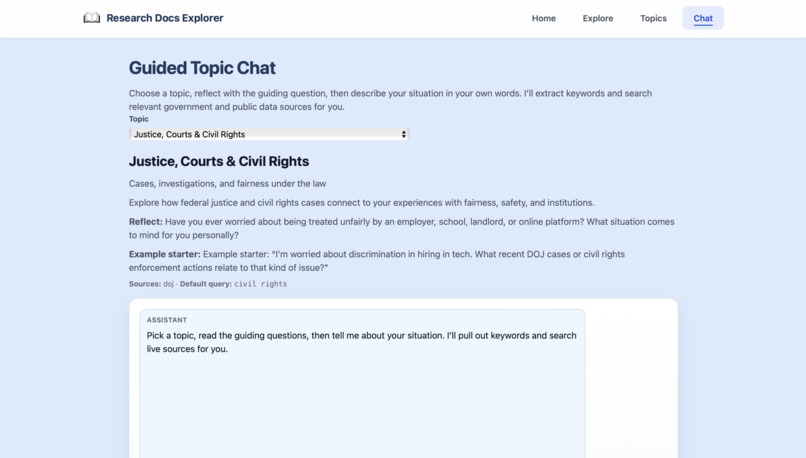
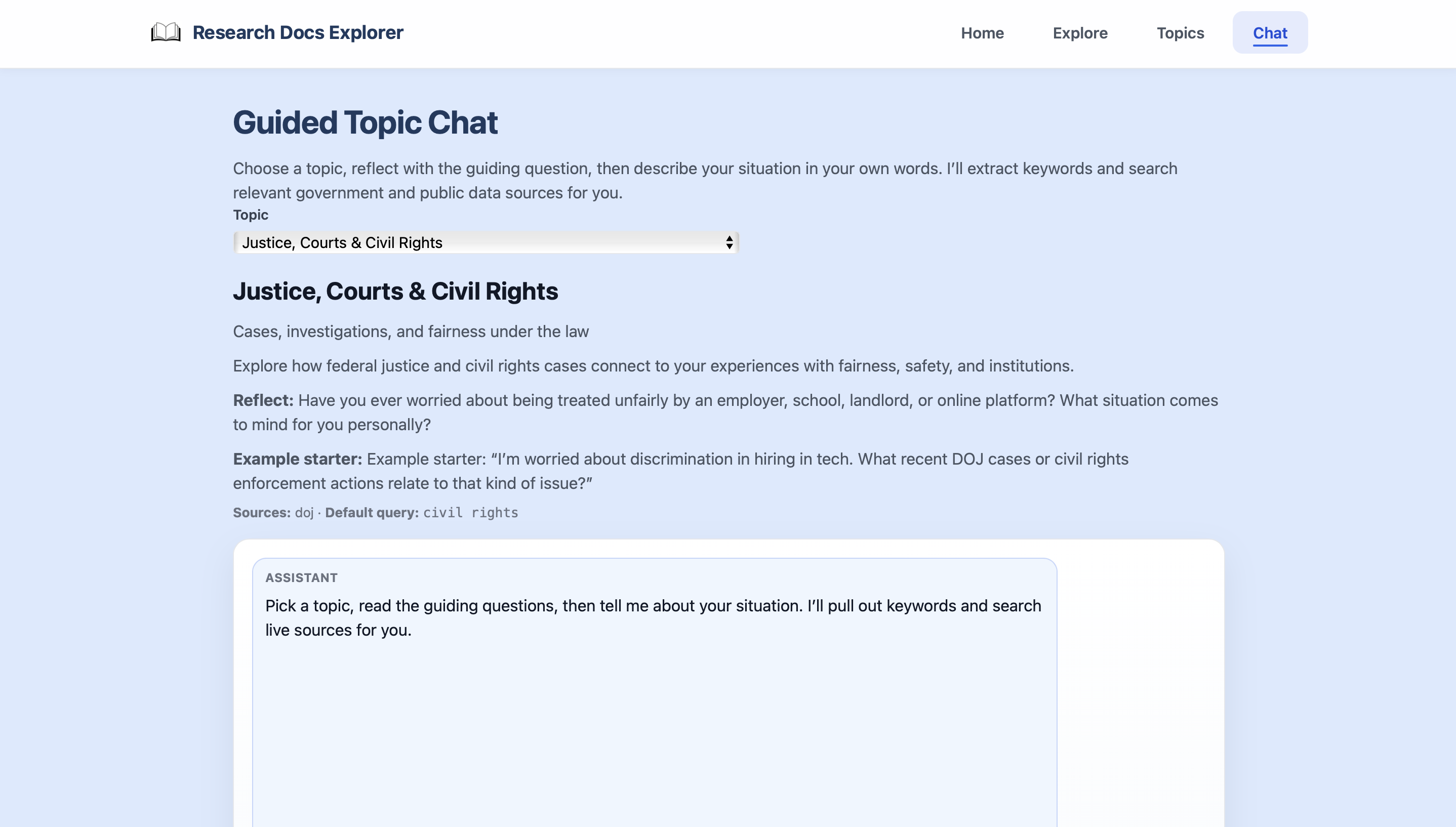
Guided topic chatbot
Inspiration
Most people don’t struggle with access to information--they struggle with asking the right questions. While search engines and chatbots may return answers, they don’t teach users how to refine a question, identify meaningful keywords, or dig deeper into a topic beyond surface-level curiosity. With the development and release of OpenAI in 2022, it is clear that students have a different definition of learning compared to 10 years ago. While students may rely on AI heavily, even adults find themselves turning to this source of unreliability. Our project, the Guided Topic Explorer, solves this issue of dependence.
What it does
We built an intelligent research assistant that actively teaches prompt engineering and effective search strategies while delivering relevant information from trusted APIs. Instead of just returning results, our tool:
- Extracts and highlights high-value keywords from user input
- Guides users to refine their searches using better phrasing
- Encourages deeper, more analytical questioning
- Connects queries to reliable data sources through interchangeable APIs
How we built it
Using AWS, we developed a search feature and chatbot that parses through real research information to give informed answers to personal questions. On the frontend, users select a topic (e.g., justice, public health, economic data, climate, etc.). Behind the scenes, each topic dynamically connects to different APIs, such as government databases, public research repositories, statistical datasets, and news and official publications. This modular design allows us to scale easily by swapping or adding APIs per topic without redesigning the system. That means the platform isn’t tied to one niche, but is a framework for intelligent research across domains. When a user enters a phrase like, “I just experienced a hurricane last week", the system doesn’t just search that exact sentence--it extracts meaningful keywords such as hurricane, natural disaster, damage, emergency response, and region. This teaches users how powerful refined keywords can be--a core concept in prompt engineering. Over time, users begin thinking more intentionally about how they phrase questions. Lastly, the chatbot isn’t just reactive. It is designed to prompt insightful follow-ups such as:
- “Are you interested in economic impact, emergency preparedness, or climate trends?”
- “Would you like local data or national policy responses?”
- “Are you researching this academically or personally?” This shifts the experience from simply giving information to exploring topics more intelligently, encouraging curiosity beyond surface-level questions.
Challenges we ran into
We began our project with a larger scope in mind, and ended up needed to narrow it down to a specified list of topics. Following this challenge, we spent time considering the trade-offs between having an Amazon Bedrock knowledge base and using API retrieval.
Accomplishments that we're proud of
We accomplished narrowing down the abundance of information that the chatbot was taking in from the APIs, enabling extraction of the most vital research to provide the best and most relevant resources to the user. Additionally, creating this project from scratch, compressing the entirety of the software development life cycle, and using AWS in a high-pressure environment and short time period was a challenge that we overcame.
What we learned
We learned that we should begin developing our project with a smaller scope, keeping in mind that we can always expand in the future. Additionally, bringing together a team that did not previously all know one another taught us valuable teamwork lessons that will be extremely vital as we enter professional settings.
Built With
- amazon-web-services
- apis
- bedrock
- claude
- gateway
- iam
- lambda
- node.js
- react
- s3


Log in or sign up for Devpost to join the conversation.