-
 GIF
GIF
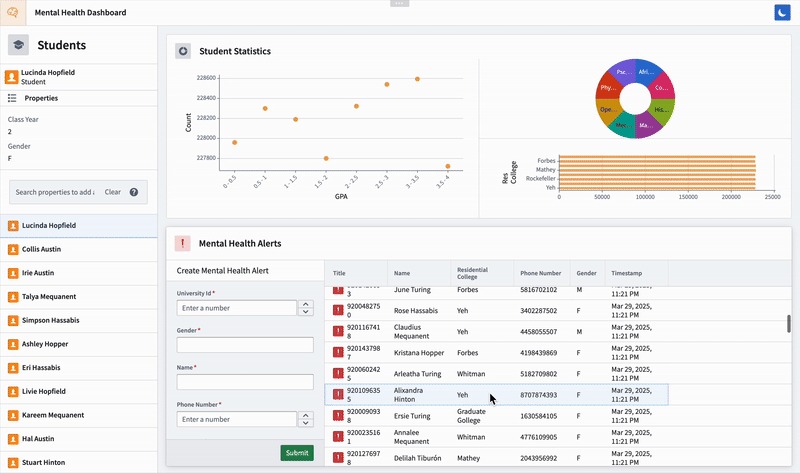
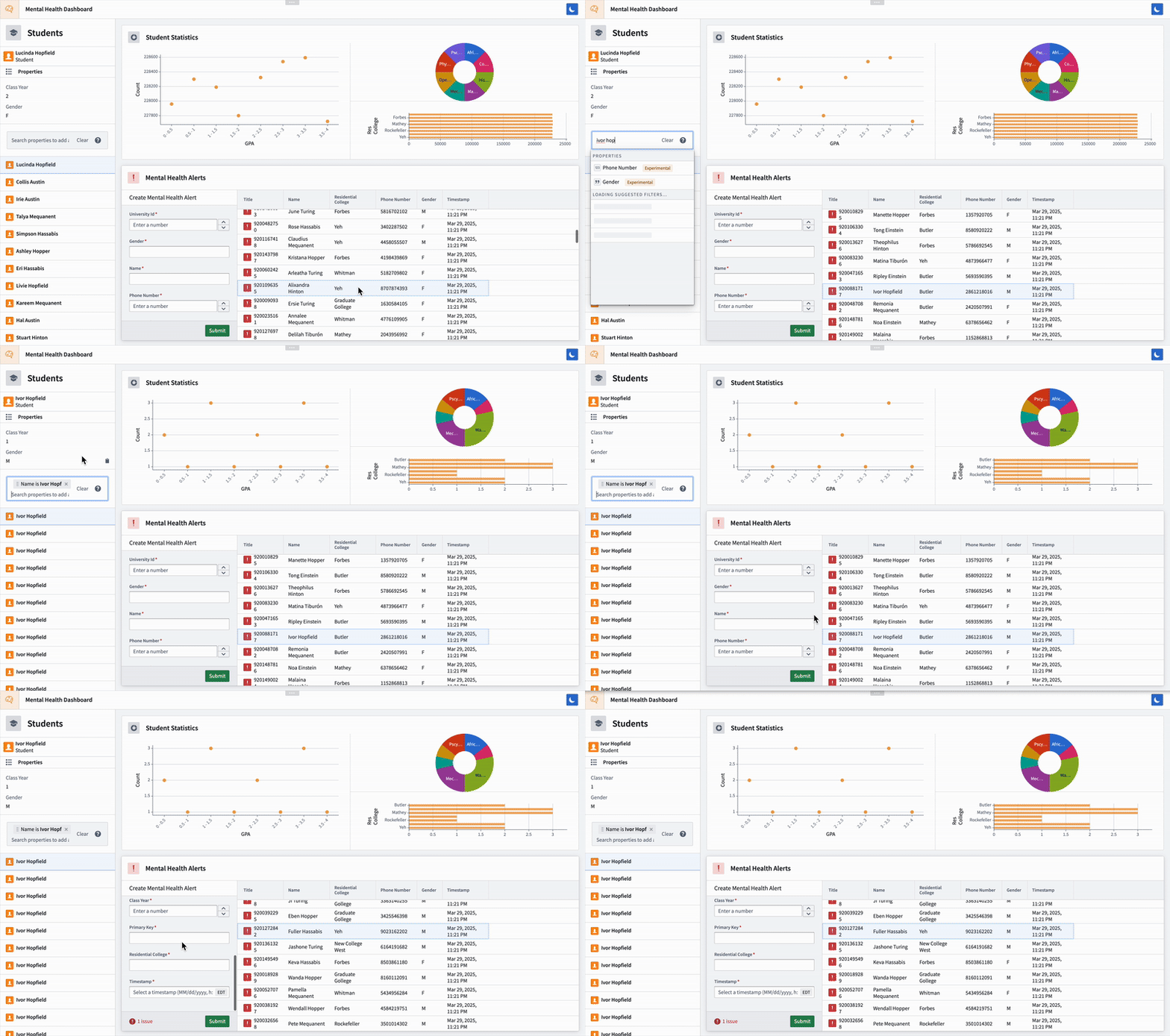
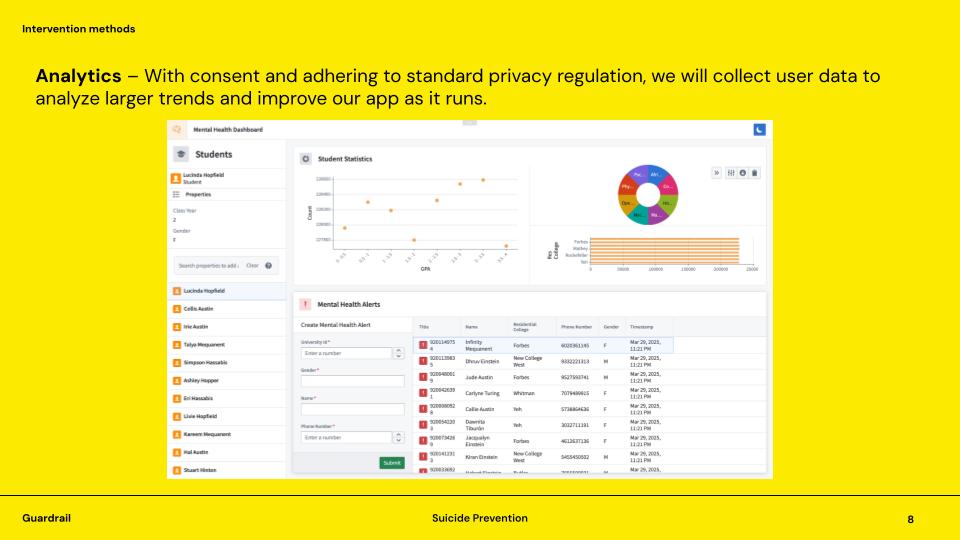
Demo of Dashboard
-
 GIF
GIF
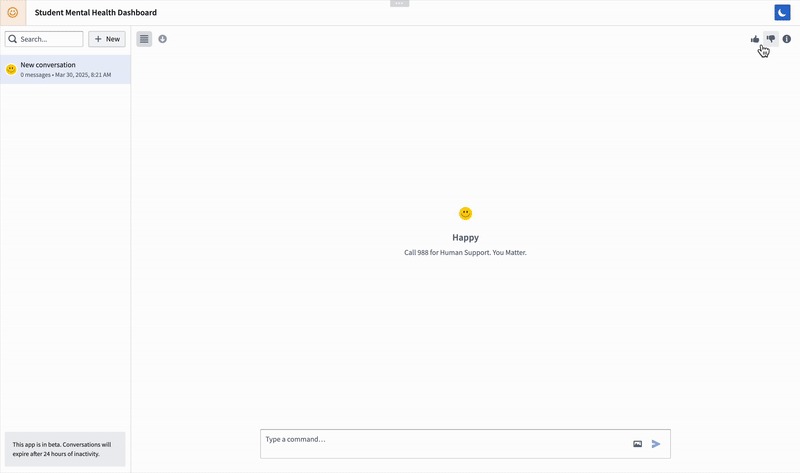
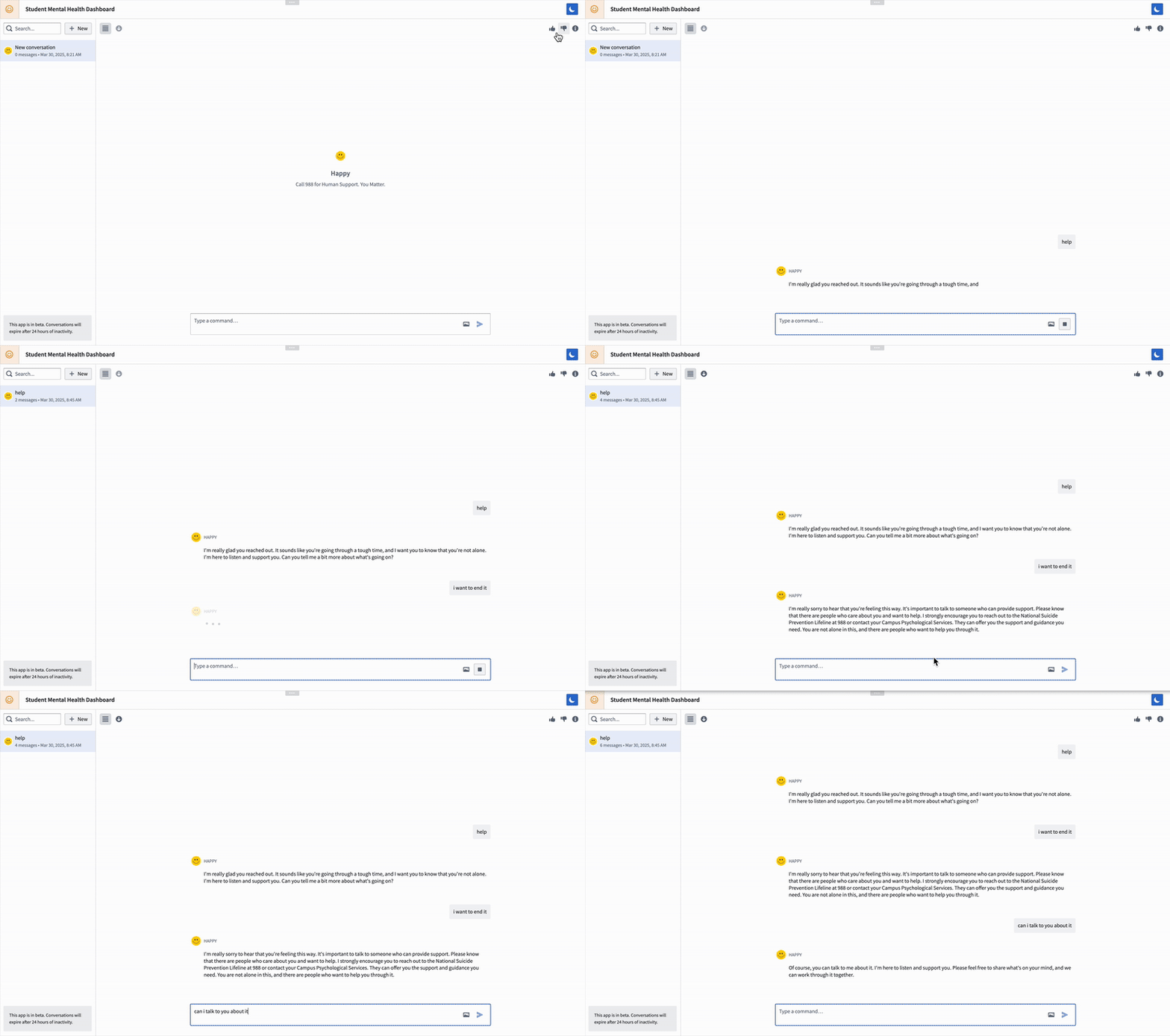
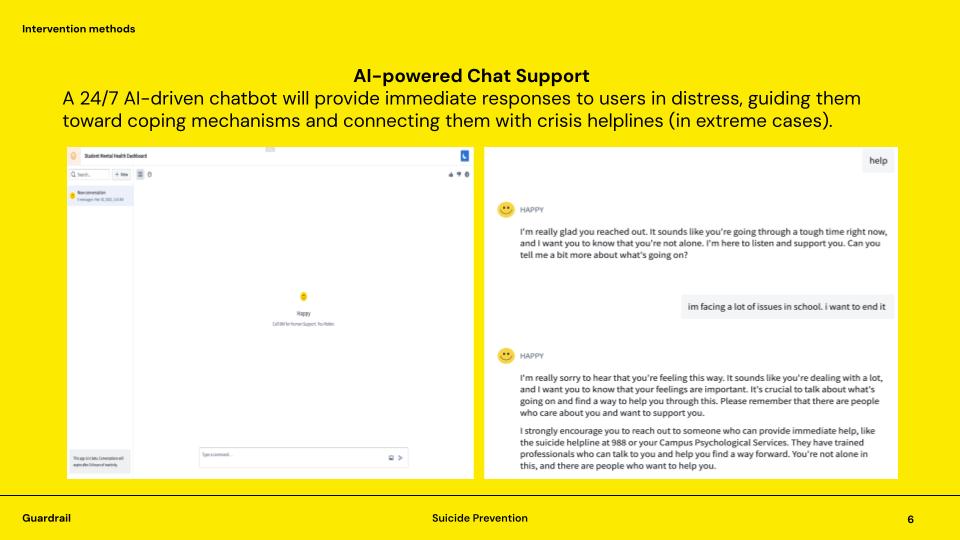
Demo of Chatbot
-

-
-
-
-
-
-
-
-
-
-

-
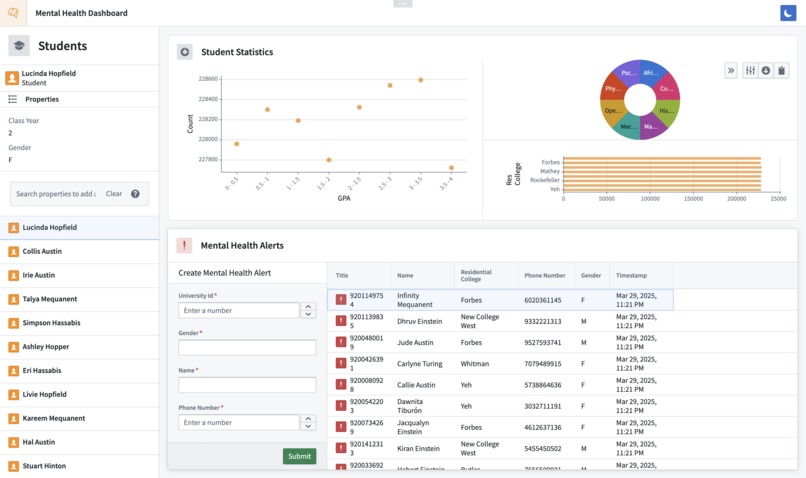
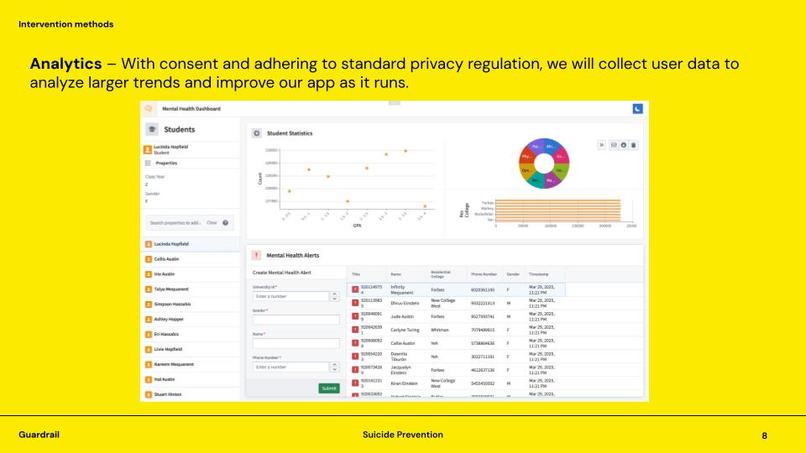
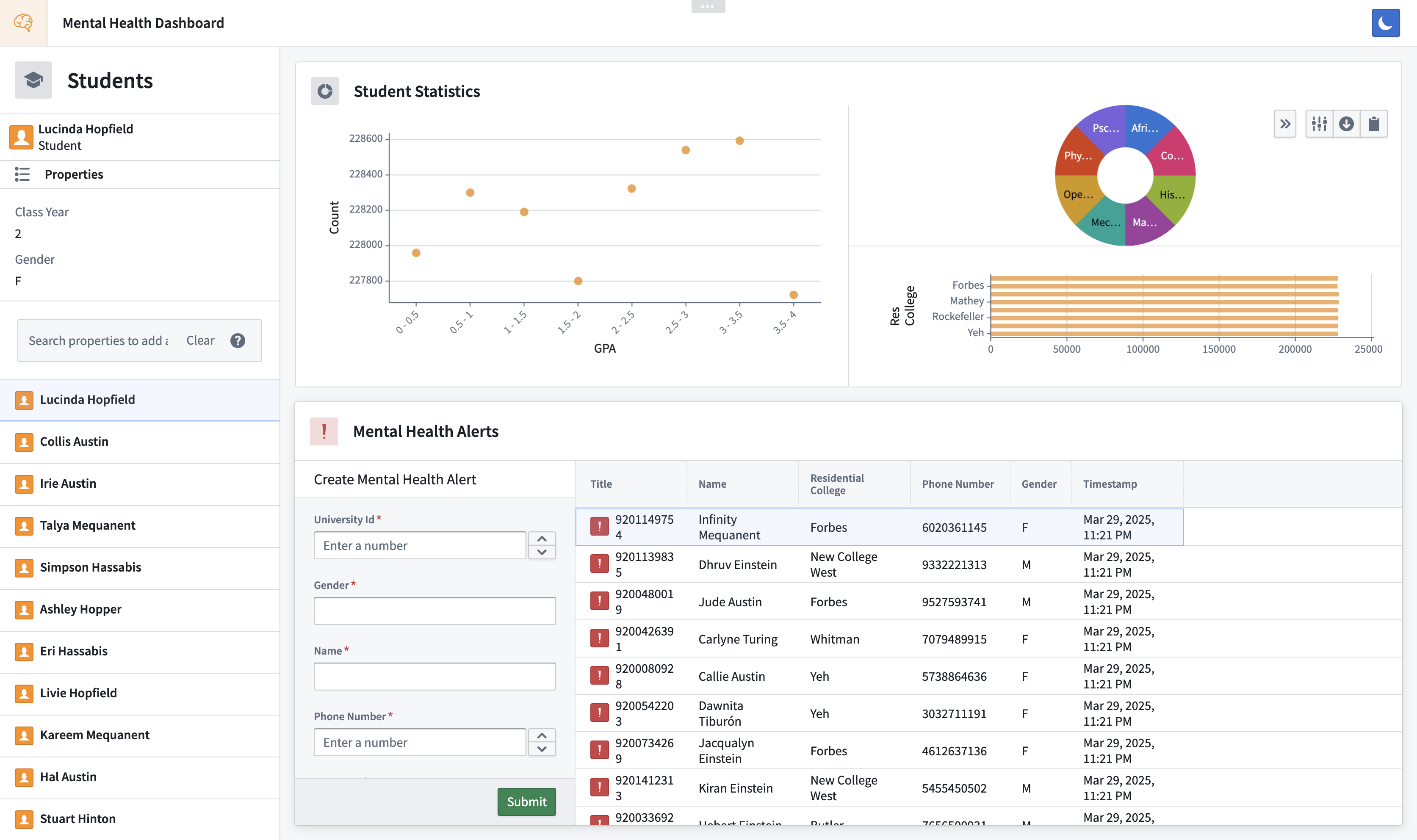
Administrator Dashboard; Accessible to Campus Psychological staff to identify students in need.
-
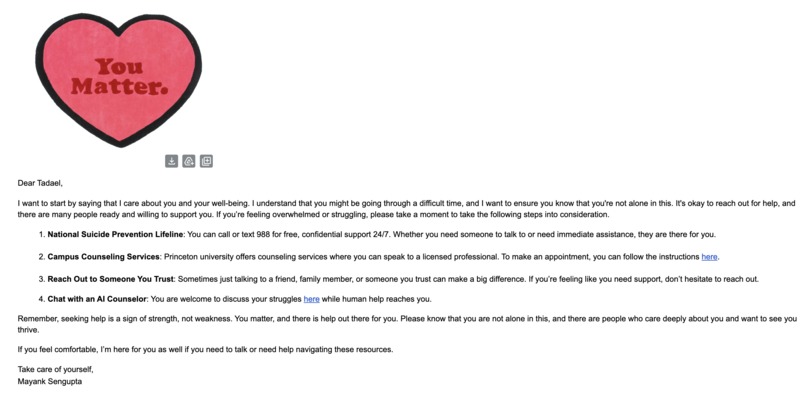
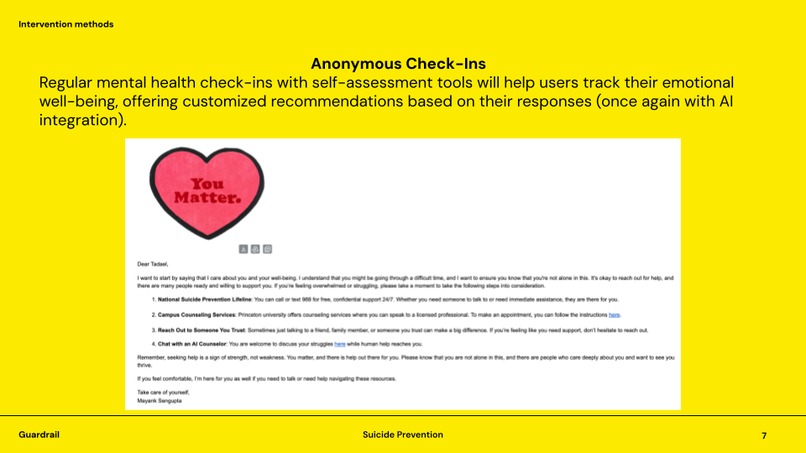
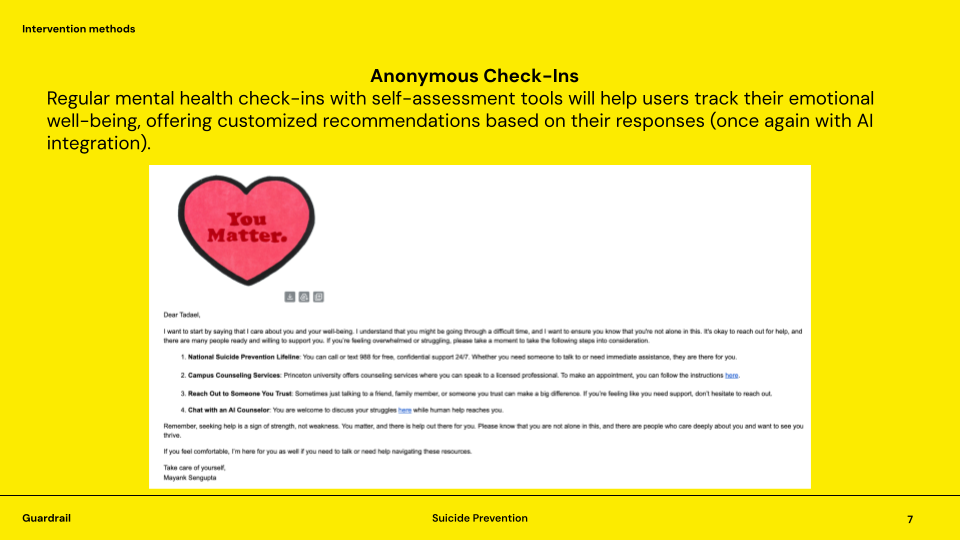
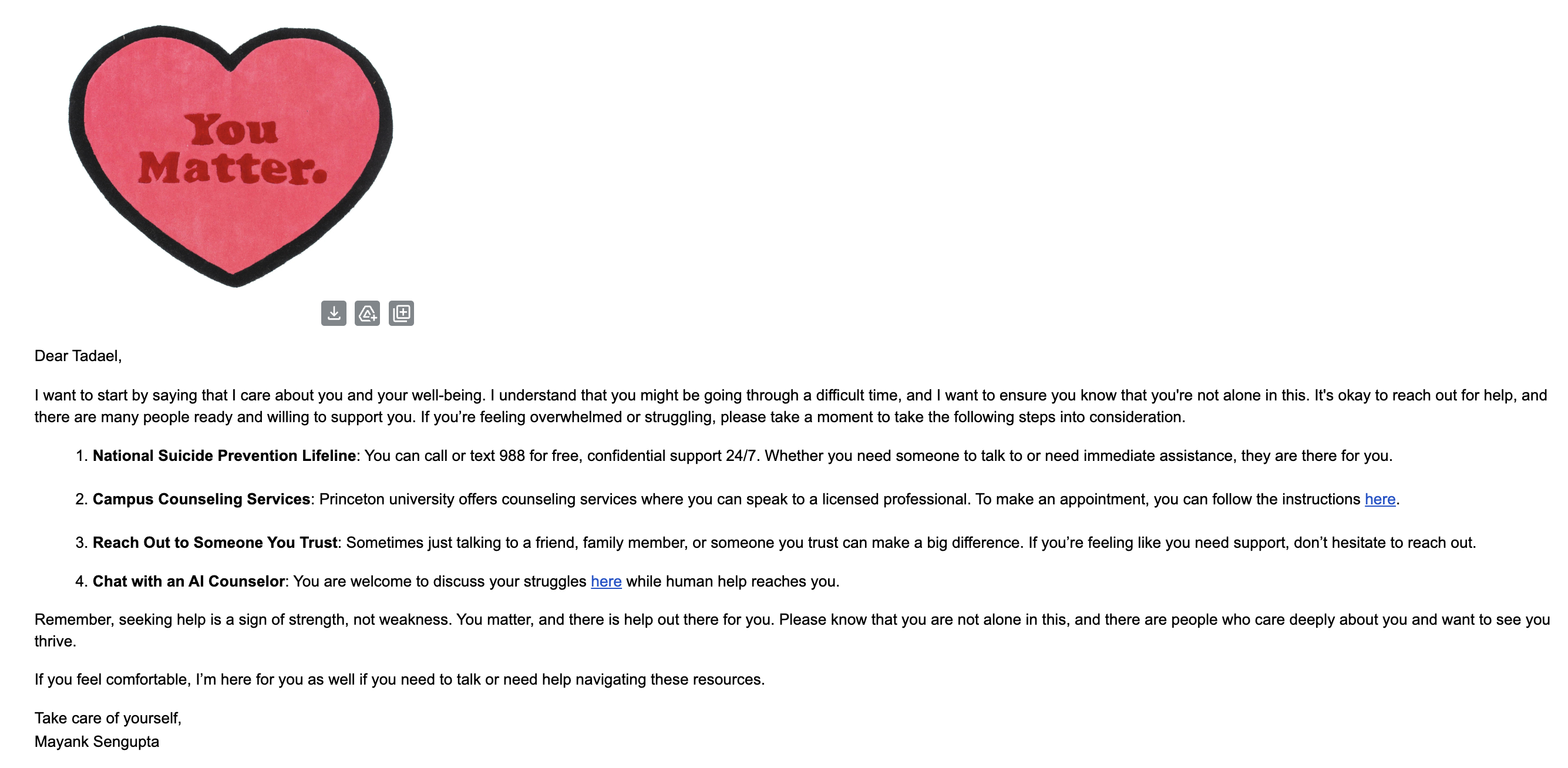
An automatically sent email to reach out to a student in need.
-
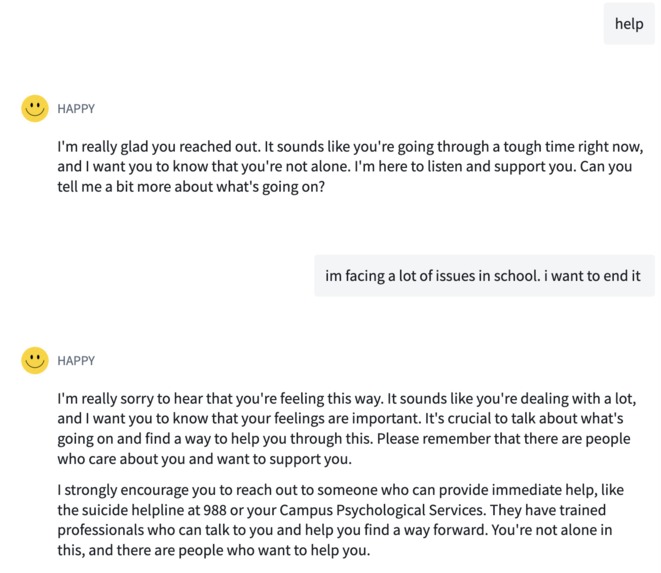
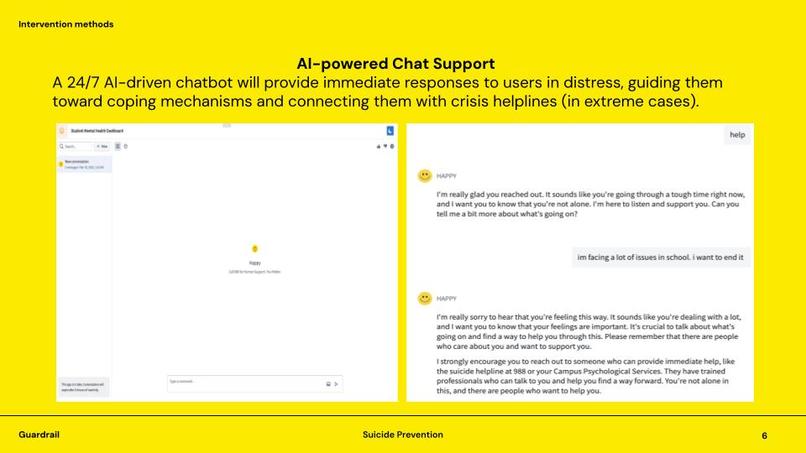
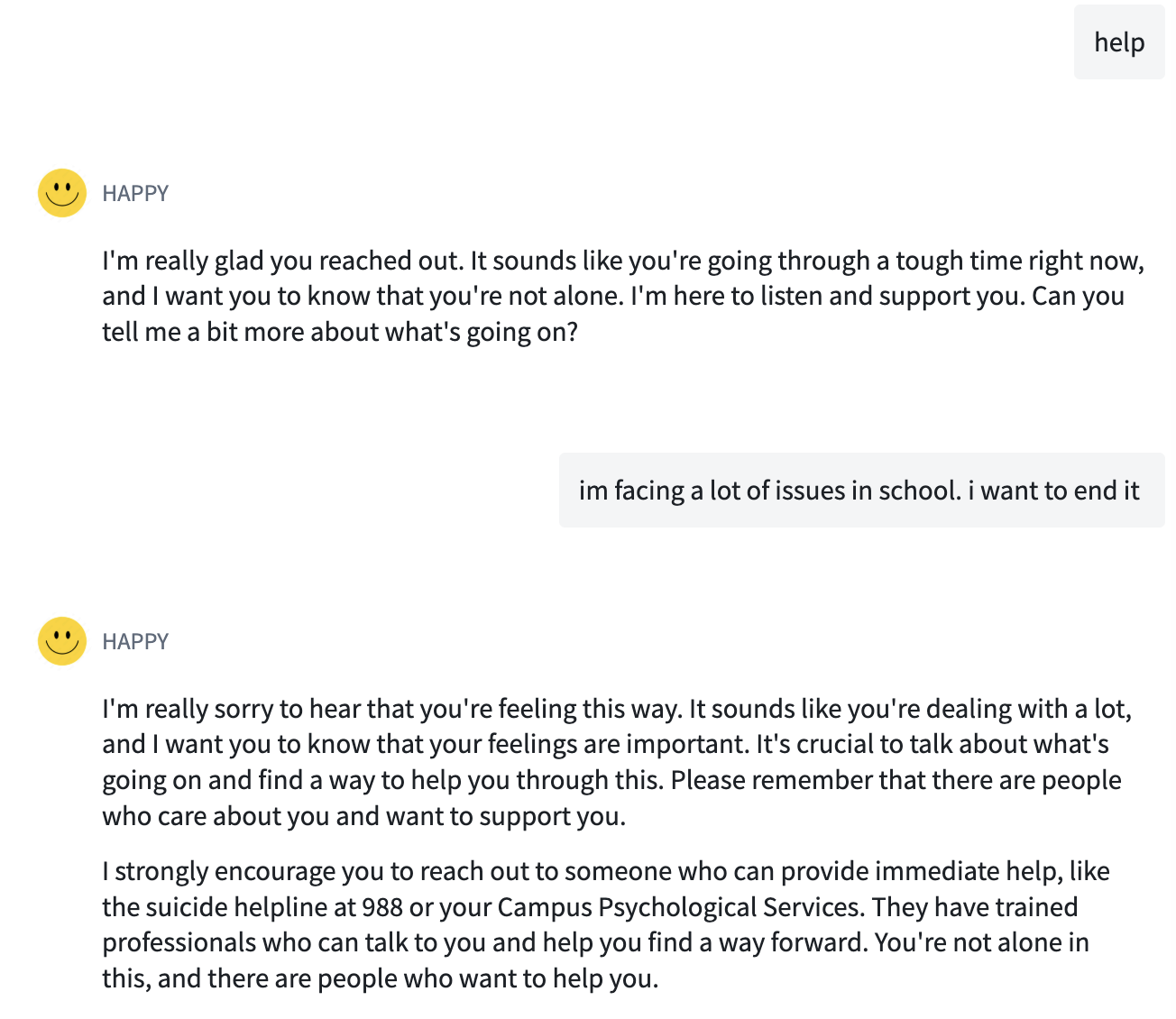
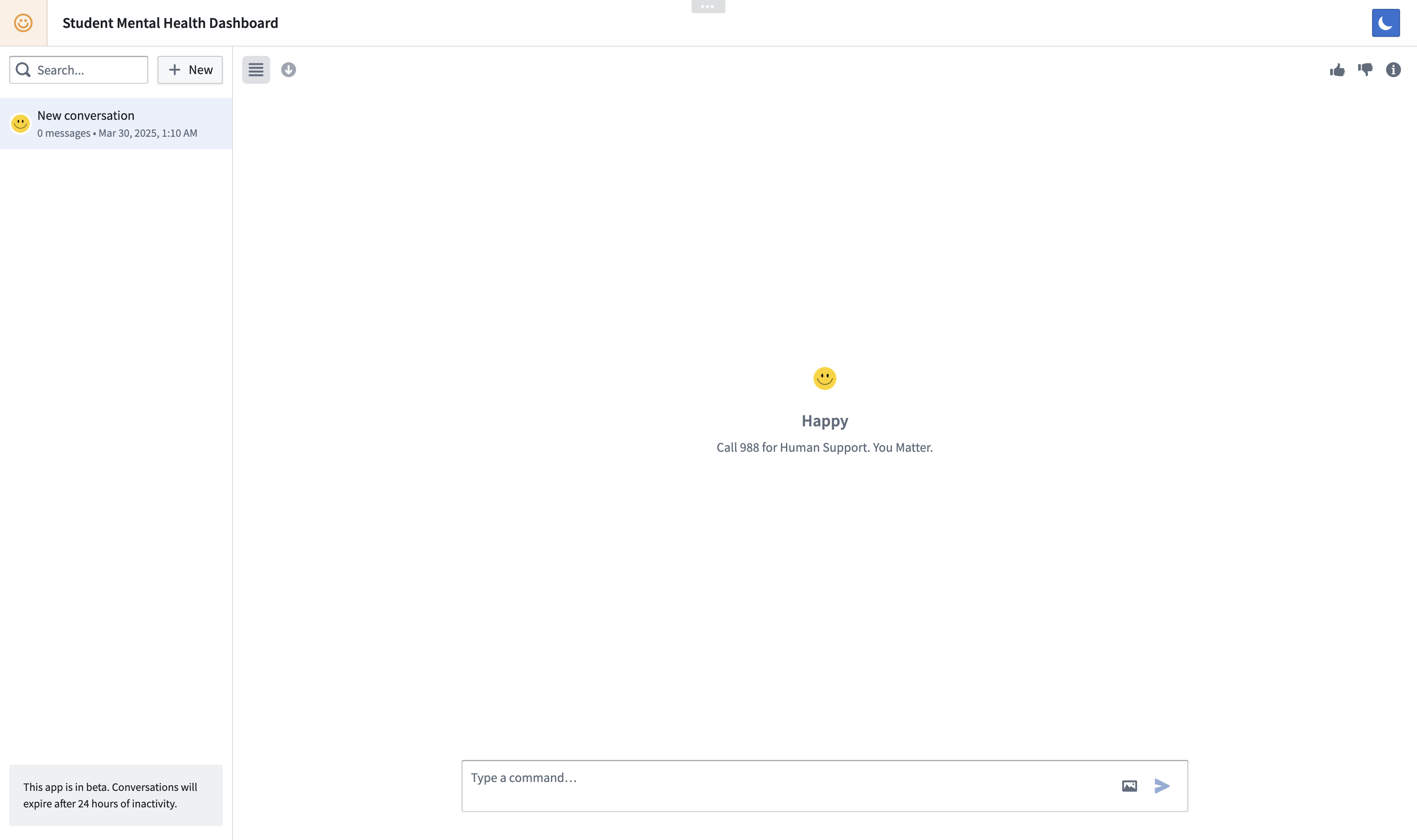
A conversation between students and the AI agent.
-
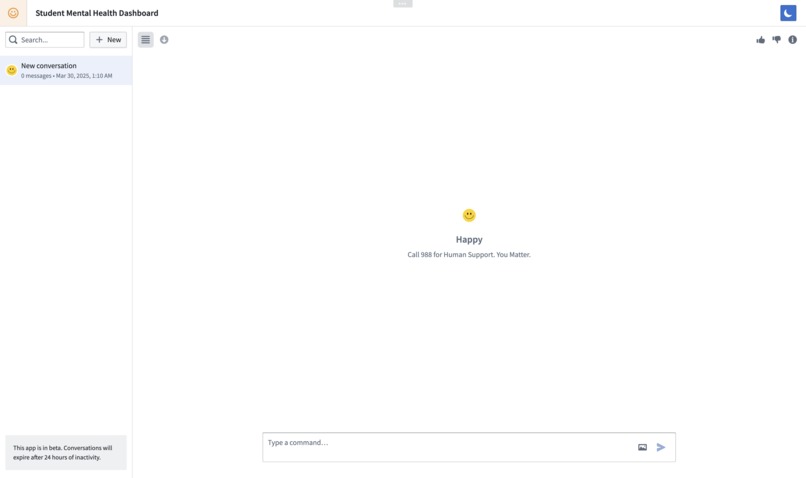
AI Agent Dashboard; Acst as a first responder in mental health crises to protect students while human help arrives.
-
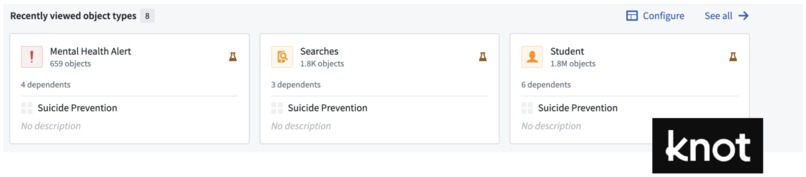
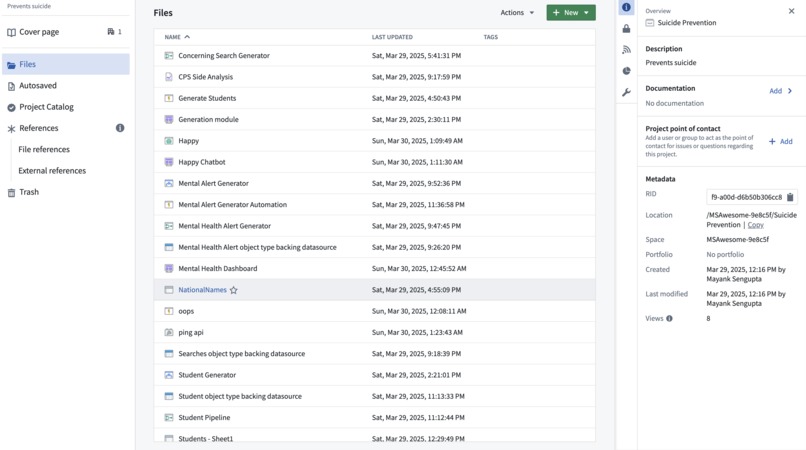
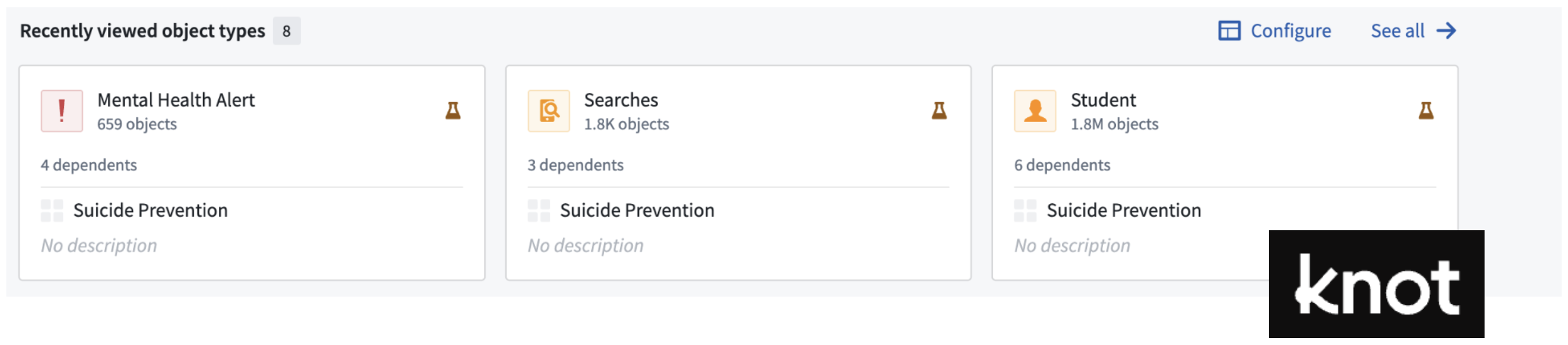
Our data types.
-
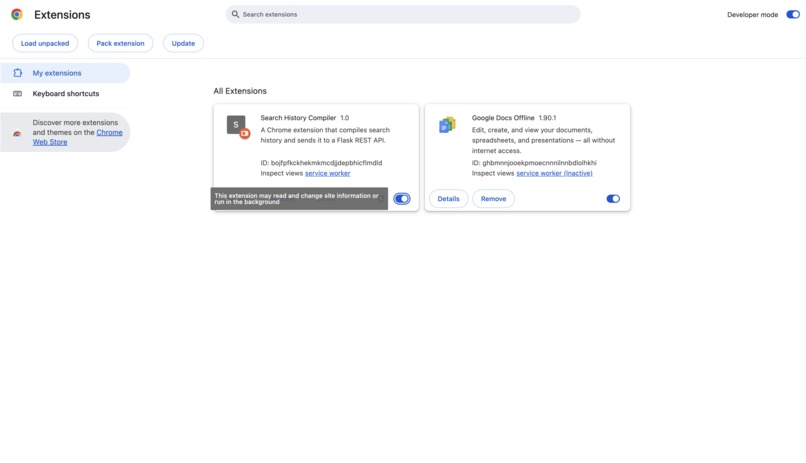
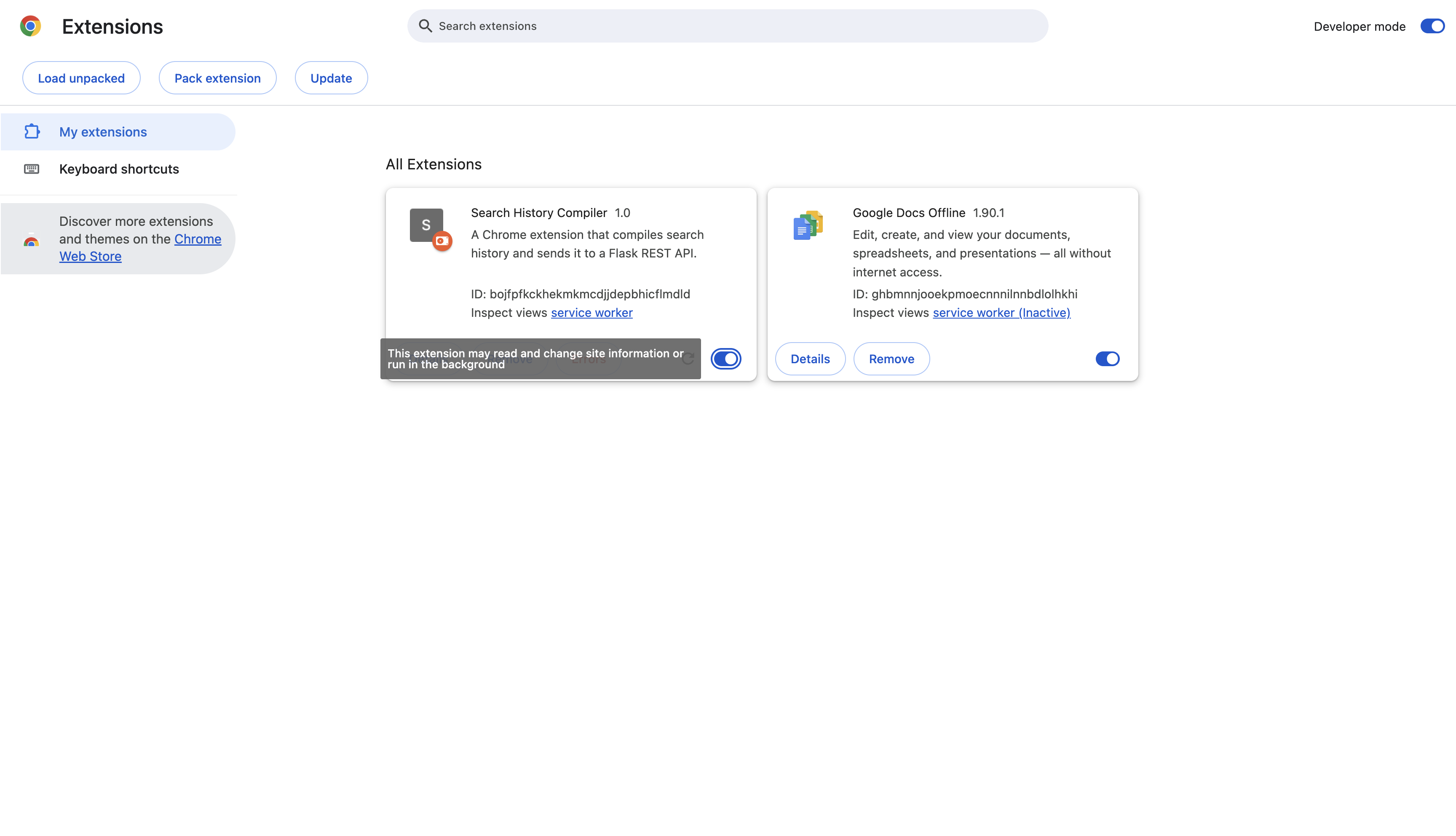
Installing the Chrome Extension
-


Inspiration
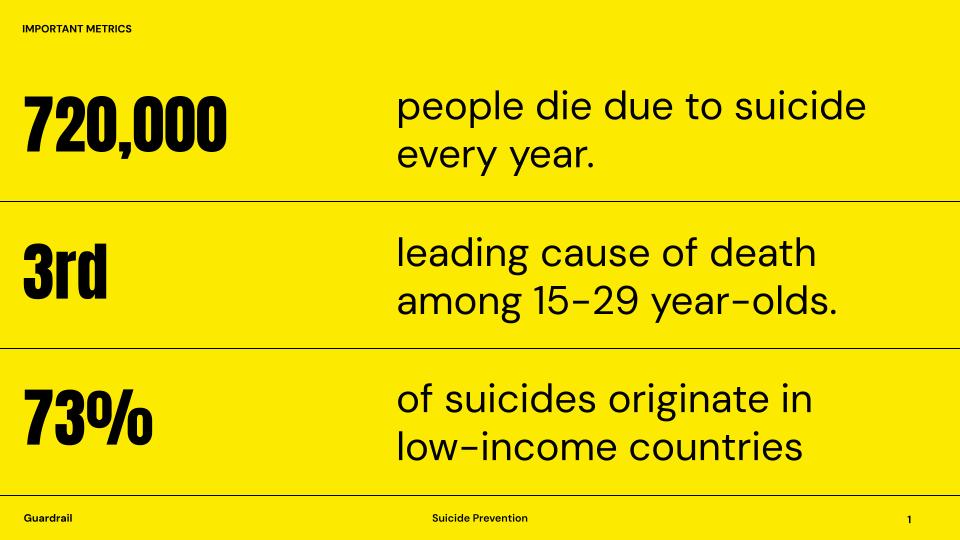
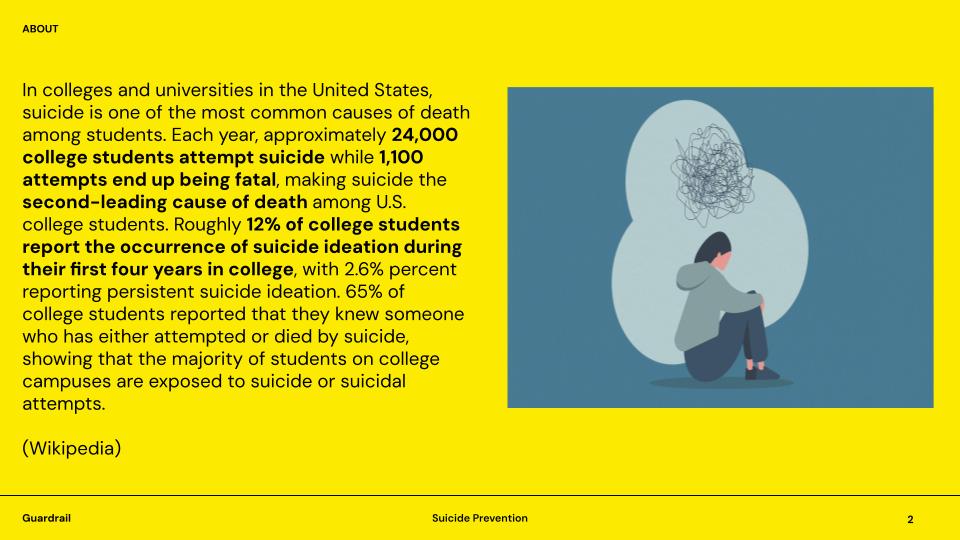
Our inspiration for Guardrail came from a shared vision: to create a proactive, accessible, and AI-powered suicide prevention tool that ensures no one has to struggle alone. According to a study done by Areán et. al., a person's Google Searches are one of the best predictors of their suicide risk, so our app focuses on monitoring student search history with LLMs to identify and assist students in need.
What it does
As a platform to proactively prevent self-harm, Guardrail automatically checks in with students, provides AI-powered interventions, and fosters a supportive community. The Student Mental Health Dashboard that we created can be used by the staff at Campus Psychological Services to find students in need of help and actively check in on their safety (determined based on automated scans of search history), while the Chatbot interface that we create can be used by students to share their struggles while human help arrives.
How we built it
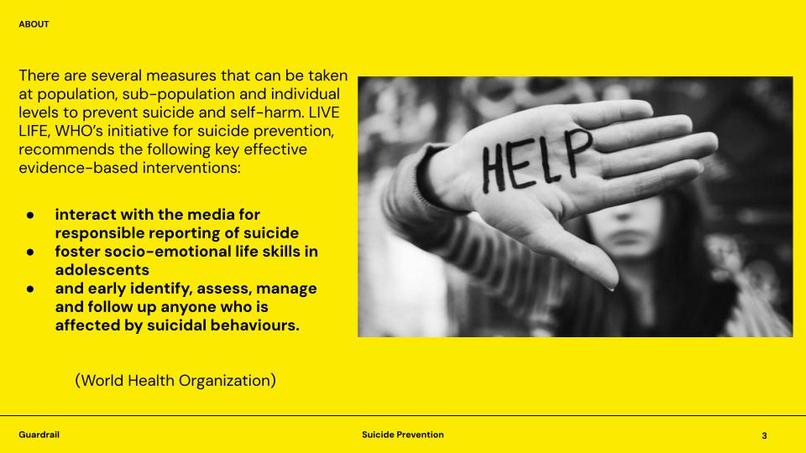
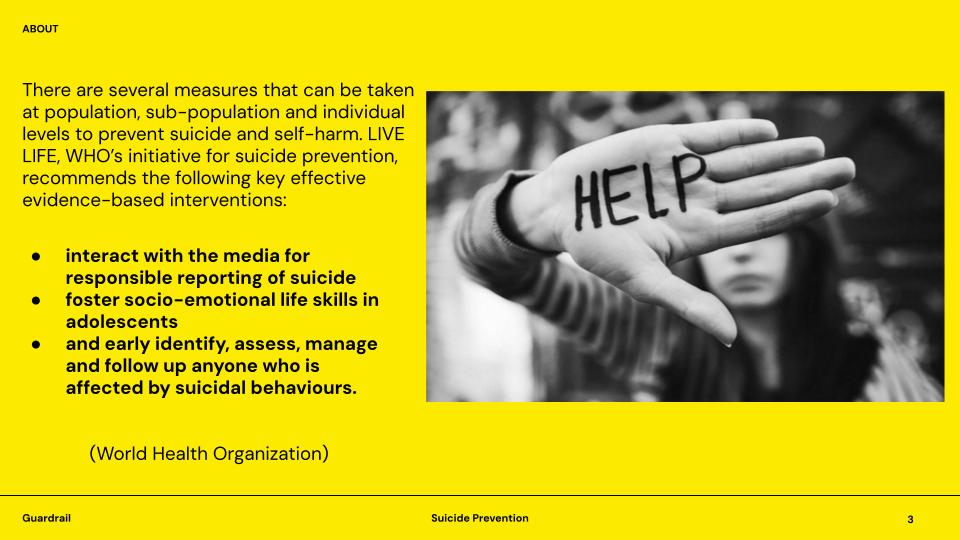
We started by researching suicide prevention strategies recommended by the World Health Organization (WHO), including responsible media engagement, socio-emotional skills development, and early intervention. The platform uses a Chrome extension installed automatically on to school Gmail accounts to monitor student search history. At given time intervals, search history is sent is sent to a Flask REST API, which then sends it to a Palantir Foundry database for processing. No data can be accessed directly, even by admins, and data is deleted automatically after a week. All searches are processed by an LLM, which sends alerts to the Mental Health dashboard when it finds a trend of concerning searches for a given user.
Challenges we ran into
Data Generation was often the most difficult part of the project. We tried looking for a database of Suicidal vs Non-suicidal Google Searches, but we eventually found a dataset of tweets for suicide detection, and we used an LLM pipeline to generate our own dataset of Suicidal vs Non-suicidal Google Searches by creating a Google Search based on the context given in each tweet. We also learned how to make a Chrome extension on the fly, using it to monitor student search history and ping a Flask REST API with new data.
Accomplishments that we're proud of
We are very proud that we are working on a project that addresses a significant social challenge. Our commitment stems from the belief that every life is valuable, and we are dedicated to ensuring that support reaches those in need—even before they ask for it. We are also proud that we generated millions of rows of notional data, created a Chrome extension (which we didn't know how to do before this hackathon), and created two highly interactive user interfaces for our app in such a short time. Knowing that our efforts could make a real difference in someone's life fuels our passion and reinforces the importance of our mission.
What we learned
During our first hackathon, we gained insights into several critical aspects of mental health support: the Importance of Early Intervention, the Power of AI in Mental Health, handling sensitive mental health data and the value of community based support system for people in need of help. We also learned how to collaborate smoothly across widely varying skillsets in the extremely time-pressured of this hackathon. We are eager to continue work on our app and participate in future iterations of HackPrinceton!
What's next for Guardrail
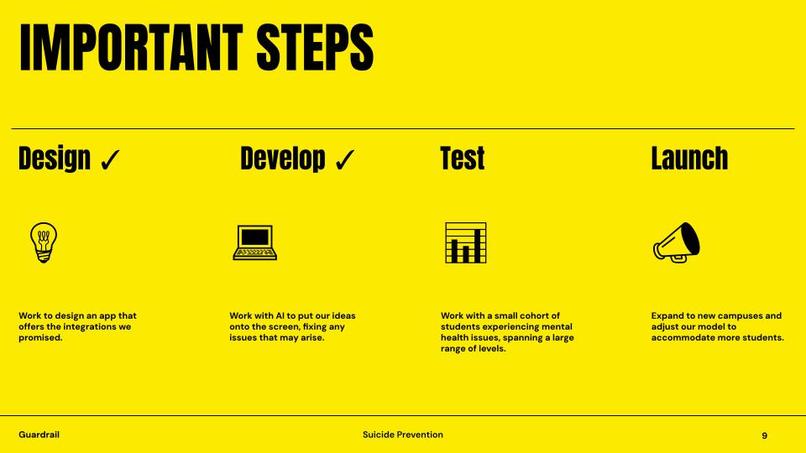
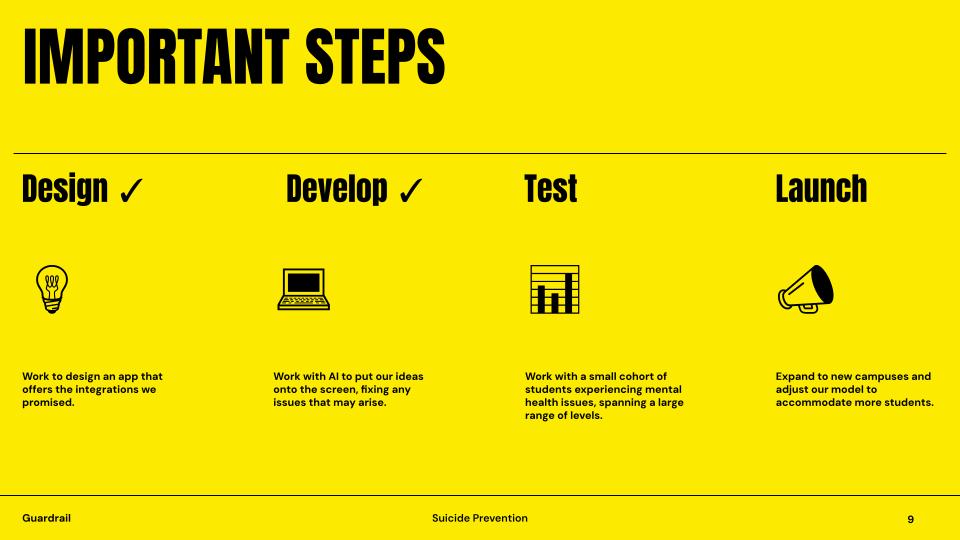
1) Expand our app to more campuses and refine its features based on user feedback. 2) Continue testing and improving our AI-powered interventions. 3) Strengthen partnerships with mental health organizations to provide additional resources and professional guidance.
Note
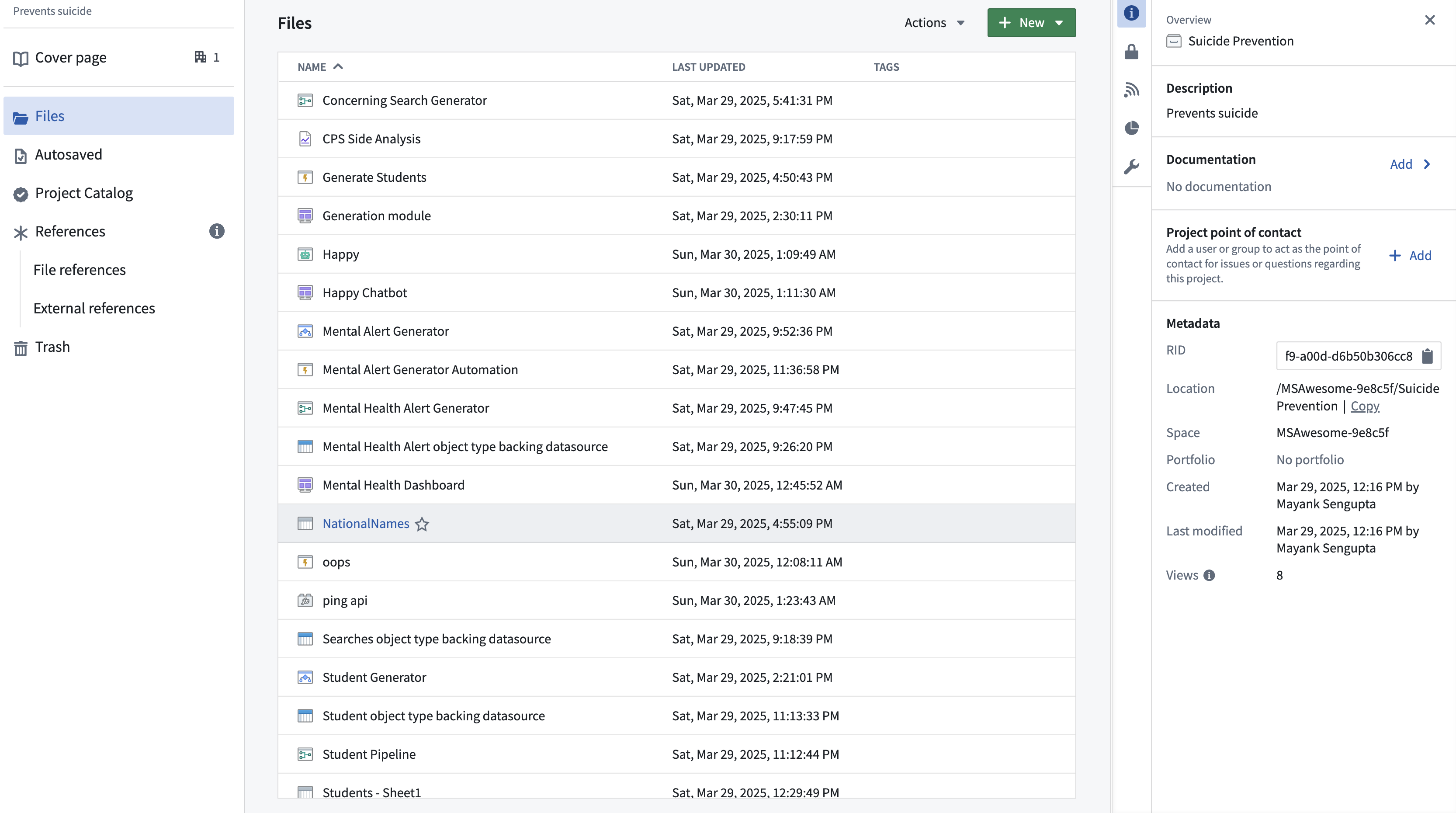
A lot of our work was done in Palantir Foundry, which we can't link to our Github Repo
Built With
- flask
- javascript
- palantir-foundry

Log in or sign up for Devpost to join the conversation.