-
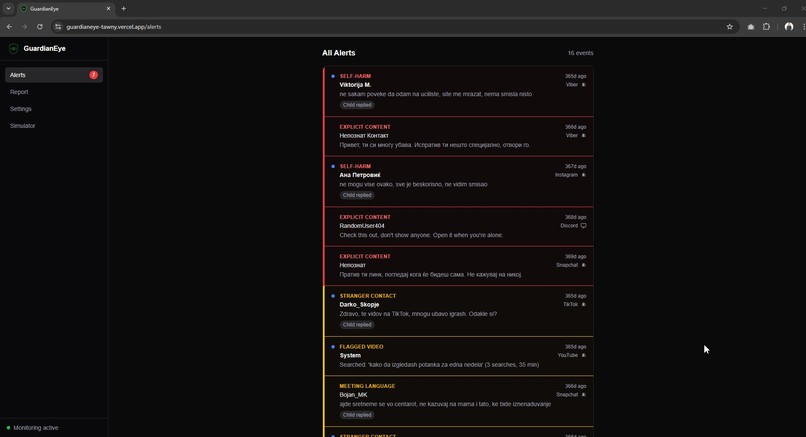
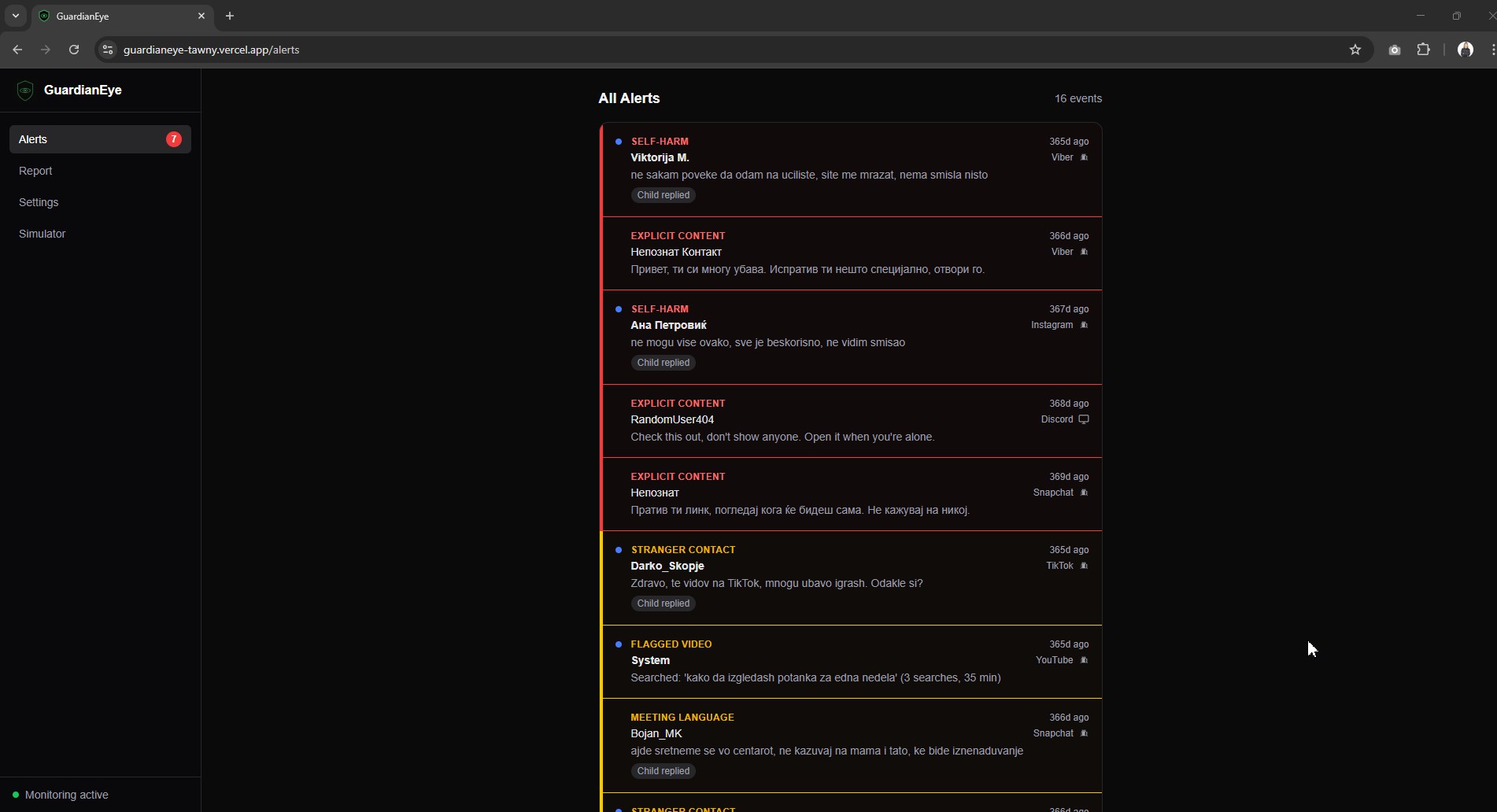
Alert feed — urgent alerts (red) sorted to top, warnings (yellow) below, unread indicators
-
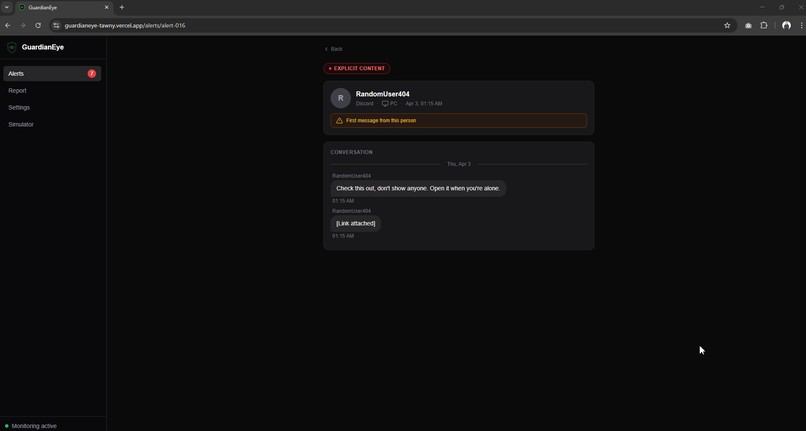
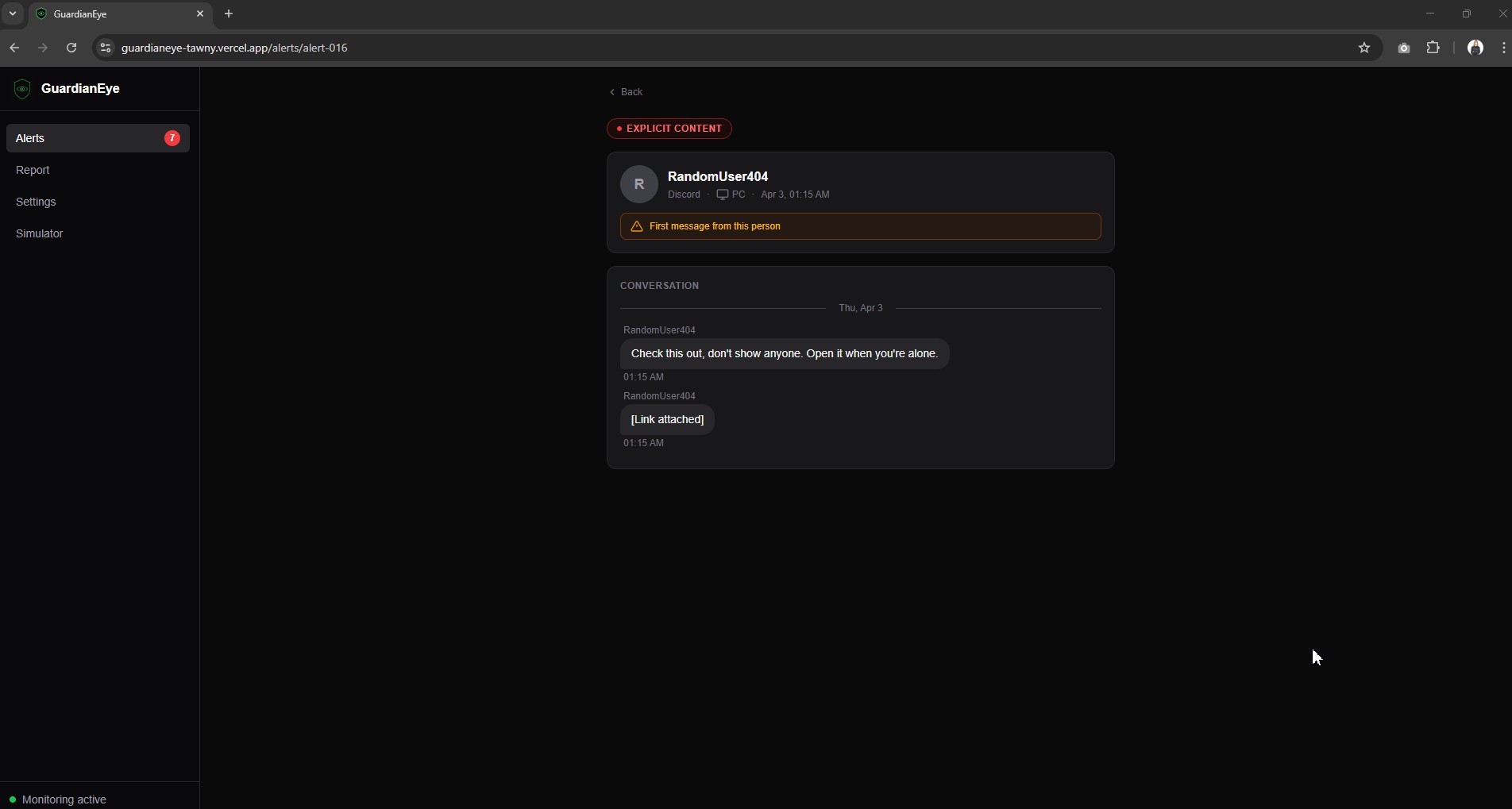
Event detail — full conversation thread in original language (Macedonian Cyrillic or it can be English), sender info, and first-contact flag
-
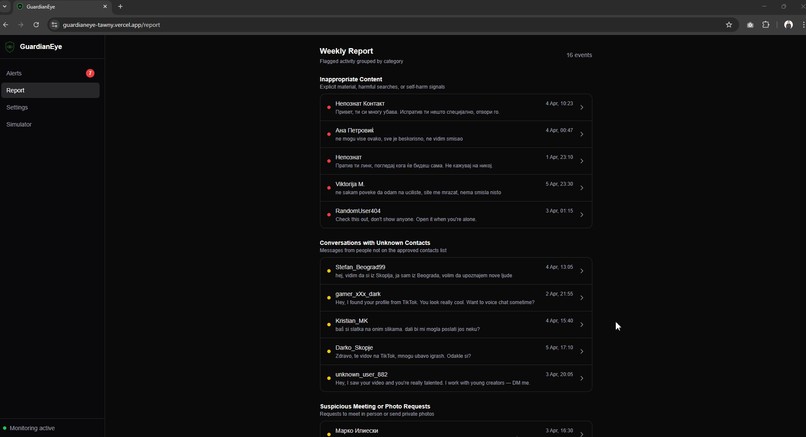
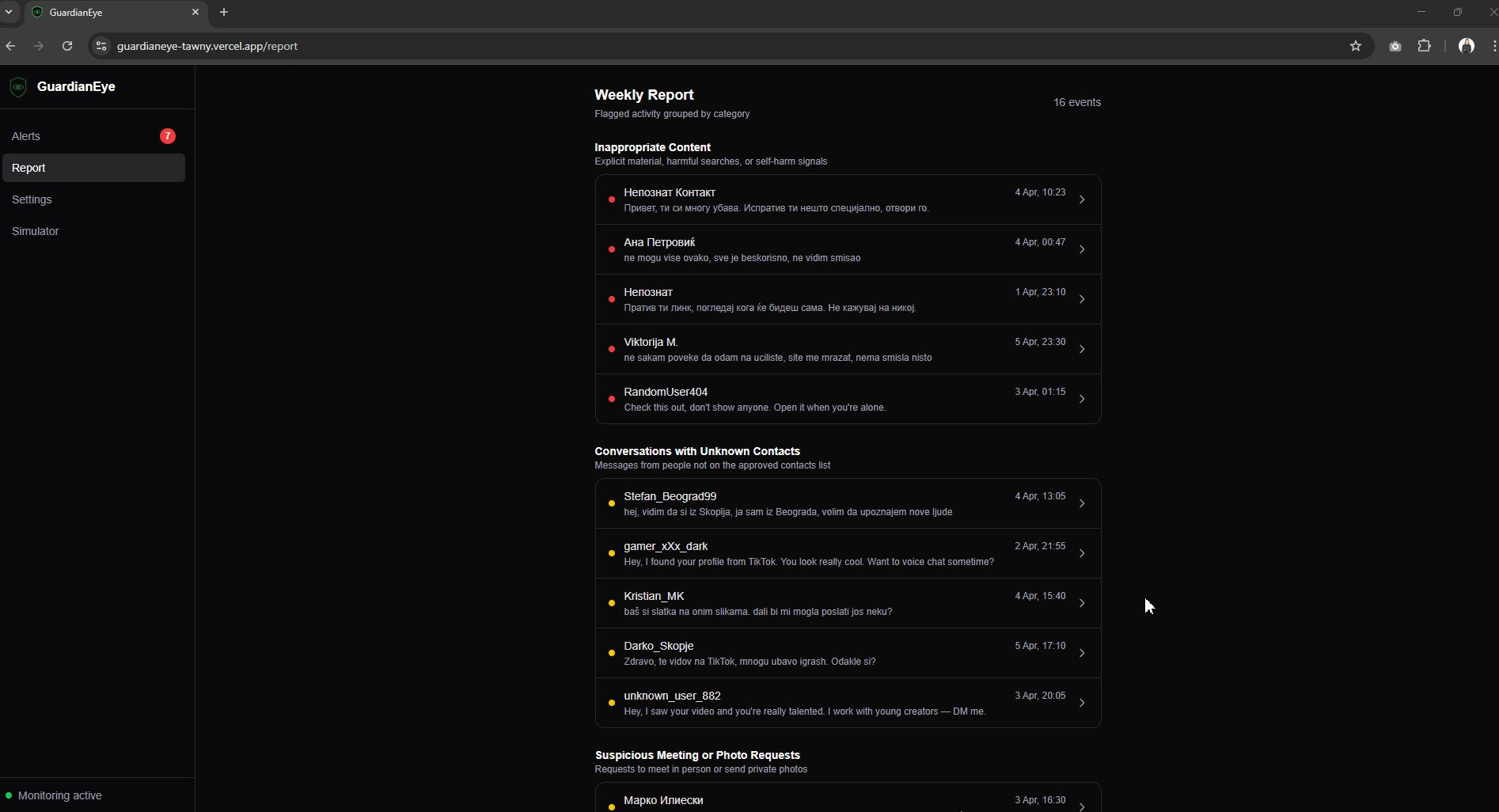
Weekly report — activity grouped by category for an informed conversation, not a surveillance debrief
-
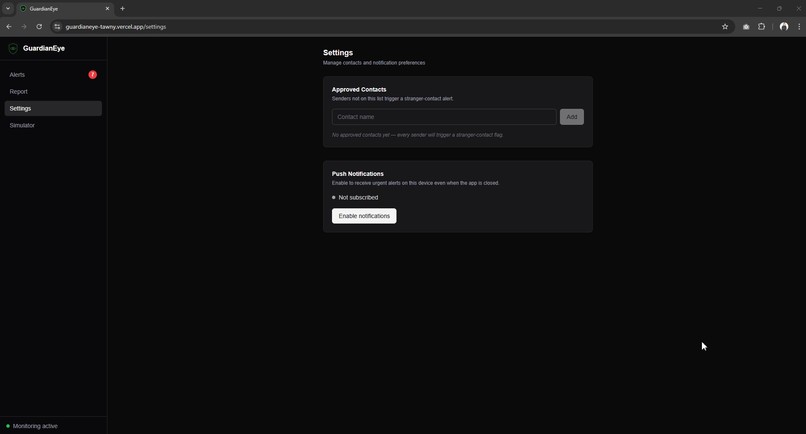
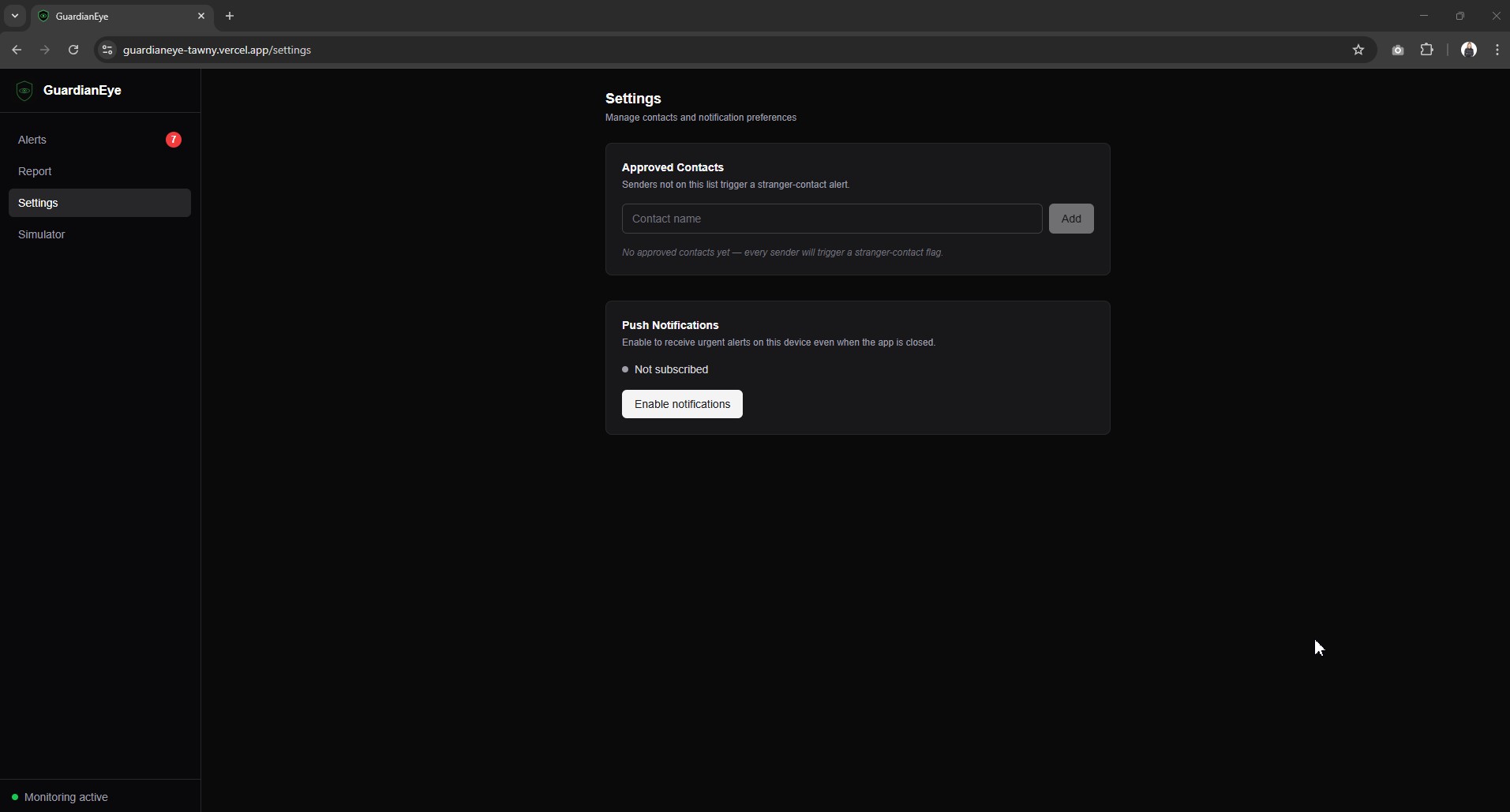
Settings — who she can talk to, and where alerts find you.
-
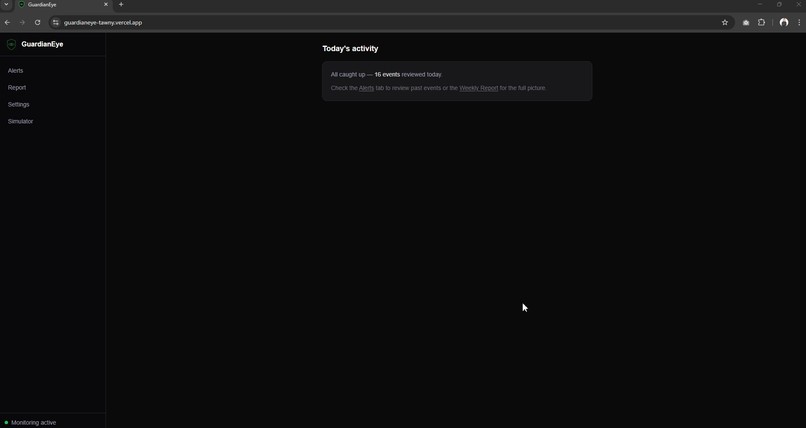
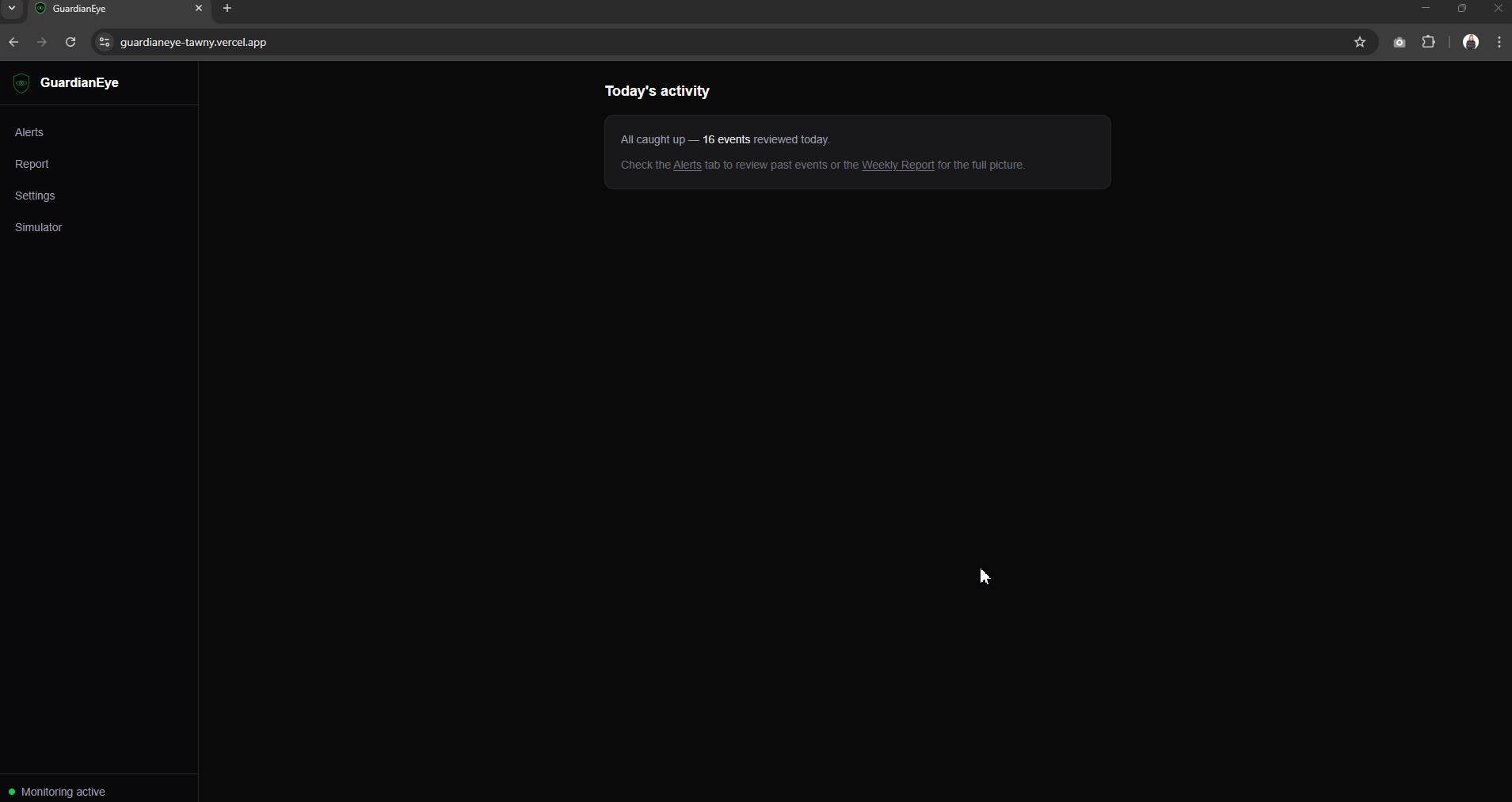
Home screen — "All clear" state when no active alerts
-
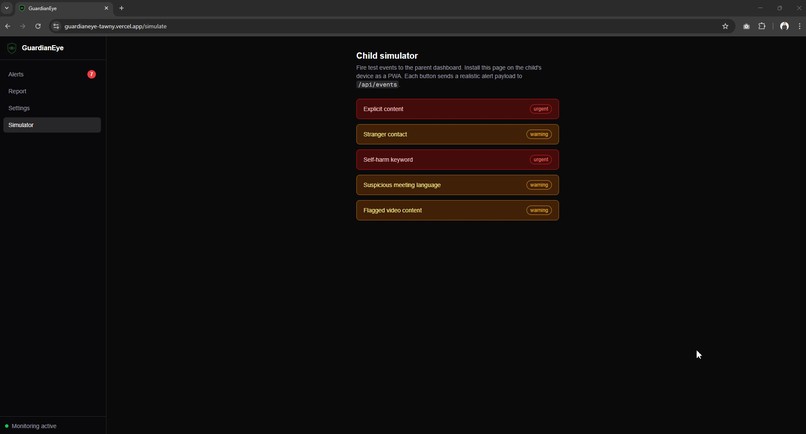
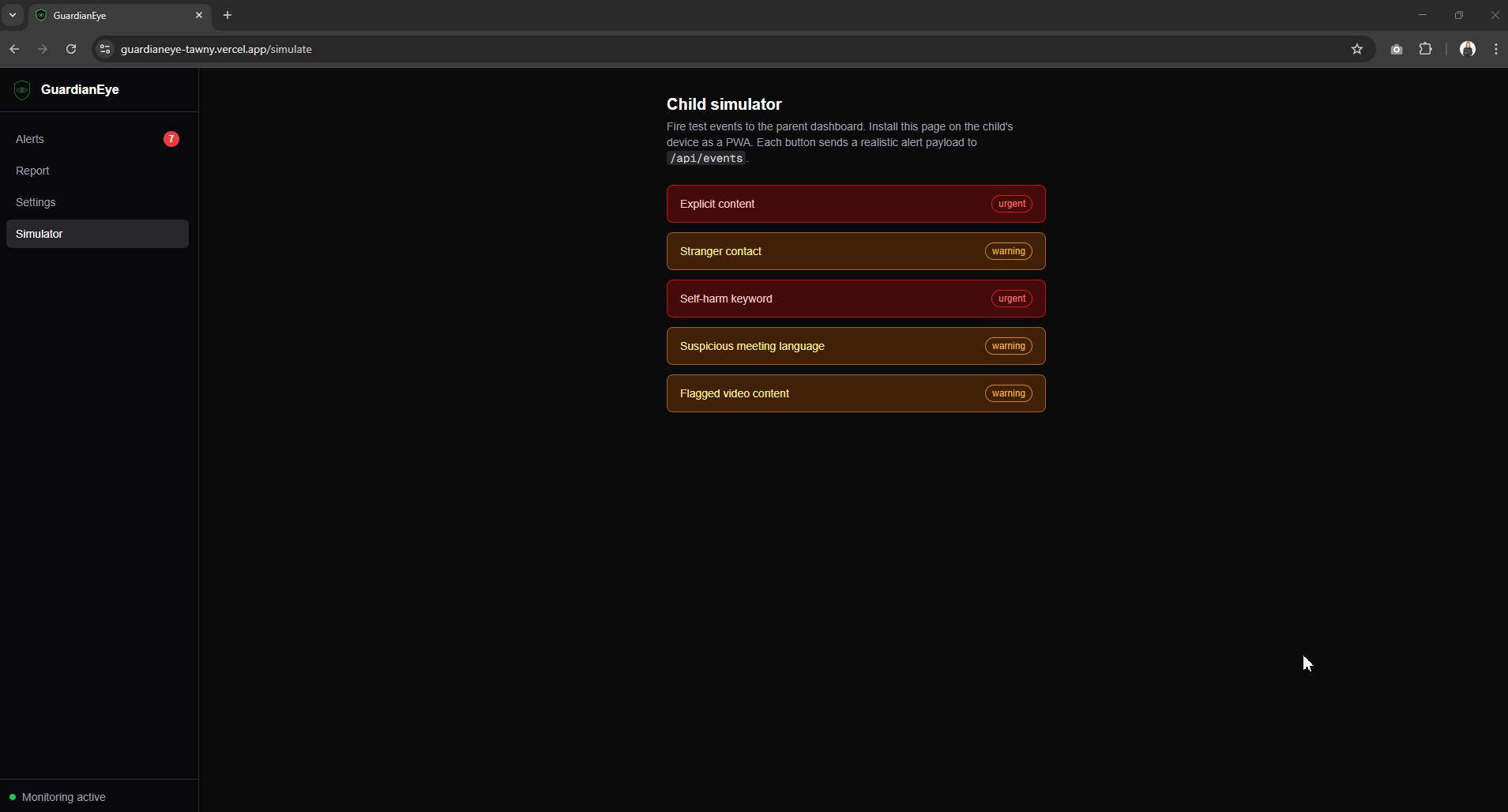
Child event simulator — fires mock alerts to test the full push notification loop
## Inspiration
My 8-year-old daughter received an explicit image on Snapchat. She told me — but only after she'd already seen it. It was too late. Existing tools like Bark catch things — but often with a 48-hour lag. By the time the alert reaches you, the moment has passed. I wanted something that tells me now, so I can have a calm, informed conversation with my daughter instead of a reactive one two days later.
## What it does GuardianEye is a real-time parent dashboard that monitors a child's digital activity and sends push notifications the moment something flagged happens.
- Alert feed — urgent events (self-harm signals, explicit content) surface in red at the top; warnings in yellow below
- Event detail — full conversation thread in the original language (Macedonian Cyrillic, Serbian, English), sender info, first-contact flag
- Weekly report — activity grouped by category so you can have an informed conversation, not a surveillance debrief
- Push notifications — urgent events push directly to your phone within seconds via Web Push API
- Child simulator — fires mock events so you can test the full loop without a real monitoring agent ---
## How we built it Next.js 15 App Router + TypeScript + Tailwind CSS v4. No database — React context + localStorage for state, a module-level in-memory store for the API layer. Real-time delivery via client-side polling every 3 seconds. Push notifications via the Web Push API (web-push package) with VAPID keys — no Firebase, no vendor dependency. Deployed on Vercel (HTTPS required for both PWA install and Web Push). Installable as a PWA on Android from Chrome. The entire project was spec-driven: learner profile → scope → PRD → technical spec → build checklist, before a single line of code was written.
## Challenges we ran into
- Web Push end-to-end — getting the full loop working (simulator → API → push send → phone notification → tap → correct alert detail) required careful coordination across the service worker, VAPID keys, subscription storage, and Vercel cold-start re-subscribe workaround
- Next.js 15 + TypeScript strict mode — several patterns that work in looser configs (setState in effects, Uint8Array.from() return types, server/client boundary crossings) required proper fixes
- Multilingual rendering — Macedonian Cyrillic, Serbian Latin, and English all in the same conversation thread; had to ensure no stripping or encoding corruption anywhere in the stack ---
## Accomplishments that we're proud of
- Push notification arrives on your phone within 3 seconds of a simulator event firing — the core promise of the app, working end-to-end
- Built and deployed a full PWA with a working spec-driven process, starting from scratch with no prior greenfield experience
- The project story (the Snapchat incident → the 48-hour lag problem → real-time awareness) is real, personal, and holds together as a coherent product argument ---
## What we learned
Writing a spec before building is not overhead — it's the thing that prevents the build from becoming a debugging session. Every component I built already knew what data it needed, where it came from, and what it was responsible for. The checklist meant I was never asking "what do I do next?" Also: Web Push API is more capable than I expected, and doesn't need Firebase.
## What's next for GuardianEye
- Real monitoring agent (Android) — currently the child-side is simulated; a real agent that hooks into notification APIs is v2
- PC/Mac monitoring client — the mock data includes PC events; a real desktop agent would close that gap
- Multi-child support — the data model is single-child; extending to siblings is straightforward
- Contact allow-listing with the child — turning the approved contacts list into a co-managed feature the child participates in, not just something the parent controls
Built With
- next.js
- pwa
- react
- tailwind-css
- typescript
- vercel
- web-push-api

Log in or sign up for Devpost to join the conversation.