Inspiration: Vague alerts slow help. “Alert!” says nothing about severity or what to do. Accessibility gap. Elderly and vulnerable users need effortless, reliable signaling. Time matters. Clear, context‑aware voice guidance can accelerate real responses.
What it does: One-touch trigger on an Arduino wearable creates an emergency alert. Real-time audio is captured via OMI, transcribed, and analyzed for distress. Natural‑voice summaries (Fish Audio) convey severity, keywords, and next steps. Live dashboard streams events and status; triple‑tap resolves and stops recording to protect privacy.
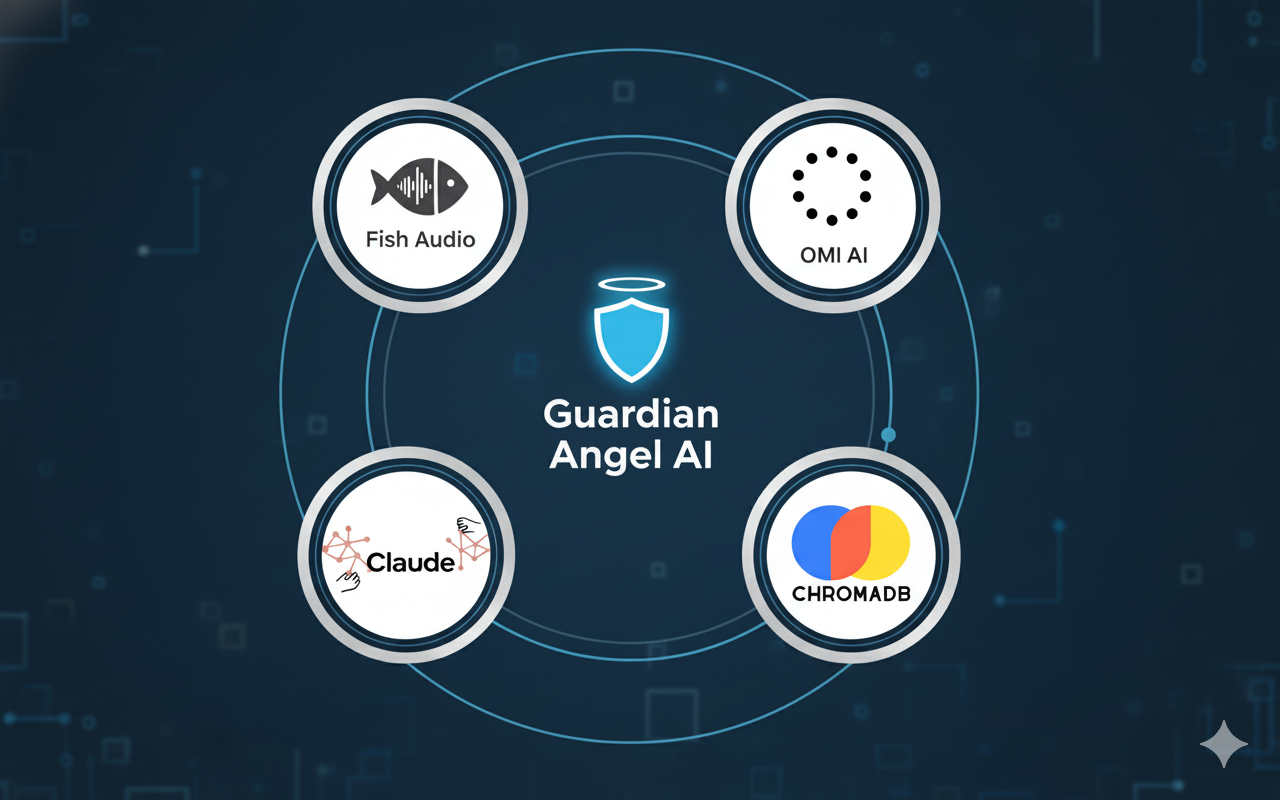
How we built it: Hardware: Arduino R4 WiFi + Grove touch sensor for press/hold trigger and triple‑tap resolution. Backend: Flask API with SSE for real‑time updates, ChromaDB for event storage, ngrok for tunneling, IFTTT for Alexa announcements. Voice: Fish Audio TTS to convert smart summaries into professional, natural speech. Wearable AI: OMI webhook streams transcripts to the backend for keyword/severity analysis and auto-summarization every 3 transcripts. Frontend: React + Vite + Tailwind dashboard with timeline, status indicators, and system flow view.
Challenges we ran into: Low-latency consistency: Keeping end‑to‑end alert‑to‑voice near 10–15s while handling network variance. Webhook reliability: Handling retries, duplicate payloads, and transcript ordering. Signal design: Debouncing touch input and robustly detecting a triple‑tap resolution. Cross‑device sync: Coordinating Arduino, laptop relay, backend, and dashboard states. Privacy by default: Auto‑stopping OMI recording and filtering resolved transcripts.
Accomplishments that we’re proud of: E2E pipeline in seconds: Touch → transcript → context summary → natural voice in ~3–5s. Sub‑100ms UI updates: Real‑time dashboard via SSE with clear status and timeline. Context beats “Alert!”: Severity, keywords, and actionable next steps via Fish Audio. Reliable resolution flow: Triple‑tap stops recording and flips the system green. Multi‑modal integration: IoT + wearable AI + voice + real‑time web, working smoothly.
What we learned: Designing for urgency: Short, actionable voice summaries outperform verbose logs. Streaming architecture: SSE patterns, idempotent webhooks, and backpressure handling. Edge UX matters: Hardware debounce and fail‑safe flows make demos and users safer. Collaboration at speed (team of 2): Clear interfaces and logs accelerate parallel work.
What’s next for GuardianAngel: Multi‑language support and voice cloning for familiarity and accessibility. SMS/email contact alerts with acknowledgments and escalation. Location integration (GPS/indoor) and fall detection via accelerometer. Mobile app for emergency contacts and 911/dispatch integration. Healthcare extensions: vitals monitoring, facility deployments, and audit trails.


Log in or sign up for Devpost to join the conversation.