Inspiration
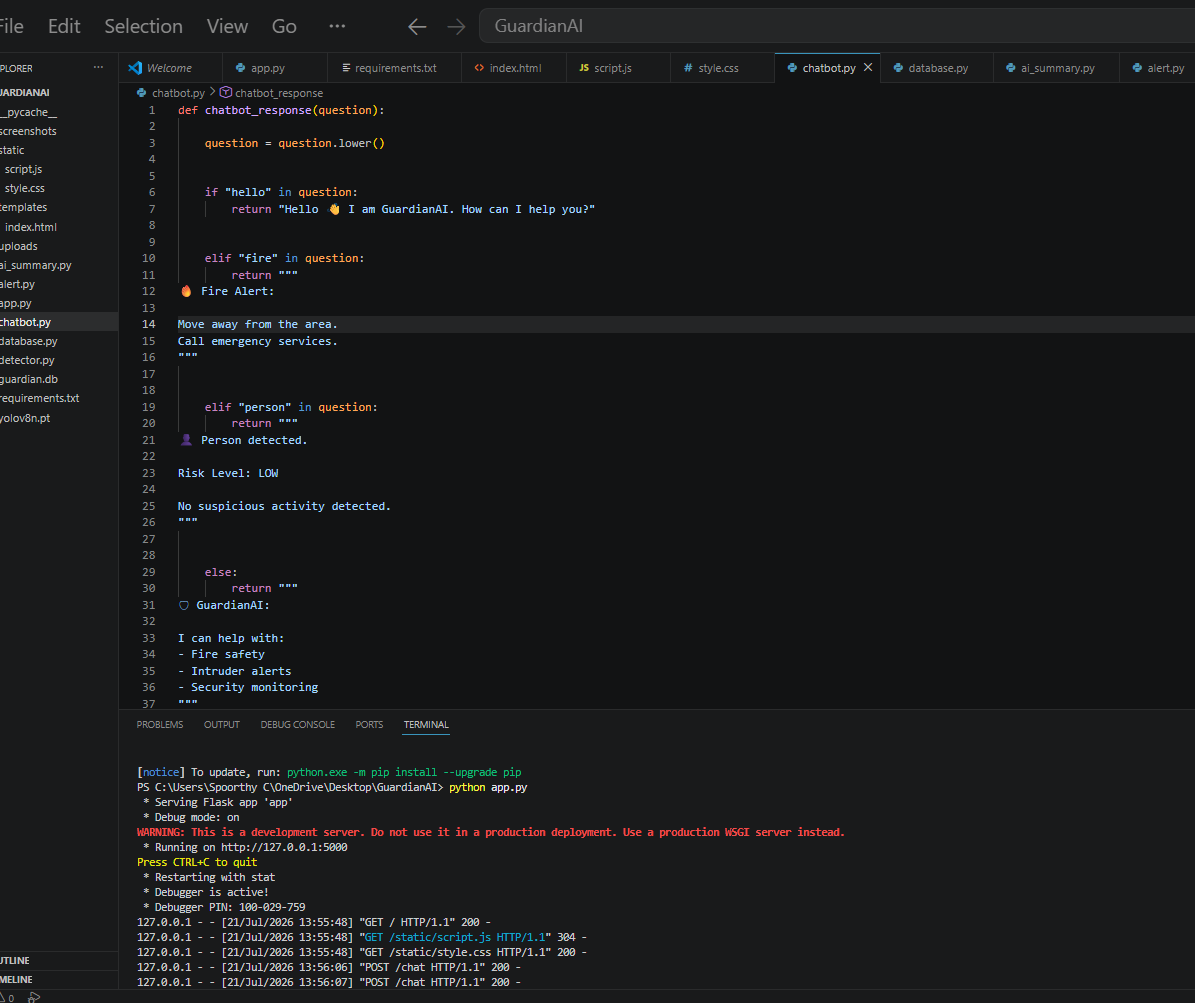
Safety is a major concern in homes, campuses, and public spaces. Traditional security systems only record events but cannot understand or respond intelligently. We wanted to build an AI-powered guardian that can continuously monitor surroundings, detect unusual situations, and provide meaningful security insights in real time.
GuardianAI was inspired by the idea of creating an autonomous safety assistant that helps people feel more secure by combining computer vision and artificial intelligence.
What it does
GuardianAI is an AI-based safety monitoring system that uses computer vision to analyze real-time camera feeds.
Features:
👁️ Detects objects and people using YOLO-based computer vision 🧠 Analyzes detected objects and assigns risk levels 🚨 Identifies potentially dangerous situations 📊 Generates security reports with detected objects and activity status 🔒 Acts as an intelligent safety assistant for homes and campuses
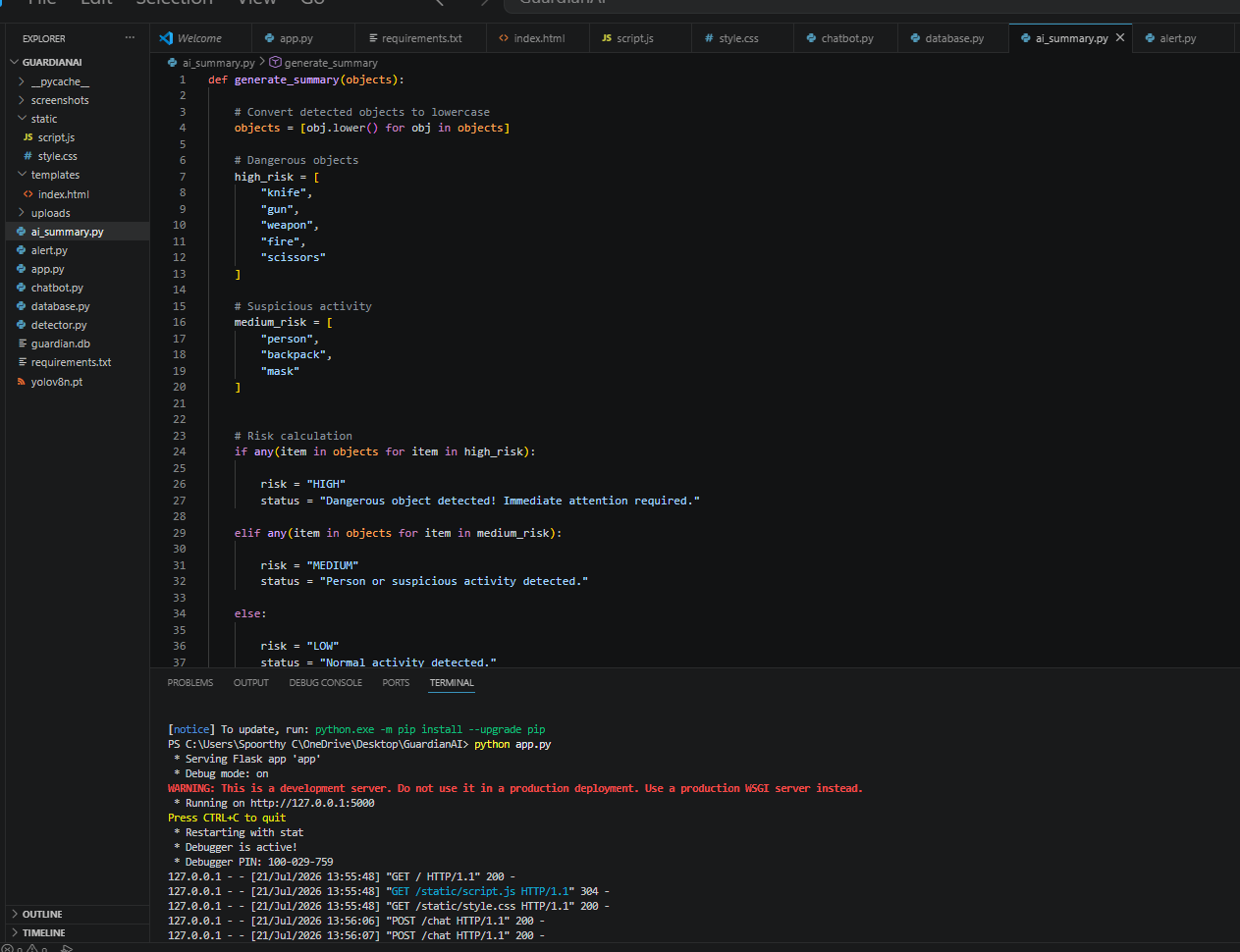
The system classifies activities into:
LOW risk — Normal activity detected MEDIUM risk — Person or suspicious activity detected HIGH risk — Dangerous objects or threats detected How we built it
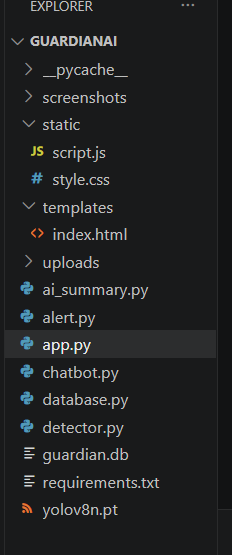
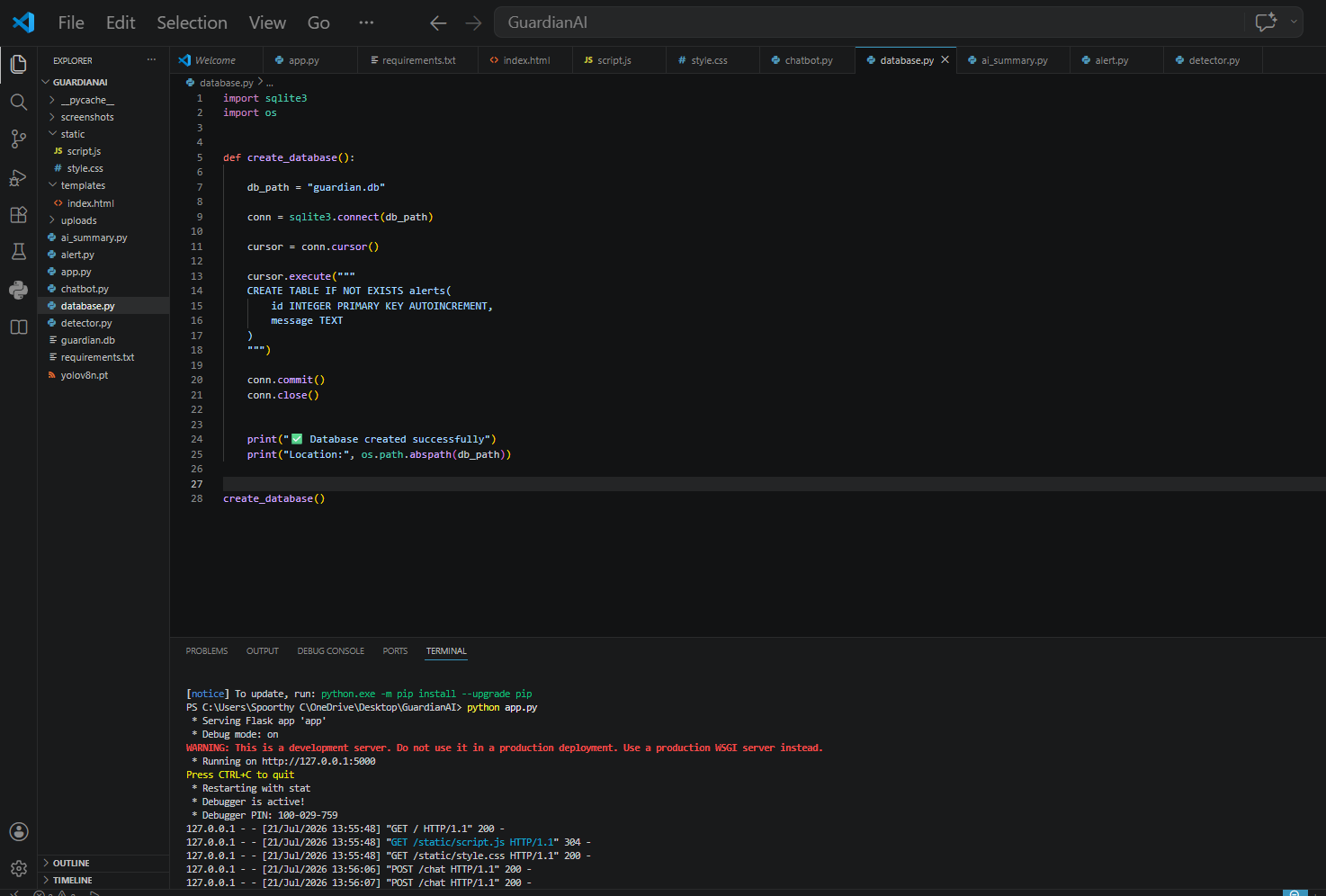
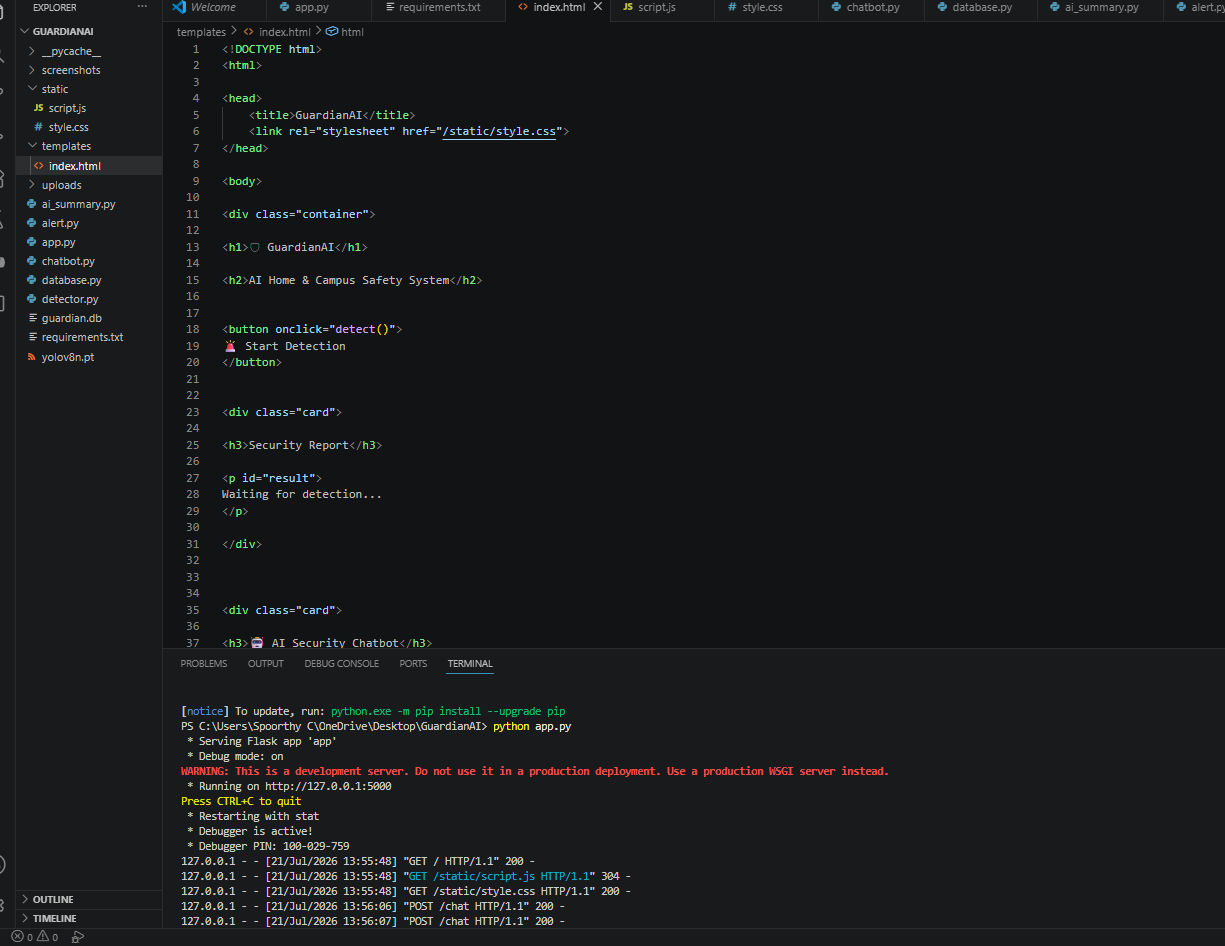
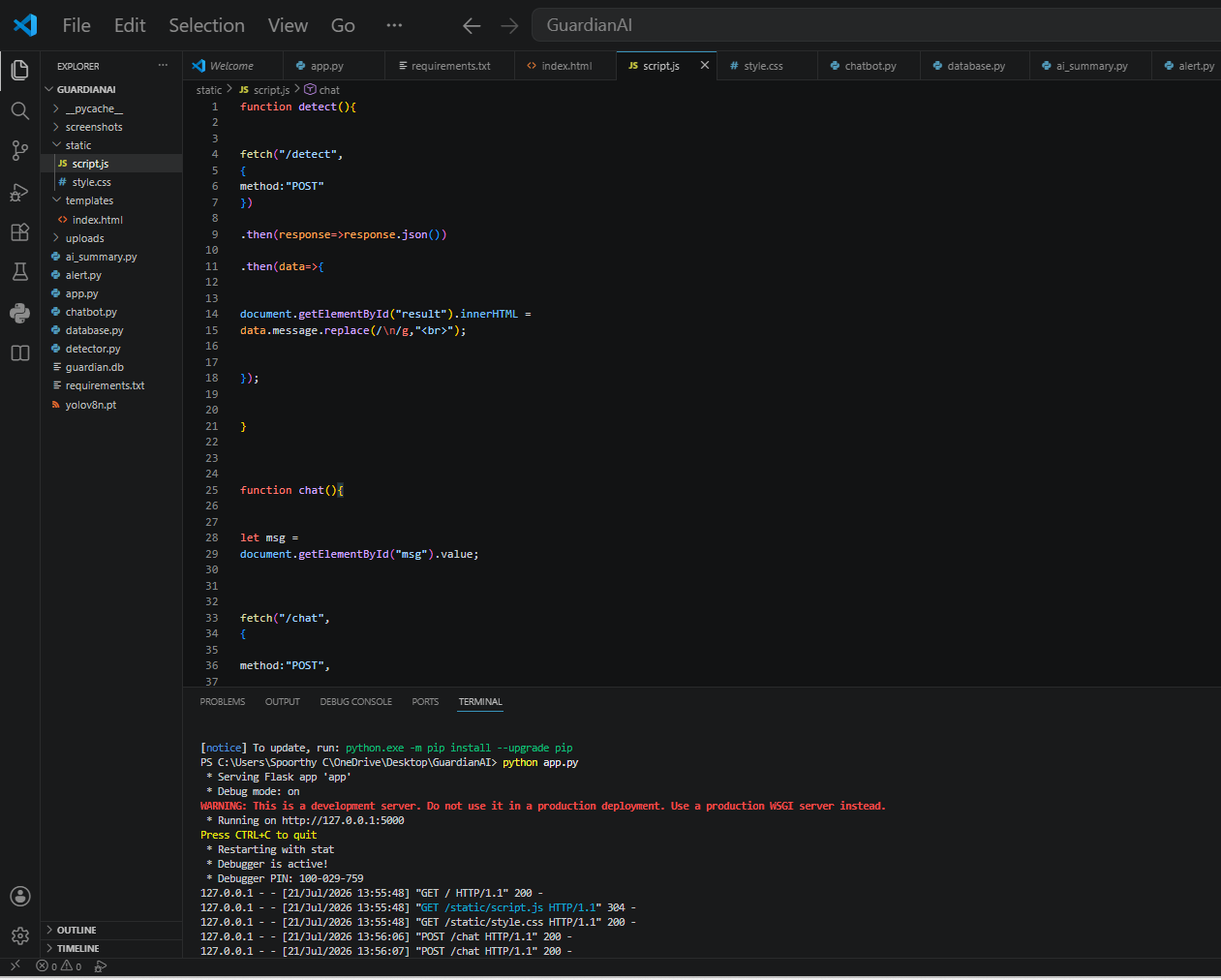
GuardianAI was developed using:
AI & Computer Vision
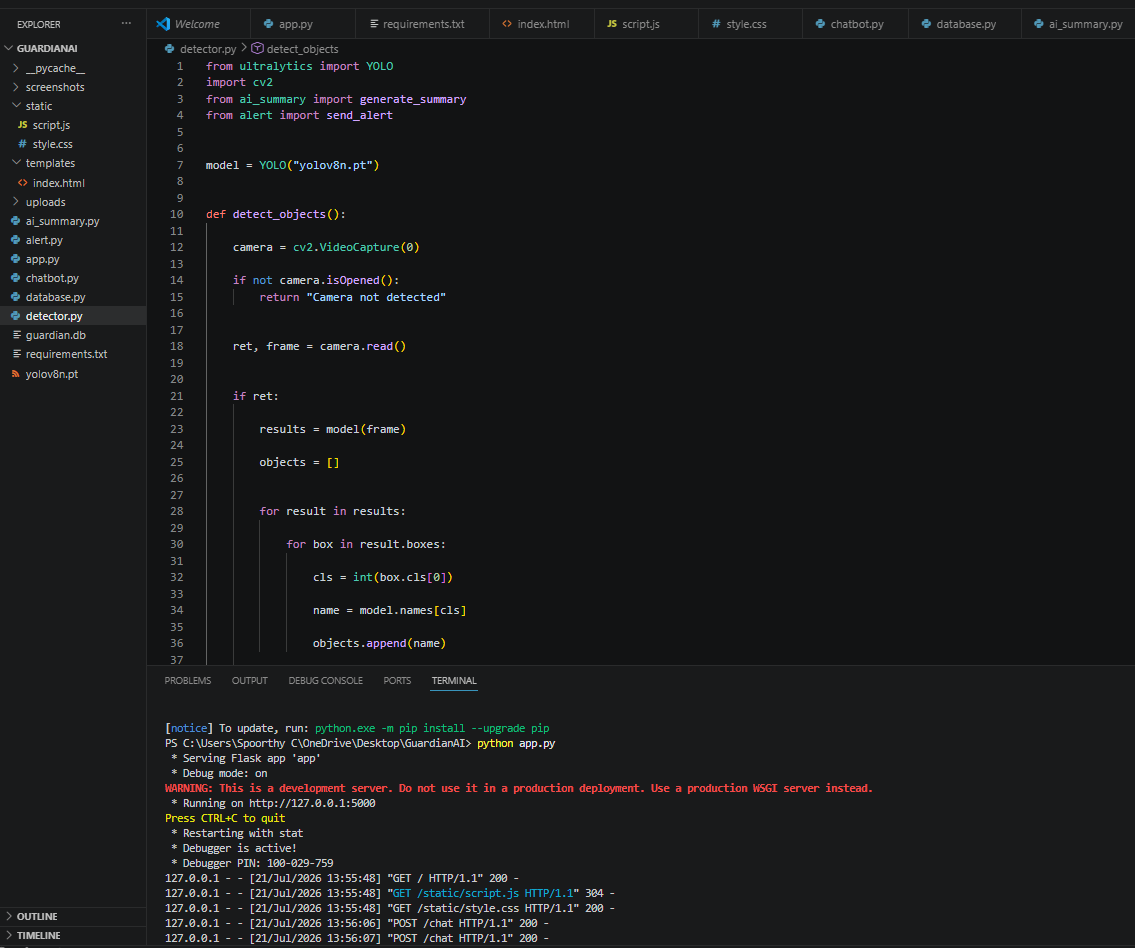
YOLOv8 object detection model OpenCV for real-time camera processing
Backend
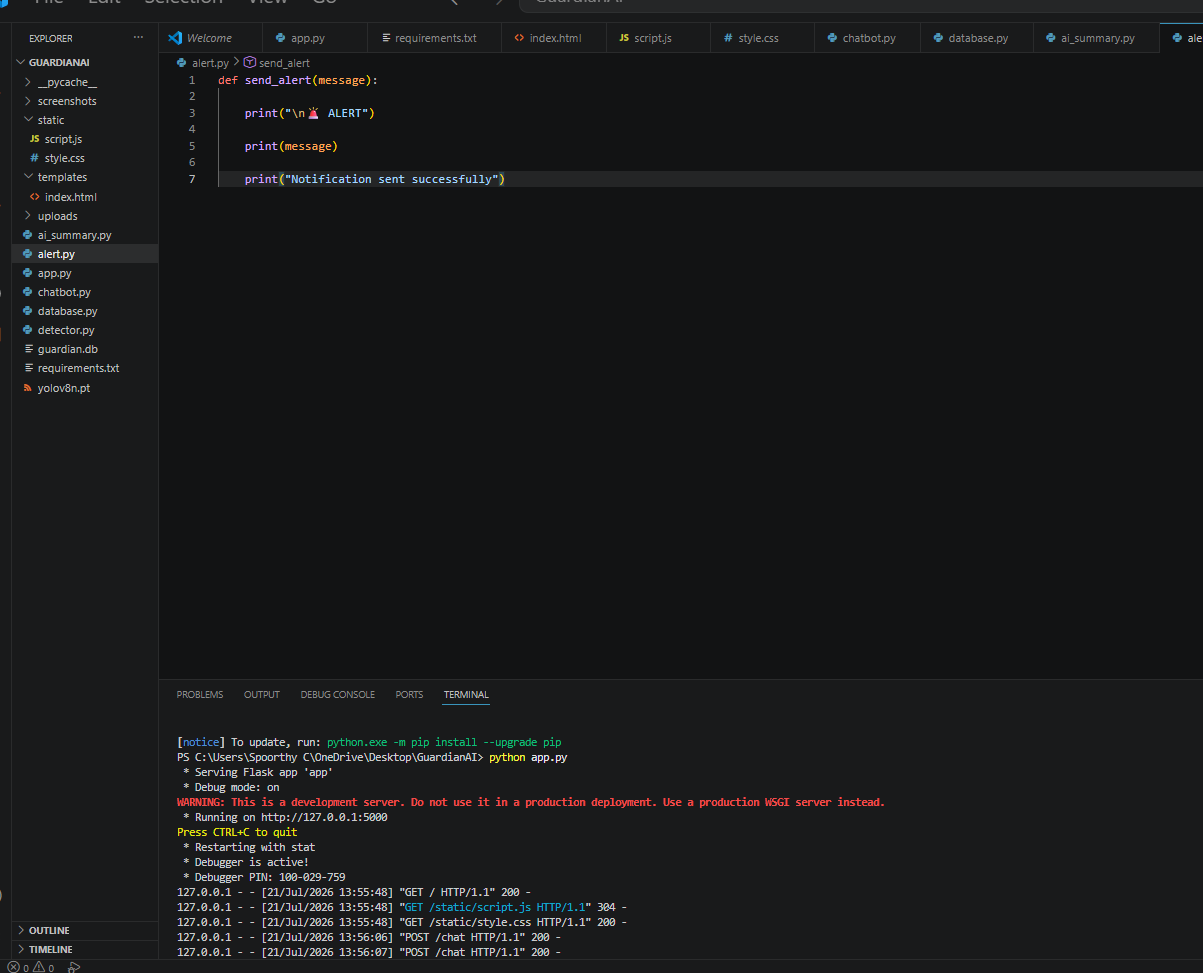
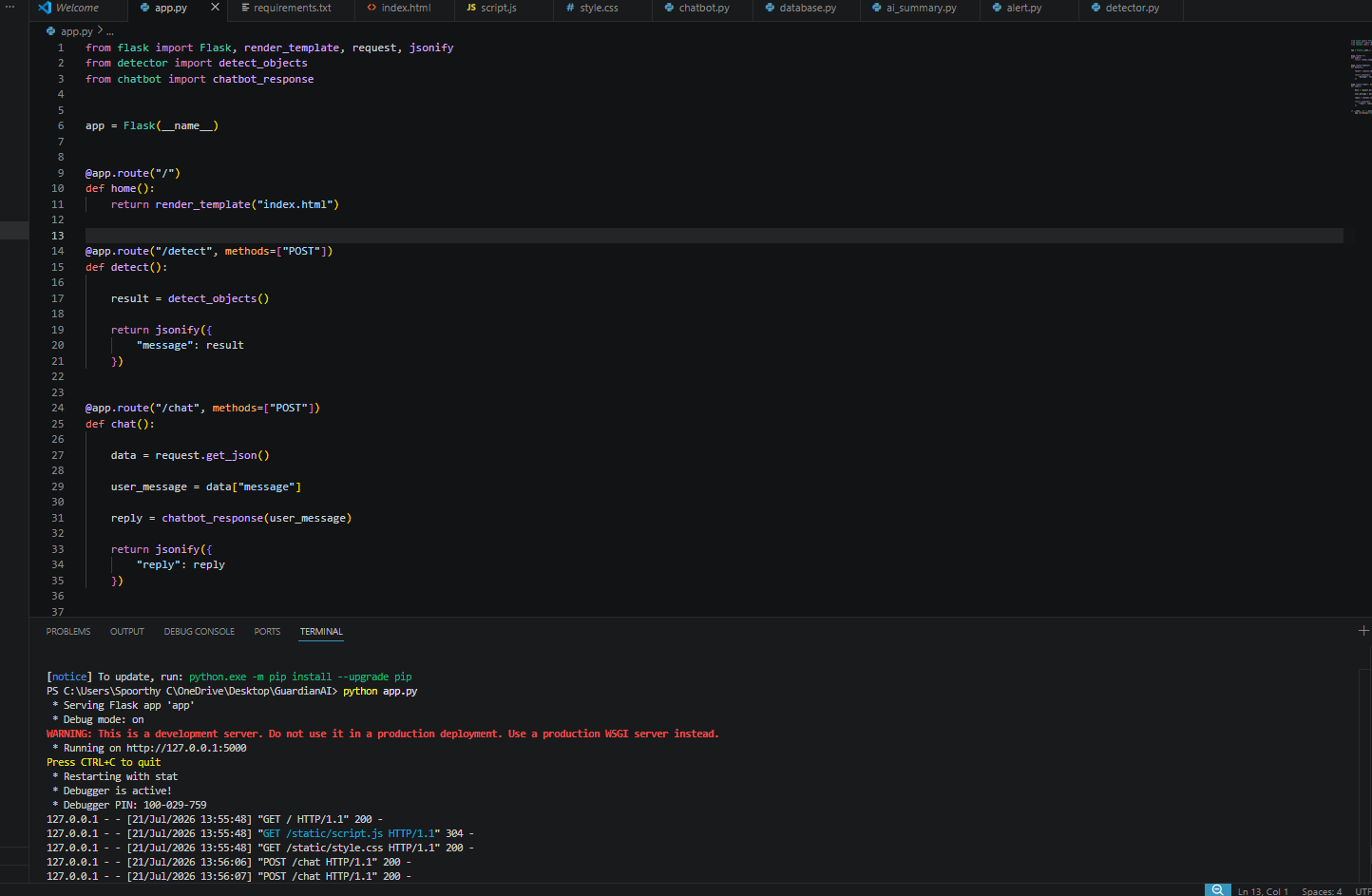
Python Flask (for future dashboard integration)
Security Analysis
Custom AI-based risk classification logic Automated security report generation
Development Tools
Visual Studio Code Python libraries including OpenCV, Ultralytics, NumPy
The workflow:
Camera Feed → Object Detection → Risk Analysis → Security Report → Alert System
Challenges we ran into
During development, we faced several challenges:
Integrating real-time camera input with AI detection Handling camera compatibility issues across devices Improving object detection accuracy Designing a risk classification system Managing project dependencies and Python environments
Solving these challenges helped us understand practical AI deployment and debugging.

Log in or sign up for Devpost to join the conversation.