-
-
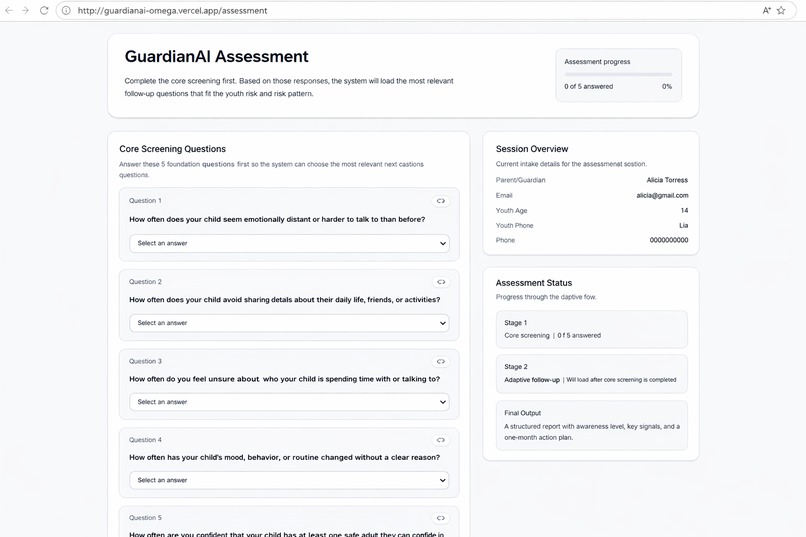
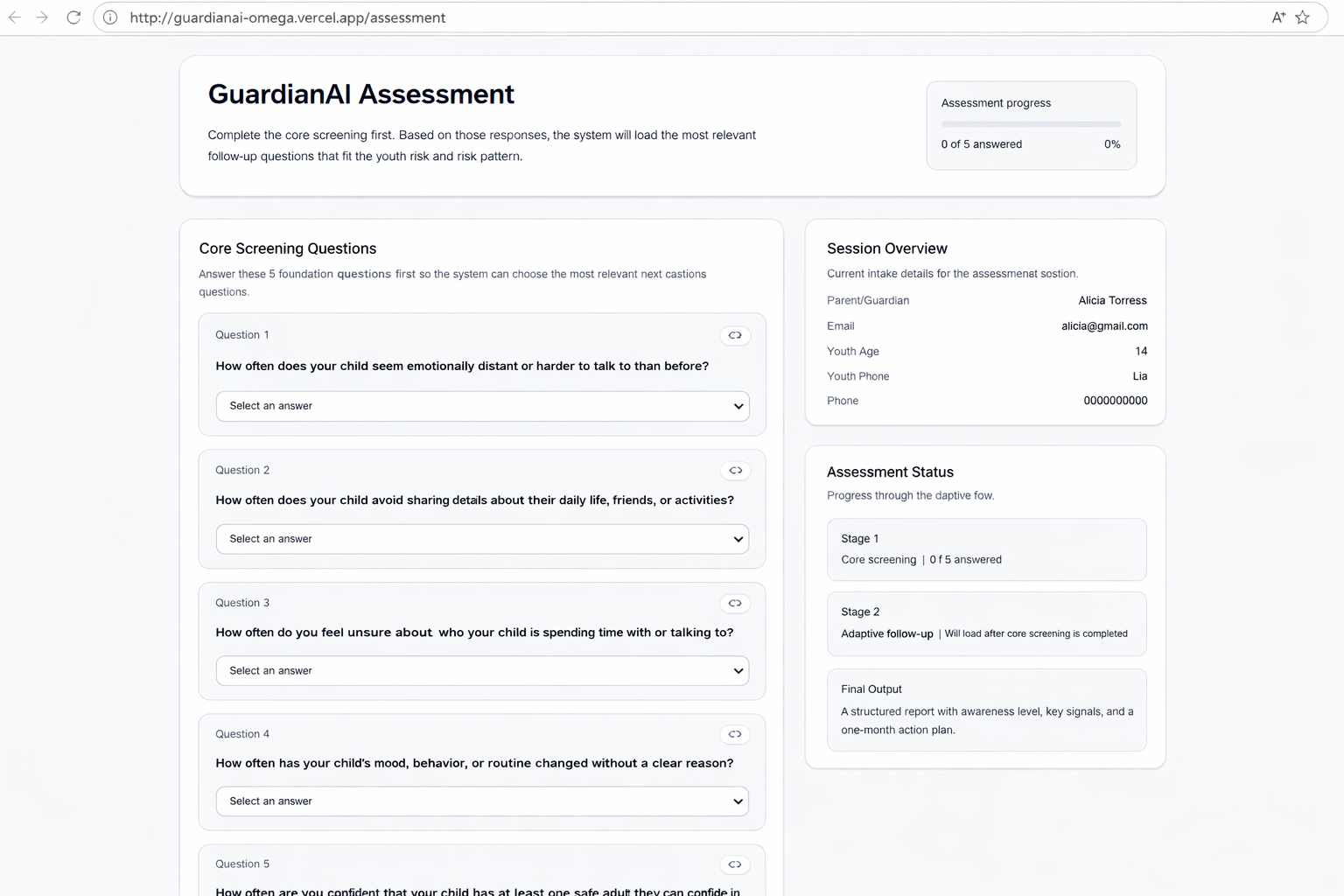
Assessment page
-
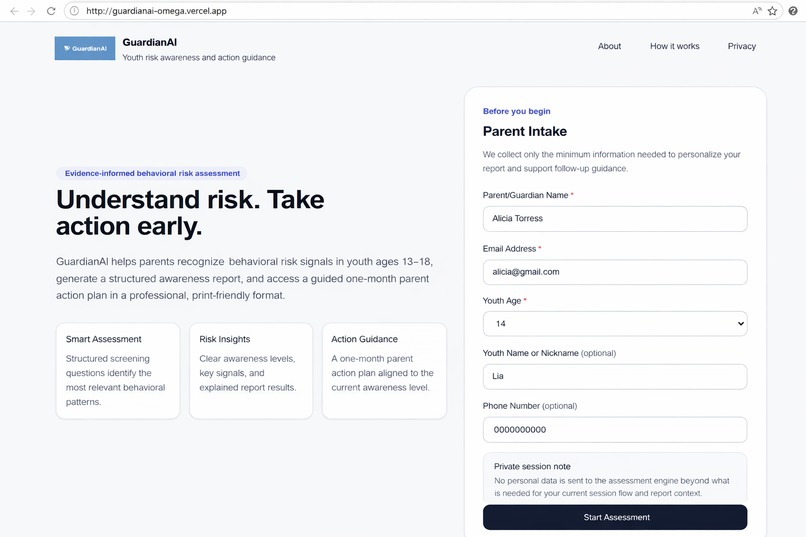
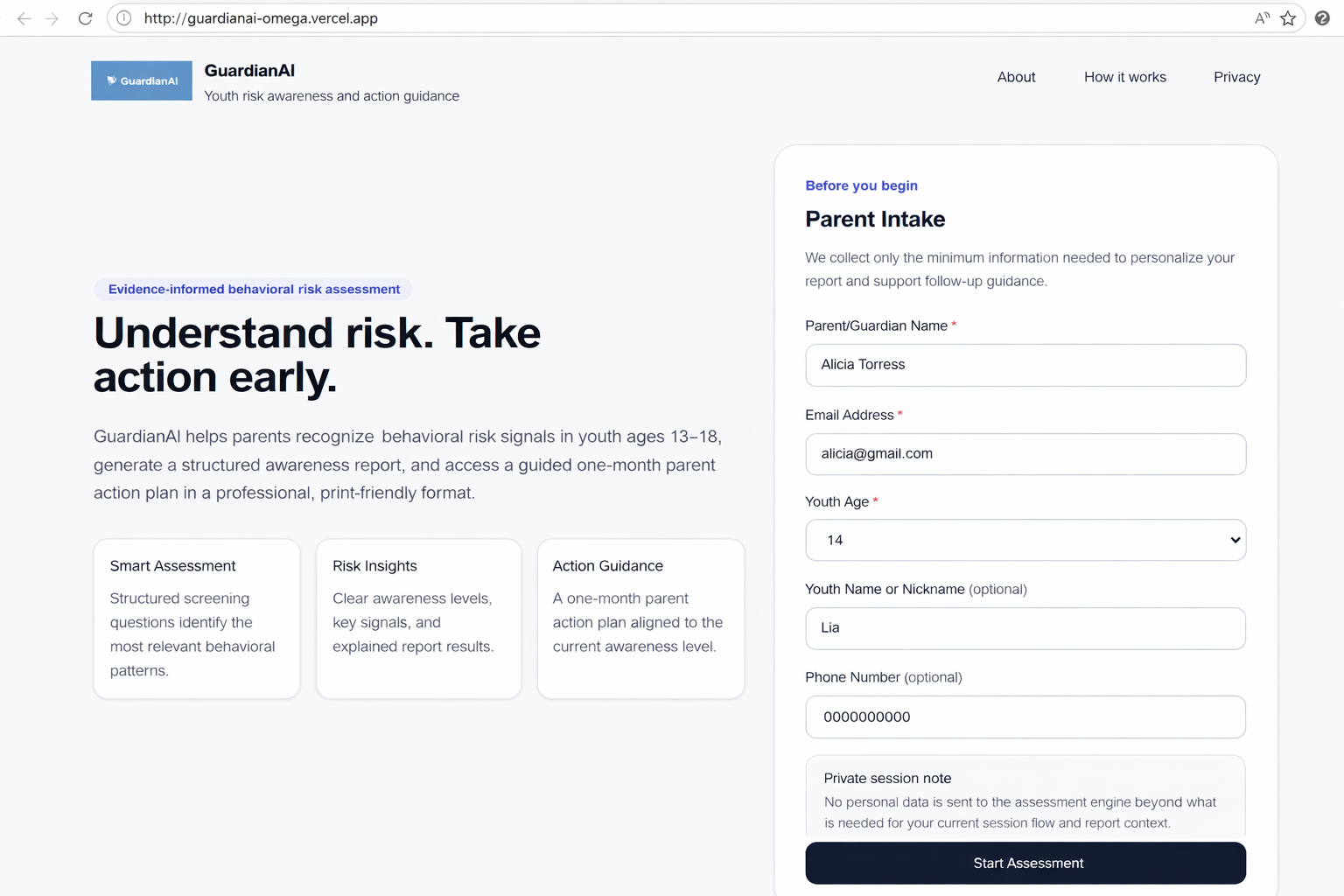
Homepage
-
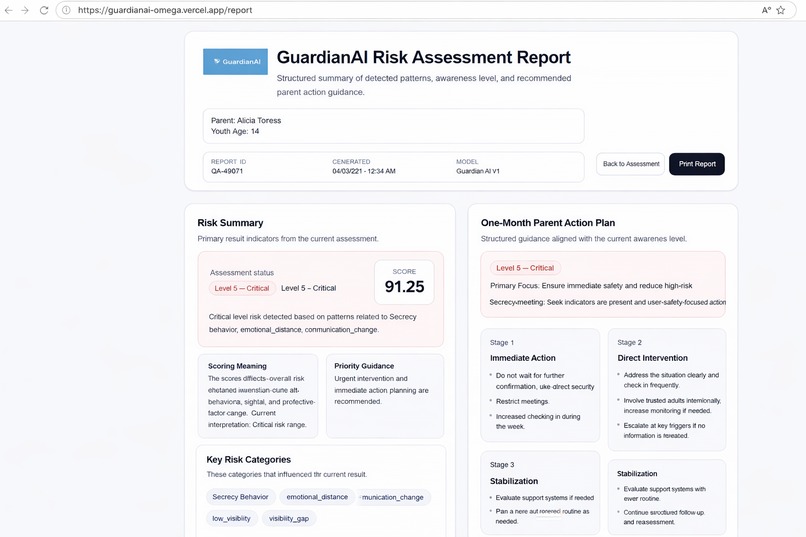
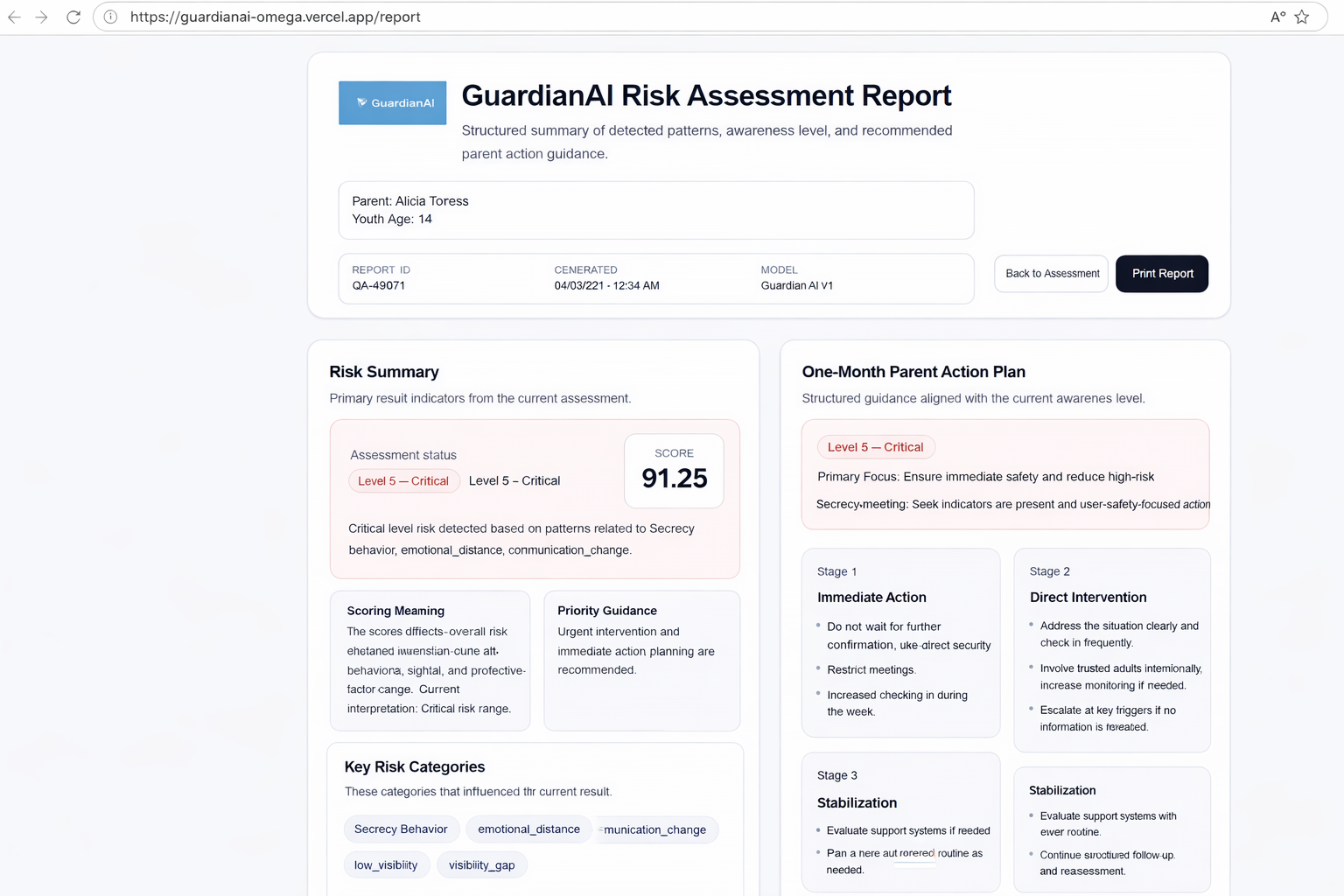
Risk score
-
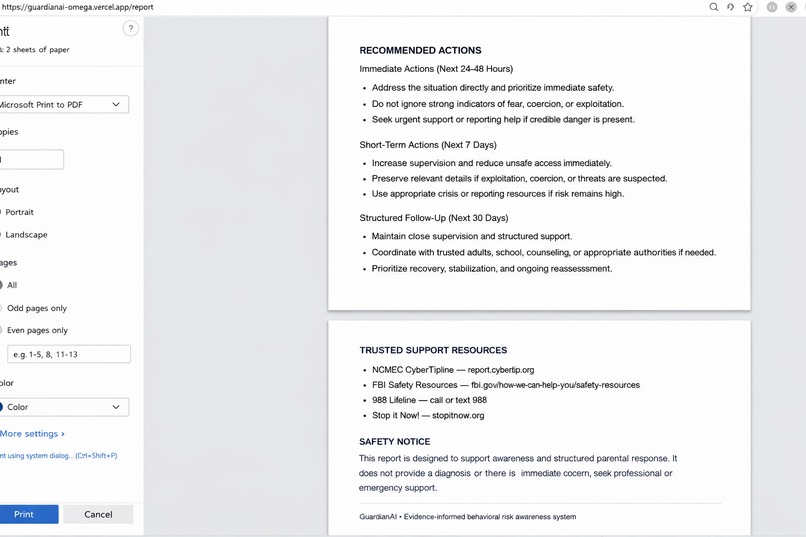
Details Report
-
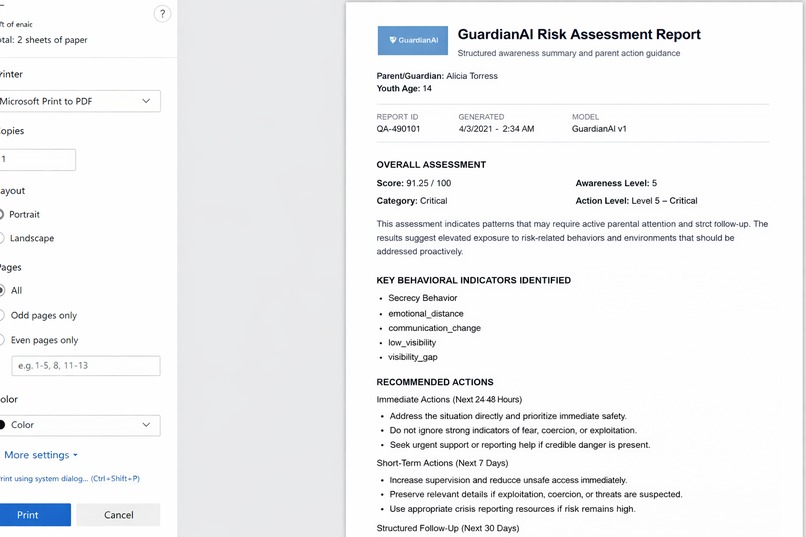
Report
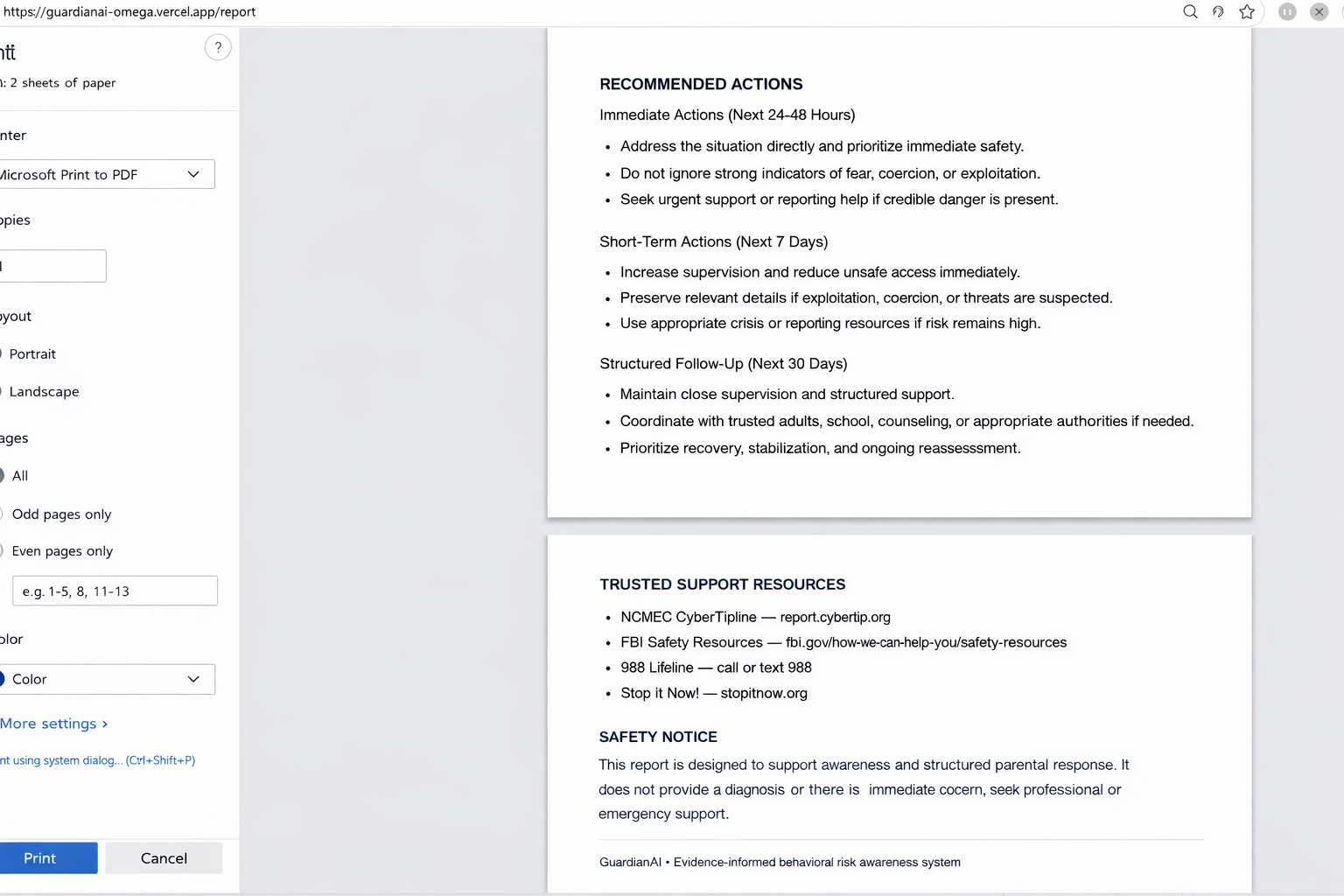
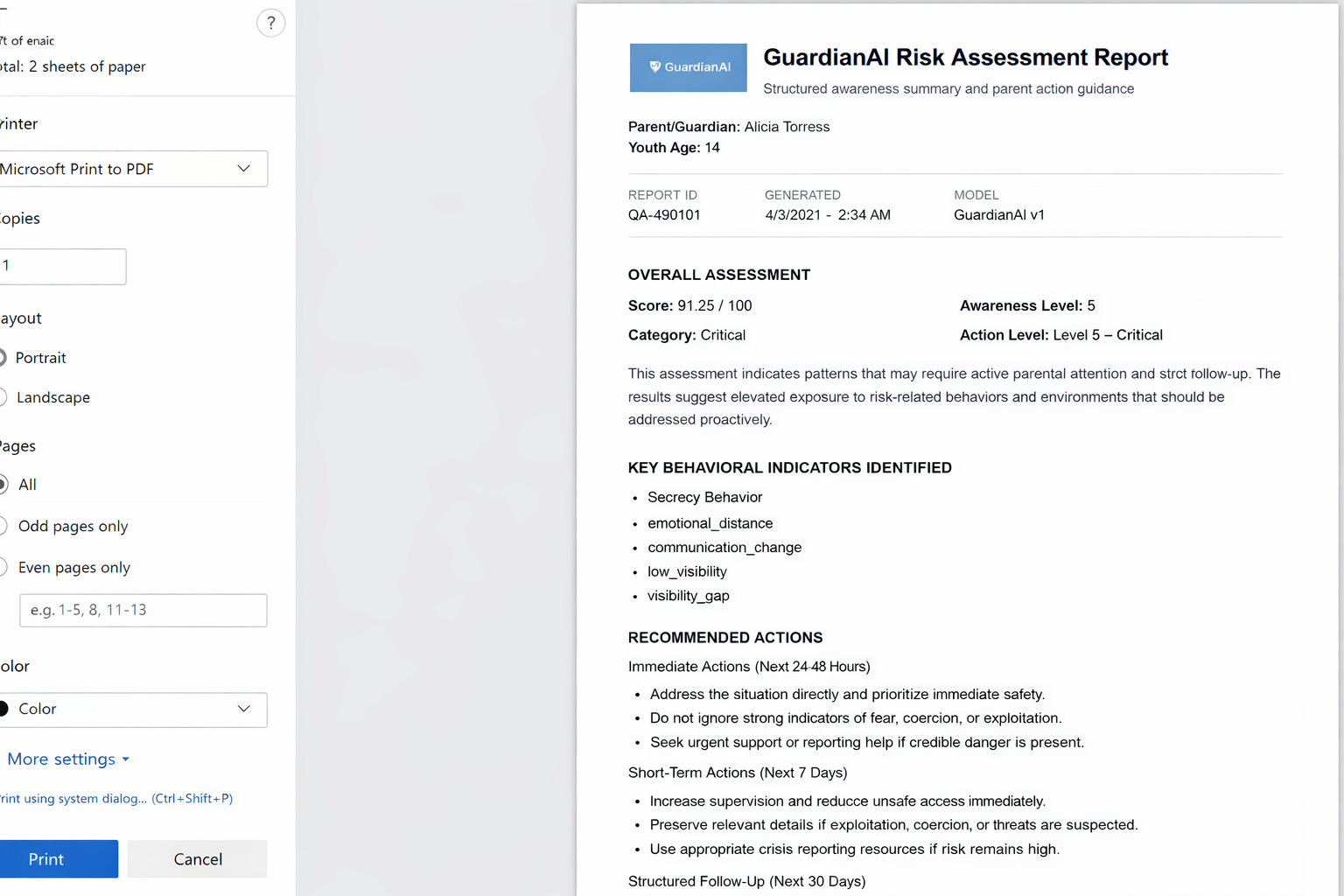
In the United States, over 300,000 children are reported missing every year, with recent years showing similar numbers across 2022–2025. (Source: https://www.icmec.org/missing-children-statistics/). These cases often don’t happen suddenly — many involve teenagers and are preceded by behavioral changes and online risks. Despite efforts by agencies like the FBI and national organizations, the numbers remain consistently high, showing that prevention is still not enough.
I deeply care about helping vulnerable people, especially youth. This inspired me to build a system that helps parents recognize early warning signs and take action before the risk becomes critical.
GuardianAI is a structured assessment system that helps parents identify early behavioral and safety risks in youth.
It uses guided questions informed by research in youth behavior, online safety, and developmental psychology, along with insights gathered from interviews, real-world cases, and publicly available sources such as the National Center for Missing & Exploited Children (NCMEC) and the Office of Juvenile Justice and Delinquency Prevention (OJJDP). The system adapts its questions based on age and reported symptoms, analyzes patterns through a scoring and rule-based model, and generates a clear awareness report. It highlights key warning signals and provides a researched one-month action plan with practical steps parents can take. By translating complex behavioral signals into structured insights and guidance, GuardianAI helps families access support-like awareness similar to what a trained professional might provide, especially for those who may not have immediate access to such resources.
GuardianAI was built as a hybrid decision-support system combining domain-specific behavioral modeling with an adaptive assessment pipeline.
The backend implements a modular architecture using Node.js and Python, where user inputs are processed through a multi-domain scoring engine (emotional, social, online exposure, and behavioral signals). Each response is weighted and evaluated through a rule-based inference layer designed from research patterns observed in youth behavioral studies and publicly available datasets (e.g., NCMEC, OJJDP).
An adaptive question flow dynamically adjusts based on prior responses, enabling deeper exploration of high-risk indicators rather than relying on static questionnaires. This allows the system to simulate a structured assessment approach similar to professional screening methods. On top of the scoring engine, an LLM-assisted reasoning layer generates contextual explanations and structured guidance, transforming raw signals into interpretable insights and actionable recommendations. The system is designed to prioritize explainability, ensuring that every output is traceable to underlying behavioral indicators, while maintaining a lightweight, responsive frontend for real-time interaction and report generation.
One of the main challenges was translating complex, research-based behavioral patterns into a structured system that remains accurate while still being simple enough for parents to use. Balancing technical depth with real-world usability required multiple iterations of the scoring logic and question design.
Another challenge was designing the adaptive assessment flow. Ensuring that follow-up questions dynamically adjust based on user responses—while still maintaining consistency and avoiding bias—required careful tuning of rule-based logic and domain weighting. We also faced difficulty in making the system explainable. It was important that every result clearly reflects the underlying signals rather than appearing as a “black box,” which led to building a transparent reasoning layer tied directly to observed indicators. Finally, integrating research-informed guidance into actionable recommendations was challenging. Converting broad insights from studies and real-world patterns into concise, practical steps for parents required continuous refinement to ensure clarity, relevance, and responsibility.
What I’m really proud of is that this can actually help people in real life. Even if it helps just one parent notice something early and take action, that matters.
Over time, I see this growing beyond just a tool — something that can be used in schools, across cities, and eventually at a larger level where more families can benefit from early awareness. A lot of parents and guardians don’t even realize what signs to look for, and some kids don’t even have parents around, so this can support guardians too. The goal is to keep improving this system with more real-world data, better guidance, and stronger awareness so more people can understand these risks early. If more families become aware, even a small improvement can make a real difference.
speaking to people gave me a much deeper understanding of what actually happens behind these situations. It’s very different from what we usually see in the media — most cases are more complex, and there are always patterns that build over time.
This process made me realize how much early warning information already exists, but it is not structured in a way people can use. It also made me more confident that this problem can be addressed with the right approach. After going through all this research and real-world context, I feel a strong responsibility to keep working on this. My goal is to continue improving this system and do my part so fewer children go through these situations in the future.
The next step is to evolve GuardianAI into a more advanced system by integrating modern AI technologies such as large language models (LLMs) to provide deeper reasoning, more personalized guidance, and better explainability of behavioral patterns. The goal is to move from a structured assessment tool to a more intelligent, adaptive support system that can continuously learn and improve.
I also plan to expand the research foundation by incorporating more real-world case studies, validated behavioral frameworks, and data from recognized organizations such as NCMEC and OJJDP. This will allow the system to become more accurate, reliable, and grounded in real-world patterns over time. On a larger scale, the vision is to grow this into a broader awareness system — starting with individual families, then expanding into schools, communities, and eventually across cities and states as part of a wider national effort. By collaborating with organizations, educators, and technology partners, this can become a meaningful tool that increases awareness among parents and guardians, especially those who may not have access to professional support. Ultimately, the goal is not just to improve the technology, but to build something that genuinely helps people — raising awareness, enabling early action, and contributing to reducing the number of youth who go missing over time.
Built With
- css
- fastapi
- html
- javascript
- node.js
- python
- vercel

Log in or sign up for Devpost to join the conversation.