-
-
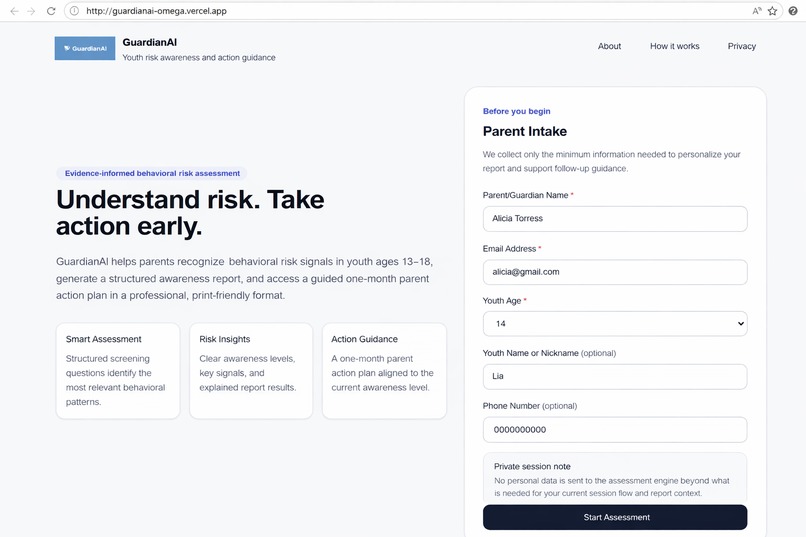
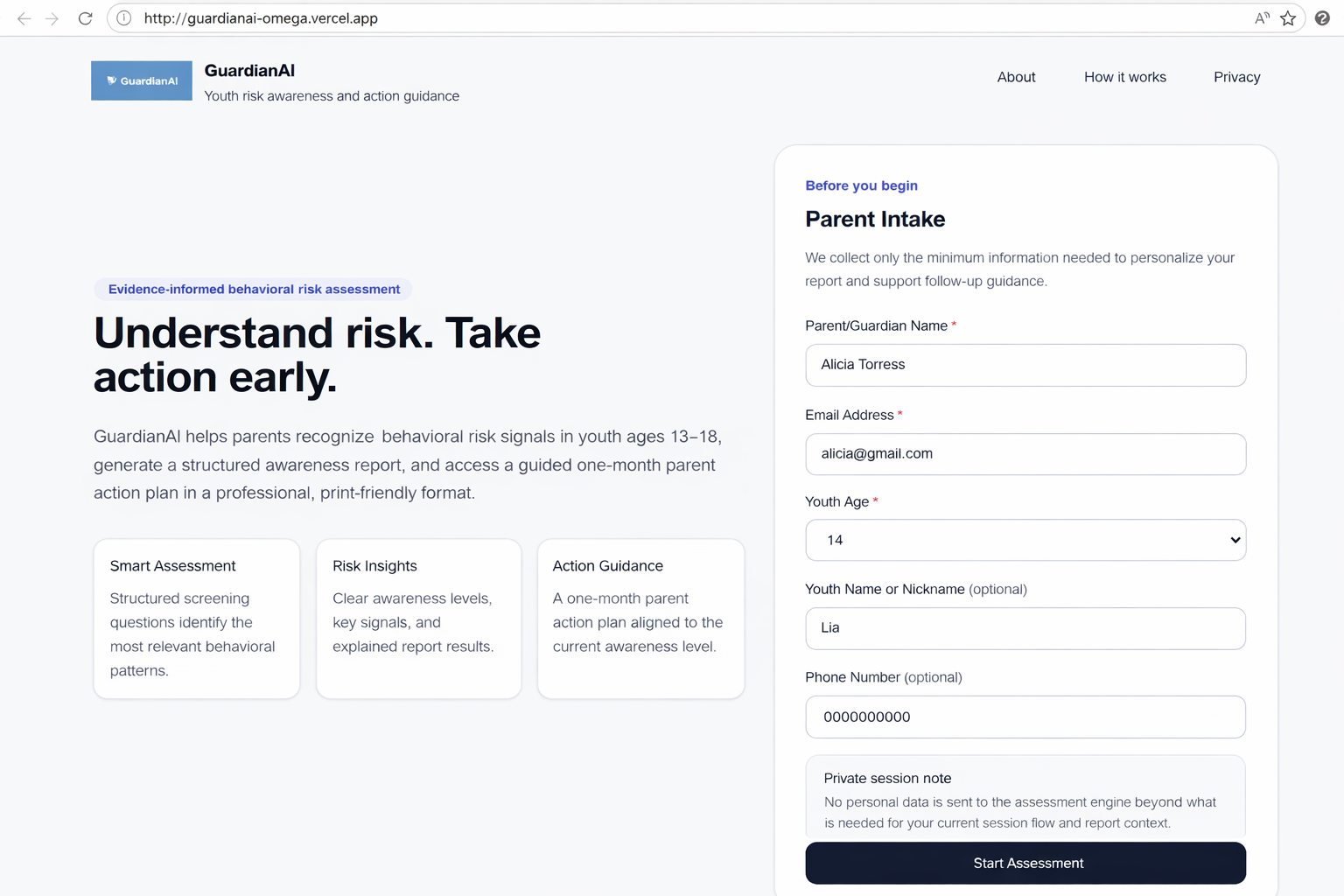
Homepage - Problem
-
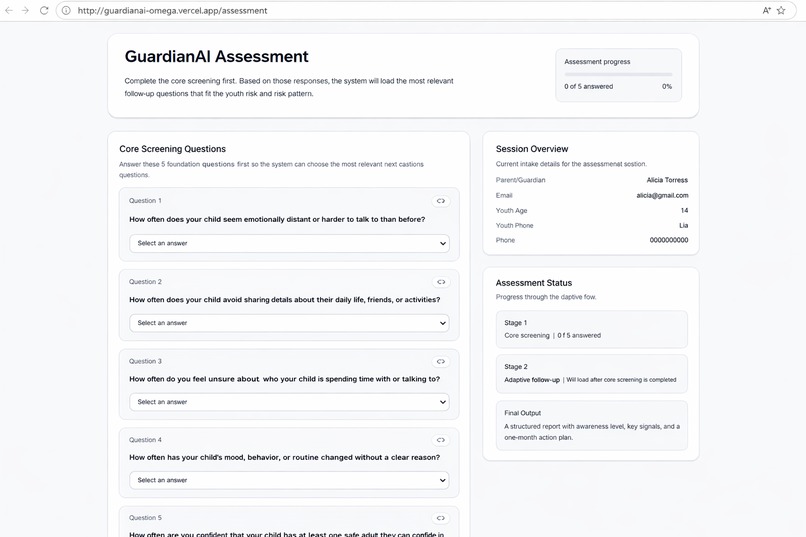
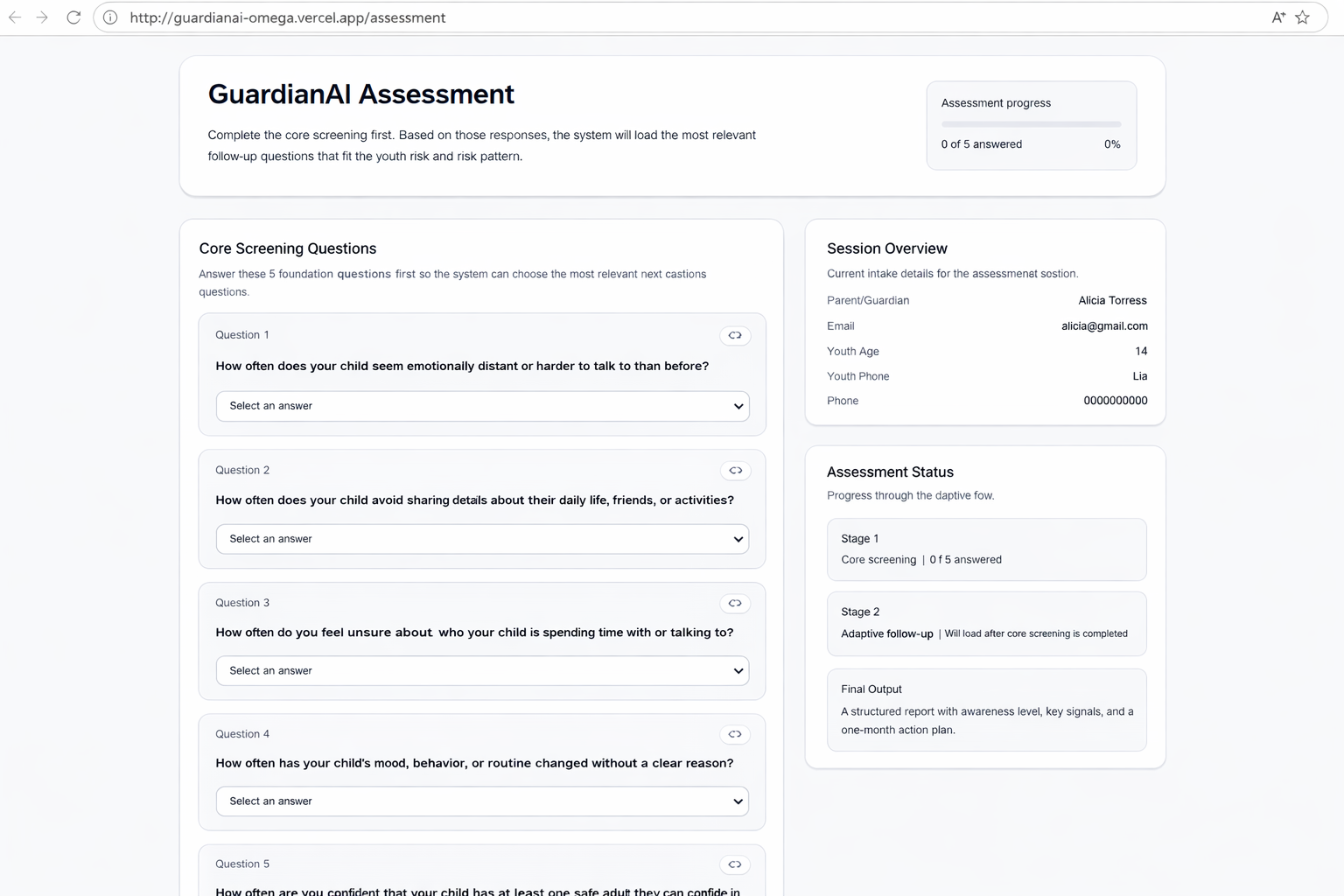
Assessment- Questionnaires
-
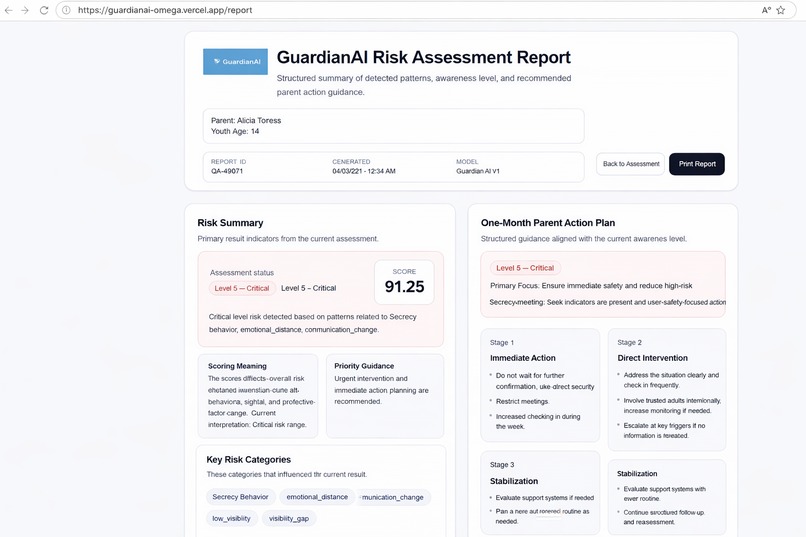
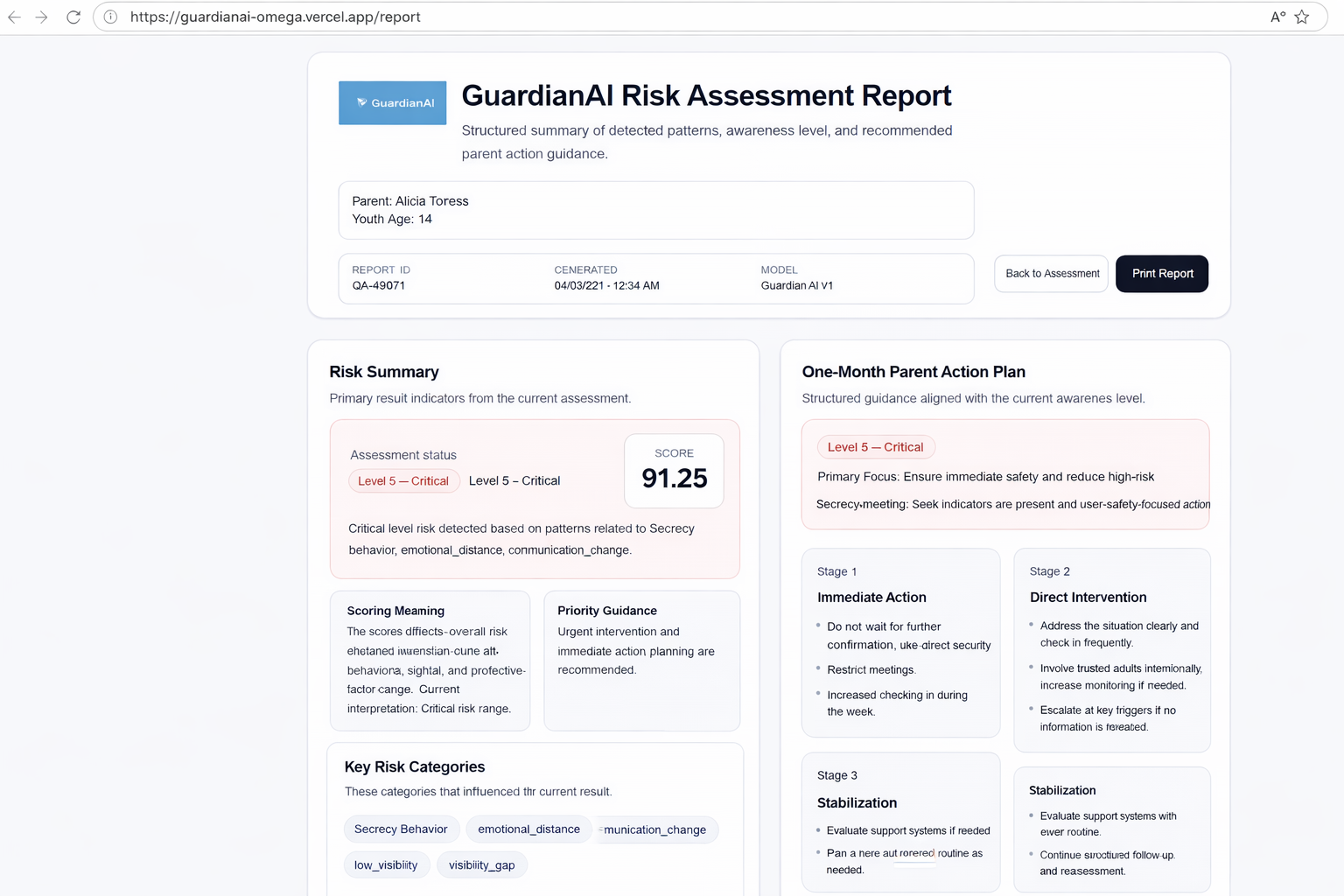
Intelligence- Results
-
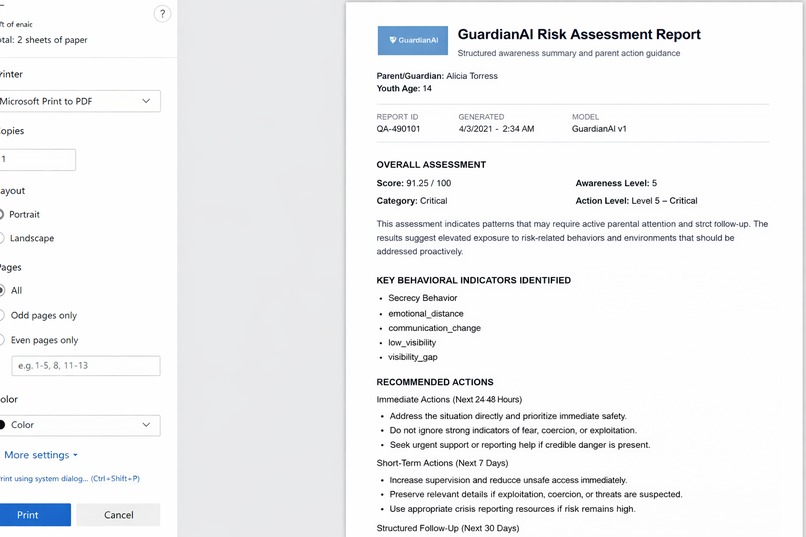
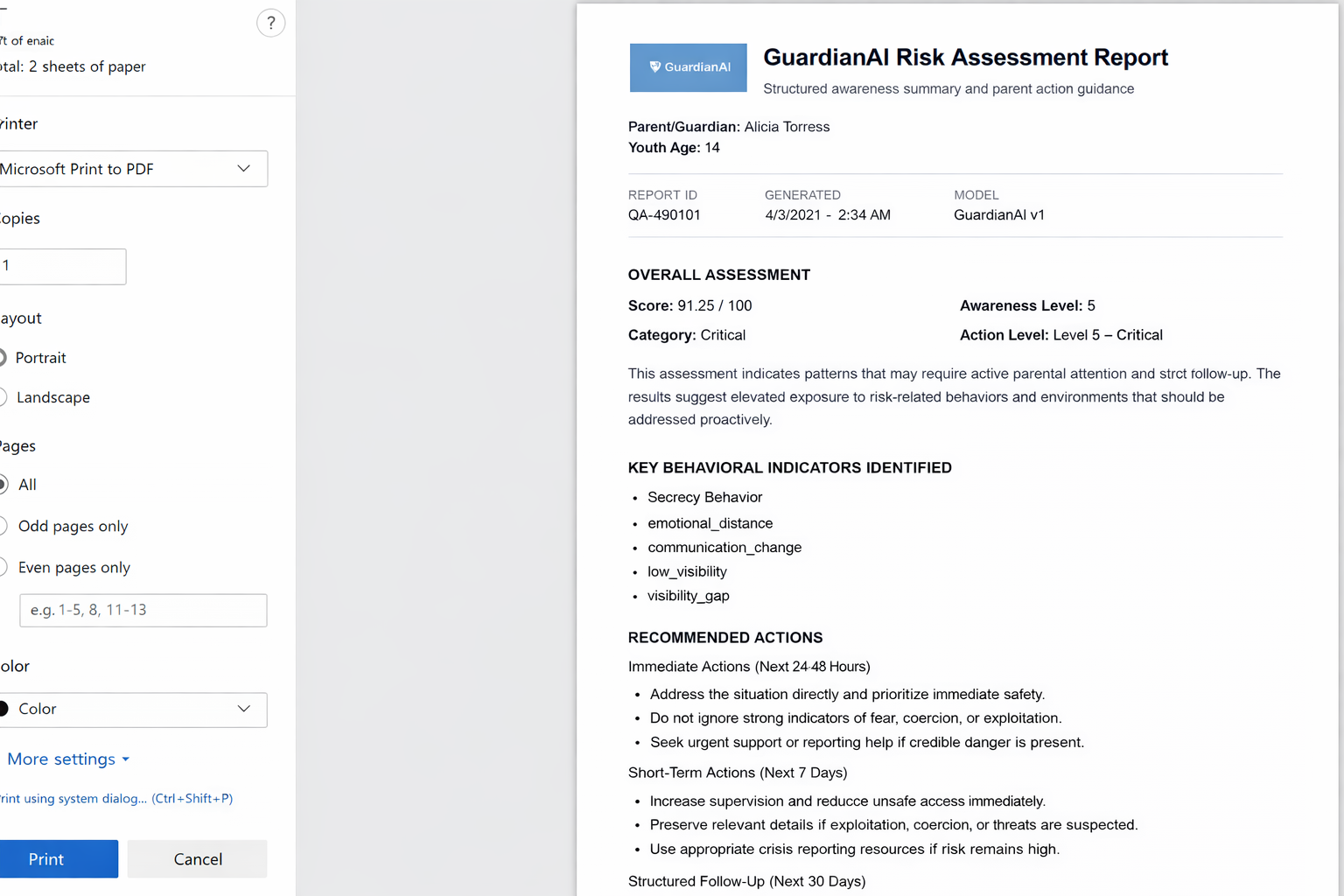
Output - Summery
-
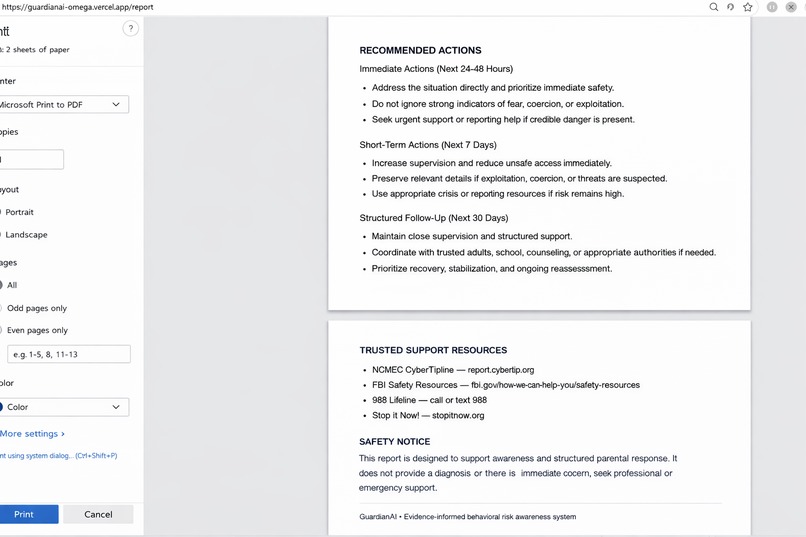
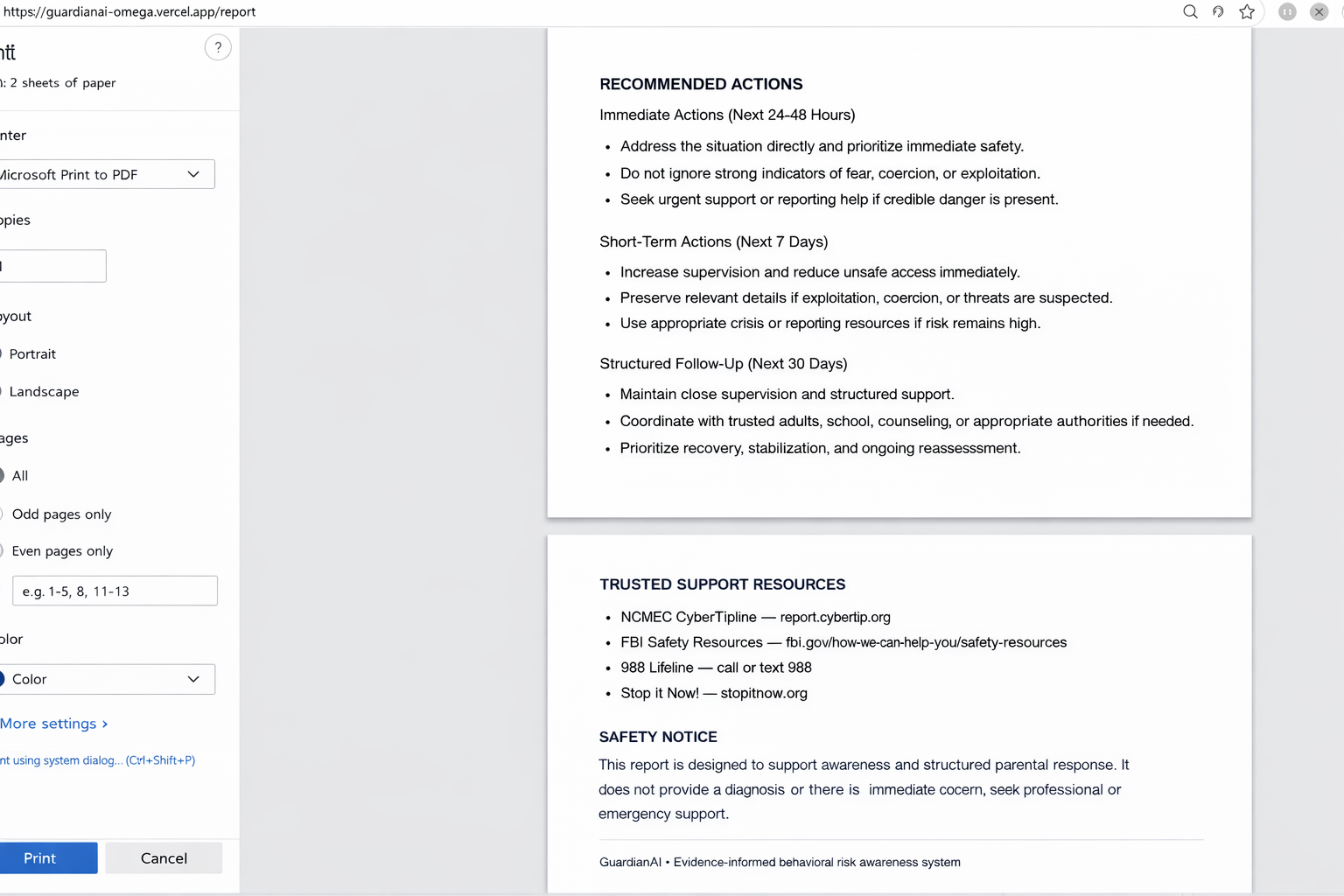
Action Plan
Inspiration
Across the United States, a large number of youth-related incidents develop gradually over time rather than happening suddenly. Through conversations with parents, students, and educators, one thing became clear: people care deeply, but they often don’t recognize early warning signs or know how to respond. I wanted to build something that helps bridge that gap—making behavioral patterns easier to understand before situations escalate.
What it does
GuardianAI is a web-based system that helps parents understand early behavioral risk signals in teenagers (ages 13–18). Instead of asking fixed questions, the system adjusts based on each response. After a few core questions, it selects more relevant follow-up questions depending on the situation. This helps focus on things like emotional changes, online activity, and social behavior. At the end, it gives a clear risk level and simple guidance that parents can actually follow, instead of just showing a score.
How we built it
The system is built using a full-stack setup.
Frontend: Next.js for the user interface and assessment flow
Backend: FastAPI for handling logic and evaluation
Data: A structured question bank with adaptive decision logic
The main idea is that the system works step by step. It starts with a small set of core questions, then based on those answers, it decides which questions to ask next. This makes the assessment more focused instead of asking everything to everyone.
The logic is designed to be clear and explainable, so the results are not random and can be understood. Most of these situations don’t happen suddenly. They build over time. I wanted to create something that helps people notice those early signs before things get serious.
Challenges we ran into
One of the biggest challenges was not technical, but understanding the problem correctly. Collecting meaningful behavioral patterns required going beyond assumptions. I looked into verified sources, studied real-world cases, and spoke with parents, students, and educators to understand how these situations actually develop over time. From there, building a structured question bank was difficult. It involved translating real-life scenarios into clear, observable, and non-judgmental questions. Designing around nearly 100 questions while keeping them relevant and measurable was a complex process. On the technical side, integrating the frontend and backend during deployment presented challenges, particularly around CORS configuration and handling environment-based API routing between local and production environments.
Accomplishments that we're proud of
I was able to build a full working system from idea to deployment, not just a concept. Instead of using a basic form, I designed a system where questions change based on answers, which makes it feel more real and situation based. What I’m most proud of is the purpose of this project. This is not just another tool. It’s something that can help parents understand what’s going on early and take action before things get worse. If this grows, I believe it can be used by families, schools, and institutions to support young people better.
What we learned
This project showed me how important clarity and simplicity are when building something for real people. I also learned a lot about:
- Deploying and debugging a full-stack app
- Building adaptive logic instead of fixed flows
- Turning real-life behavioral patterns into something structured
More importantly, it showed me that many real-world problems are not solved because people don’t recognize them early. This made me think more about building tools that focus on awareness and prevention, not just reaction.
What's next for GuardianAI
Future improvements include:
- More advanced adaptive logic using machine learning
- Personalized action plans based on risk patterns
- Expanded behavioral datasets and validation
- Improved mobile experience and UI refinement
The long-term goal is to evolve GuardianAI into a preventive support tool that helps families take informed action early.
Built With
- fastapi-(python)
- next.js-(react
- render
- rest-apis
- tailwind-css
- typescript)
- vercel-(frontend-hosting)

Log in or sign up for Devpost to join the conversation.