Inspiration
The idea for Guardian Z began with a simple, painful truth: People often see danger but stay silent out of fear.
One evening, a college student saw a young girl crying near a bus stop. Something felt wrong—she wasn’t with family, and a man nearby kept forcing her to walk with him. The student wanted to help but hesitated. “What if I’m wrong?” “What if they target me later?” “Will the police even listen?”
By the time courage replaced fear, the girl was gone. No one reported it. No one knew what happened next.
That night, a realisation struck: Silence isn’t caused by ignorance—it’s caused by fear.
Fear of getting involved. Fear of exposing identity. Fear of retaliation. Fear of a system that feels too heavy to approach.
This moment sparked a vision: What if there was a way to report danger without revealing yourself? What if a single tap could alert NGOs instantly, without your name or number? What if society didn’t need courage to speak—just a safe platform?
And that vision became Guardian Z.
A platform where:
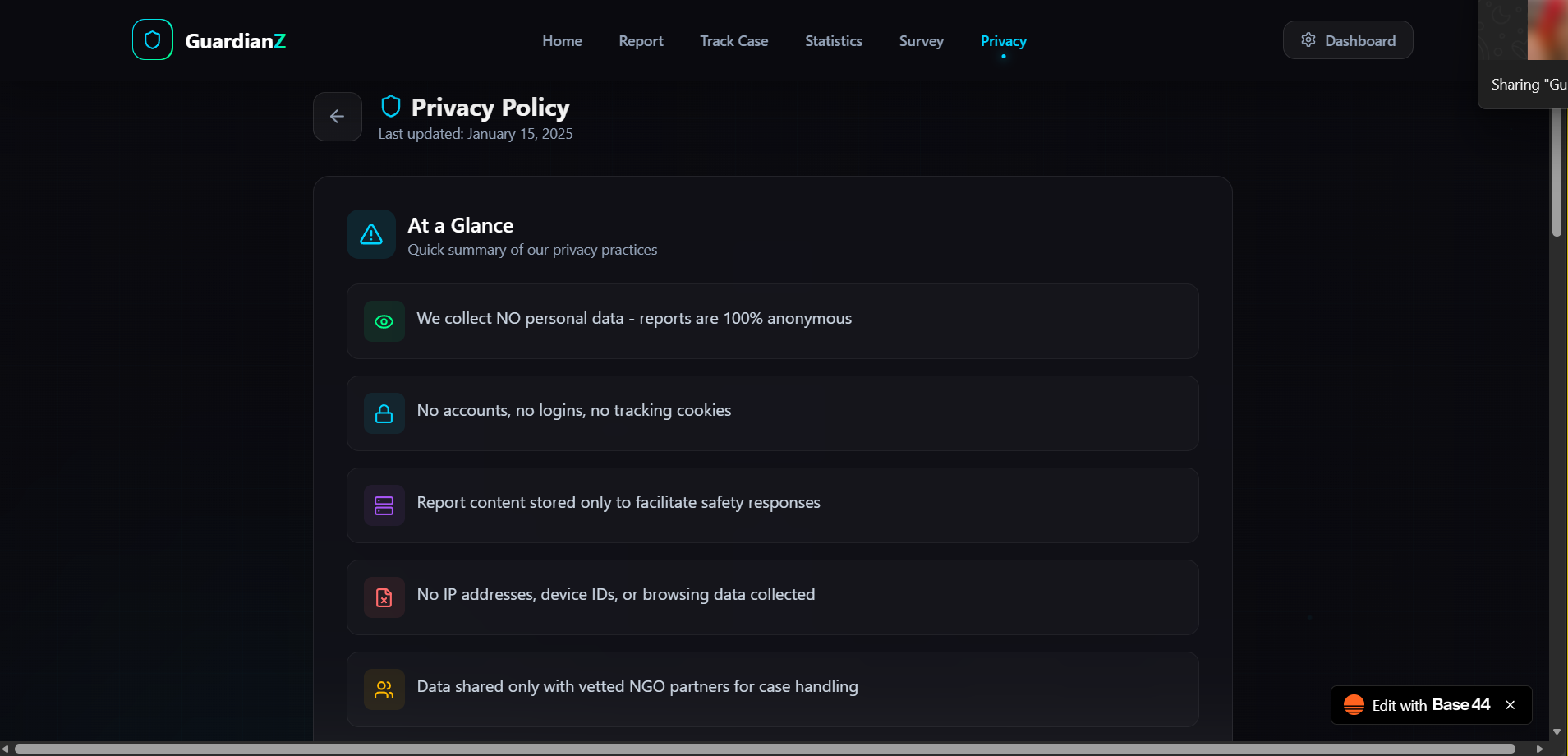
No identity is ever asked.
Every report creates a chance to save someone.
Community safety is powered by anonymous courage.
Ordinary citizens become silent guardians.
Guardian Z was born from the belief that: You don’t need to be a hero to save someone—you just need a voice that feels safe.
And this project aims to give every person that voice. Because sometimes, a single anonymous tip is all it takes to change a life.
What it does
What Guardian Z Does (Point-Wise)
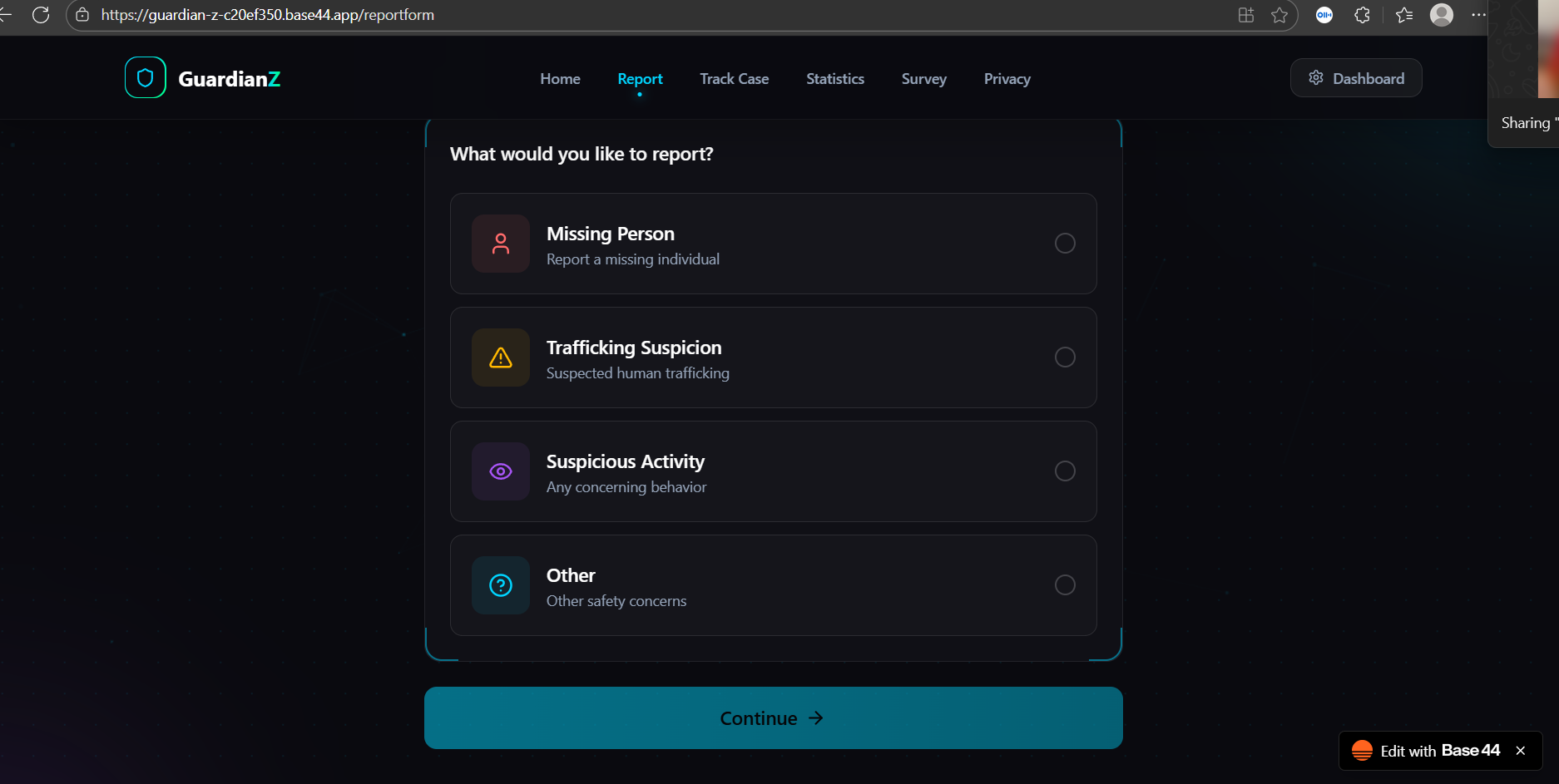
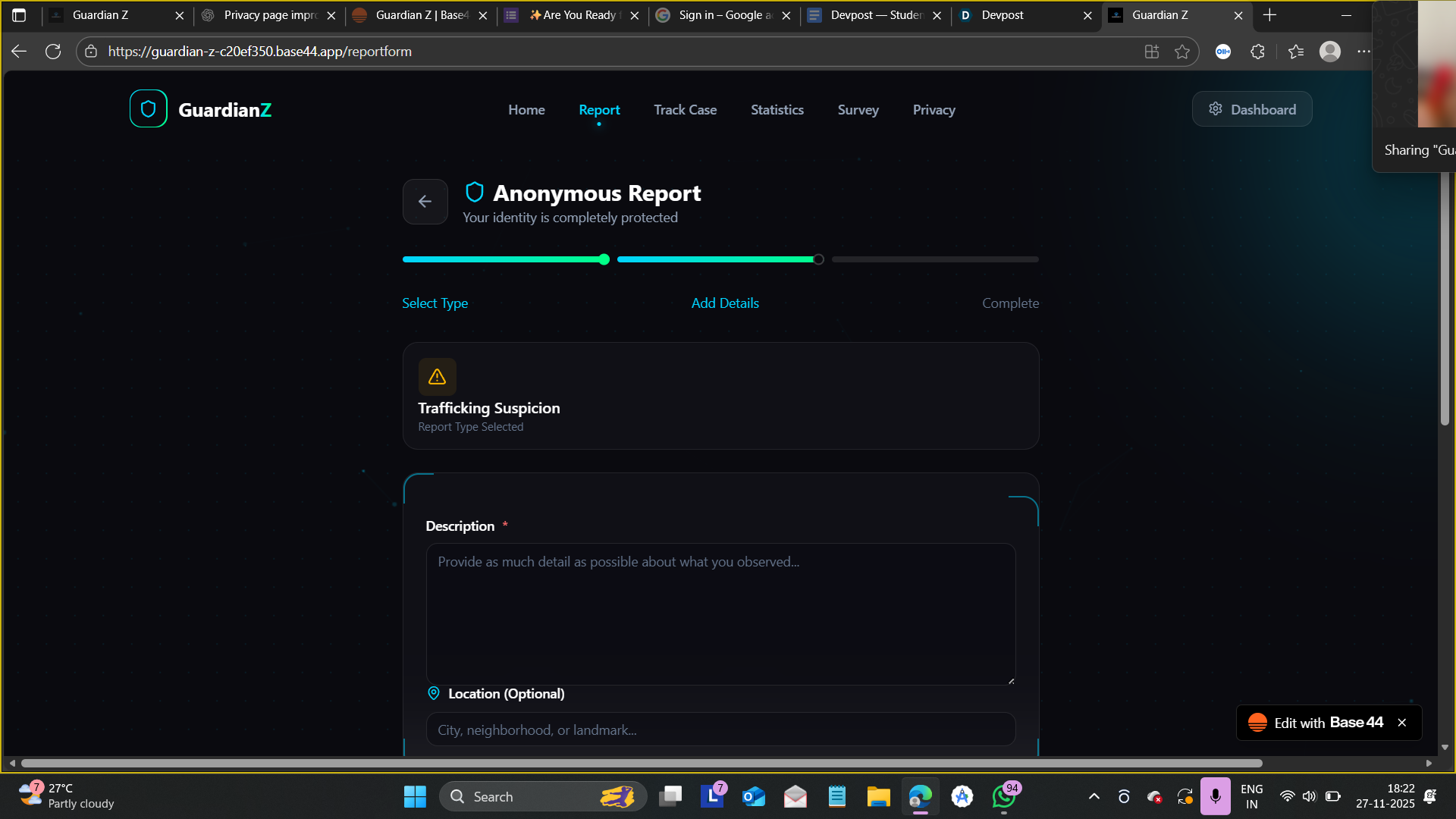
Allows people to report suspicious activities anonymously
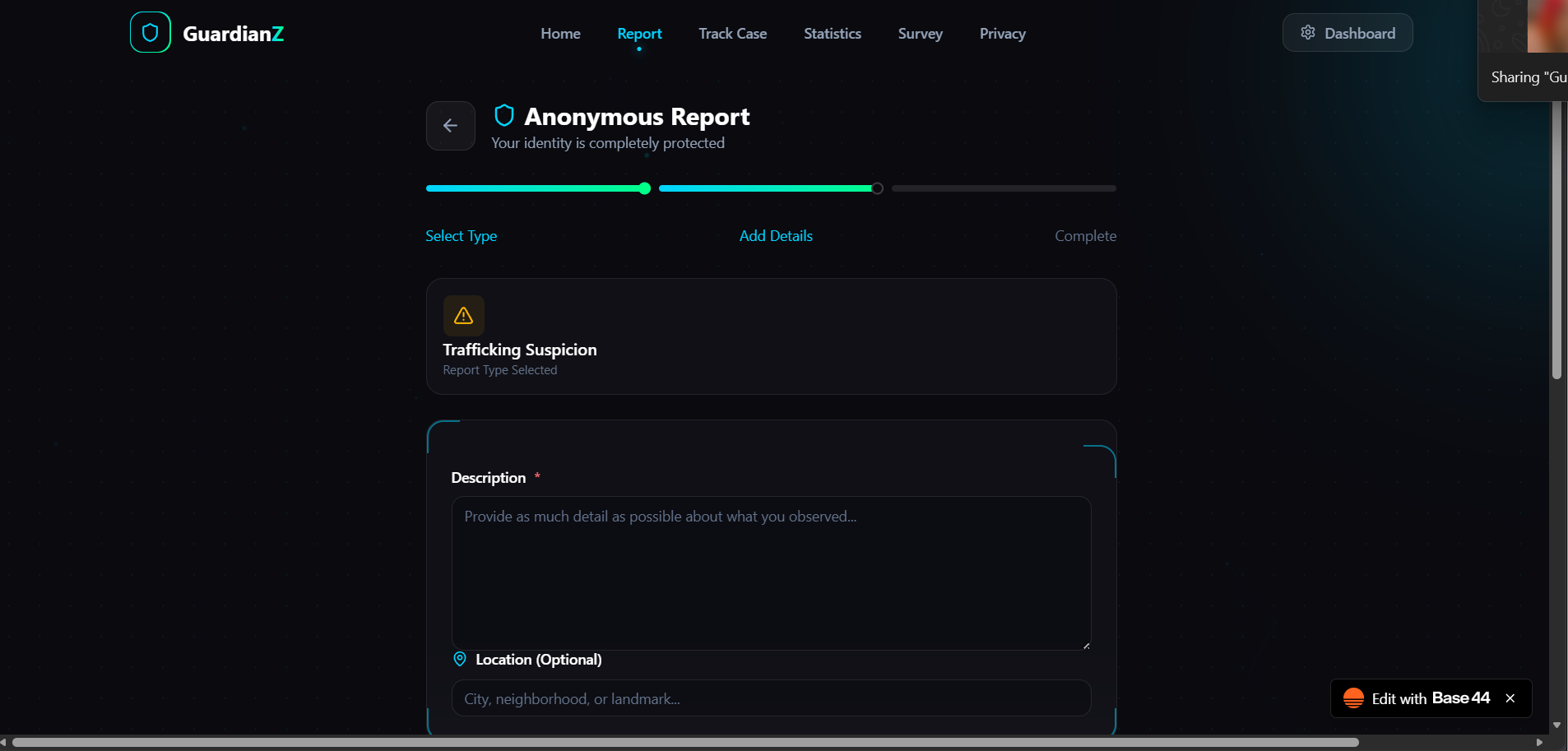
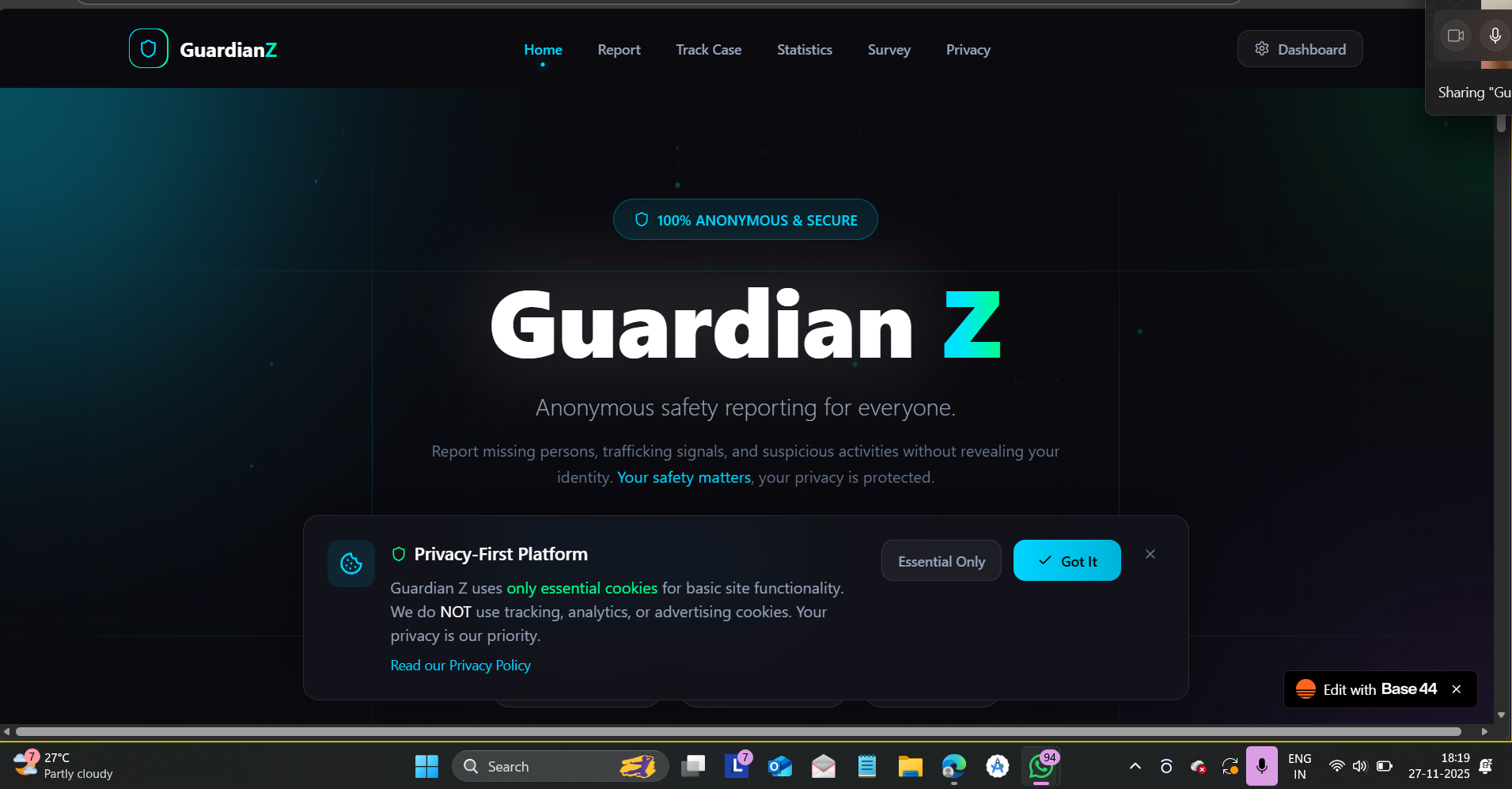
No login, no personal details, zero identity exposure
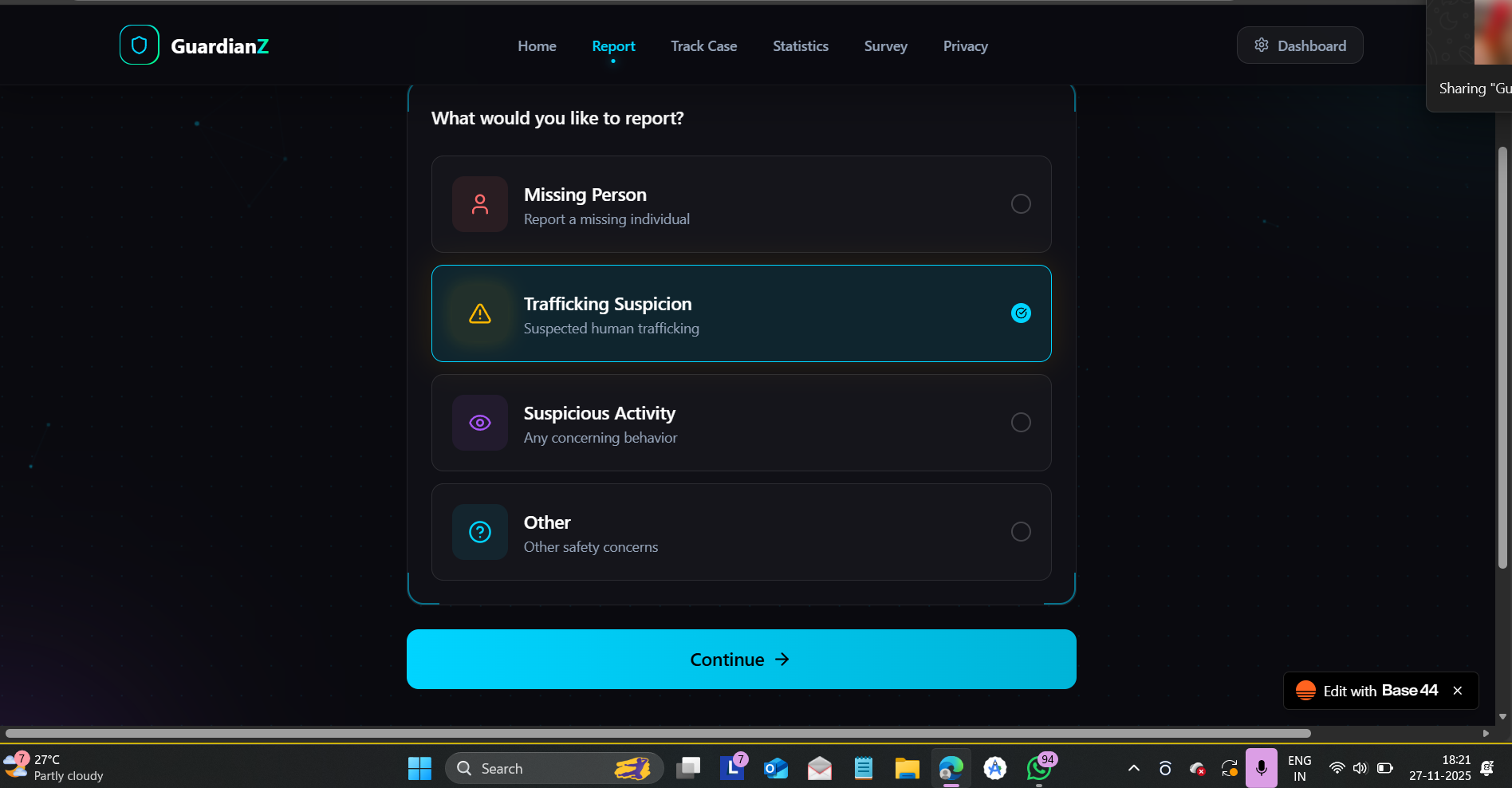
Supports reports for missing persons, trafficking signs, or crimes
Let's users upload photos/videos with an auto-blur option
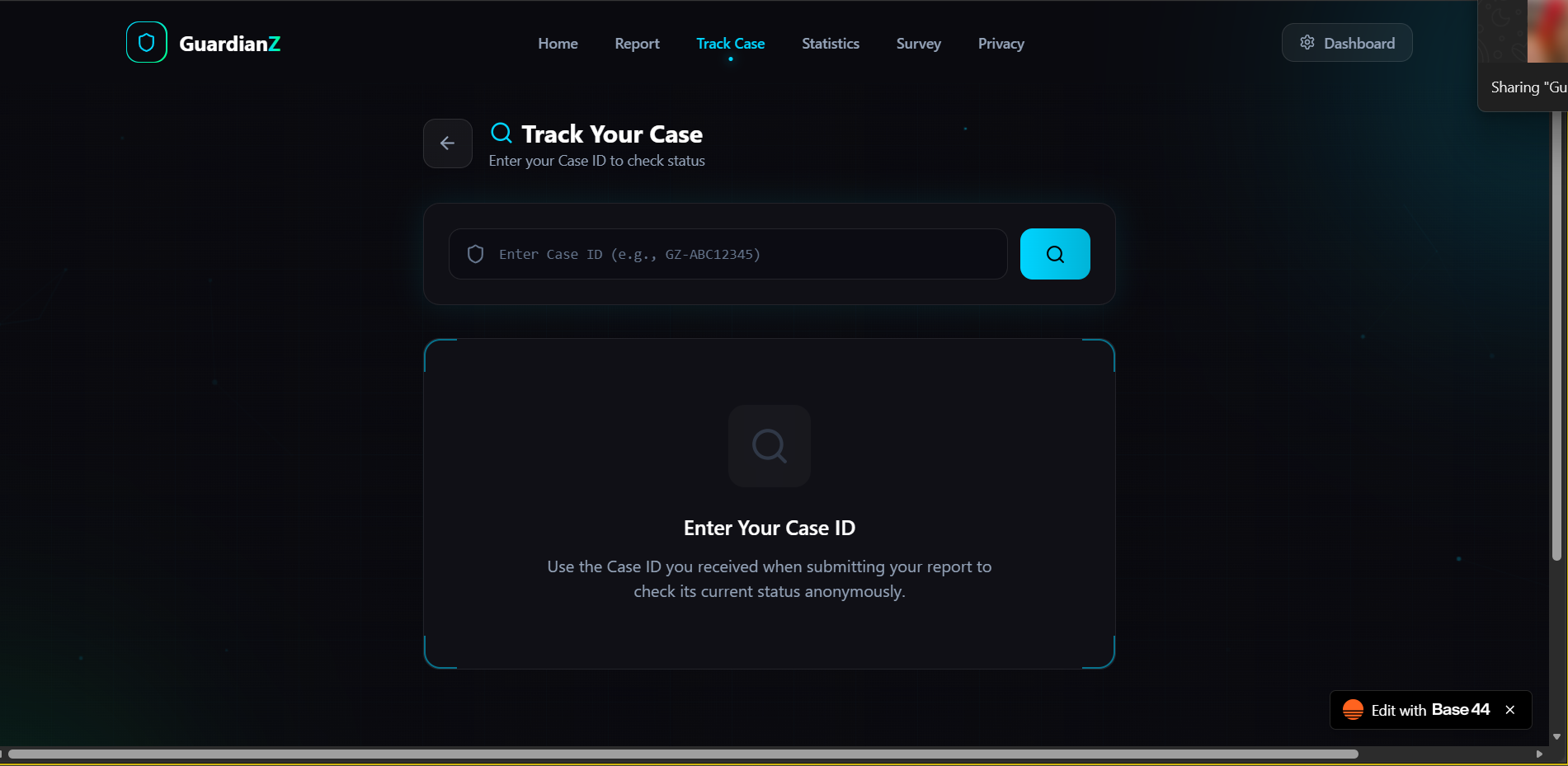
Generates a unique Case ID for tracking the report
Sends reports directly to verified NGOs and responders
Responders can update case status in a secure dashboard
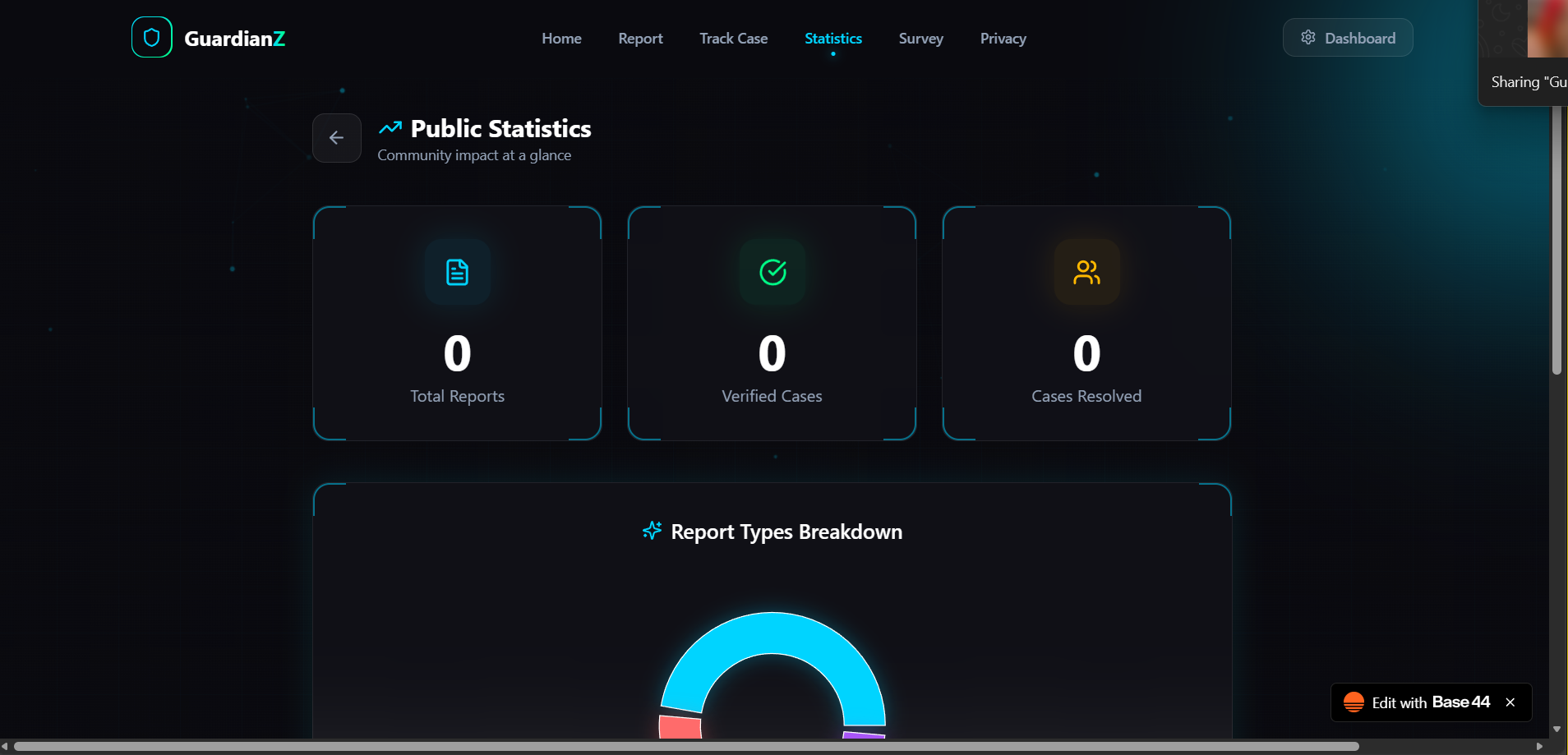
The public can check the case progress without revealing identity
Helps increase community safety and faster rescue actions
How we built it
Guardian Z began as a small idea during a discussion: “Why don’t people report crimes even when they want to help?”
We realised the answer was fear—fear of exposure, fear of trouble, fear of consequences. So we decided to build something that removed fear entirely.
We started with a basic concept: Anonymous reporting + Direct help = Safer communities.
From there, we designed a simple form where anyone could report danger without giving their name. Then we added a Case ID system so people could track updates safely. Next came the responder dashboard, built for NGOs who could act quickly. Piece by piece, we shaped an app that protected both the victim and the reporter.
We tested, fixed, improved, and refined every part—always keeping one question in mind: “Does this keep the user completely anonymous and safe?”
And that’s how Guardian Z was built— Not just as an app, but as a promise that helping someone should never put you at risk.
Challenges we ran into
Limited Time to Build a Complete Safety System Creating an anonymous reporting platform, a Case ID tracker, and an NGO dashboard—all within a short hackathon window—was a major challenge.
Ensuring True Anonymity Under Time Pressure We had to remove all personal identifiers, redesign forms, and rethink data flow to guarantee 100% anonymity, which required quick but careful decisions.
Implementing Secure File Uploads Handling photos/videos safely with optional blur filters was difficult with limited time and resources.
Building a Functional Dashboard for NGOs Creating a verifier dashboard with filters, status updates, and secure access had to be done fast while preventing any security loopholes.
Creating a Smooth User Experience Balancing simplicity for the public and powerful tools for responders in a hackathon timeline required constant adjustments.
Coordination & Task DivisionWith tight deadlines, we had to divide work efficiently—UI, backend, database, privacy, and content—while keeping everything consistent.
Technical Integration Issues Connecting the database, Case ID system, and status tracker caused unexpected bugs that had to be solved quickly.
Ethical & Safety Considerations We had to ensure we weren’t creating a platform that could be misused, all while meeting hackathon requirements.
Accomplishments that we're proud of
Built a Complete Safety Platform in Hackathon Time As students, creating an end-to-end system—anonymous reporting, case tracking, and NGO dashboard—within the hackathon deadline is a huge achievement.
Successfully Designed 100% Anonymous Reporting We built a reporting flow with zero personal details, proving that privacy-focused apps can be simple and effective, even with limited resources.
Developed a Working Case ID Tracking System Creating a secure, user-friendly way for the public to track their case without logging in was a major technical success.
Integrated Safe Media Upload With Blur Option Adding features like image/video upload and auto-blur showed our ability to build real-world, safety-first solutions.
Created a Professional NGO/Responder Dashboard We built a functional dashboard where verified responders can update statuses and handle reports—something usually done by experienced teams.
Designed a Clean, Impactful UI/UX Even as students, we delivered a polished interface that feels modern, trustworthy, and ready for real-world use.
Focused on Social Impact, Not Just Tech Our app doesn’t just work—it solves a real problem. It empowers people to report danger without fear, making communities safer.
Learned Real Development Skills Under Pressure We gained hands-on experience in security, database structuring, user privacy, problem-solving, teamwork, and rapid prototyping.
Created Awareness About Reporting & Safety Through our app, we spread the message that even small actions—like anonymous reporting—can save lives.
What we learned
Problem-Solving with Real-World Impact learned how to identify a real social problem—fear of reporting—and design a solution that genuinely helps people.
Building for Privacy and Safety We understood the importance of anonymous systems, ethical technology, data protection, and how to design features that keep users safe.
Full App Development Process From UI design to backend structure and dashboards, we experienced how complete apps are planned, built, tested, and improved.
Teamwork & Collaboration We learned how to divide tasks, communicate quickly, share ideas, and support each other under a strict time limit.
Time Management Under Pressure Hackathon deadlines taught us how to prioritise features, solve problems quickly, and deliver a working prototype on time.
Technical Skills & New Tools We got hands-on experience with:
Databases
User flows
Case ID systems
File upload handling
Dashboards
UI/UX design principles
Creating User-Friendly Experiences We learned how to design simple, smooth interfaces so even first-time users can easily report danger.
Thinking Like Developers, Not Just Students This project taught us to think about security, misuse prevention, performance, and real-world usage—things beyond classroom theory.
Presentation & Documentation Skills We practised explaining our idea clearly through stories, reports, and pitch content.
Confidence in Our Ability to Build Meaningful Tech The biggest learning was realising that, as students, we can still create impactful solutions that can make communities safer.
What's next for Guardian Z
What’s Next for Guardian Z (As a Project by Us Students)
Improve the Prototype into a More Stable Version We want to refine our current prototype, fix bugs, and make the reporting flow even smoother.
Add More Advanced Features Step-by-Step Features like better media blur, improved dashboards, and faster case tracking will be added as we learn more.
Expand the UI/UX Design We plan to redesign parts of the app to make it cleaner, more modern, and easier for users.
Learn More About Security & Privacy To make Guardian Z stronger, we will study more about secure data handling, safe storage, and ethical tech practices.
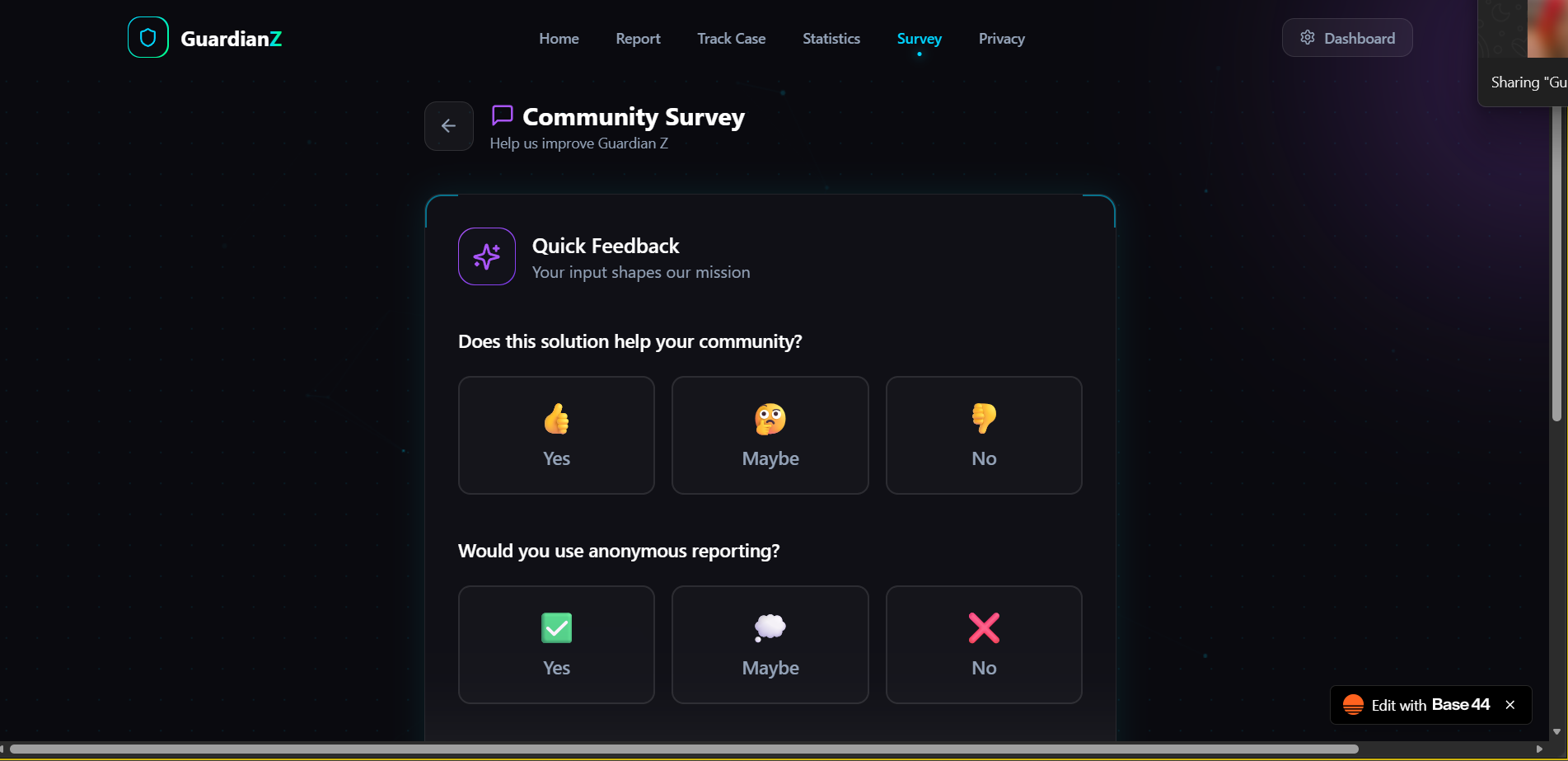
Test the App With Real Users We want to share the prototype with students and teachers to get feedback on what should be improved.
Work With Seniors, Mentors, and Developers Collaborating with people who have more experience will help us upgrade the app the right way.
Build a Better Backend We plan to strengthen the database, make the Case ID system more powerful, and improve the NGO dashboard.
Continue This as a Long-Term Learning Project Even after the hackathon, we want to keep improving Guardian Z to sharpen our skills in development, problem-solving, and teamwork.
Explore Real Partnerships Later (Optional) If the project grows, we may try connecting with NGOs or safety groups for guidance and real-world insight.
Document Everything & Publish It We aim to document the project and maybe publish it on GitHub or present it in future college events.
Built With
- base44


Log in or sign up for Devpost to join the conversation.