-
-
Guardian Logo
-
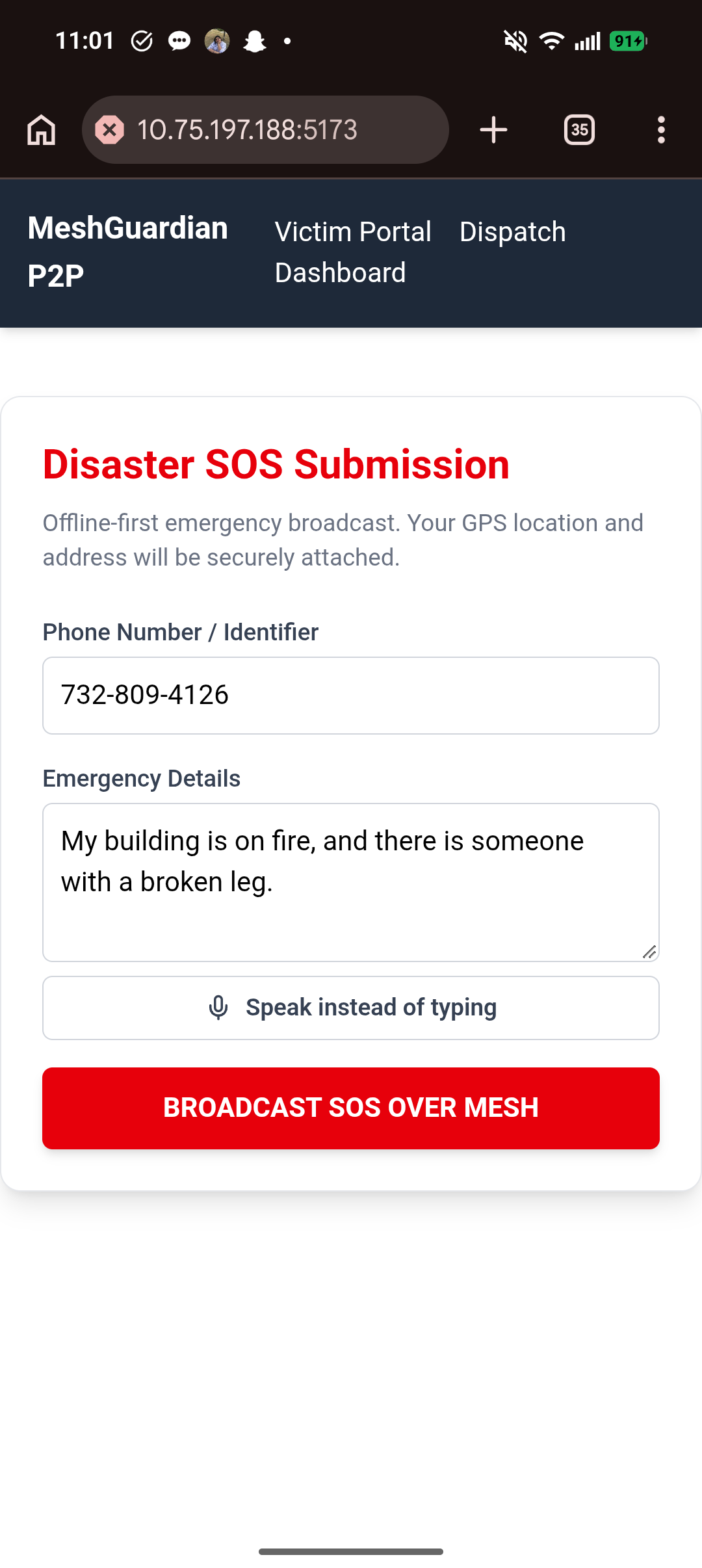
Emergency service request portal.
-
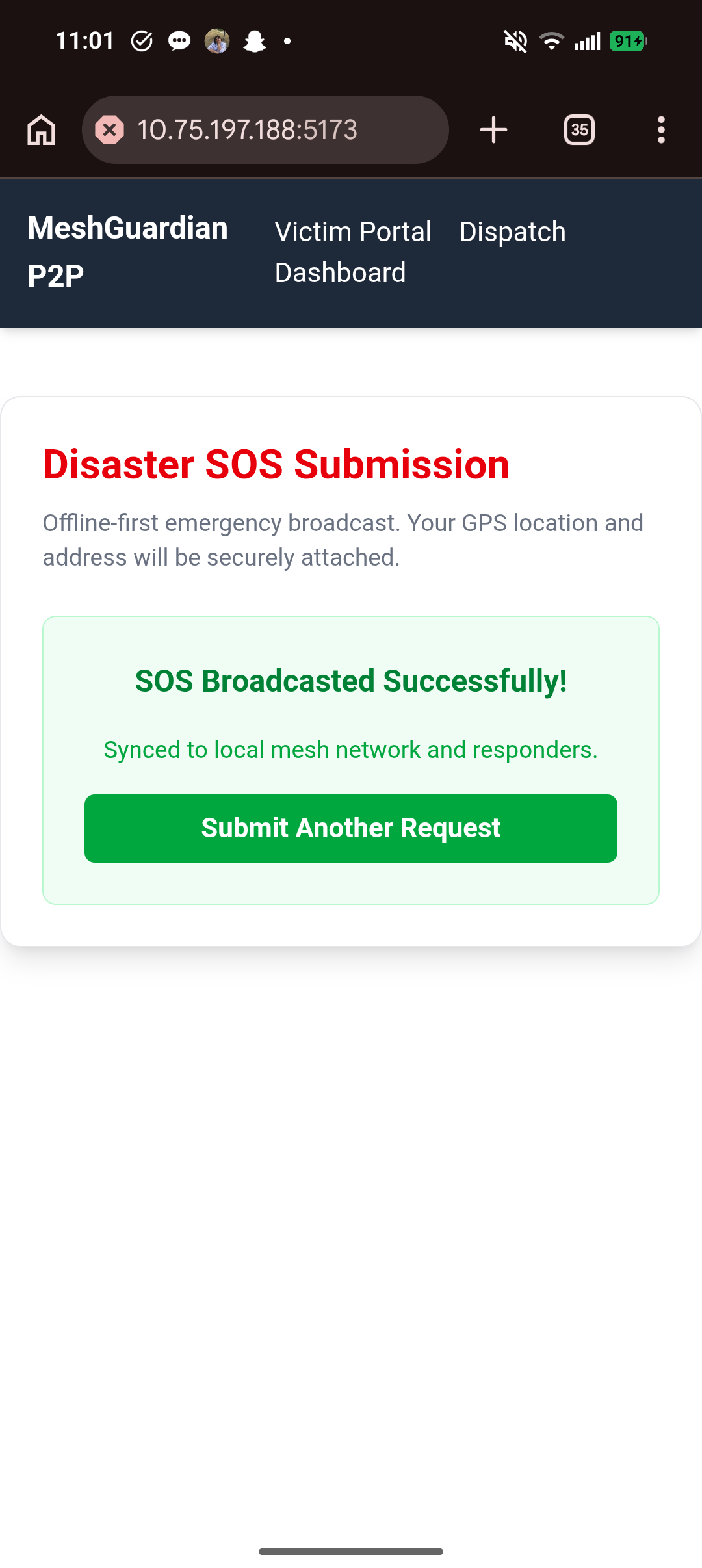
Successful broadcast.
-
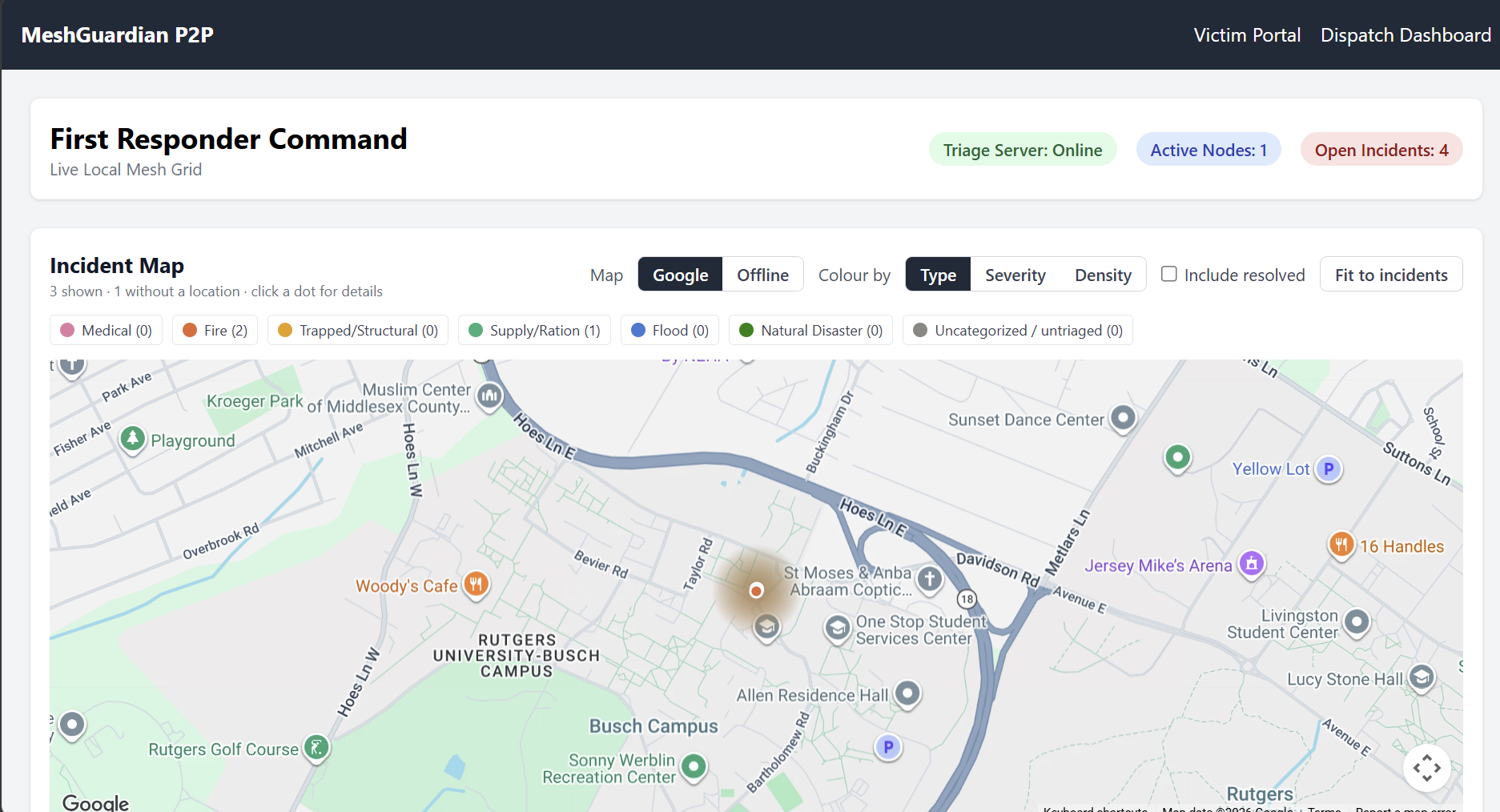
Responder Dashboard 2
-
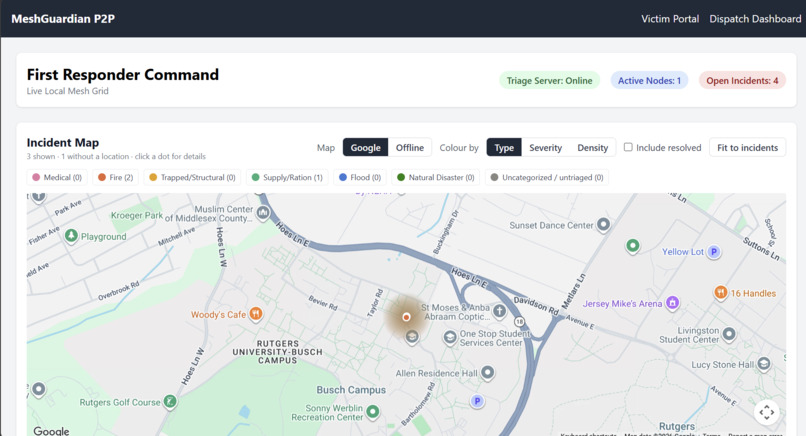
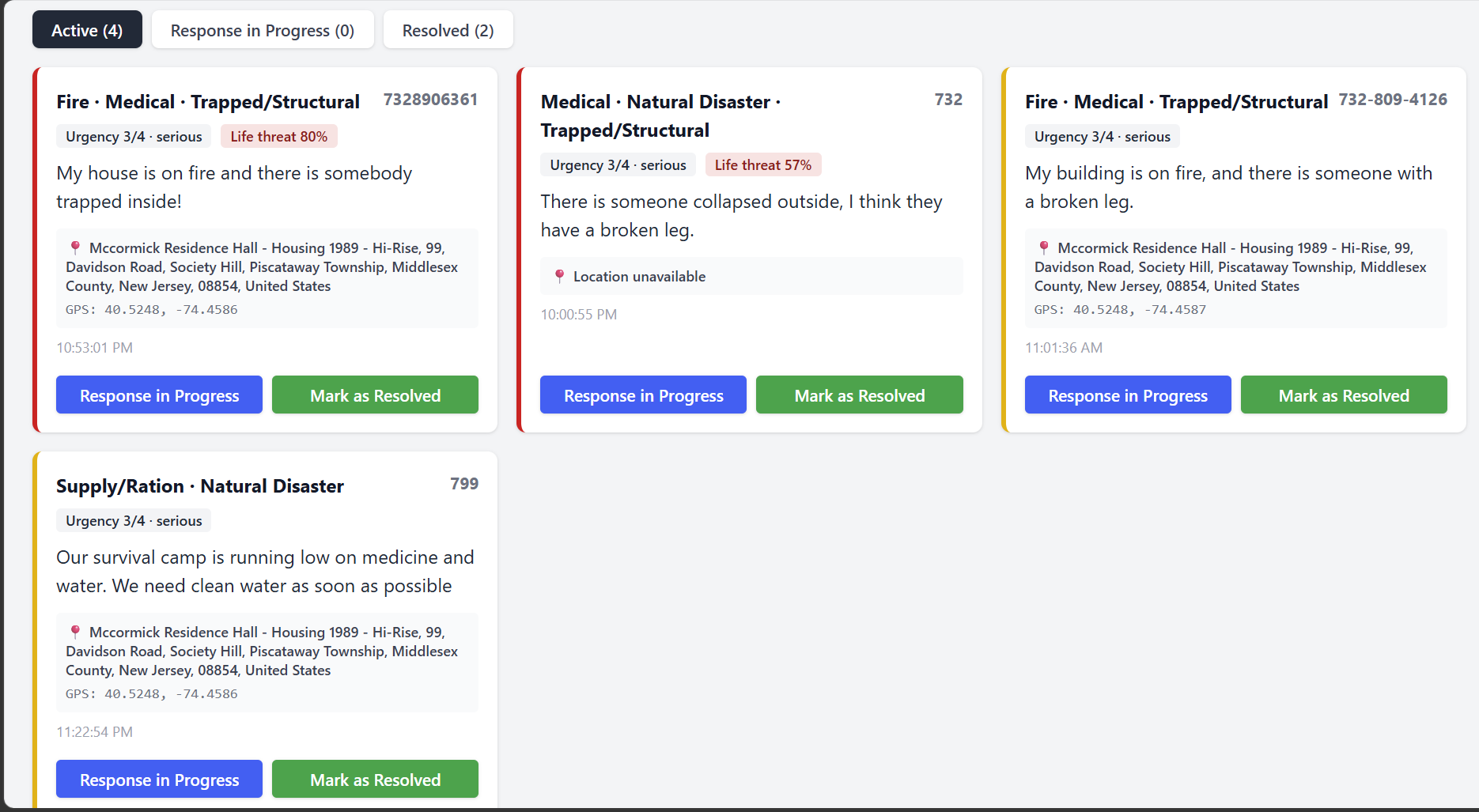
Responder Dashboard 1
Inspiration
We were inspired to take on this hack by the recent devastating floods in Nepal, where victims and families were left in the dark, and emergency services lost valuable time trying to locate survivors. We wanted to make a service that could quickly and effectively receive SOS communications, categorize them by emergency type and severity, all while being offline. Working within these restrictions and wanting to let emergency teams access leverage AI, we used brand new non-autoregressive models such as Laya for local, immediate data categorization.
What it does
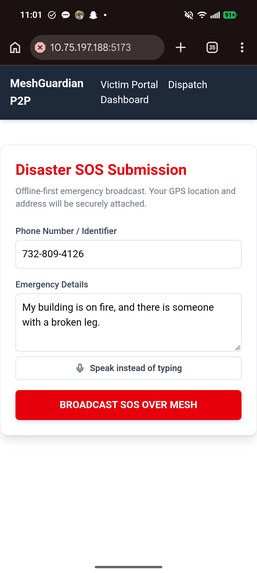
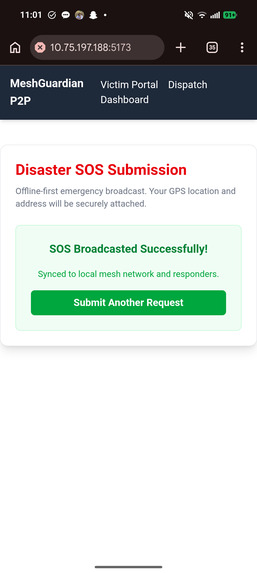
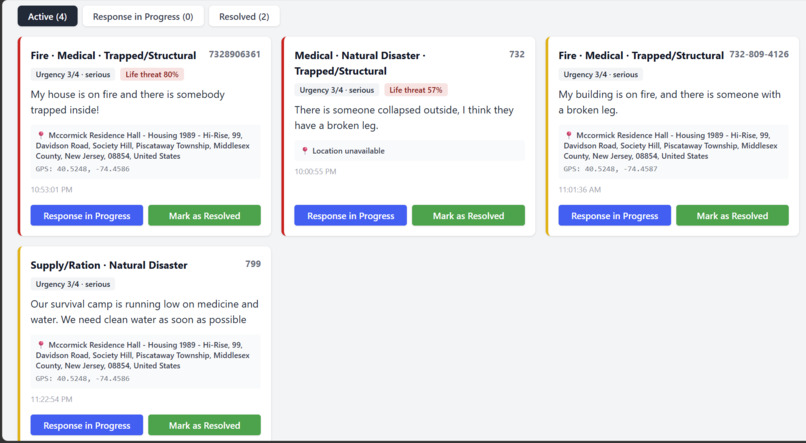
In disaster situations, it is often the case that first responders are able to network their devices together using emergency microwave signal relays. Guardian expands this capability to connect victims of natural disaster directly to emergency services using peer-to-peer, mesh networking that links multiple devices over a local connection. Victims of natural disaster can send requests over the network, where a server run by first responders uses a local, System One language model to automatically categorize and label data by type and severity to take load off of emergency services. The model, Laya, takes a written response and categorizes it by emergency type (Fire, Structural, Supply/Ration, etc.), severity, and if there is an immediate threat to life. This data gets overlaid onto a local Maps heatmap where workers can oversee a disaster zone by different categories to make informed decisions about their response. The entire system, including the AI analysis, is lightweight enough to run off of a single laptop.
How we built it
We built three main systems, a frontend, server, and database. For the frontend, we used React and Tailwind, as well as a fully offline map. Our server processes input from the frontend user portal using Laya, a System One language model that is extremely fast and efficient at categorizing data. Laya processes a .JSON file and outputs a processed file to the database. The database was written in SQLite.
Challenges we ran into
A few issues we ran into figuring out how to make speech-to-text and maps offline, figuring out how to create a local network without having to be connected to the internet and saving that data in a database. Laya was also not categorizing the data correctly, which took some time to adjust and optimize.
Accomplishments that we're proud of
Connecting our systems together, took a lot of time and research of P2P networking. We were also very happy to see the system work together fully offline. Finally, we were very happy that this system could run off of a single laptop, which would make it viable in an emergency situation.
What we learned
We learned a lot about networking and server architecture. Specifically, we just started learning about P2P networking. This was also our first time using a lot of frameworks, such as FastAPI and Tailwind. We were also working with language models for the first time.
What's next for Guardian
Getting the resources and hardware to do a full long-range field test would be a great way to see how Guardian performs in actual disaster scenarios.
Built With
- elevenlabs
- fastapi
- google-maps
- javascript
- json
- laya
- pydantic
- python
- react
- sqlite
- tailwind
- trystero
- webrtc
- xml


Log in or sign up for Devpost to join the conversation.