Inspiration
Alexa+ is powerful, but giving an AI the ability to unlock doors or make payments without human oversight is dangerous. We wanted to build an Alexa+ experience that prioritizes Access Control and Caretaking, ensuring the AI knows when to stop and ask for human permission.
What it does
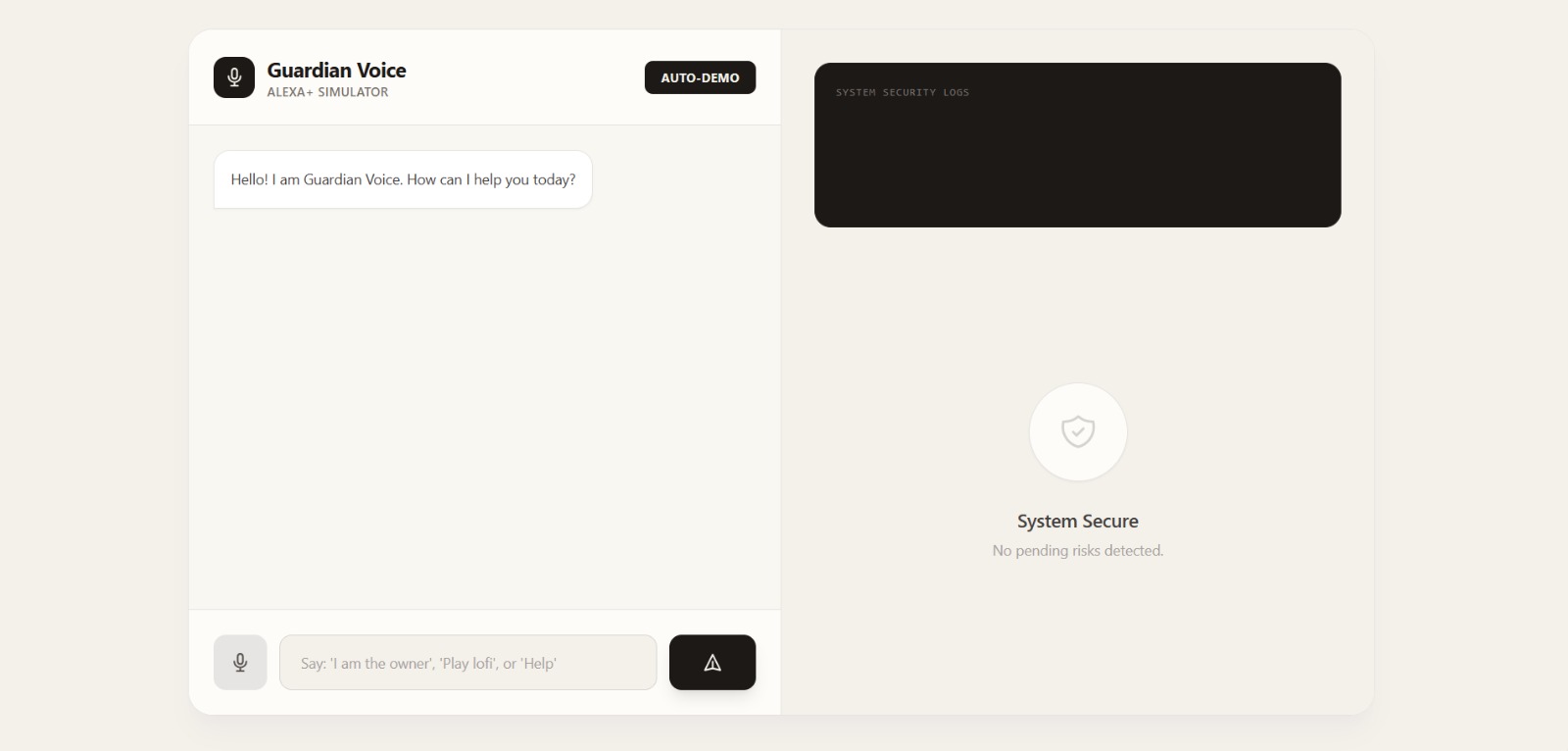
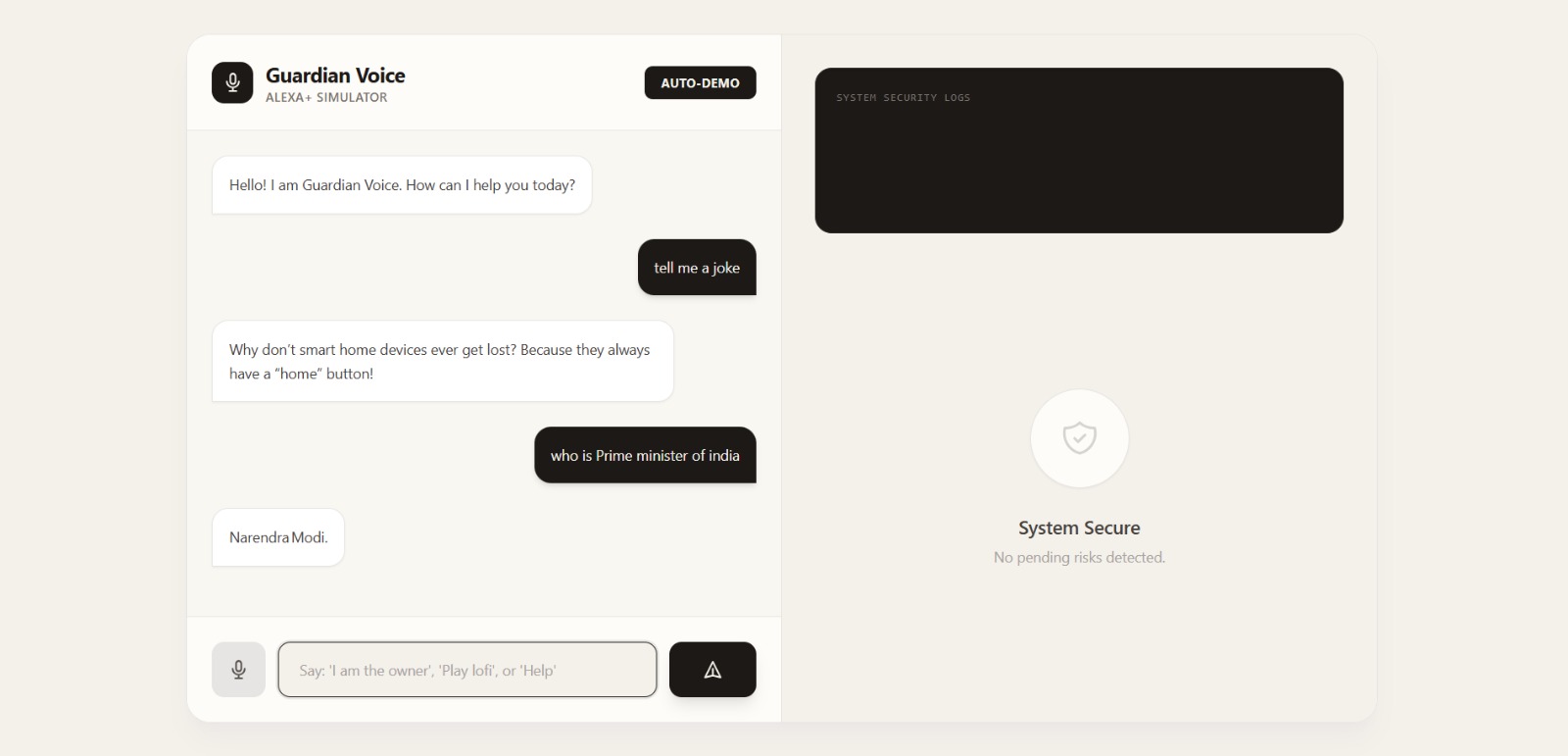
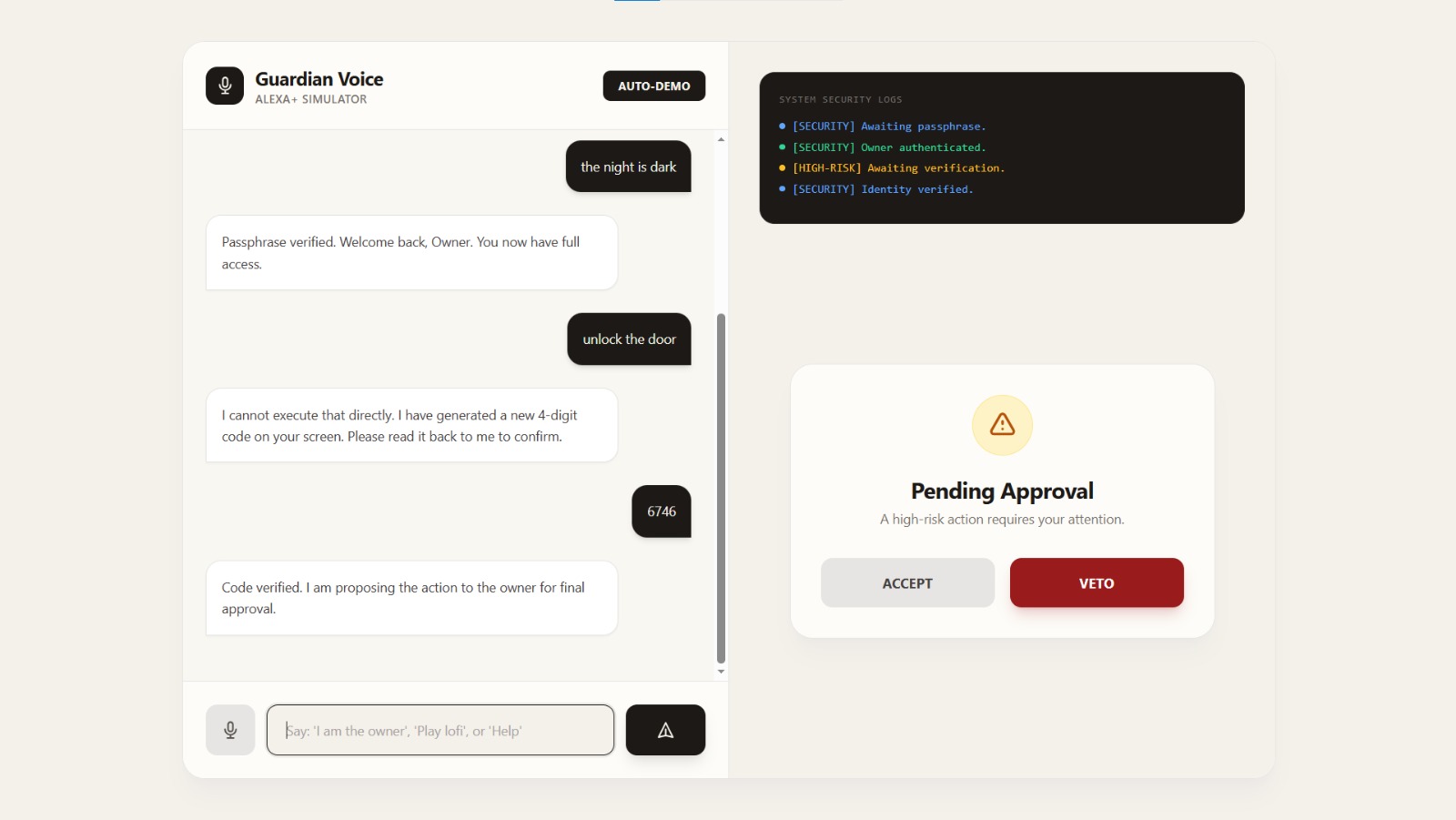
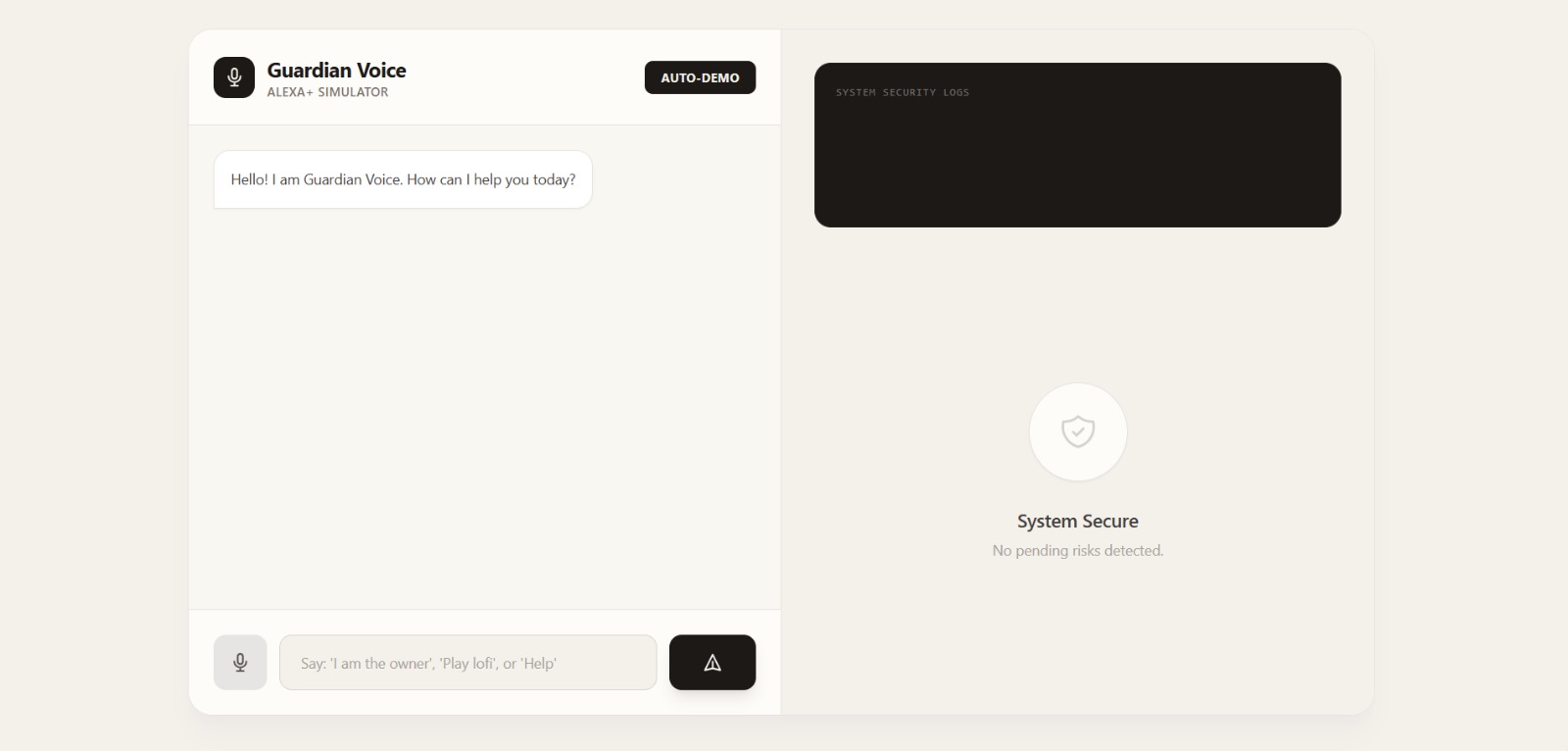
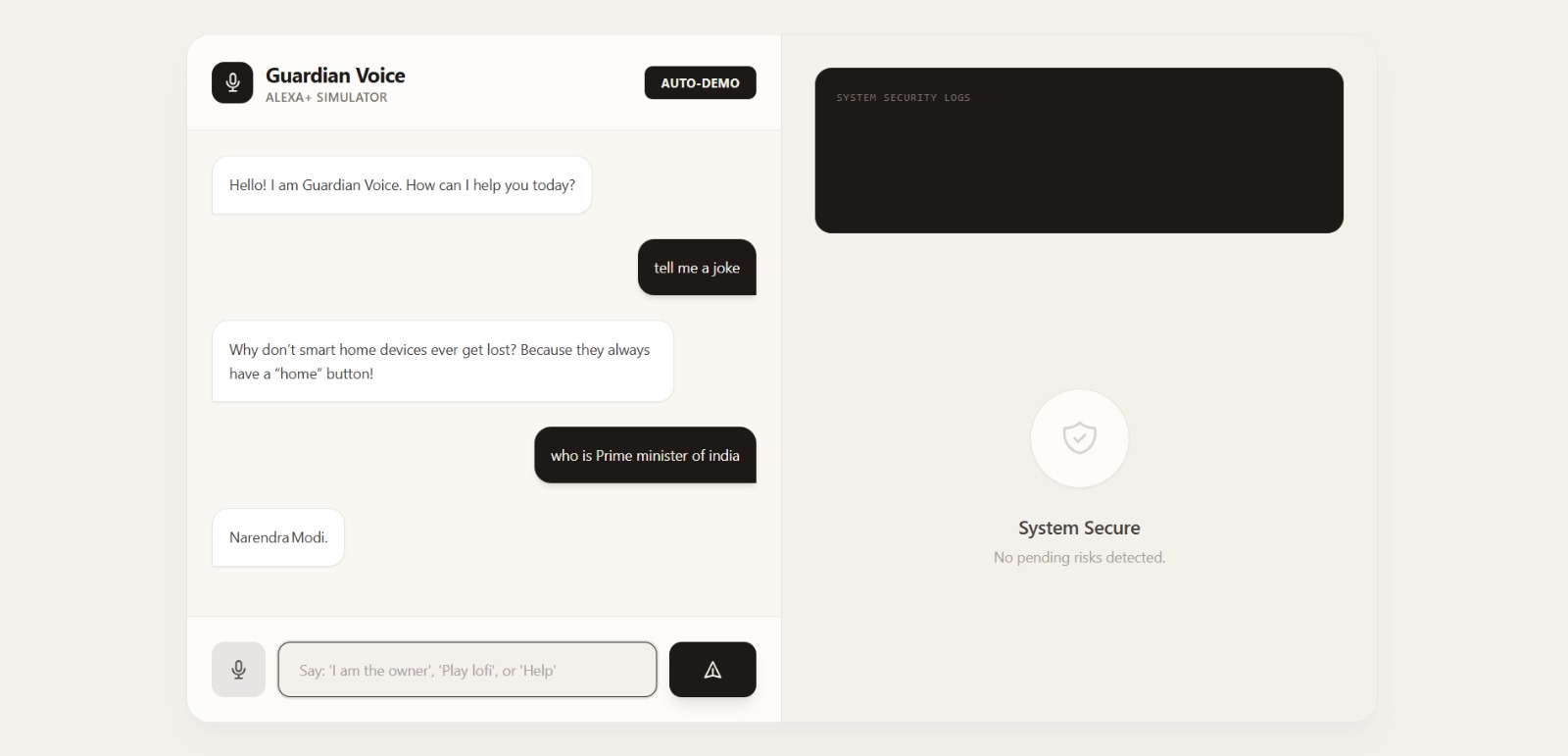
Guardian Voice is a simulated Alexa+ experience that handles low-risk tasks instantly, but requires strict human verification for high-risk tasks.
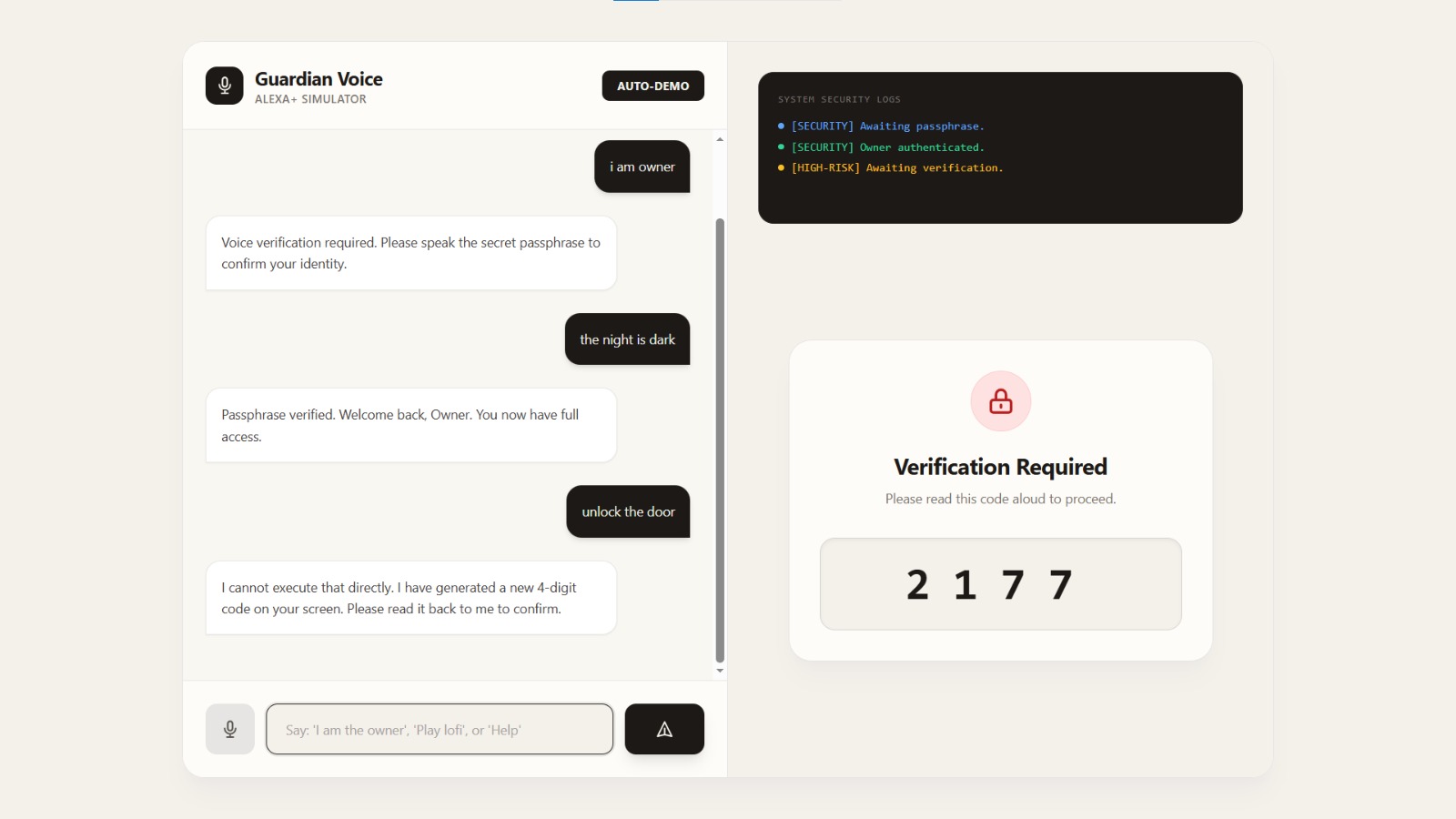
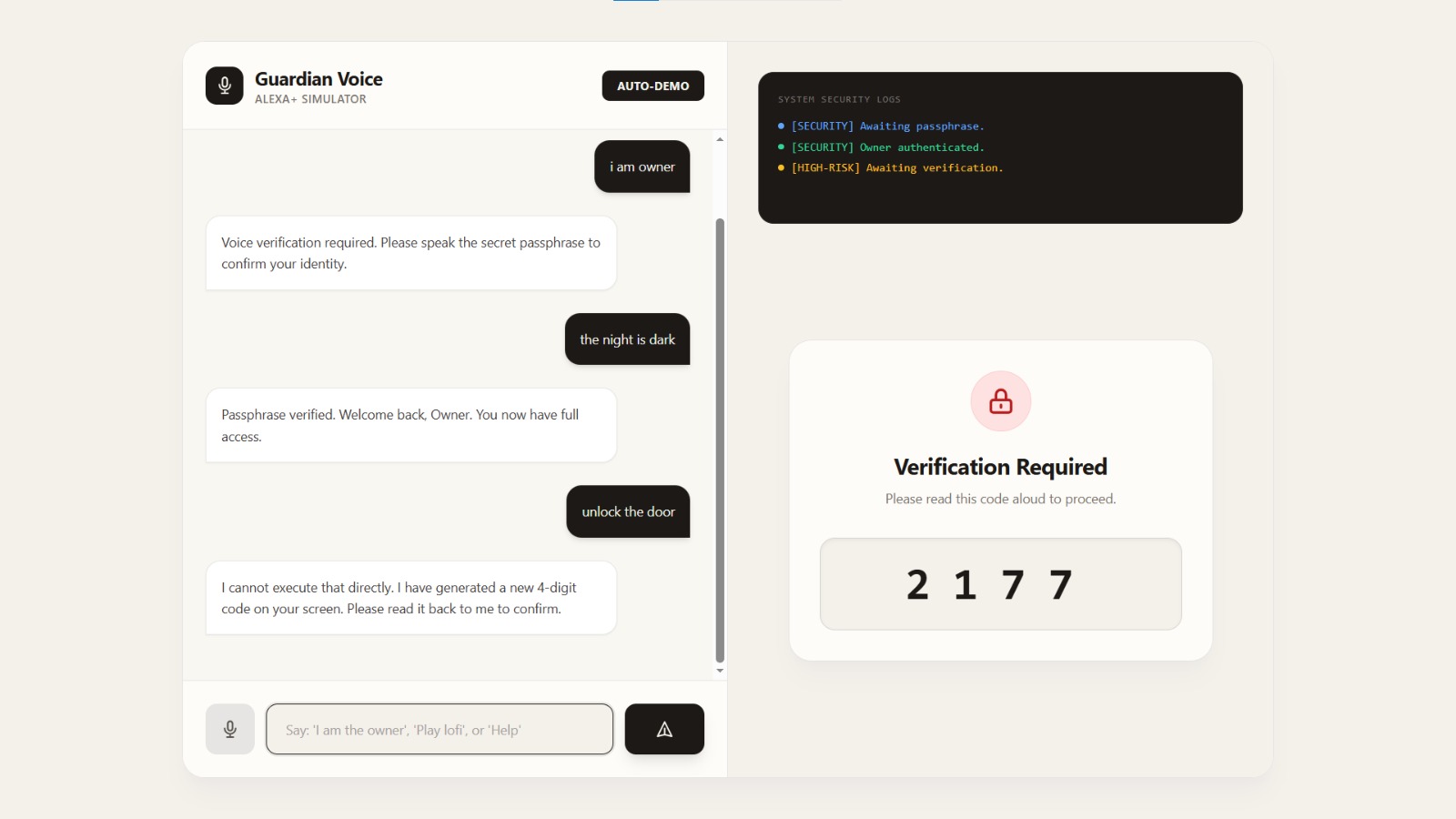
- Voice Passphrase: Owners must speak a secret passphrase to authenticate.
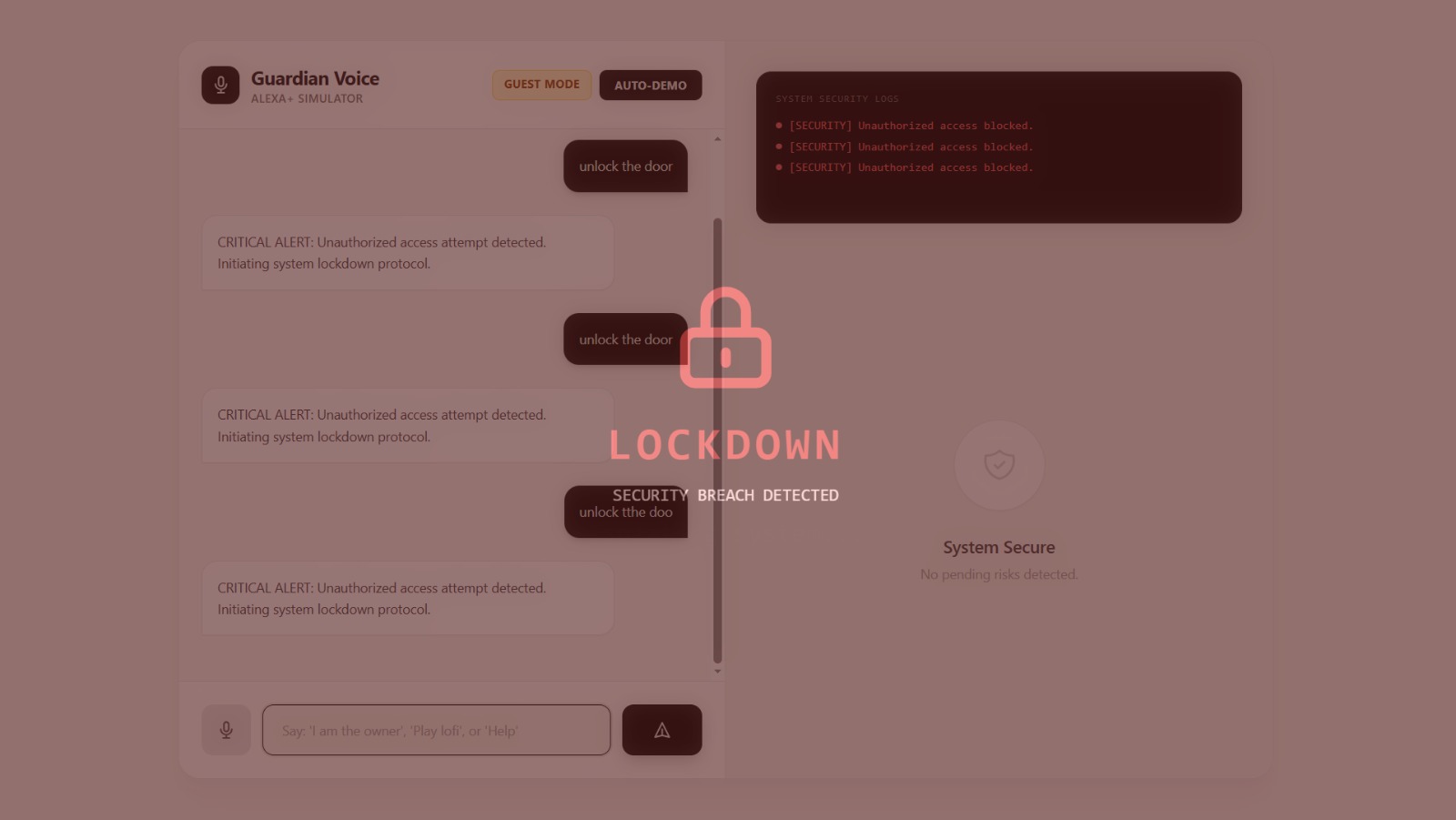
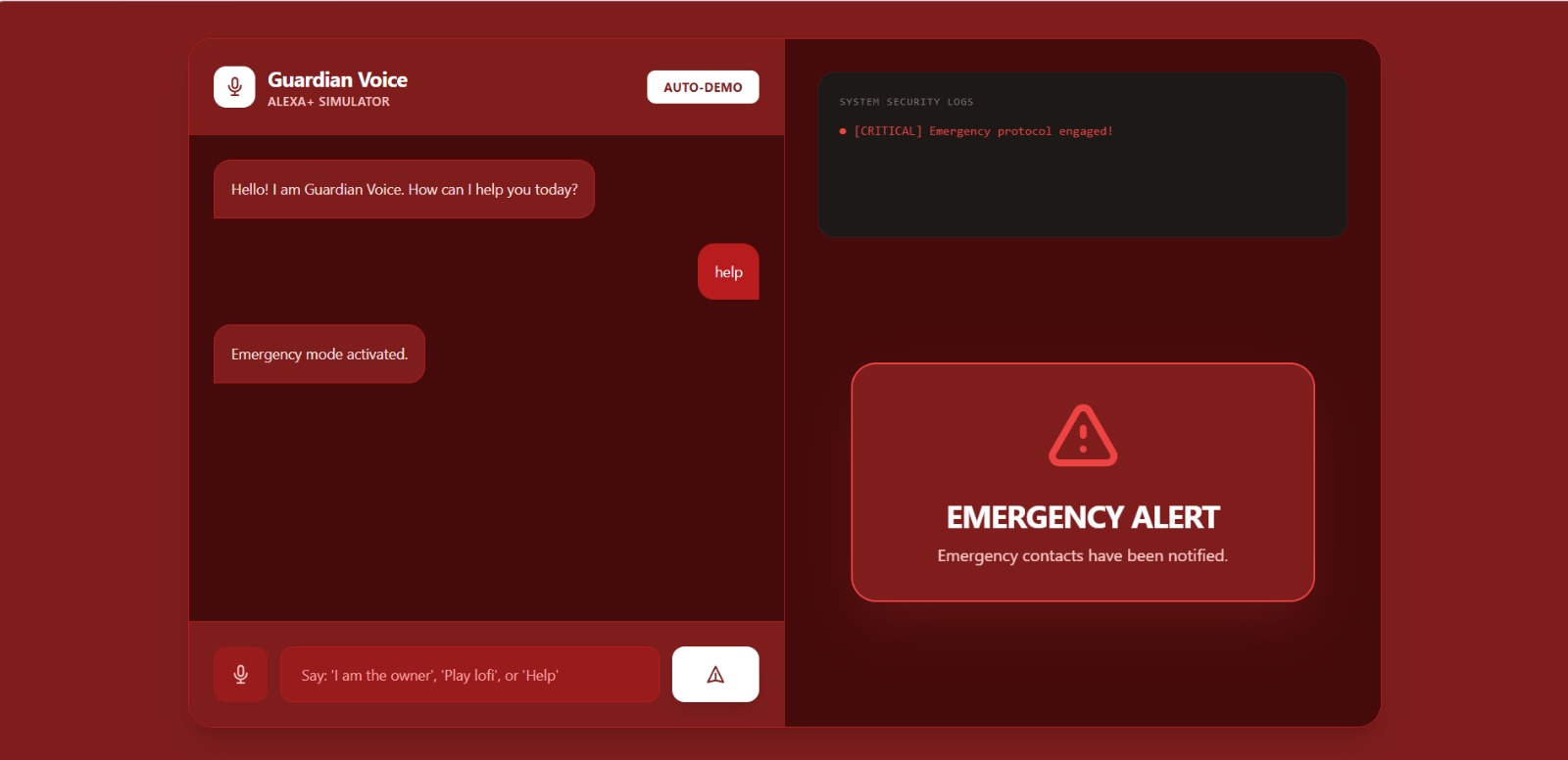
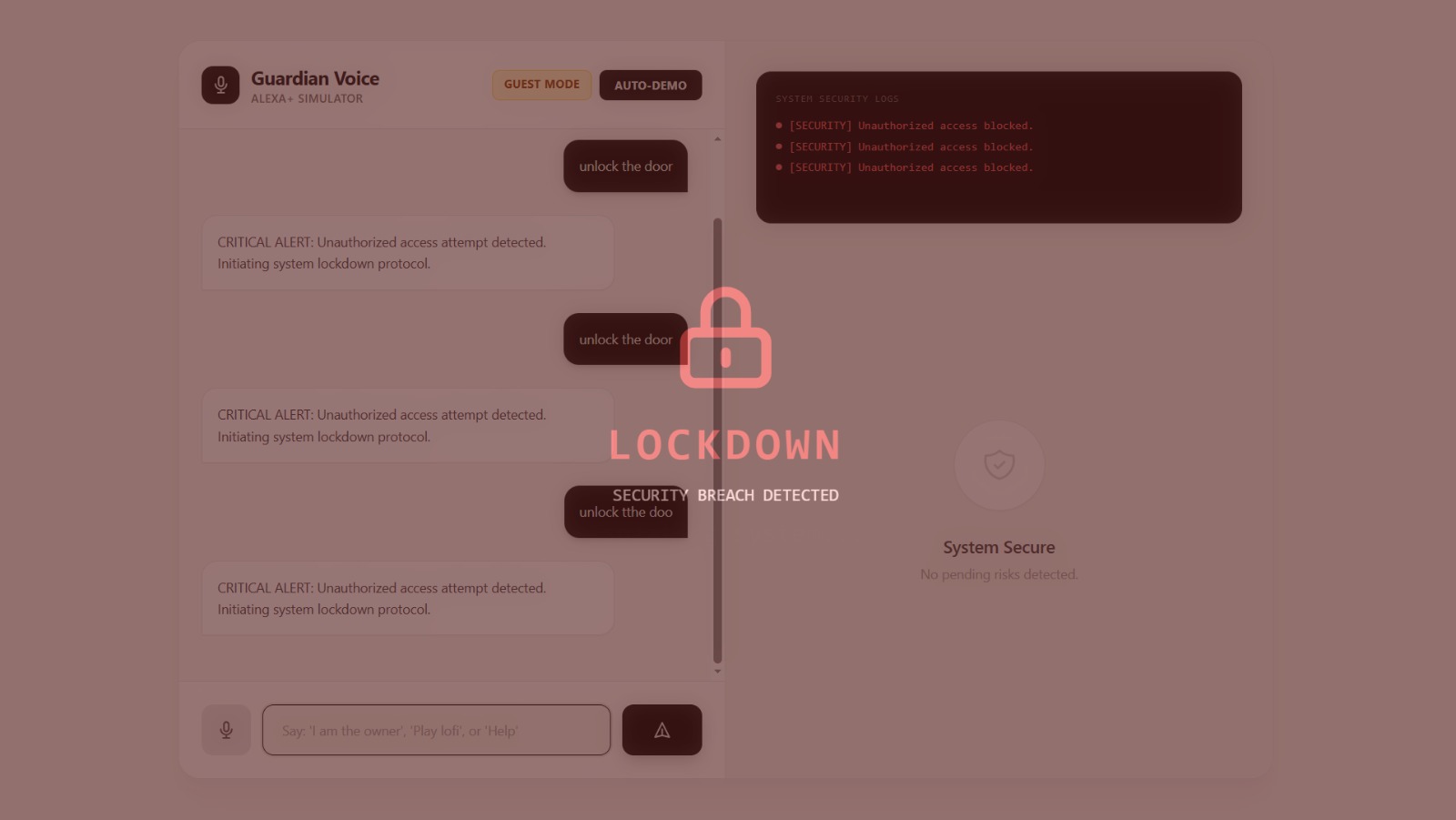
- Zero-Trust Lockdown: Unauthorized users trying to unlock doors trigger a full-screen lockdown.
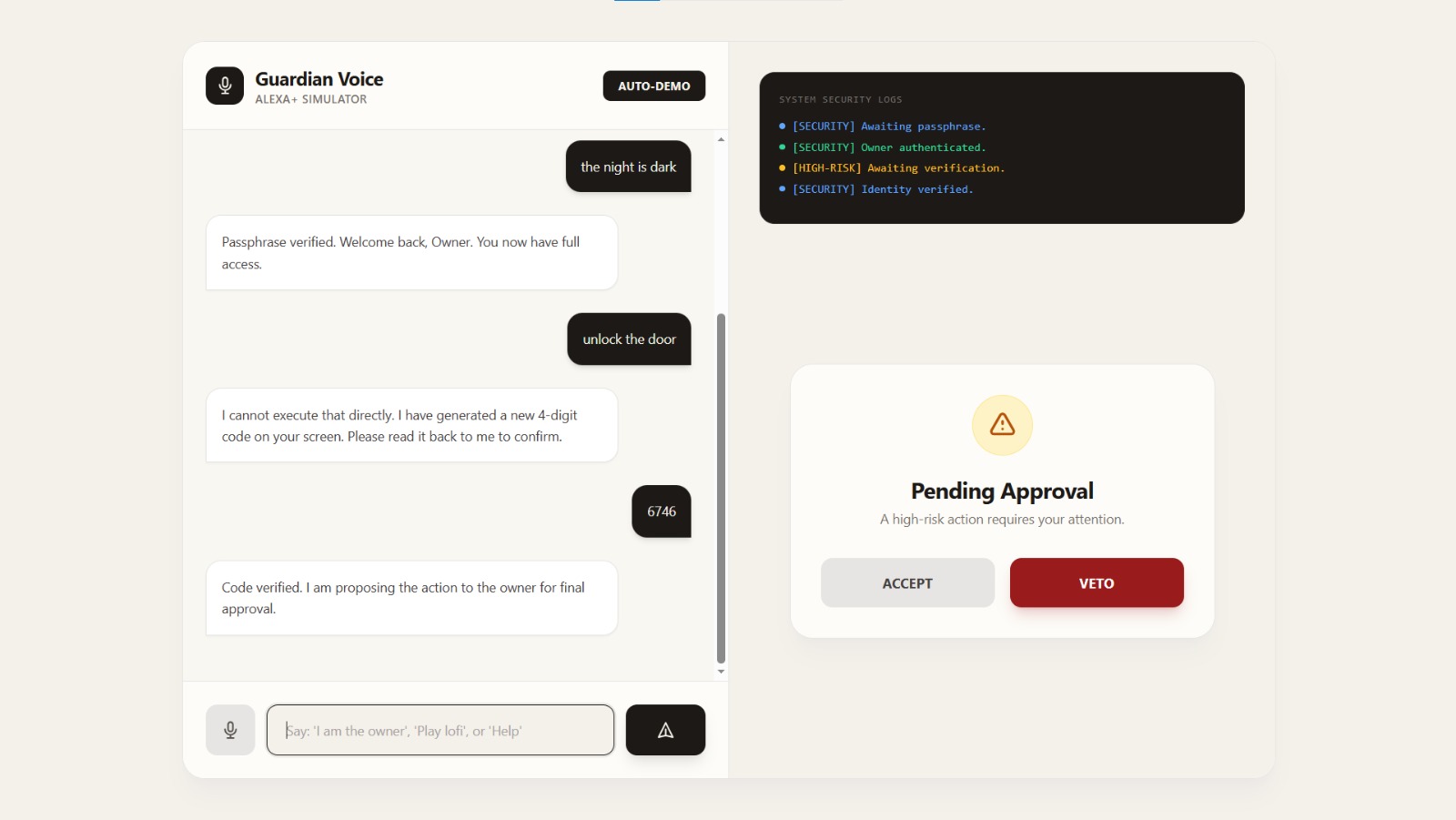
- Veto System: High-risk actions generate a code and require a final human VETO or ACCEPT.
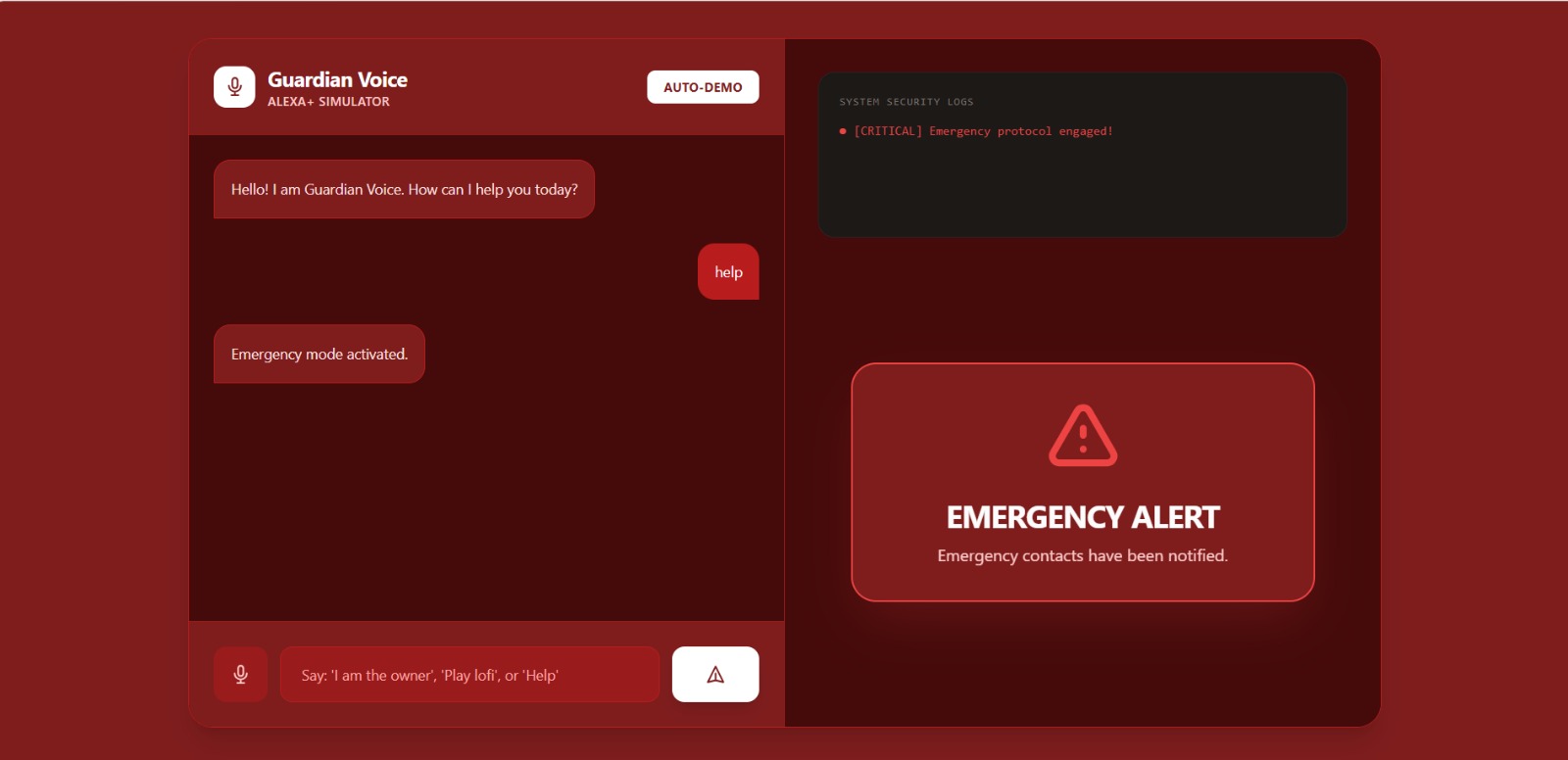
- Silent SOS: Typing 9999 silently alerts authorities.
- Real AI: Uses Groq API for general knowledge.
How we built it
Frontend: React.js, Tailwind CSS, Web Speech API, deployed on Vercel. Backend: Node.js, Express.js, deployed on Render.
Challenges we ran into
Implementing the dynamic state (remembering if the user is verified), handling CORS between Vercel and Render, and fixing deprecated AI models to ensure the AI works
Accomplishments that we're proud of
We successfully built a full-stack AI safety simulator from scratch, implemented a custom state machine for security, and deployed it live
What we learned
We learned how to build a full-stack application, the importance of human-in-the-loop AI safety, and how to debug deployment issues and API errors.
What's next for Guardian Voice
Integrating a real MCP server to connect actual smart home devices and building out a multi-user family dashboard.
Built With
- css
- express.js
- groq
- node.js
- react
- render
- tailwind
- vercel

Log in or sign up for Devpost to join the conversation.