-
-
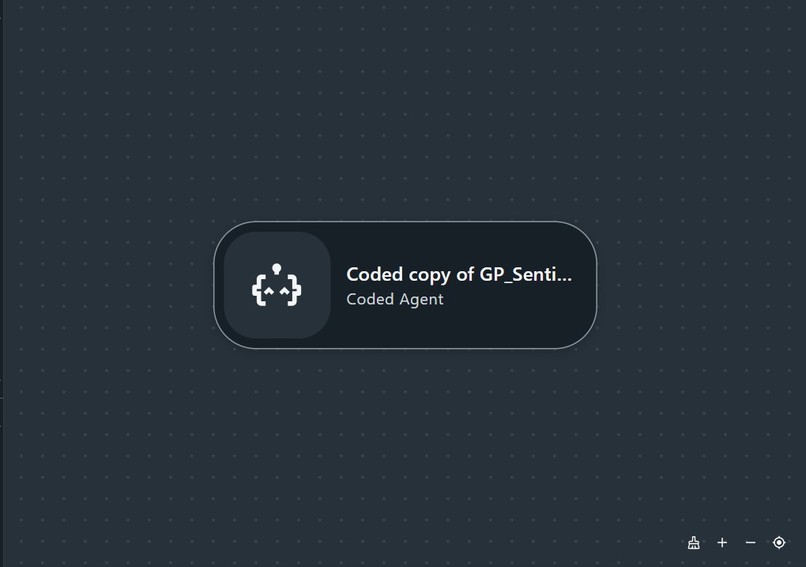
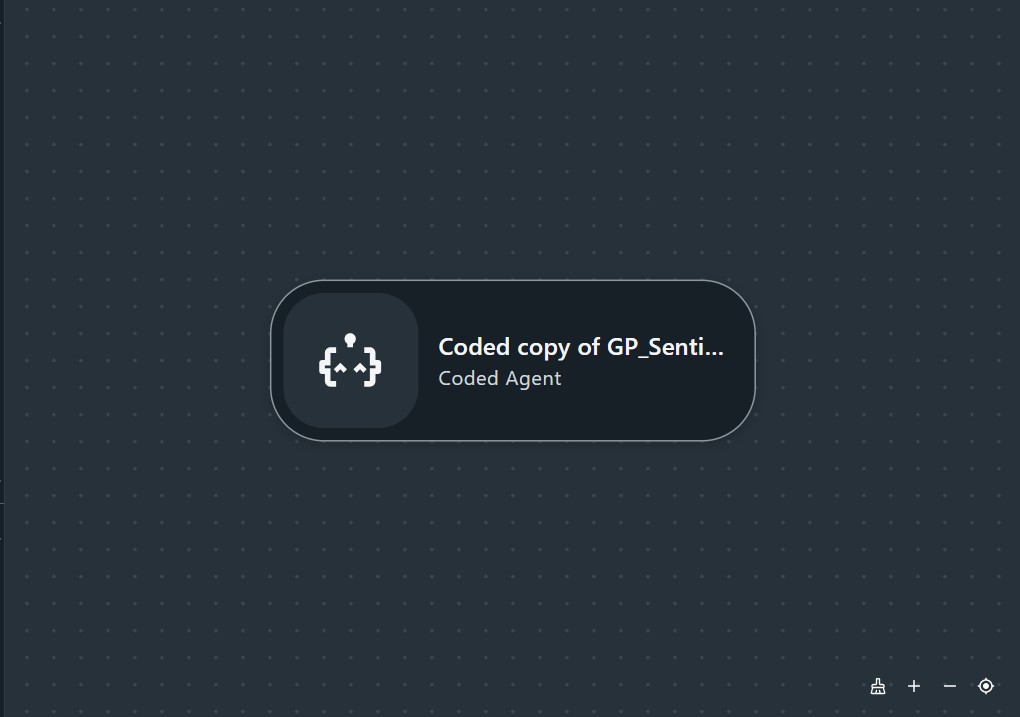
Coded Agent
-
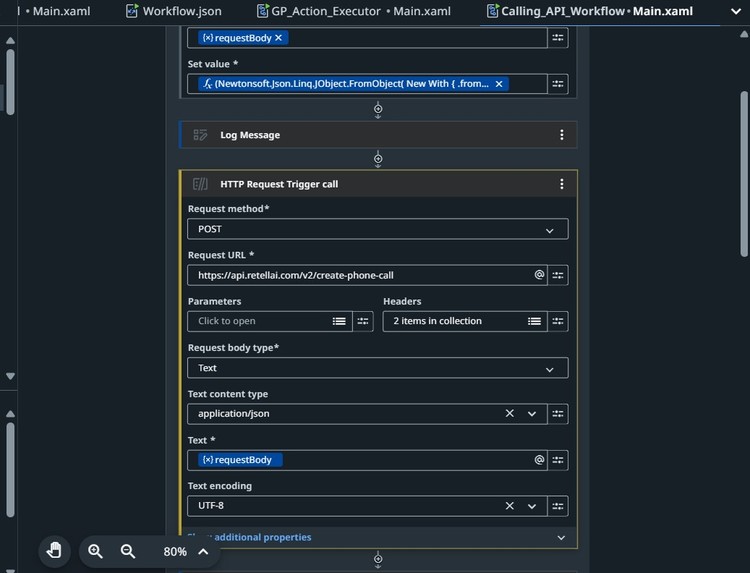
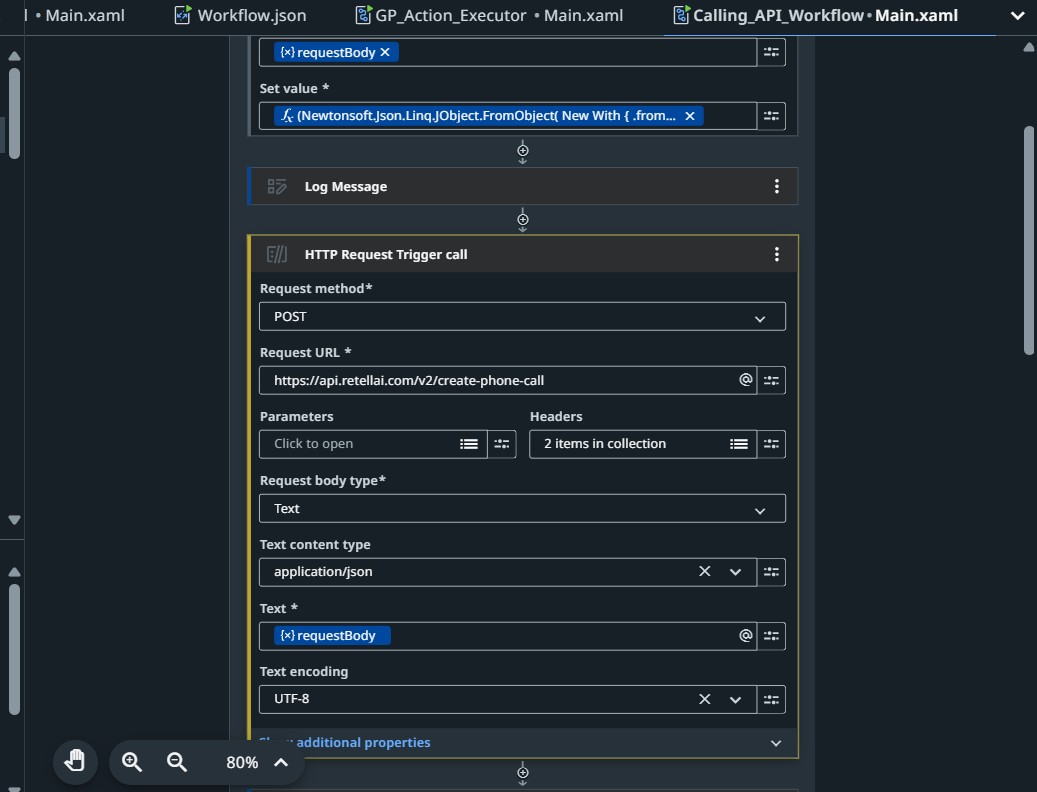
Calling Agent Using API
-

Maestro BPMN
-
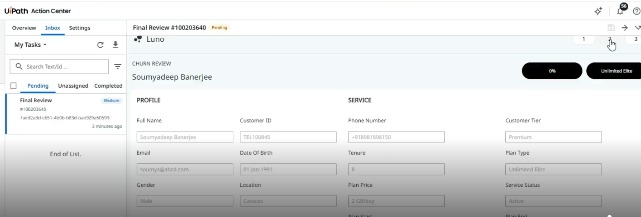
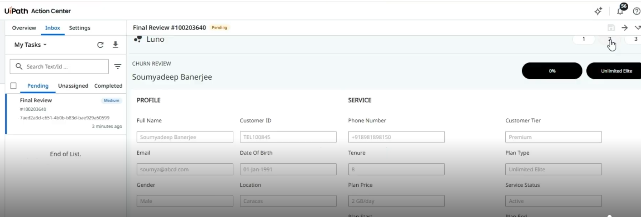
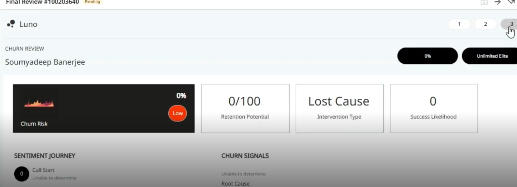
Human In The Loop ( Action-App )
-
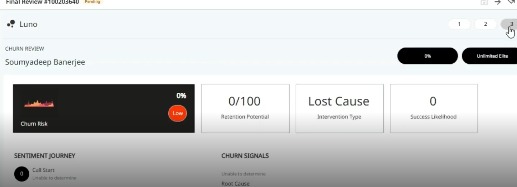
Human In The Loop ( Action-App )

Inspiration
We've all been on both sides of that call.
As professionals who've spent years in customer-facing roles, we've watched churn happen in slow motion — a customer growing quieter, less engaged, and then one day, gone. The tragedy isn't that we couldn't see it coming. The tragedy is that we saw it clearly and still couldn't act fast enough.
Telecom operators lose up to 1 million subscribers annually, bleeding $120M+ in revenue while dashboards cheerfully label those customers as "loyal" right up to the day they cancel. No human retention team — however talented — can work through a subscriber base of millions in time.
That gap between knowing and reaching is what inspired us to build GuardianPulse AI.
What It Does
GuardianPulse AI is a multi-agent retention platform orchestrated by UiPath Maestro that spots telecom customers about to leave, reads their full situation across six dimensions, and acts — fairly, empathetically, and always with a human in the loop.
Step 1 — Understand the customer Six AI agents study the customer simultaneously:
- CRM Intelligence Agent — account health and lifetime value
- Sentiment Intelligence Agent — call mood and risk phrases
- Behavioral Intelligence Agent — usage patterns and competitor signals
- Revenue Leakage Agent — annual revenue at risk
- Intent Prediction Agent — churn probability
- Unified Risk Scoring Agent — one consolidated Risk Score (0–100)
Step 2 — Choose the smartest, fairest offer The Customer Retention Offer Agent proposes a retention offer sized to that customer's value and risk. Never one-size-fits-all.
Step 3 — Clear three ethical safeguards Before a single customer is contacted, every offer must pass:
- Hardship Check — genuine hardship? Divert to human care, no sales pitch.
- Fairness Check — discriminatory or excessive? Blocked and logged.
- Human Approval — the AI only proposes; a manager makes the final call.
Step 4 — Reach out An AI agent places a retention call, announces it is AI, and presents the offer. No answer? An in-app notification is sent instead.
Step 5 — Outcome and advocacy The benefit is applied, the CRM is updated, and the result is logged so the system keeps learning. With the customer's consent, a loyalty advocacy post celebrates their story publicly — turning a save into social proof.
How We Built It
We orchestrated the entire pipeline on UiPath Maestro using a BPMN process flow with ten agents, two human-in-the-loop gates, and structured external integrations.
The Call Analysis Agent (GP_CallAnalysisAgent) is one of our most
intensively engineered components — a deterministic LLM-powered agent that
analyses real call transcripts and returns a structured 24-field JSON
output covering stated churn intent, emotional tone, competitor mentions,
and suggested offer type.
The Governance & Responsible AI Agent enforces three mandatory checkpoints in-process — not as an afterthought — aligned with GDPR Art. 22 (human-in-the-loop), FCC/TCPA (consent & AI disclosure), and the EU AI Act (fairness & transparency).
A UiPath Apps dashboard gives the retention team real-time churn analysis so every human approver has full context before acting.
UiPath products used: Maestro · Agent Builder · Studio Web · Orchestrator · Action Center · Integration Service · UiPath Apps
Additional integrations: Twilio (AI voice calls) · REST APIs · LangGraph (Python-coded agent)
Challenges We Ran Into
Non-determinism in LLM outputs was our most persistent challenge. Producing a consistent, validated 24-field JSON structure across diverse call transcripts required careful prompt engineering, output constraints, and field-level fallback logic.
Ethical design at every step added real complexity. It would have been technically simpler to auto-fire a retention call the moment a risk score crossed a threshold. Designing a system where the AI earns the right to act — by first confirming the customer isn't vulnerable, the offer is fair, and a human has approved — meant every safeguard added a new decision gate to the BPMN flow. We considered each one non-negotiable.
Orchestrating all six UiPath agent types within a single Maestro process — AI agents, RPA workflows, human-in-the-loop App tasks, and a Responsible AI agent — required deep coordination across the team and constant testing of how components interact in a live agentic pipeline.
Accomplishments That We're Proud Of
- A fully orchestrated 10-agent pipeline running end-to-end in UiPath Maestro, covering every stage from risk detection to CRM update
- A deterministic call transcript analyser returning 24 structured fields reliably — solving one of the hardest problems in production LLM deployment
- An ethics-first architecture with three mandatory safeguards built into the process flow itself, not layered on top
- Two human-in-the-loop gates that keep a person accountable at every high-stakes decision point
- A consent-based advocacy flow that turns a retained customer into public proof of the brand's care — a feature no standard retention tool offers
- Full regulatory alignment across GDPR Art. 22, FCC/TCPA, and the EU AI Act baked into the agent design
What We Learned
Building GuardianPulse AI taught us that the hardest part of an agentic retention system is not the intelligence — it is the trustworthiness.
Human-in-the-loop is not a constraint. It is the feature that makes the entire system credible to regulators, managers, and customers alike. GuardianPulse AI is designed so that accountability is structurally guaranteed — not just promised in a README.
We also learned that determinism is a design goal, not a default. In a production agentic system, the same customer must always receive the same risk score, the same offer, and the same compliance outcome. Achieving that across ten agents and an LLM-powered transcript analyser required deliberate engineering at every layer.
What's Next for GuardianPulse AI
- Activate the Advocacy Agent — complete the consent-based social publishing flow so retained customers can share their loyalty story with a single confirmation
- Expand to more telecom markets — currently designed for USA and EU regulatory contexts; next target is APAC compliance frameworks
- Adaptive offer learning — feed outcome data back into the offer selection logic so the system continuously improves retention rates over time
- Proactive risk monitoring — move from reactive (signal detected) to predictive (signal anticipated), flagging at-risk customers before a triggering event occurs
- Multi-industry extension — the ethics-first, human-in-the-loop multi-agent framework is directly portable to utilities, banking, and subscription services facing the same retention challenge


Log in or sign up for Devpost to join the conversation.