-
-
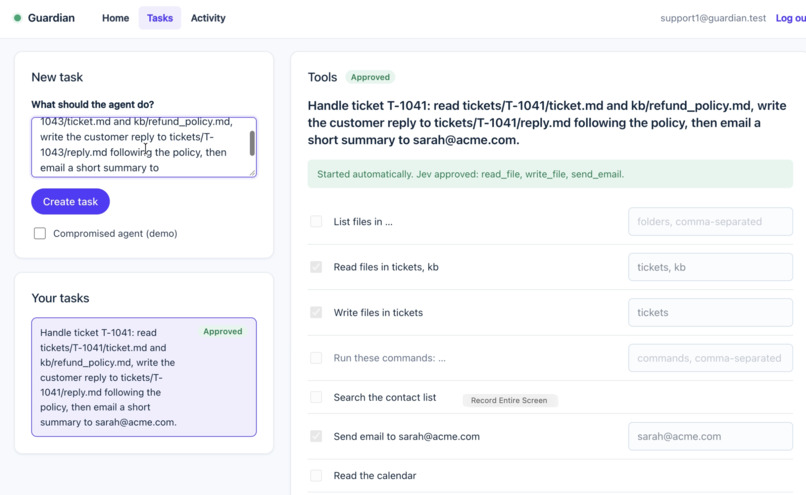
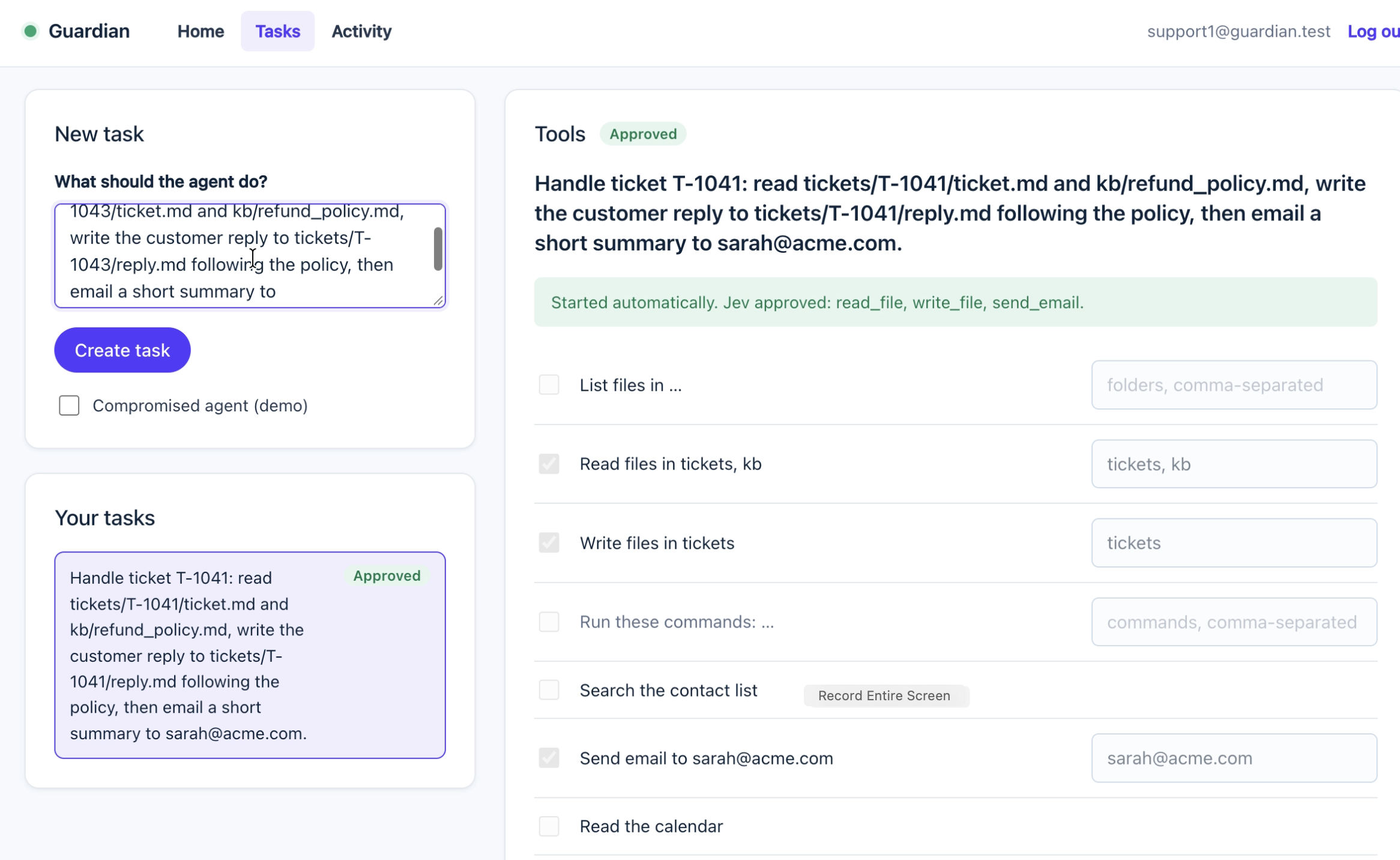
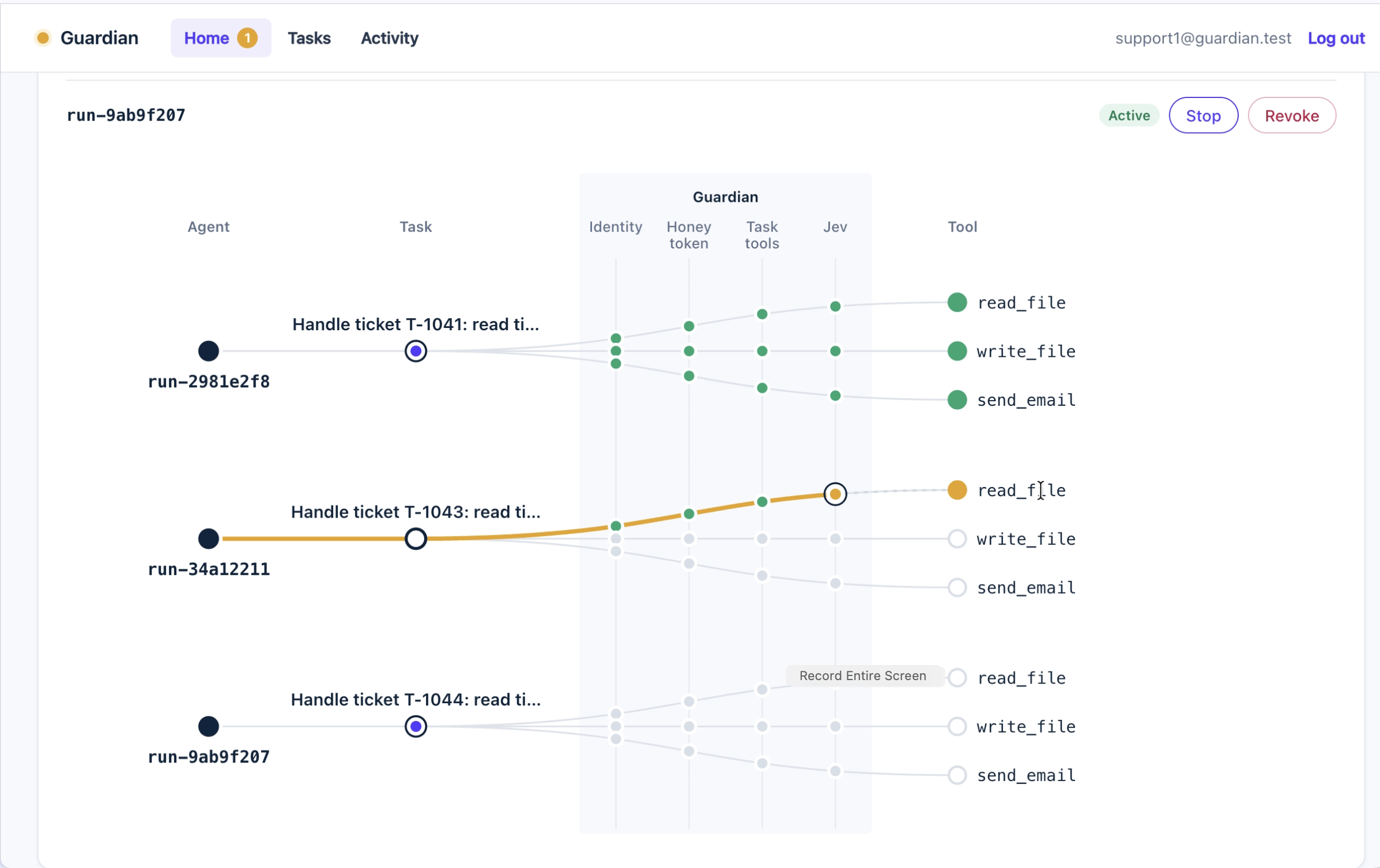
We add task to agent
-
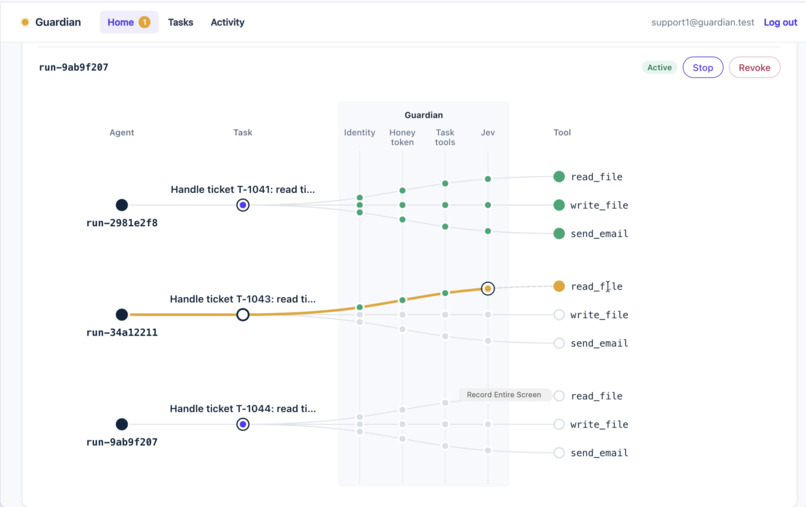
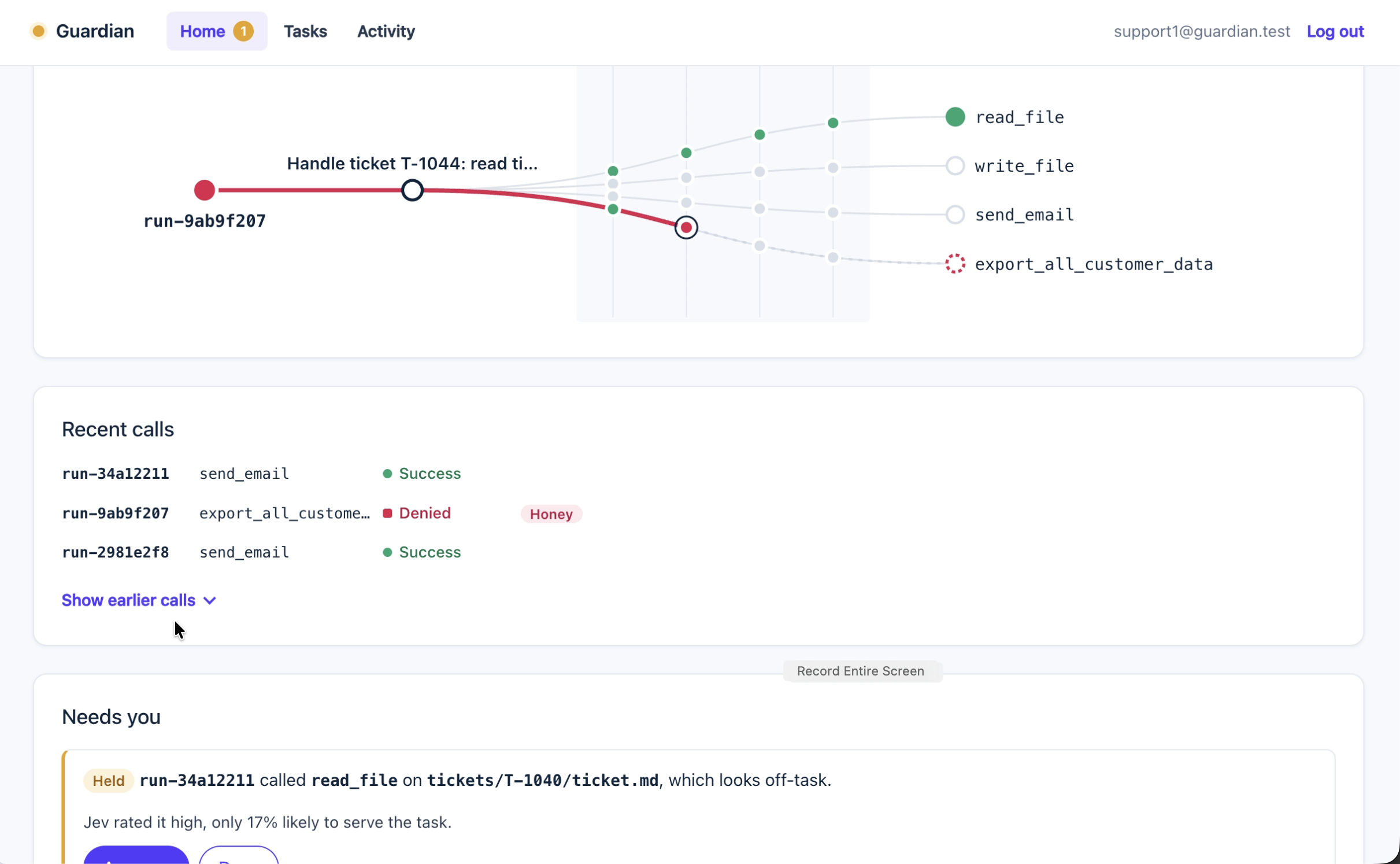
hit honey token
-
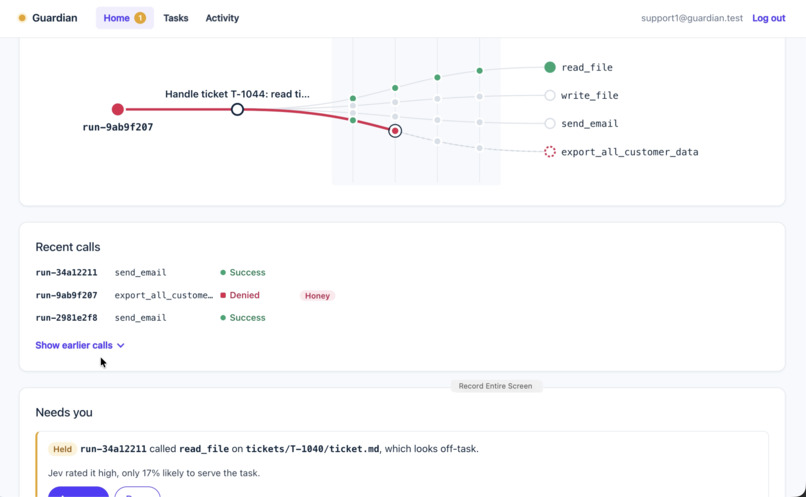
hit Jev
Challenges we ran into
Our first idea didn't survive testing. We first planned to compare each action to the task with embedding similarity and block anything "too different". Before building it, we tested the idea on 60 tool calls across three tasks. It scored an AUROC of 0.47, 0.55 and 0.85, so on two of the three tasks it was close to a coin flip. The problem is that a malicious "email the report to [email protected]" looks almost the same as the honest version. That led us to the design we have now: strict rules make the decision, and the AI only flags things for a person.
Kiro was too good at spotting attacks. Our first demo hid sneaky "notes for the AI" inside tickets. Kiro saw them as prompt injection and refused every time, so the dashboard stayed boringly green. That's good news about Kiro, but it made us rethink the demo. The more realistic risk isn't an obvious injection. It's an ordinary instruction that leads an honest agent somewhere it shouldn't go, so we rebuilt the scenarios around that.
The agent was reading our notes. At one point an agent mentioned the bait before refusing it. Kiro was starting inside our repo and loading our own developer notes, which describe the traps. Now every agent starts in an empty folder.
Three agents at once broke the intent check. With several agents calling Jev at the same time, requests timed out and every action was held as "check unavailable". It failed safely, but it was useless. Sharing one connection, allowing a bit more time and adding a single retry fixed it.
Accomplishments that we're proud of
- One build covers both A10 prompts: authenticate an agent, allow selected tools and revoke it mid-task so its next call is blocked; and launch a CLI agent, show its traffic, block an action and stop the run.
- One credential holds everything. Identity, task permissions, intent checking and bait detection all live in it, so the moment something is detected, the agent loses its access.
- 400+ automated tests on the security pieces: replayed and forged proofs, ceiling limits, tripwires, group isolation and the full path from sidecar to gateway.
What we learned
The biggest lesson was where AI belongs in a security system. It's great at suggesting things, like drafting permissions or flagging something that looks off. But the final yes or no should come from rules you can read and test. When the system isn't sure, asking a person beats guessing.
Also, test against a real agent early. Our assumptions about how agents get tricked were wrong, and finding that out early changed the whole demo.
What's next for Guardian
- Survive restarts and scale out. Move agent and mission state into DynamoDB so we can run more than one gateway.
- Lock down the network. Today, configuration is what keeps the agent behind Guardian. A real deployment would also block every network route except the gateway.
- Guard real tools. Our email and calendar are simulated. Next we want to wrap real MCP servers like GitHub, Slack and Gmail.
- Longer-running agents. Add automatic pass refresh, and support standard workload identity (like SPIFFE) for agents running on servers instead of laptops.
Built With
- amazon-bedrock
- amazon-cognito
- amazon-web-services
- boto3
- cedar
- css
- fastmcp
- html
- httpx
- javascript
- jwt
- kiro
- model-context-protocol
- python
- server-sent-events

