About the Project — Guardian Lens
Inspiration
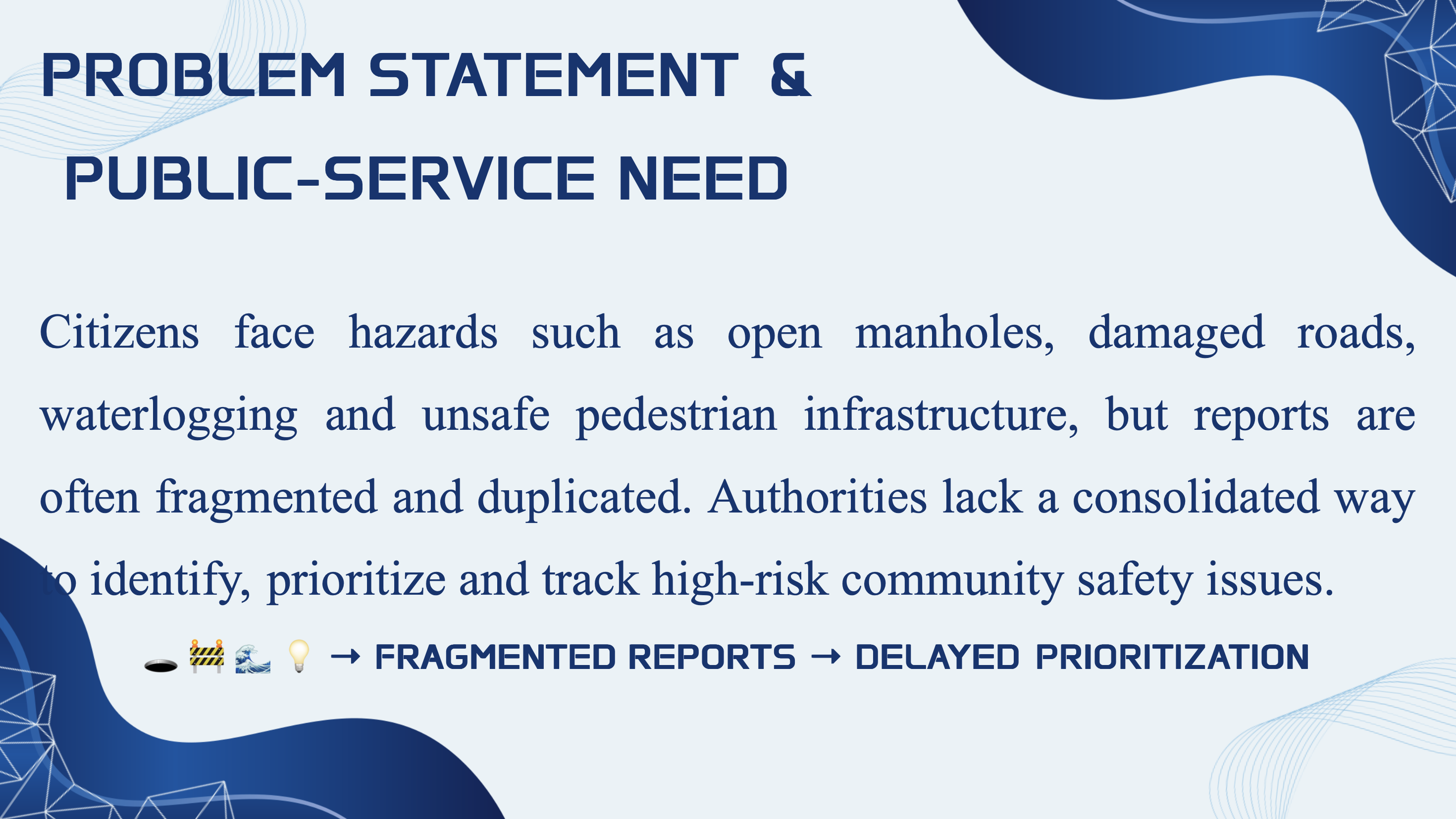
Guardian Lens was inspired by the everyday safety hazards that people encounter in their communities, including open manholes, damaged roads, waterlogging, and unsafe pedestrian infrastructure. These issues can put lives at risk, yet citizen reports are often scattered across different channels, duplicated, or difficult to prioritize. We wanted to address this gap by exploring how technology and artificial intelligence could help transform individual citizen reports into meaningful, actionable community safety intelligence.
Our vision was to create a platform that helps communities and authorities identify safety concerns more effectively, prioritize high-risk issues, and improve the way local problems are tracked and addressed.
What It Does
Guardian Lens is an AI-powered community safety intelligence project designed to help make communities safer and more resilient. It focuses on organizing reports of local hazards and making safety-related information more useful for decision-making. By bringing attention to issues such as damaged roads, open manholes, waterlogging, and unsafe pedestrian infrastructure, the project aims to support better identification, prioritization, and tracking of community safety concerns.
The core idea behind Guardian Lens is simple: turning citizen reports into actionable community safety intelligence.
How We Built It
We began by identifying the problem of fragmented and duplicated safety reports and understanding how this can delay the prioritization of urgent issues. We then developed the concept for Guardian Lens around the need for a more consolidated approach to community safety intelligence.
Our approach focuses on using AI-powered technology to help make reported hazards more organized and useful for identifying high-priority concerns. We developed the project concept and prototype with the goal of demonstrating how technology can support community safety, disaster management, and resilience.
Challenges We Faced
One of the key challenges was addressing the problem of fragmented and duplicated reports while keeping the focus on identifying and prioritizing high-risk safety issues. Different hazards can have different levels of urgency, making effective prioritization an important part of the problem.
Another challenge was shaping the idea into a practical technology-based solution that could be clearly demonstrated through a prototype. We needed to focus on the core public-service problem and communicate how AI-powered community safety intelligence could help make hazard reporting and tracking more effective.
What We Learned
Through this project, we learned the importance of starting with a clearly defined real-world problem before developing a technological solution. We also gained a better understanding of how fragmented information can affect decision-making and why consolidating reports and prioritizing urgent issues matter for community safety.
Guardian Lens reinforced our understanding that technology is most valuable when it addresses practical challenges faced by people. AI can offer meaningful support when applied thoughtfully to real-world problems, particularly in areas such as public safety, disaster management, and community resilience.
Our Vision
With Guardian Lens, we aim to contribute to safer, more responsive communities by helping transform scattered citizen reports into organized, actionable safety intelligence. Our vision is to support a future where community hazards can be identified, prioritized, and tracked more effectively, helping citizens and authorities work toward safer public spaces.
Guardian Lens — Turning Citizen Reports into Safer Communities.

Log in or sign up for Devpost to join the conversation.