-
-
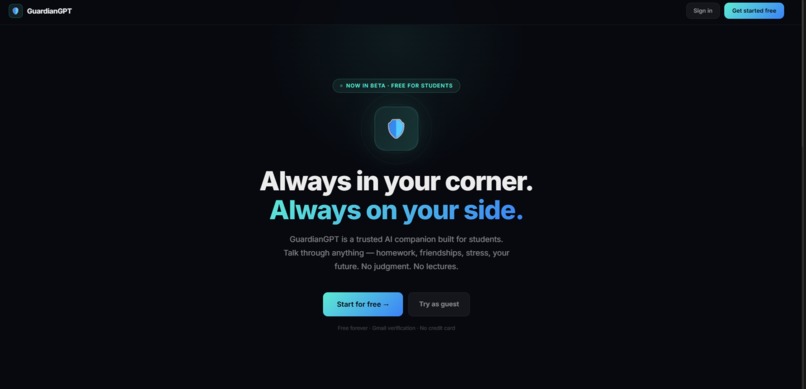
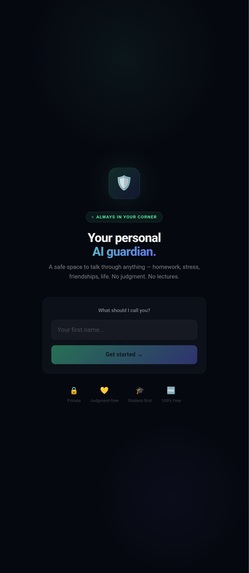
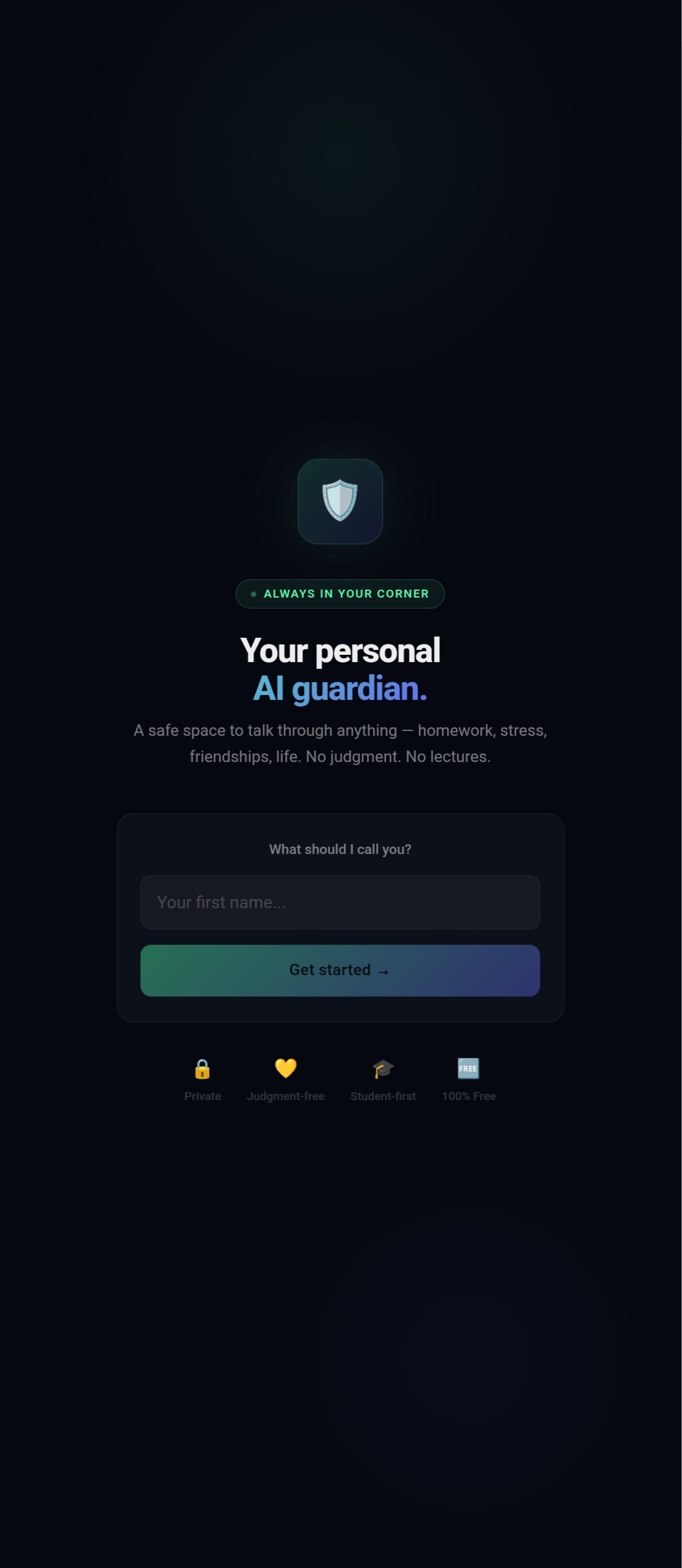
Main homepage
-
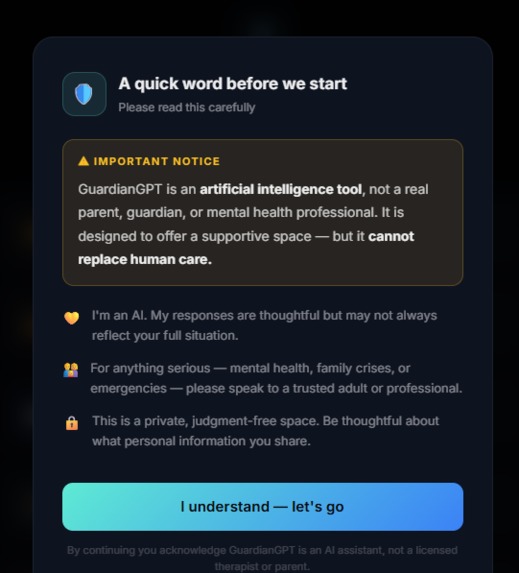
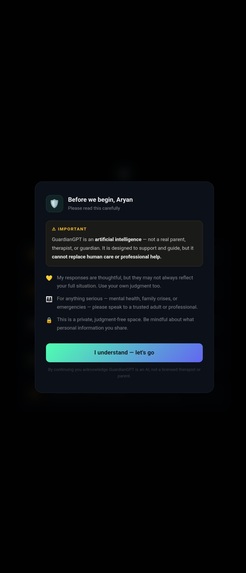
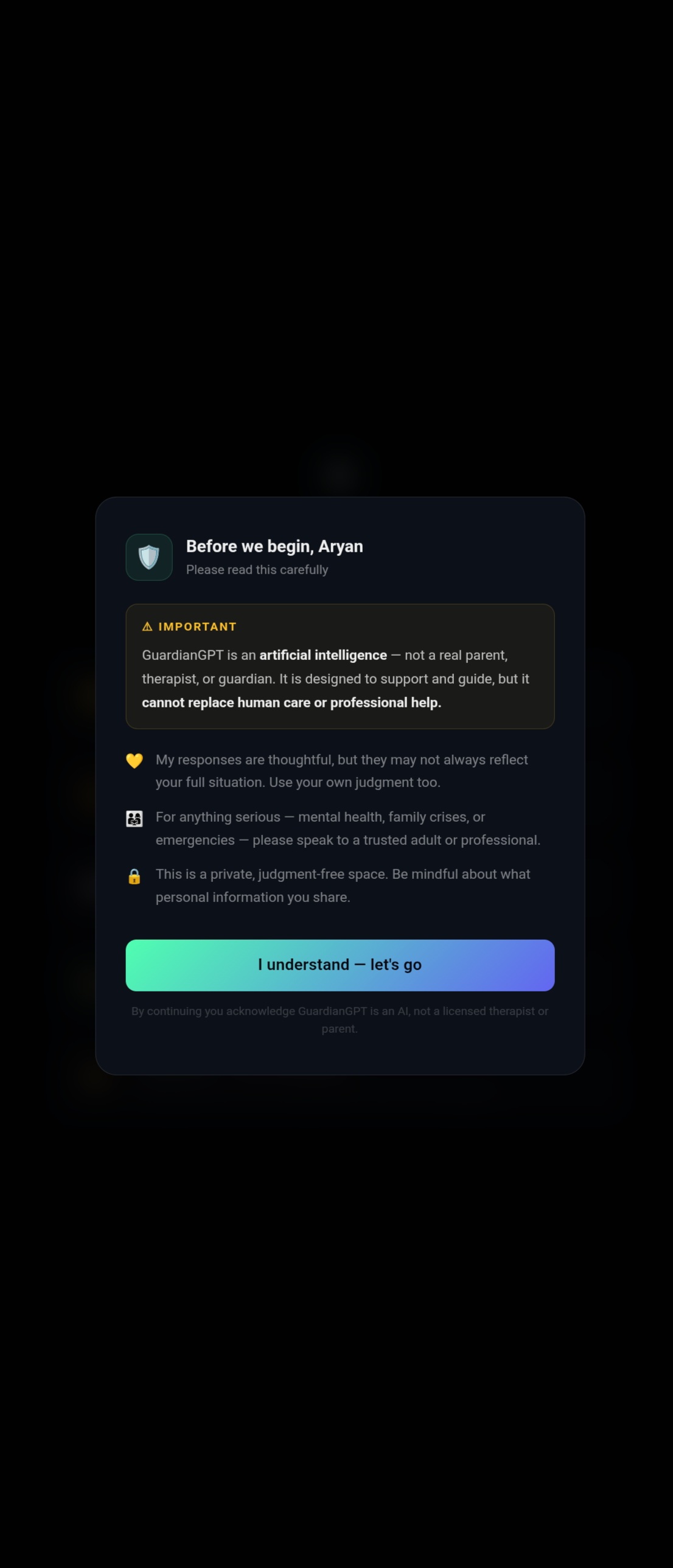
Legal Notice
-
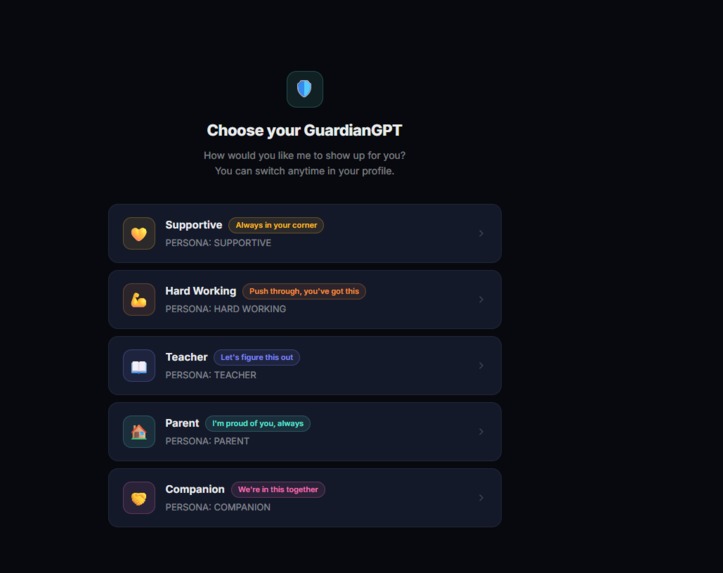
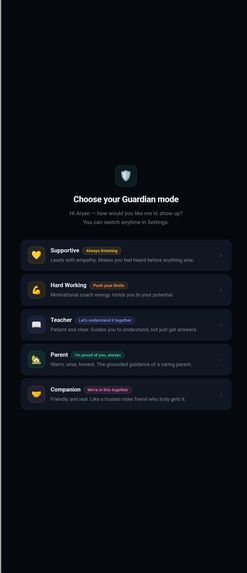
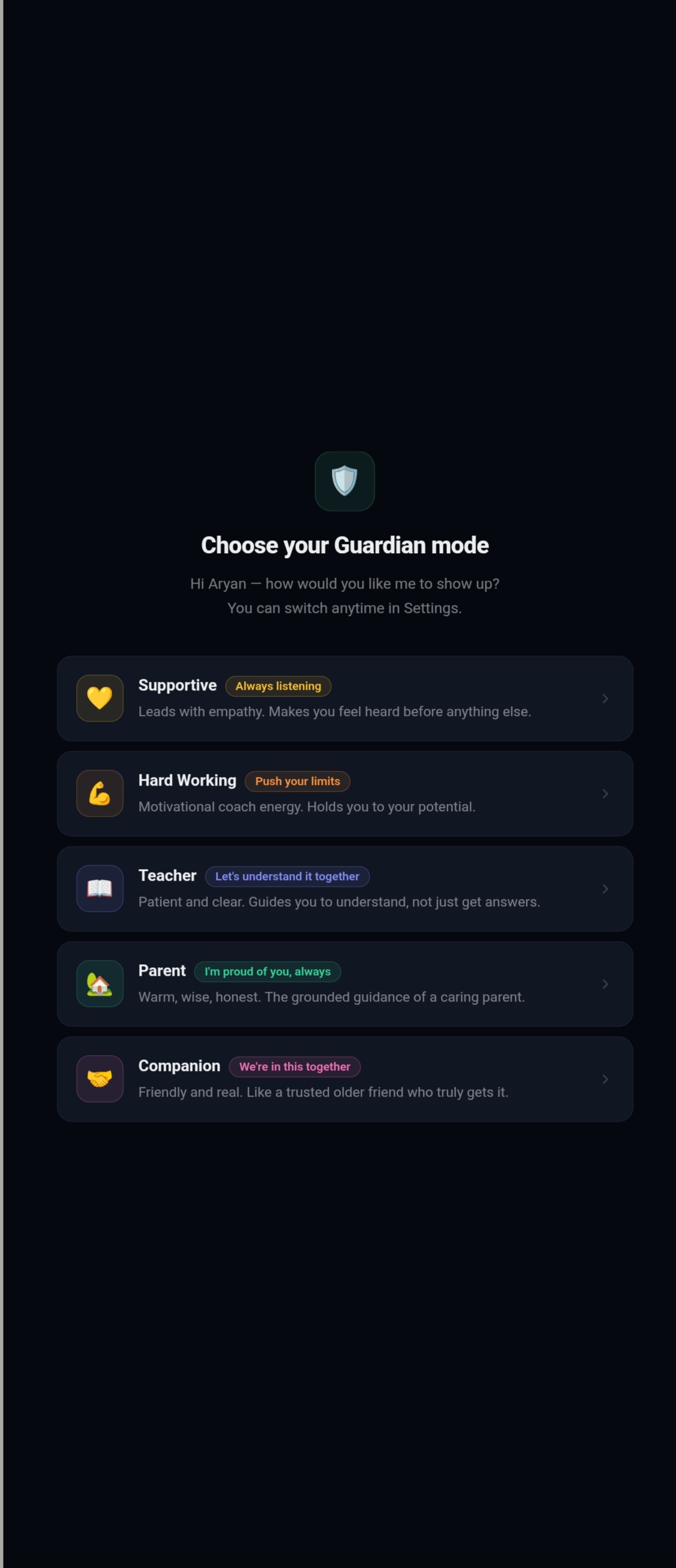
Different natures of model
-
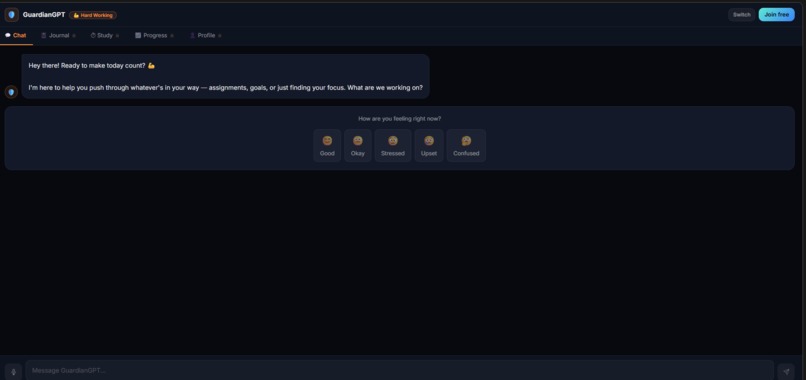
Nature 1
-
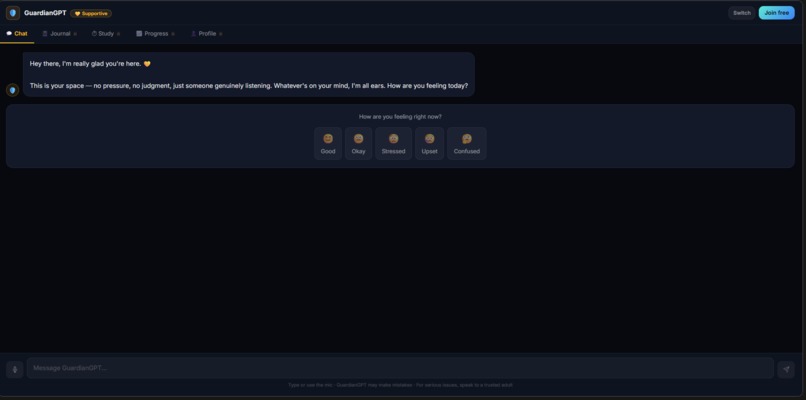
Nature 2
-
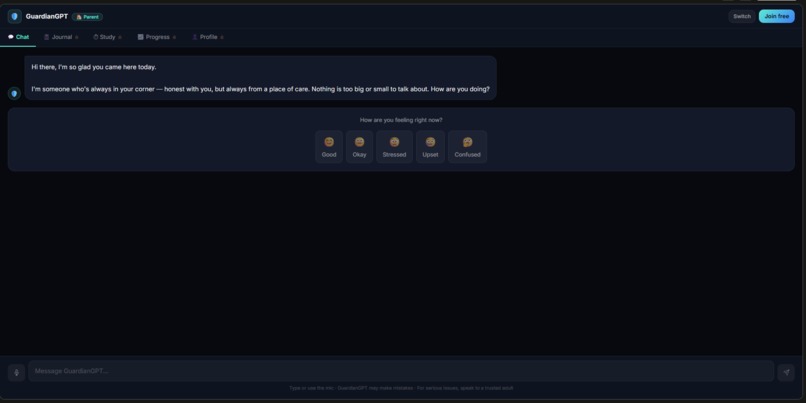
Nature 3
-
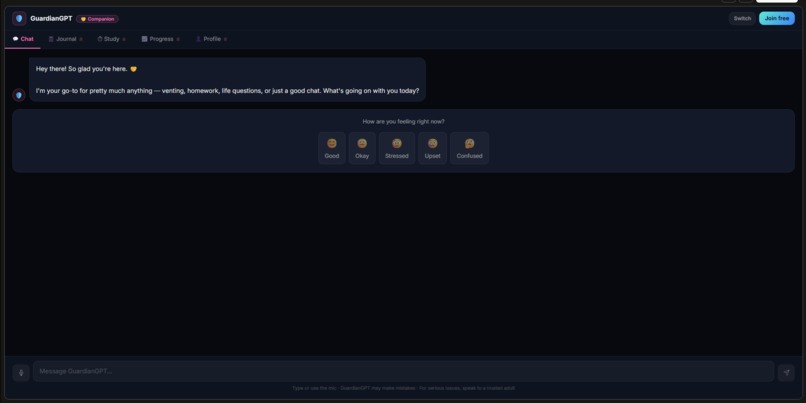
Nature 4
-

Logo
-
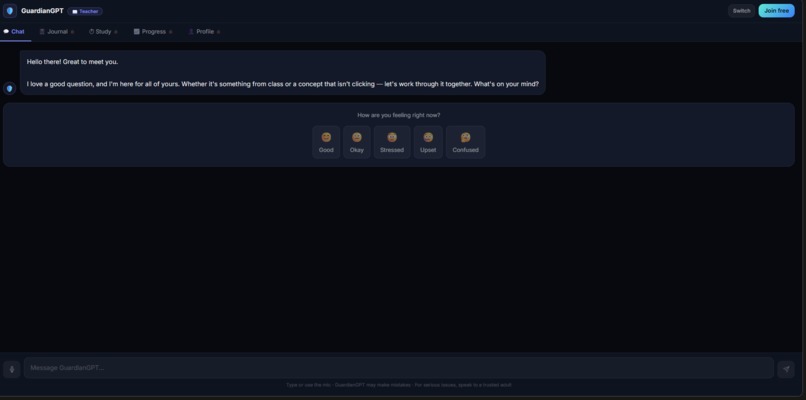
Nature 5
-
-
-
-
-
-
-
Inspiration - Personal experience as a student, and the general problem of students being under lots of pressure, especially around exams, inspired GuardianGPT. Actually feeling how much revising, workload and stress become much of an issue was able to show us exactly how a student might feel lost or unsupported, and that was able to show us a possible way forward: creating something that could provide instantaneous support when it was most needed, and make them less confused and their workload less demanding. The goal was to produce something that didn't add to a student's workload or stress when other things might potentially, but would actually help students under pressure.
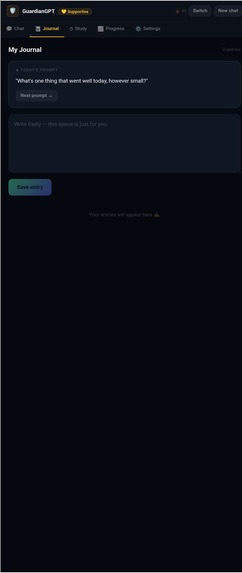
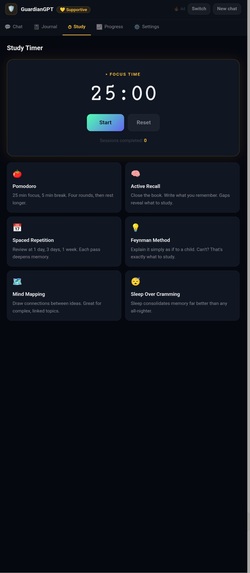
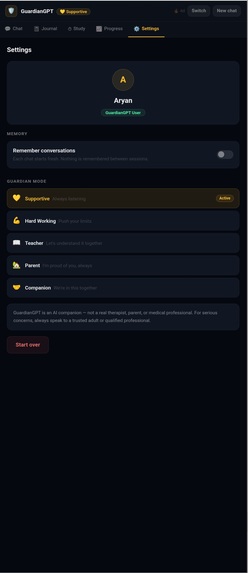
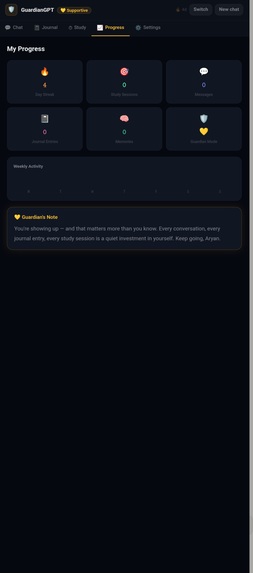
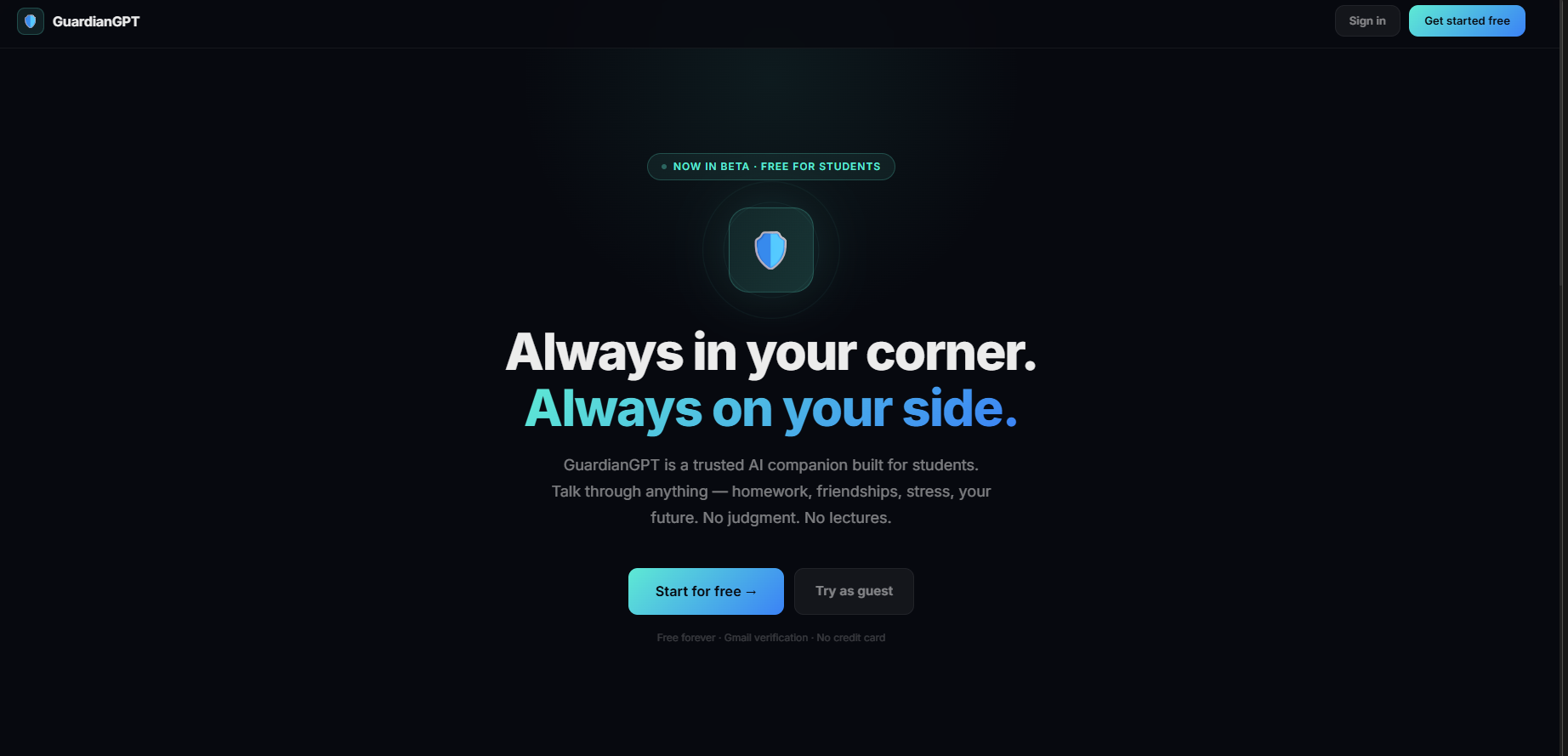
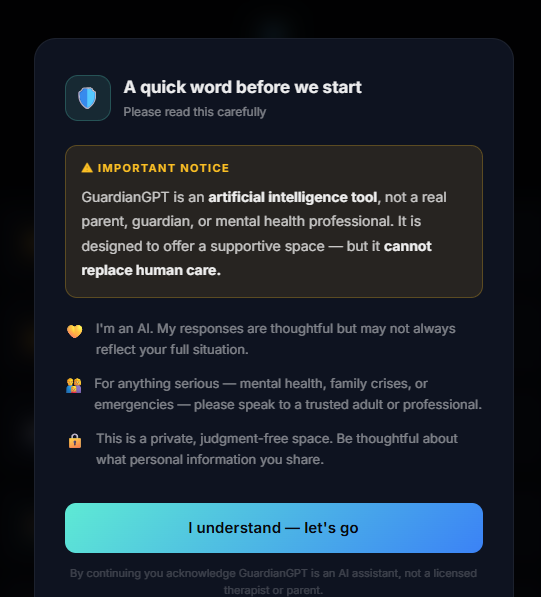
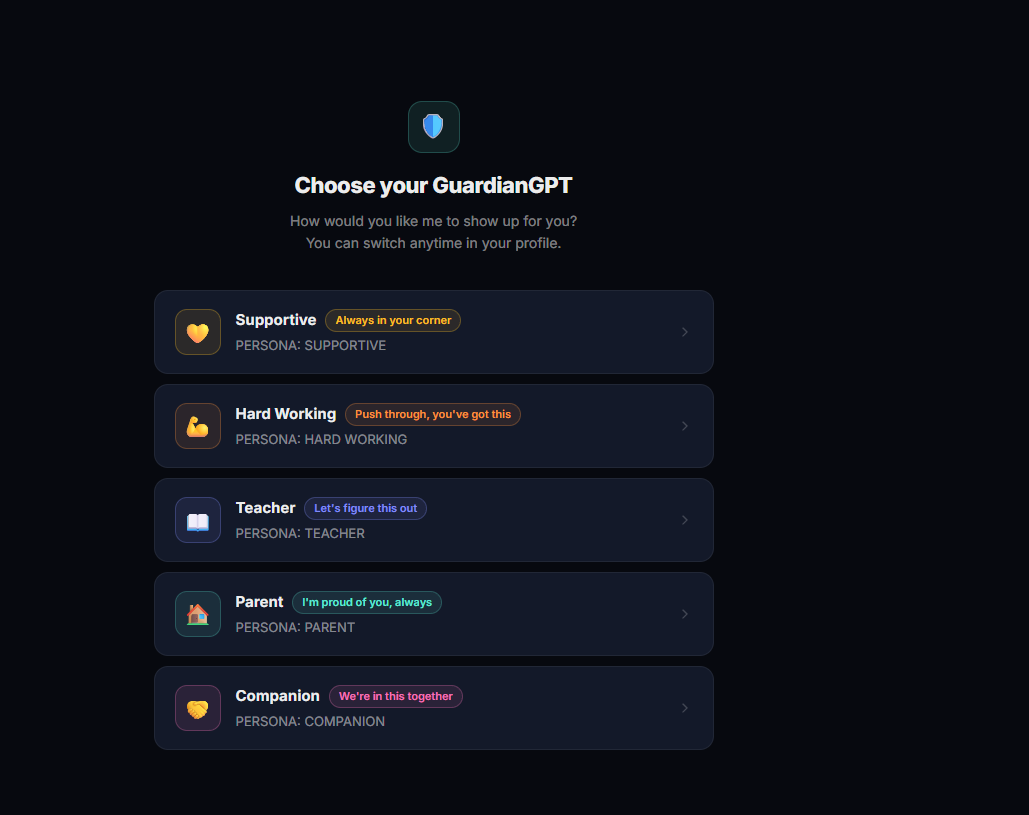
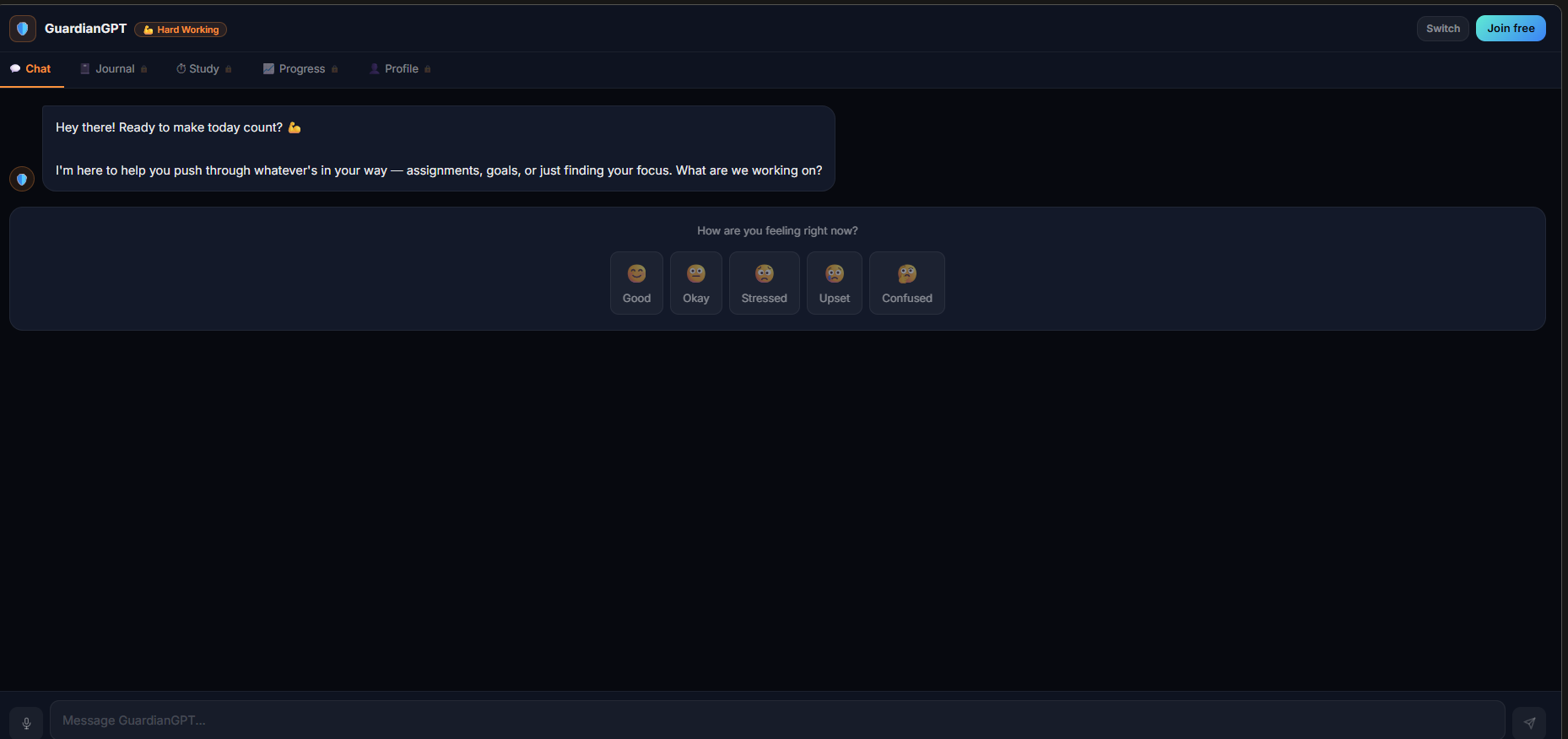
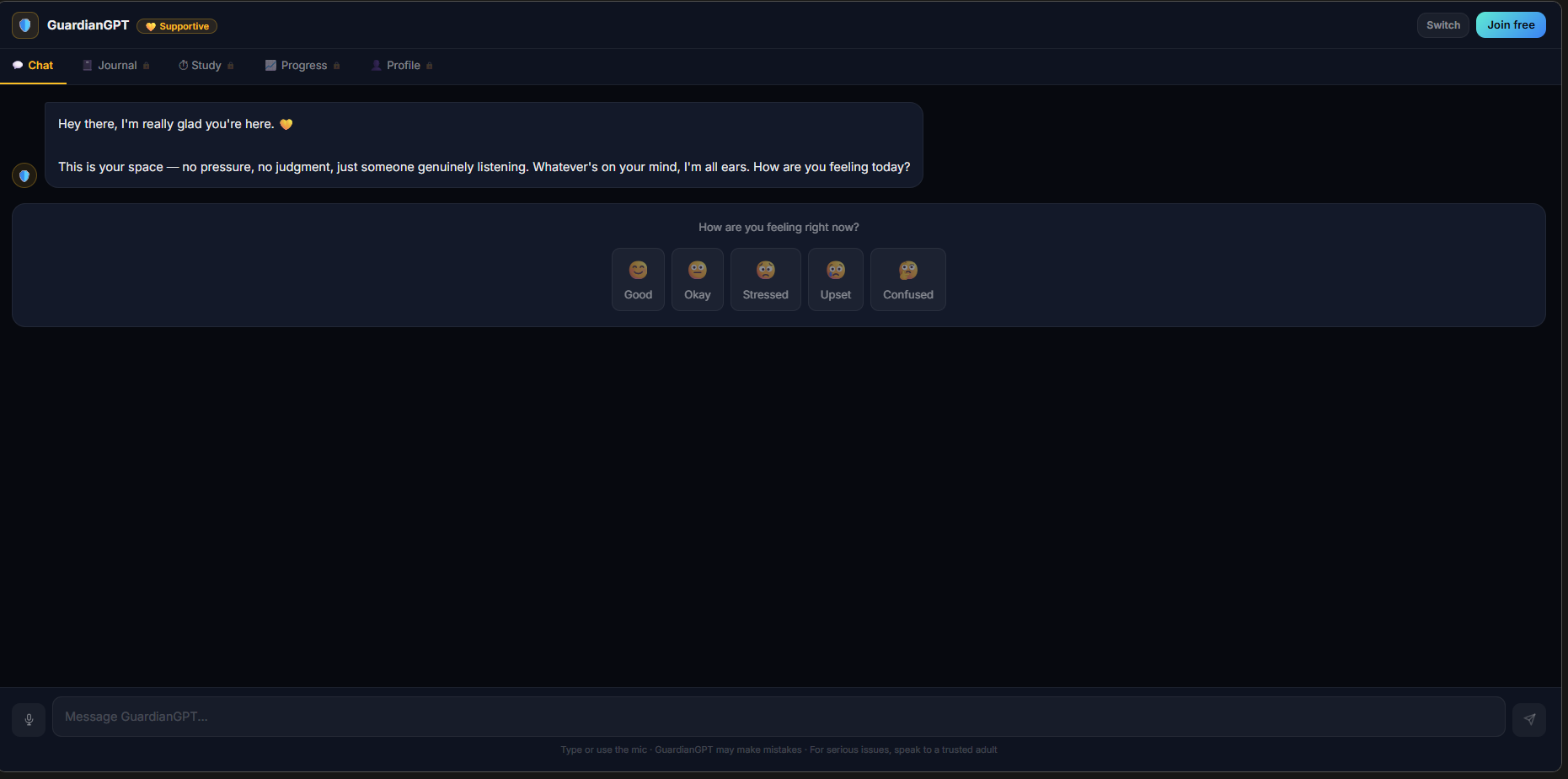
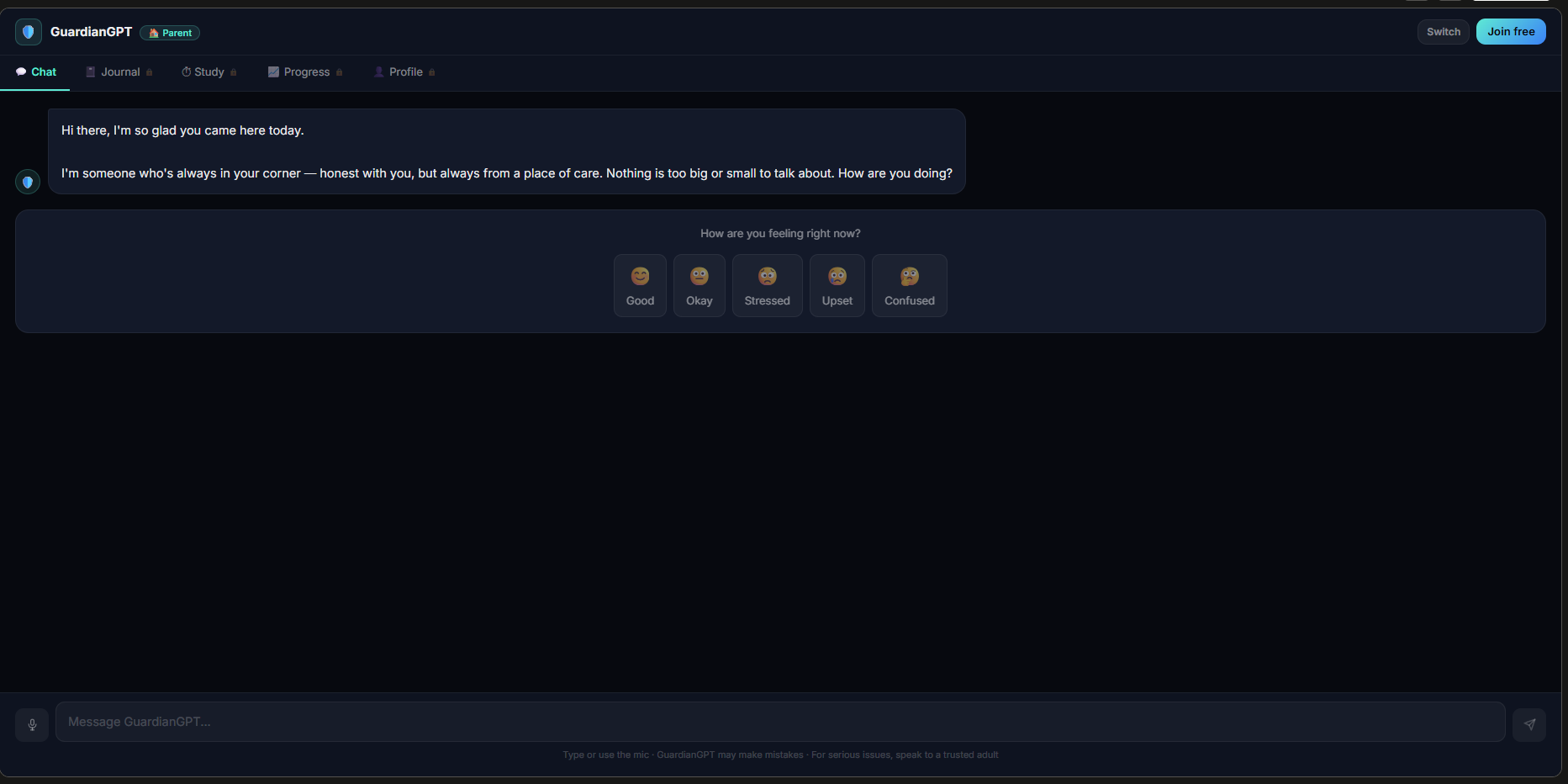
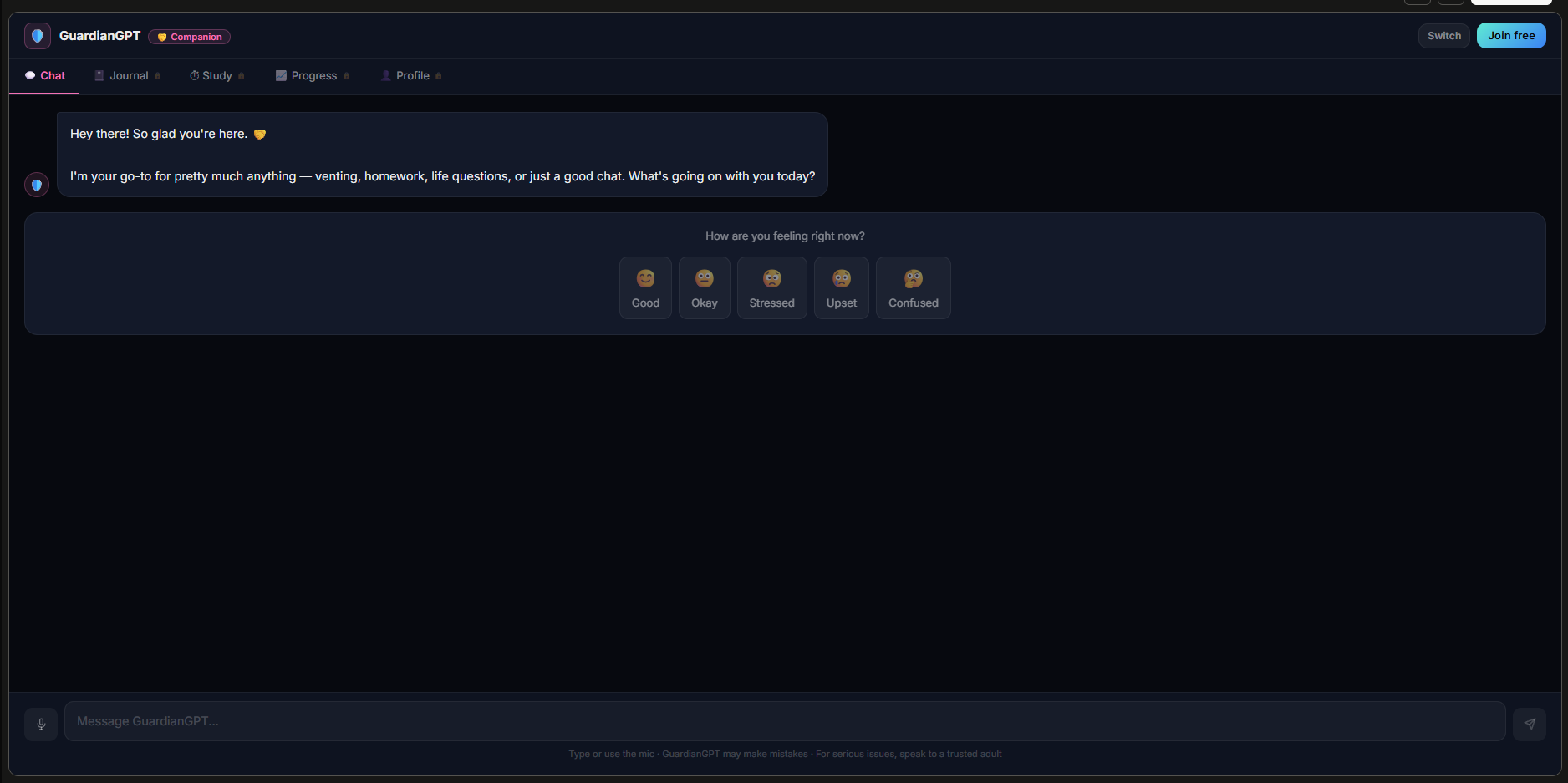
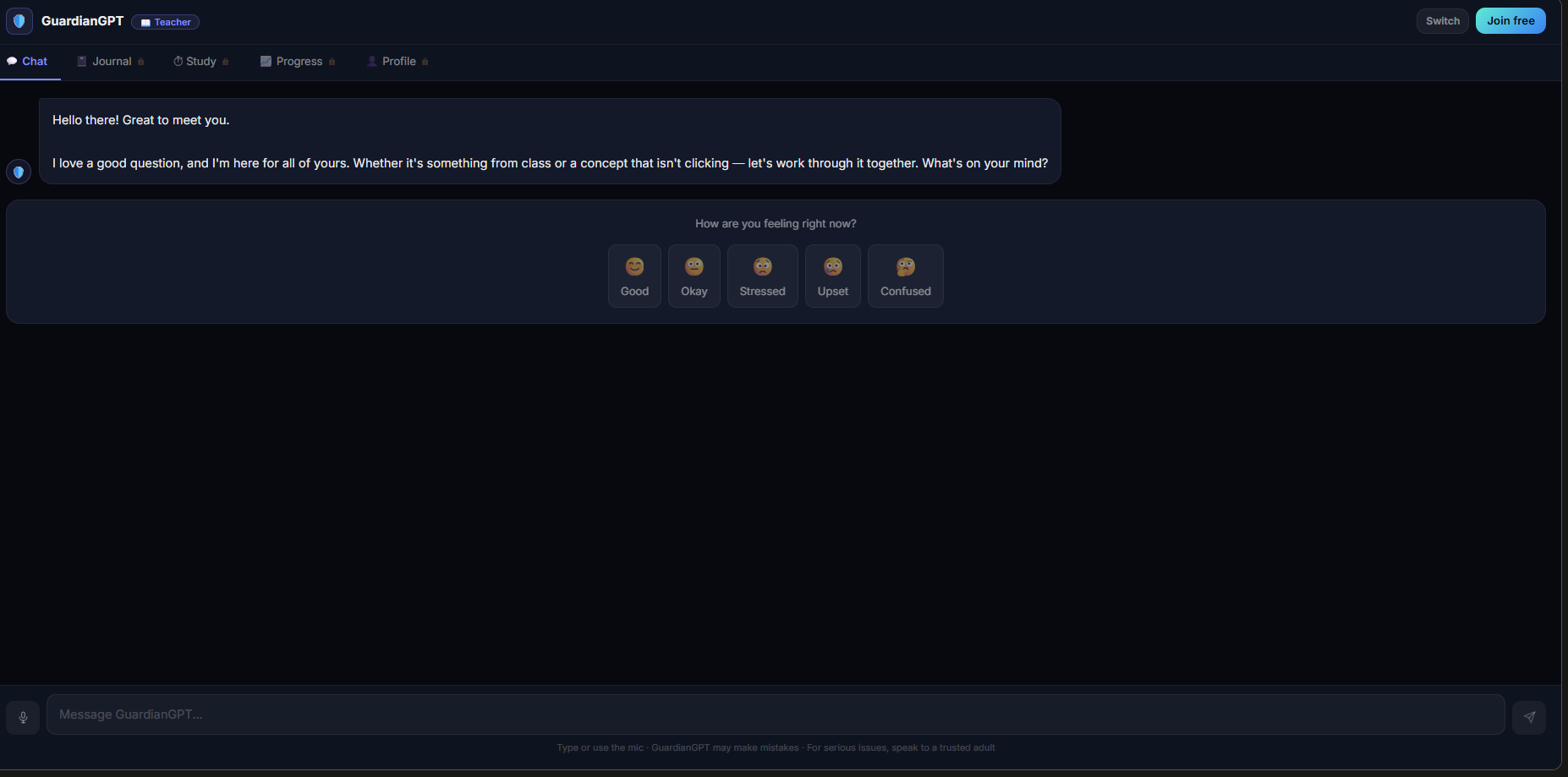
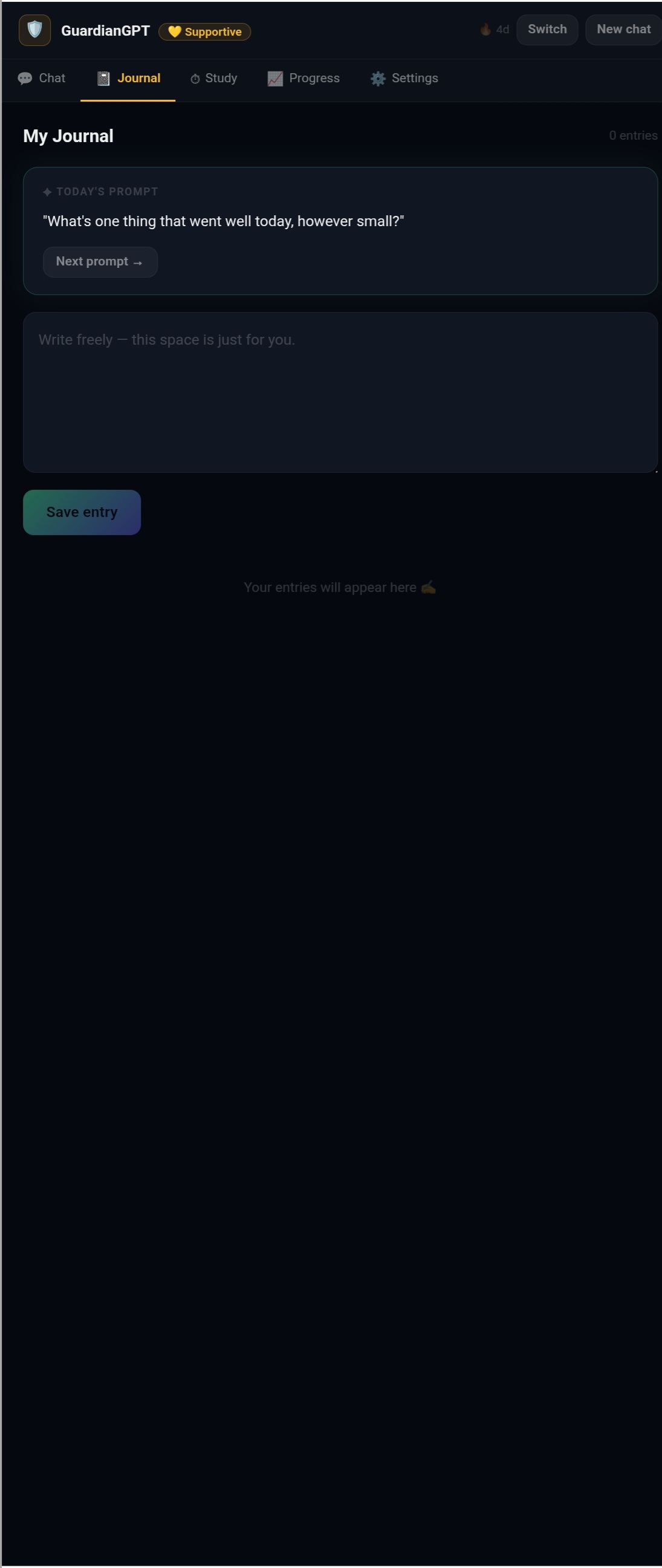
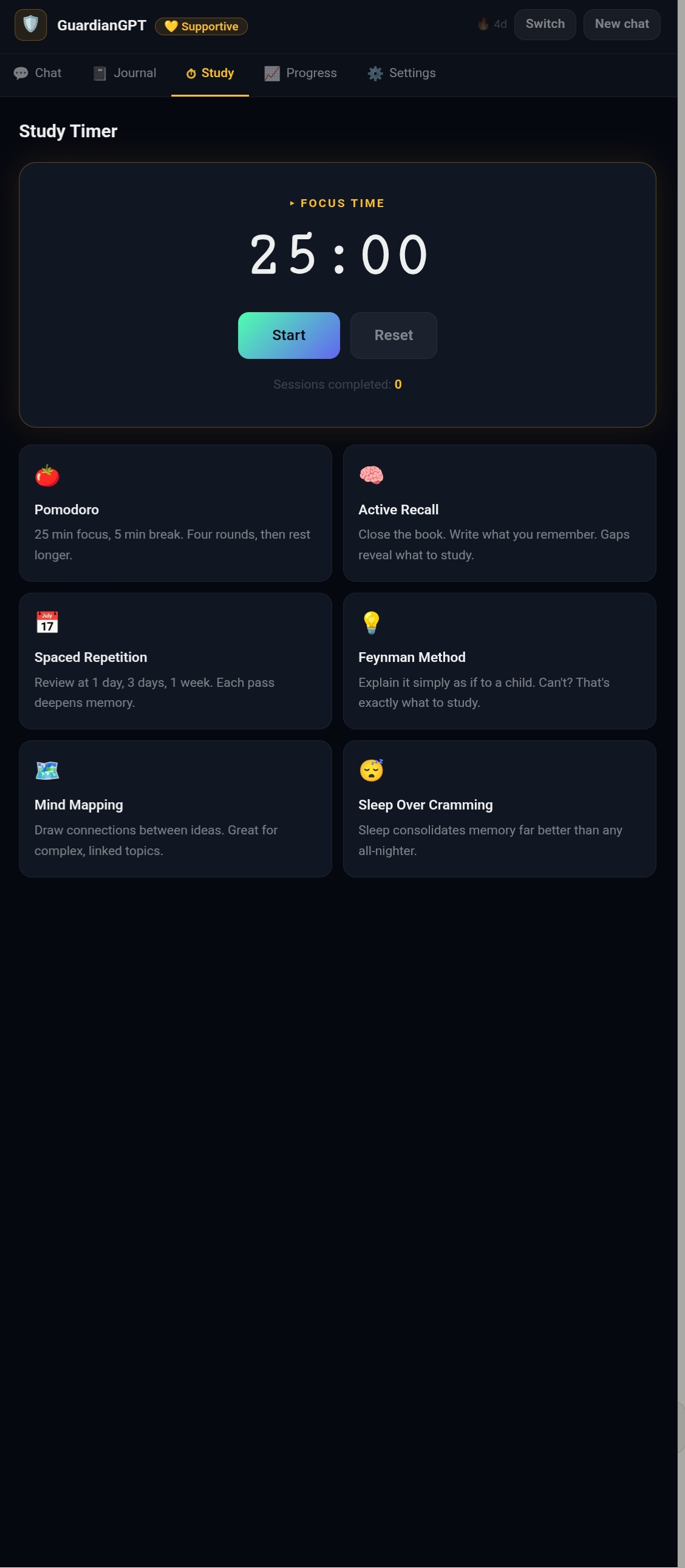
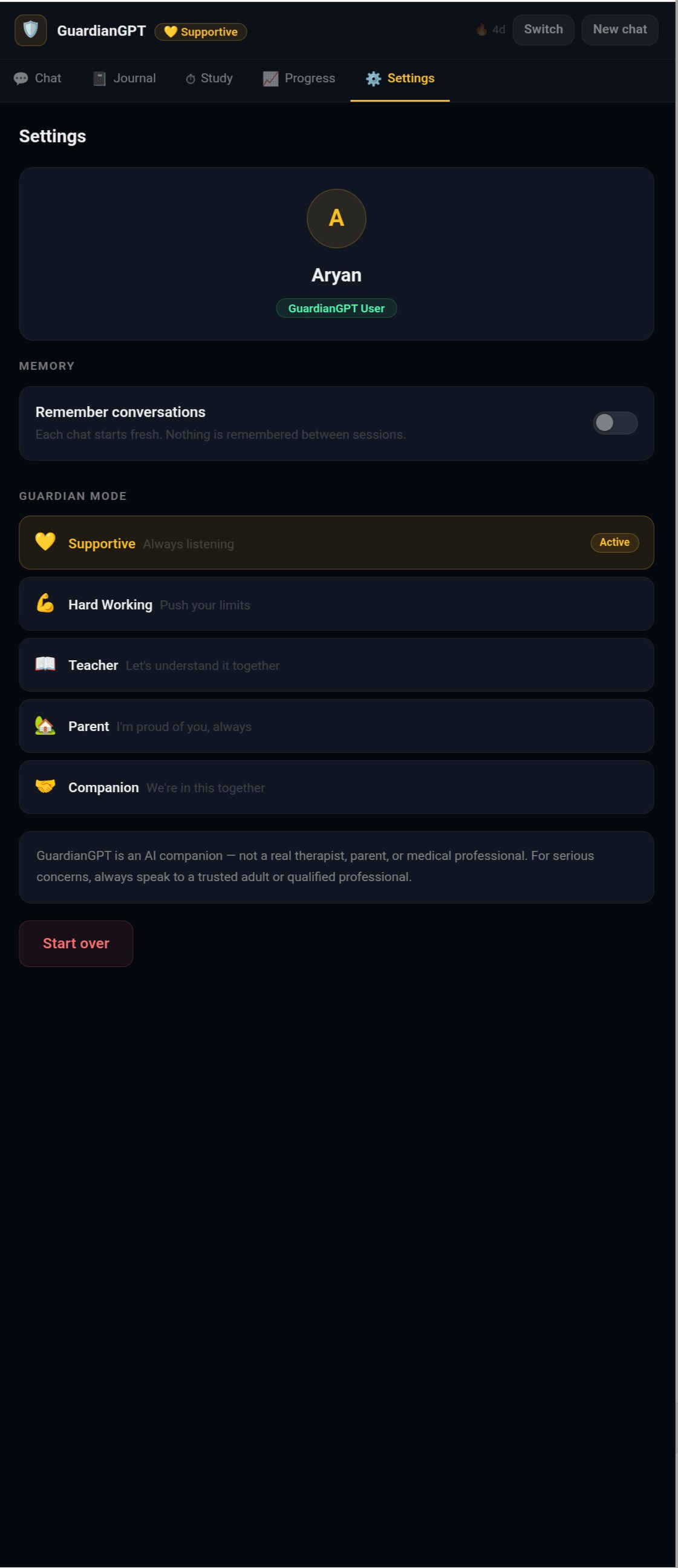
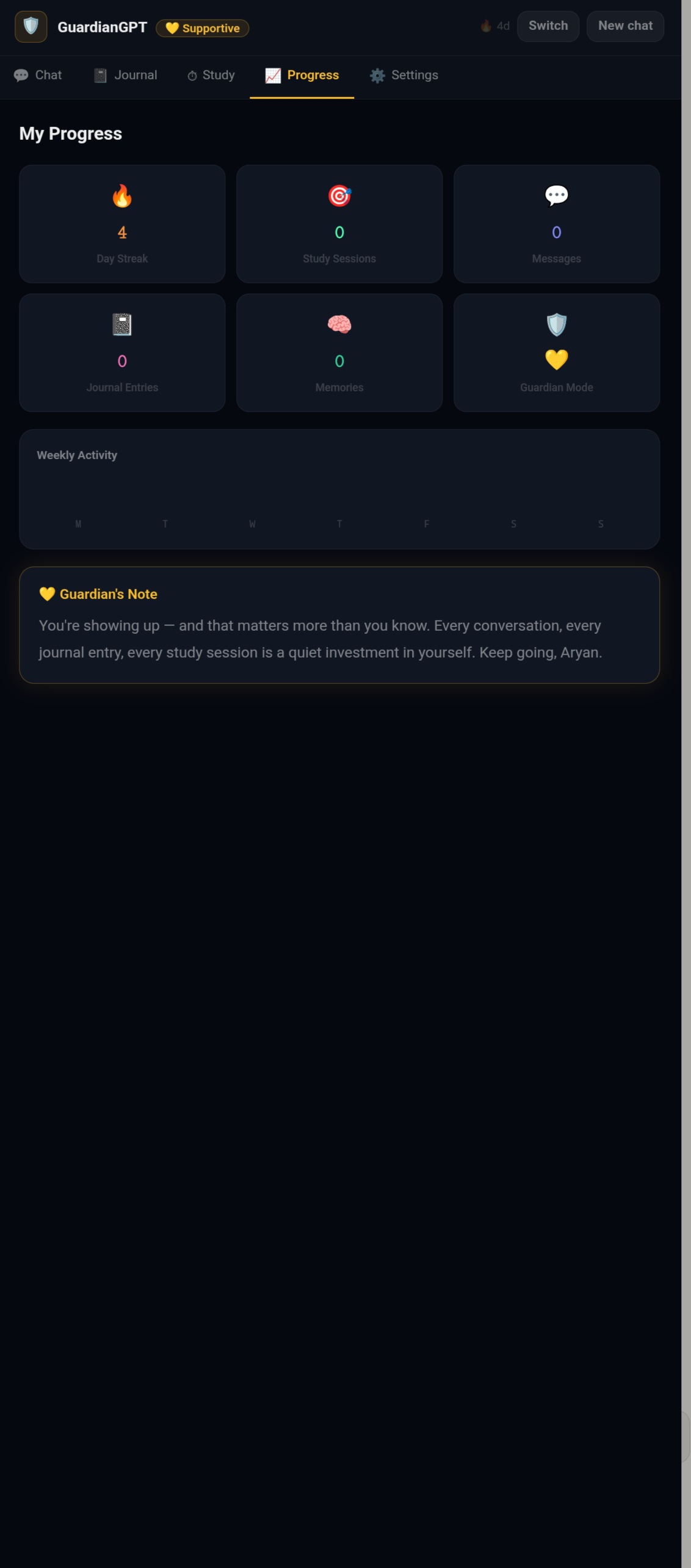
What it does - GuardianGPT is a very fast, simple, and customisable AI Chatbot that gives users control over its 'nature' or the way in which the model responds. The ability for users to customise how they 'act' is the most important distinguishing feature of our bot compared to many of the others currently available, enabling our bot to be customisable to each user's need: learning help, simpler explanation, or more directed guidance. We aimed to give the bot a simple interface and the ability to be accessed without registration, allowing initial accessibility to all users and allowing them to benefit from it at all times they need it, whilst still offering the potential for customisation for all users.
How we built it - GuardianGPT was built using Claude and React. We used the API provided by Claude and the capabilities of its interface in order to create an MVP user interface and back end, in order for it to be ready for submission at the deadline. We plan to have future development using various tools and technologies available on the market after receiving the relevant funding and budget allocation to become a full application.
Challenges we ran into - There were multiple challenges throughout the creation process. The UI wasn't always fully functional, and at times the Claude API didn't perform at its optimum, giving invalid or unexpected responses. In addition, the bot's inability to accept typos meant we displayed several error messages, which may have been easily resolved otherwise. The ability for the user to change how the model responds, while keeping it safe, was a big obstacle.
Accomplishments that we're proud of - We are most proud of the fast response rate and easy-to-use, sophisticated user interface, as well as the extent to which the users are allowed to customise the 'nature' of the bot, as well as how it is usable without requiring a login, meaning accessibility for many users thaInspiration - Personal experience as a student, and the general problem of students being under lots of pressure, especially around exams, inspired GuardianGPT. Actually feeling how much revising, workload and stress become much of an issue was able to show us exactly how a student might feel lost or unsupported, and that was able to show us a possible way forward: creating something that could provide instantaneous support when it was most needed, and make them less confused and their workload less demanding. The goal was to produce something that didn't add to a student's workload or stress when other things might potentially, but would actually help students under pressure.
What it does - GuardianGPT is a very fast, simple, and customisable AI Chatbot that gives users control over its 'nature' or the way in which the model responds. The ability for users to customise how they 'act' is the most important distinguishing feature of our bot compared to many of the others currently available, enabling our bot to be customisable to each user's need: learning help, simpler explanation, or more directed guidance. We aimed to give the bot a simple interface and the ability to be accessed without registration, allowing initial accessibility to all users and allowing them to benefit from it at all times they need it, whilst still offering the potential for customisation for all users.
How we built it - GuardianGPT was built using Claude and React. We used the API provided by Claude and the capabilities of its interface in order to create an MVP user interface and back end, in order for it to be ready for submission at the deadline. We plan to have future development using various tools and technologies available on the market after receiving the relevant funding and budget allocation to become a full application.
Challenges we ran into - There were multiple challenges throughout the creation process. The UI wasn't always fully functional, and at times the Claude API didn't perform at its optimum, giving invalid or unexpected responses. In addition, the bot's inability to accept typos meant we displayed several error messages, which may have been easily resolved otherwise. The ability for the user to change how the model responds, while keeping it safe, was a big obstacle.
Accomplishments that we're proud of - We are most proud of the fast response rate and easy-to-use, sophisticated user interface, as well as the extent to which the users are allowed to customise the 'nature' of the bot, as well as how it is usable without requiring a login, meaning accessibility for many users that would not otherwise use the service. We were personally driven by the fact that this service arose out of our own problems and how this may have affected us, creating an applicable way to overcome those problems.
What we learned - During the development stage of the software, we learned how important it is to test rigorously. Repeated testing of every element in GuardianGPT, including how the model and UI perform with multiple test interactions, is what we have been testing during the development of our model.
What's next for Guardian GPT - we are hoping for a small grant from a larger organisation to continue the development of Guardian GPT into a fully functioning and fully featured AI chatbot application, and distribute it to platforms such as the Apple App Store and Google Play Store, allowing access for many users globally. This also means taking into account the associated platform deployment and requirements. We would use funding to advertise our app, for example, across popular media platforms like TikTok and Facebook to create awareness, and then begin our search for early testers of the app to help us with improvements based on their honest reviews.t would not otherwise use the service. We were personally driven by the fact that this service arose out of our own problems and how this may have affected us, creating an applicable way to overcome those problems.
What we learned - During the development stage of the software, we learned how important it is to test rigorously. Repeated testing of every element in GuardianGPT, including how the model and UI perform with multiple test interactions, is what we have been testing during the development of our model.
What's next for Guardian GPT - we are hoping for a small grant from a larger organisation to continue the development of Guardian GPT into a fully functioning and fully featured AI chatbot application, and distribute it to platforms such as the Apple App Store and Google Play Store, allowing access for many users globally. This also means taking into account the associated platform deployment and requirements. We would use funding to advertise our app, for example, across popular media platforms like TikTok and Facebook to create awareness, and then begin our search for early testers of the app to help us with improvements based on their honest reviews.
Built With
- claude
- manus
- react

Log in or sign up for Devpost to join the conversation.