Inspiration
Modern software projects grow rapidly, making manual security reviews increasingly difficult. Developers often rely on multiple tools to detect vulnerabilities, identify exposed secrets, assess risk, and generate remediation guidance. These tools frequently produce fragmented results that require significant manual effort to interpret.
I wanted to build an AI-powered security engineer that could automate this workflow and present security findings in a way that is easy for both developers and decision-makers to understand. That idea became Guardian.
What it does
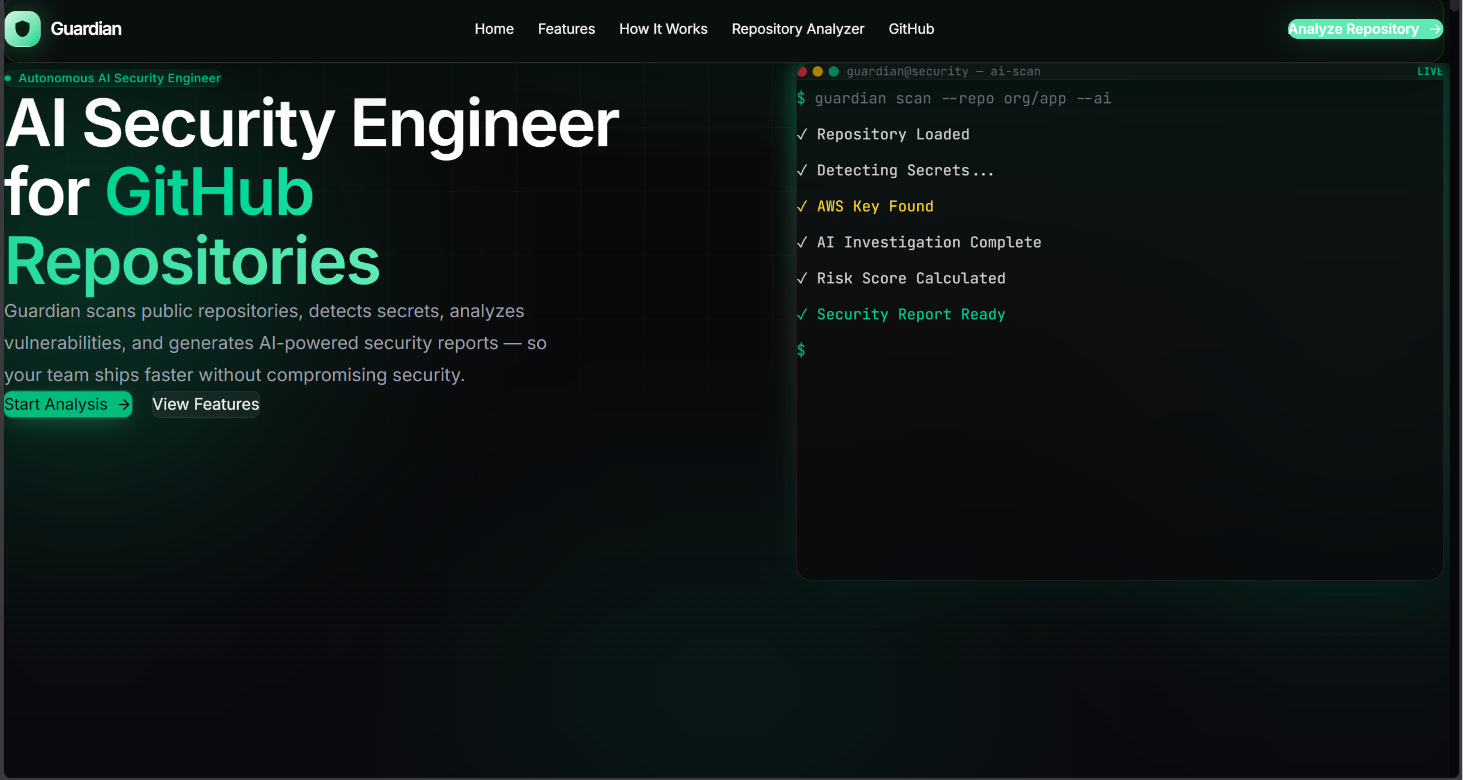
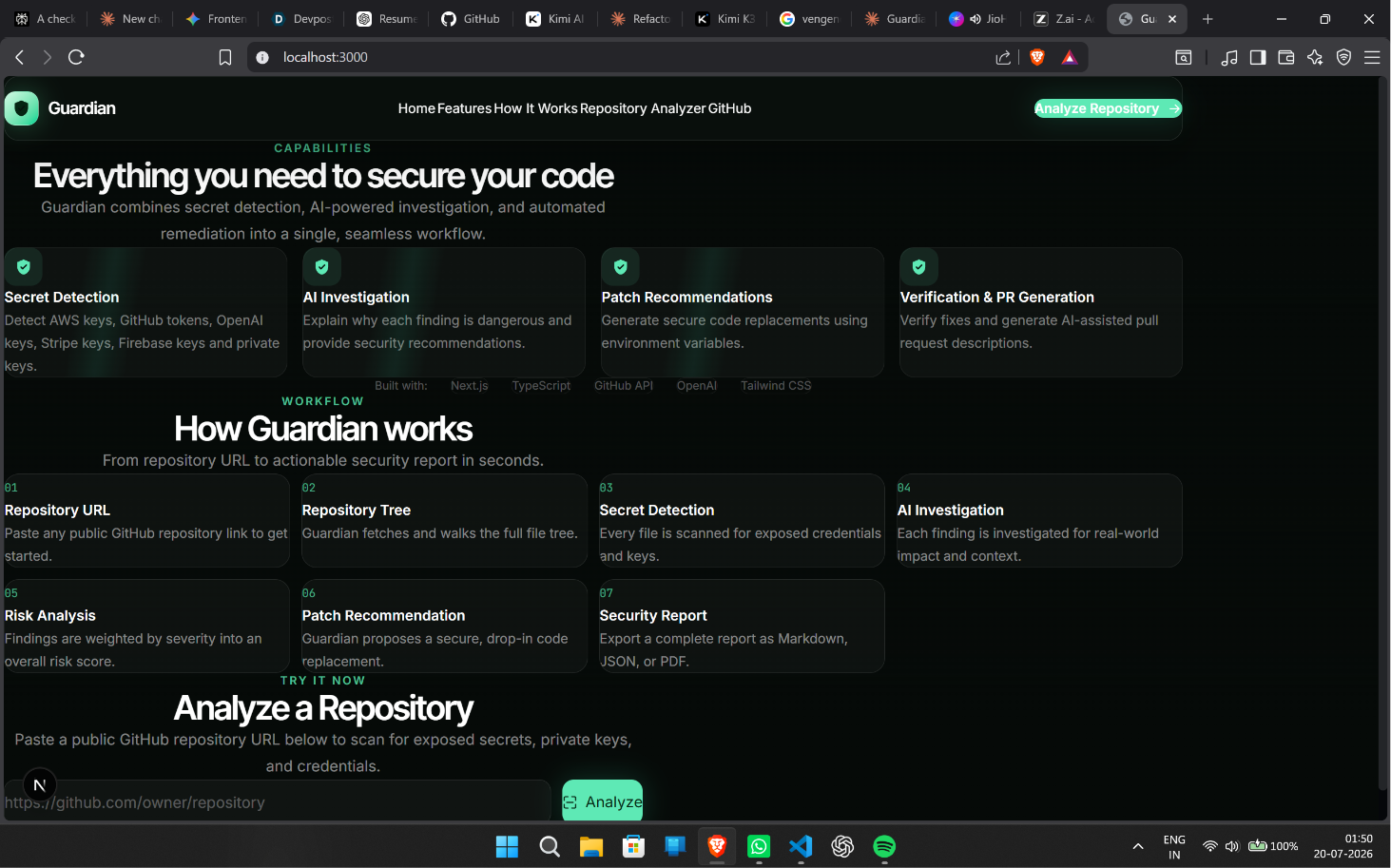
Guardian analyzes GitHub repositories and performs AI-assisted security analysis to help developers identify potential security issues and understand their impact.
It provides:
- AI-powered repository analysis
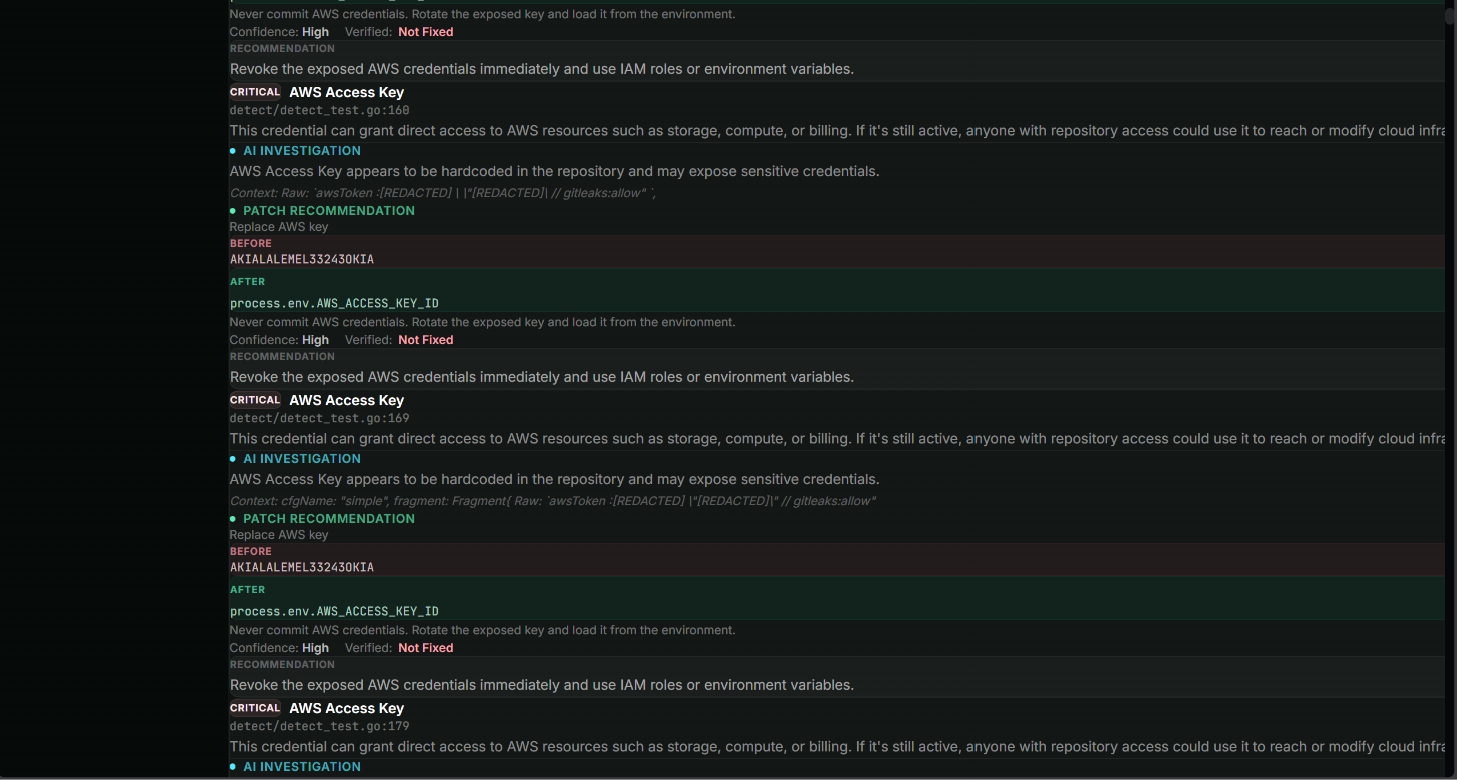
- Secret and credential detection
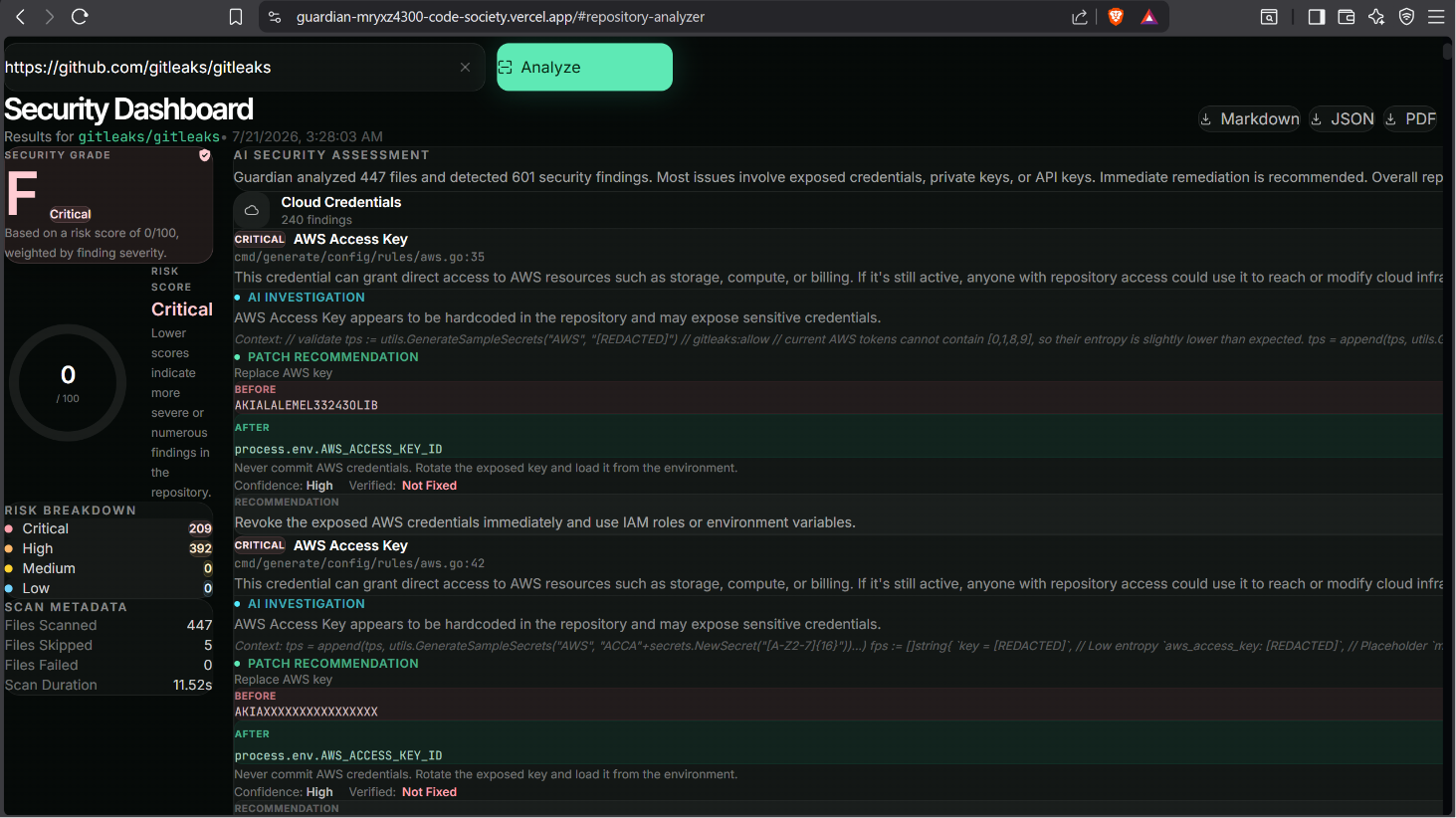
- Risk assessment
- OWASP Top 10 mapping
- MITRE ATT&CK mapping
- AI-generated remediation guidance
- Executive-ready security reports
- Export support (PDF, Markdown, JSON)
Instead of simply reporting issues, Guardian explains why they matter and suggests practical remediation steps.
How we built it
Guardian was built as a modern full-stack web application using:
- Next.js 16
- React 19
- TypeScript
- Tailwind CSS v4
- Framer Motion
- Vercel for deployment
The frontend focuses on creating a responsive, polished experience with animated security visualizations, an interactive dashboard, and a real-time terminal-inspired analysis interface.
The analysis pipeline combines repository inspection with AI-generated explanations, security mapping, and structured reporting to deliver actionable insights.
Challenges we ran into
Building Guardian involved several technical and design challenges.
One challenge was designing an interface that presented complex security information without overwhelming users. The dashboard, animations, and report layouts went through multiple iterations before reaching a clean and intuitive design.
Another challenge was organizing security findings into meaningful categories while integrating OWASP Top 10 and MITRE ATT&CK mappings in a way that added value rather than simply displaying raw data.
Deploying the application, optimizing production performance, and refining the overall user experience also required careful testing and iteration.
Accomplishments that we're proud of
We're proud of building a polished, production-ready application that combines AI with practical security workflows.
Highlights include:
- A modern responsive UI
- AI-powered security investigation
- Executive-ready report generation
- OWASP & MITRE mapping
- Multiple export formats
- Production deployment on Vercel
- Smooth animations and developer-friendly experience
What we learned
Building Guardian reinforced the importance of balancing technical capability with usability.
We learned how thoughtful UI design can make complex security concepts easier to understand, how AI can improve developer workflows when paired with structured security data, and how modern frontend technologies can be combined to create fast, engaging user experiences.
What's next for Guardian
Future improvements include:
- GitHub App integration
- Continuous repository monitoring
- CI/CD integration
- Historical vulnerability tracking
- Multi-repository management
- Team collaboration
- Authentication and user accounts
- CVE enrichment and threat intelligence integration
- AI-powered pull request security reviews
Built With
- ai
- att&ck
- css
- cybersecurity
- devsecops
- framer
- github
- gpt
- javascript
- json
- markdown
- mitre
- motion
- next.js
- node.js
- openai
- owasp
- react
- rest
- tailwind
- typescript
- vercel

Log in or sign up for Devpost to join the conversation.