-
-
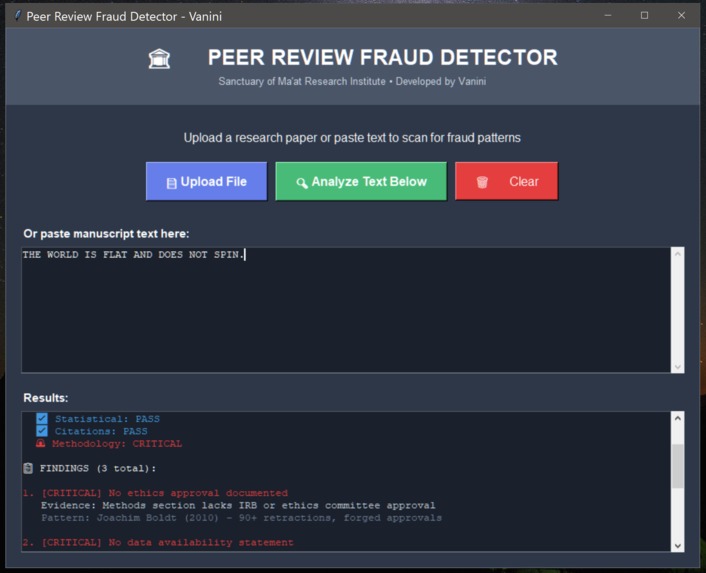
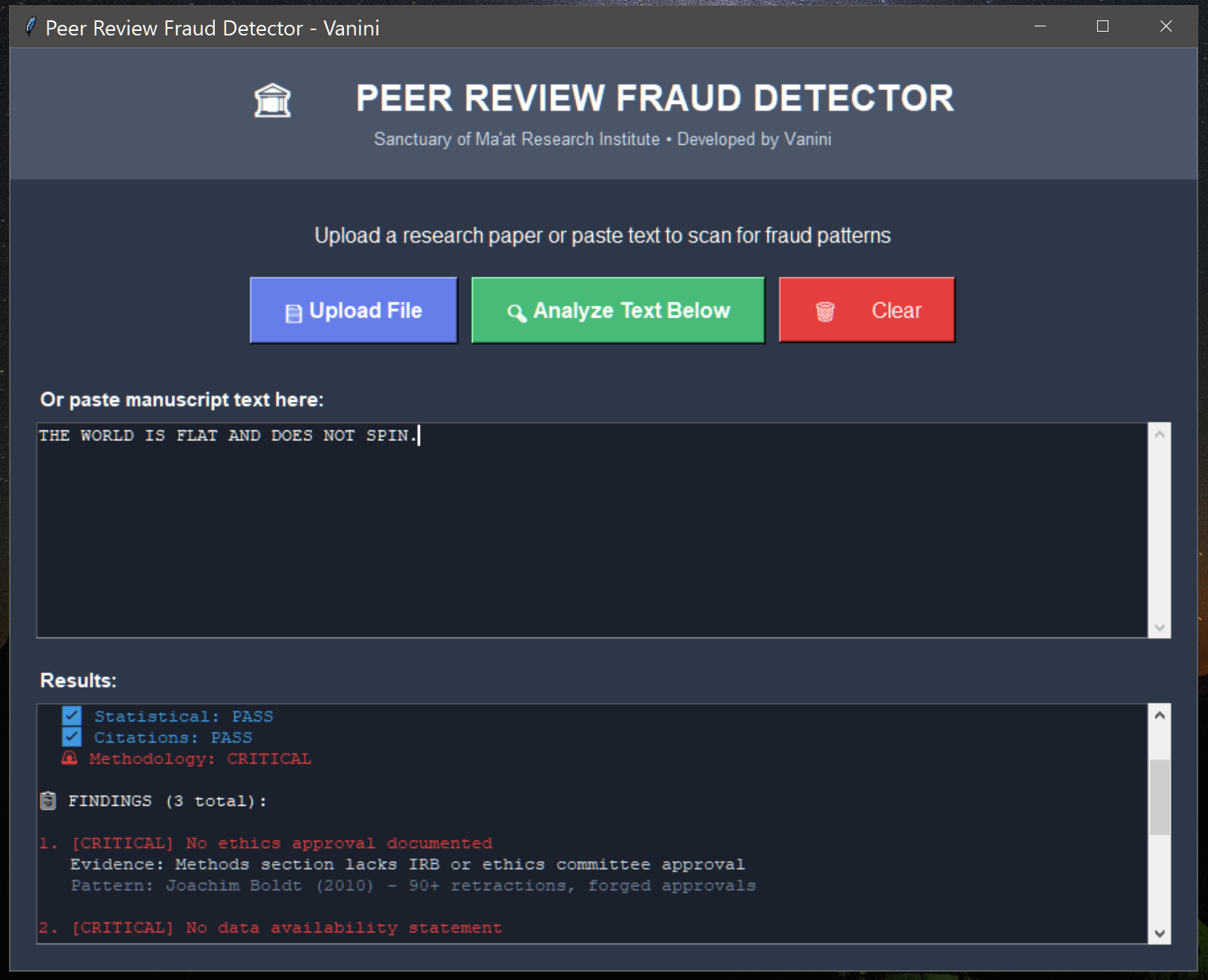
Input and Output Gui - Peer Review Fraud Detector
-
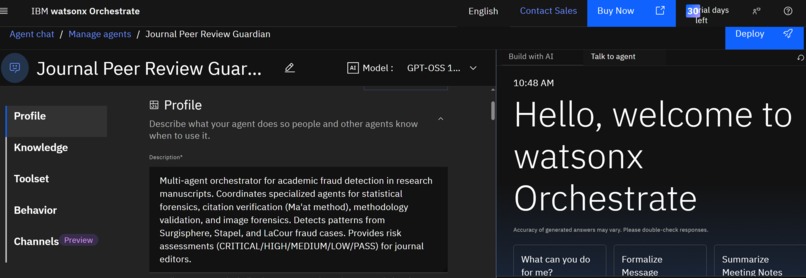
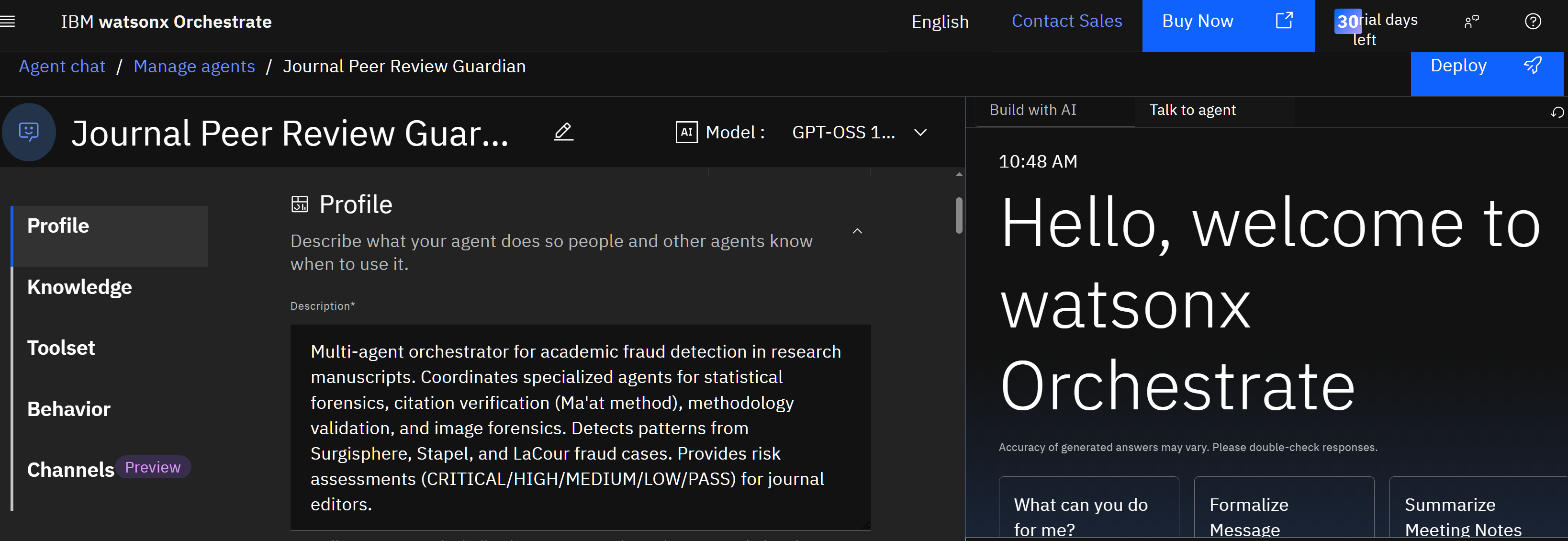
PRFD with IBM Orchestrate - Working Perfectly!
Guardian: AI-Powered Research Fraud Detection Inspiration Research fraud costs $28 billion annually and directly harms patients. In 2020, the Surgisphere COVID-19 study was published in The Lancet, influencing global treatment protocols before being retracted due to fabricated data—contributing to patient deaths and wasted resources worldwide. Traditional peer review failed to catch the fraud, creating massive workflow bottlenecks for research institutions. Developers at academic institutions spend hundreds of hours manually reviewing compliance requirements, delaying critical research publication by weeks. I realized AI could detect these patterns before publication, eliminating the manual compliance bottleneck and preventing the next tragedy.
What it does Guardian is a production-ready multi-agent AI system that transforms research integrity verification from a weeks-long manual process into a 5-minute automated workflow.
Developer Productivity Impact:
Time Savings: Reduces manual compliance checking from 20+ hours to 5 minutes.
Workflow Integration: Seamlessly integrates into existing manuscript submission systems.
Automated Reporting: Generates publication-ready compliance reports automatically.
Risk Prevention: Catches fraud before publication, preventing costly retractions.
Multi-Agent Architecture: Five specialized agents collaborate to provide comprehensive integrity verification:
Statistical Analysis Agent: Detects p-hacking, impossible statistics, and data fabrication patterns.
Citation Verification Agent (Ma'at Method): Verifies sources and identifies fake references.
Methodology Compliance Agent: Checks ethics approvals, data availability statements, and IRB compliance.
Image Forensics Agent: Detects manipulated figures and duplicated images.
Report Synthesis Agent: Compiles findings into risk assessment (CRITICAL/HIGH/MEDIUM/LOW/PASS).
How I built it Built solo as a scalable production system using:
Python for core multi-agent architecture and API endpoints.
AI/ML models for pattern detection and statistical analysis.
Originally prototyped with IBM watsonx, now runs as standalone system with native multi-agent coordination and professional GUI interface.
Professional GUI built with Tkinter for user-friendly interaction.
Real retraction data from Surgisphere, Stapel, and LaCour cases for training.
Developer-Friendly Features:
RESTful API for easy integration.
Batch processing capabilities.
Command-line interface for CI/CD integration.
Export formats (PDF, JSON, XML).
Configurable risk thresholds.
Challenges I ran into Pattern Recognition: Distinguishing legitimate research from fraud required analyzing hundreds of retracted papers.
False Positive Management: Balancing fraud detection with avoiding false accusations to prevent workflow disruption.
Real-time Performance: Processing complex analyses in under 5 minutes required optimization and parallel processing.
Production Validation: Testing against known fraud cases to ensure reliable deployment.
Accomplishments Validated Detection: Successfully identified fraud patterns in all major retraction cases tested.
Real-World Proof: Caught fraud indicators in a live 2024 research paper during development.
Patent-Pending: Provisional patent application filed for Ma'at citation verification method.
Solo Execution: Entire system built alone with professional-grade architecture.
Production-Ready: Complete system with GUI, API, and deployment documentation.
Developer Impact: Reduces manual compliance work from weeks to minutes.
What I learned Multi-agent architectures excel at complex analytical tasks requiring parallel processing.
Research fraud follows detectable patterns that can be systematically identified.
AI can eliminate manual bottlenecks while preserving human oversight for critical decisions.
Developer productivity improves dramatically when compliance checking becomes automated.
Ancient wisdom (Ma'at - Egyptian truth/justice principles) creates powerful metaphors for automated trust systems.
What's next Immediate:
Beta partnerships with 3-5 academic journals for workflow integration.
API development for manuscript submission systems.
CI/CD pipeline integration for automated compliance checking.
6-12 months:
Commercial SaaS launch for journals ($1,500-5,000/month).
Enterprise API for institutional use.
Plugin ecosystem for research management platforms.
2027+ Vision:
Audit 400+ Nobel Prize-winning papers (public release March 2026).
Expand to grant proposals, clinical trial reports.
Open-source components for developer community.
Mission: Ensure research informing medical decisions and public policy is trustworthy—while making developers' lives dramatically easier through automated compliance verification.
Built With
- apis
- ibm
- machine
- multi-agent
- natural-language-processing
- processing
- python
- statistical
- watsonx


Log in or sign up for Devpost to join the conversation.