
Inspiration
In recent years, Kigali, a burgeoning hub for international students and diverse expatriates, has witnessed a growing concern regarding personal safety, particularly among its international student community. A disturbing trend has been observed where at least two-thirds of international female students have reported incidents of harassment, us being examples of such students. We feel very unsafe getting cabs, getting motor rides, and walking around our neighborhoods at night; even our homes are not so safe anymore as thieves now break into student residences to steal sometimes. After Interviewing several Individuals, we realized International students, especially girls, were the main target of these assaults, often resulting to physical if not emotional harm. The city's vibrant cultural and educational opportunities have attracted many international students. However, this demographic often grapples with safety challenges, ranging from harassment by public workers such as Doctors and transport personnel to difficulties accessing immediate help in emergencies such as accidents or health crises.
What it does
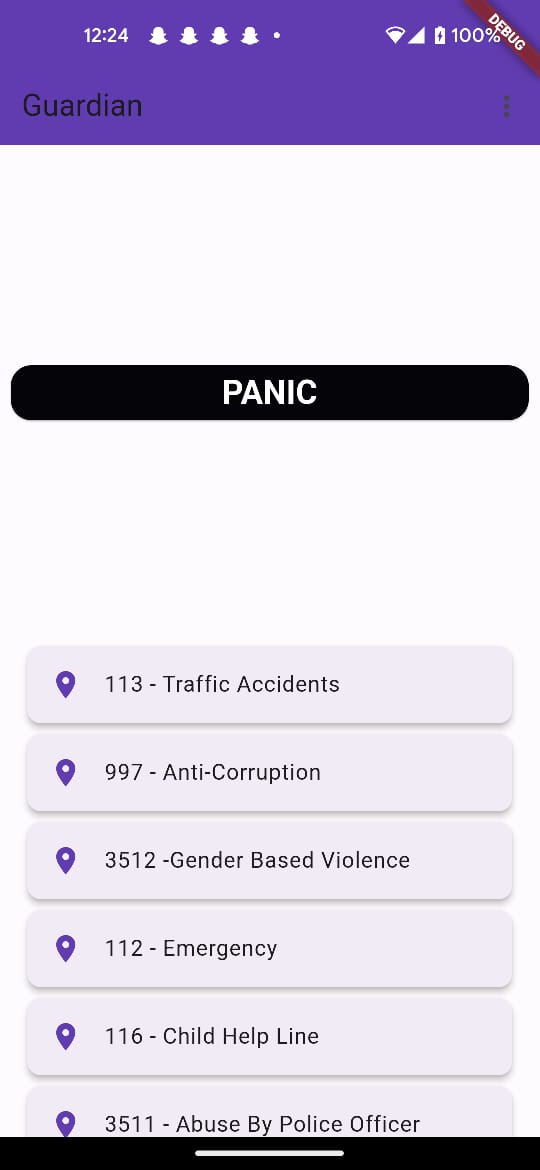
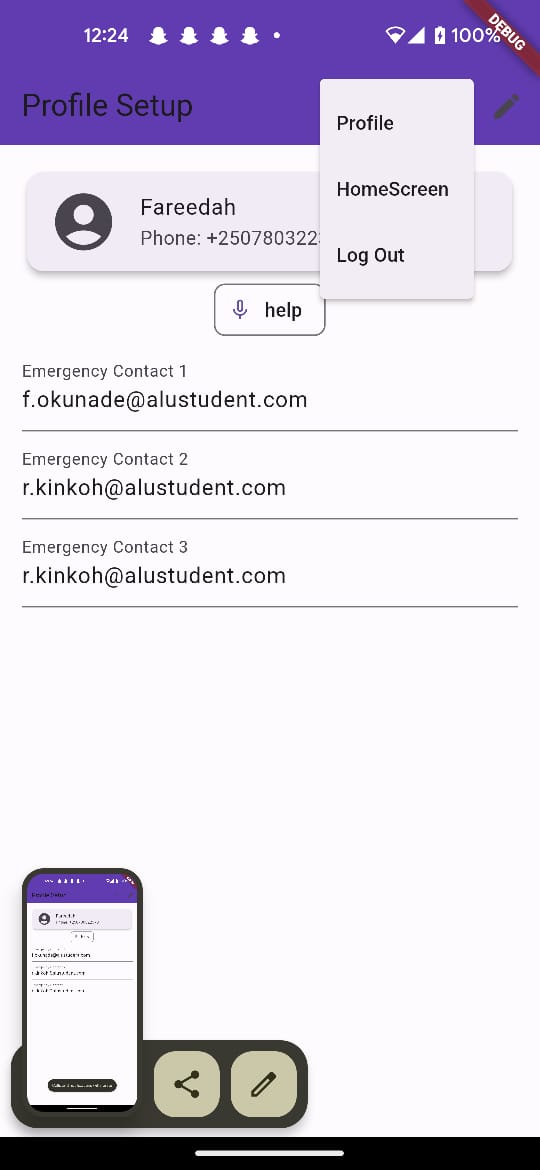
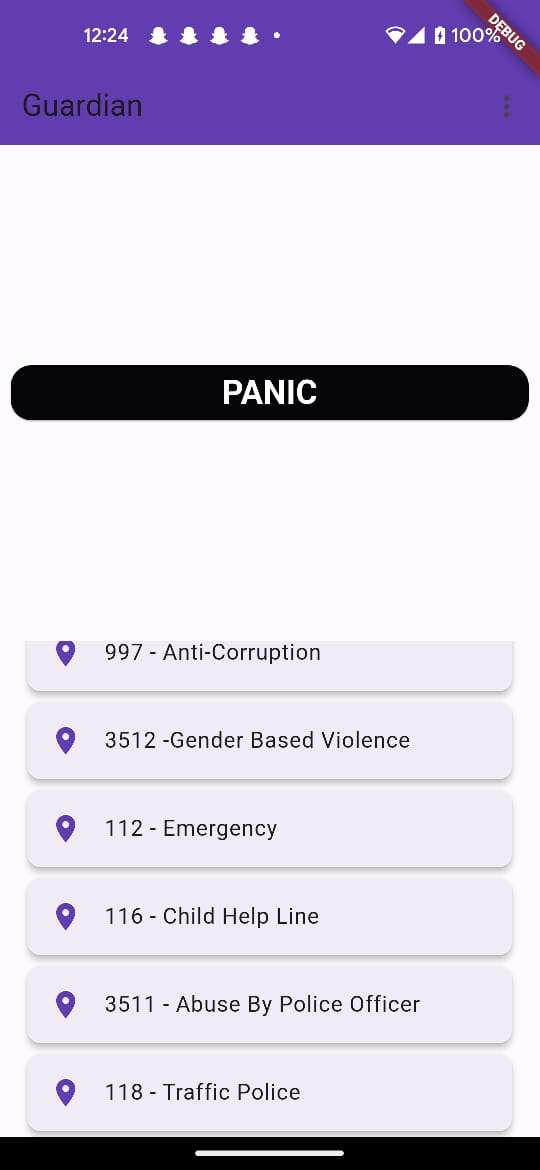
Our emergency response app is a comprehensive safety tool designed to enhance international students' and residents' security and well-being in urban environments like Kigali. At its core is a discreet panic button that, when activated, sends immediate alerts and shares the user's real-time location with emergency contacts or services. The app also features trigger actions for emergency scenarios, location tracking and a list of emergency service lines
Tools and Technologies:
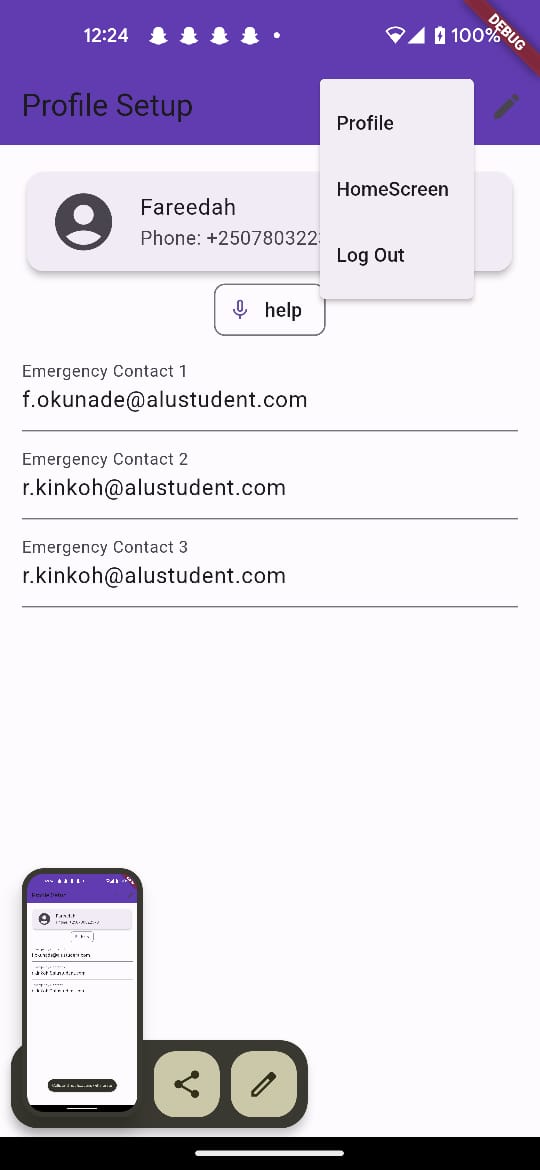
Flutter Framework: Used for UI development and app logic. Flutter's ability to create cross-platform applications from a single codebase was instrumental. Firebase: This provided several backend services: Firebase Auth: For user authentication using phone numbers. Firebase Cloud Firestore: For storing user data such as emergency contacts and panic codes. Firebase Storage: For storing audio recordings. Dart Programming Language: The primary language for developing Flutter apps. Location Package: To access and monitor the device's location. Speech-to-Text Package: For converting spoken words into text (for setting up panic codes). Another Audio Recorder Package: For audio recording functionalities. Mailer Package: To send emails with emergency alerts and attachments. Permission Handler Package: To request and handle necessary permissions from the user (like location and microphone access). Google's SMTP Server: For sending out email alerts. Technical Requirements: Voice Recognition: Setting up a panic code via voice. Real-Time Location Tracking: Continuously updating the user's location. Audio Recording: To record and send audio in emergencies. Persistent Storage: For storing recordings on the device. Secure Authentication: Using phone numbers for user verification. Automated Email Alerts: Sending emails with location and audio attachments in emergencies.
Challenges:
The Challenges we faced Indluded ; Integration of Multiple Services: Coordinating various Firebase services (Auth, Firestore, Storage) with Flutter. Handling Permissions: Ensuring the app correctly requests and handles permissions for location, storage, and microphone. Audio Recording and File Management: Implementing reliable audio recording functionalities and managing file storage. Voice Recognition Accuracy: Ensuring the speech-to-text conversion is accurate for setting up panic codes. Real-Time Location Sharing: Implementing continuous location tracking and sharing in real-time. Email Attachment Issues: Difficulty in attaching and sending audio files via email. UI/UX Design: Creating a user-friendly interface that is intuitive, especially in high-stress situations.
Accomplishments that we're proud of include building the Guardian app, providing a comprehensive experience in cross-platform mobile development using Flutter and Dart, alongside significant backend integration with Firebase services like Authentication, Firestore, and Storage. Key learnings included managing real-time data, particularly with location tracking, understanding the intricacies of permissions for accessing device features and handling audio recording and processing. Implementing voice recognition added an innovative aspect to the app, although it came with challenges in ensuring accuracy. Additionally, setting up automated email alerts, especially with attachments, was a crucial learning curve, enhancing our understanding of email service integration in a mobile environment.
The project's major accomplishments include the creation of an effective emergency response tool, which stands as a testament to our ability to leverage technology for crucial real-life applications. Developing an intuitive and user-friendly interface, particularly under emergency conditions, was a significant achievement. Implementing a voice-activated panic system and reliable real-time location tracking were key highlights, adding immense value to the app's functionality. Overcoming various technical challenges, particularly in audio file management and real-time data handling, was instrumental in ensuring the app's effectiveness. Ultimately, the Guardian app project was a journey in advanced mobile app development and an opportunity to contribute meaningfully to community safety and security.
What's next for Guardian
we plan to introduce a versatile triggering mechanism, allowing users to set multiple trigger actions tailored to different emergency scenarios. This customization will enable users to respond more effectively to the diverse situations they encounter.
Another exciting development is adding a comprehensive map feature within the app. This feature will display emergency centers and provide their itineraries, making it easier for users to find the nearest and most suitable assistance in real time.
Additionally, recognizing connectivity challenges in various situations, we are committed to offering offline services. This enhancement will ensure that critical functionalities of the app, such as triggering alarms and accessing essential information, remain accessible even without an internet connection.
These advancements are designed to make the emergency app not just a tool for crisis situations but a reliable companion for everyday safety and preparedness, significantly contributing to the peace of mind and well-being of our users.

Log in or sign up for Devpost to join the conversation.