-
-
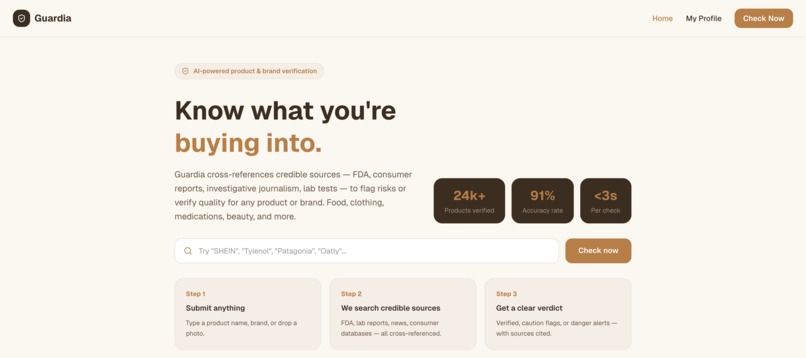
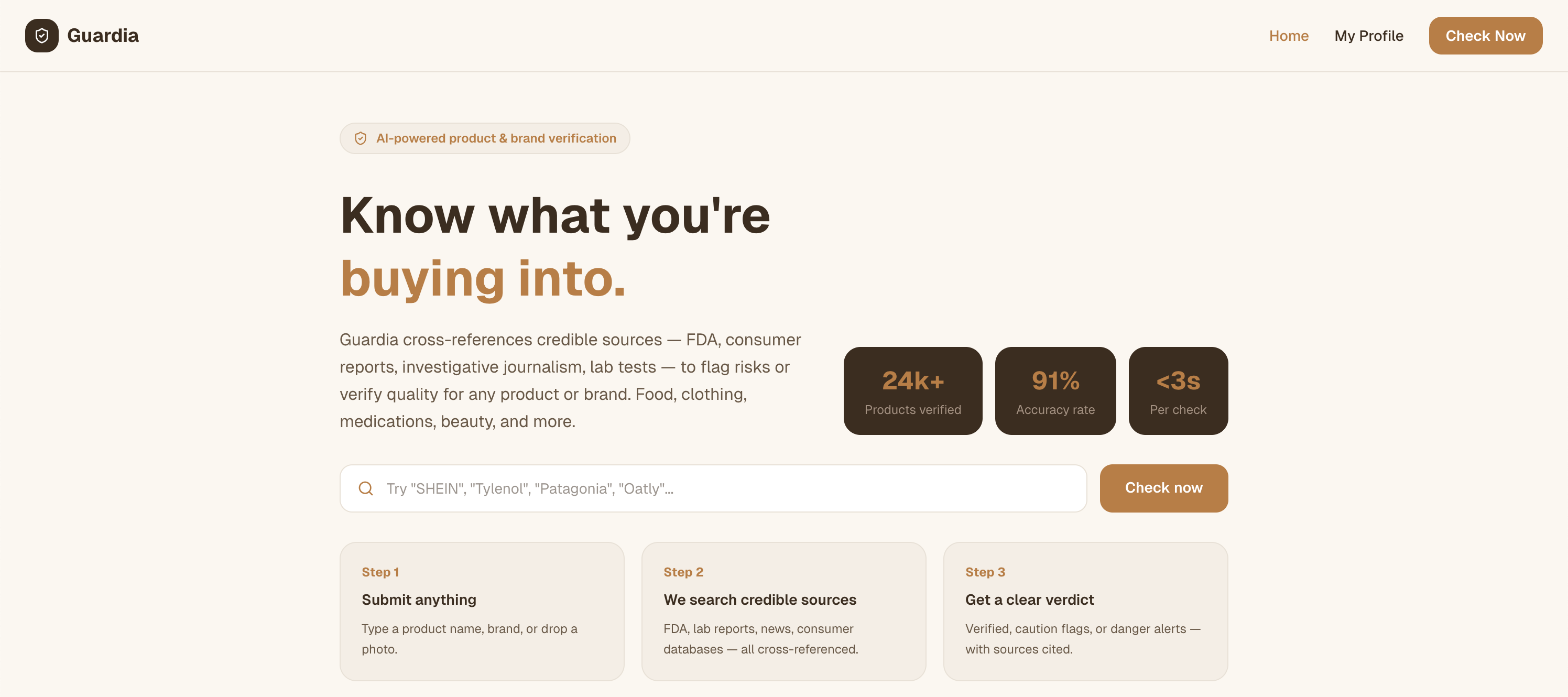
Main page
-
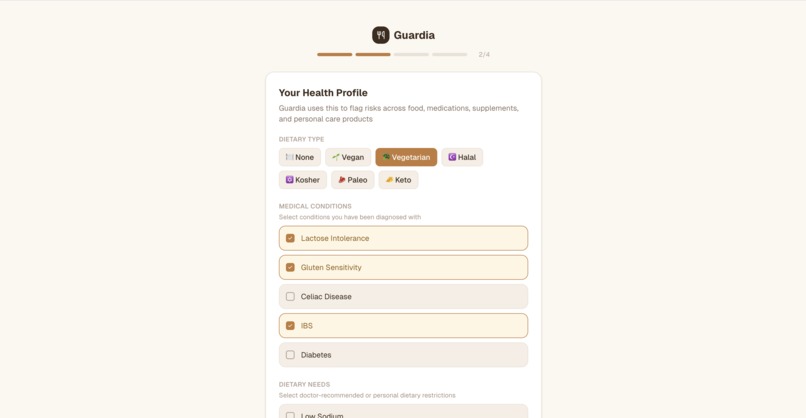
Onboarding
-
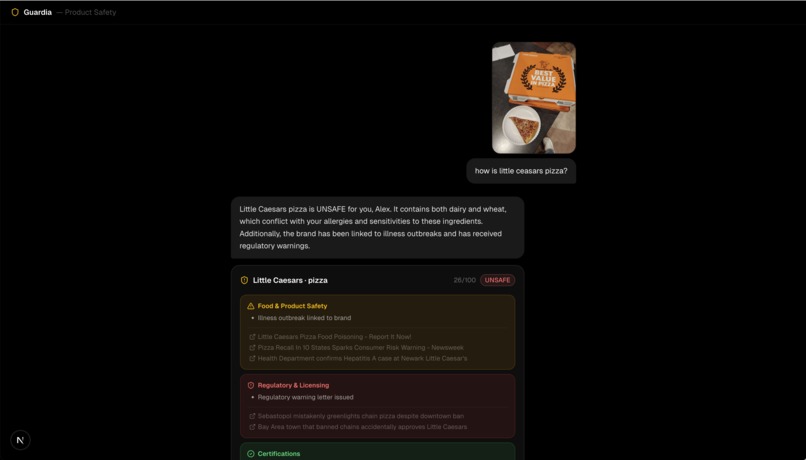
Brand/product analysis
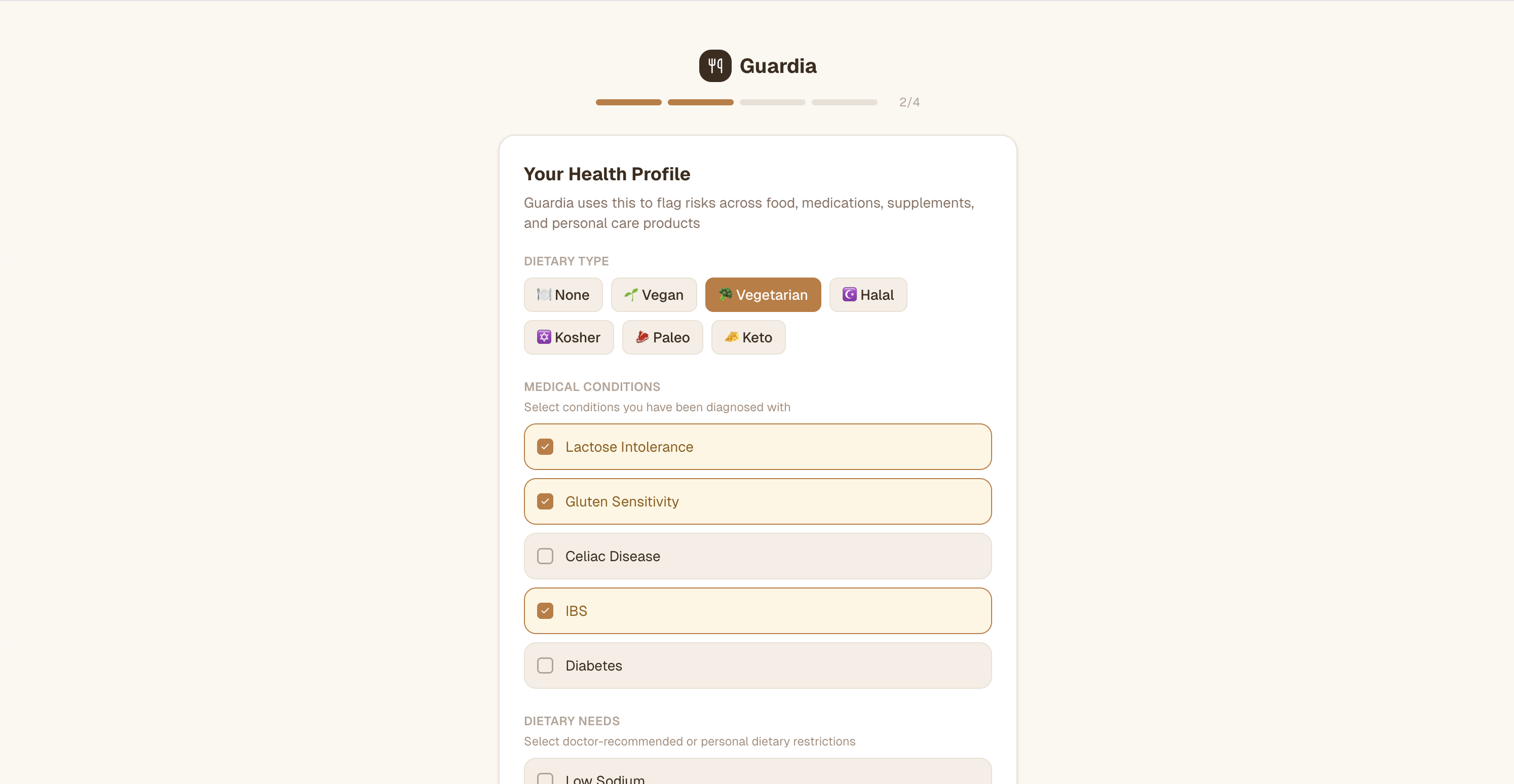
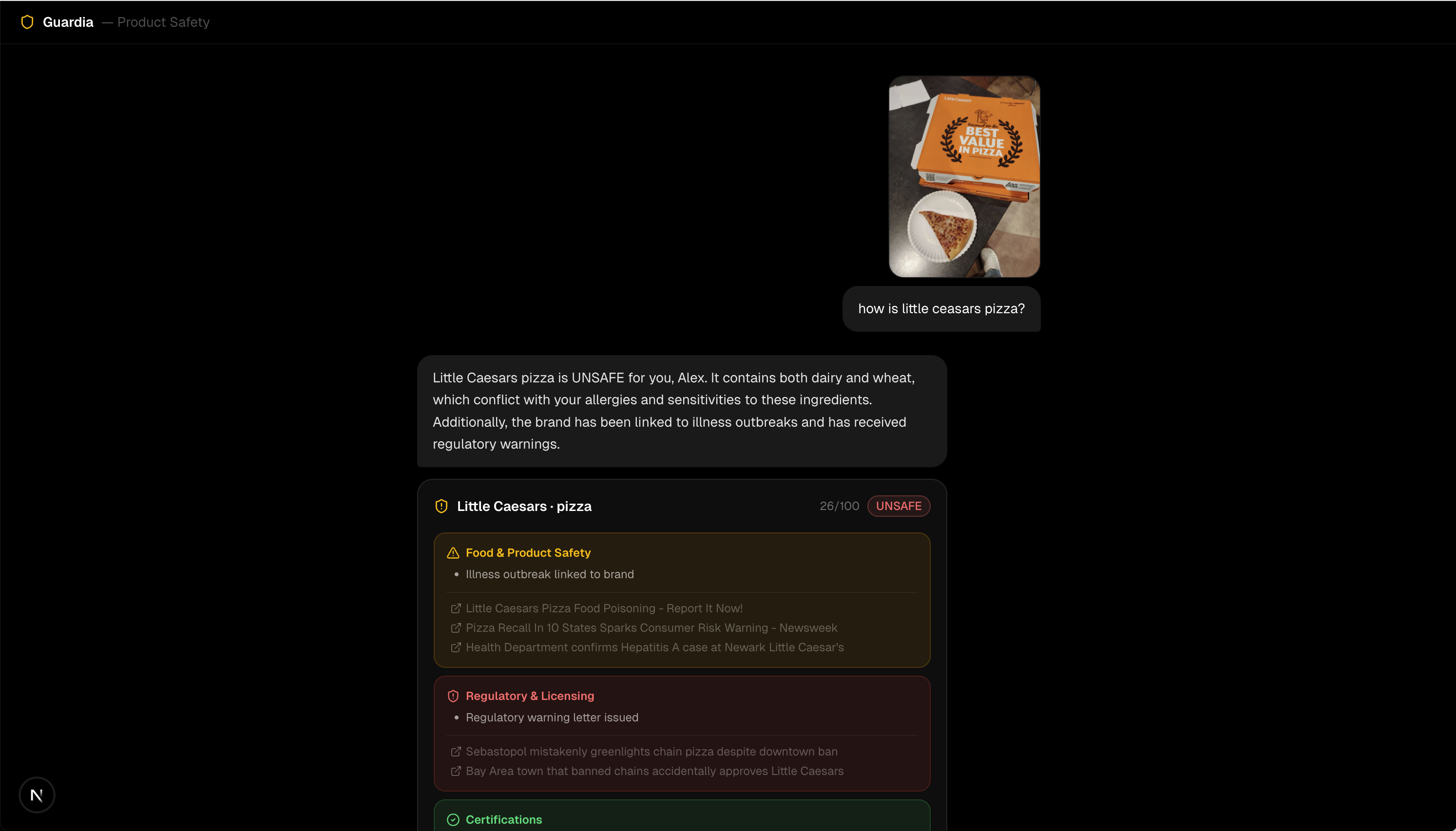
Inspiration
My friend carries an EpiPen everywhere she goes.
Not because she's dramatic. Because the last time she forgot it, she ended up in the ER after a salad. A salad. The restaurant said it was safe.
We've all watched someone we love navigate the exhausting, invisible math of eating with allergies — the whispered conversations with waiters, the label-squinting in grocery aisles, the quiet anxiety before every first bite. It's 2026. We have AI that writes poetry and drives cars. Why does eating safely still feel like a gamble?
That's why we built Guardia.
What it does
Snap a photo. Know in seconds.
Point your camera at a menu, a food label, a dish — and Guardia tells you whether it's safe for you. Not safe in general. Safe for you — your allergies, your medications, your body.
It breaks down exactly which ingredient is the problem and why. It cross-references FDA recalls in real time. It doesn't just give you an answer — it shows you its reasoning, so you can make the call yourself.
Because the goal was never to replace your judgment. It was to give you the information you deserve.
How we built it
Five people. Three hours. Zero sleep.
We used Claude's vision API to power the core analysis — multimodal image understanding that can read a crumpled label under bad lighting and still catch the allergen buried in line fourteen of the ingredients list.
The hardest part wasn't the code. It was figuring out how to communicate risk to someone whose health depends on getting it right. We rebuilt the result screen four times before it felt honest enough to ship.
The hardest part
How do you design something that people will trust with their lives — in an afternoon?
We didn't solve that completely. But we made one decision that guided everything else: Guardia never just says "unsafe." It always says why. Which ingredient. Which interaction. What to ask. What to avoid.
Transparency isn't a feature we added. It's the only reason this product has any right to exist.
What we learned
People don't need more information. They need the right information, at the right moment, delivered in a way that doesn't make them more afraid — just more prepared.
That's a design problem as much as a technical one. And it's the problem we'll keep working on.
What's next
Guardia is just getting started.
We want to be in your pocket at the grocery store, at the restaurant, at the pharmacy. We want to flag the drug-food interaction your doctor forgot to mention. We want to work in seventeen languages, because food allergies don't only happen in English.
Most of all — we want the day to come when nobody has to carry an EpiPen just in case.
That's the version of Guardia we're building toward.
Built With
- gemini
- javascript
- node.js
- supabase
- tavily


Log in or sign up for Devpost to join the conversation.