-
-
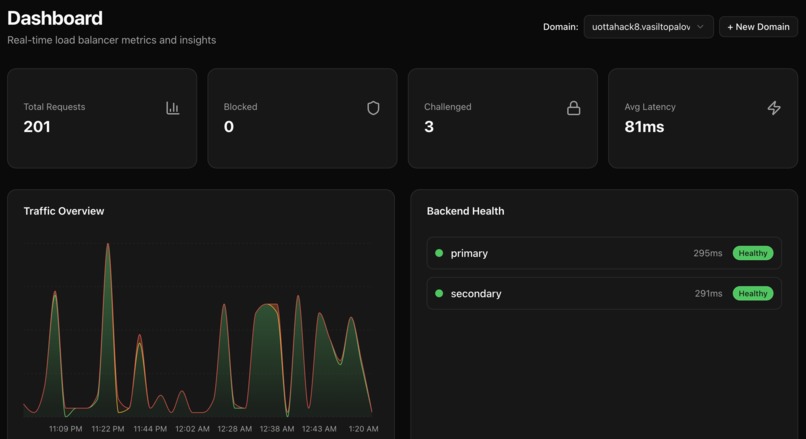
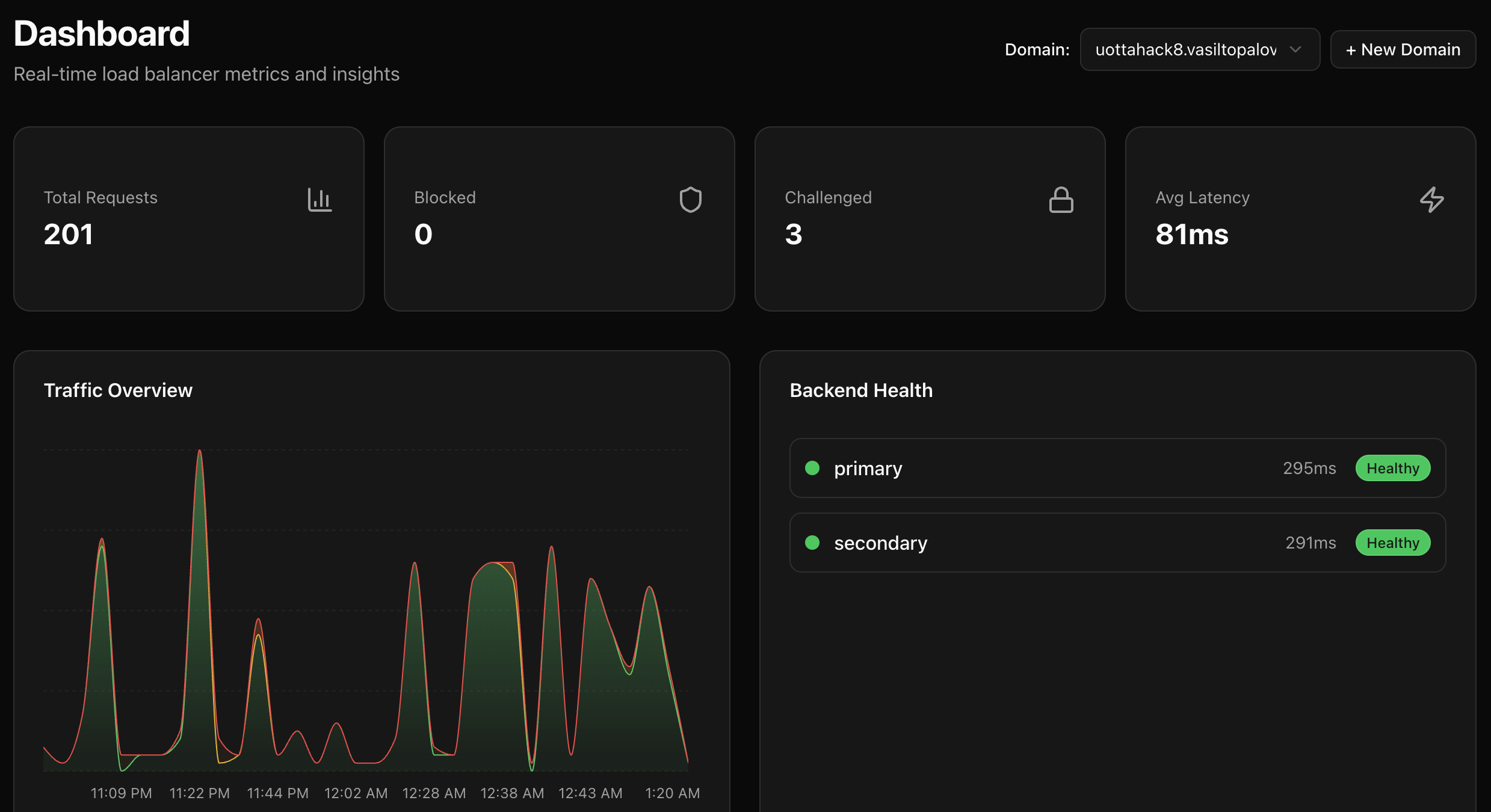
Dashboard overview metrics page
-
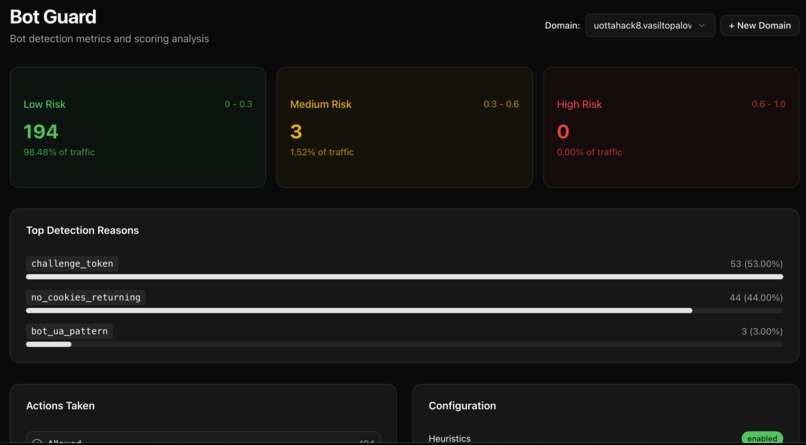
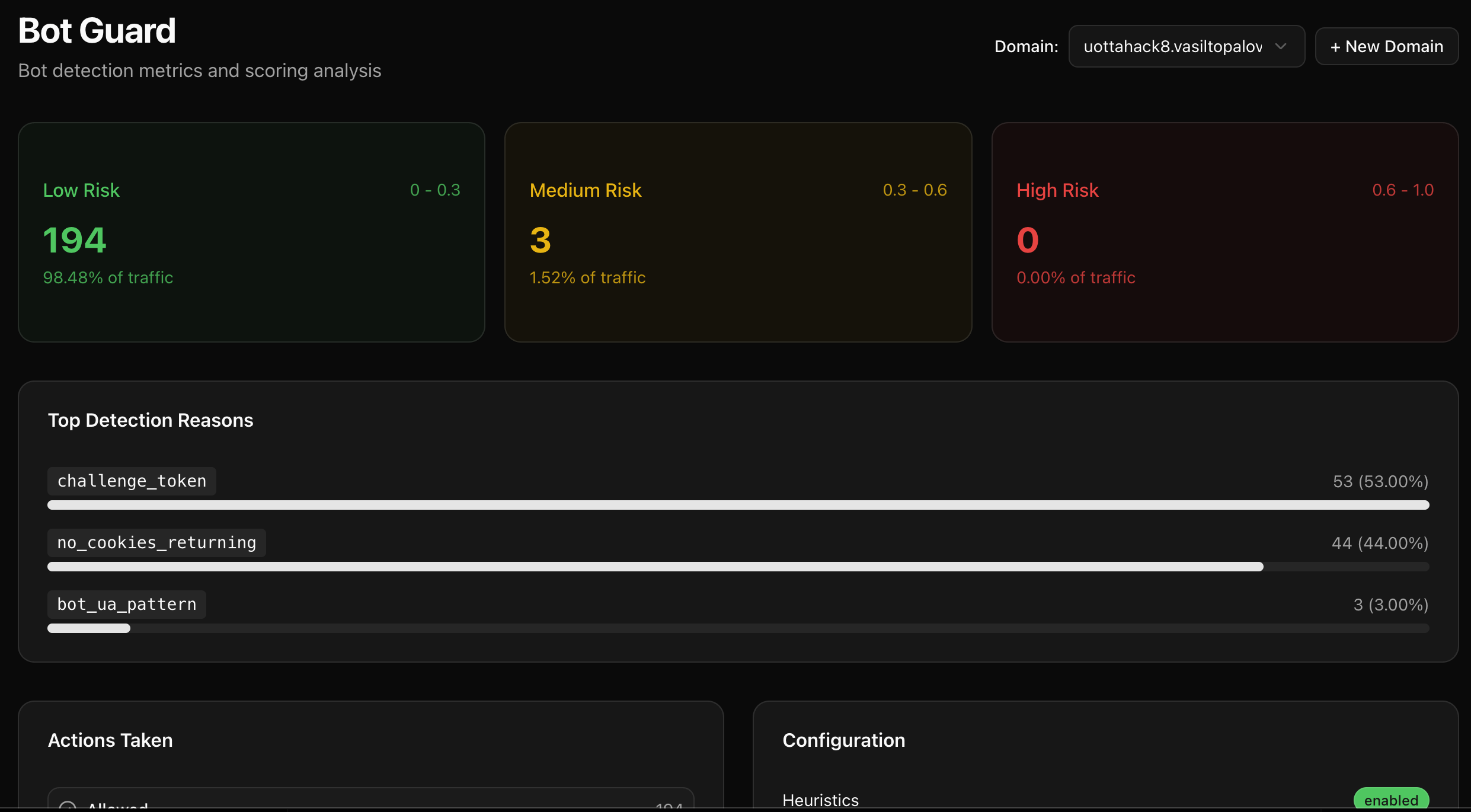
Dashboard bot metrics page
-
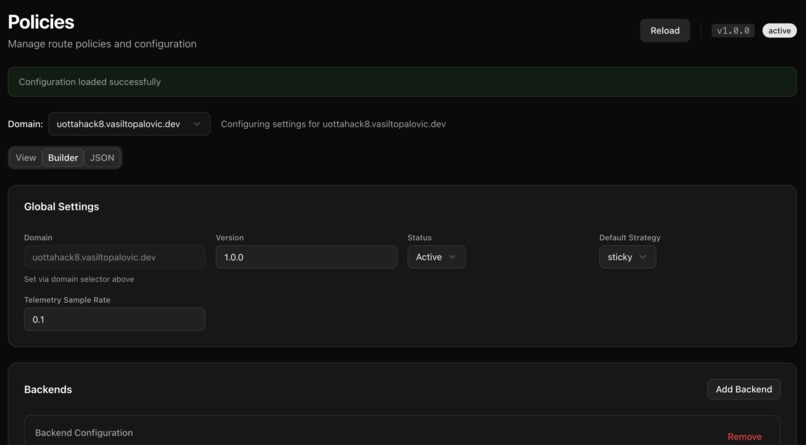
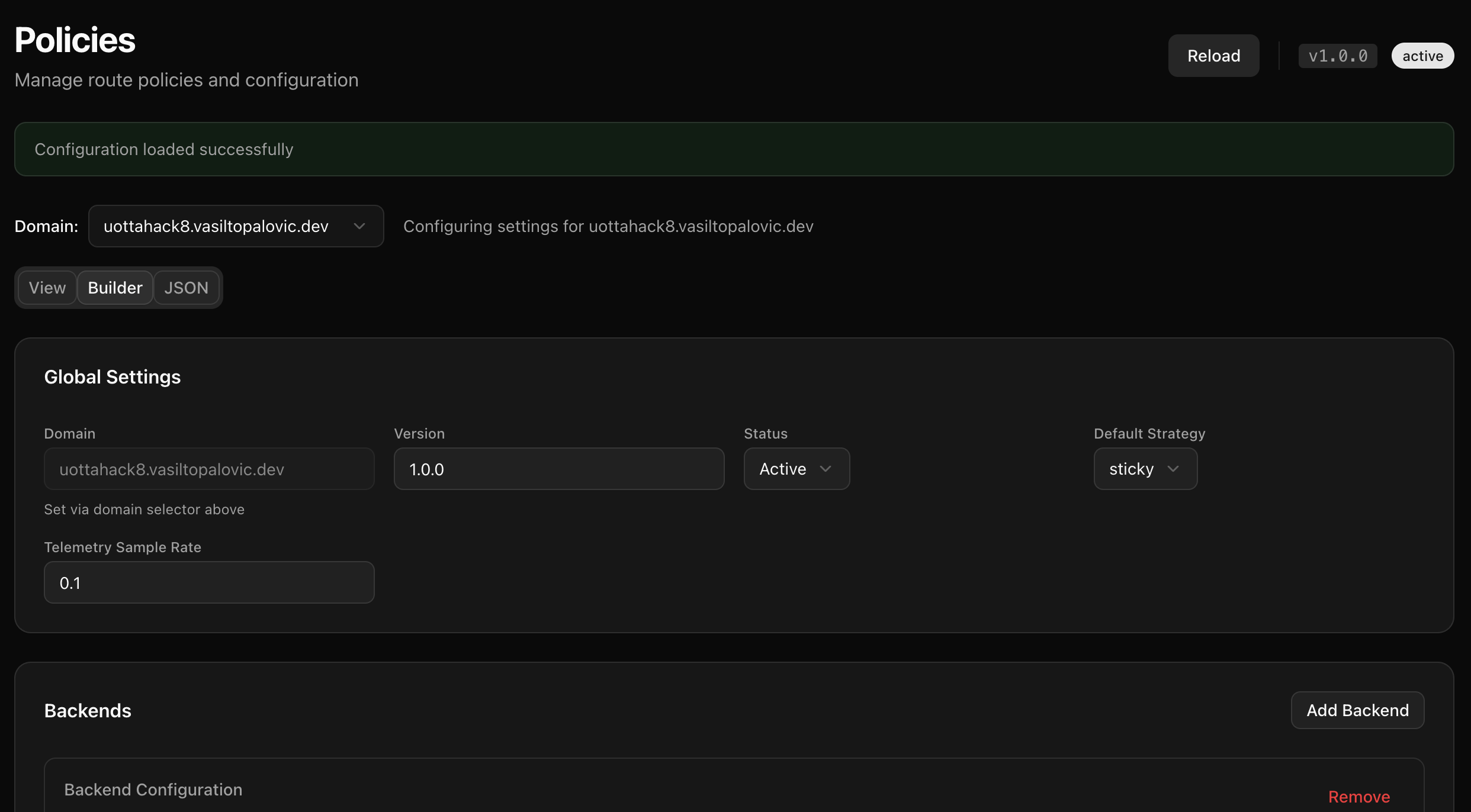
Policy configuration page
-
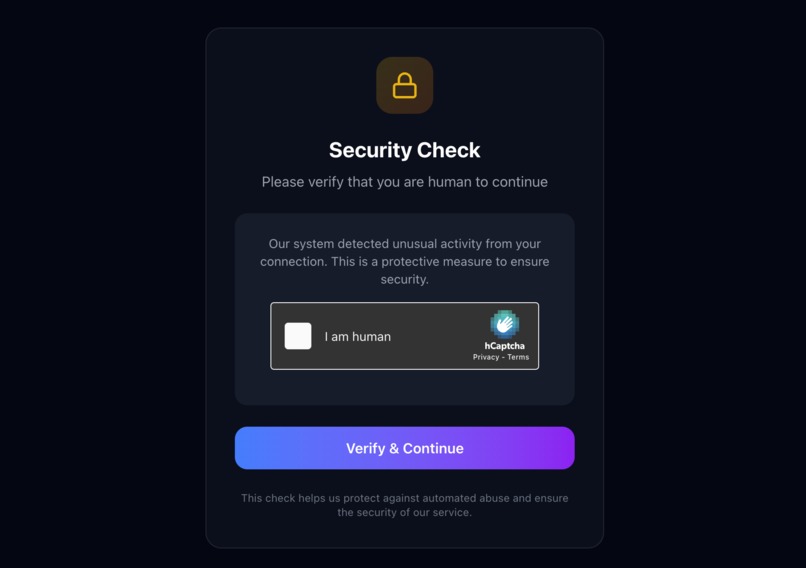
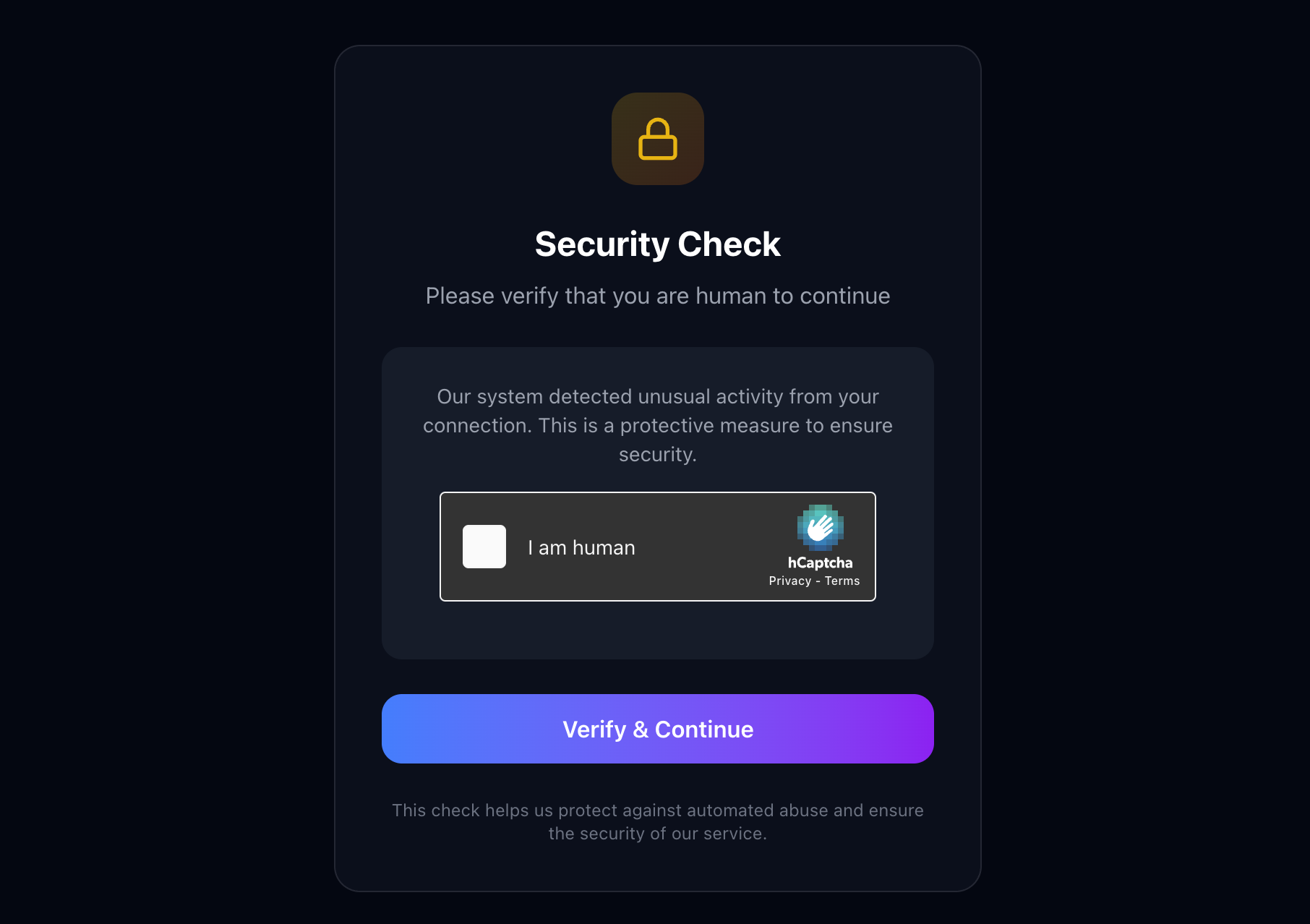
Client-facing security challenge
Inspiration
Modern APIs face an ever-growing threat from automated bot traffic, scraping, and DDoS attacks. Traditional solutions are either too expensive, too complex to deploy, or lack the intelligence needed to distinguish between legitimate users and sophisticated bots. We were inspired by the challenge of building a production-ready solution that combines:
- Edge computing power - Leveraging Vercel's global edge network for sub-50ms latency worldwide
- AI intelligence - Using machine learning to detect sophisticated bots that bypass traditional rule-based systems
- Developer experience - Making enterprise-grade protection accessible through a beautiful, intuitive dashboard
The goal was to create something that doesn't just block bots, but intelligently protects APIs while maintaining excellent performance for legitimate users. We wanted to build a system that learns, adapts, and provides complete visibility into what's happening at the edge.
What it does
Guard is an intelligent edge load balancer with AI-powered bot detection that protects your APIs at the edge. It combines smart load balancing, real-time bot detection, rate limiting, and comprehensive observability into a single, production-ready solution.
Core Features
AI-Powered Bot Detection
- Heuristic-based scoring combined with an optional PyTorch AI classifier
- Detects sophisticated bots that bypass traditional rules
- Configurable thresholds with multiple action types (allow, challenge, throttle, block, reroute)
- Challenge token system with hCaptcha integration for proof-of-human verification
Smart Load Balancing
- Multiple strategies: weighted round-robin, latency-aware, health-aware, sticky sessions
- Automatic backend health monitoring
- Real-time latency tracking and optimization
- Policy-based routing with path pattern matching
Advanced Rate Limiting
- Per-IP, subnet, session, or endpoint-based limits
- Sliding window implementation with burst protection
- Dynamic rate limit adjustment during bot attacks
- Configurable per-policy limits
Complete Observability
- Full request journey tracing in Sentry
- Real-time metrics dashboard with bot score distributions
- Performance monitoring with span-level details
- Automated remediation system that responds to attacks
Modern Admin Dashboard
- Dark-mode interface built with shadcn/ui
- Real-time metrics and analytics
- Policy management with visual builders
- Multi-domain support with per-domain metrics
How we built it
Architecture
Guard is built on a modern, edge-first architecture:
Request → Edge Middleware → Feature Extraction → Rate Limiting → Bot Detection (Heuristics + AI) → Load Balancing → Proxy → Backend
Technology Stack
Frontend & Edge Runtime
- Next.js 16 with App Router for the dashboard and API routes
- Vercel Edge Runtime for sub-50ms global latency
- React 19 with TypeScript for type safety
- shadcn/ui + Tailwind CSS v4 for the modern dashboard UI
- Recharts for data visualization
Backend Services
- Upstash (Redis) for rate limiting and caching
- PostgreSQL (Neon) for configuration and metrics storage
- FastAPI microservice for AI bot classification using PyTorch
- hCaptcha for challenge verification
Observability & Monitoring
- Sentry for error tracking, performance monitoring, and custom metrics
- Full request journey tracing with breadcrumbs
- Custom metrics for bot scores, decisions, and backend performance
- Webhook integration for automated remediation
Security & Infrastructure
- IP address hashing with SHA-256 for privacy compliance
- JWT-based challenge tokens with IP binding
- HTTP-only cookies for security
- Fail-open architecture to prevent single points of failure
Key Implementation Details
Edge Middleware Pipeline
- Feature extraction from requests (IP, url, headers, user agent, geo)
- Rate limiting with sliding window algorithm
- Bot scoring using heuristics (8+ rules) and optional AI classifier
- Backend selection based on configured strategy
- Request proxying with header injection
AI Bot Detection
- Trained PyTorch model on real bot traffic patterns (sourced from multiple datasets)
- Feature extraction from request characteristics
- Blended scoring between heuristics and AI
- Performance monitoring to detect model drift
Observability Integration
- Every request creates a Sentry transaction
- Child spans for each pipeline stage
- Breadcrumbs for decision reasoning
- Custom metrics for aggregation and alerting
Fail-Safe Design
- Graceful degradation if Redis/Postgres unavailable
- Fallback to heuristics-only if AI service fails
- Default configurations for zero-downtime operation
Challenges we ran into
1. Edge Runtime Limitations
Challenge: Vercel Edge Runtime doesn't allow arbitrary CNAME records to route to the service (it requires them all to be listed in the Domains list for the project)
Solution:
- Leveraged the Vercel API to add new domains to the Domains list automatically
2. AI Service Integration
Challenge: Integrating a Python PyTorch service with the Edge runtime while maintaining low latency and handling failures gracefully.
Solution:
- Built a FastAPI microservice that can be deployed separately
- Implemented timeout and retry logic with fallback to heuristics-only
- Created a blended scoring system that combines both approaches
- Added performance monitoring to detect when AI service is unavailable or degraded
3. Real-time Metrics Collection
Challenge: Edge runtime can't directly write to PostgreSQL, but we needed real-time metrics for the dashboard.
Solution:
- Created an HTTP API endpoint (
/api/metrics/record) that Edge runtime calls - Implemented batching and async processing to avoid blocking requests
- Designed a hybrid storage approach: Redis for rate limits, Postgres for analytics
4. Observability in Edge Runtime
Challenge: Getting comprehensive traces and breadcrumbs from Edge runtime to Sentry with proper context.
Solution:
- Implemented custom Sentry instrumentation for Edge runtime
- Created structured breadcrumbs for each decision point in the pipeline
- Added span-level attributes for filtering and analysis
- Fixed missing exception transmission by ensuring proper async flushing
6. Multi-Domain Support
Challenge: Supporting multiple domains with isolated metrics and configurations while maintaining performance.
Solution:
- Implemented domain-based querying in all storage functions
- Created domain selector UI in the dashboard
- Normalized domain names (lowercase, trimmed) for consistent querying
- Added domain context to all metrics and traces
Accomplishments that we're proud of
Intelligent Bot Detection
Our dual-layer approach (heuristics + AI) provides:
- Detection of sophisticated bots that bypass traditional rules
- Performance monitoring to detect model drift
- Blended scoring for optimal accuracy
- Challenge system for proof-of-human verification
Complete Observability
Every request is fully traceable:
- Full journey visualization in Sentry (feature extraction → rate limit → bot detection → routing → proxy)
- Span-level performance metrics
- Rich breadcrumbs showing decision reasoning
- Custom metrics for aggregation and alerting
- Integration with Sentry's Seer AI debugger
Automated Remediation
Built an intelligent system that:
- Detects bot attacks in real-time using multiple signals
- Automatically adjusts rate limits during attacks
- Integrates with Sentry webhooks for event-driven responses
- Provides detailed metrics on attack patterns
What we learned
Edge Computing Best Practices
- Async patterns matter: Proper async/await and timeout handling is critical in Edge runtime
- Fail-open is essential: Protection systems must never become bottlenecks
- Hybrid architectures work: Combining Edge and Node.js runtimes for different needs
- Observability is challenging: But essential for debugging edge functions
AI Integration in Production
- Fallbacks are mandatory: AI services can fail, degrade, or be slow
- Performance monitoring is crucial: Need to detect model drift and accuracy issues
- Blended approaches work best: Combining rule-based and ML systems provides reliability and intelligence
- Latency matters: AI calls must be fast or have timeouts
What's next for Guard
Multi-Region Support
- Regional configuration management
- Geo-aware routing and rate limiting
AI Improvements
- Real-time model updates
- Federated learning across customers
- Explainable AI for bot detection decisions
- Custom rule generation from AI insights
Enterprise Features
- SSO/SAML integration
- Role-based access control
- Audit logging
- SLA monitoring and guarantees
Built With
- hcaptcha
- next.js
- postgresql
- pytorch
- redis
- sentry
- vercel

Log in or sign up for Devpost to join the conversation.