-
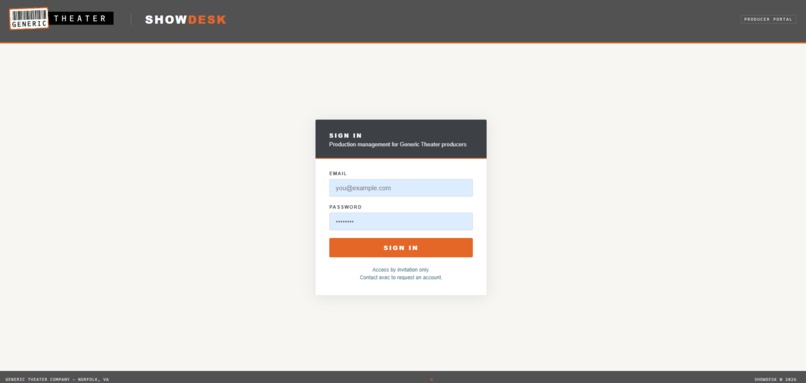
login screen
-
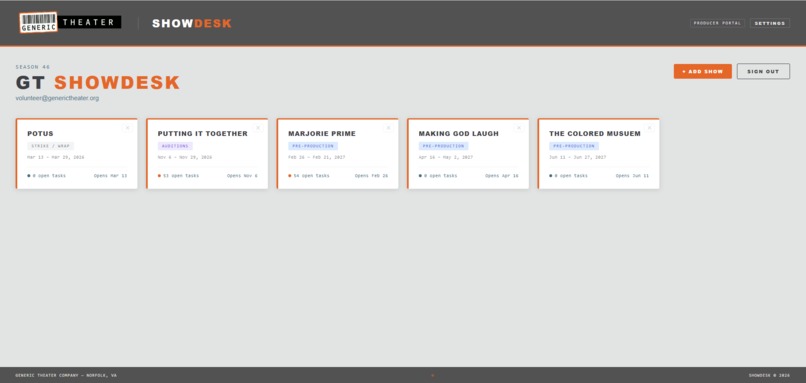
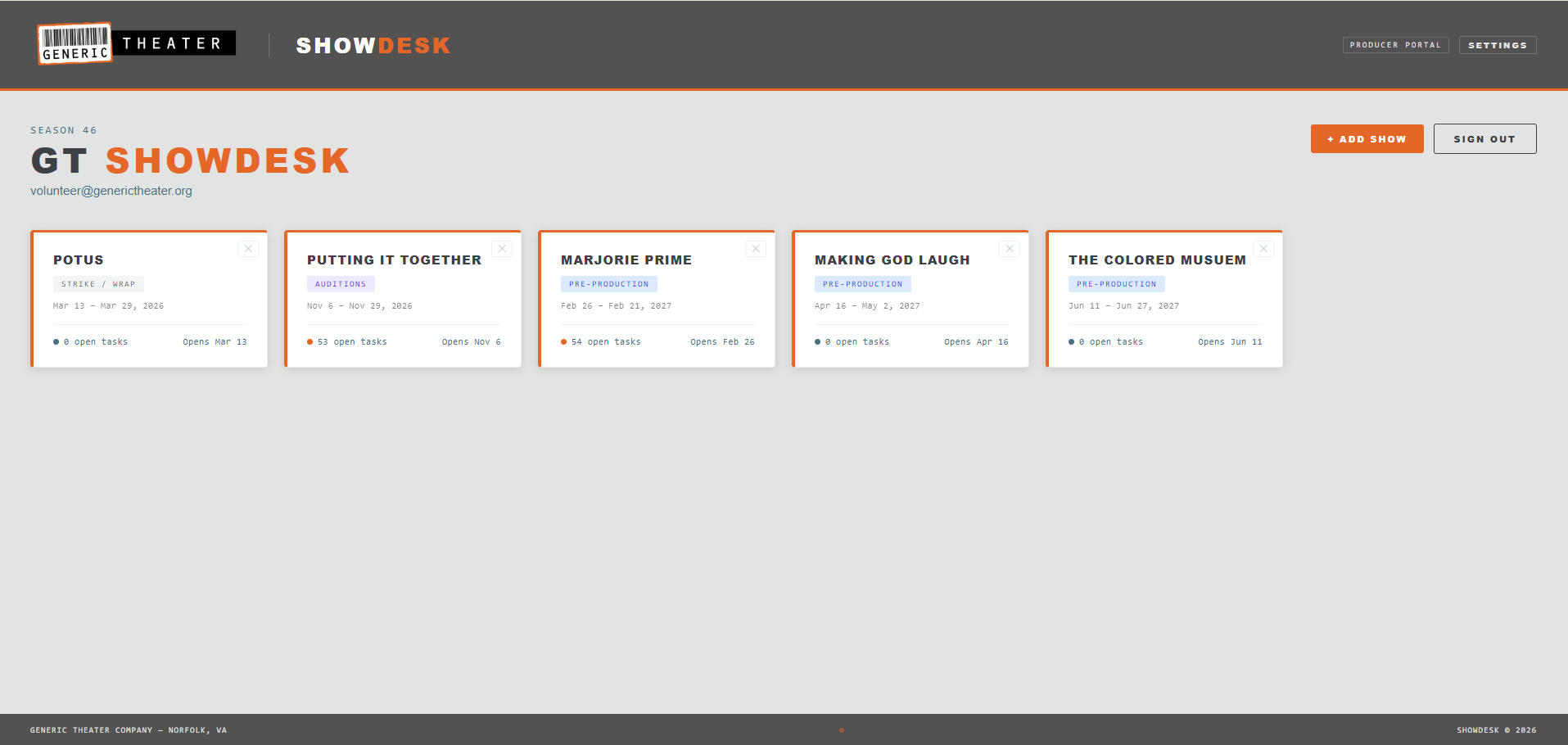
Dashboard screen where shows can be added of deleted; each show deck card has basic show info and shows task progress
-
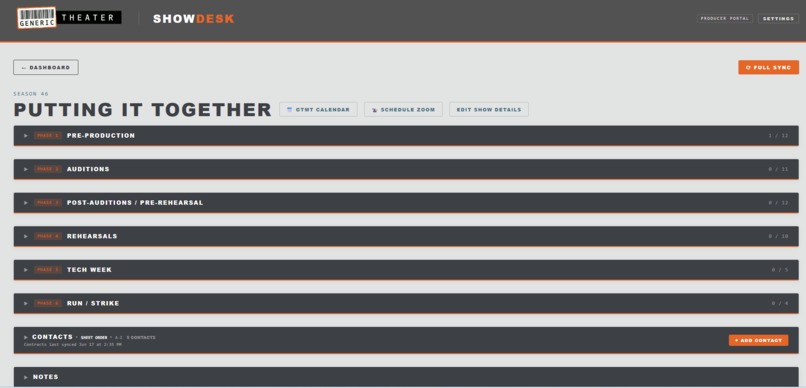
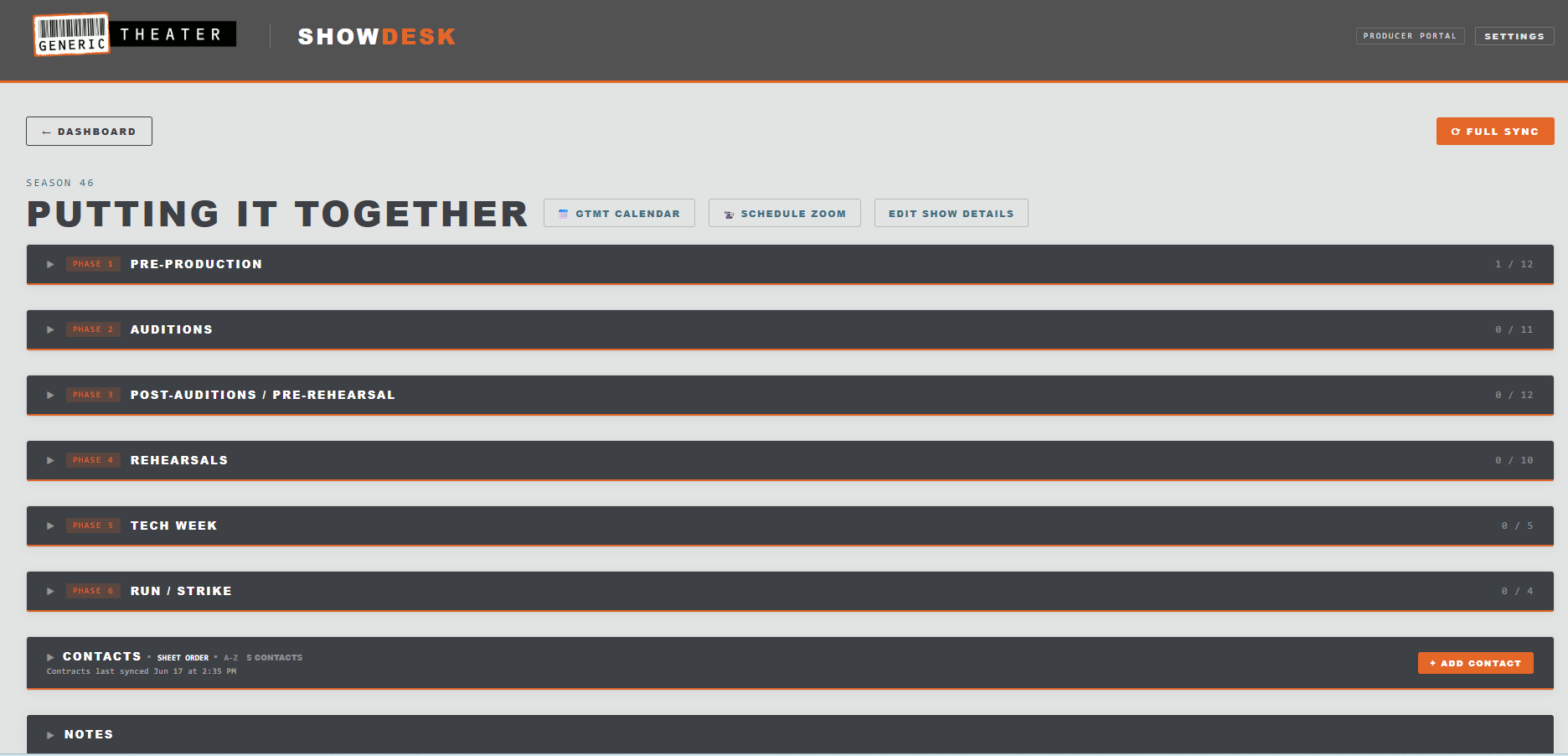
Show Desk view. AI Production Coach, tasks status tool, zooms scheduler, linked resources, forms, calendars and contact status checked.
-
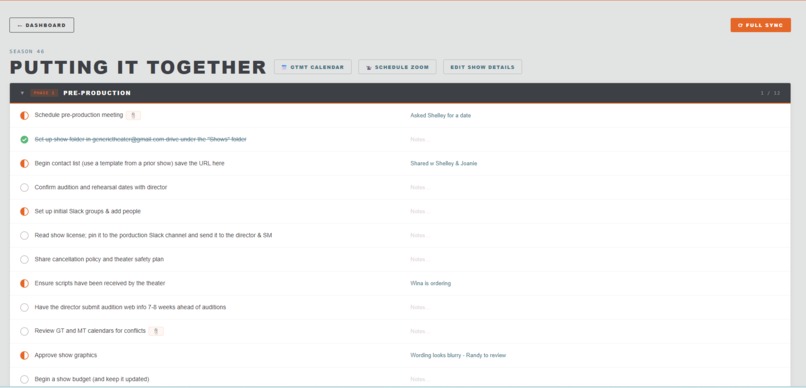
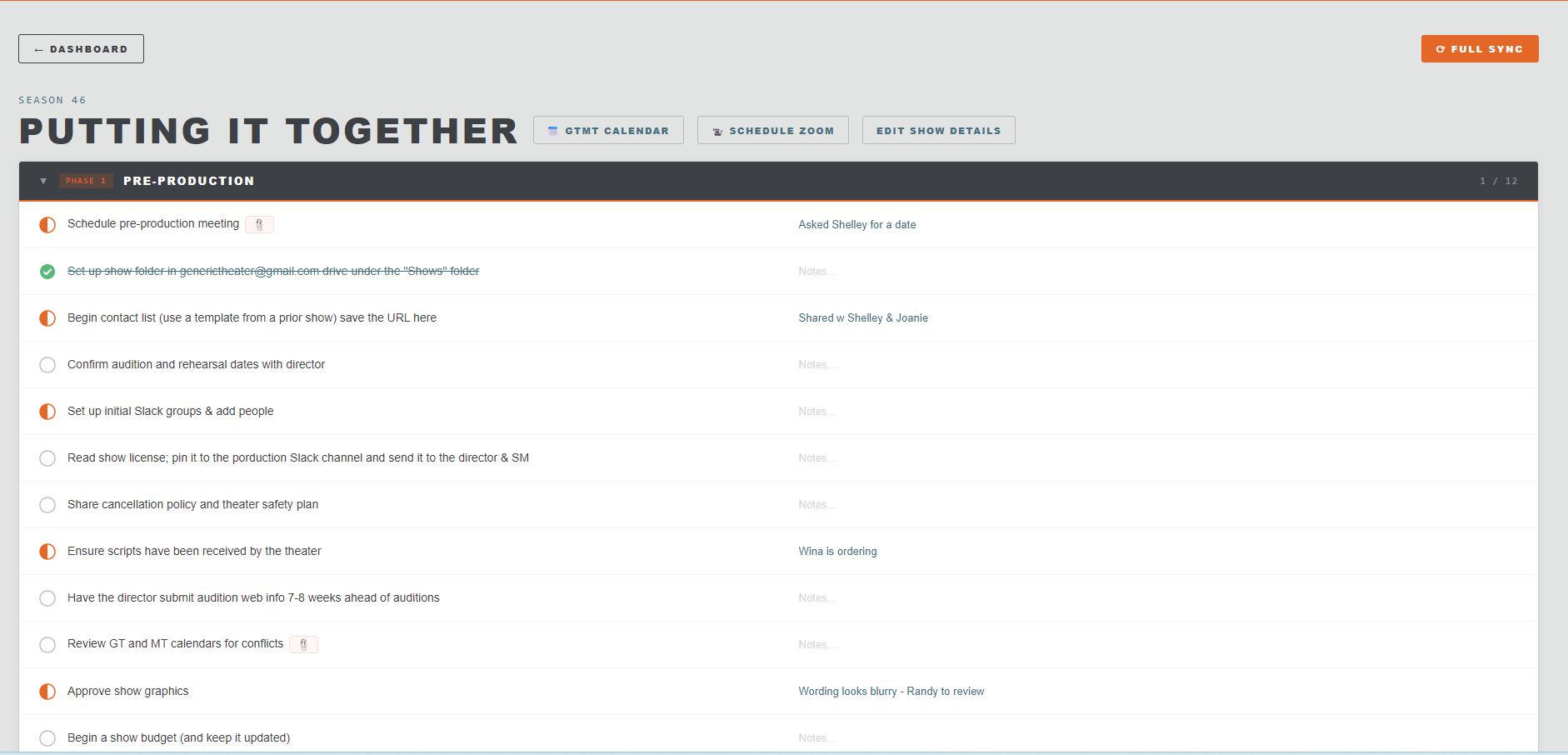
Pre-production task list in progress with notes.
-
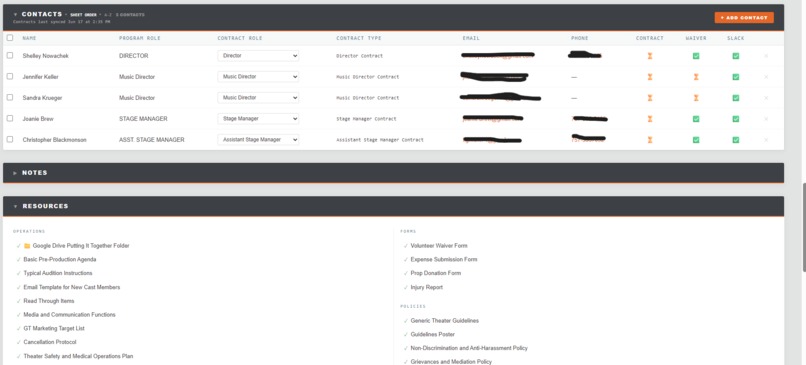
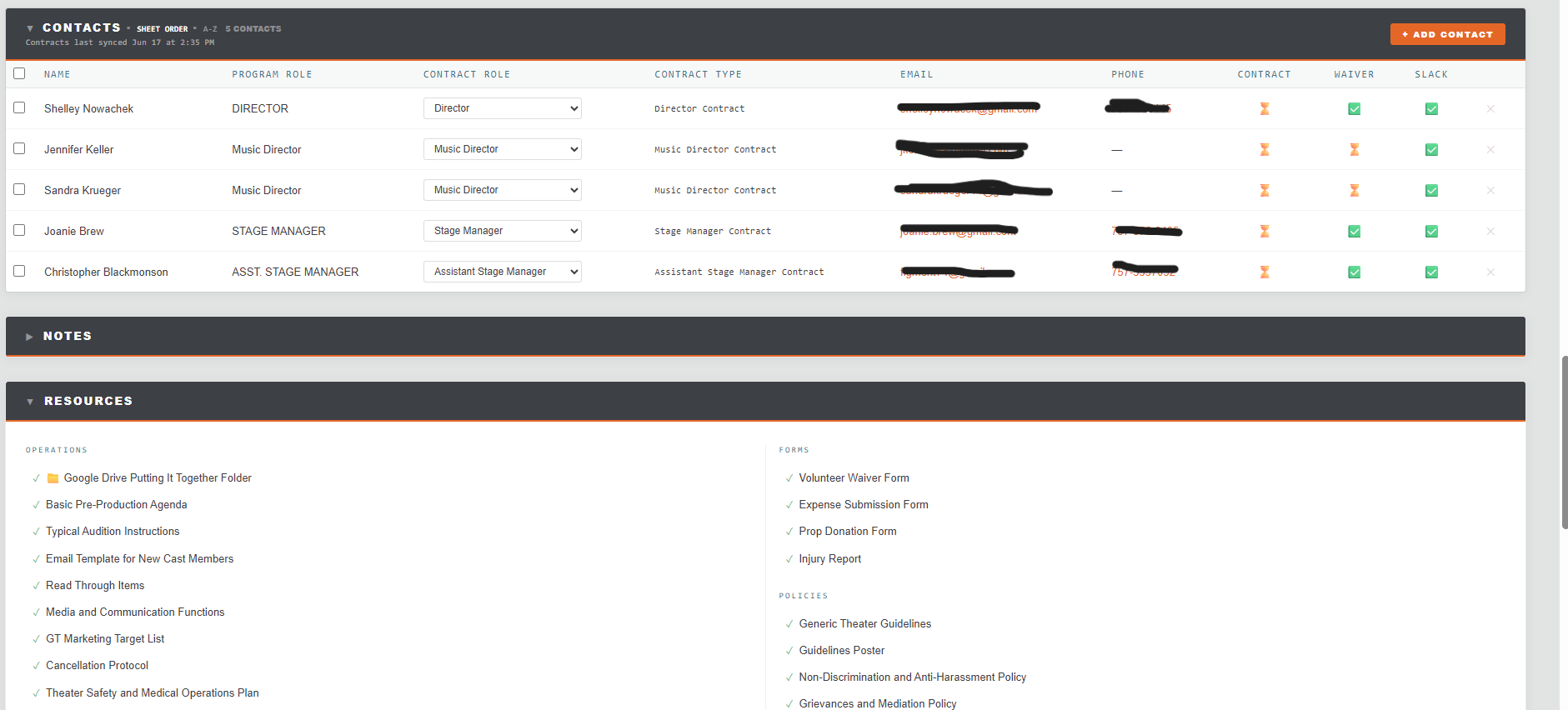
Contact List, Notes and Resources. Emails are matched to jotform contracts and slack to ensure that cast and crew have completed onboarding.
-
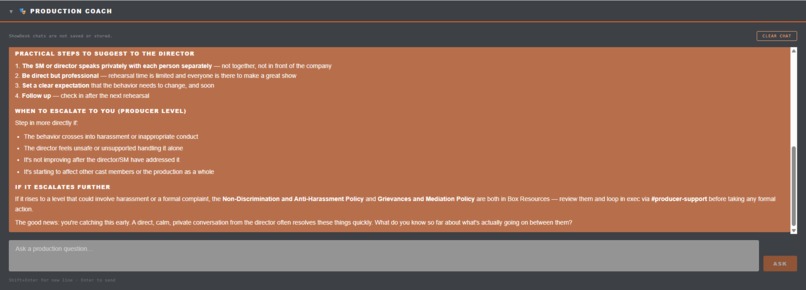
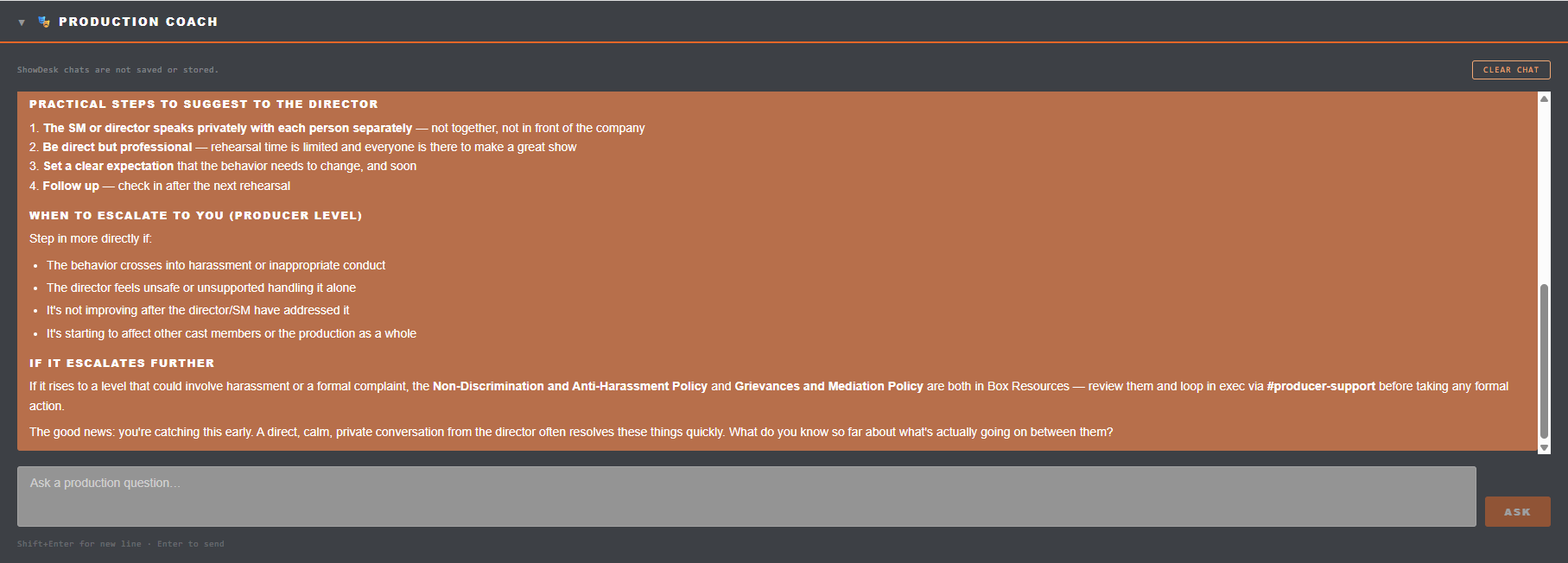
AI coaching through a cast member conflict.
-
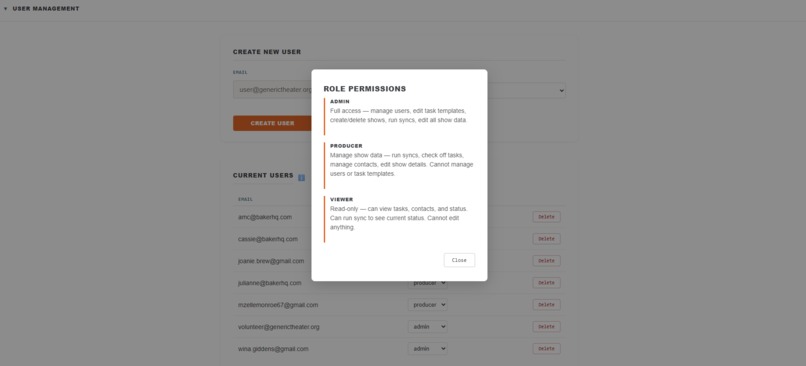
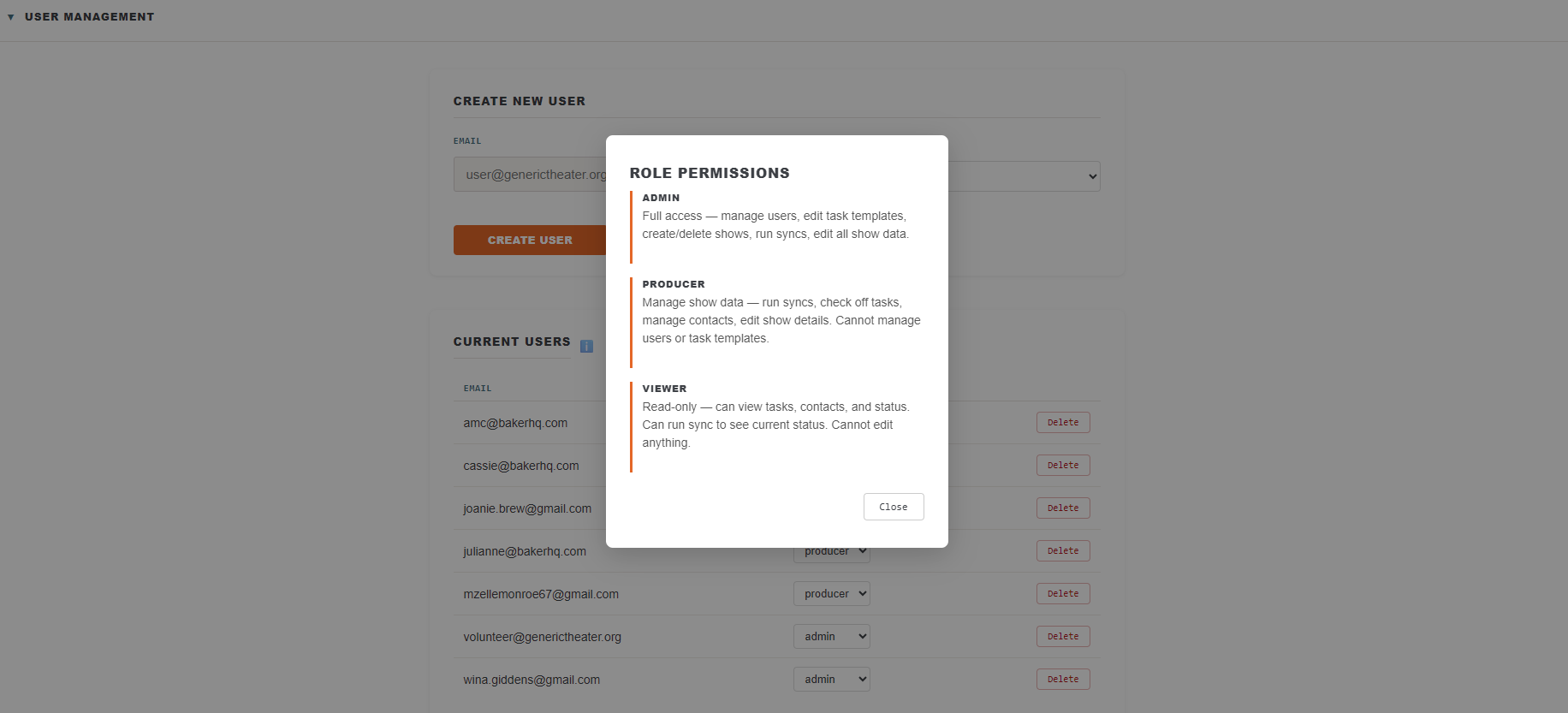
Admin screen where passwords change, tasks are edited, and users are added with appropriate roles: admin, producer, or viewer
Inspiration
I'm on the board of Generic Theater — an all-volunteer nonprofit theater in Norfolk, VA that's been producing shows for 45 years. During our last show, an actor was injured mid-performance. The producer didn't know where the injury report was. The cancellation policy didn't reach the right people in time. Performances were cancelled.
The producer was undertrained. The system failed her.
45 years of institutional knowledge lives in people's heads, scattered across eight tools, and nowhere findable when you need it most. I decided to fix that — even though I couldn't code.
What it does
GT ShowDesk gives volunteer theater producers one place to manage an entire show from pre-production through strike.
- 52-task checklist organized by phase, with direct links to every document and tool
- Contact tracking synced live from Google Sheets with real-time contract, waiver, and Slack status
- Resource library — Box, Google Drive, Jotforms — one click from anywhere in the app
- Zoom meeting creation built in
- PWA — works on phone, tablet, or desktop
- Producer Coach — an AI assistant powered by Claude with 45 years of GT institutional knowledge encoded into its system prompt
Producer Coach is not a generic chatbot. It knows GT's escalation paths, venue hard limits, financial approval thresholds, and communication culture — built through structured knowledge extraction from real producer failure scenarios.
How we built it
Stack: React, Vite, Supabase, Netlify, Anthropic Claude API, Jotform API, Google Sheets API, Slack Bot API, Zoom Server-to-Server OAuth, Box
Built in 12 days using Claude Code as the primary development environment. I described what I needed in Claude chat and followed instructions in Claude code. Claude coached me though starting a GitHub account and using all sorts of tools I had never used. I debugged errors, and learned enough to make real architectural decisions along the way.
The Producer Coach system prompt was built through a long iterative process — working through real scenarios that producers face, how GT's specific policies should shape responses, and where the hard lines are. That system prompt is the artifact. The AI is the delivery mechanism.
Challenges we ran into
- Netlify serverless functions silently fail when placed outside the base directory — a multi-day debugging mystery that came down to one folder location
- Supabase row-level security policies fail silently when missing — learned to audit every new table and operation
- Role lookups must use
user_idnot email — a subtle bug that gave every user the wrong permissions - Encoding institutional knowledge that lives entirely in people's heads into something an AI can reliably surface under pressure
Accomplishments that we're proud of
- A nonprofit board member with no coding background shipped a production-ready, deployed web app in 12 days
- The Producer Coach system prompt encodes 45 years of organizational knowledge in a form that's instantly accessible to a brand-new volunteer
- The app is live, real data is in it, and it goes into active use Season 46 — June 2026
- AI didn't just power the product. It enabled the builder.
What we learned
- Institutional knowledge is an engineering problem. Extracting it, structuring it, and making it accessible requires the same rigor as any other system design
- Serverless architecture has sharp edges that don't surface until production — environment variables, base directories, and RLS policies all bit us
- The most important skill wasn't coding — it was knowing the domain well enough to make good decisions fast
- A non-developer can build production software with AI assistance if they understand the problem deeply enough
What's next for GT ShowDesk — AI Production Management for Theater
GT ShowDesk is live and in use already for our first Season 46 show, Putting It Together. The producer who experienced our last show wreck will be one of the first users.
Post-launch priorities:
- Producer Coach chat history and persistence
- Google Calendar write integration
- Season archive and show history
- Custom domain on generictheater.org
Every volunteer theater in the country has similar issues. GT is the proof of concept.


Log in or sign up for Devpost to join the conversation.