Inspiration
Businesses process invoices, payments, bank transactions, and tax records every day. However, these records often exist in separate systems, making financial verification a time-consuming and error-prone task. A payment may not match its invoice. An amount may be incorrect, a transaction may be duplicated, or an important discrepancy may go unnoticed. We wanted to explore how AI could make financial auditing smarter, faster, and more accessible. That idea led us to build GST Setu – Autonomous Tax Audit Swarm (ATAS).
What it does
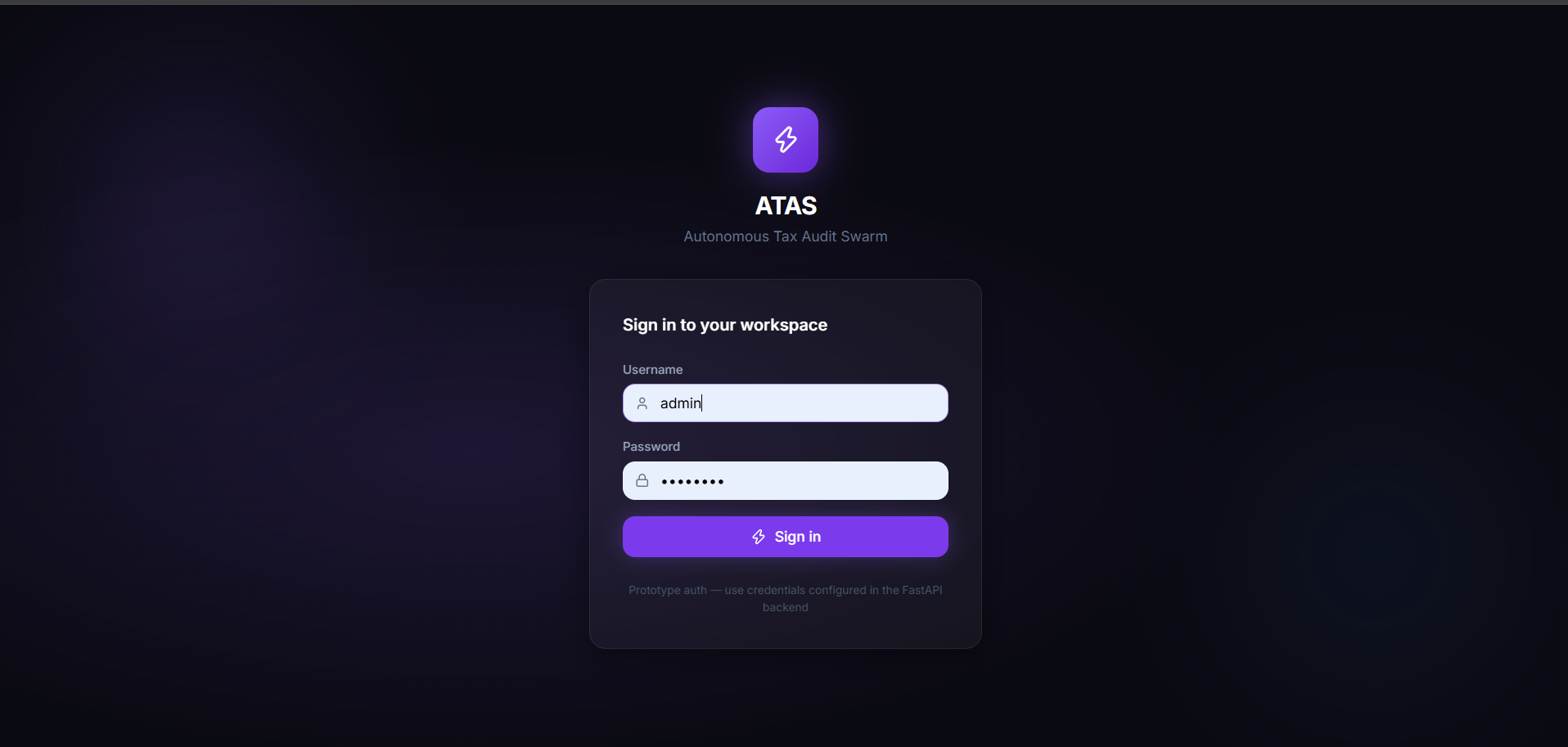
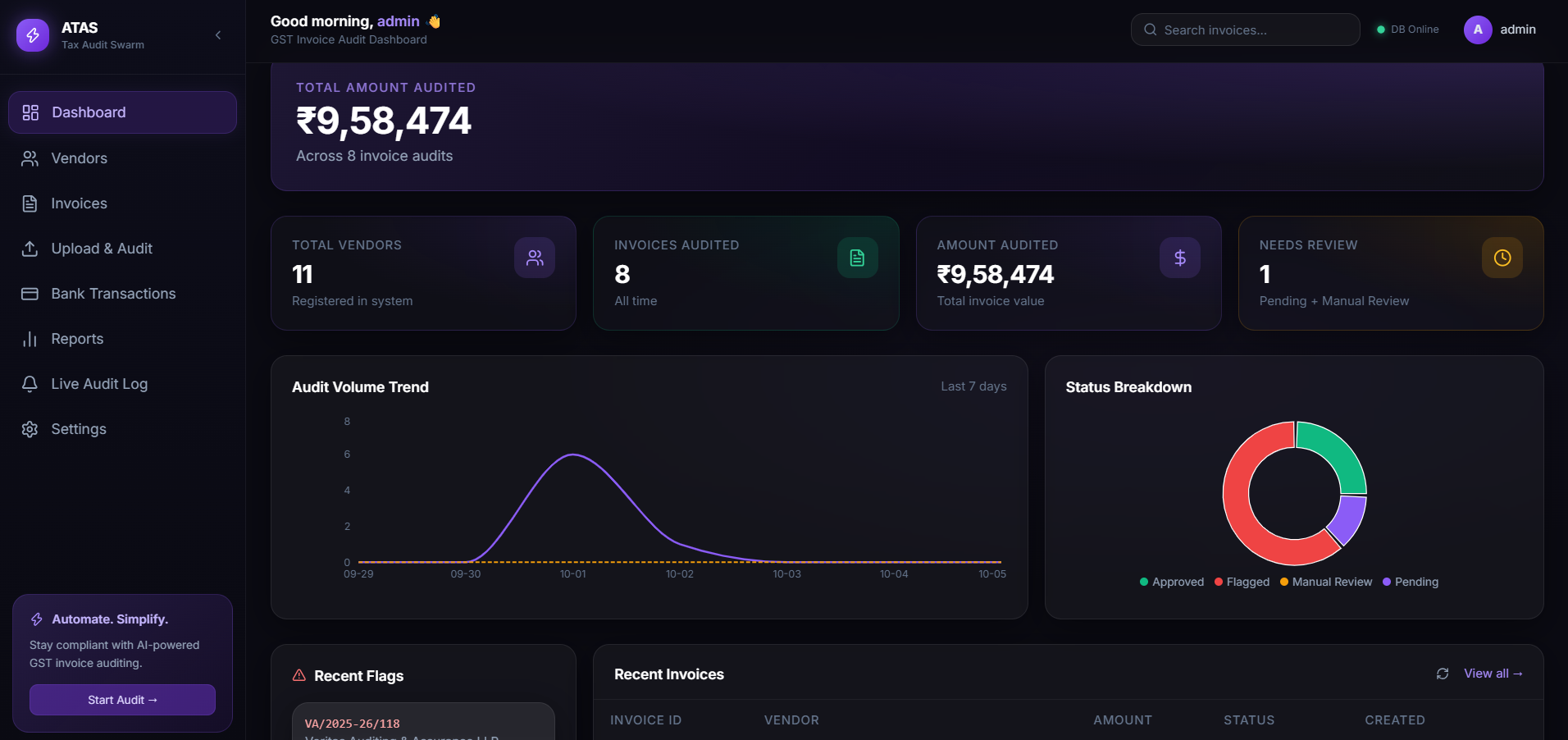
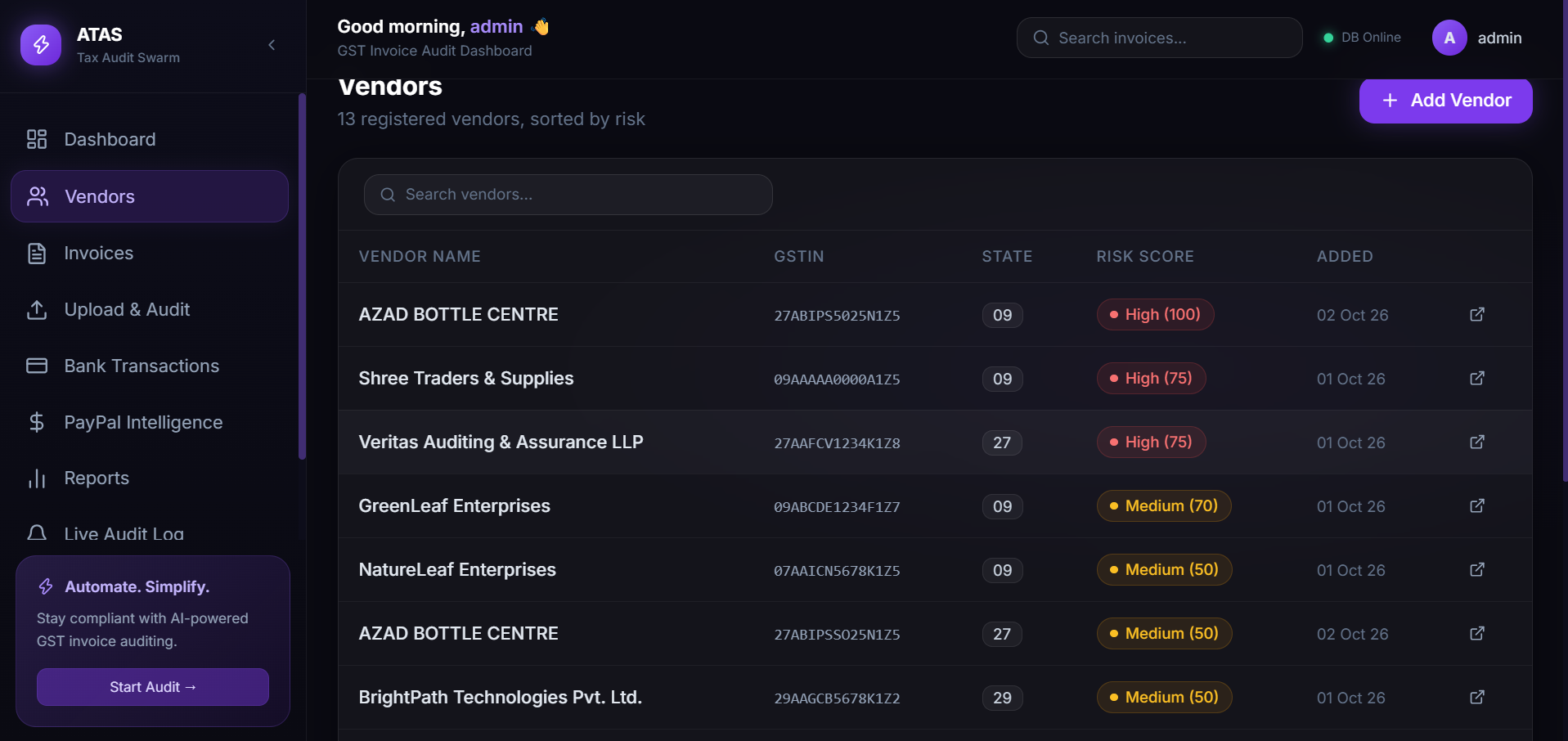
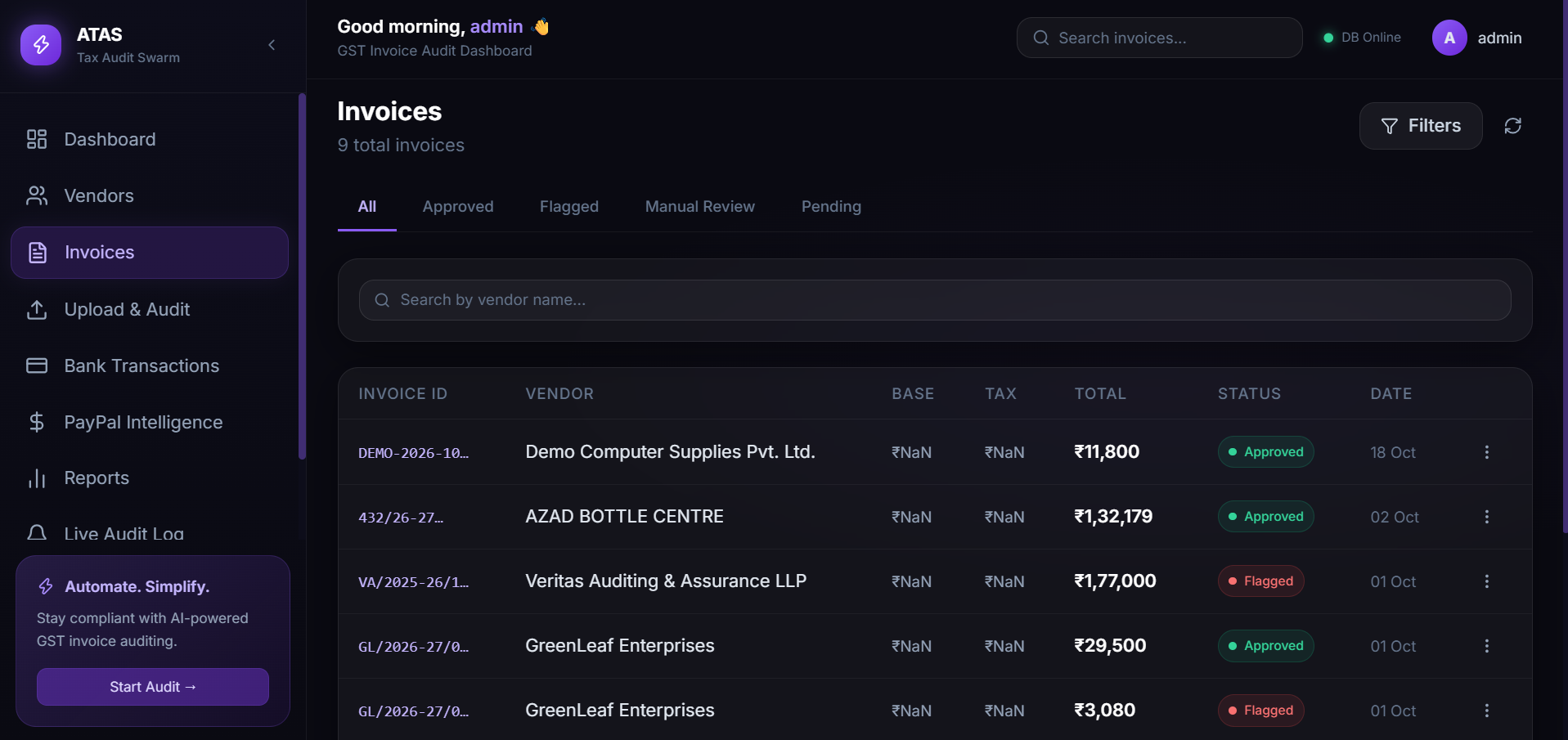
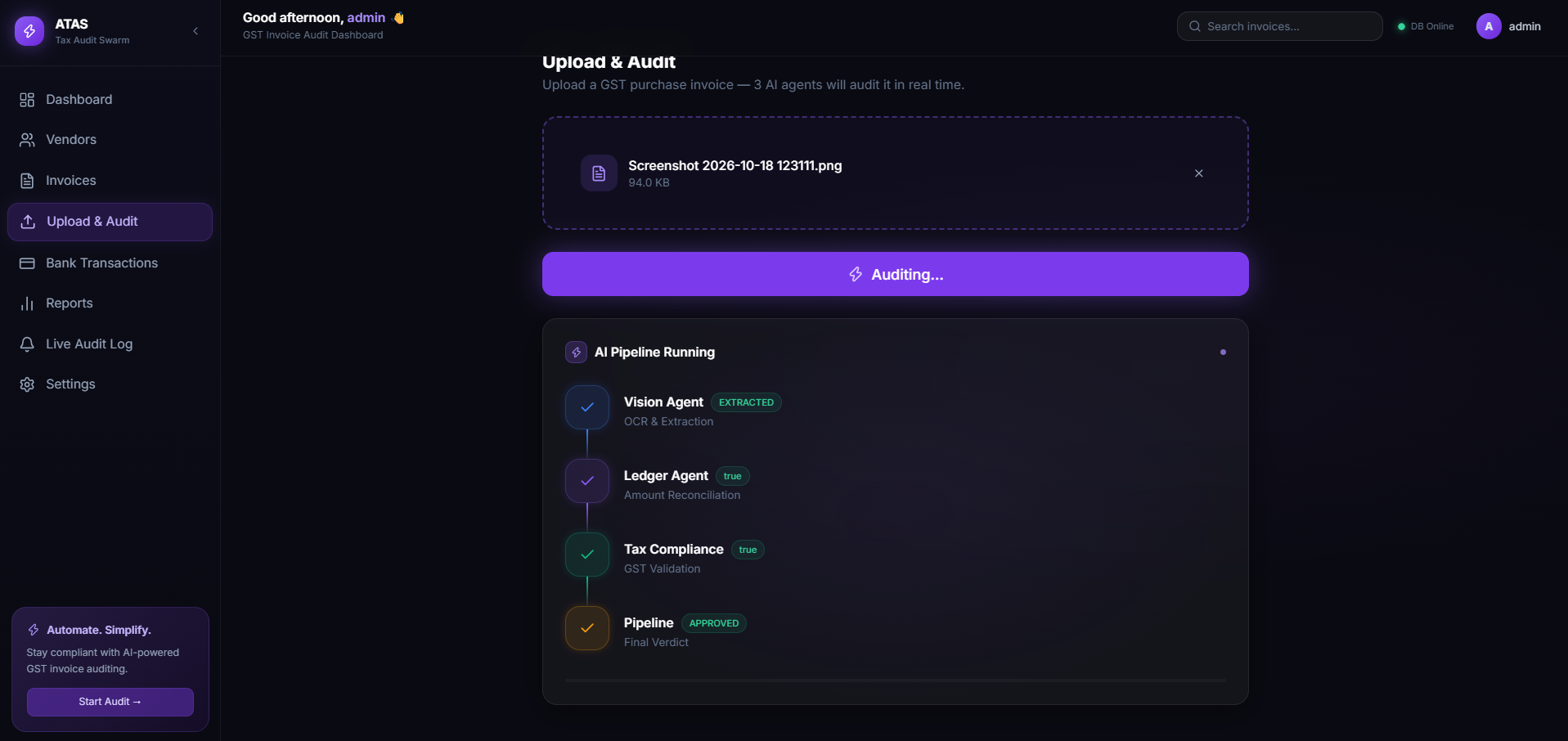
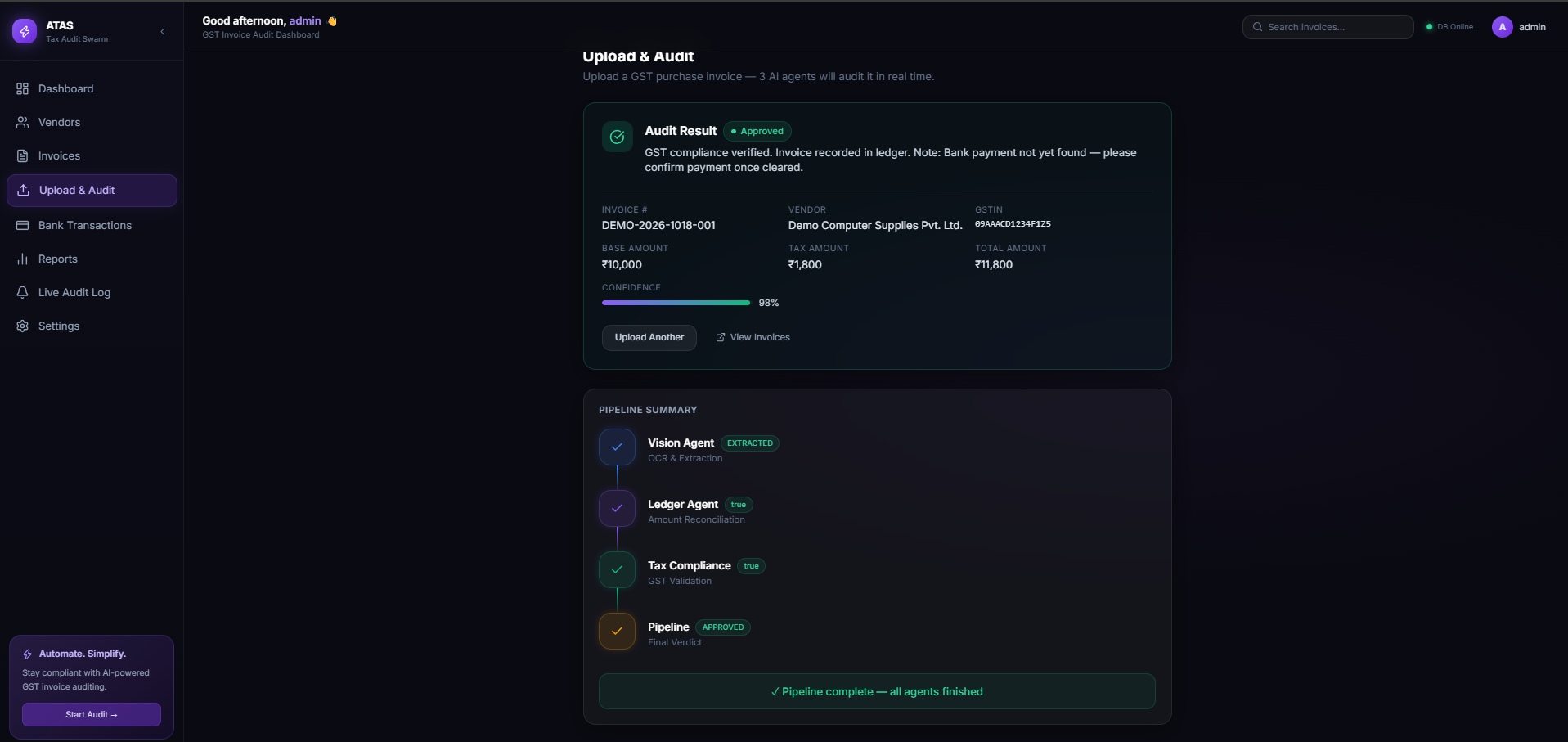
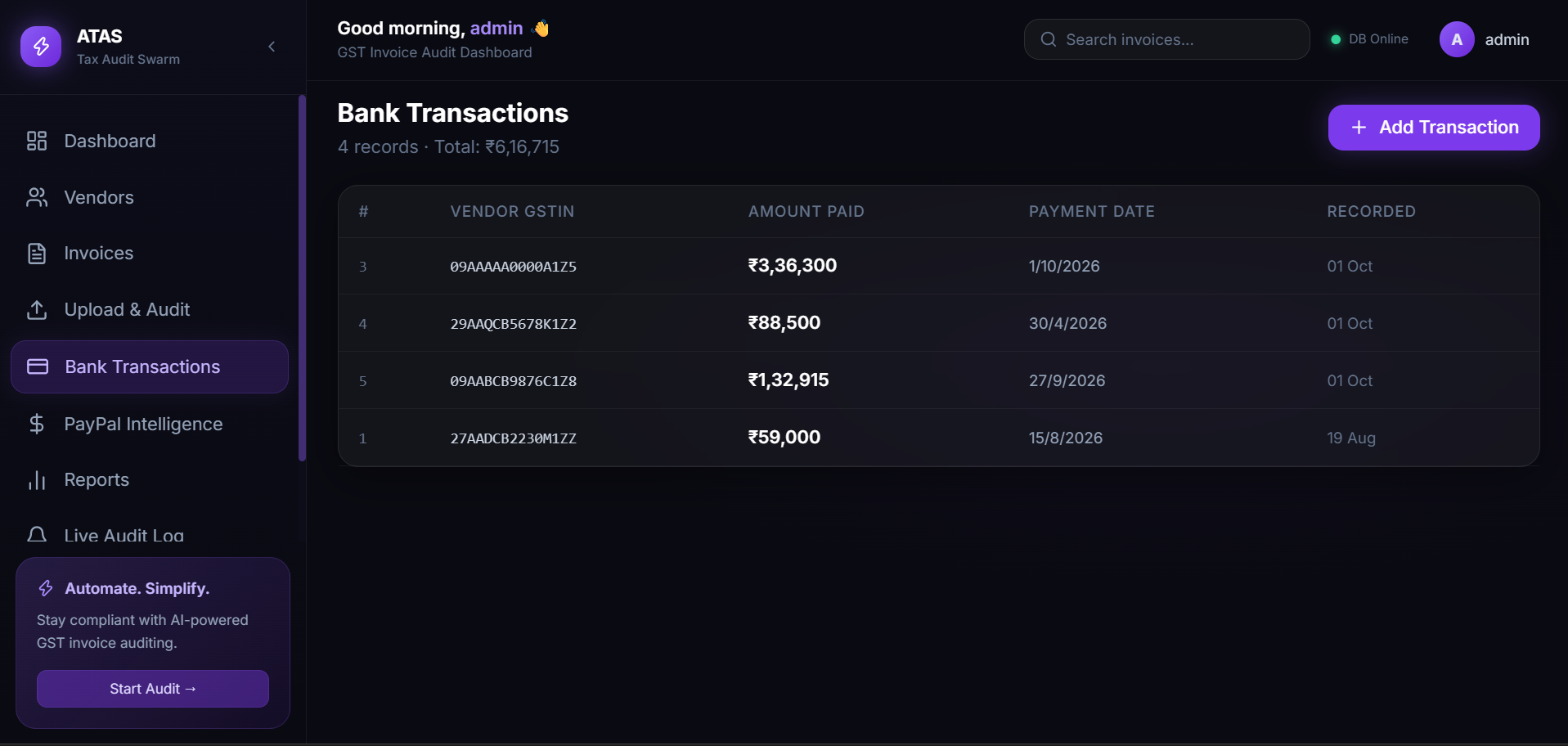
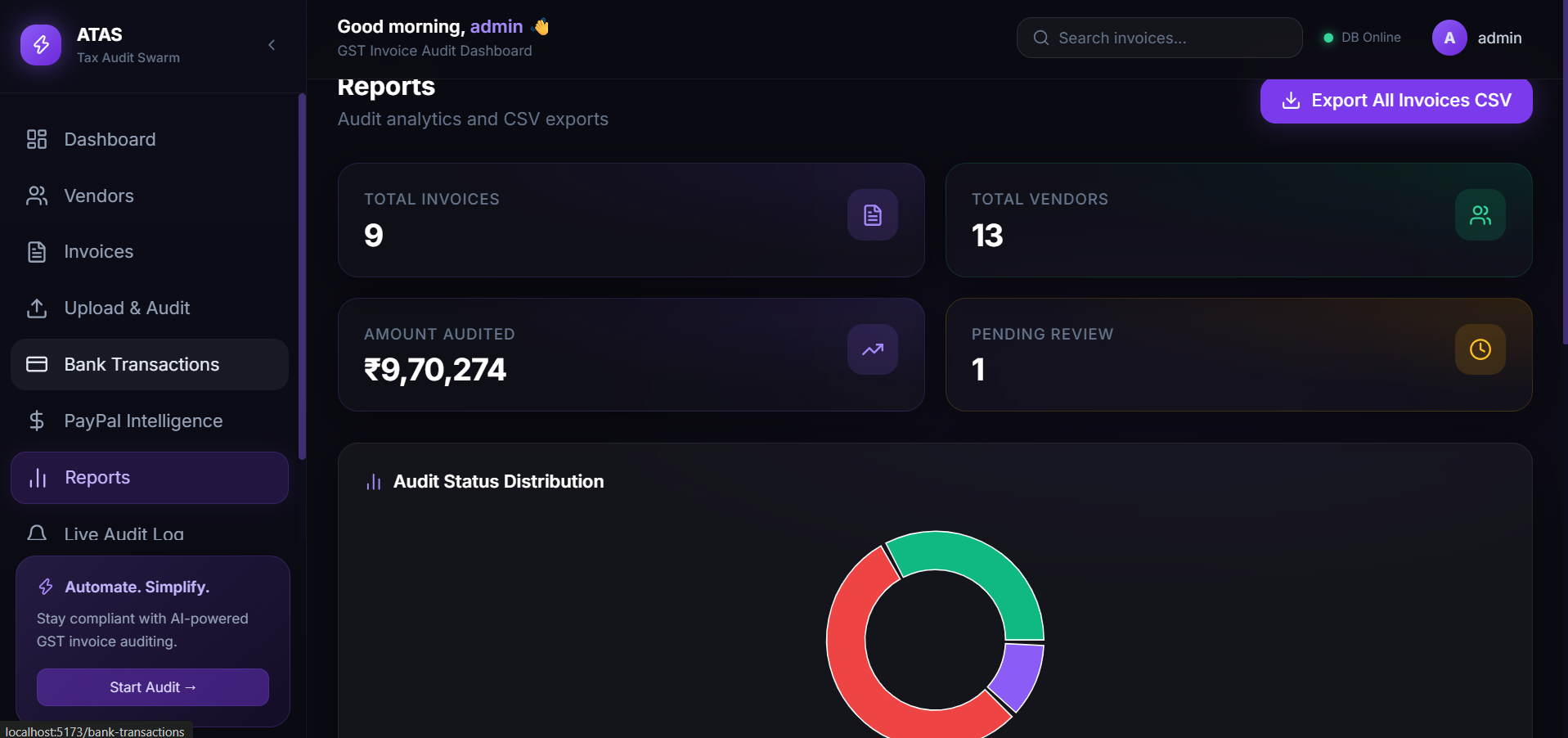
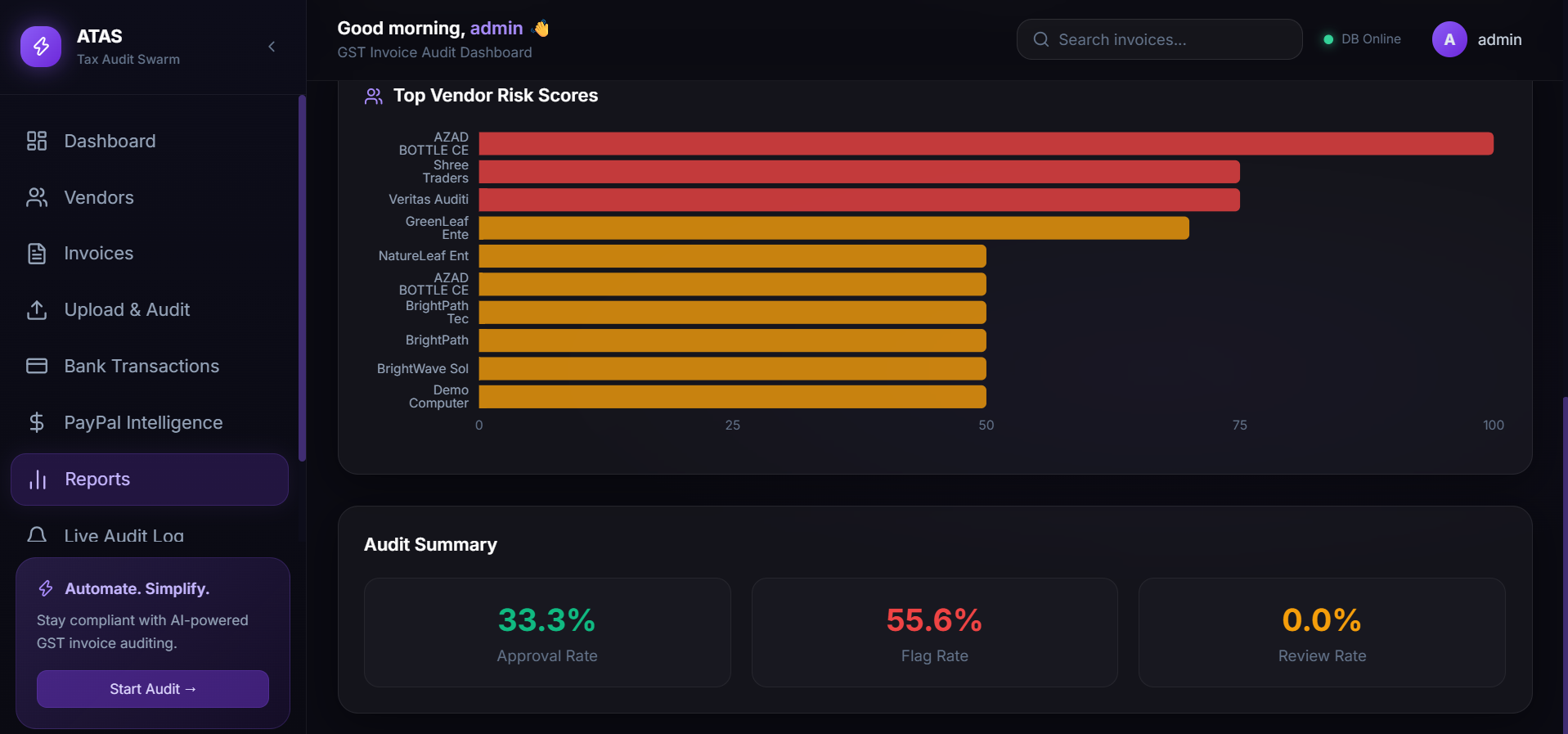
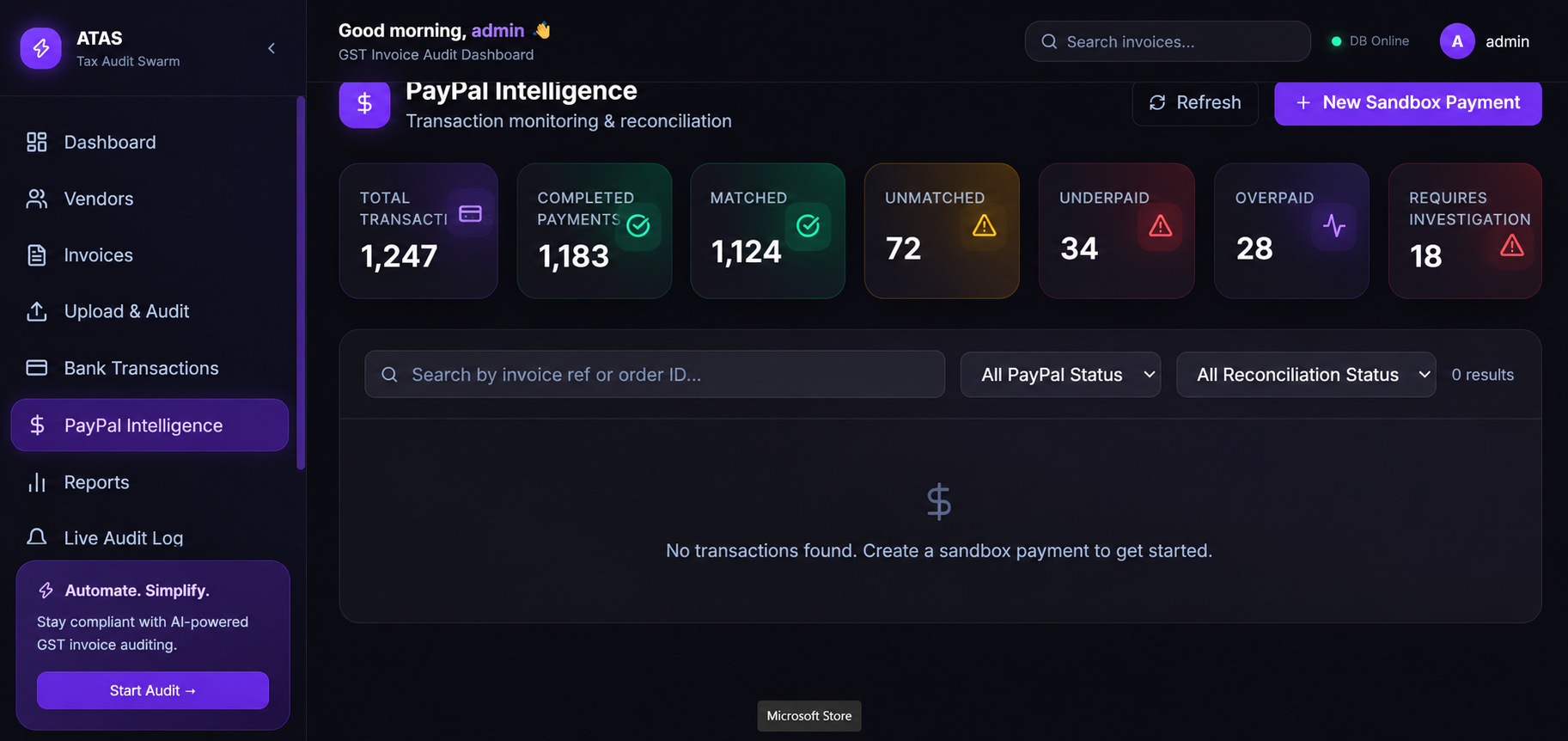
GST Setu is an AI-powered financial auditing platform designed to help businesses identify inconsistencies and investigate potential financial risks. Our existing system uses a multi-agent architecture, where specialized agents collaborate on different stages of the audit process: Vision Extractor: Extracts relevant information from invoices and financial documents. Ledger Detective: Examines financial records and identifies inconsistencies. Tax Inspector: Uses retrieval-augmented generation (RAG) to investigate tax-related issues and provide contextual explanations. The platform combines a React-based frontend with a FastAPI backend, database storage, and AI-powered analysis. For the PayPal AI Hackathon, we are extending this foundation towards payment intelligence. Our goal is to connect PayPal transactions with business invoice records, identify mismatches, detect unusual transaction patterns, and generate understandable audit findings. The PayPal integration is being developed using the PayPal Developer Sandbox, allowing us to explore payment workflows without processing real money.
How we built it
We approached the project by dividing the auditing process into smaller, specialized responsibilities instead of relying on a single AI model to handle everything. We used: React, TypeScript, and Vite for the frontend. Python and FastAPI for backend services. Gemini API for AI-powered reasoning. ChromaDB for retrieval-based knowledge support. PostgreSQL for structured data storage. We focused on combining deterministic financial checks with AI-based investigation. This distinction is important: calculations and transaction comparisons should be reliable and verifiable, while AI should help explain findings and provide useful context.
Challenges we ran into
One of our biggest challenges was making multiple AI agents work together while keeping their responsibilities clearly separated. We also had to consider the reliability of financial data extraction, the possibility of incorrect or incomplete records, and the risk of AI generating explanations that are not supported by actual transaction data. Another challenge is integrating payment workflows securely. Handling API credentials, transaction states, duplicate requests, and payment verification requires careful backend design. These challenges taught us that building financial AI is not simply about generating intelligent responses. It is about building a system where every important finding can be traced back to actual data.
Accomplishments that we're proud of
Built a Multi-Agent AI System: Developed GST Setu's Autonomous Tax Audit Swarm, with specialized agents for invoice extraction, ledger investigation, and tax analysis. Combined AI with Financial Verification: Designed an approach that combines structured financial checks with AI-powered reasoning rather than depending entirely on AI-generated outputs. Built a Full-Stack Platform: Integrated a React and TypeScript frontend with a FastAPI backend, PostgreSQL, and ChromaDB. Focused on Explainability: Designed audit findings and risk assessments to help users understand not just what might be wrong, but why it deserves attention. Tackled a Real-World Problem: Applied AI to a practical business challenge where accuracy, traceability, and reliability matter. Expanding Towards Payment Intelligence: We are extending GST Setu with PayPal Sandbox integration to explore automated payment-to-invoice reconciliation and transaction discrepancy detection. Our biggest accomplishment is turning an idea into a working foundation for a practical financial auditing platform—and having a clear direction to take it further.
What we learned
Through this project, we learned how to design multi-agent systems, integrate AI with backend services, work with financial records, and think about the reliability and security requirements of real-world financial applications. Most importantly, we learned that AI should not replace financial verification. It should strengthen it by making complex information easier to investigate, understand, and act upon.
What's next for GST-Setu
Our vision for GST Setu is to evolve it into a unified financial intelligence platform that helps businesses move beyond traditional record-keeping towards proactive financial monitoring. By combining payment data, invoice intelligence, deterministic reconciliation, and explainable AI, we aim to make financial auditing more transparent, efficient, and accessible.
Built With
- artificial-intelligence
- automation
- chromadb
- data-analytics
- fastapi
- fintech
- gemini-api
- genai
- machine-learning
- multi-agent-systems
- paypal-ai
- postgresql
- python
- rag
- react
- typescript
- vite
