-
-
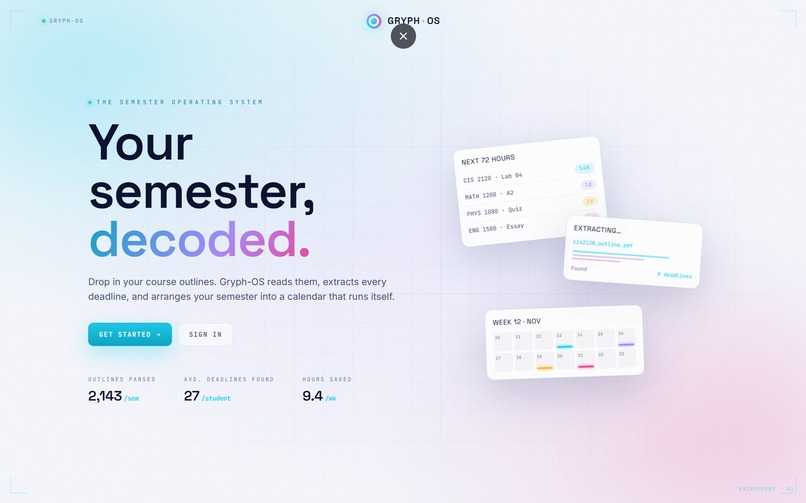
onboarding
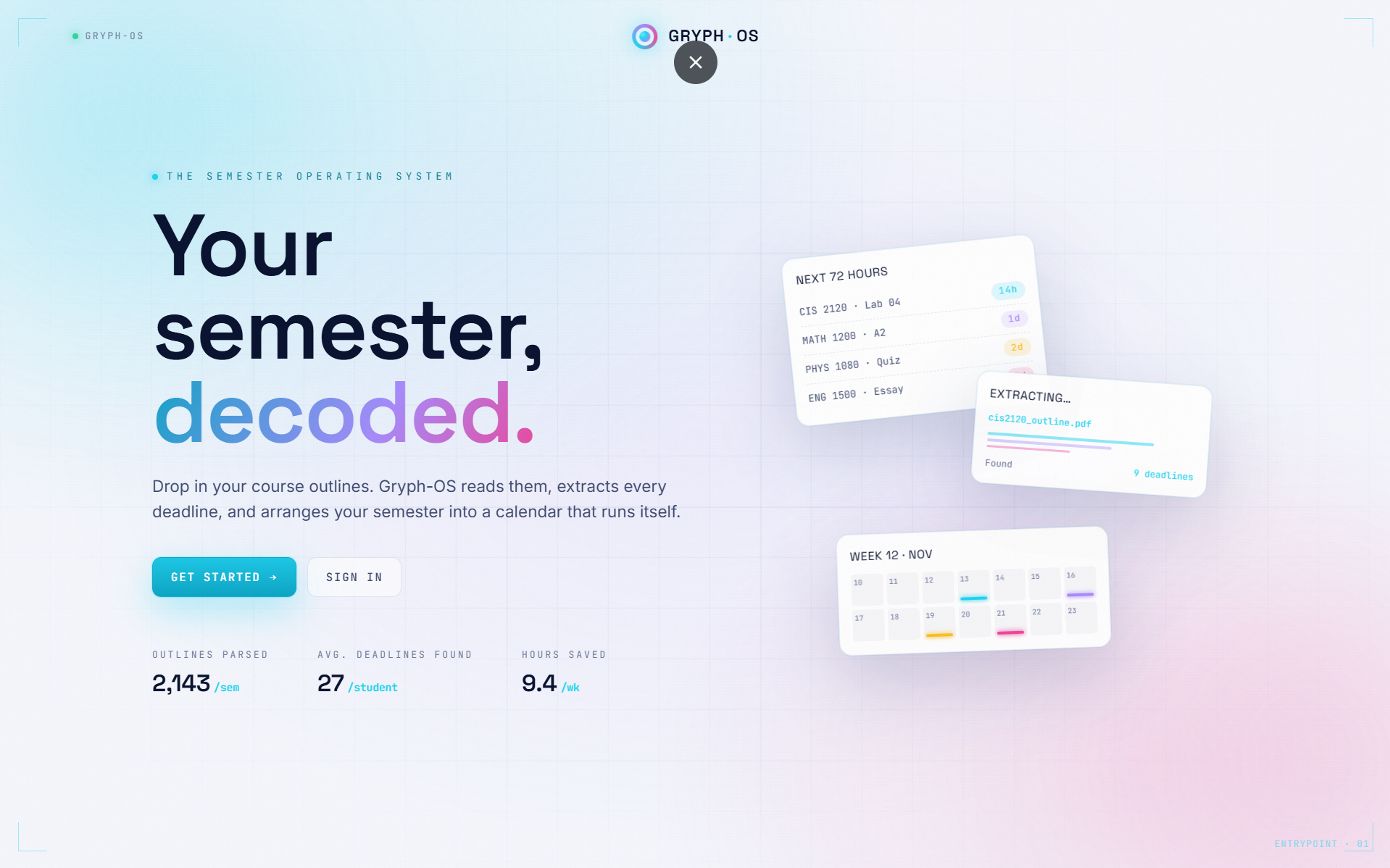
Inspiration
Cognitive overload causes student failure. Passive calendars are inefficient. Students require an active control center that parses unstructured syllabi and proactively protects academic integrity.
What it does
Automated Ingestion: Extracts deadlines directly from syllabus PDFs.
Execution Matrix: Auto-populates a live semester calendar.
Deep Work Kanban: Facilitates frictionless task tracking.
Integrity Guardrail: Blocks proprietary test uploads to prevent academic misconduct.
TECHNICAL EXECUTION The frontend is React with Framer Motion — every animation, the voice orb, the boot sequence, the calendar, all custom-built. We used Web Speech API for the voice assistant — no third-party voice service, pure browser-native TTS and speech recognition. For the backend, it's FastAPI on Python, deployed on Render. We process PDFs locally using pypdf — so text extraction is instant and free — then we send only the text to Gemini AI for intelligent parsing.
For cloud infrastructure — we leaned hard on AWS:
• AWS Cognito handles all authentication. Secure signup, login, JWT token management, and session handling — production-grade auth out of the box. • AWS S3 stores every syllabus PDF users upload. Files go directly to S3, metadata lives in MongoDB Atlas, and we generate signed download URLs on demand. Fully cloud-native file pipeline. The frontend is deployed on Vercel with automatic SPA routing. The backend runs on Render with Python 3.11. The entire stack is cloud-hosted — no local server anywhere
Challenges we ran into
Mitigated severe API rate limits and deployment friction by pivoting to a hybrid local-extraction pipeline prior to LLM routing.
Accomplishments that we're proud of
What we learned
Mastered transforming unstructured PDF data into strict JSON for UI rendering and implementing client-side friction for automated user moderation.
What's next for GRYPH OS
(In the recorded video, the voice of ai in the application was not recorded)
Built With
- amazon-web-services
- aws-cognito
- cognito
- fastapi
- framer-motion
- google-gemini-api
- mongodb-atlas
- next.js
- pypdf
- python
- react
- render
- s3
- tailwind-css
- typescript
- vercel
- web-speech-api
- zustand


Log in or sign up for Devpost to join the conversation.