-
-
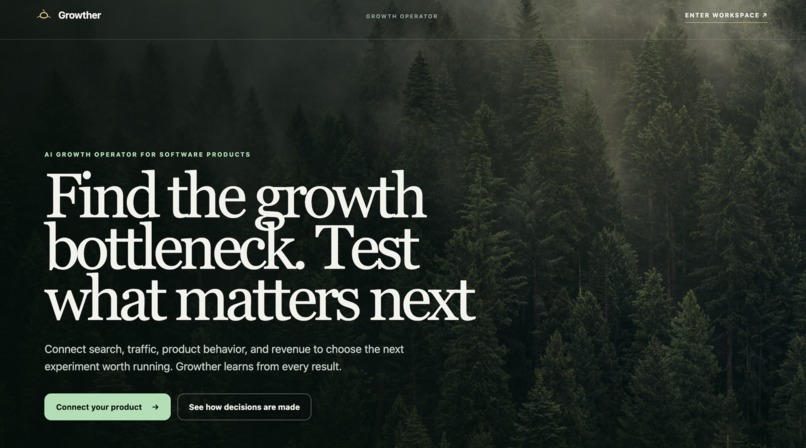
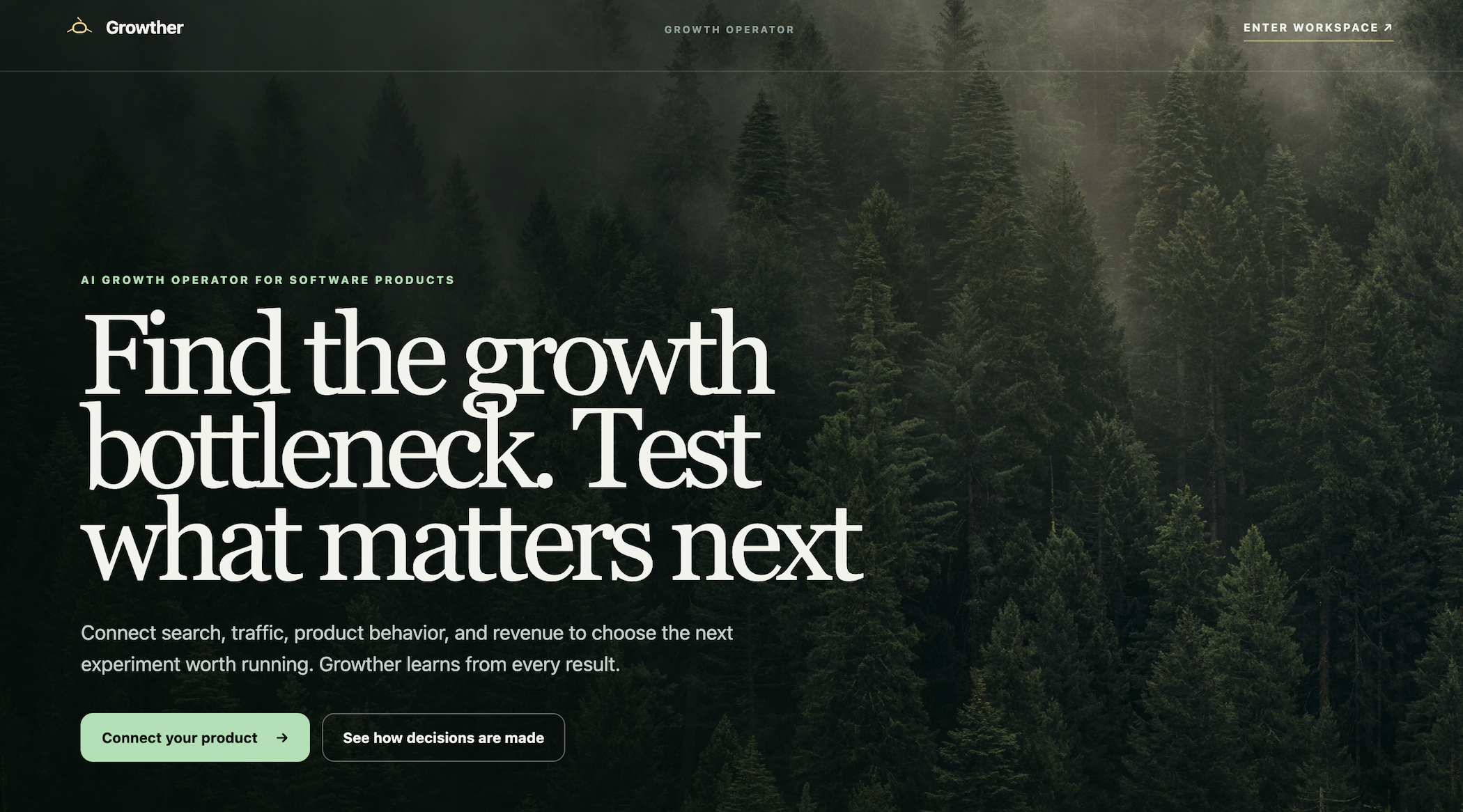
hero find the growth bottleneck
-
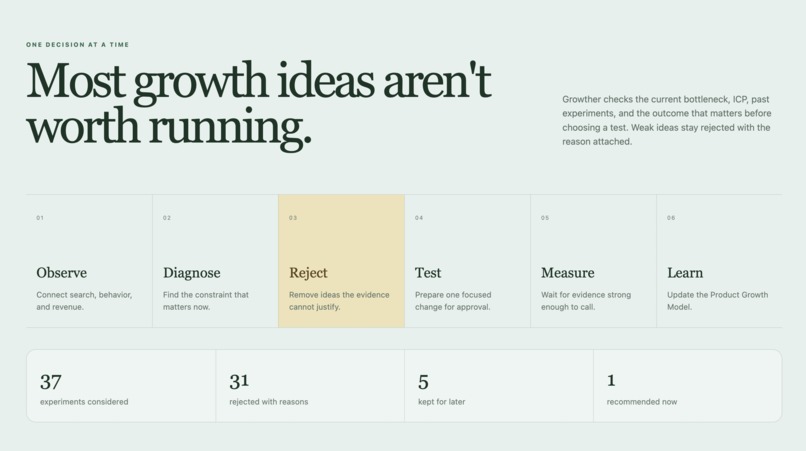
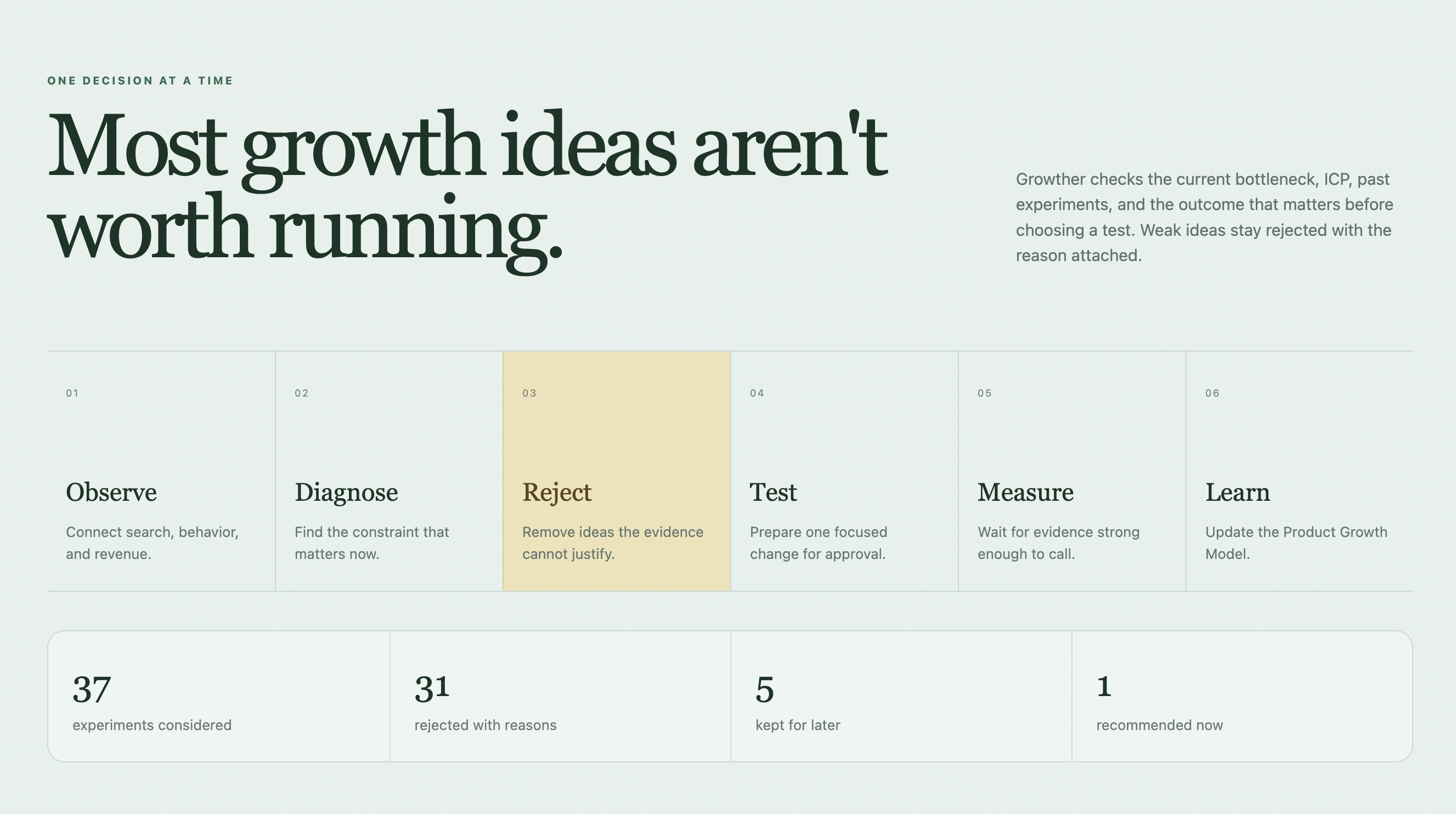
picking idea from hypothesis hero
-
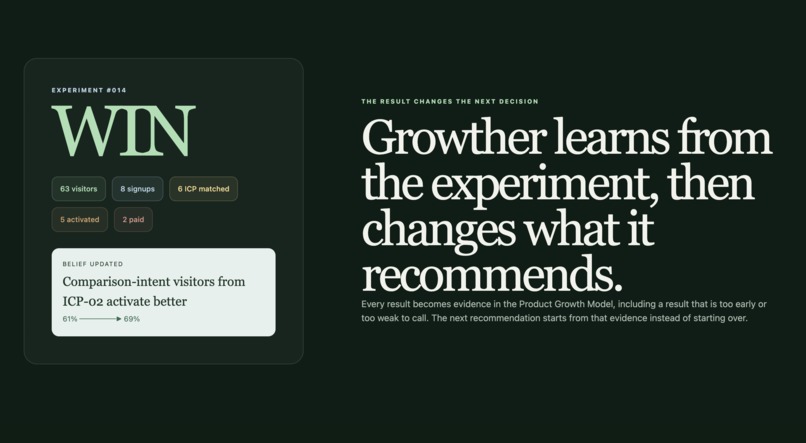
experiment result shown on hero
-
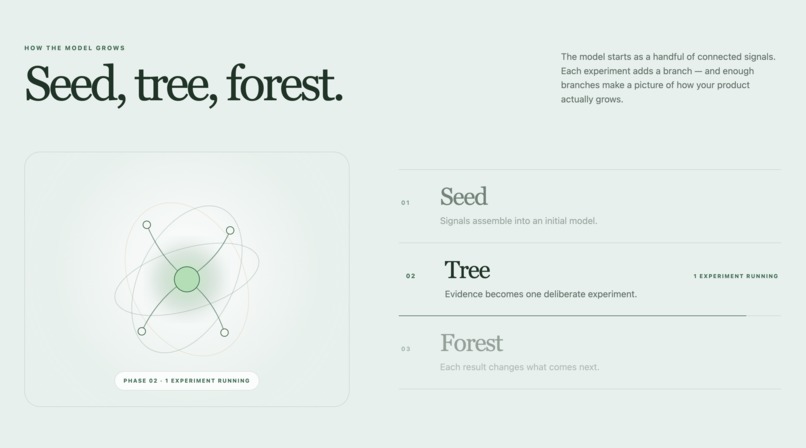
concept of how product idea represented in hero
-
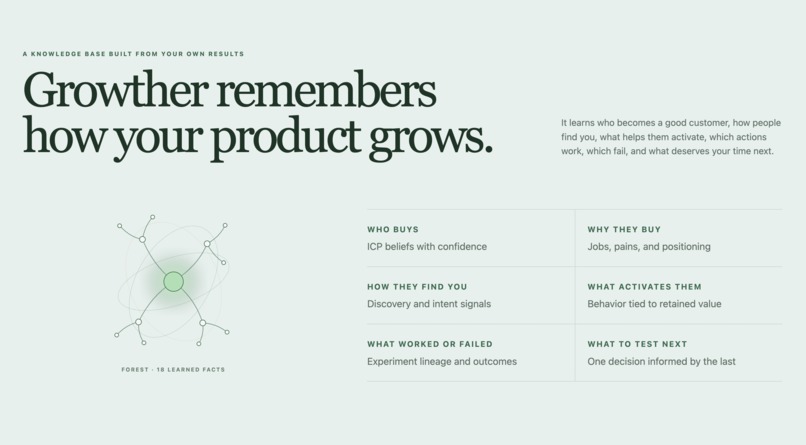
how system learns hero
-
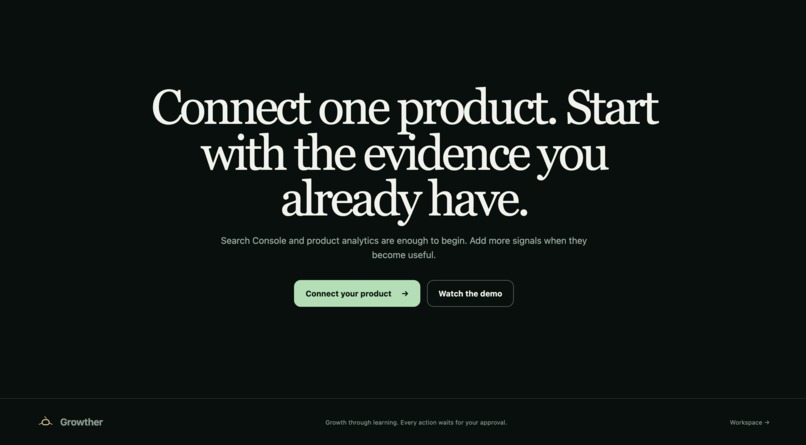
cta hero
-
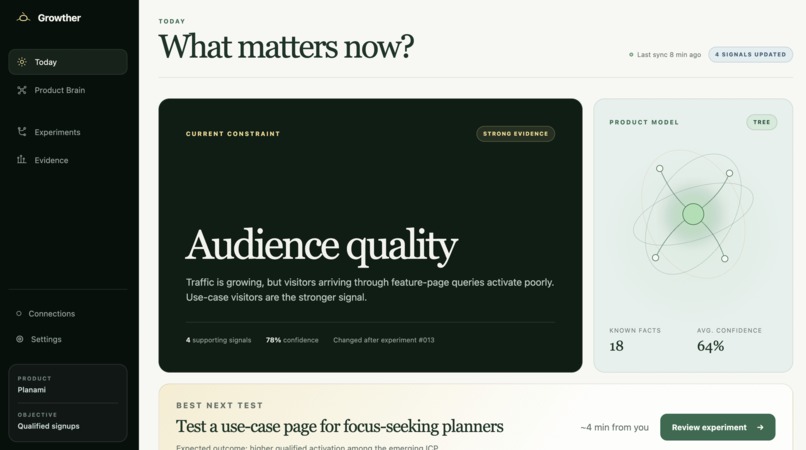
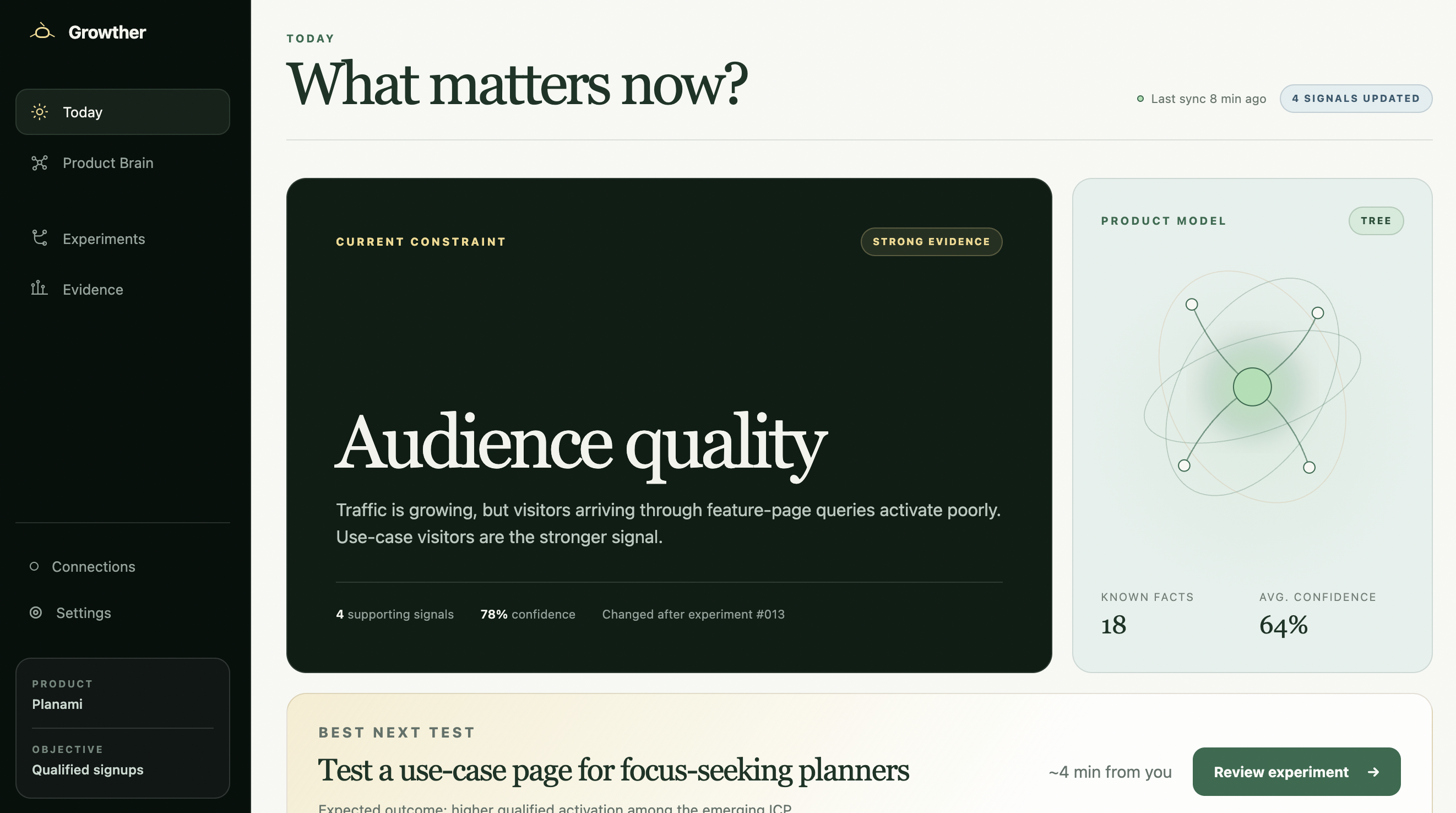
dashboard current focus
-
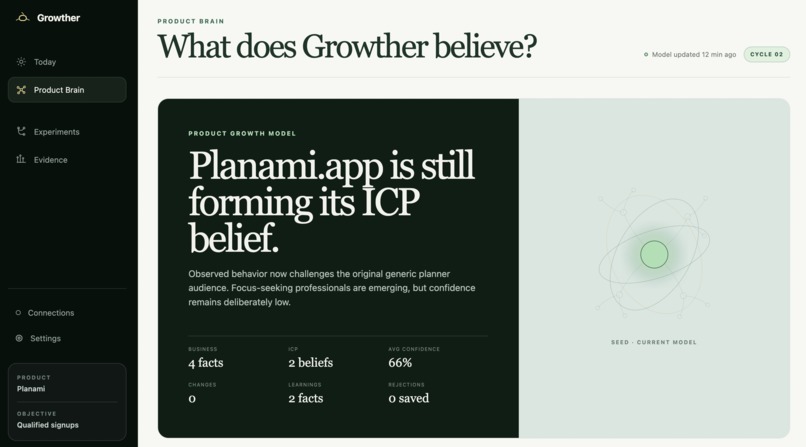
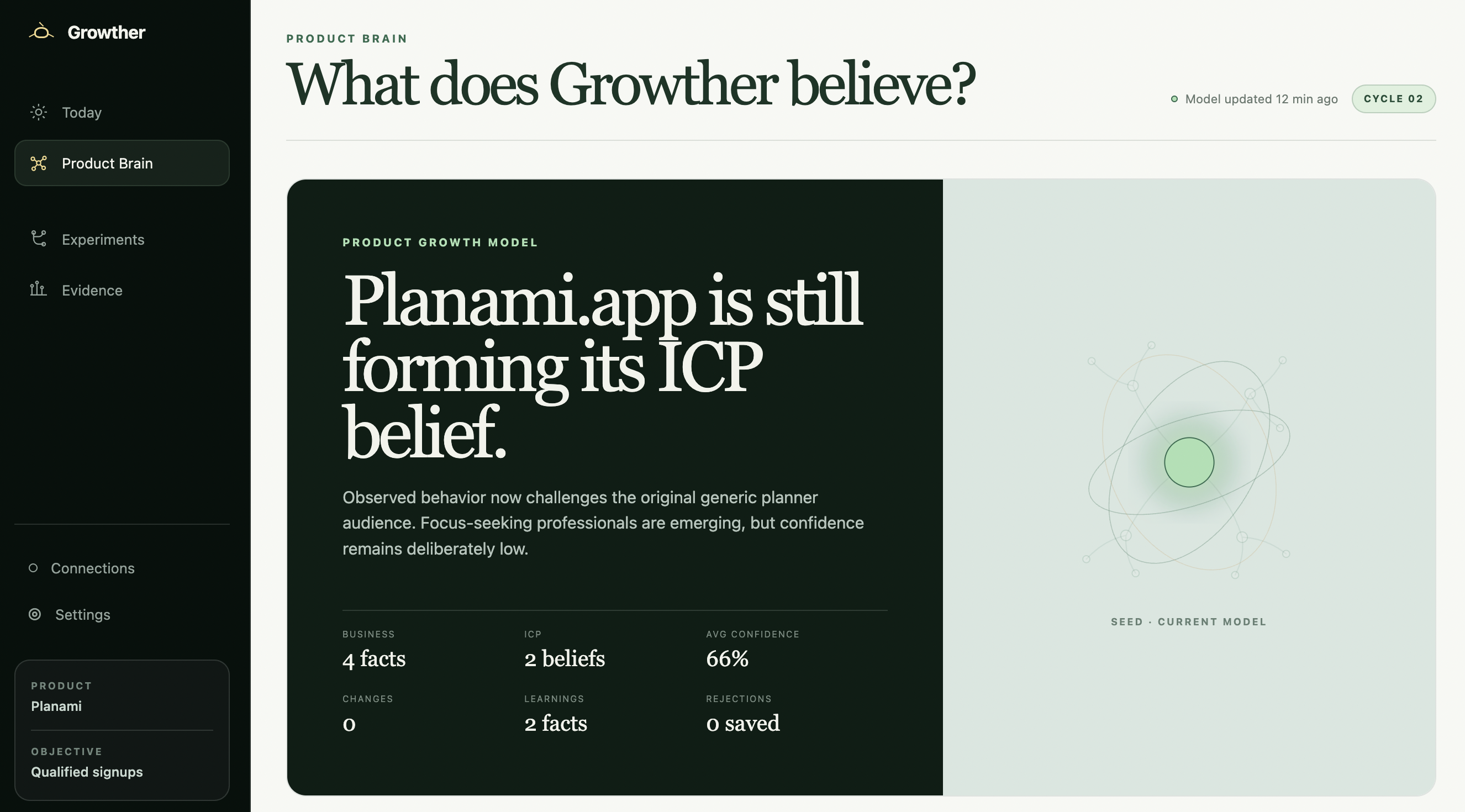
product brain page part 1
-
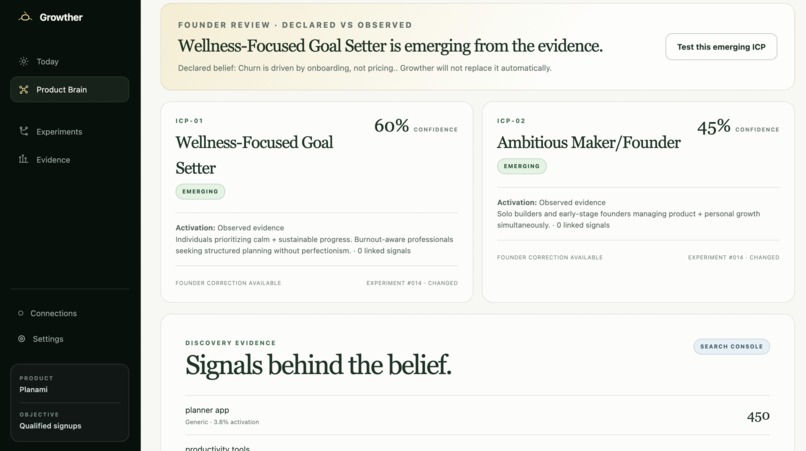
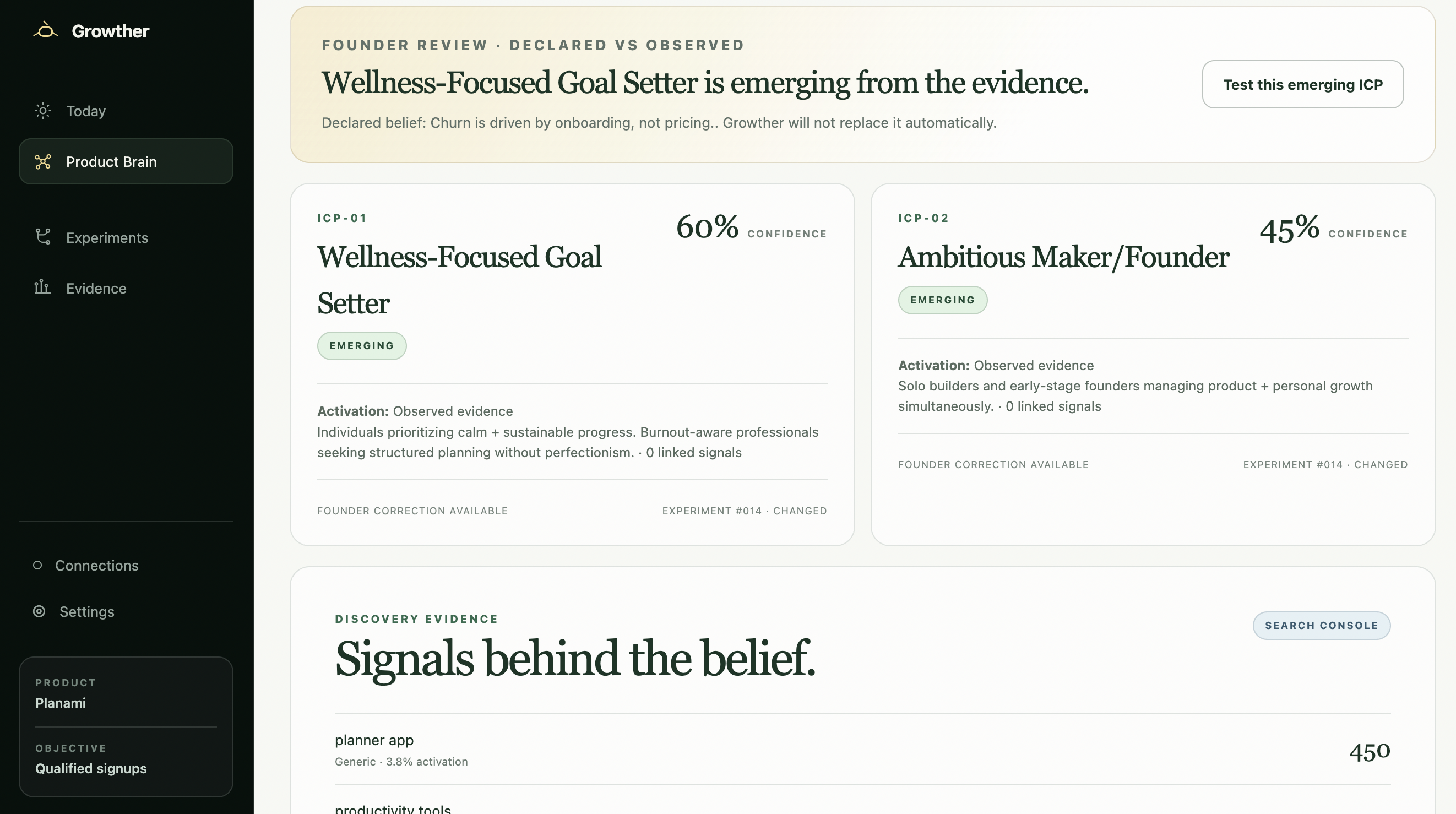
product brain page part 2
-
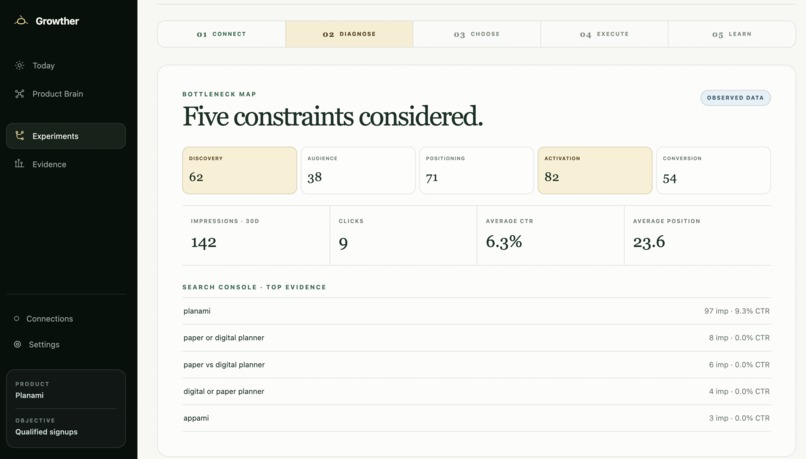
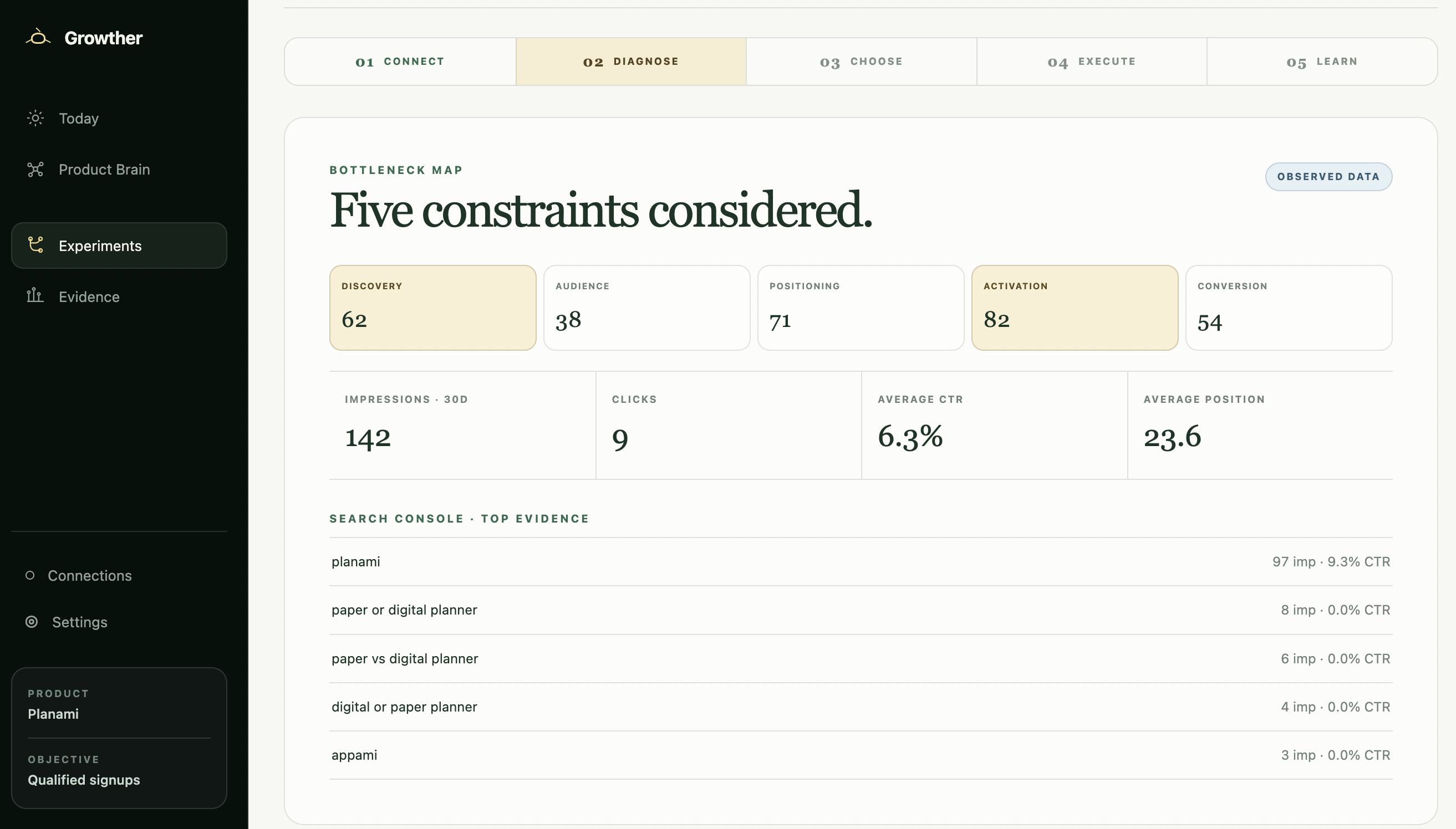
experiment page
Inspiration
While working on my side projects, I noticed that even if an idea is validated, it doesn't mean the product has a good chance to survive. A lot of different things need to go right for a product to get attention and grow, and the founder has to make a lot of decisions along the way.
Every test and every experiment takes time. A system that saves this time also saves the founder's money and focus.
While doing research, I found products that help with SEO or help track experiments, but I haven't found a system that actually learns how a specific product grows over time and applies this new knowledge.
So I wanted to try building a system that can understand a product, help identify its ideal customers, find the current growth bottleneck, choose the best hypothesis to test, try it and learn from the result.
What it does
Growther connects information about the product with growth data. Currently with Google Search Console and product analytics.
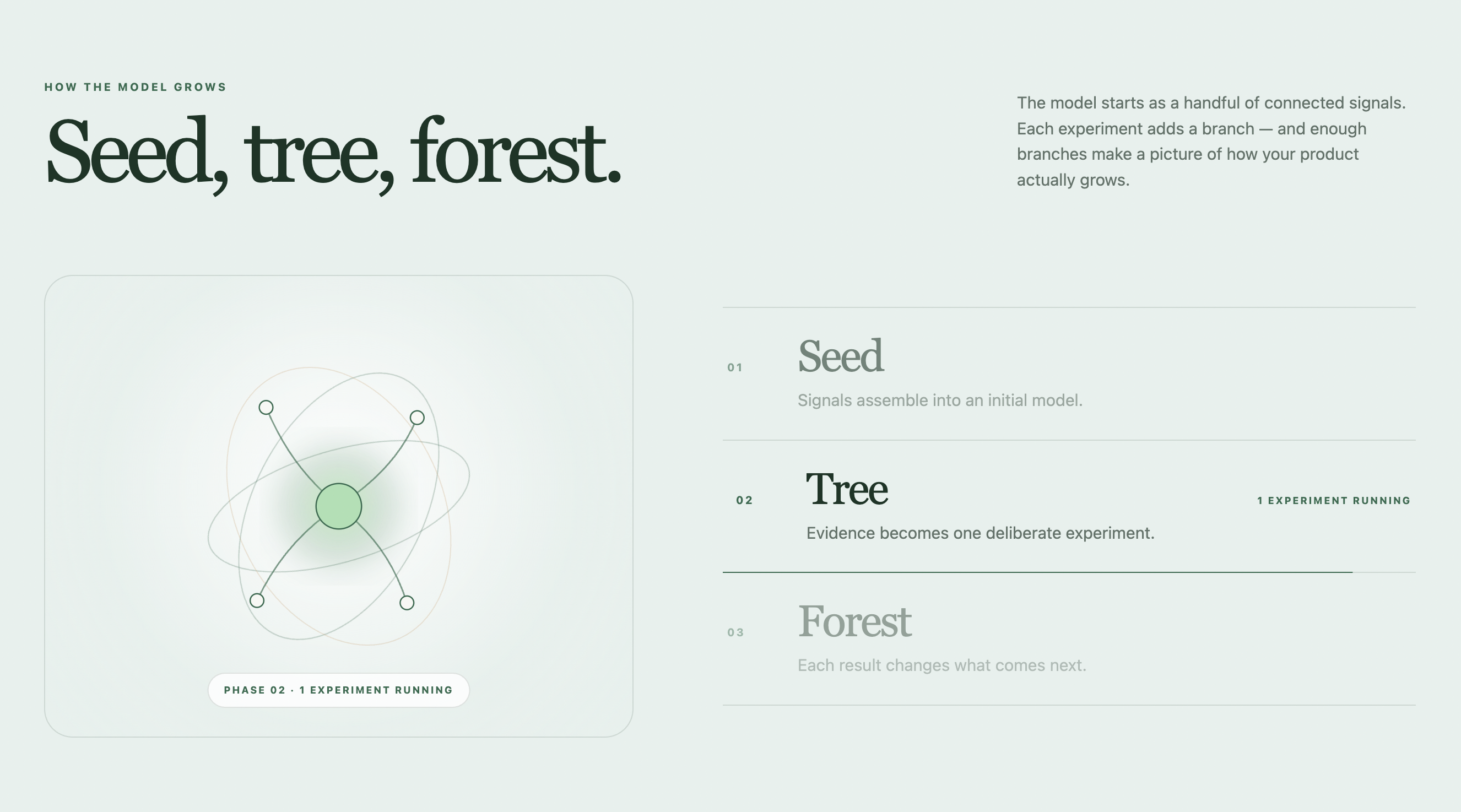
It builds an initial model of the product, its ICP, goals, and current growth situation. Then it looks for the bottleneck that seems to matter most right now.
Instead of producing a long list of growth ideas, it generates possible hypotheses, rejects the ones that don't fit the current bottleneck or available evidence, and selects one experiment worth trying.
For the MVP, the system can go through a complete learning loop:
observe data → diagnose the bottleneck → generate and reject hypotheses → choose an experiment → prepare a change → get founder approval → evaluate the result → update what it knows about the product
But some parts are currently hardcoded for the demo. Parts of data are also cached in DB to load faster and make sure diagnosis has data (limit in LLM is not hit).
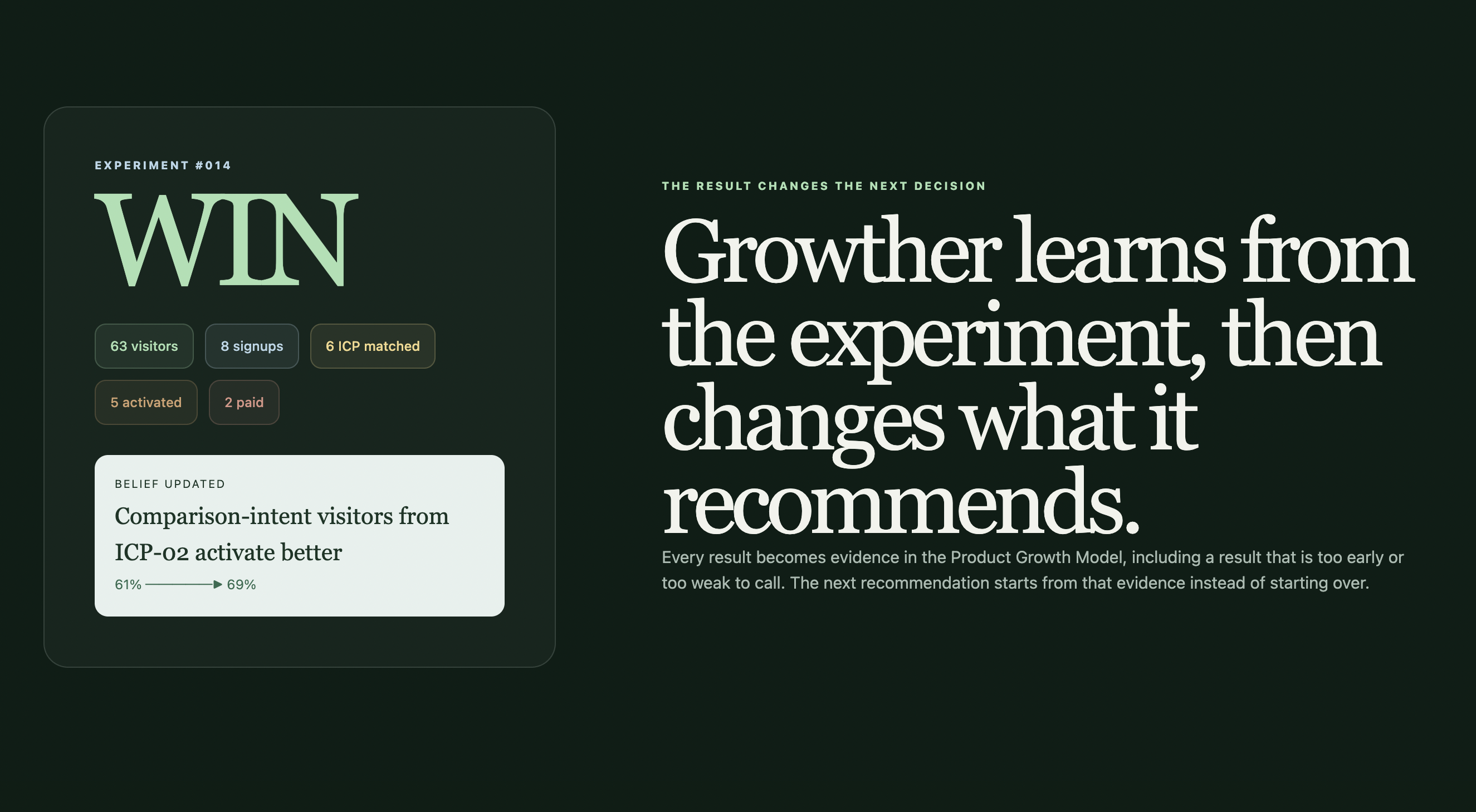
The important part is what happens after an experiment. The result becomes evidence in the Product Growth Model. That can change confidence in an ICP, message, acquisition source, or other assumption, and the next recommendation should change because of what the system learned.
The goal is to make Growther more useful for a specific product over time instead of giving the same generic marketing advice every time.
How we built it
I started by playing with the idea and discussing it with an AI chat. After several hours, we had a specification for the first version of the product and the website.
Then I tried to reduce that larger idea into the smallest MVP I could actually build for the hackathon. I used AI coding tools while implementing it, tested different approaches, removed parts that were too large for the timeline, and changed the flow several times as I understood the product better.
The MVP focuses on one complete growth-learning loop rather than trying to build every possible marketing channel.
Challenges we ran into
The system is quite complex. Growth data can come from many places, and even deciding what should count as useful evidence is a problem on its own.
I had to choose the smallest building blocks that could still demonstrate the main idea and change plans along the way to fit the hackathon timeline.
Another challenge was keeping the product focused. It would have been easy to turn it into an SEO tool, analytics dashboard, or generic AI marketing agent, so I kept coming back to the same question: does this feature help the system understand how this particular product grows?
Accomplishments that we're proud of
Even though the system still looks far from what I originally imagined, I'm proud of how much it moved in that direction in a short time.
It already managed to identify seemingly correct bottlenecks in two of my test side projects. That was one of the most interesting moments for me, because the output wasn't simply another list of marketing ideas. In both cases, it pointed to a more specific problem that made sense when compared with the product data.
I want to continue running it on those projects and see whether the next experiments actually improve its decisions.
What we learned
I learned that leaving design until the end is not always a good idea, especially when the design itself can help explain a new product concept.
I also learned more about reading data from Google Search Console, handling cached data more efficiently, and how difficult it is to turn several imperfect signals into one useful growth decision.
The biggest product lesson was that generating hypotheses is the easy part. Choosing what not to do, measuring the result, and carrying that learning into the next decision is much more interesting.
What's next for Growther
Once the base version works reliably, I want Growther to learn from more parts of the product: acquisition, activation, conversion, retention, and eventually social and community channels.
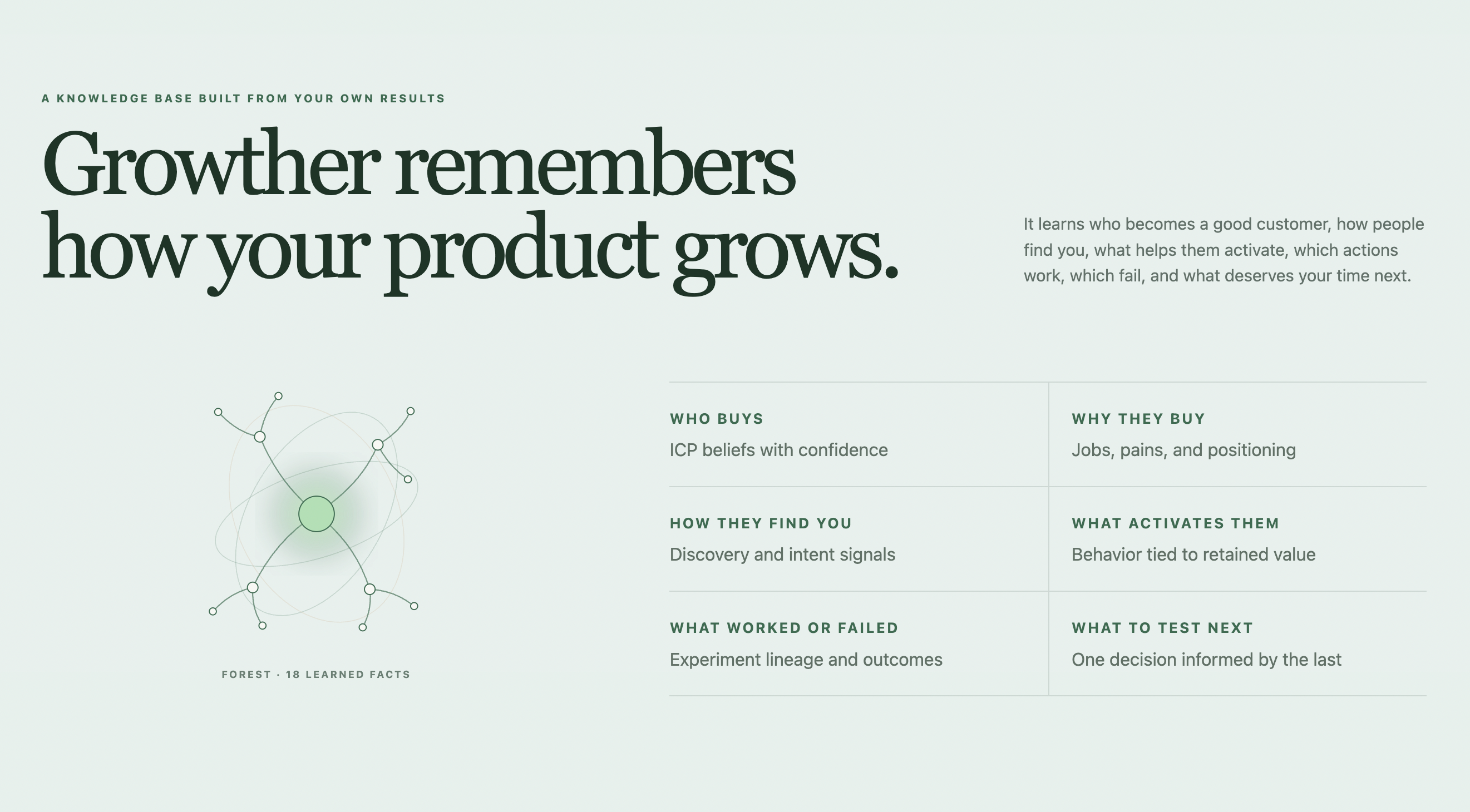
The Product Growth Model should become more accurate after every experiment and gradually learn who becomes a good customer, how those people discover the product, what helps them activate, which growth actions work, and which ones repeatedly fail.
Later, I also want to explore patterns across projects. Instead of relying only on general marketing knowledge, internet examples, and the history of one product, Growther could build an anonymized internal knowledge base from experiments across many products.


Log in or sign up for Devpost to join the conversation.