Inspiration
How many hours have you spent on your phone today? Have you drank enough water? Technology has the potential to generate unprecedented growth, but it does not come without risk. Since the introduction of Snapchat, rates of mental illness in preteen girls has increased 5 fold. A wealth of information means we can do almost anything we want, but being overwhelmed by choice often means we fall into bad habits. We overuse social media, spend less time outside, and do less of the things we love.
Some applications are actively predatory. They use deceptive design patterns-that is, user interfaces explicitly designed to encourage self destructive behaviour. Stay online until your eyes hurt, skip a meal to watch another episode, spend more money on things you don’t want.
The result of this is a large-scale loss of your autonomy. We develop bad habits and routines which don't achieve anything or improve our lives. For those of us trying to improve our lives, how do we even start? Existing solutions do not suffice. Some offer help improving personal habits, but only in specific domains such as fitness or studying. Others try to reduce the time we spend on social media by creating barriers, but do not provide an alternative positive habit to build on. Further, current approaches are overly prescriptive, with no space for the individual’s values and thought processes.
We need a method of taking our personal goals, and transforming them into plans for growth. We need a tailored toolbox and plan for achieving the things we want.
What it does
At Growth Garden we ask, what does growth mean to you? We give you the control to build the habits you want. By integrating AI, we are able to take your goals, and develop a personalised journey to get where you want to go. Our system comprises of two overarching parts.
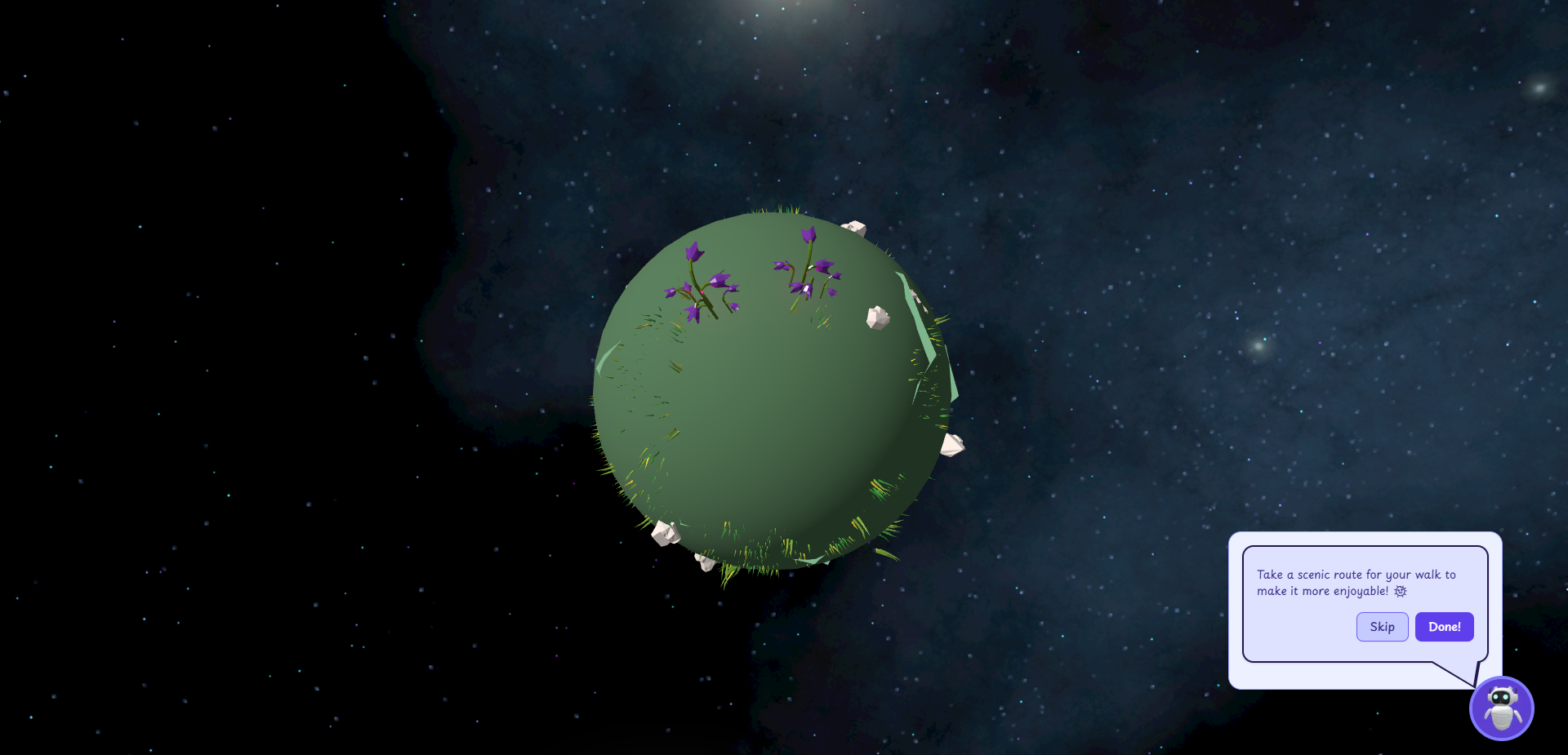
First, an AI assistant Bruce. Tell them what you want to get better at, or what habit you’d like to develop, and they will set up a routine, prompting you with tasks to move you closer to your goals, one step at a time. At any point, you can revise your goals with Bruce, ensuring Growth Garden is always helping your ideal version of yourself.
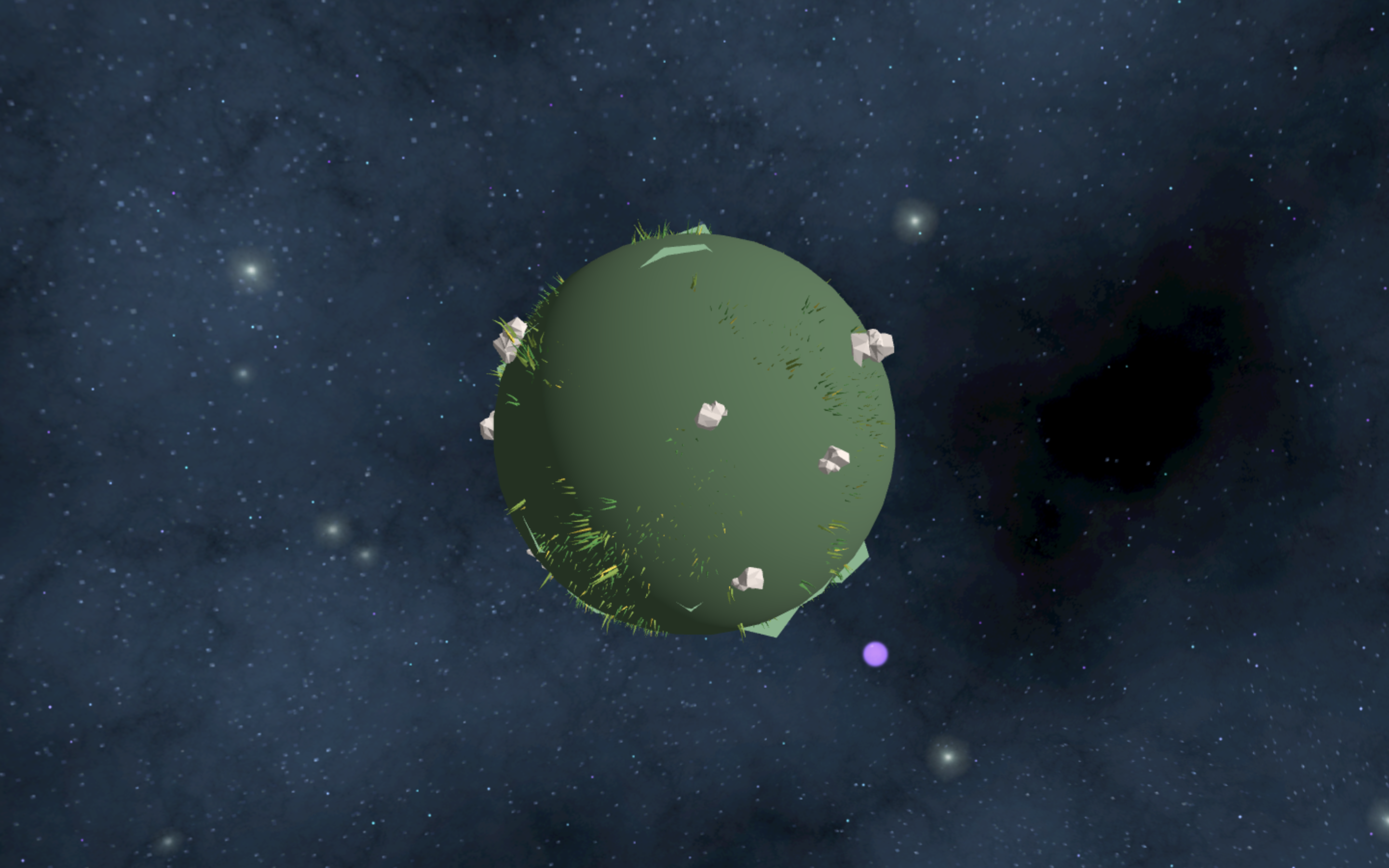
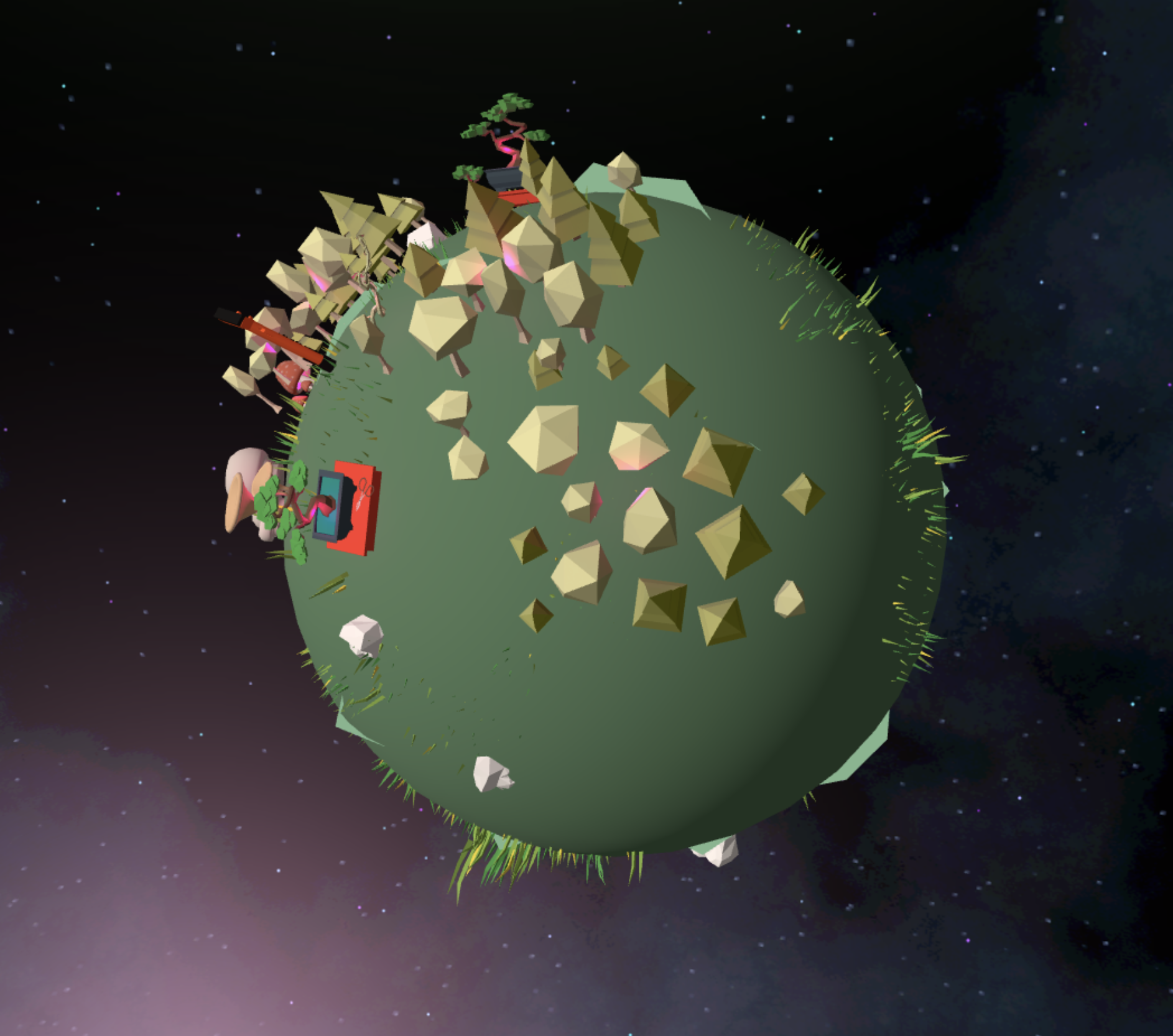
Second, our garden growing experience. When completing tasks from Bruce, you receive small plants, mushrooms, and garden items to decorate your space. Over time, your garden will reflect your personal growth. Plus, it never hurts to have that extra dopamine hit when you do something positive.
How we built it
We first focused on getting a CI/CD pipeline ready, to integrate changes as fast as possible. Then we split into sub-teams. One sub-team worked on getting the AI API calls up and running, one sub-team worked on getting 3d rendering working and loading in assets, and one sub-team started planning out the DevPost, pitch, and video.
We built our app with the Next.js framework, and used Langflow from Datastax for the backend. We spent a lot of time on the custom physics and 3d rendering, Three.js was a big part of that! Also a massive shout out to poly pizza, free sounds, and sketchfab for a lot of the assess and sounds we used and were inspired by.
Oh yeah and we wrote it in typescript!
Challenges we ran into
The biggest challenge we faced was integration, which affected us on a couple levels. First, we used quite a few different libraries, a framework, and looked into multiple APIs. Using each individually was one part, but making sure all the parts talked to each other properly was another thing entirely. Sometimes APIs didn’t behave the way we expected, and different systems interact in different ways. In a couple of cases that meant we built custom software to get things working exactly the way we wanted it.
Second, integrating the different learning resources we were using. A lot of people have made very good tutorials on a number of related and similar subjects, which we then took and combined. We identified our favourite parts of various examples, and used them as inspiration for development. Since each source does things differently, we found that while putting together different parts we had to do more than just simply copy each tutorial. We had to develop a deeper understanding of how each system we looked at worked, and make tweaks from each part to suit our overall goal.
Accomplishments that we're proud of
We're really proud of the calming vibe we've curated in our app. The combination of assets, colours schemes, shaders and sounds which all relax the user while simultaneously gently guiding them to achieve their goals. Different people worked on each part of the app, so having everything come together as a cohesive whole was really satisfying.
The feature that lets us snap assets to the surface of the planet was also a major win for us. It makes the process of tailoring your garden that much easier, and also makes things feel nicer too. We built a lot of the vector maths from scratch, so having things work properly was really rewarding. It also helps us make fine tune adjustments to exactly how the snapping behaves.
The audio is something we're proud of too. We built a nice system that integrates different clips, which means users aren't listening to a single loop, but rather different ambient sounds are dynamically chosen, giving a unique feel. We also took time to design the individual sound effects, which adds that satisfying feeling when you complete a task or place a mushroom.
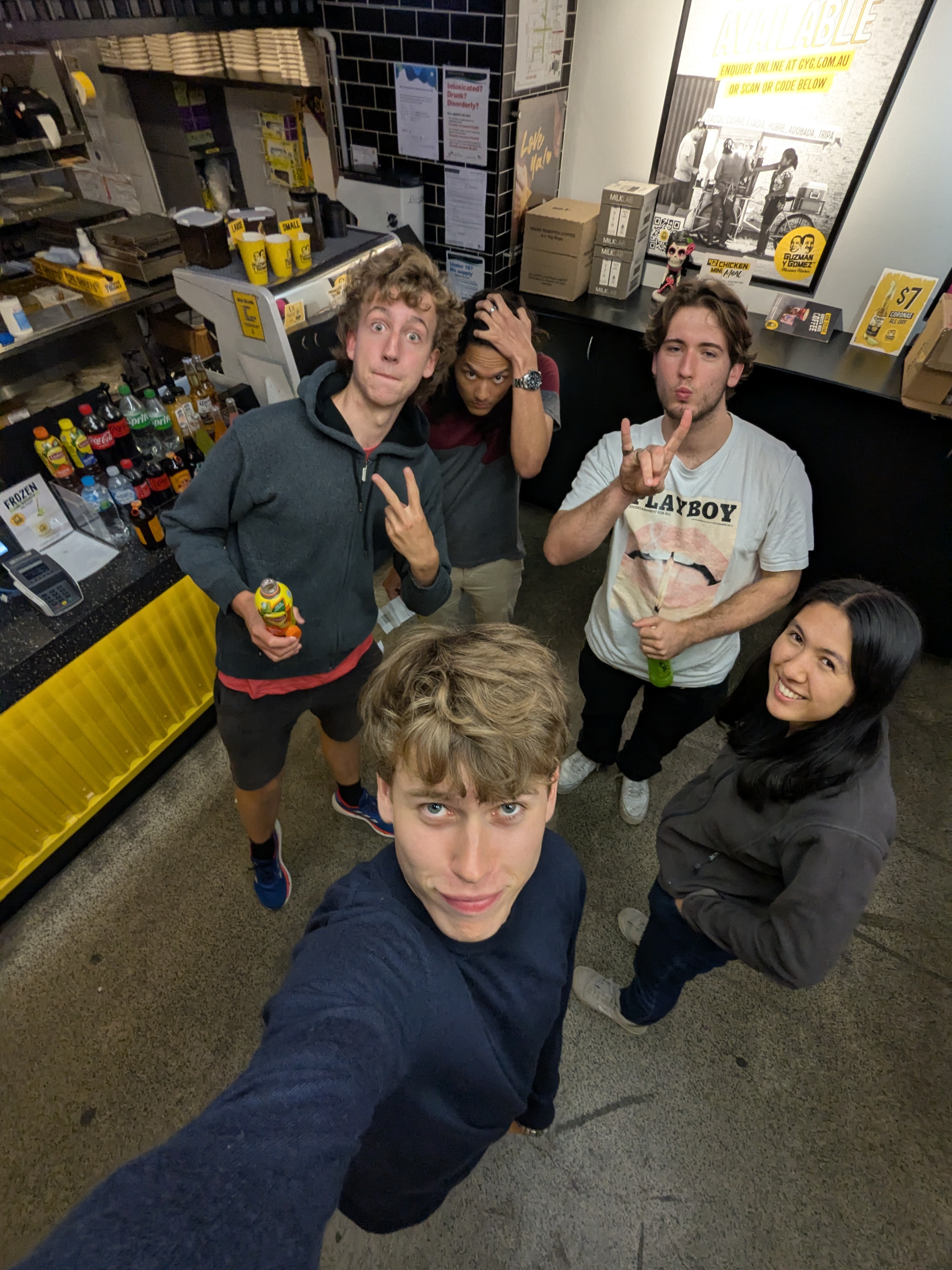
And of course, we're proud of our teamwork process. Half of our team are first timers, and we're really proud of hustling through the past two days, going from ideation to building to shooting the video. We had hiccups, but we pulled through and learned a lot through this process.
What we learned
Our team has worked together before, but never in a hackathon. Usually we have lots of time to tackle features individually, and take slow, sure steps. Now, we’ve learnt a whole new process to building, with a priority on speed and efficacy, getting our product working in a small time frame. We took several key lessons from our experience.
Highly Parallelised Jobs
To avoid waiting on each other to finish various parts of the work, we maintained a to-do list that allowed everyone to work in parallel. We broke down our product into various components, and each team member took charge of a piece of the puzzle. The biggest challenge was developing multiple parts without having a fixed way of fitting them together. To overcome this, we leaned heavily into communication, clearly laying out the specifications and needs of each component.
Celebrating Wins
We’re focused for long hours, and development gets daunting. Especially when there’s just that one bug we can’t seem to fix. Celebrating wins became integral to boosting team morale. Genuinely caring about our product goes a long way too! When we see that feature finally working the way we envisioned it, and when we see we’re that much closer to our goal, we make sure to take time to celebrate that experience.
Balancing Flexibility with Direction
We knew going in we’d need to find a clear direction to move in, to avoid burning time. But something else we found useful was keeping our options open. We knew the problem we wanted to tackle, along with the broad strokes of our approach, and we left some of the finer details to later. Also, we made sure not to get too attached to a single idea while developing, which let us make changes and adjustments as we realised what did and didn’t work.
What's next for Growth Garden
Our web application works on both desktop and mobile phone, and we’d love to continue down that route by developing a dedicated mobile app. We’d love to let Bruce send push notifications to your phone, so growth garden can help support you no matter where you are. Giving tailored notifications based on time, location, and other user data would also be a huge plus.
We are also keen on developing our AI features further. We’d love to further tailor and train our LLM, to ensure the tasks we provide are even more suited to developing good habits for growth garden users. One possibility would be to enhance our model with access to psychological research, meaning that the tasks we provide would have a strong basis in scientifically proven methods.
Last but definitely not least, more mushrooms! If we had a year’s worth of extra time, we could spend all of it developing more mushroom assets, tweaking the look and feel of each species, and maybe even adding animation! We believe having that satisfying, warm feel to growth garden really contributes to having a positive experience, to transform daunting habit changing tasks into something cozy.
Built With
- datastax
- jenkins
- next.js
- pnpm
- react
- three.js
- typescript


Log in or sign up for Devpost to join the conversation.