-
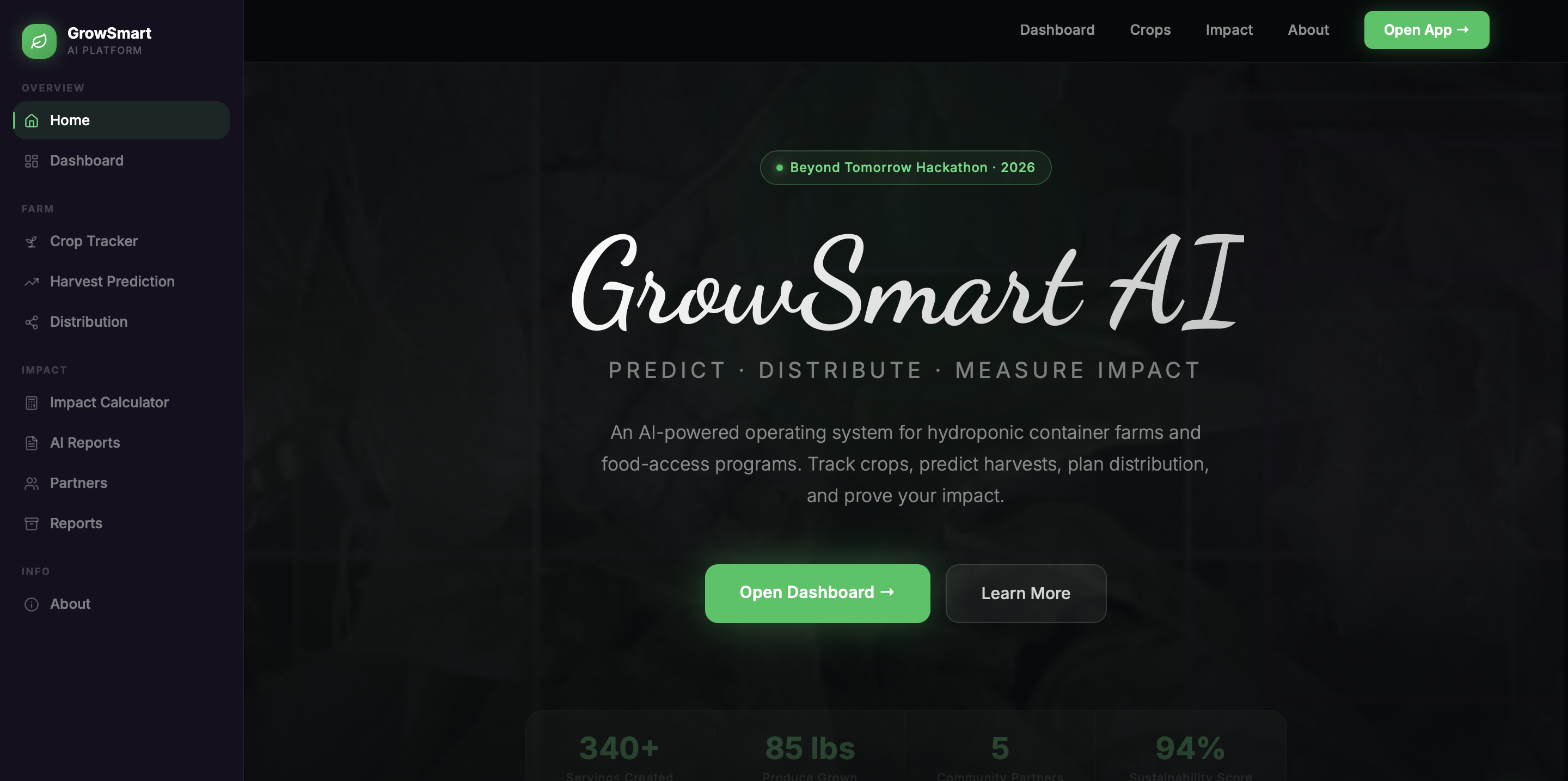
Photo 2: GrowSmart AI brand screen showing the app’s core focus: predict harvests, distribute produce, and measure impact.
-
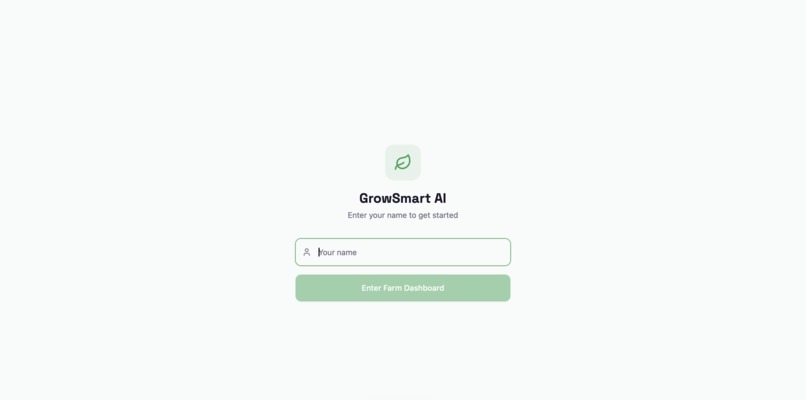
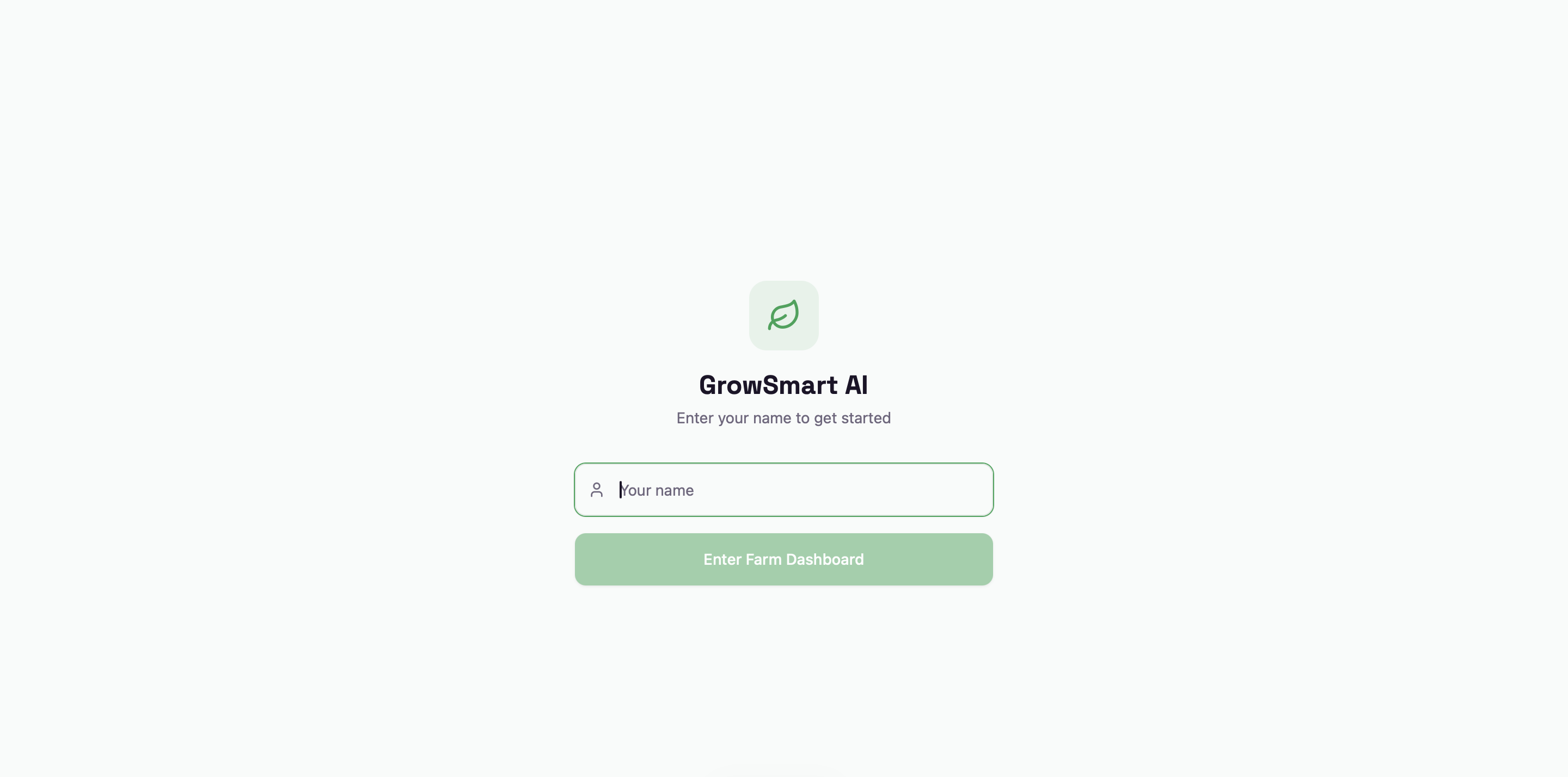
Photo 1: Users enter their name to access the GrowSmart AI farm dashboard and begin tracking crops and impact.
-
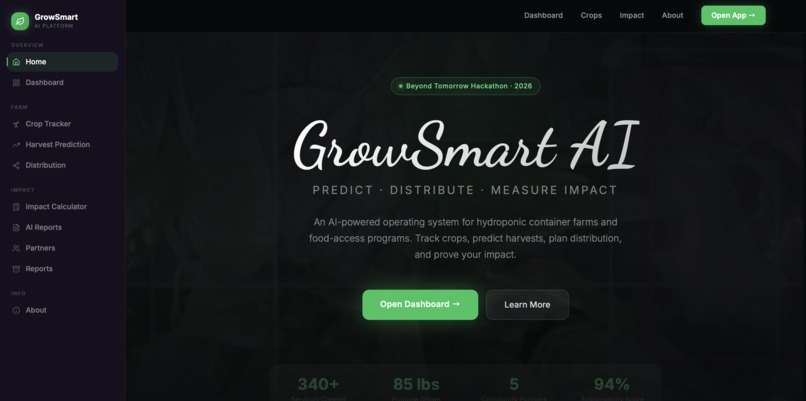
Home page
-
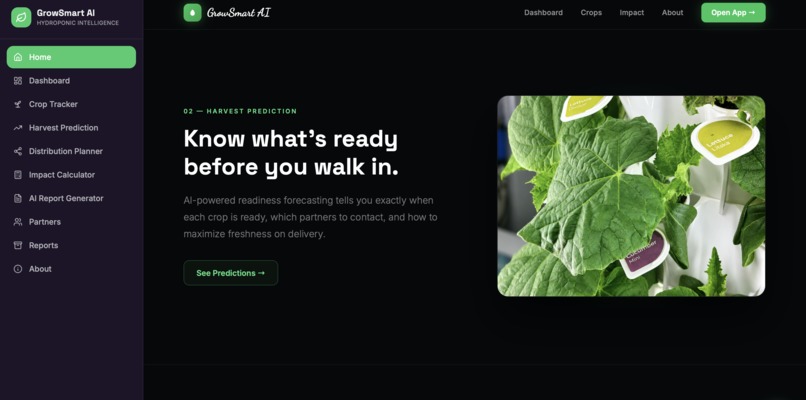
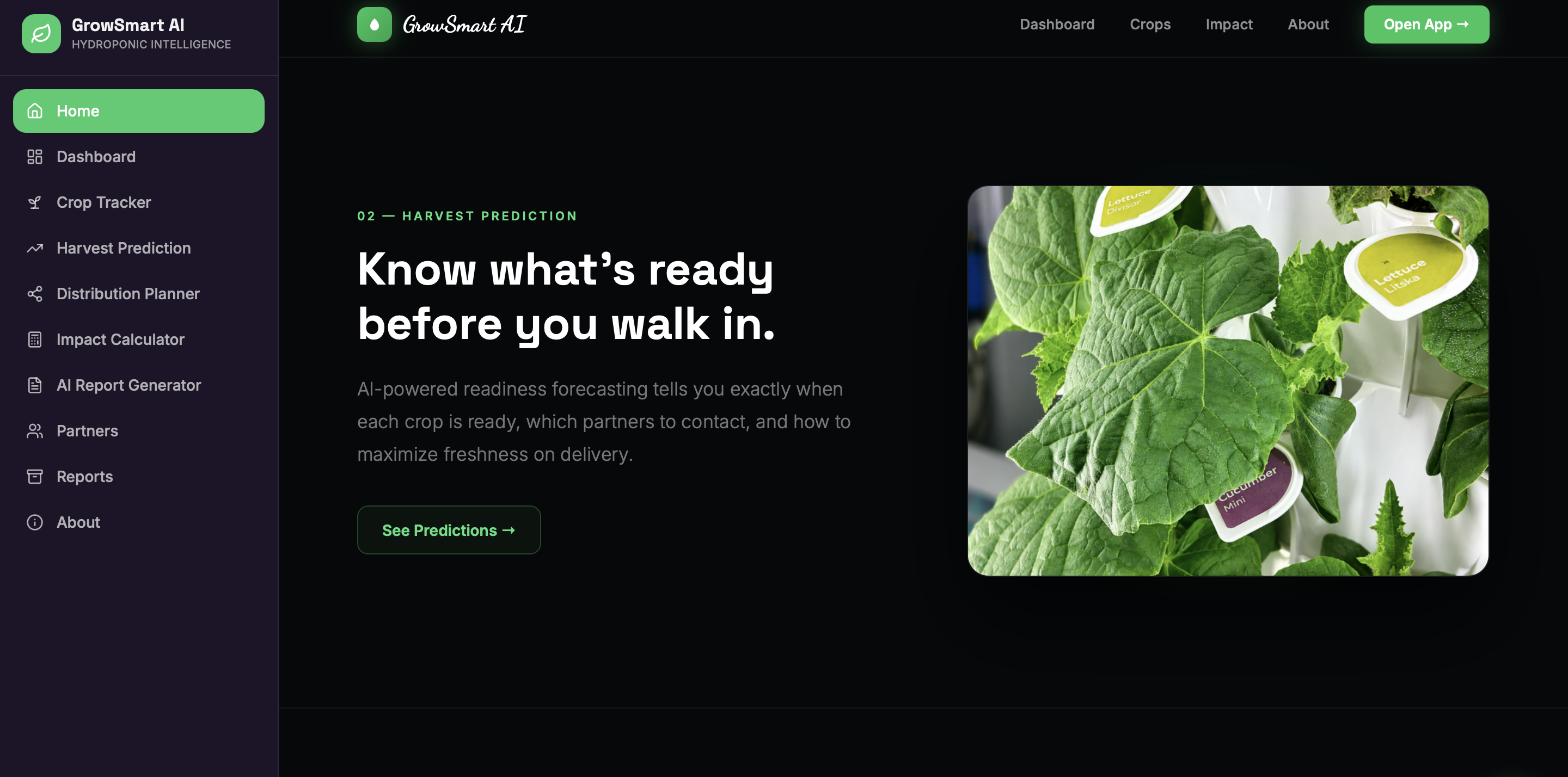
Home page showing how GrowSmart AI helps users predict crop readiness and plan fresh produce delivery.
-
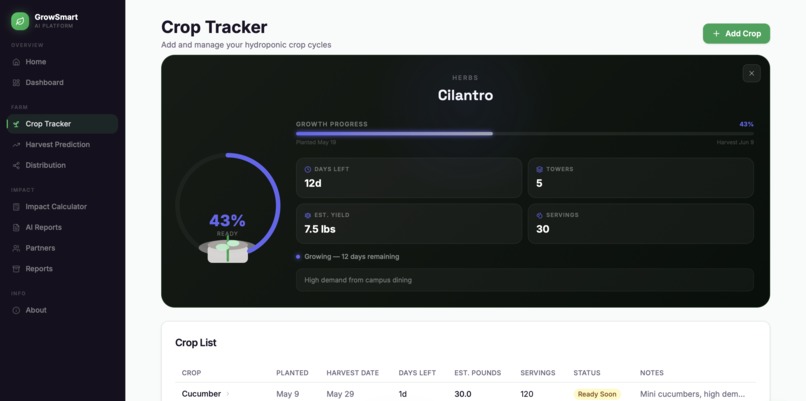
Crop Tracker
-
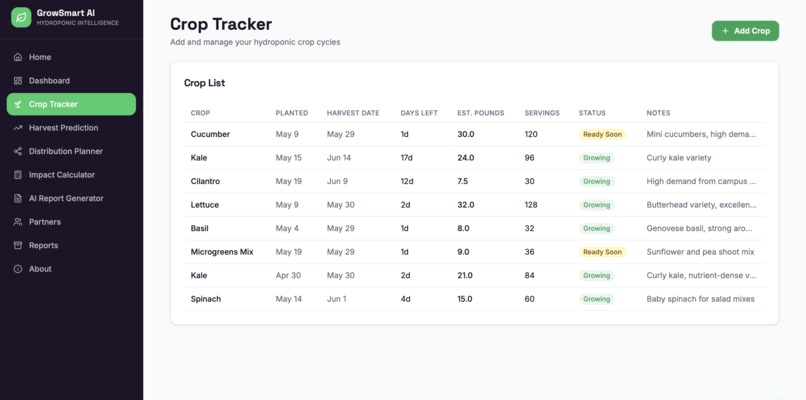
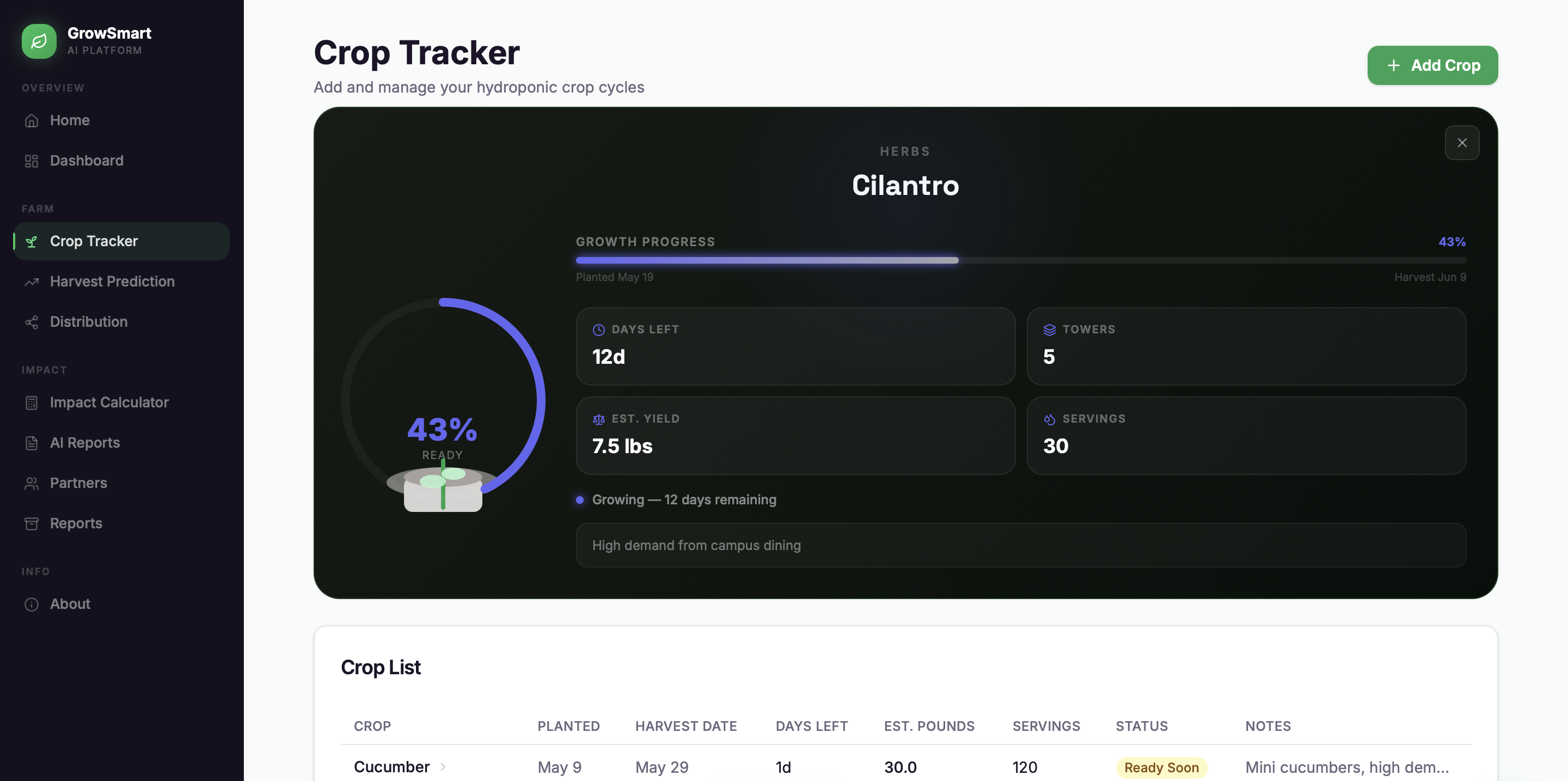
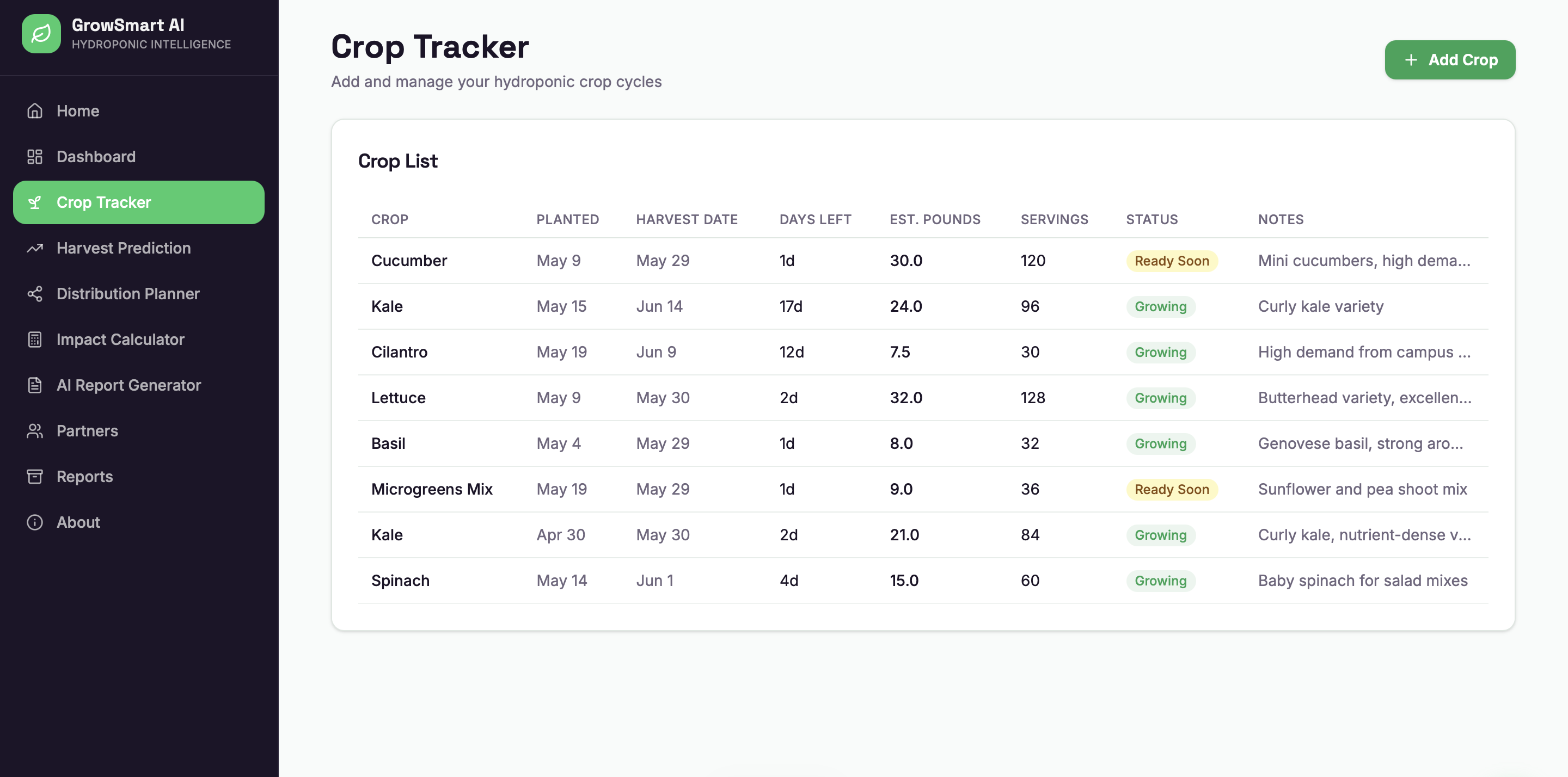
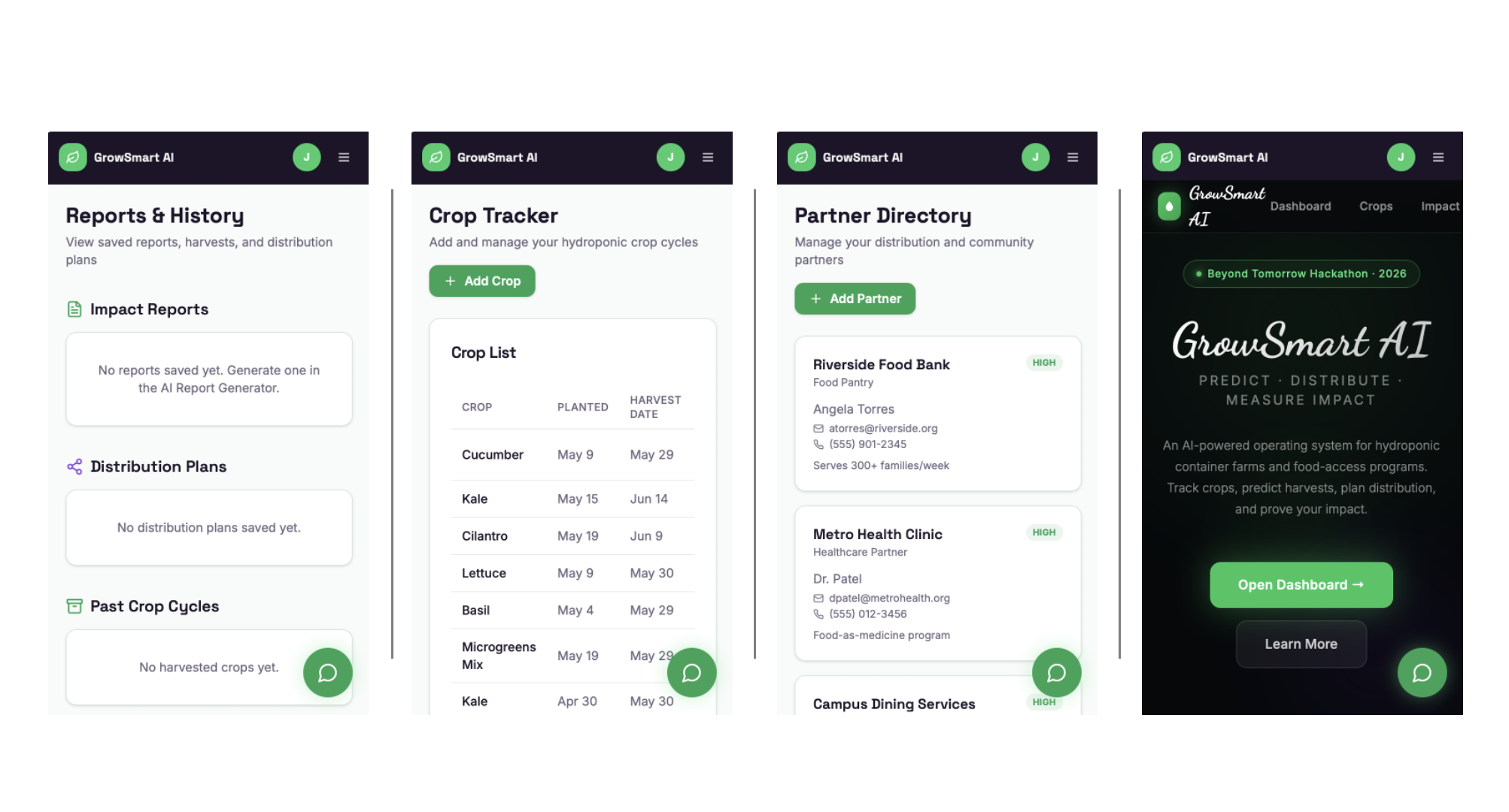
Crop Tracker page showing crops, planting dates, harvest dates, estimated pounds, servings, and growth status.
-
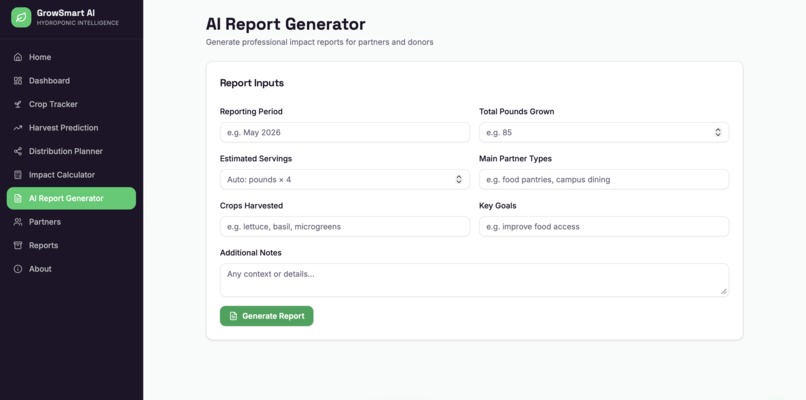
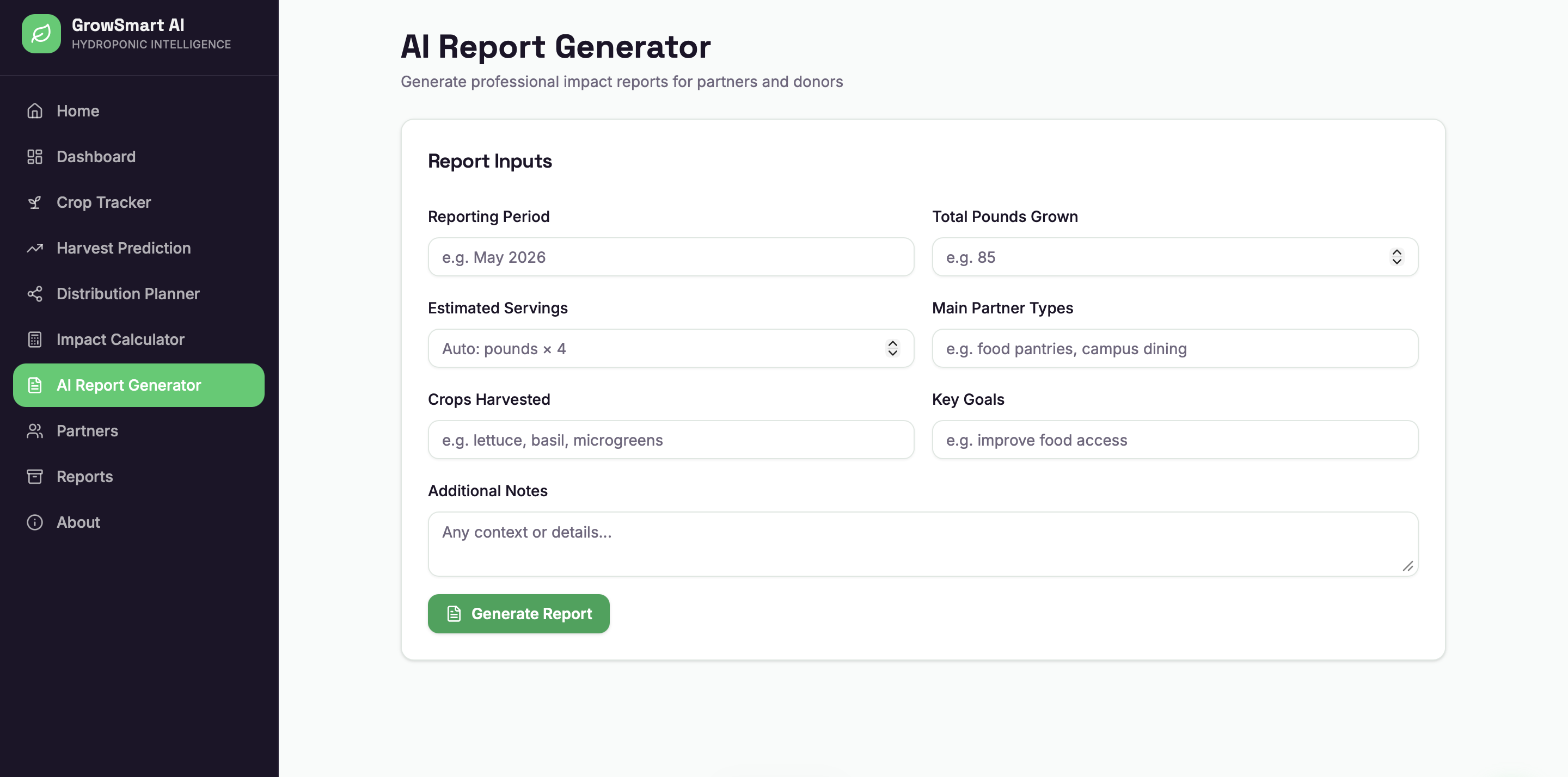
AI Report Generator where users enter harvest data to create professional impact reports for partners and donors.
-
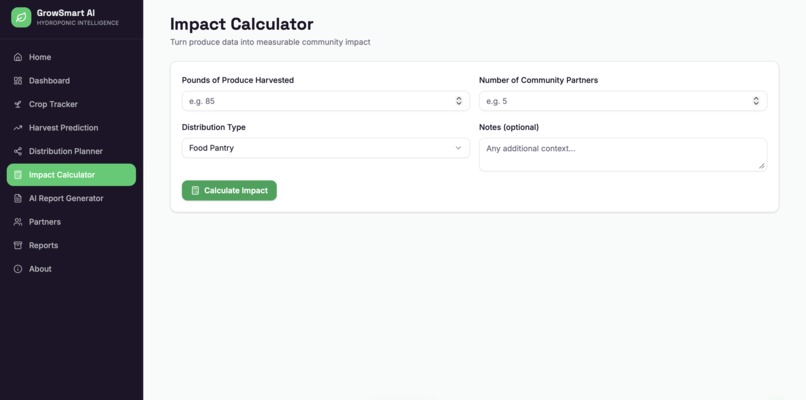
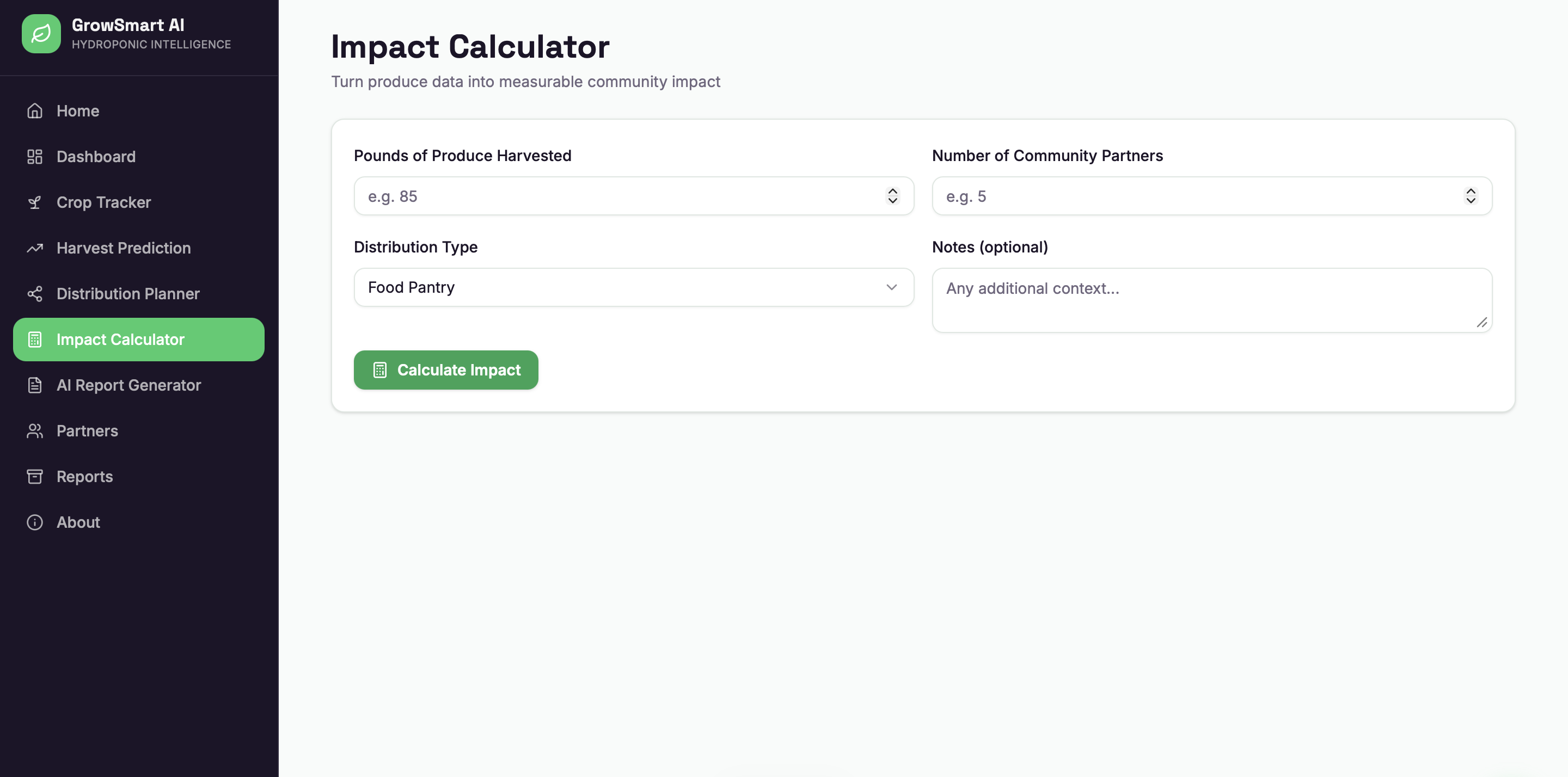
Impact Calculator page where users enter produce data to estimate servings, partner reach, and measurable community impact.
-
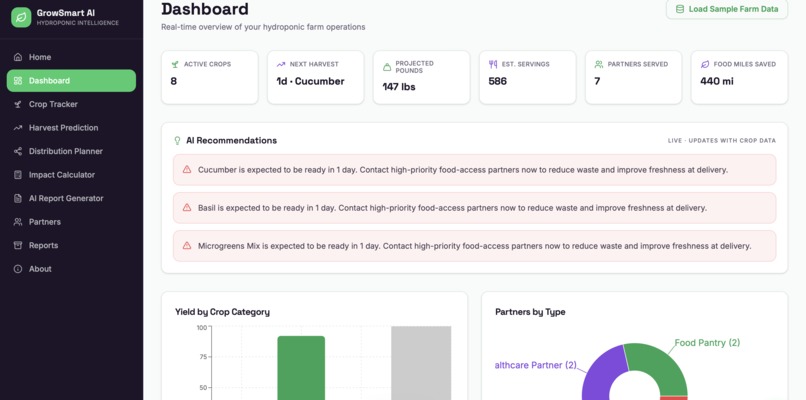
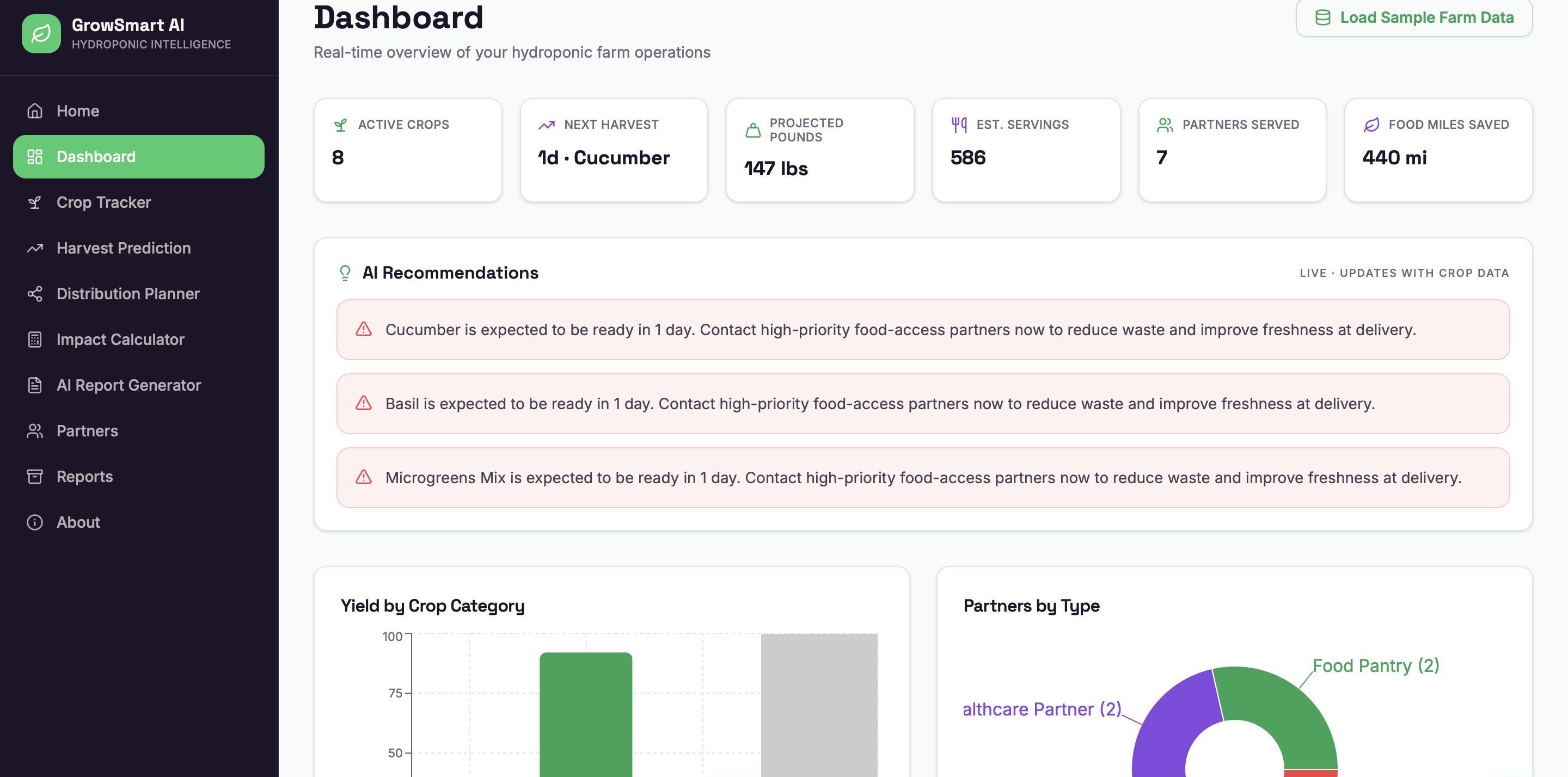
Dashboard showing active crops, next harvest, projected produce, servings, partners served, AI recommendations, and charts.
-
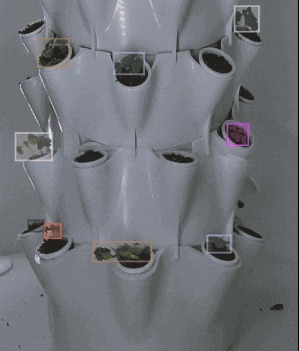 GIF
AI Tracker
-
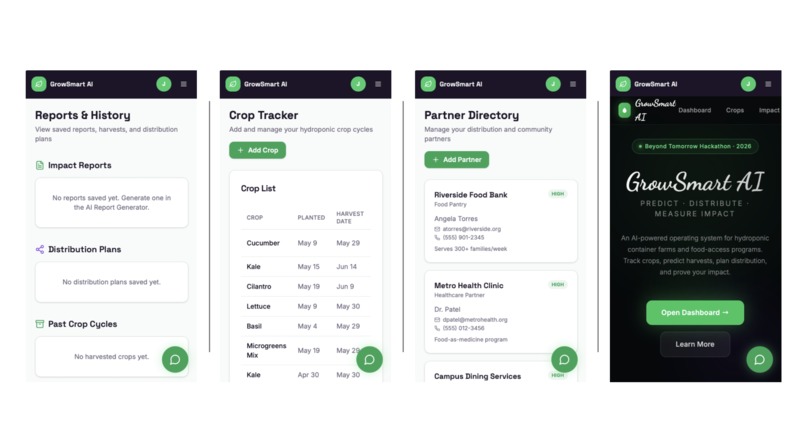
Phone app
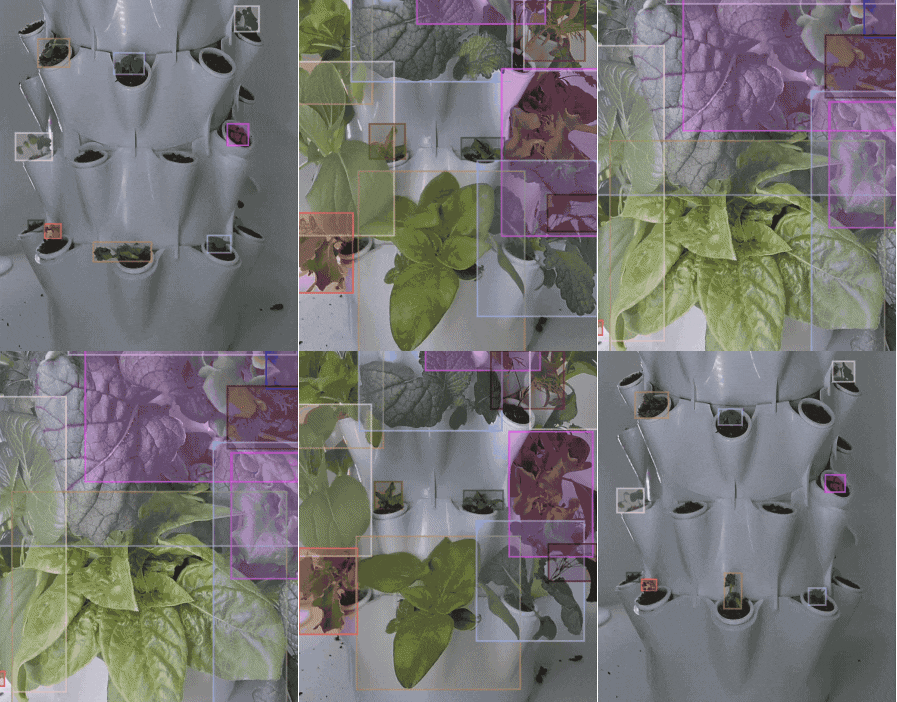
Inspiration
GrowSmart AI was inspired by the need for communities to improve access to fresh, nutritious food while building more sustainable local food systems. Hydroponic container farms can grow produce year-round, use space efficiently, and support food-access programs. However, many small farms, university programs, and community organizations still struggle to track crop cycles, predict harvests, plan distribution, and clearly communicate their impact.
The idea behind GrowSmart AI is to make hydroponic food-access programs easier to manage and easier to scale. Instead of treating farming, distribution, and reporting as separate tasks, the platform brings them together into one intelligent dashboard. The goal is to help teams move from simply growing produce to making data-informed decisions about where that food can create the greatest community benefit.
What it does
GrowSmart AI is a web-based dashboard that helps hydroponic farms and food-access programs track crops, predict harvests, plan produce distribution, and generate impact reports.
Users can enter crop information such as crop type, planting date, number of towers or trays, expected growth cycle, and estimated yield. Based on that information, the platform calculates expected harvest dates, estimated pounds of produce, and approximate servings.
The app also includes a distribution planner that recommends how produce could be allocated among food pantries, campus dining, healthcare partners, restaurants, or community organizations. One of the main features is the AI impact report generator, which turns crop and distribution data into a professional written report for donors, partners, community updates, or internal planning.
How we built it
GrowSmart AI was built as a web app prototype as the main development platform. The app was designed to function as a working MVP rather than only a concept or static website.
The project includes several connected sections: a dashboard for farm and impact metrics, a crop tracker for managing crop cycles, a harvest prediction system, a distribution planner, an impact calculator, and an AI report generator.
The prototype uses structured user inputs, simple prediction logic, and automated calculations. For example, estimated production is calculated using:
$$ \text{Estimated Total Pounds} = \text{Number of Towers or Trays} \times \text{Yield per Tower or Tray} $$
Servings are estimated using:
$$ \text{Estimated Servings} = \text{Estimated Pounds} \times 4 $$
These calculations allow the app to quickly turn basic crop data into useful planning information. The AI reporting feature then helps translate those numbers into clear, professional language that can be shared with stakeholders.
Challenges we ran into
One challenge was deciding how to make the project both realistic and achievable within a hackathon setting. Hydroponic farming can involve complex data such as sensor readings, environmental conditions, crop-specific growth rates, nutrient levels, and historical yield trends. Since this project is an MVP, we focused on the most important inputs: crop type, planting date, growth cycle, number of towers or trays, and estimated yield.
Another challenge was making the app more than just a dashboard. A basic dashboard can show numbers, but GrowSmart AI needed to demonstrate real decision-making value. To solve this, we added distribution planning and AI-generated impact reporting so the app could help users not only track food production but also communicate why that production matters.
We also had to balance simplicity with impact. The app needed to be easy enough for a farm manager, student team, or community organization to use while still being strong enough to show technical depth and future potential.
Accomplishments that we're proud of
We are proud that GrowSmart AI connects a real-world problem with a practical technology solution. The project does not only focus on growing food; it also focuses on the systems needed to manage, distribute, and measure the impact of that food.
We are also proud of building a prototype that combines multiple functions into one platform: crop tracking, harvest prediction, distribution planning, impact calculation, and AI-generated reporting. Each part supports the same goal: helping hydroponic food-access programs make better decisions and communicate their value more clearly.
Another accomplishment is that the app has strong future potential. It could be used by university programs, food pantries, healthcare partners, community farms, and sustainability teams that want to make fresh food production more organized and measurable.
What we learned
Building GrowSmart AI showed us how simple data can become powerful when it is organized around real-world decisions. A few basic inputs can help estimate harvest timing, food output, servings, and distribution plans.
We also learned that AI does not need to replace human decision-making to be useful. In this project, AI works best as a support tool that helps users summarize information, communicate impact, and make planning easier.
This project also highlighted the connection between technology, sustainability, and public health. Food-access programs are not only about growing food; they are about logistics, communication, measurement, and partnerships. A strong technical tool can help these programs become more efficient, transparent, and scalable.
What's next for GrowSmart AI
The next step for GrowSmart AI is to connect the platform with real crop and harvest data from hydroponic farms. Future versions could include real-time sensor integration, historical yield prediction, partner request forms, automated donor reports, and nutrition-based food-as-medicine recommendations.
The platform could also connect directly with hydroponic container systems to track environmental data such as temperature, humidity, water use, nutrient levels, and lighting schedules. Over time, machine learning could improve yield predictions by comparing expected harvests with actual results.
The long-term vision is for GrowSmart AI to become an operating system for hydroponic food-access programs, helping universities, food pantries, healthcare partners, and community farms grow fresh produce while measuring and communicating their impact.
Built With
- ai-assisted-app-generation
- automated-calculations
- data-visualization
- form-based-data-input
- javascript
- react
- tailwind-css
- web-dashboard
