-
-
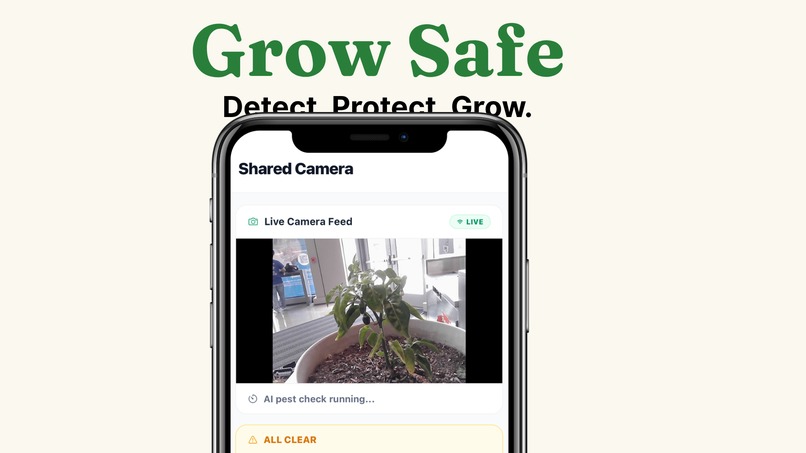
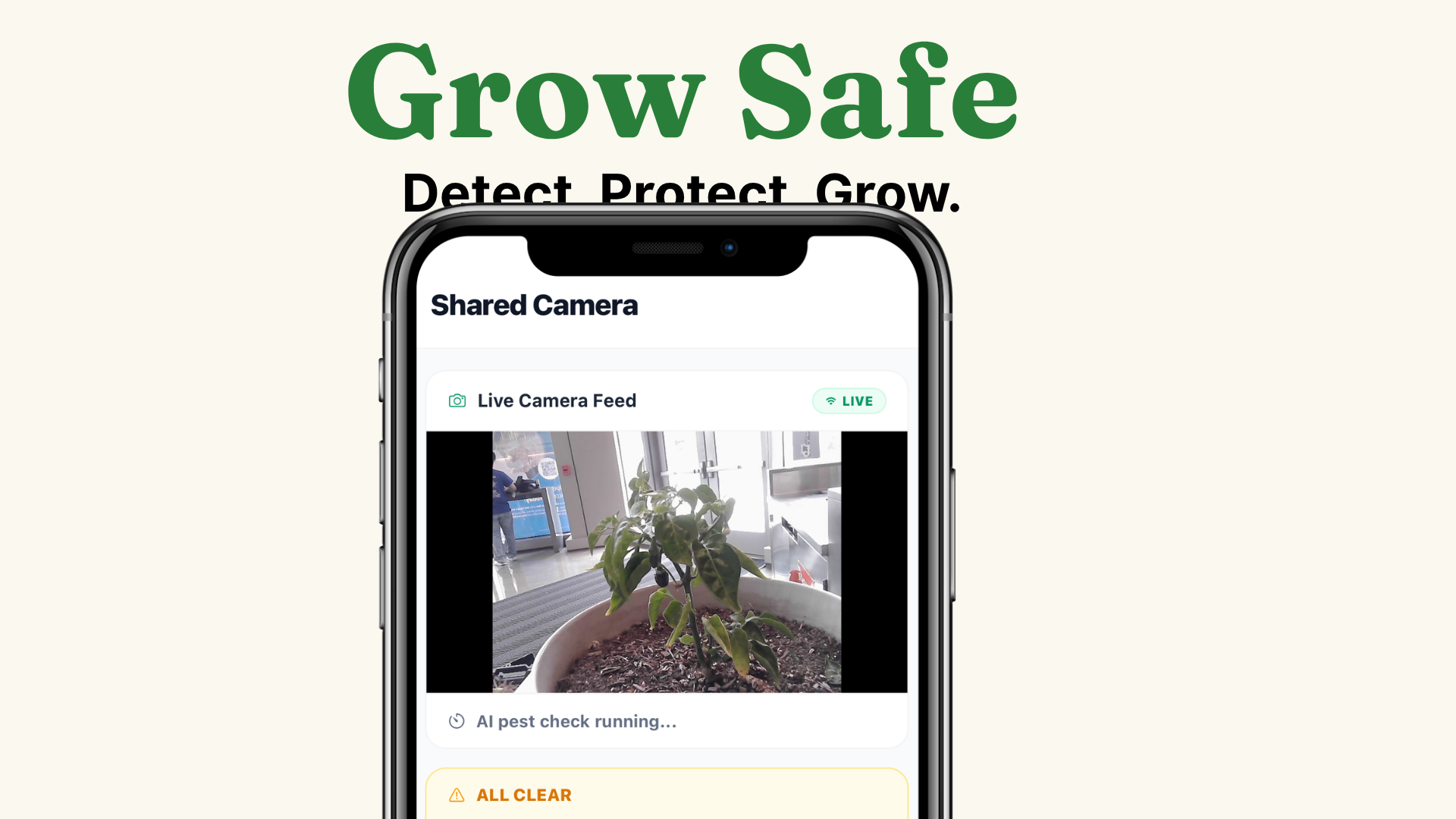
Preview
-
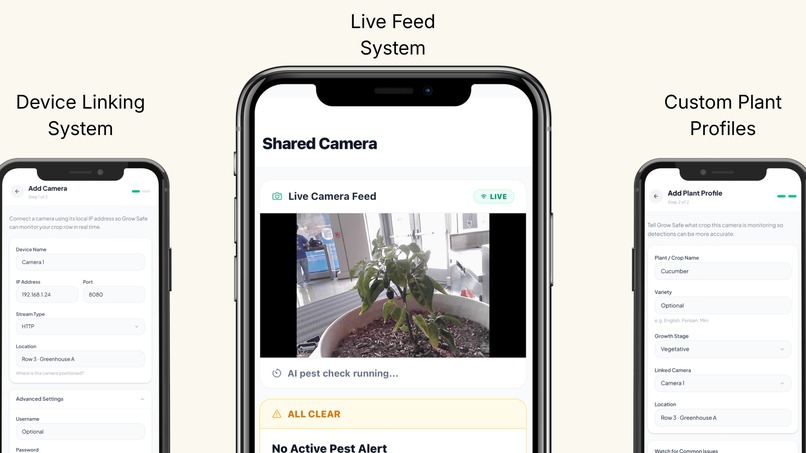
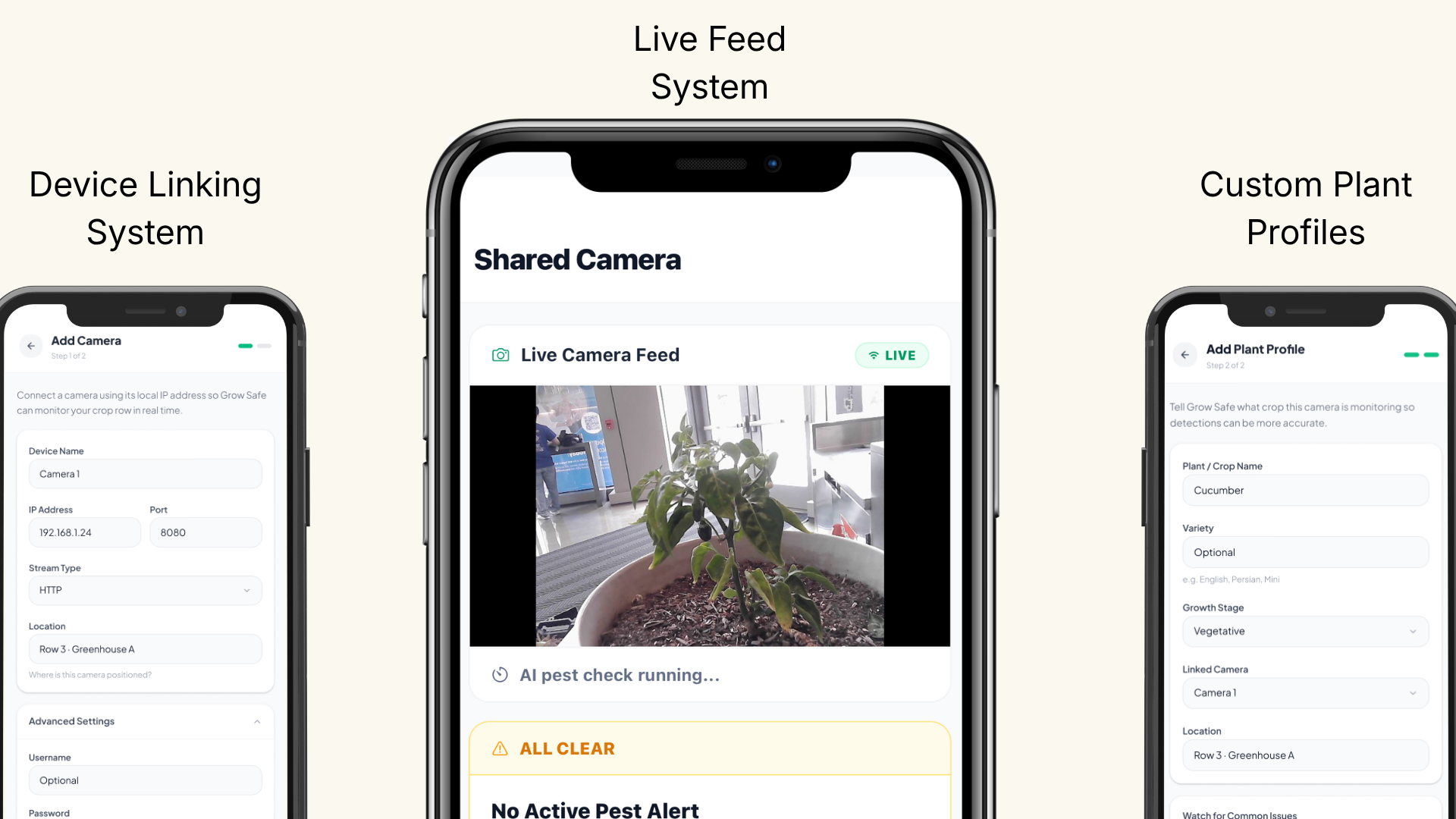
Some Cool Features
-
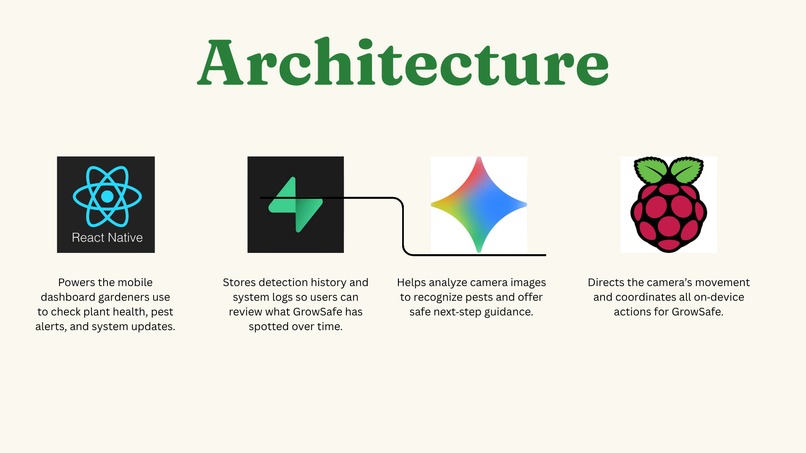
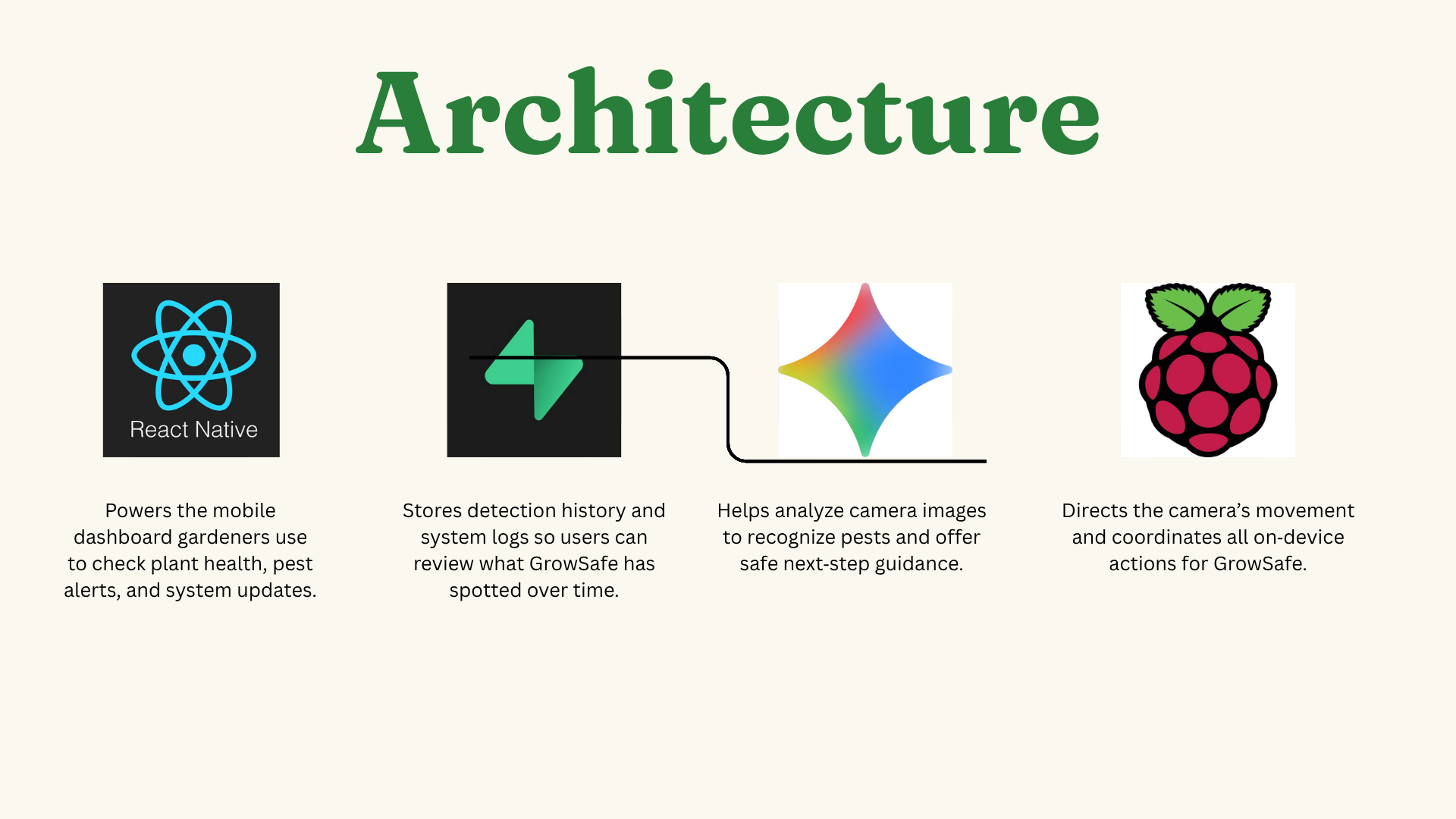
Architectures and platforms we used to build it
-
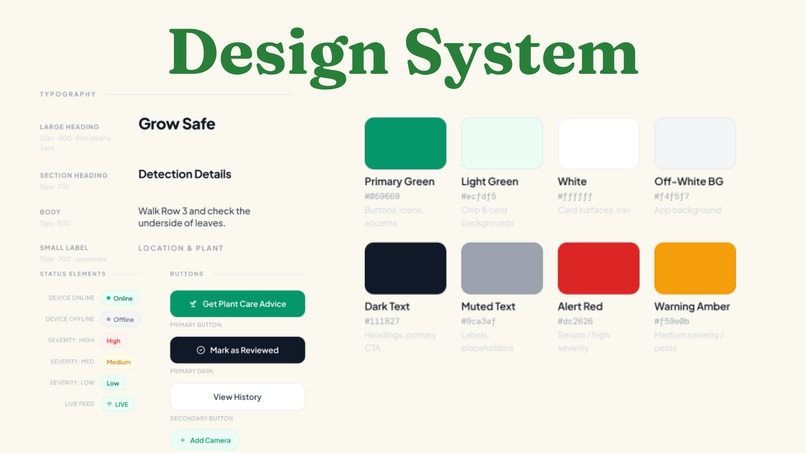
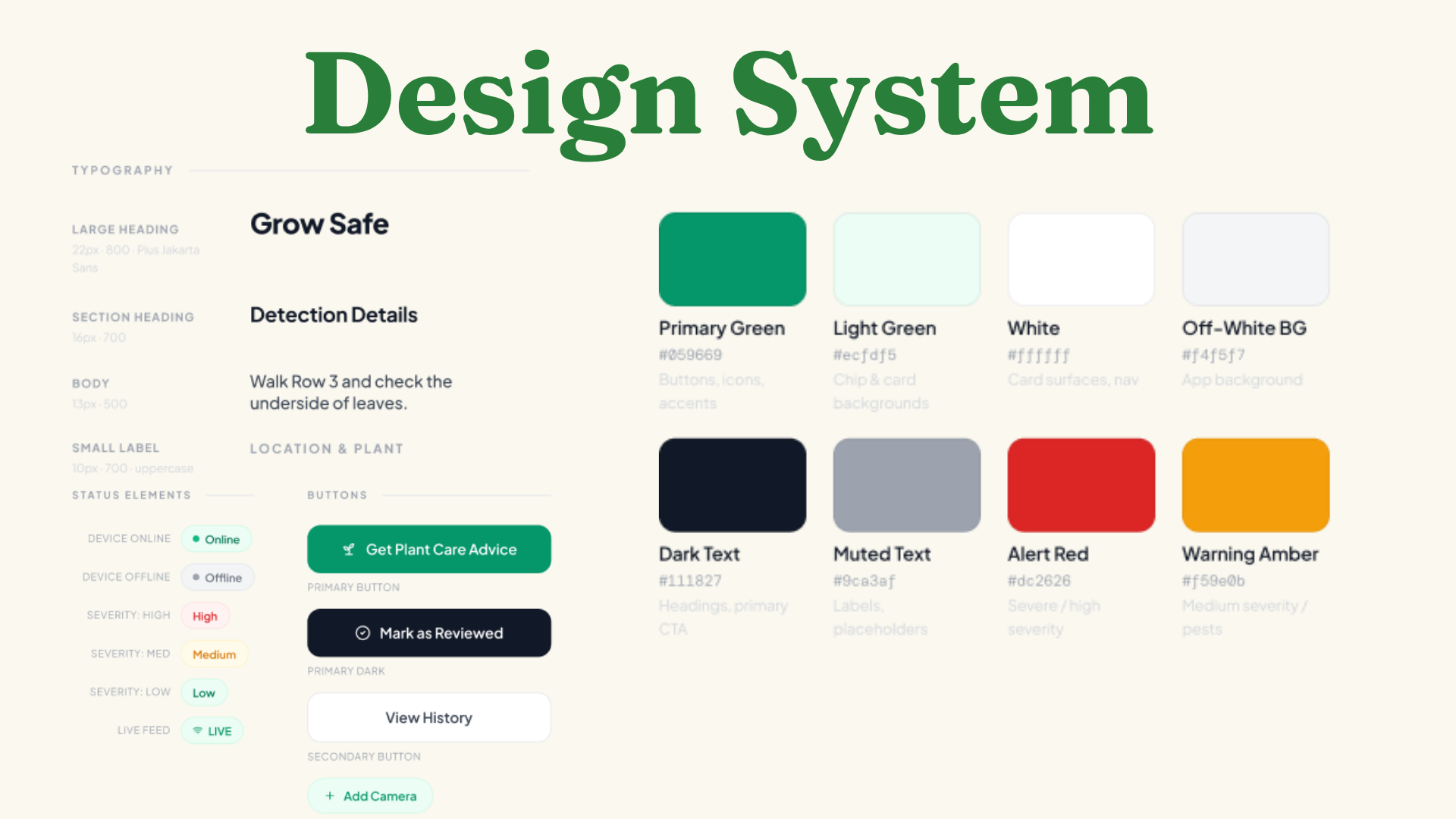
The design Components and color schemes we followed
🤔** Inspiration**
GrowSafe was inspired by our community and by the people who make agriculture possible. As Dolores Huerta said, “Honor the hands that harvest your crops.” Growing up around Watsonville and the Pajaro Valley, agriculture has always been part of our lives. It is more than an industry here; it supports families, creates jobs, feeds communities, and represents the hard work happening in fields every day.
We saw this firsthand when the Pajaro River flooded. Many agricultural workers in our community lost work or faced major reductions in income because the fields they depended on were suddenly inaccessible. That experience showed us how closely crop health, economic stability, and community well-being are connected. Today, the fields have mostly recovered, but the same question remains: how can we better protect the crops and workers that our communities rely on?
One major threat is pests and plant diseases. According to the Food and Agriculture Organization of the United Nations, up to 40% of global food crops are lost to plant pests annually, causing hundreds of billions of dollars in economic losses. For farmers, these losses are not just numbers. They can mean wasted labor, reduced income, higher costs, and fewer opportunities for the people who depend on agriculture.
That is why we built GrowSafe. Our goal is to give farmers an accessible way to monitor crops, detect potential pest or disease issues earlier, and respond before small problems become major losses. GrowSafe is our way of using technology to support the people who feed us and to give back to the agricultural communities that shaped us.
🪴What it does
GrowSafe is an AI-powered pest monitoring system that watches plants in real time. Using a webcam connected to a Raspberry Pi, GrowSafe monitors a plant, garden bed, or growing area for potential threats. When the AI detects a possible pest, such as insects, rodents, or other animals, it flags the issue and sends the information to the GrowSafe app. From there, users can view live activity, check recent detections, and respond before small pest problems turn into major crop damage.
How we built it
Mobile Application - Built with Expo, React Native, and the Supabase client, our mobile app gives gardeners an intuitive, easy-to-use dashboard. As soon as they open the app, they can quickly view the status of their plants, recent pest detections, and any actions GrowSafe has taken.
Raspberry Pi - Our system uses a Raspberry Pi 4B paired with a SparkFun Pi Servo HAT to generate PWM signals that control the servo motor and adjust the camera’s yaw. Housed in a protective case, the Raspberry Pi serves as the central controller for GrowSafe, processing detections, coordinating hardware responses
Backend - Supabase powers GrowSafe’s backend by securely storing pest-detection history, timestamps, and system activity for users to review over time. We also integrate Gemini Flash 2.0’s multimodal capabilities to help identify detected pests from camera images and provide tailored recommendations for safe, effective next steps.
😒Challenges we ran into
As innovators, we felt ourselves biting off more than we could chew. As a team, we wanted to include much more advanced hardware, but we do not have enough hardware or time to make every idea happen. Instead of letting that stop us, we focused on building a working prototype that still shows GrowSafe’s potential to grow into a more advanced, industrial-scale system.
Truth be told, most of our team consisted of first-time hackathon participants, so optimizing our time became an inevitable challenge we had to face. Luckily, we were able to make up for lost brainstorming time by separating work responsibilities and trusting each other to bring our individual parts of GrowSafe to life.
🏆Accomplishments that we're proud of
An accomplishment that we as a team felt most proud of was simply bringing our project to life. Although it was not as advanced as we had originally imagined, we are proud of what we created with the time and hardware we had. This experience has made us look forward to attending more hackathons and continuing to improve our ideas.
📖What we learned
We learned so much during this hackathon that it is practically impossible to list everything. However, one must try. Working together as a team, we learned how to 3D print structures and even use CAD to create parts that better fit our project. Hardware was a huge roadblock, but it is also something we have taken a step forward in. We are now much more comfortable working with Raspberry Pis, servo motors, and the other components that brought GrowSafe to life.
❓What's next for GrowSafe
Our next step is to make GrowSafe more accurate, scalable, and capable of protecting larger growing spaces.
First, we want to improve pest recognition by training our AI model on larger, pest-specific datasets, especially datasets focused on crops grown around Watsonville and the Pajaro Valley. This would help GrowSafe detect threats more reliably and make its alerts more useful for local growers.
We also want to expand GrowSafe beyond insect detection. Future versions could identify larger animals that damage crops, such as birds, rabbits, squirrels, or deer, and activate safe, species-appropriate deterrent systems. These deterrents could include animal-specific sounds, warning noises, predator calls, lights, motion-based devices, or targeted water sprays designed to discourage pests without harming them.
On the hardware side, we plan to improve nighttime monitoring, weather resistance, camera rotation, and overall durability.
Eventually, we would like to make GrowSafe mobile so it can survey larger crop areas more efficiently. A moving camera system, whether mounted on a rail, rover, or other mobile platform, could help growers monitor more plants with fewer devices and respond to threats before they spread.


Log in or sign up for Devpost to join the conversation.