-
Group 16 - Growing Roots
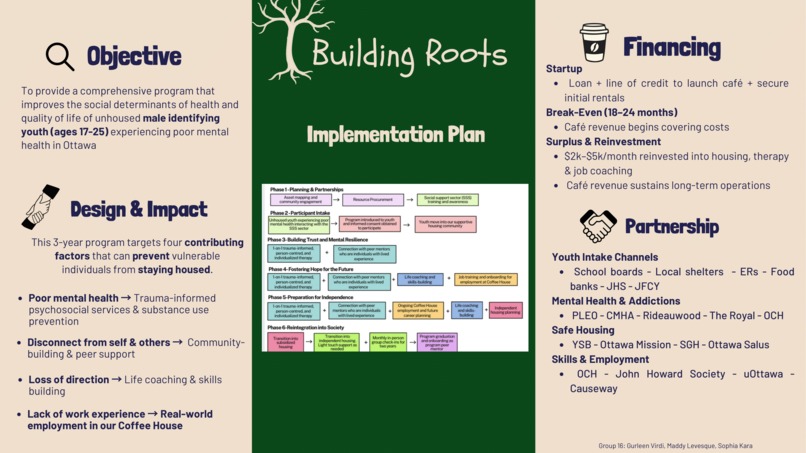
Design: This 3-year program aims to provide safe housing, trauma-informed mental health services, and employment opportunities to our target population. Offering these three essential resources simultaneously will enhance their psychosocial well-being, foster a sense of community, and equip them with the work experience needed for independence and self-sufficiency. First, youth engaging with the social support sector will be screened for program eligibility and will give informed consent to participate. Next, the cohort will move into fully funded, operational apartments. The initial two weeks will focus on increasing their understanding of the program, building community among participants, and developing trust in the program staff. After this period, if ready, youth will commence trauma-informed, person-centred therapy with a licensed mental health professional. During therapy, they will continue participating in community-building workshops and have opportunities to rest, relax, and reset their nervous system (e.g., reading, playing with therapy dogs, practising yoga, eating healthy food). As they progress in therapy, they will start life coaching and employment skills workshops. These will teach essential customer service, problem-solving, and teamwork skills necessary for success in roles such as our café employee. Subsequently, the youth will undergo job training and onboarding for work at the café. Over the following months, they will work and save money, continue therapy (including advanced mental healthcare if needed), and advance through the program’s curriculum of life coaching and skills development. Once ready, at around four months, they will work with their mentor to begin transition planning into subsidized housing. At month six, they will move into subsidized housing (partially funded by us and partially by themselves). Between months 12 and 15, they will transition into fully independent housing with support to find a suitable home. They will continue employment at our café or perhaps secure a more advanced position. Until the three-year mark, they will participate in monthly, in-person dinner check-ins, sharing progress with their cohort and program staff. After completing three years, they will graduate, receive a certificate endorsed by uOttawa, and serve as peer-mentors for new cohorts. It is anticipated that revenue from the café will fully fund the program, ensuring long-term sustainability. Once bank loans are repaid, all income will be reinvested into the program. Ongoing, the staff will develop community partnerships to assist youth in securing employment after graduation or pursuing further education aligned with their career goals. All plans will be co-created with youth and regularly adapted to meet their needs. This person-centred approach provides space for mental health care, self-acceptance, and trauma processing. When youth are mentally prepared, they are better positioned to gain valuable employment and skills-building experiences that help launch their future careers.
Potential Impact: Improving mental health, decreasing the number of unhoused youth in Ottawa, and preventing substance youth. Addressing the root cause of housing insecurity (poor mental health) and simultaneously providing the pathway needed to overcome an unstable living situation (i.e., life skills, employment) will decrease the number of youth who are unhoused and increase the likelihood that their mental health will remain at a place they can manage, thereby allowing them to thrive in the employment we provide them, eventually allowing them to become independent, and mentor the newer cohort of youth.
Built With
- canva
- pubmed

Log in or sign up for Devpost to join the conversation.