-
-
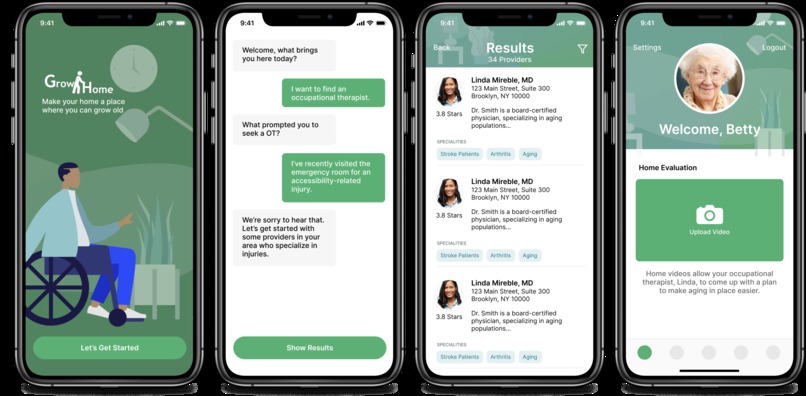
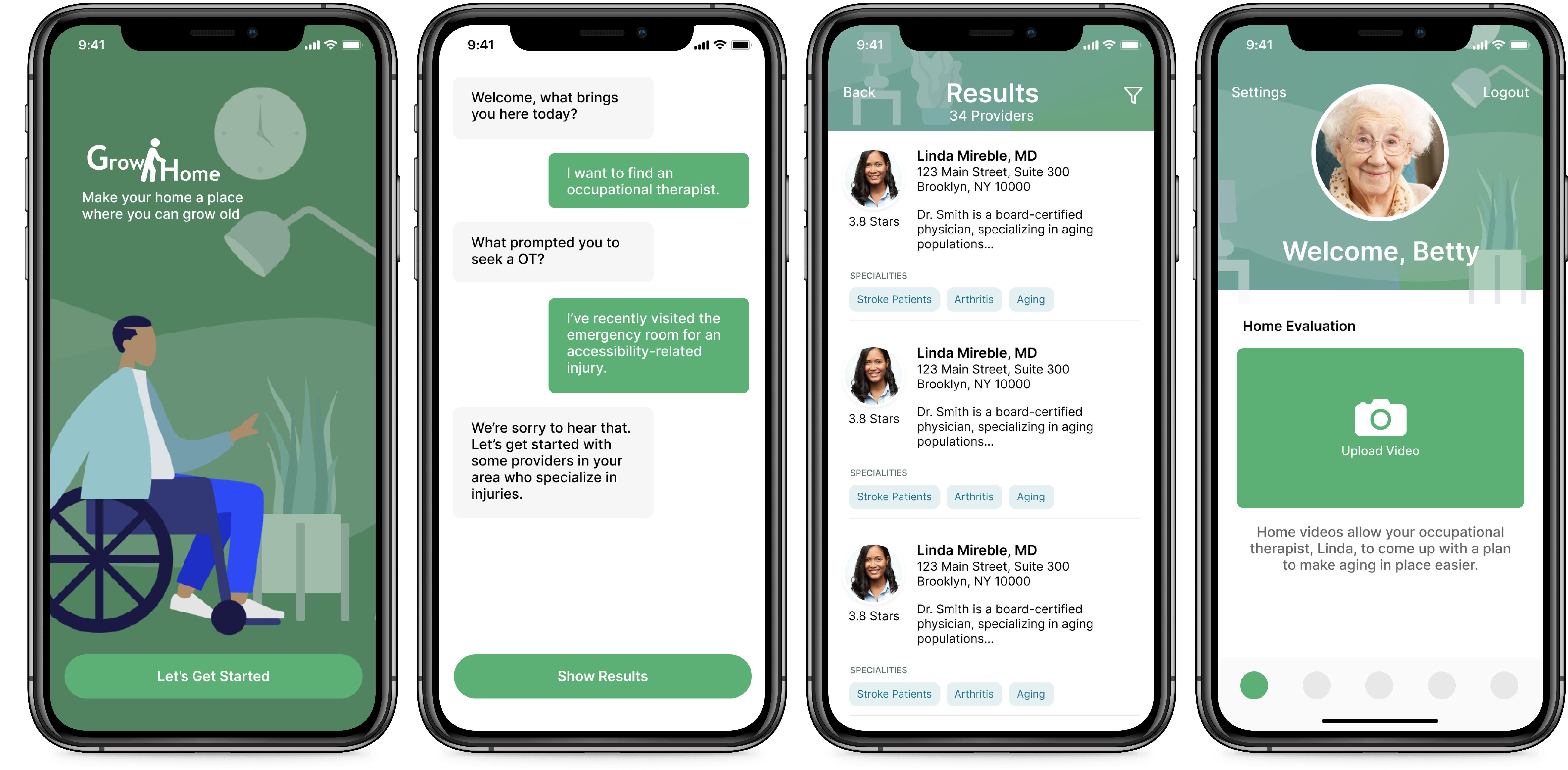
Get matched with an occupational therapist and use GrowHome to facilitate communication & other care needs, such as a home evaluation.
-
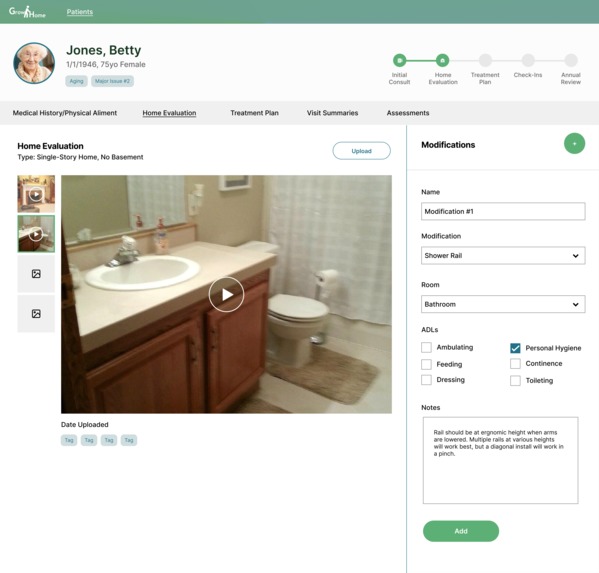
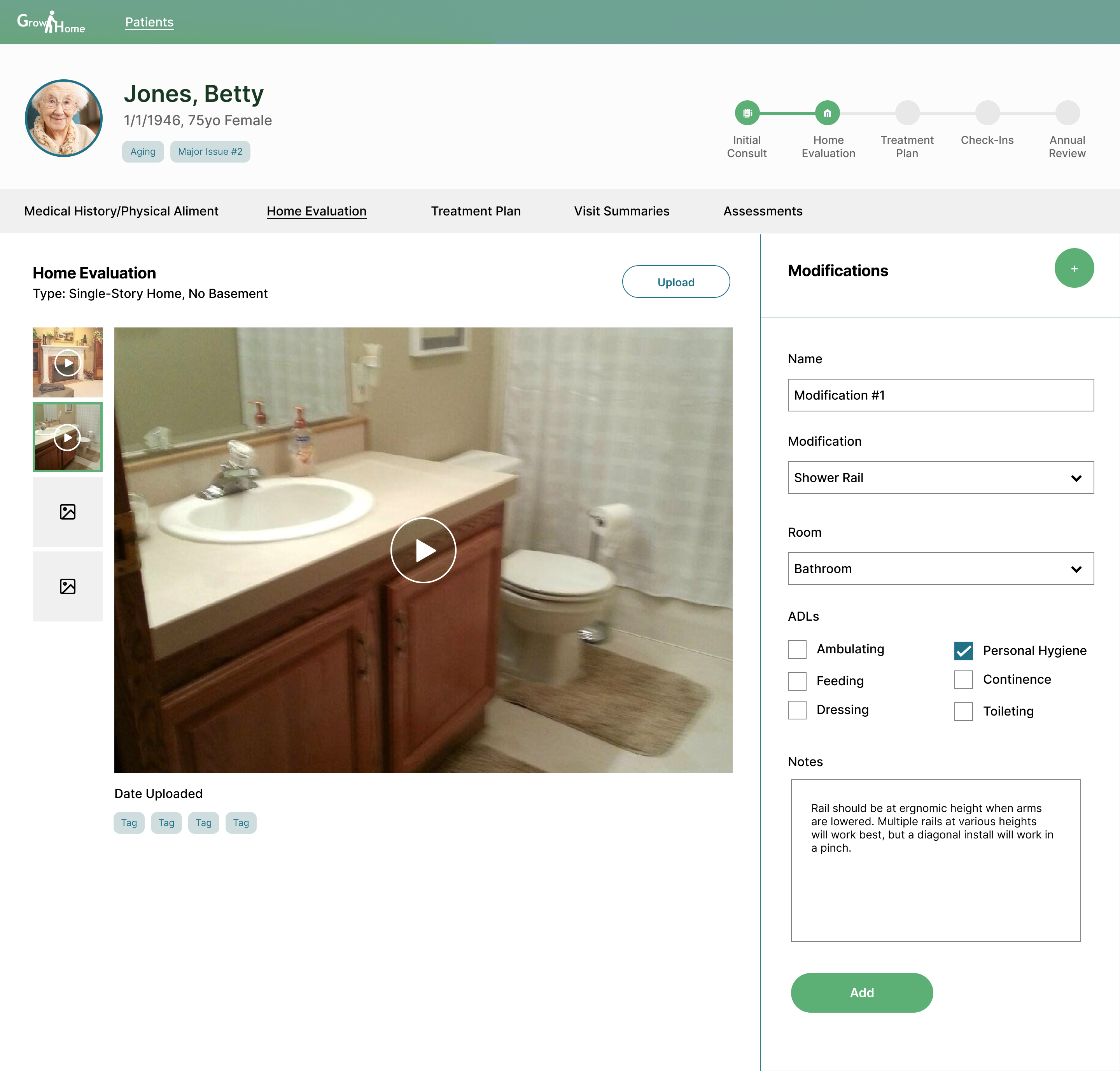
Providers can analyze footage and make recommendations.
-
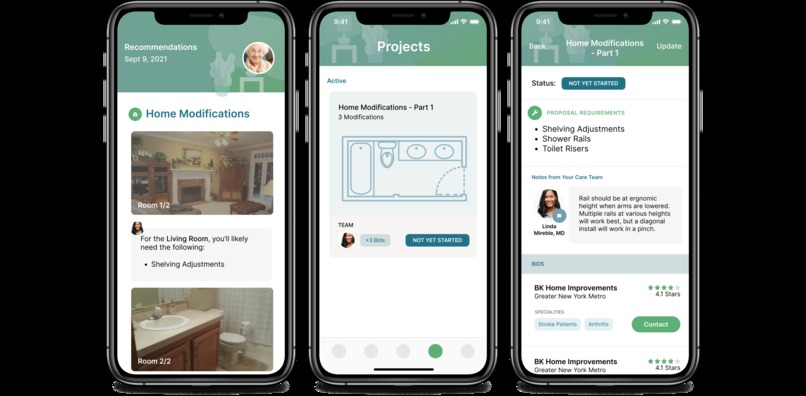
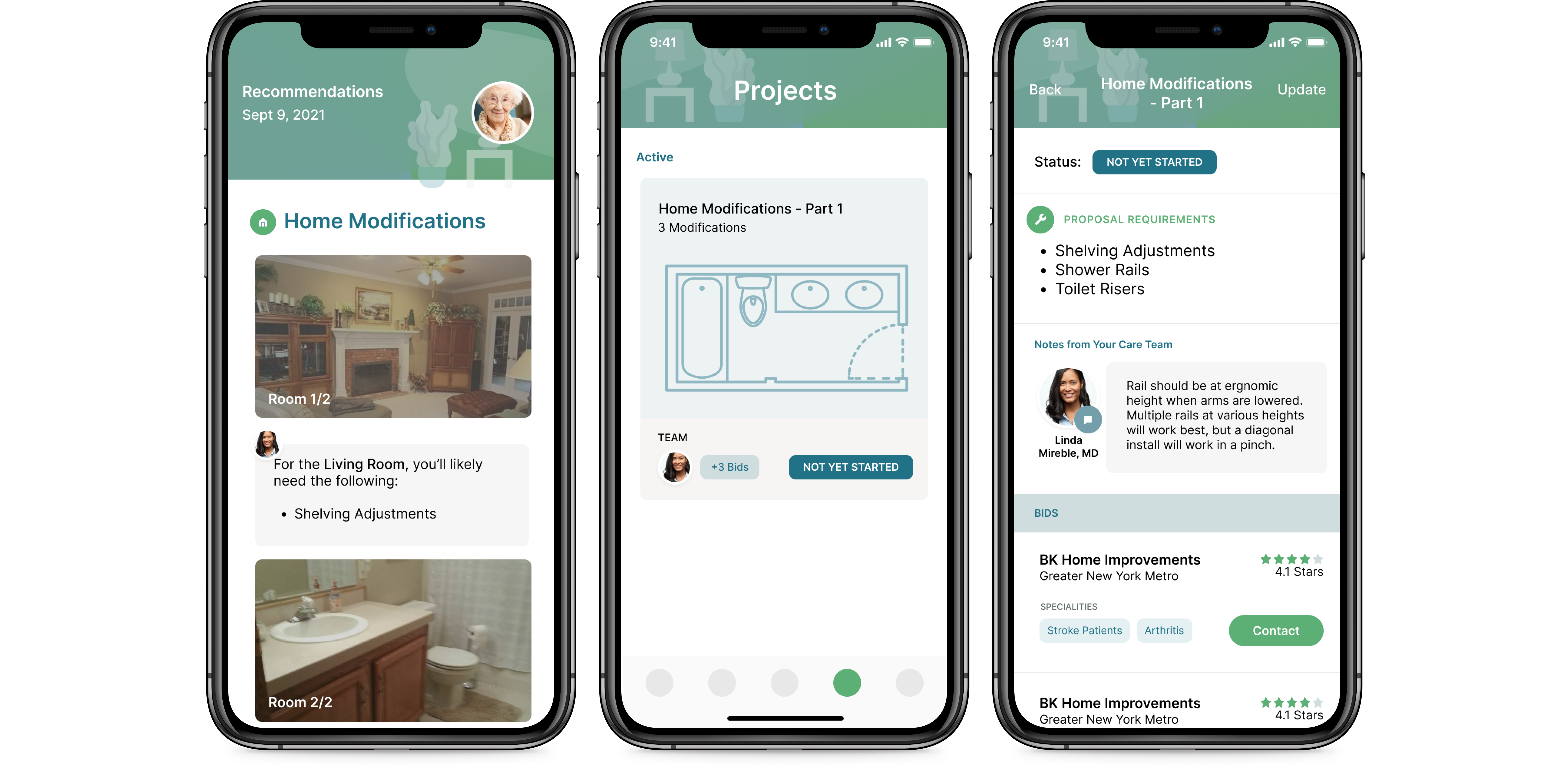
Once recommendations are entered, use GrowHome to keep patients, care teams, and contractors all aligned on the modification requirements.
-
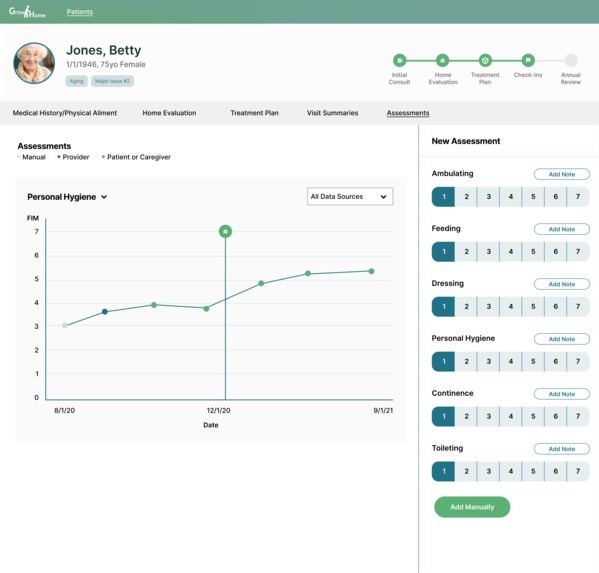
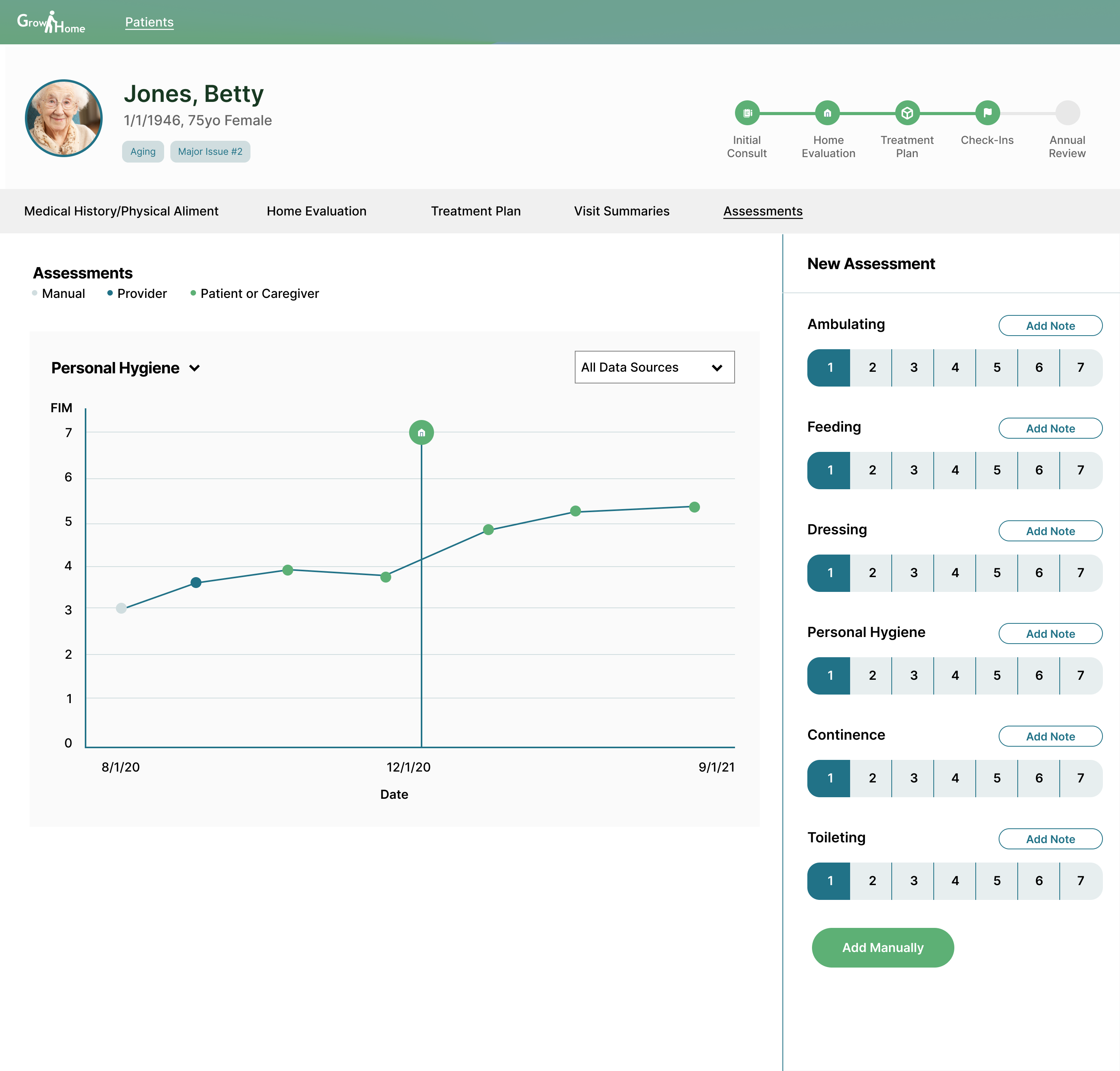
The app can also gather data that is used to standardize the effectiveness of the modifications.
Inspiration
21 million Americans have limitations in their activities of daily living (CDC). Despite these restrictions, older Americans prefer to age in place, rather than uprooting their lives and moving to long-term care facilities (AARP). We created GrowHome to facilitate the implementation of thoughtful patient-centered home modifications. We referenced the CHRONIC Act in MA, the CAPABLE program in Baltimore, and the Bipartisan Policy Center to design this solution. Based on our market research, we’re the only platform of our kind.
What it does
GrowHome is a patient-centered platform that empowers older adults to live independently. Patients and caregivers can establish care with an occupational therapist (OT) after answering a few quick questions online or over the phone. Based on the patient’s preference, they can upload a video of their living arrangements to GrowHome or organize an in-person meeting with their OT. During the meeting, they discuss the patient’s concerns and work together to generate a treatment plan, including home modification solutions. After the patient chooses the modifications that will help them most, the OT, the patient, and their caregiver can use GrowHome to identify certified contractors to implement their vision. The occupational therapist monitors the patient’s quality of life before, during, and after the home modification to ensure that the solutions are effective. Finally, financial liaisons work with patients to apply for loans and grants that will help offset the cost of the equipment installed. Contractors are excited to use GrowHome because they can secure stable purposeful contracts on their own schedule. Occupational therapists use GrowHome to coordinate better care for their patients, establish care with patients they wouldn’t otherwise see, and conveniently monitor their patient population’s health outcomes. Financial liaisons use GrowHome’s financial library and its data repository to help patients submit paperwork for reimbursement.
How we built it
Our team used Figma to generate workflows for each persona (patient, healthcare provider/OT, contractor, and liaison). We also used Figma to develop a high fidelity prototype of the mobile and web applications. Figma is mostly geared towards designers, but it’s based on a framework of HTML5 and CSS/Sass The matching process aims to use patient-friendly language, in line with GrowHome’s commitment to accessibility. On the backend, patients’ self-identified concerns will be translated into ICD10-compliant codes, using conservative business logic where applicable. For the assessment portion of the application, we reference WHO’s quality of life questionnaires and industry-standard activities of daily life (ADLs). The assessment levels are also based on the Functional Independence Measurement (FIM) scale, a universally validated scale which quantifies levels of independent living. The backend for this application is intended to be compliant with data interoperability standards for medical and billing applications. Our landing page is built upon a React and Node.JS framework—a standard web framework for modern SaaS (software as an application) products.
Challenges we ran into
Older patients have a varying degree of comfort with online platforms and applications. We wanted to be intentional with product accessibility, so we decided to give patients the opportunity to complete the intake process virtually or coordinate in-person services over the phone. Since this is a fairly new area, we struggled to finalize our marketing strategy. Based on conversations with geriatricians and occupational therapists, we decided that the best way to market this product was through direct mailers, targeted social media campaigns, and referrals through healthcare providers.
Accomplishments that we're proud of
We’re proud of finding a unique way to advocate for older adults while addressing a serious public health crisis (chronic conditions associated with aging). We’re also proud of our commitment to patient-centered care and the evidence-based nature of this program.
What we learned
We understood that aging in place was a common problem but we didn’t understand the breadth of the issue until developing this idea. We learned more about government programs supporting this work, funding available for durable medical equipment, insurance requirements for home modifications, and certified aging in place specialists.
What's next for GrowHome
We’d like to work with JHU’s hexcite program to accelerate development and implementation of our idea. GrowHome is currently focusing on older adult populations who struggle with activities of daily life. We plan to expand our services to support anyone with disabilities in the future. We would also like to work with a wider range of healthcare providers, add financing options for uninsured patients, expand the type of remodifications available, and work with legislators on including home modification subsidies in federal healthcare plans.
Built With
- digitalocean
- figma
- node.js
- pexels
- react


Log in or sign up for Devpost to join the conversation.