-
-
Journey 1
-
Journey 2
-
Journey 3
-
Journey 4
Inspiration
I had already built a farming game in Meta Horizon, and I kept wanting a lighter, lower-pressure version of it, something you can dip into for a couple of minutes and let tick along on its own. That pointed me at the idle genre. From there I wanted a theme that could keep growing without ever running out of room to expand, and trains and rails fit perfectly: you can always lay more track, add another loop, or climb to another level. Grow A Train Farm came out of putting those two ideas together.
What it does
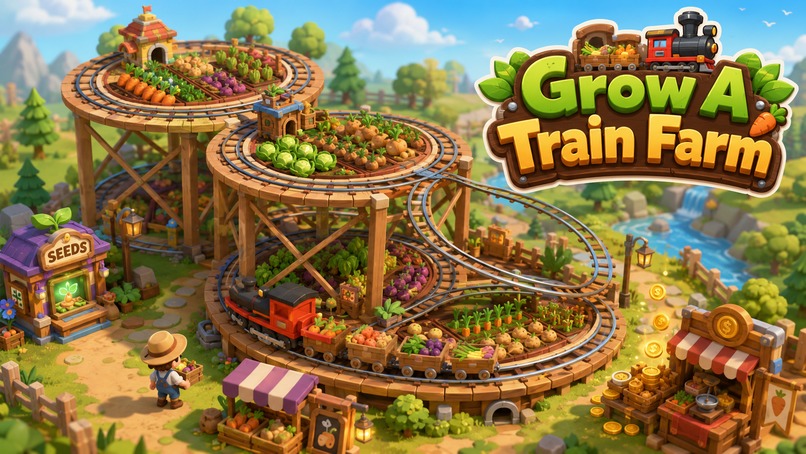
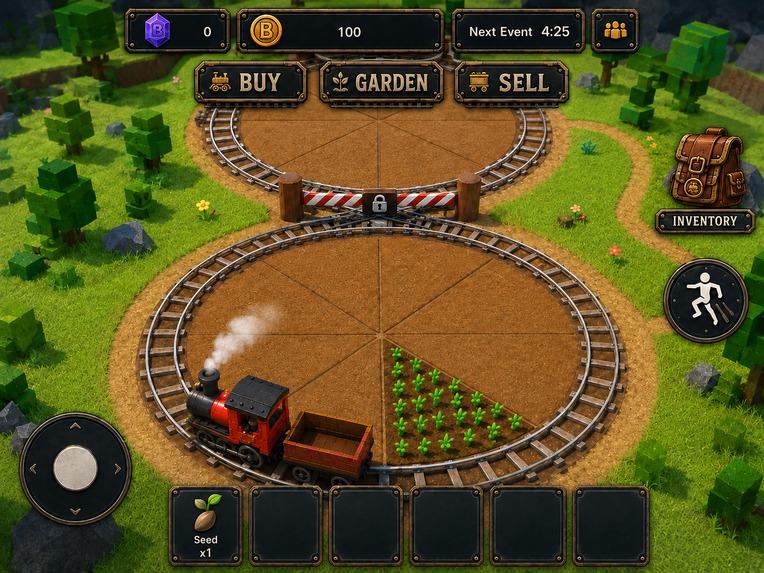
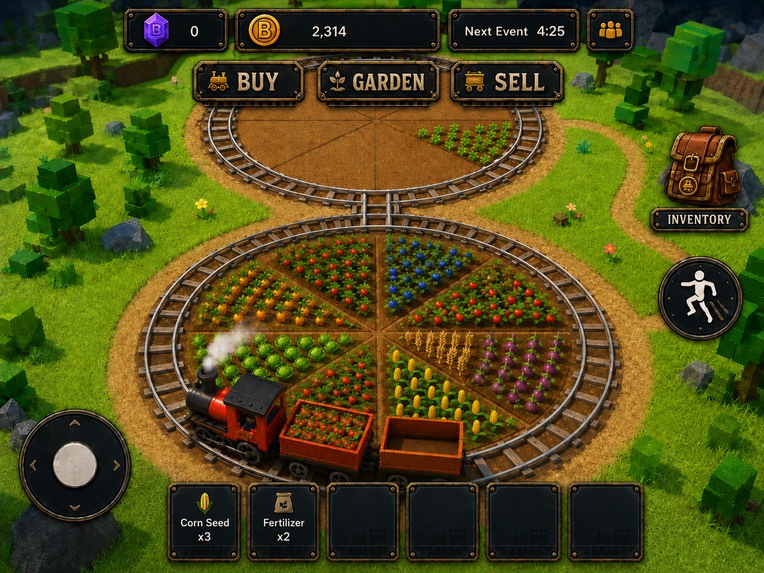
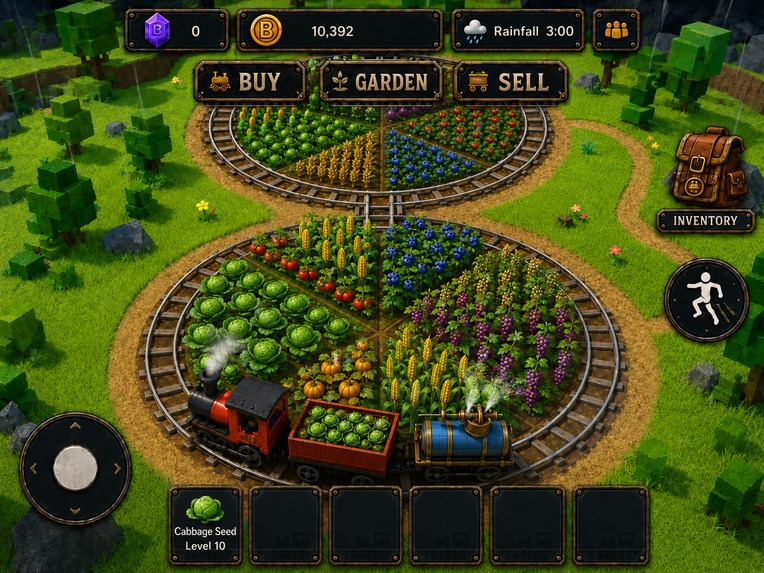
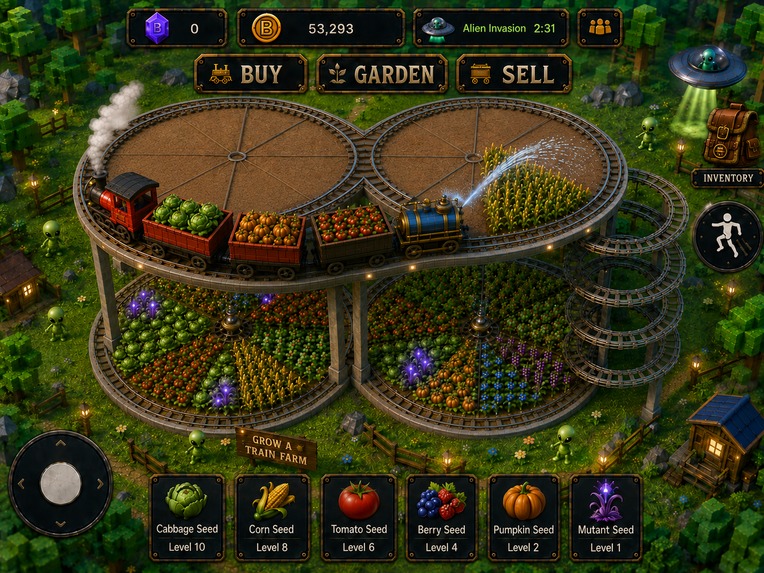
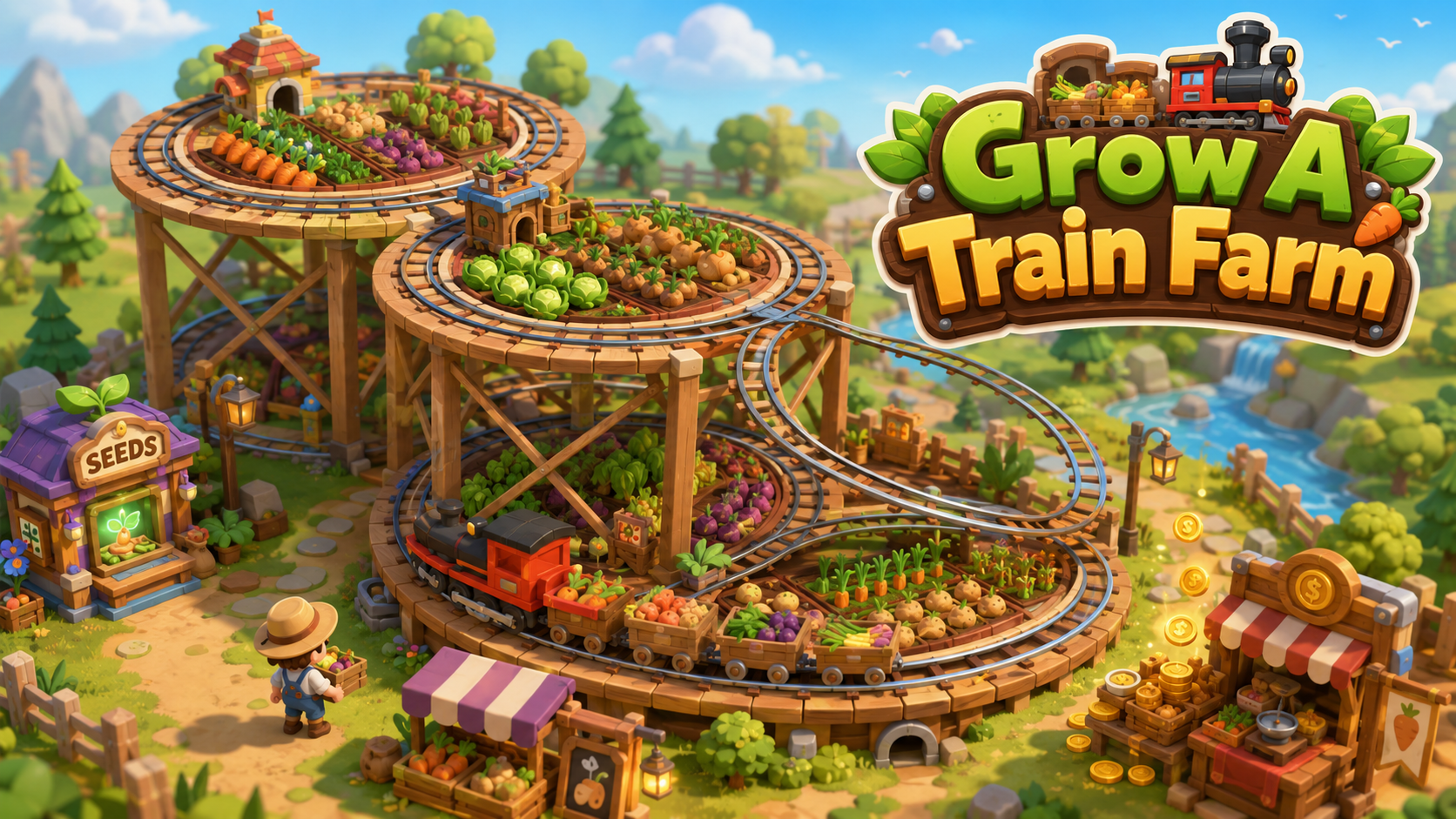
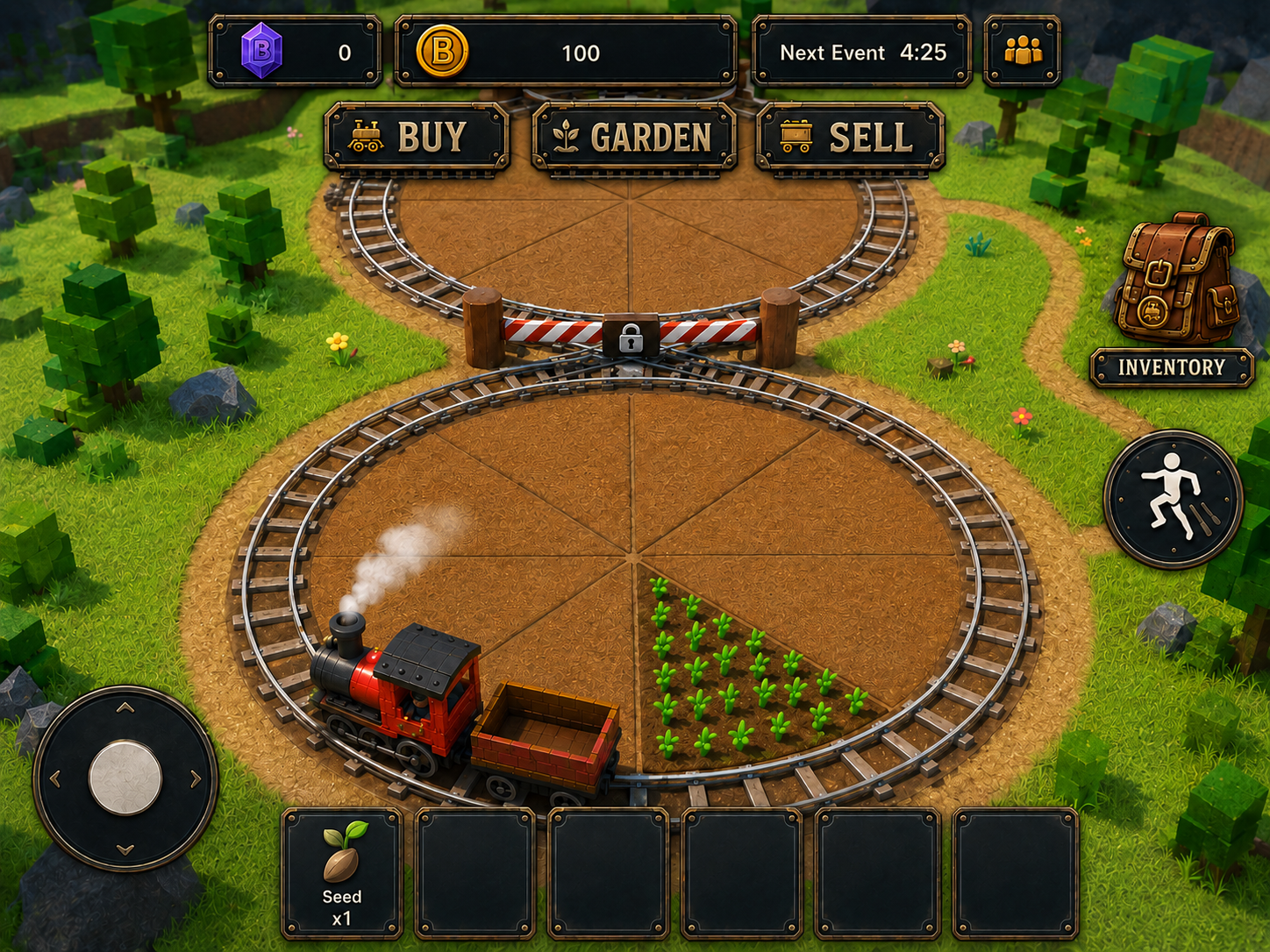
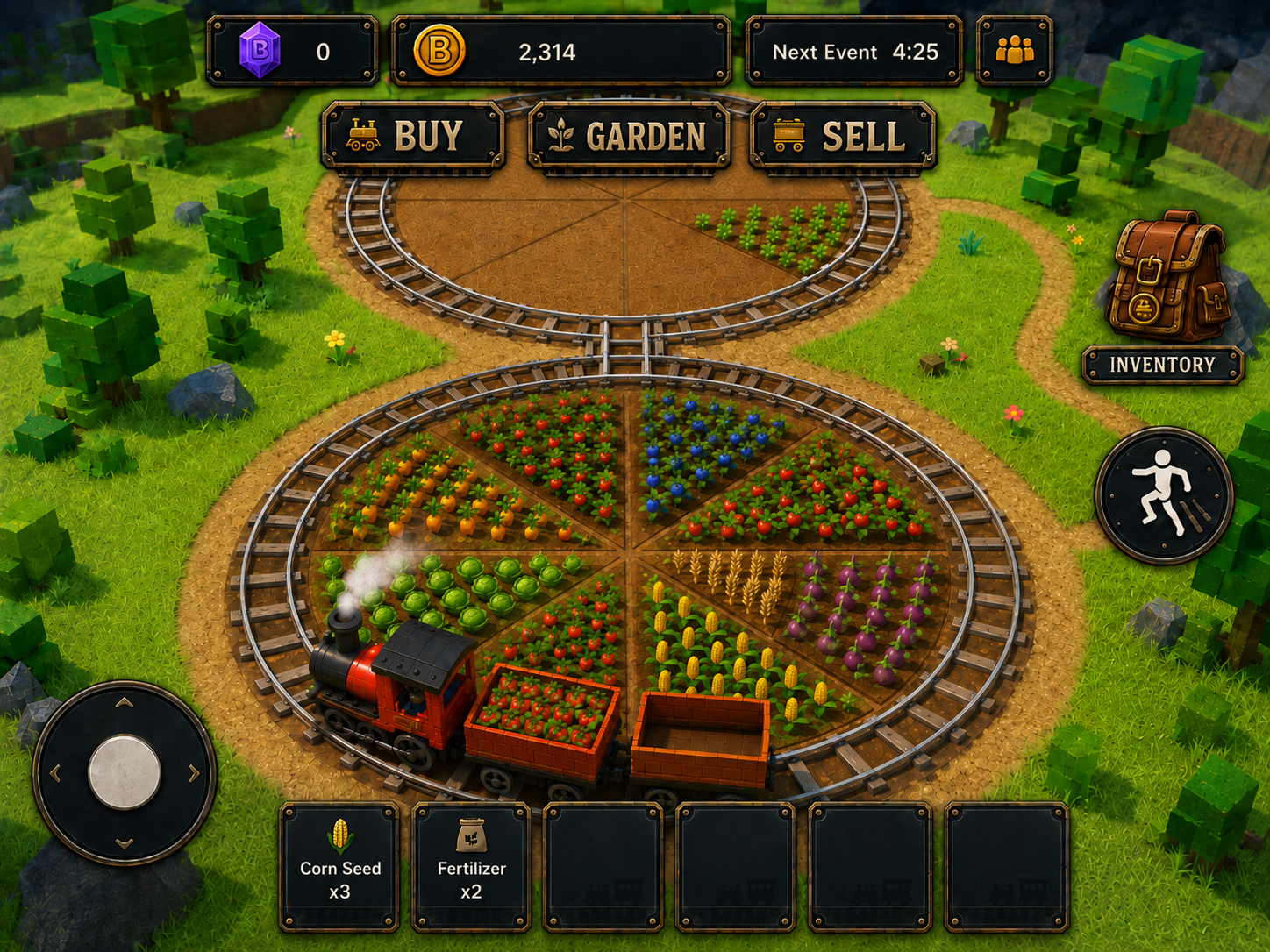
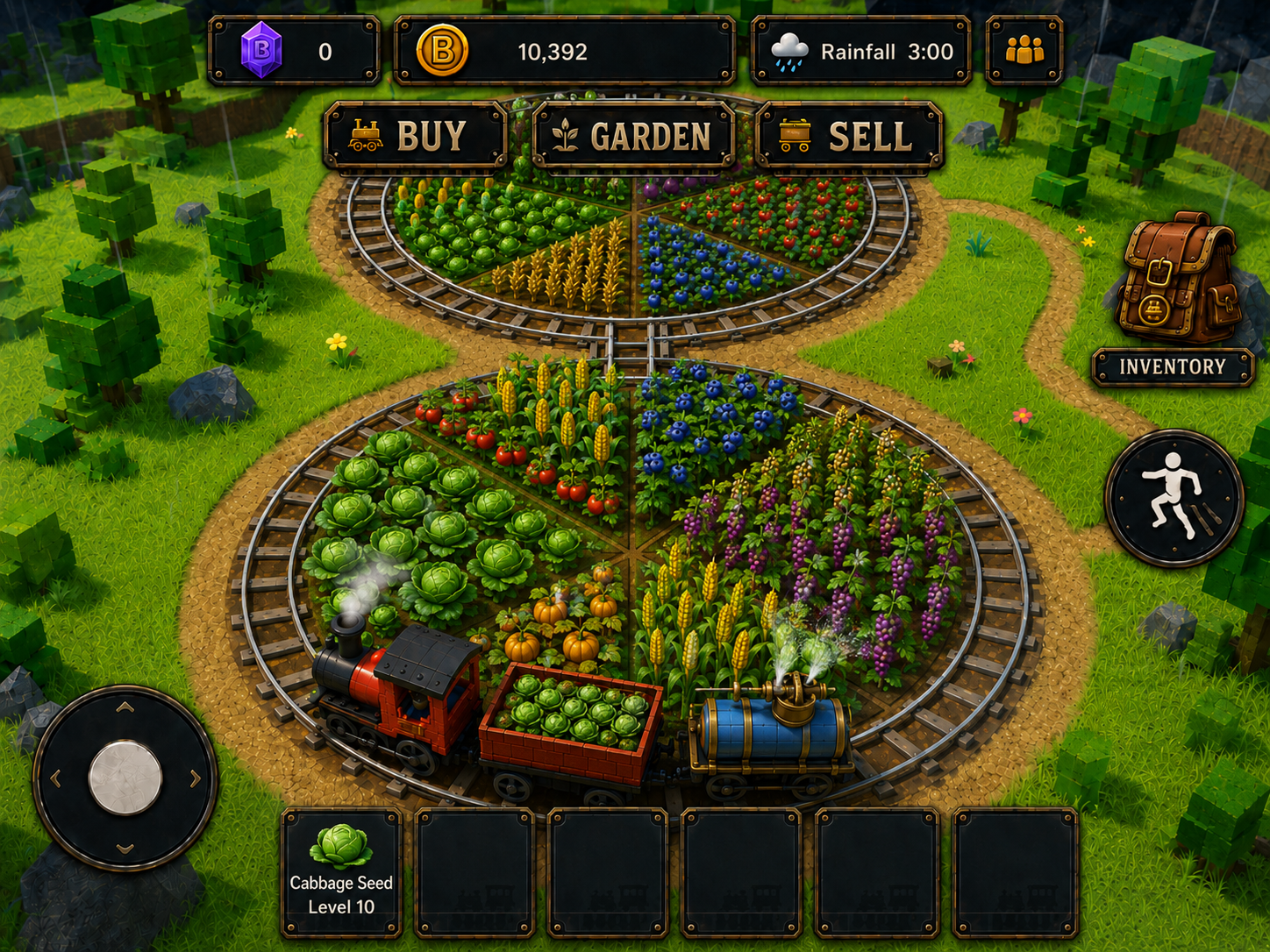
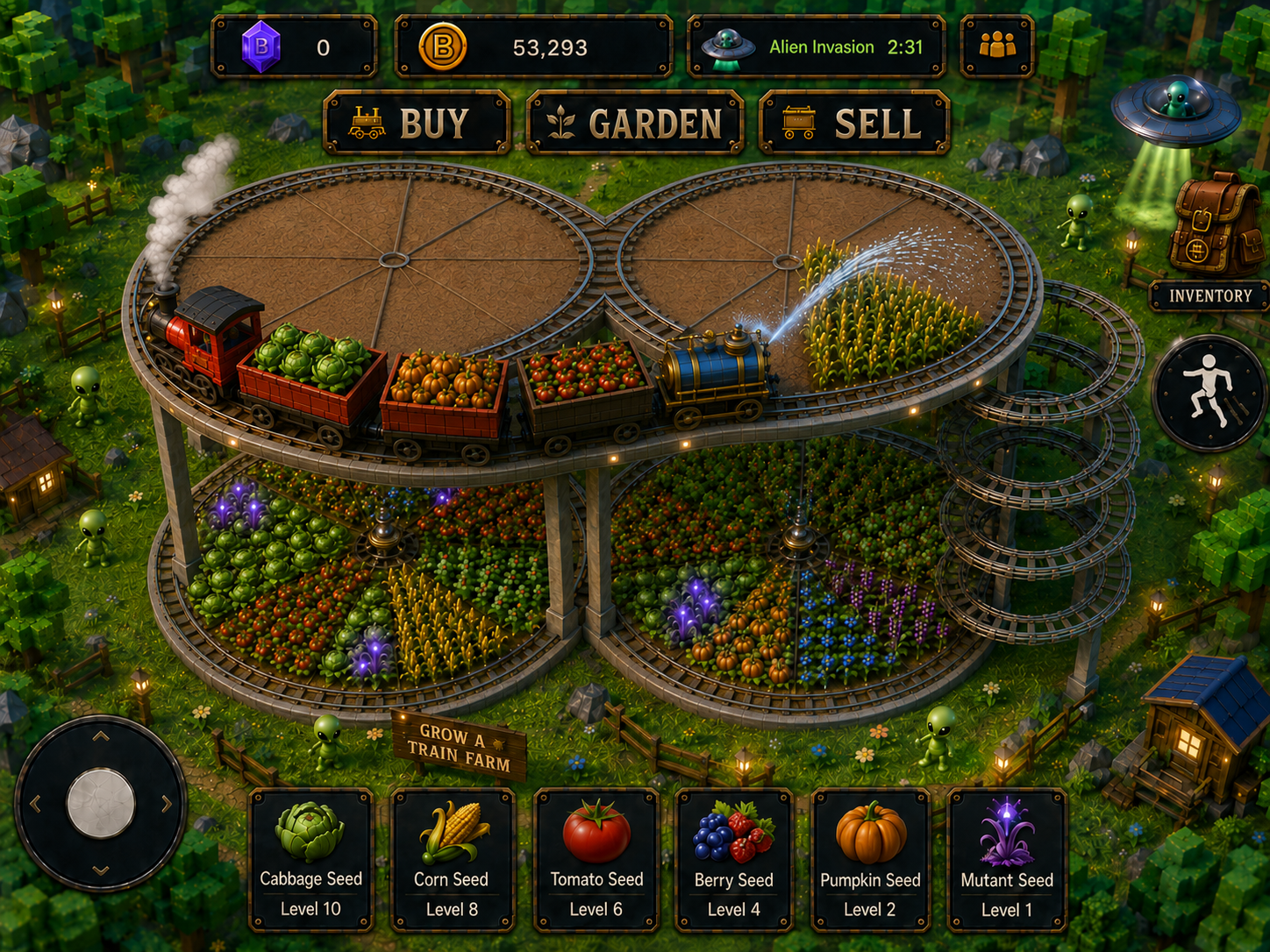
Grow A Train Farm is a cozy idle farming game for mobile. You explore a little world as a character, plant seeds in your garden, and a train rides the rails watering your crops and gathering them once they are ripe. You collect the haul, sell it for coins, and pour the coins back into the farm: unlock more plots, roll for rarer seeds at the Seed Station, level up your crops, and speed up and kit out your train. Your loop grows outward into bigger rings, and once a floor is doing well you build upward to a new one, so a long-time player's farm becomes a tall, stacked railway. It keeps earning while you are away, so a two-minute visit always pays off, and there is a constant chase for rare crops, mutations, pets, and train skins to bring you back.
How we built it
This is a design submission rather than a finished game, so the work was figuring out exactly how the game would come together before any of it is built. I started from one question, what makes an idle farm satisfying, and designed outward: the moment-to-moment loop, the way the railway expands, the economy and how its numbers scale, the rarity and collection systems, and the hooks that bring players back. It all became four pieces: a Game Design Document, a Player Journey Map of the first fifteen minutes, a Visual Concept Package, and a Production Plan that scopes an honest MVP. For the visuals I modeled the train, the rail plot, and a set of train skins in Blender and laid out the UI, so the look and feel is concrete rather than just described.
Challenges we ran into
The hardest part was the rail system: working out how the track expands and how much of it the player gets to shape, while keeping the train on one closed loop that always comes back around. I wanted the growth to feel big and customizable without turning into a fiddly logistics puzzle, and it landed on growing the loop outward in sizes and then upward floor by floor. The economy was the other tricky piece. Idle games live on numbers that climb into the trillions, and keeping that satisfying without it spiraling or stalling meant thinking carefully about grow times, upgrade costs, and how every bonus stacks. Scoping was a challenge in its own right, deciding what truly had to be in the first version and what could wait.
Accomplishments that we're proud of
A design package that actually holds together, where the four documents describe one coherent game instead of four loose ideas. The out-then-up railway is the part I am happiest with, since it gives the game a clear identity and a sense of growth you can watch happen. I am also proud of the visual direction and the 3D models, especially the tiered train skins that get more elaborate as they climb from Epic to Legendary to Transcendent, and of landing on an MVP that feels genuinely buildable rather than a wish list.
What we learned
How much real design thinking sits under a game that looks simple from the outside. The retention loops, the onboarding, the pacing of the first thirty seconds, and the economy curve all take serious thought. I also learned a lot about scoping, since it is harder to decide what to cut than what to add, and a focused plan is worth more than an ambitious one. Working through the visual concept taught me how much the look and the UI layout shape the way the game actually plays.
What's next for Grow A Train Farm
Building it. The plan is to ship the MVP, the core loop with two floors, the Seed Station, and the first systems, once Horizon's creation tools are ready, then grow it the way the game itself grows, outward and upward. After the core is proven, the roadmap adds more floors, the full pet roster, live events, player trading, the Legendary and Transcendent train-skin tiers, and seasonal content, each one layered onto the foundation the MVP puts in place.
Built With
- blender
- brain
- claude


Log in or sign up for Devpost to join the conversation.