
Inspiration
I’ve been playing chess for many years, exploring every major engine from Stockfish to Leela, constantly fascinated by how algorithms can shape the game. When registering for this hackathon, I wondered: as a quantum beginner, what could I possibly build?
While browsing ideas like a quantum Sudoku solver, a thought struck me — game + quantum. And for me, “game” naturally meant chess. Many people, even fellow chess players, told me, “Where would you even apply quantum in chess?” My answer was simple: give me the chance, and I’ll find a way.
That challenge became the seed for *Quantum Chess — the first-ever chess “gambit” powered by quantum algorithms. A blend of my passion for chess and curiosity for quantum computing, it’s my way of showing that even in a game as ancient and classical as chess, there’s still room for new openings — in both strategy and technology.
What it does
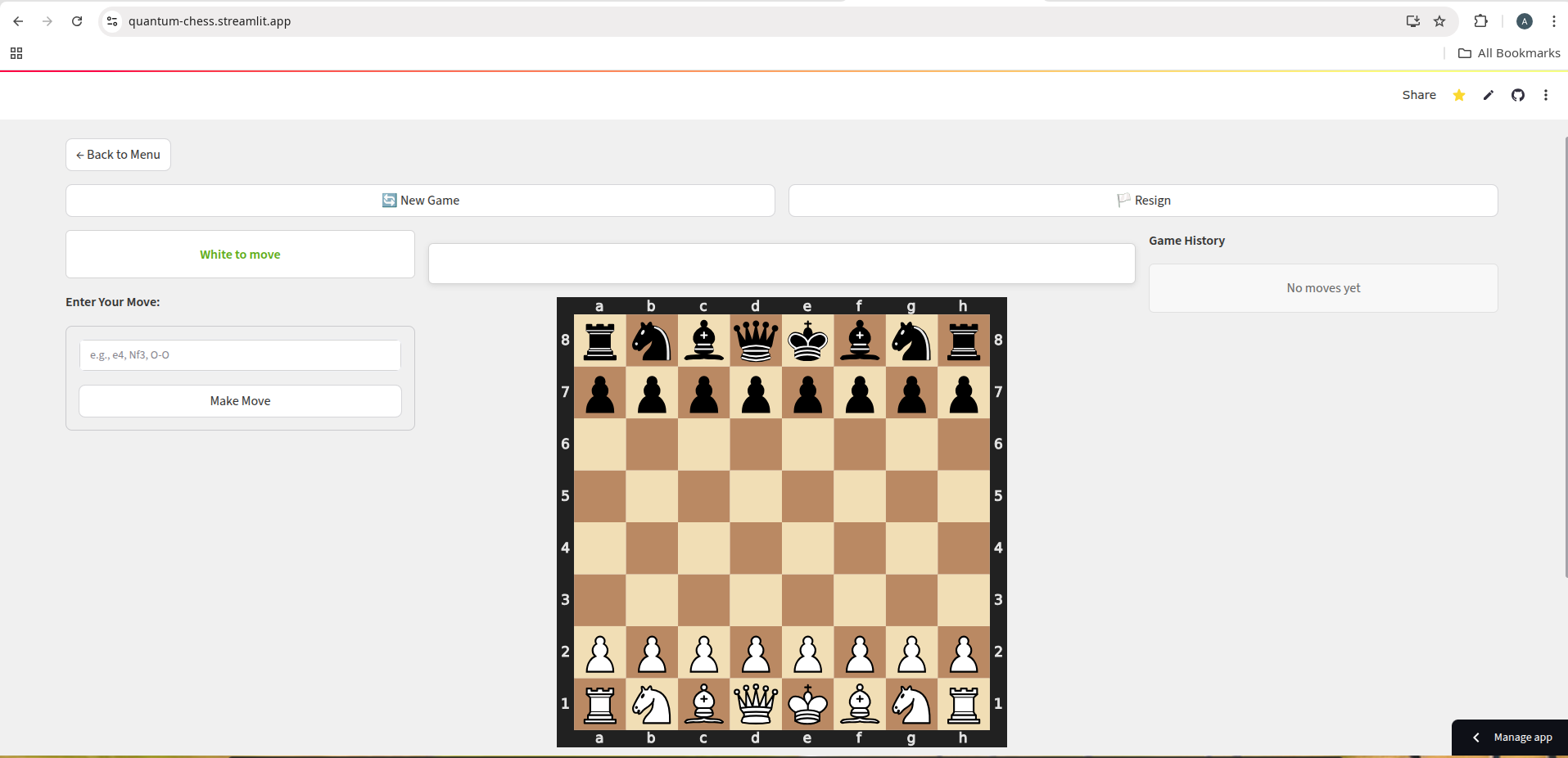
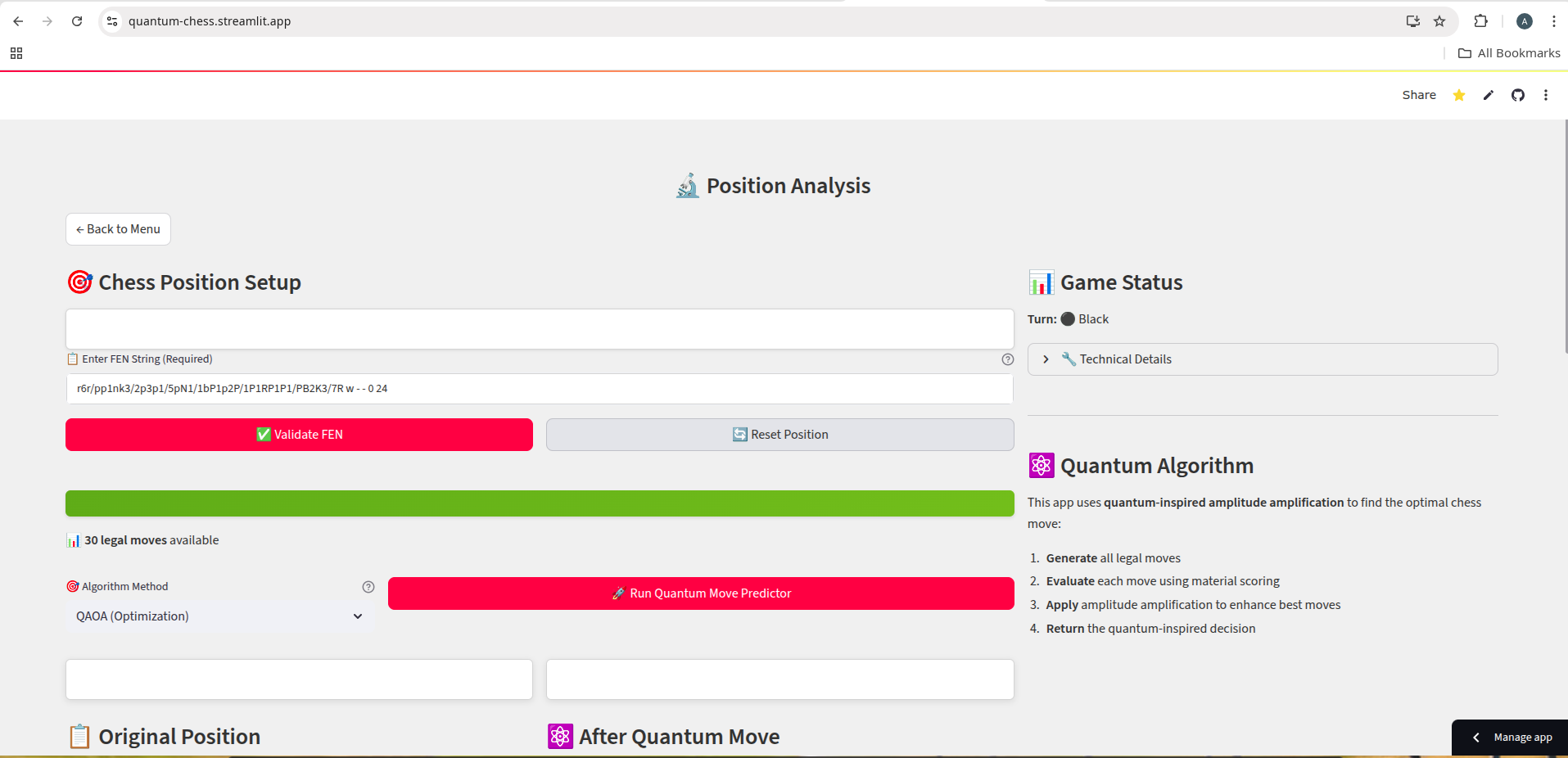
Quantum Chess lets players experience chess infused with quantum algorithms. You can input a move manually, and the game updates the board. For predicting the next move, the system takes a FEN (Forsyth–Edwards Notation), runs a quantum algorithm, and generates the next move. The quantum player can play as both White and Black, enabling you to watch an entire game unfold as if quantum were playing against itself.
How we built it
We combined classical chess logic with quantum computing by integrating a FEN-based position system with a quantum backend. The frontend handles user inputs and board rendering, while the backend uses Grover’s algorithm principles to select moves. The Lichess board editor was used to provide valid FEN inputs for smooth position setup.
Challenges we ran into
- Finding a meaningful way to apply quantum computing to chess without making it gimmicky.
- Learning and implementing Grover’s algorithm as a quantum beginner.
- Translating quantum-generated moves into valid chess moves from any given position.
- Integrating FEN parsing and ensuring the positions were accurate.
Accomplishments that we're proud of
- Successfully showing that quantum computing can influence a classical game like chess.
- Building a working FEN-based move prediction system using quantum logic.
- Creating a prototype where quantum can play both sides of a chess game.
What we learned
- How Grover’s search algorithm can be adapted for non-traditional use cases.
- How to work with FEN to set up chess positions programmatically.
- The limitations and challenges of applying quantum algorithms to combinatorial games.
What's next for Quantum Chess
- Adding more advanced quantum algorithms beyond Grover’s for varied play styles.
- Optimizing the move generation so quantum can compete against classical engines like Stockfish.
- Making the interface fully interactive with live quantum move suggestions.
- Allowing users to choose between quantum and classical opponents for comparison.

Log in or sign up for Devpost to join the conversation.