Inspiration
The inspiration behind what I designed came from the little sensors that I had for the board. With the parts that I was given I wanted to try and utilize almost every component that is on the board. There were many things that I wanted to try, but trying to implement those ideas with the hardware I had was very difficult. So I thought of things that I could possibly do with it. I looked at the developer board and noticed it looked similar to a UI panel. So I had the idea to try and create a system that is similar to other UI systems. There were many ideas, but one that was challenging yet would utilize almost every component on the board and that was a security system.
What it does
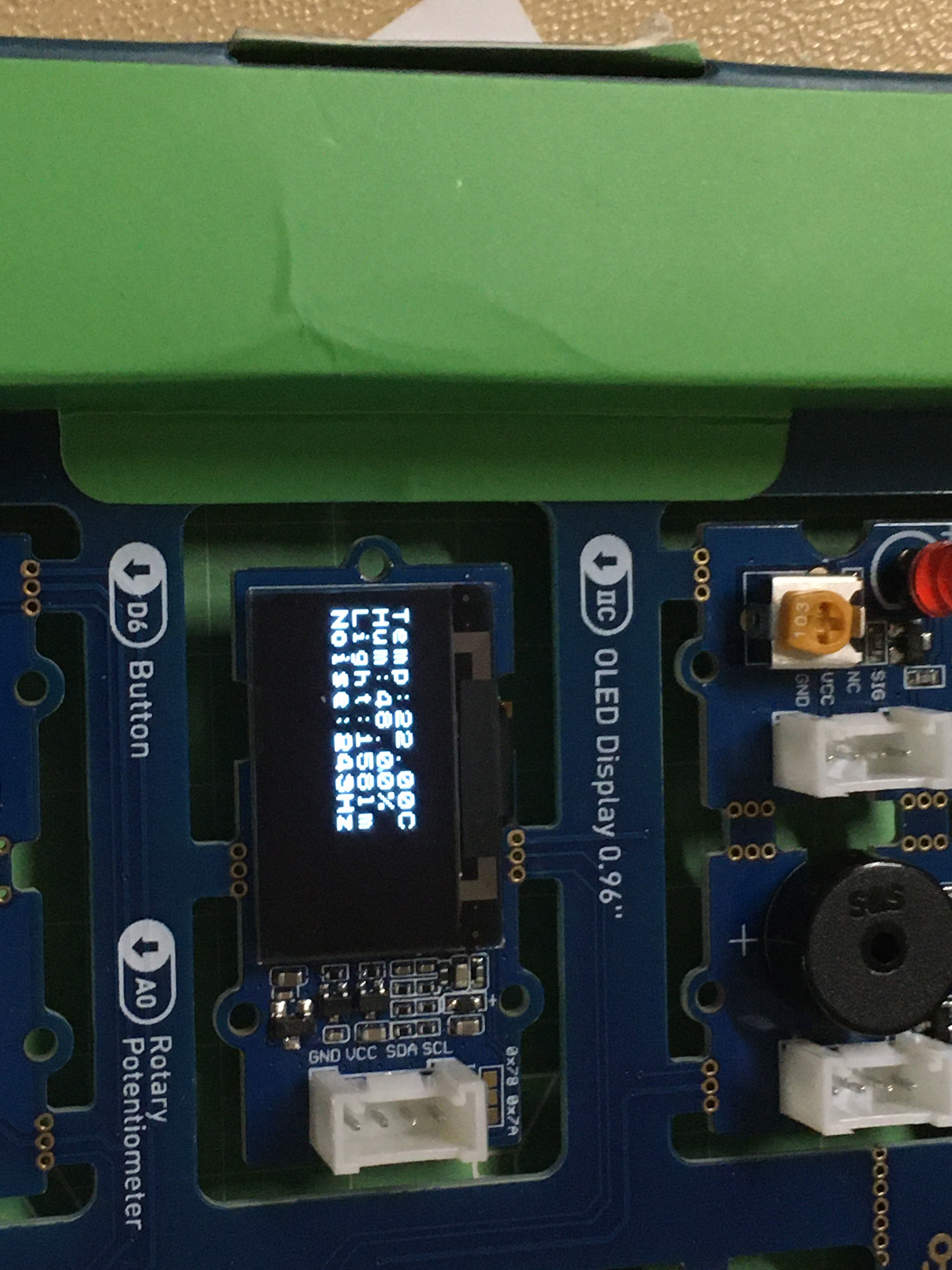
The idea behind this system is that it allows the user to set a combination code for the system. Not only does it do that, but it also reads the temperature, humidity, luminosity, and noise levels of the room that it is in. The idea is that the user uses the potentiometer to select a value and then they press the momentary switch on the board to save that number an auditory beep will be given noting that the number was saved. The user does this three more times and their password is saved on the board. Once this is done the user clicks the button again to initiate the alarm system and a red LED with light up. There will also be a message on the OLED screen stating that the alarm system is active. While it is in this state the microphone is active listening for any loud crashes. Once the mic picks this up an alarm with begins to sound. The way the user deactivates the alarm is by putting their finger over the light sensor and setting the potentiometer in the most right position. To unlock the system, the user puts in the same combination as they did when they locked it and press the button for each digit. Once the correct combination is entered a message is displayed on the OLED screen and the LED is turned off. The user can also turn the potentiometer to the most left position and a 'W' will be shown followed by the temperature, humidity, luminosity, and the noise levels of the room. The screen will switch between this and the main screen every ten seconds.
How we built it
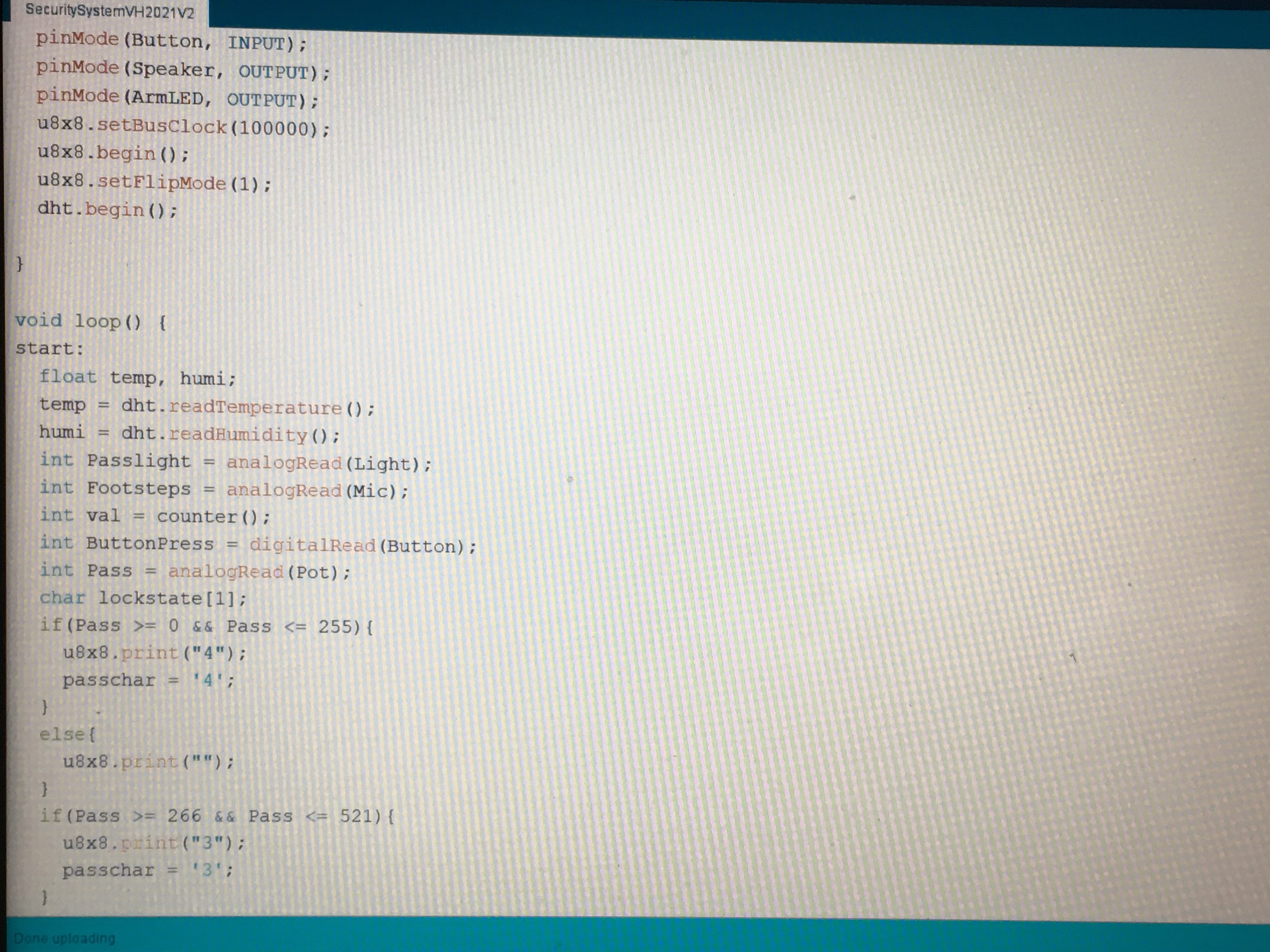
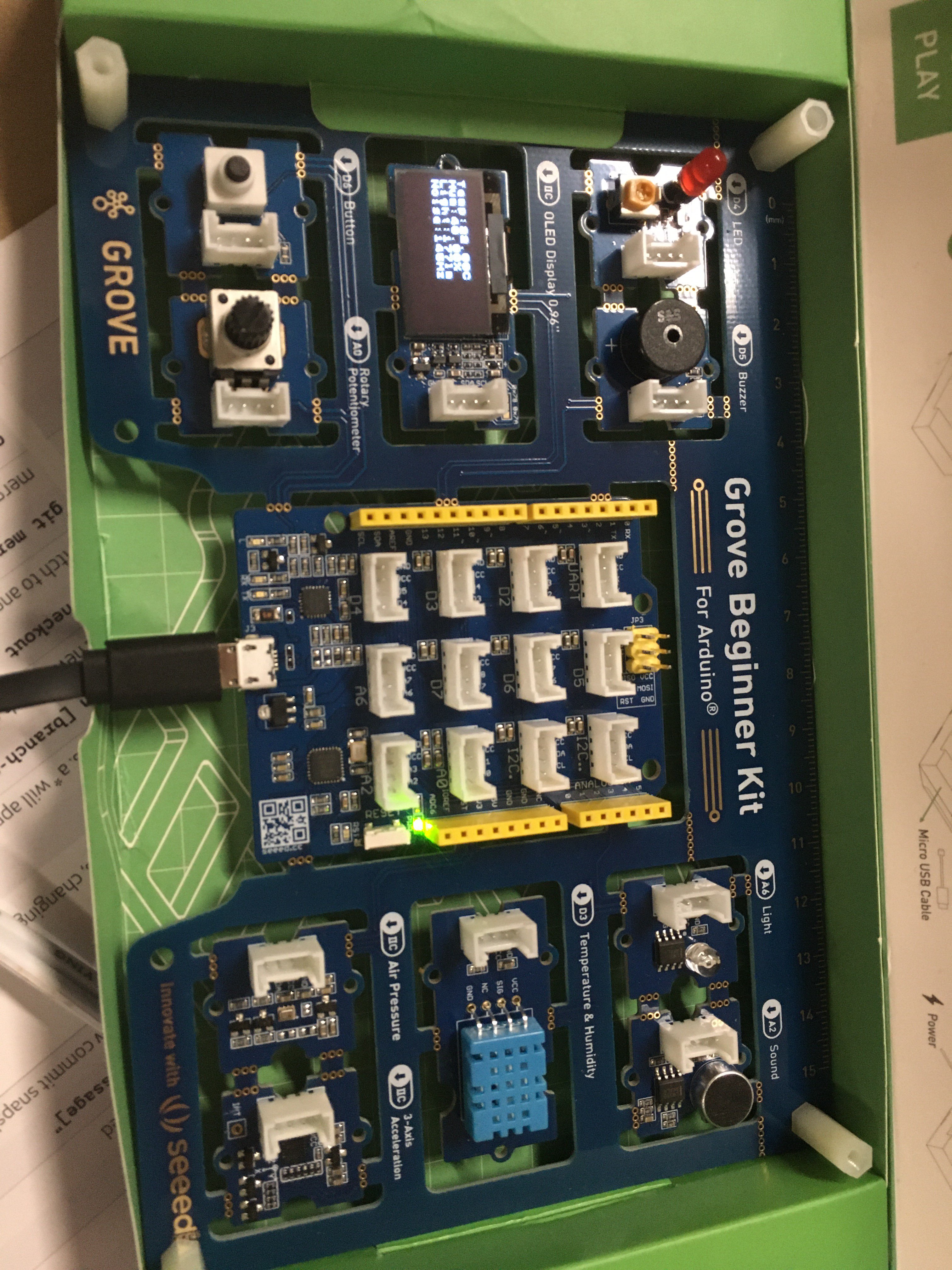
The security system was only built with the one Grove Beginner Kit. I used Arduino/C++ to code the board.
Challenges we ran into
The biggest challenge I ran into was the limited hardware. This was a huge challenge because I had to really think of a cool idea that would show my knowledge of micro-controllers and being able to program the micro-controller to have a purpose. One of the other big challenges was using unknown hardware. With every sensor, there is a different manufacturer and with different manufacturers, the libraries that are used for the sensors differ. So I had to do a lot of research on the sensors to get a good understanding of what they were capable of and be able to use their capabilities for my project. One of the other challenges came from the first step of the project, which was trying to get input from the user. There were many different ways that I tried, but all led down to either the counter not counting the presses or the code running into problems. This was mainly with parts in the code that would not execute or would execute when they should not be executed. This required a lot of troubleshooting, trial-and-error, and research. With those tools, I was able to get my project to work correctly.
Accomplishments that we're proud of
The main accomplishment that I was proud of was being able to take in a set of numbers and store them independently of each other. After they were stored they were able to be compared to make sure that they were a match. This was very difficult to implement using the potentiometer and the momentary switch. I was very happy to see after I completed the sequence that the LED did in fact turn off and the message displayed on the OLED.
What we learned
I learned a lot during this hack. This is my first hackathon and I knew that it would be difficult to do a hardware hack and do the hack on my own, but I knew that I would be able to apply what I have learned in my classes. I have taken embedded systems and currently taking VLSI design and I was able to apply that knowledge to my hack. I learned a lot about Seeed and about the types of sensors and micro-controllers that they produce. I also appreciated the fact that they had very good annotated notes and examples that aided me in the completion of my hack. I feel that this being my first hack and working by myself I did a good job at creating a cool project with limited hardware. This hack also helped me really think outside the box and be able to adapt to the situation and still create a cool product.
What's next for Grove Arduino Security System
I am very interested in micro-controllers and embedded systems and I feel like quality security systems could be created with some of the simplest parts and the simplest code. I would like to try and combine my interest in IoT systems and embedded systems together to create new and innovative products. I want to be able to help a customer with a problem and give them a quality product that won't break the bank. The biggest purpose of being an engineer is to be able to refine the technology to create bigger and better technologies. I will be researching IoT systems aided by embedded systems and I hope that I will be able to take that research experience and be able to create more sophisticated products with the foundations of this project.
Built With
- c++
- grove-beginner-arduino-kit


Log in or sign up for Devpost to join the conversation.