-
-
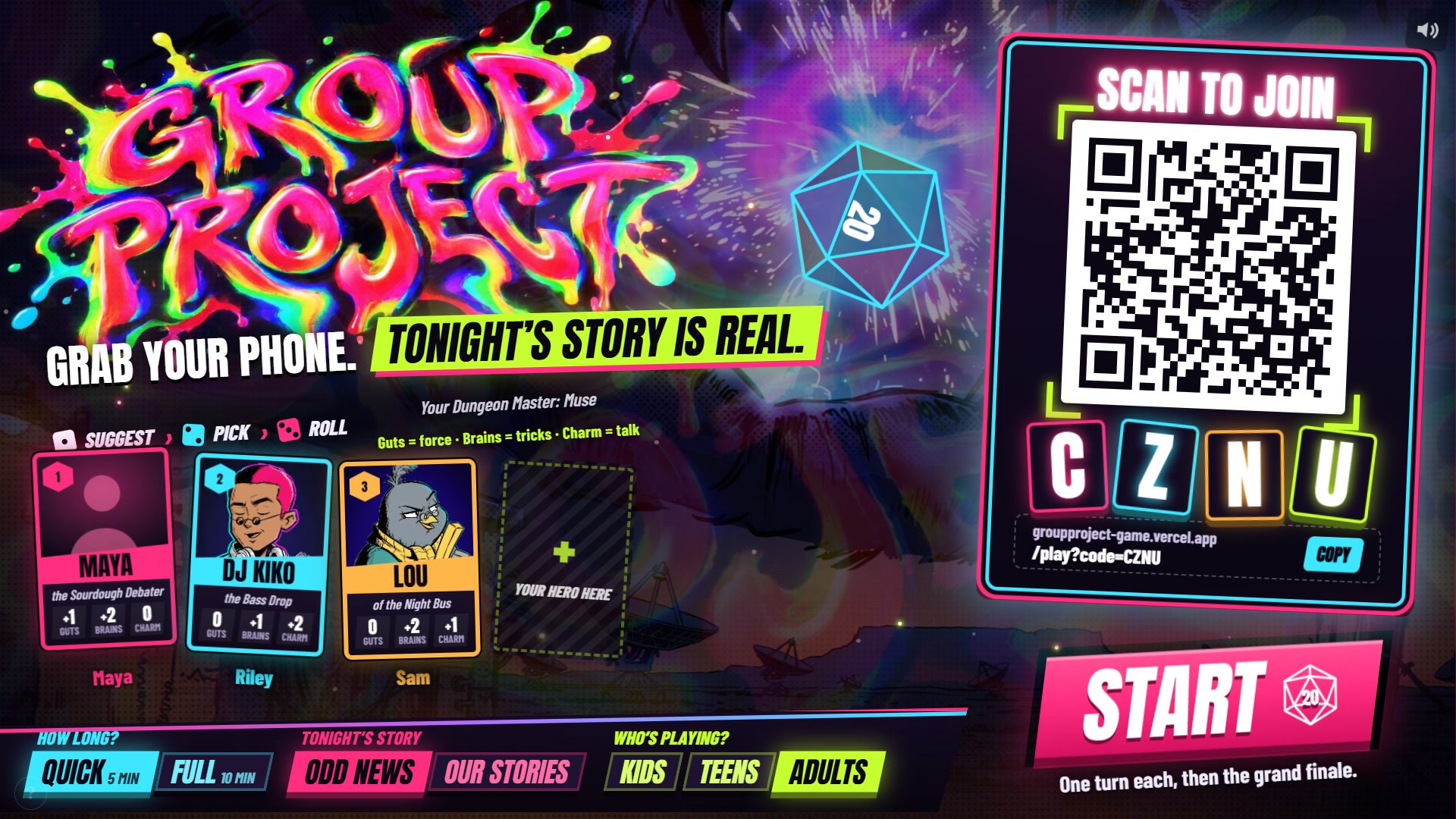
Group Project: a party game where Meta's Muse is the Dungeon Master and every story is based on a true one.
-
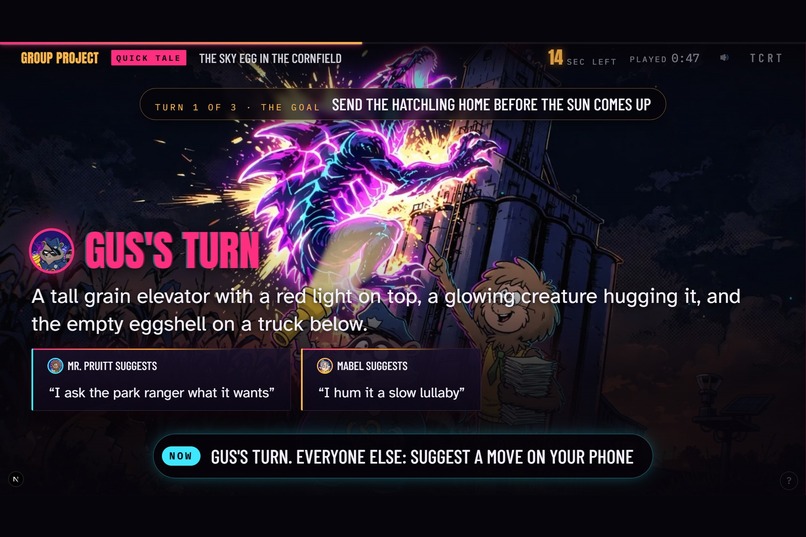
Players deciding on choice
-
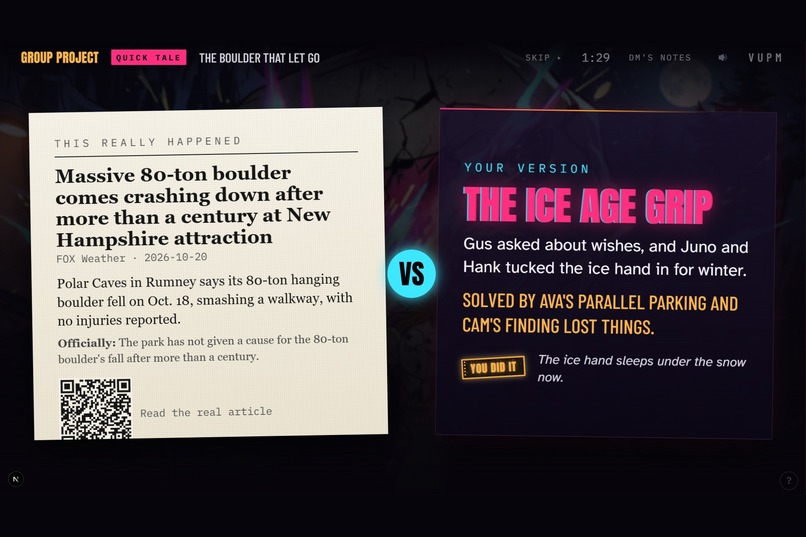
End screen
-
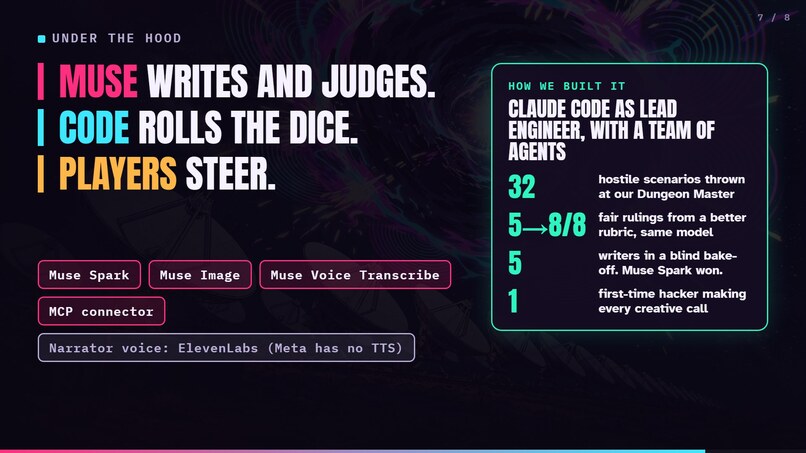
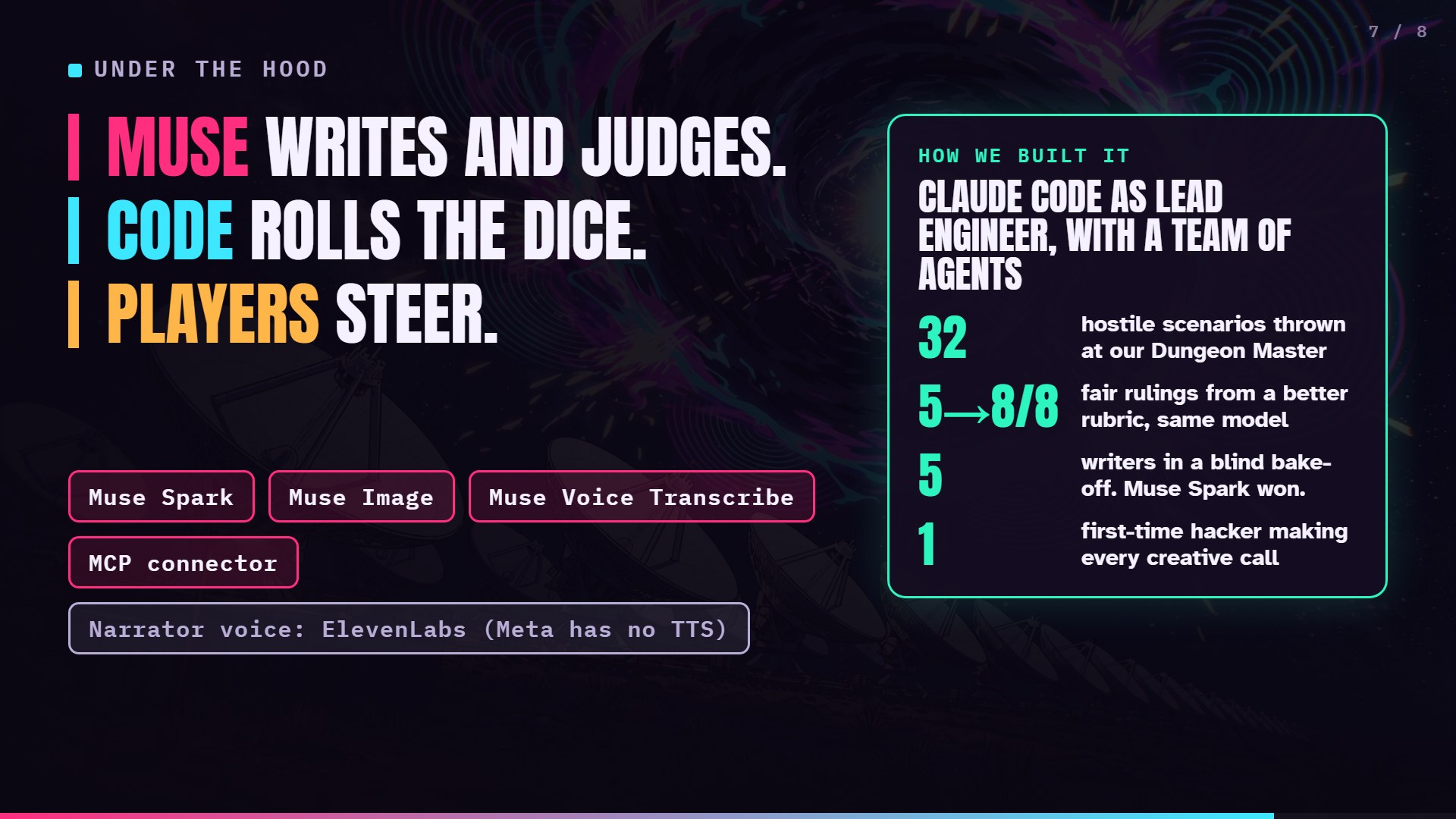
Under the hood: Muse writes and judges. Code rolls the dice. Players steer.
-
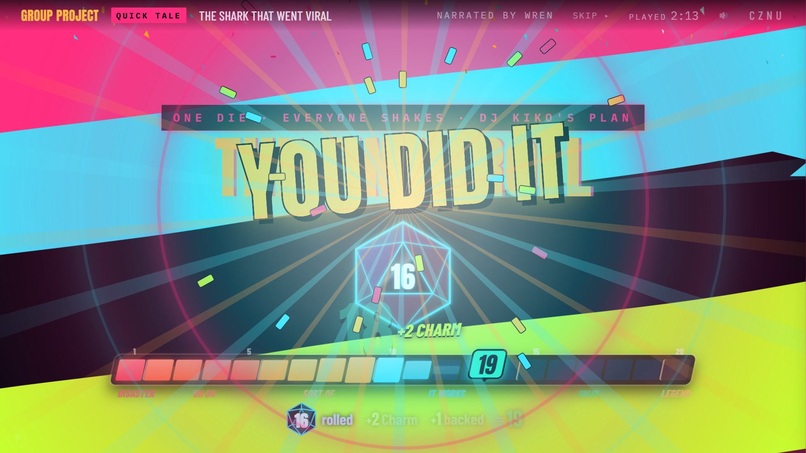
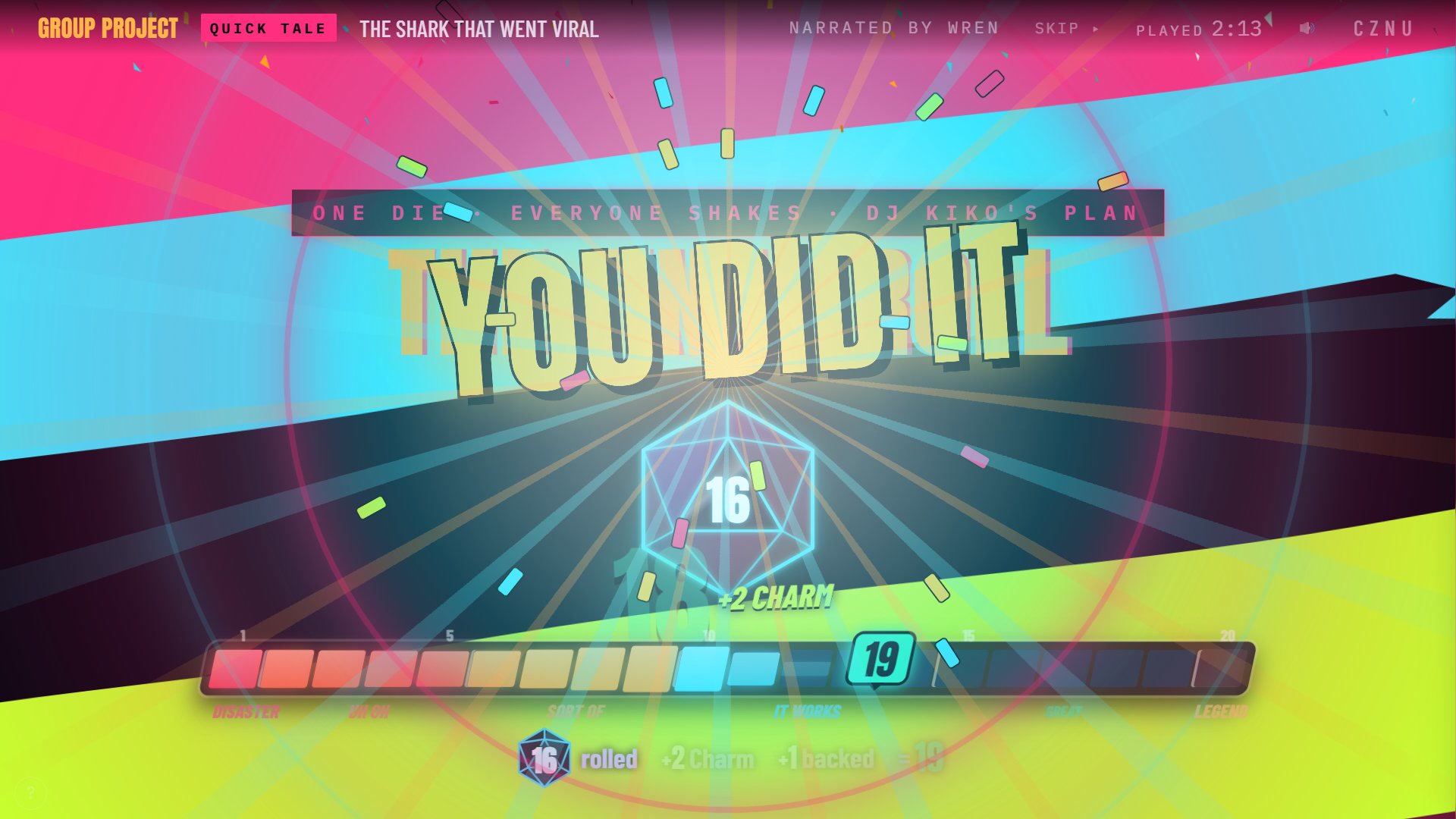
Everyone shakes their phone together for one final roll.
-
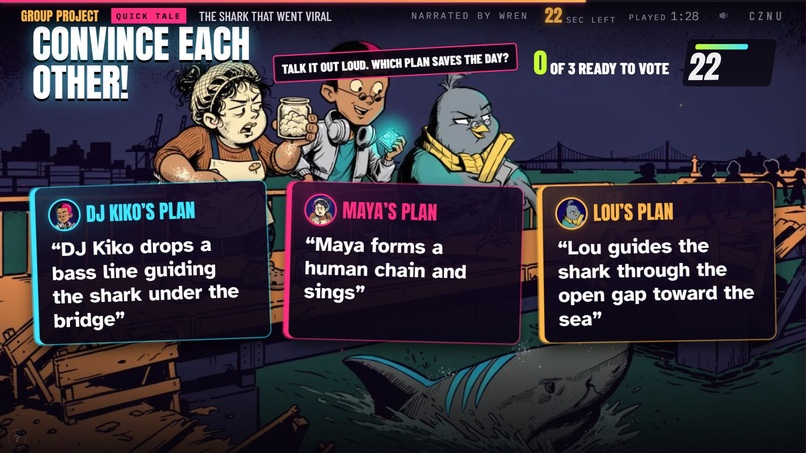
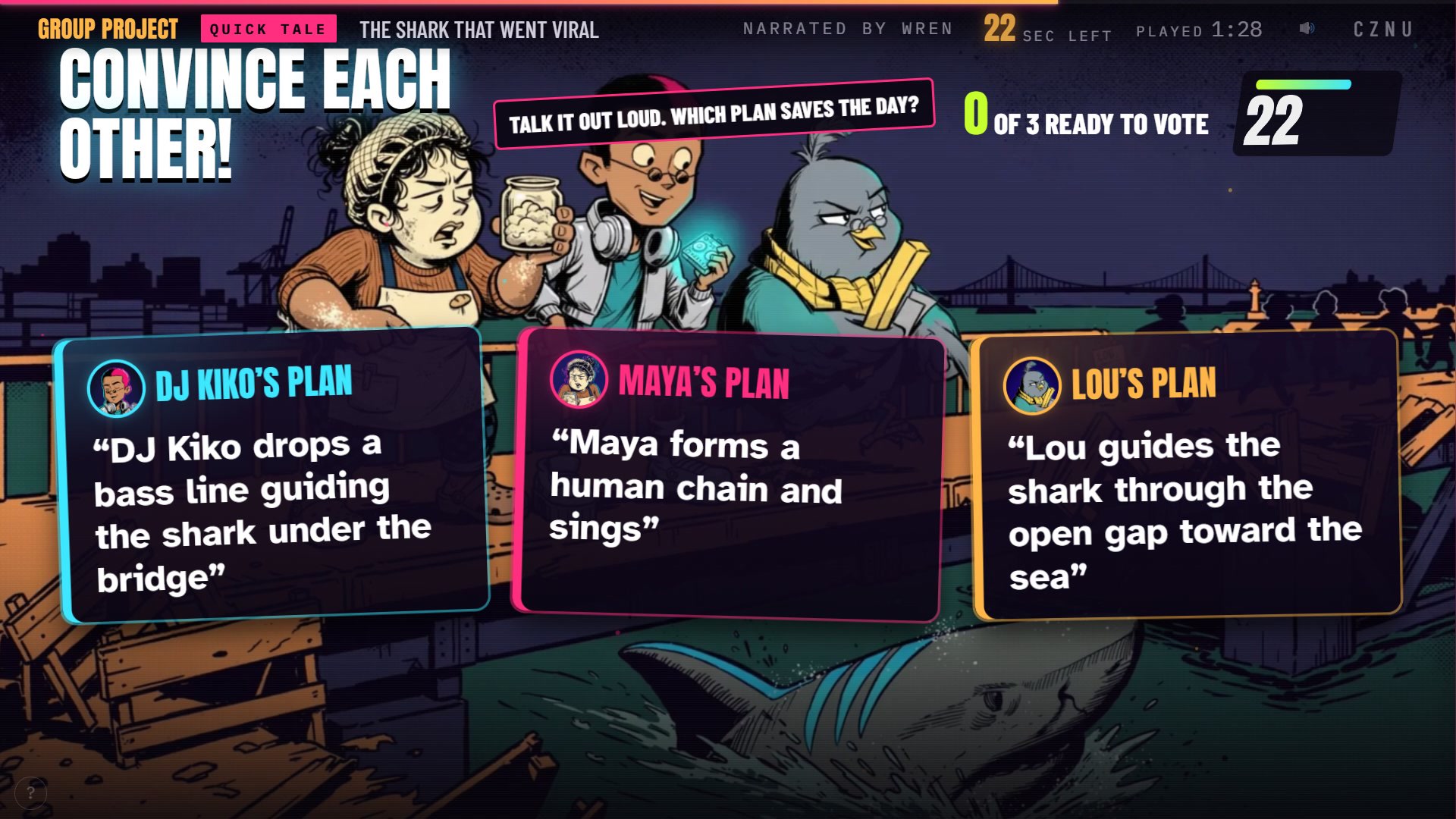
The finale: every plan on screen, 30 seconds to convince each other out loud.
-
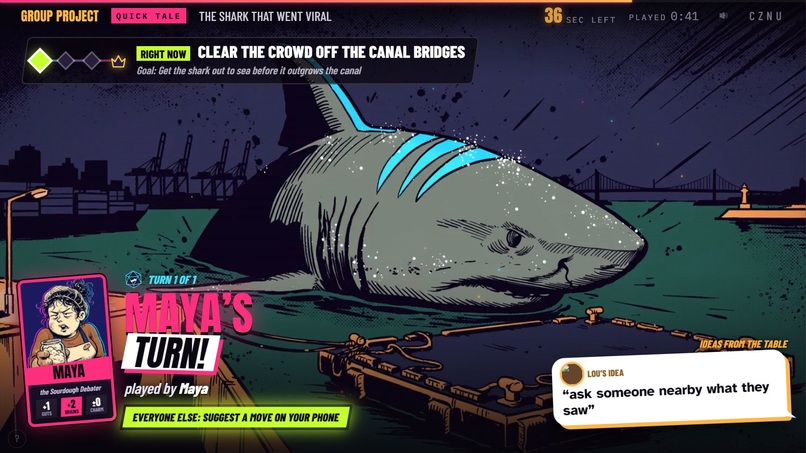
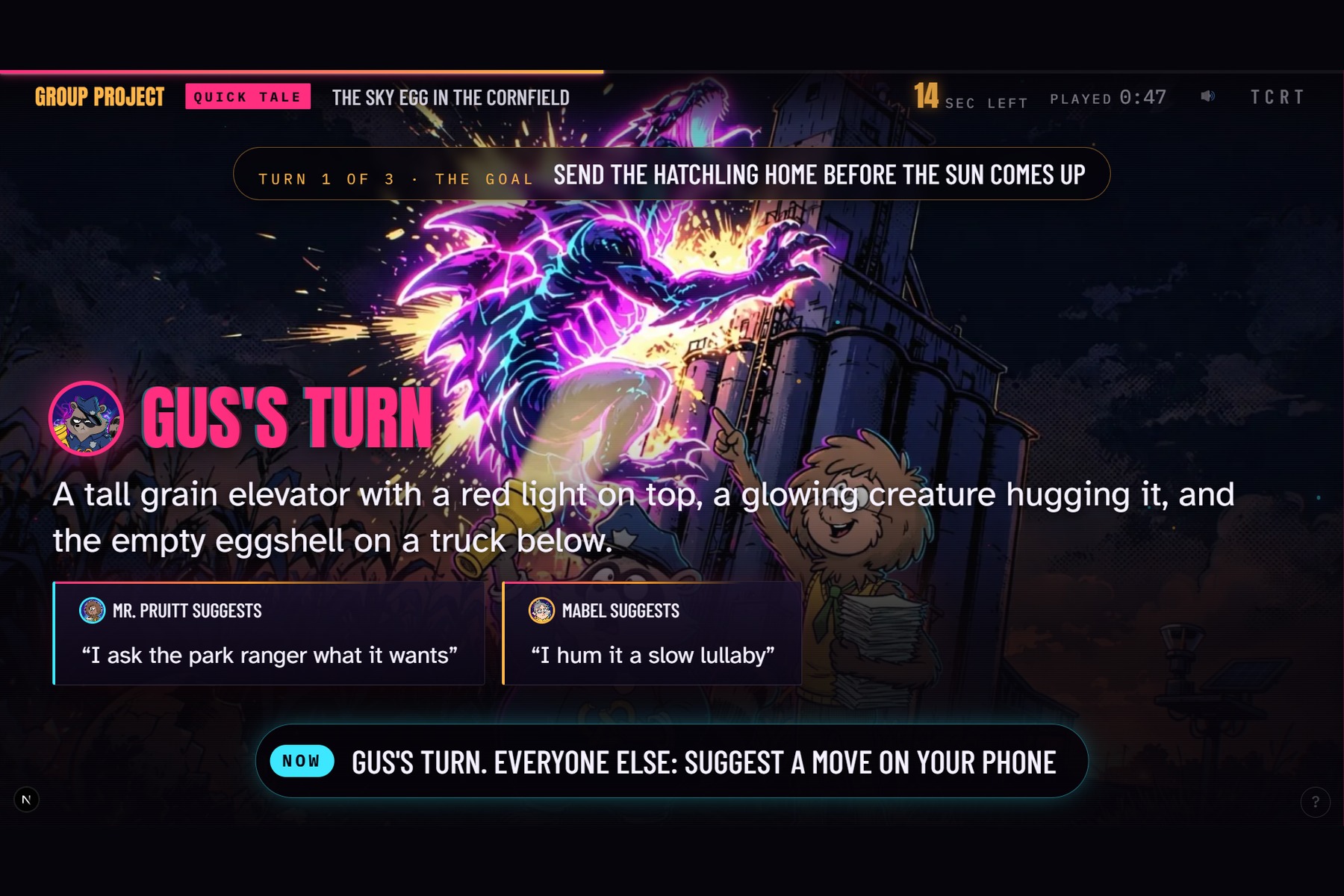
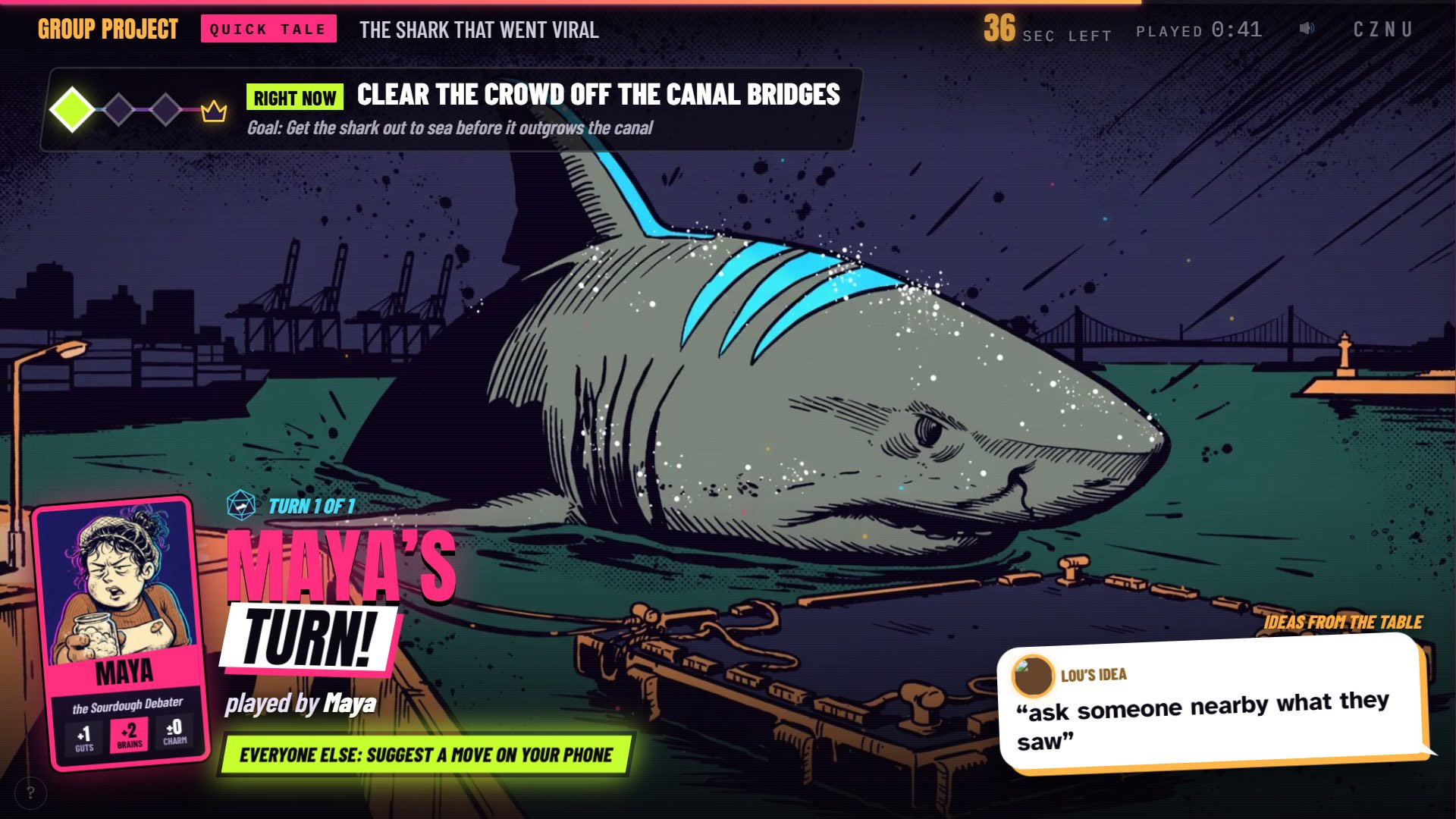
Your turn: tell the table your plan while friends pitch ideas from their phones.
-
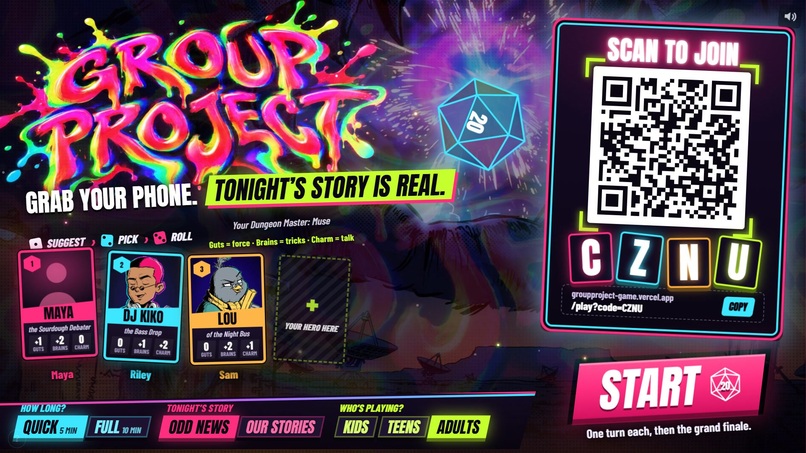
The TV is the table, your phone is the controller. Scan in, make a hero, start.
-
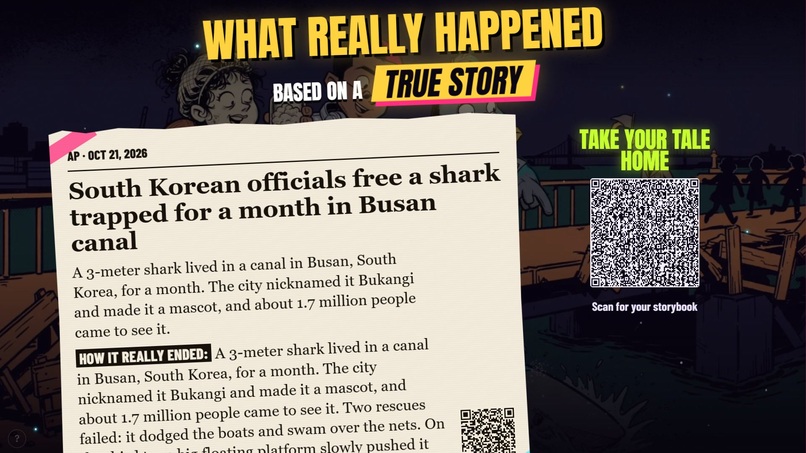
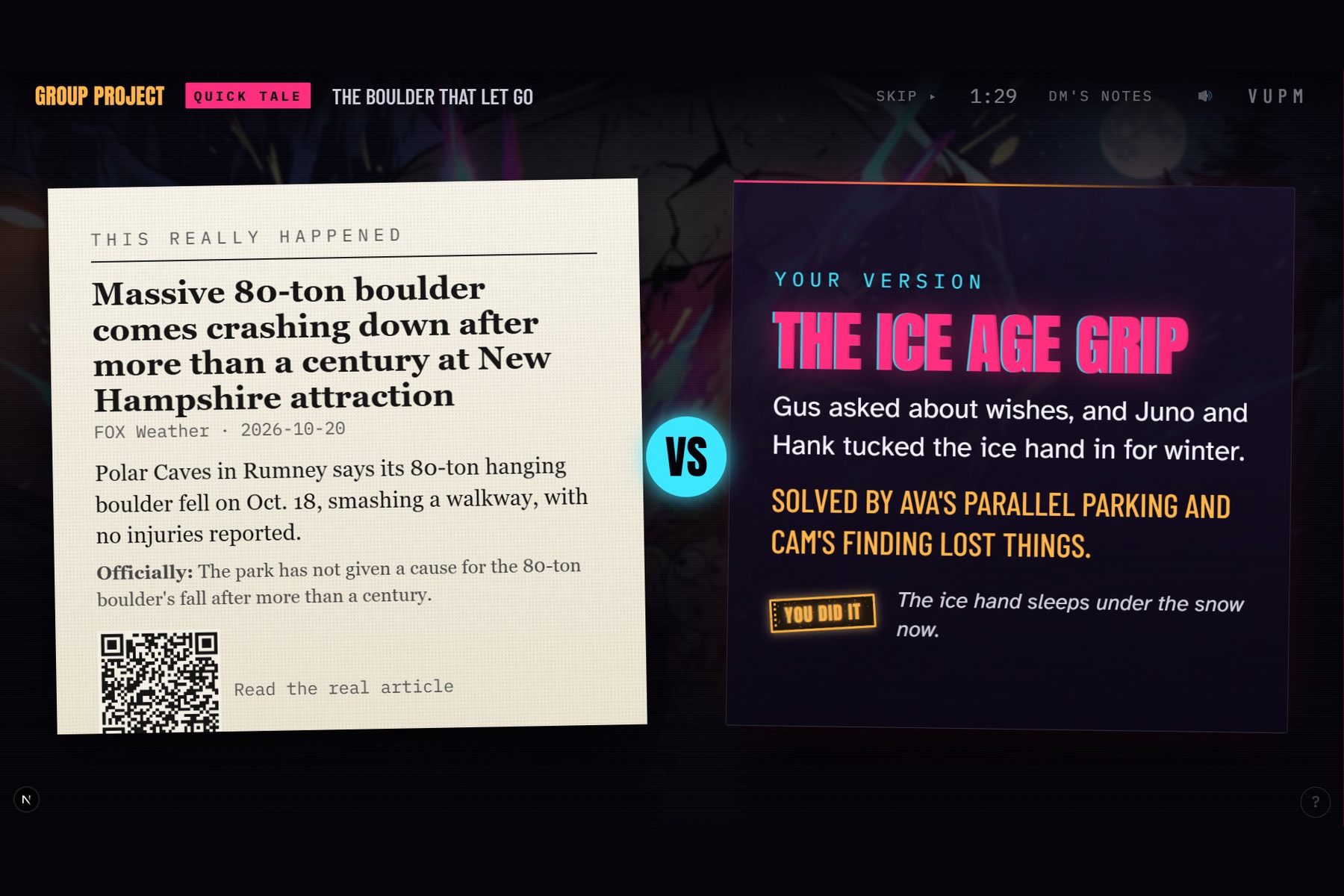
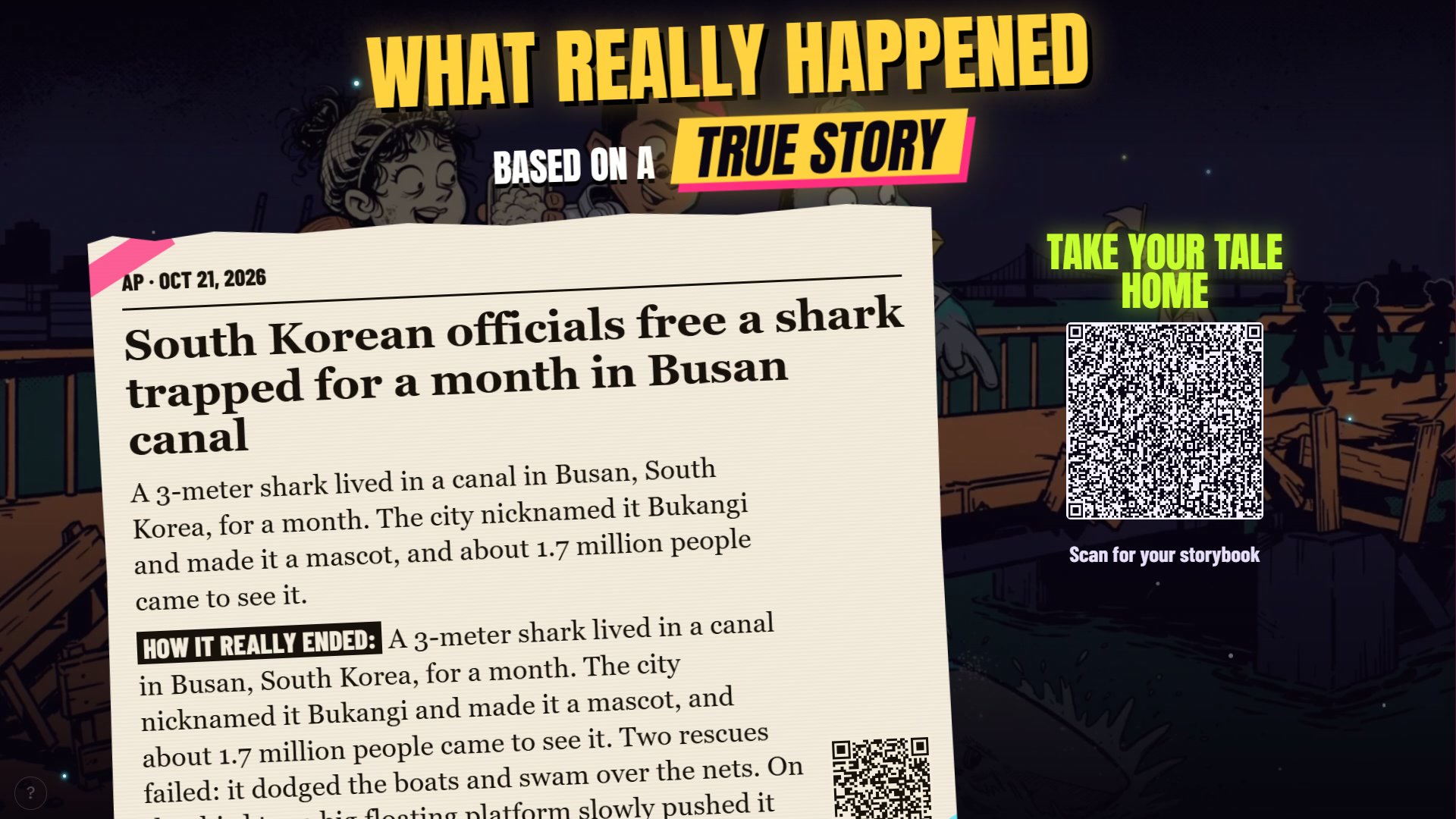
The twist: what you did, then what really happened. It's based on a true story.
Inspiration
You know how hangouts go. Nobody dislikes each other, nobody knows what to say, so everyone ends up on their phone. Tabletop games like D&D fix that: everyone gets a role and a reason to talk. The catch is someone has to be the Dungeon Master, and most groups never get past that. So we asked: what if Meta's Muse was the DM, and the humans just got to play together? And what if every story started from something that actually happened, so the ending kicks off a real conversation: "wait, that was real?"
What it does
Group Project is a party game for friends in the same room, somewhere between Jackbox and D&D. A laptop or TV is the table and everyone's phone is the controller. No app, no accounts, 2 to 6 players, about 5 minutes a game. AI runs the whole night so you can focus on each other.
- Make a hero. Type a name, describe your hero in one line, and answer one question: "What's your secret strength?" Whatever you type is what you get. Ask to be a Red Bull and you're a talking energy drink.
- Play a real story. Muse turns odd real news (a shark stuck in a city canal, gold hidden in a cellar wall) into a quest. You don't find out it's real until the end.
- Take turns, but talk. On your turn the TV says "tell the table your plan," and your friends pitch ideas from their phones. Use a friend's idea and you get +1, and their name hits the screen.
- Roll for it. Muse reads your plan, cracks a quick joke about it, and decides how hard it is. You swipe your phone to throw the die. Code rolls the dice; the AI never picks a number.
- Watch it happen. Muse writes what happens, paints a new scene with your heroes in it, and picks the sound effects, and our narrator reads it aloud.
- The finale. Everyone pitches a last plan, you get a few seconds to convince each other out loud, then everyone shakes their phone at the same time for one final roll.
- The reveal. First, what you did. Then, what really happened, with the real article.
The role of AI
Muse is the Dungeon Master, and it's in every part of the game to make it feel immersive. Muse Spark picks and checks the stories, writes the openings, judges every plan, and writes every outcome and the ending. Muse Image paints your heroes and every scene. Muse Voice Transcribe lets you speak your plan, and a Muse connector lets Muse start a game night. Code handles anything with a number: dice, bonuses, timers. The AI judges ideas, never people. The only non-Meta piece is the narrator's voice (ElevenLabs), because Meta doesn't have a text-to-speech model.
How we built it
Next.js on Vercel with Supabase Realtime. The TV runs the game, and phones just send taps and text. Stories come from SerpApi's Google News, filtered for safety and for whether they'd actually be fun to play. We built it with Claude Code running a team of AI agents in parallel while we made the creative calls. We playtested all night, recorded every session, and had agents go through the recordings frame by frame to find exactly where it broke.
Challenges we ran into
- Our first stories were scripted, and they fell apart the second players got creative. We rebuilt it so the players steer and the AI reacts.
- The AI's writing was hard to follow. One playtester just asked, "What the hell is foam?" Now every line has to make sense to a tired person at a party on the first listen.
- The stories felt boring for hours, and we kept fixing the wrong things. The real problem was our safety filter blocking anything with an edge. Now it's precise: hard limits on what actually hurts people, and room for heists and weird court cases.
- Too many features. A Meta judge told us to pick one or two things and nail them, so we cut almost everything else.
Accomplishments that we're proud of
- A full game, from scanning the QR code to the real-story reveal, that someone new gets in a minute.
- A turn where listening to your friends is literally the best move.
- It's our creative director's first hackathon.
What we learned
- AI needs a director. Left alone it drifts and gets confusing, so we built rules around it and let code check its work.
- Looking good and feeling good are different things. AI got us something that looked great fast; making it fun took a night of real playtesting.
- Guardrails should protect people, not flatten the story.
What's next for Group Project
- Campaign mode: your heroes carry over and grow between stories, like a real D&D campaign.
- "Our stories": the game starts from something that happened to someone at the table.
- Real World mode: opt-in, heavier news with guardrails, for groups who want to talk about things that matter.
Built With
- claude
- claude-code
- elevenlabs
- gemini
- google-news
- mcp
- meta-muse
- muse-image
- muse-spark
- muse-voice-transcribe
- next.js
- openai
- react
- serpapi
- supabase
- tailwindcss
- typescript
- vercel
- web-audio-api

Log in or sign up for Devpost to join the conversation.