Inspiration
My brother was caught in the LA wildfires. Our family in India couldn't feel what the next days might look like for him — and he's not a medic. Most people aren't. You need honest risk, plain steps, and a way for people far away to stay oriented. That's GroundZero.
What it does
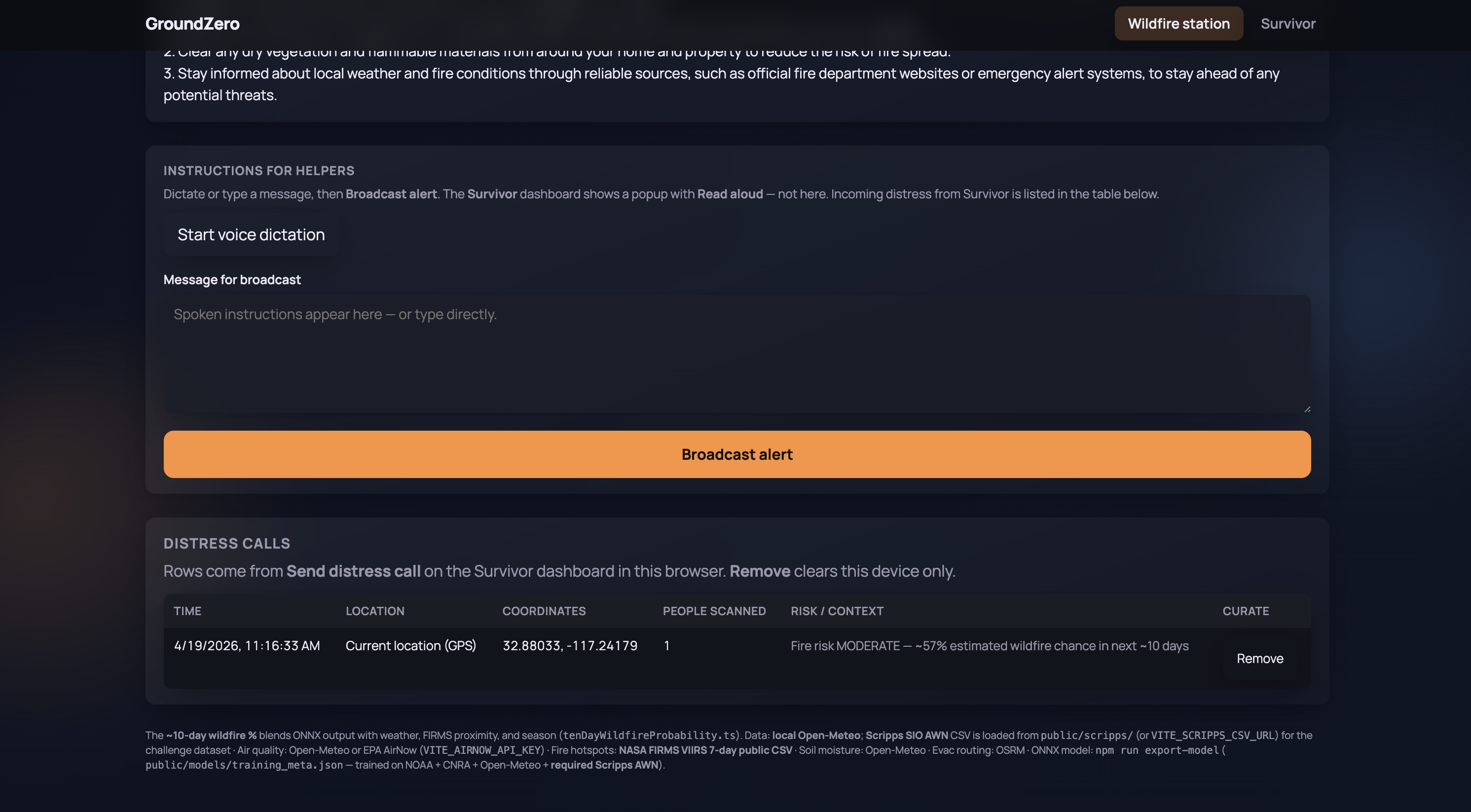
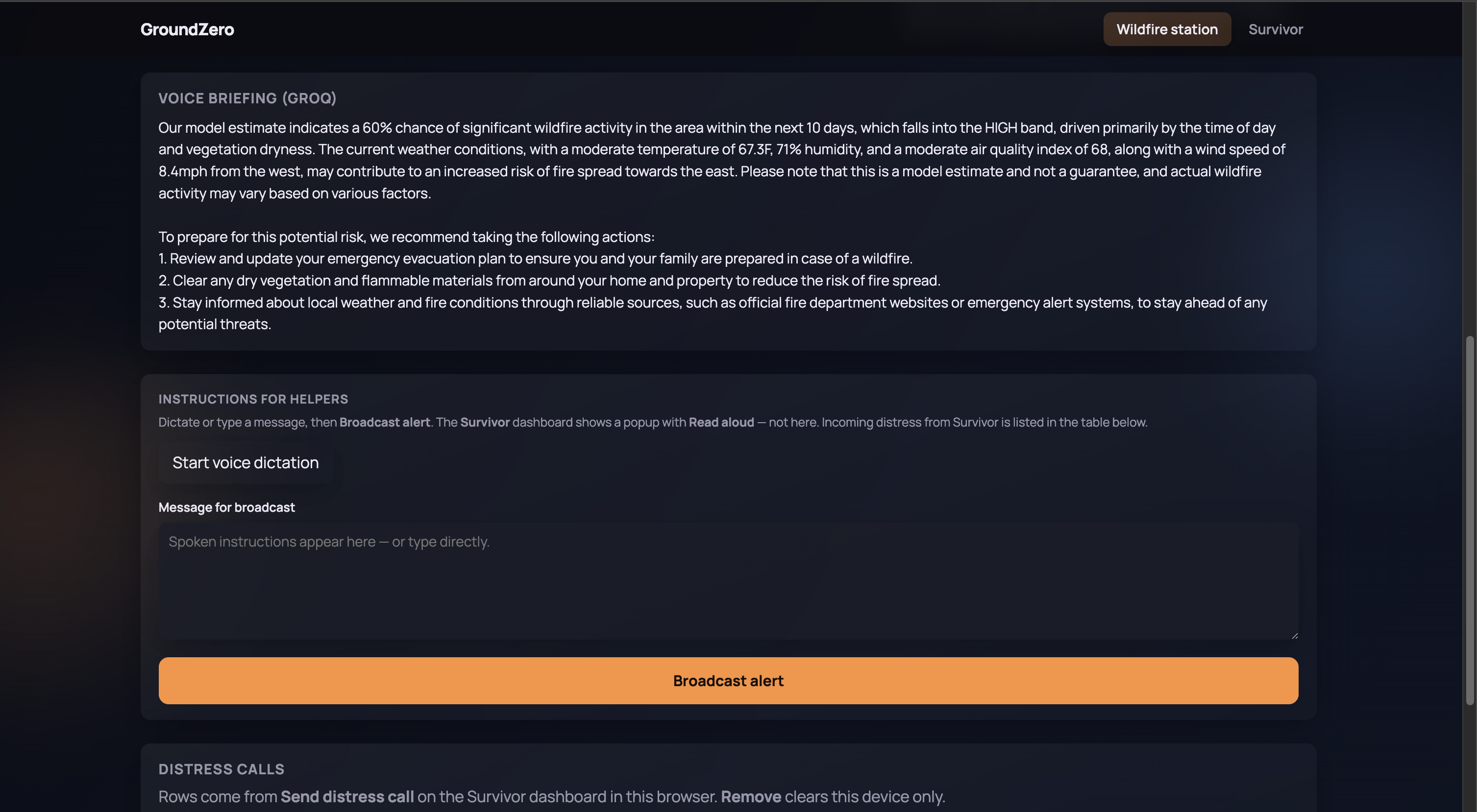
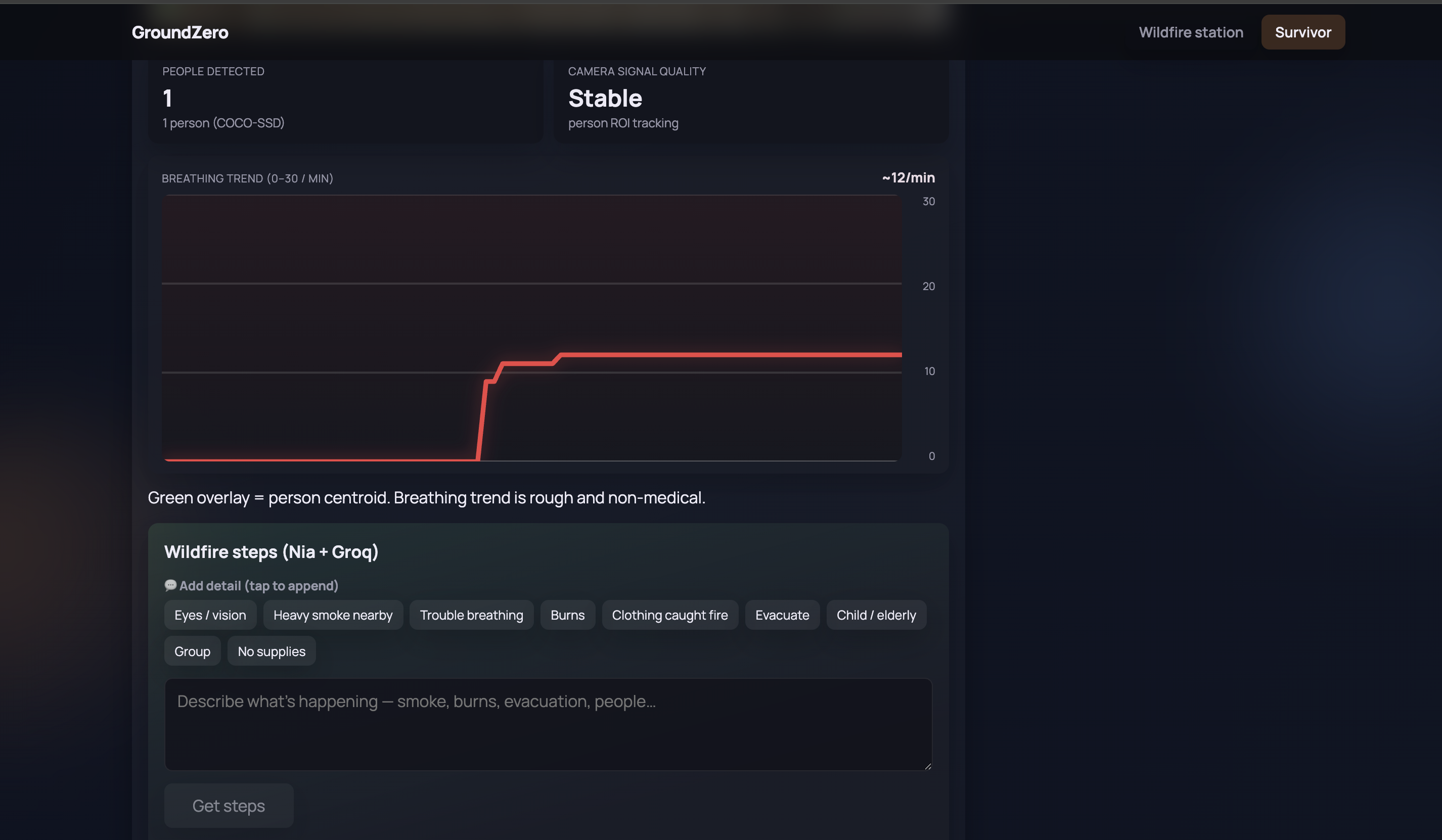
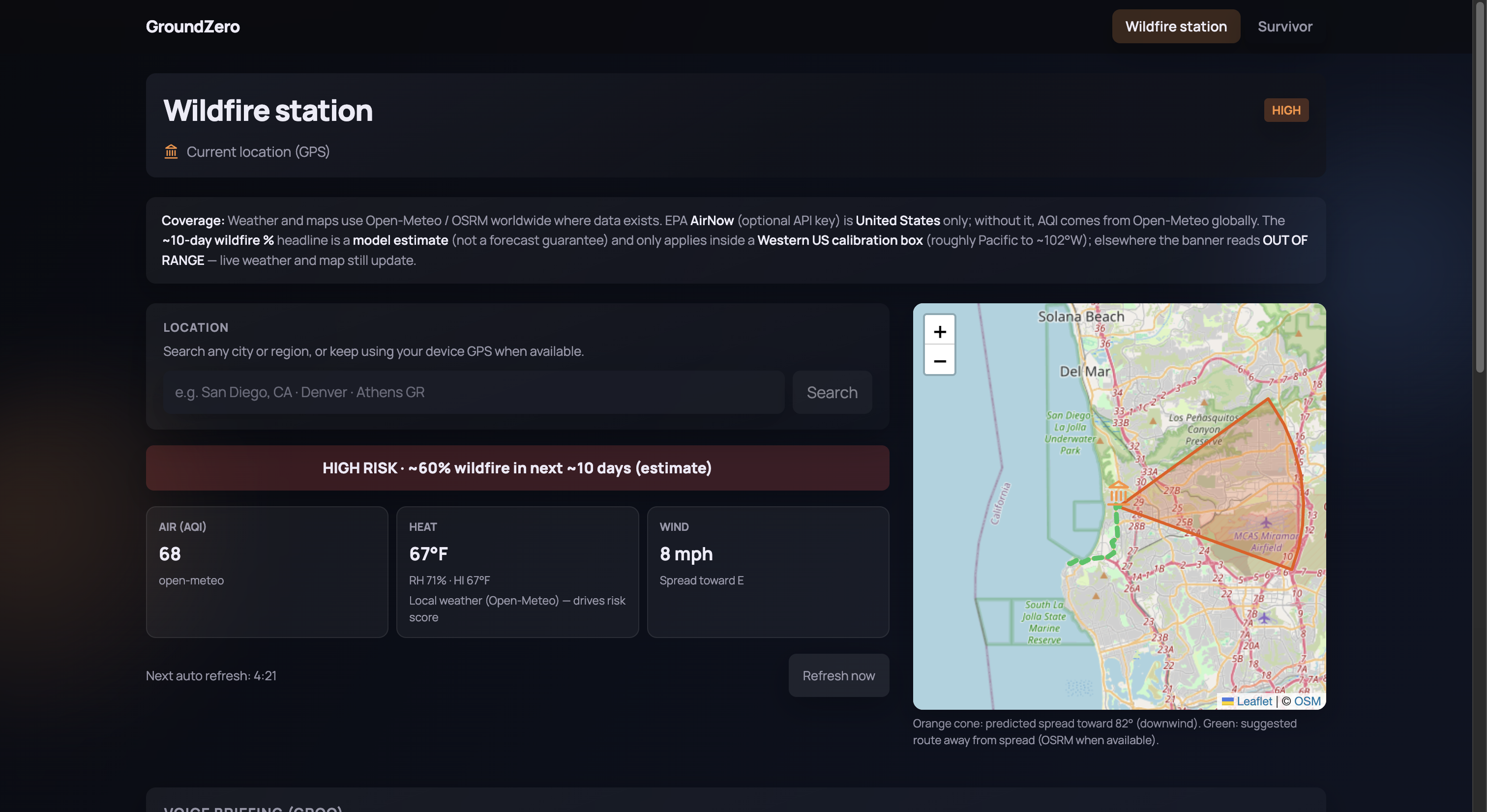
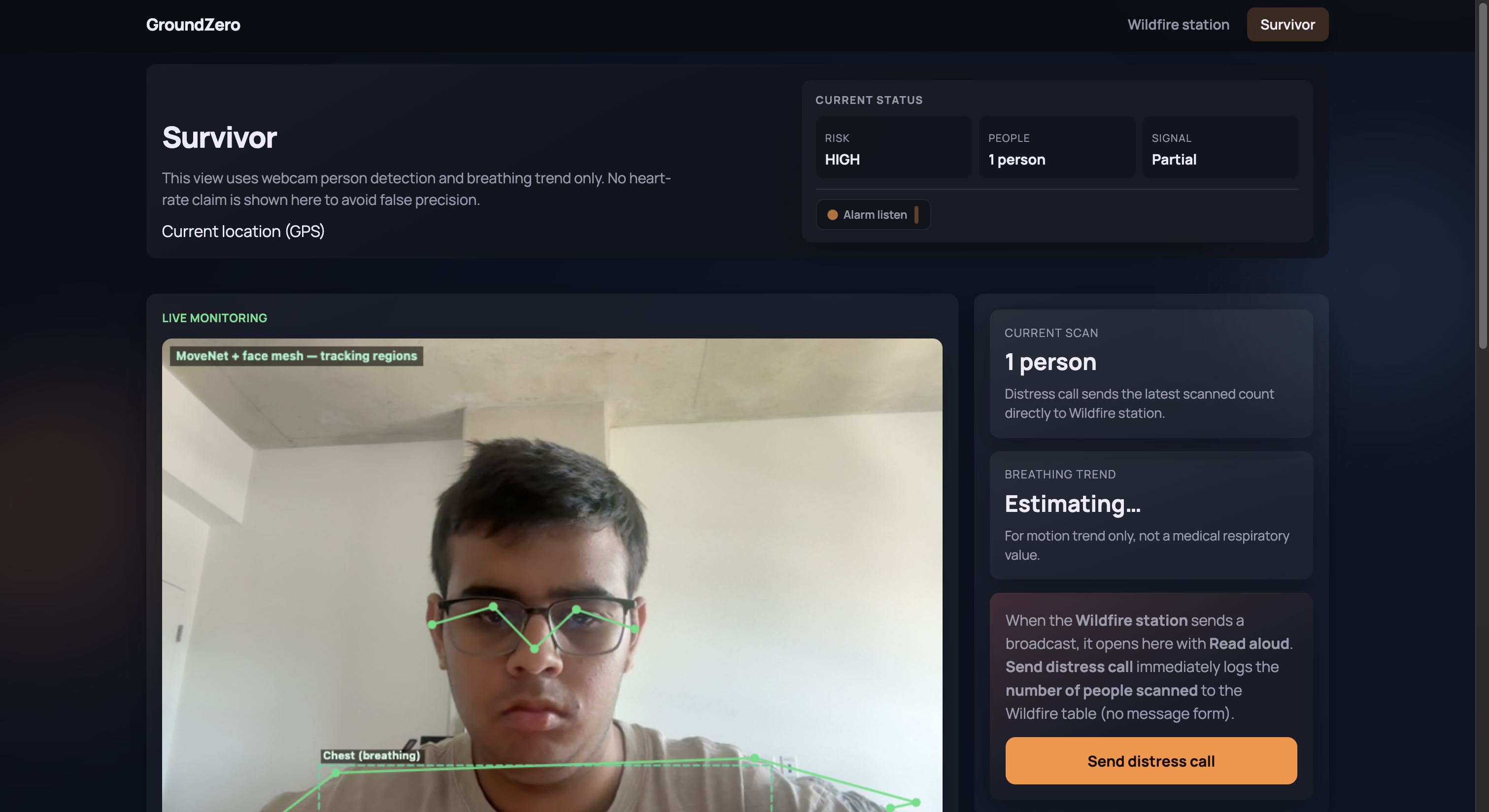
GroundZero has two dashboards. Wildfire Station is command and coordination: set location via GPS or search, get a ~10-day wildfire risk estimate, live AQI/heat/wind data, a map with wind spread cone and OSRM evacuation route, and an AI voice briefing via Groq. Helpers broadcast alerts directly to survivors. Incoming distress calls show up in a live inbox with time, GPS coordinates, people scanned, and a risk snapshot.Survivor is for the person in the event. Your webcam runs COCO-SSD to detect and count people and track a breathing trend for vitals-style awareness — no wearable, no app download. One tap sends a distress call with your GPS and people count straight to the Station. When the Station broadcasts, it reads aloud on Survivor automatically. Nia retrieves wildfire protocols; Groq turns them into clear, actionable steps.
How we built it
How we built it
Risk model: ONNX model trained on NOAA, CNRA, and Open-Meteo features, with Scripps Institution/UCSD AWN data and NASA FIRMS fire proximity Weather & maps: Open-Meteo, EPA AirNow (US), Leaflet + OSM, OSRM routing AI on-device: TensorFlow.js with COCO-SSD (people detection), MoveNet + face mesh (breathing trend), ONNX Runtime Web AI voice: Groq for voice briefings and survivor step generation; Nia for protocol retrieval Coordination: BroadcastChannel + storage fallbacks for cross-tab alert delivery; browser-local distress call inbox Audio: Classic browser audio analysis for smoke-tone listening
Challenges we ran into
Keeping the wildfire estimate honest — it's a model estimate with a defined Western US calibration box, not a guarantee. Outside that range it says OUT OF RANGE rather than silently giving bad numbers.
Accomplishments that we're proud of
A real ONNX model pipeline from NOAA/CNRA/NASA FIRMS data to in-browser inference. Breathing trend estimation with zero wearables. A one-tap distress flow that routes GPS + people count to an inbox a responder can actually triage. Groq voice briefings that are actually calibrated and useful, not generic advice.
What we learned
Browser-local coordination (BroadcastChannel) is underused and surprisingly powerful for multi-tab emergency tools. On-device ML inference has real limits in smoke and low light — being honest about signal quality matters more than faking precision. Prompt engineering for crisis contexts requires extreme care with language; confident-sounding wrong answers are worse than admitting uncertainty.
What's next for GroundZero
Multi-device distress relay beyond same-browser. Offline-first PWA mode for degraded network conditions. Expanding the ONNX model calibration box beyond Western US. Push notifications for broadcast alerts. Integration with official emergency alert APIs.
Built With
- cnra
- epa
- groq
- leaflet.js
- nia
- noaa
- onnx
- open-meteo
- osrm
- python
- react
- scripps
- tensorflow
- typescript

Log in or sign up for Devpost to join the conversation.