Research Methodologies
User Research
- 2 user interviews
- 1 expert interview (psychologist)
Social Sources
- r/abusiverelationships
- r/domesticviolence
- r/emotionalabuse
- Collected survivor narratives to capture authentic lived experiences.
Video and Narrative Analysis via YouTube
- Informational videos
- First-hand long-form videos from DV survivors
Competitive Analysis
Gemini-assisted scan of 135+ domestic violence applications across the Google Play and App Store.
Key findings:
- 46.7% of existing tools focus strictly on emergency SOS features such as alerting authorities or finding shelters
- A significant missing piece was identified: 0% of apps provided a method for addressing the “void” of identity and preference discovery
Academic Research
Consulted Sociology and Psychology papers to build a foundation of evidence-based design.
Usage of Gemini & Notability
Gemini for Brainstorming
We fed Gemini psychological frameworks (Kristin Neff, Claude Steele, Ventral Vagal theory) and it helped us rapidly translate academic concepts into product features. Going from "self-affirmation theory" to designing a "values-based anchoring screen in a self-identity formation app," was one use case of Gemini as a brainstorming partner. We also used it to poke holes in our user persona’s journey or surface key edge cases we hadn't considered.
Notability for Ideation and Sketching
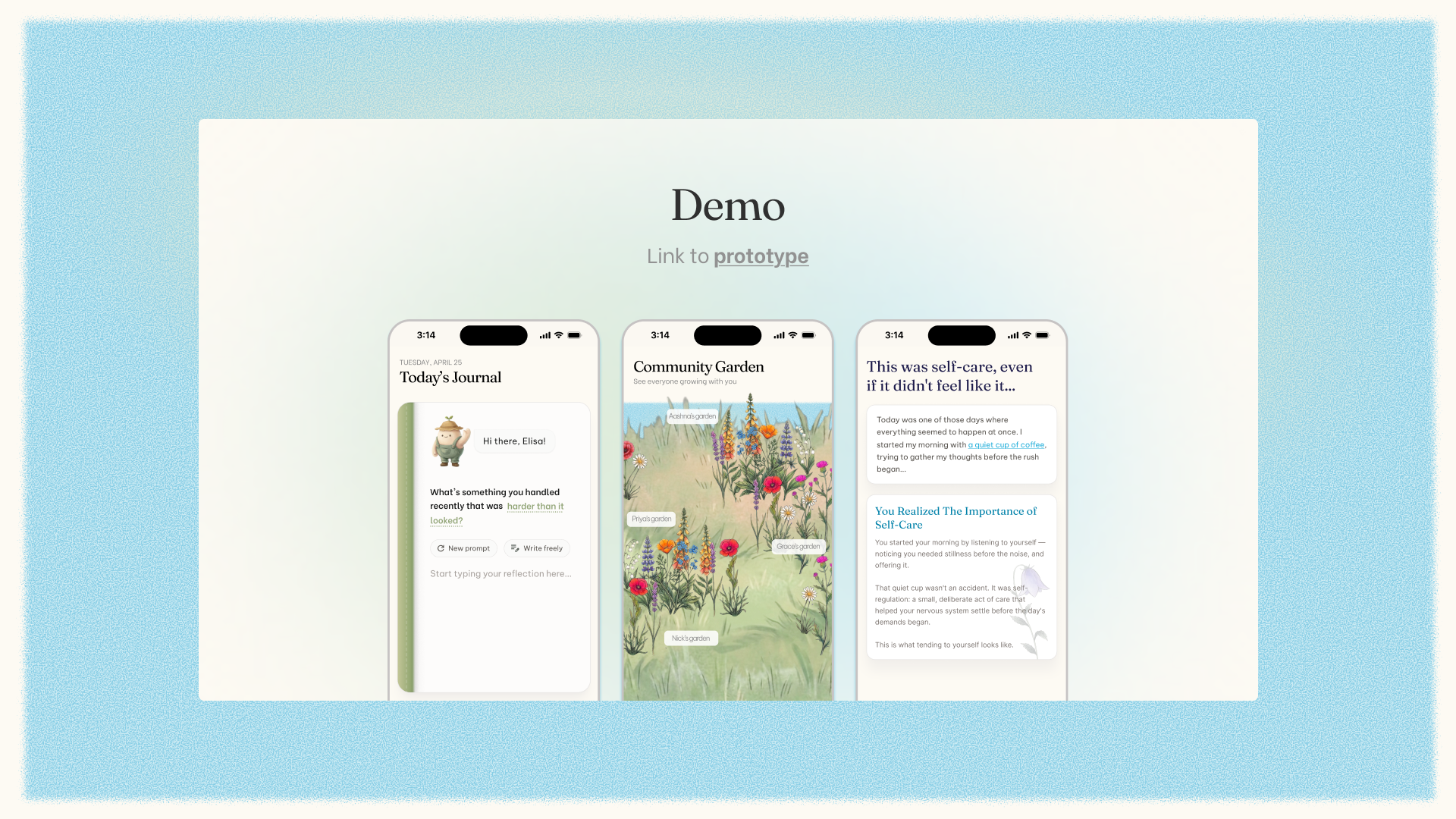
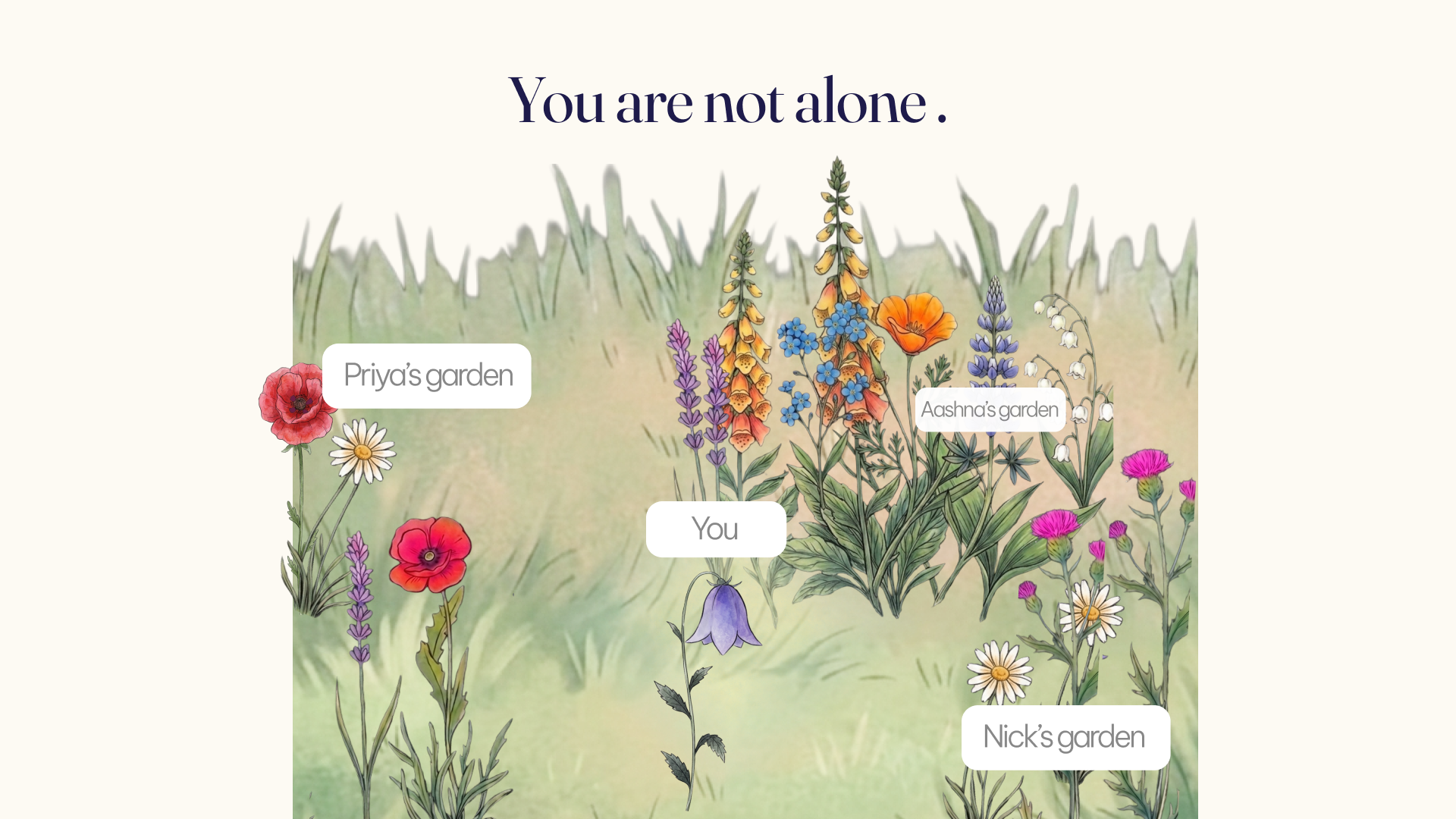
For ideating the screens specifically, Notability was a bridge between conceptual Gemini output and Figma designs. We used it to hand-sketch the Memory Garden view, visually exploring how different flowers map to different values, how the garden grows over time, and how the AI character interacts with the different screens within the journaling app. Sketching mant of our key screens first in Notability saved significant iteration time.
The Problem
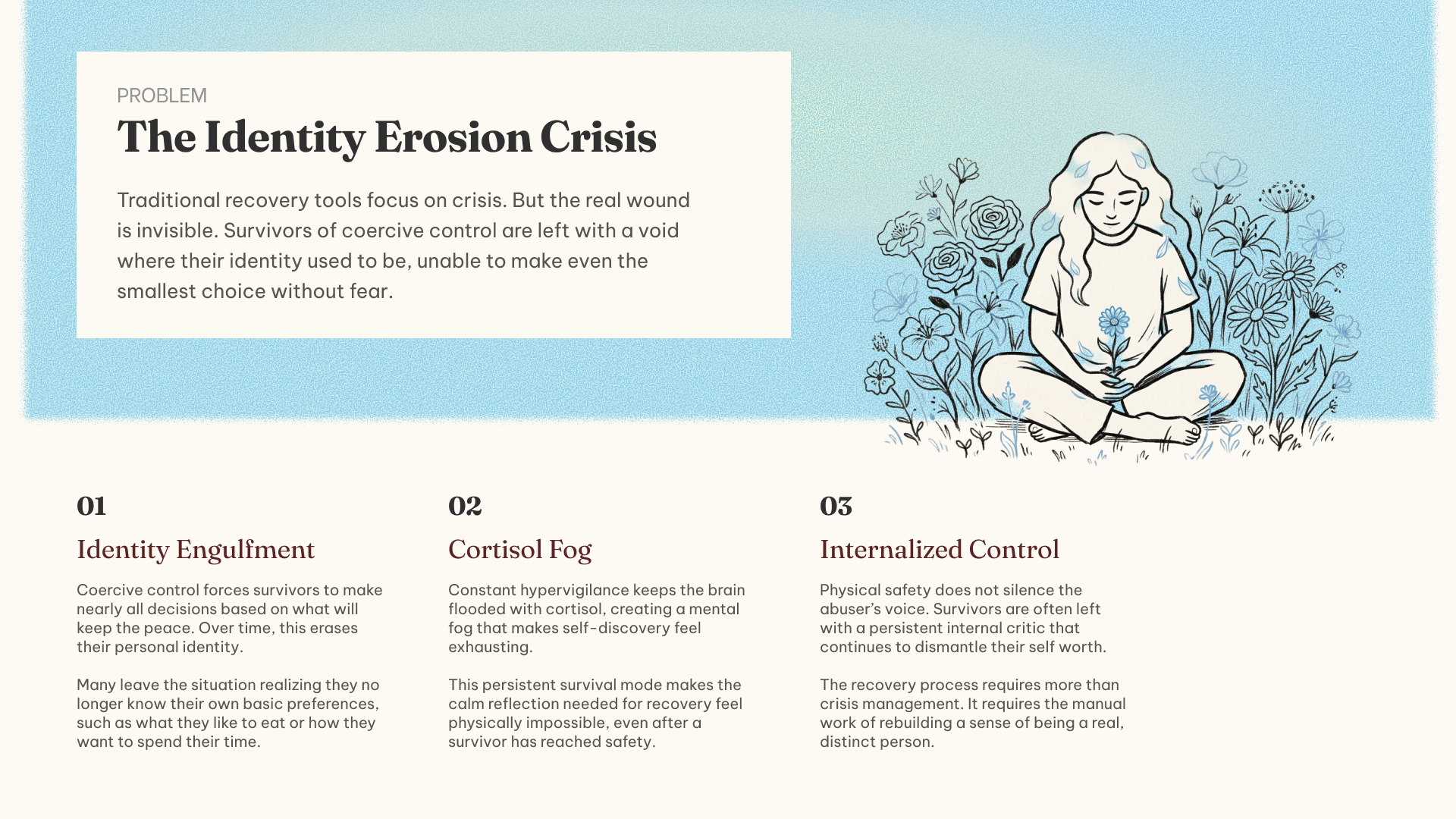
Traditional recovery tools for trauma survivors often focus heavily on the trauma itself or acute crisis management. However, individuals exiting coercive control, narcissistic abuse, or high-control environments face a specific, underserved challenge: identity erosion. Coercive control installs a critical inner voice (often mirroring the abuser) and systematically dismantles the victim's sense of self-worth, preferences, and agency. Existing journaling or productivity apps fail to account for the "cortisol fog," the fragility of a safe nervous system required for exploration, and the deep-seated belief of being "worthless" that characterizes this population.
The Solution: Groundwork
Groundwork is not a crisis app; it is a long-term companion for the "what now?" phase of recovery. It is a warm, low-friction mobile application designed to help users systematically rebuild a cohesive sense of self. It uses established psychological frameworks, self-compassion journaling, intentional exploration, value-based self-affirmation, and low-stakes play, to quiet the critical inner voice and help users reconnect with who they are, separate from who they were told to be.
Challenges We Ran Into
Core Design Challenges
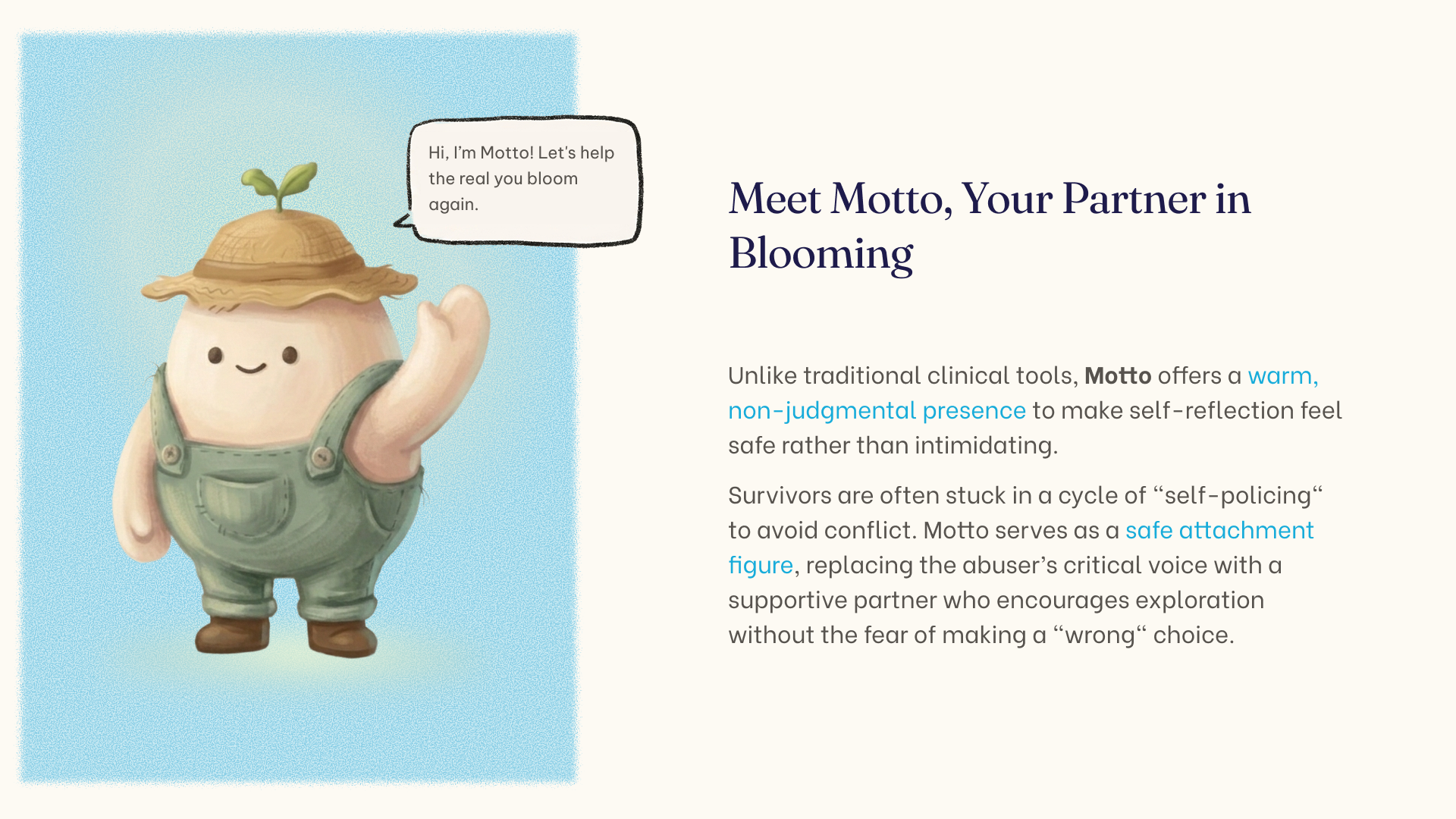
Designing for this population without causing harm. Every interaction had to be low-friction and non-coercive, the app itself couldn't replicate the pressure dynamics survivors are recovering from. We also had to resist over-featuring; the instinct was to solve everything, but the right call was to do a few things with a lot of psychological intentionality. Scoping the AI character so it felt warm and playful was also harder than expected.
Trauma-Informed Design Considerations
Trauma-informed design (TIC) seeks to create a virtual space that honors the sensitivities of those who have experienced trauma, providing a sense of safety and respect. A nervous system in distress processes visual information viscerally before it is cognitively understood. Because of this, the UI must be visually calming and non-threatening. For visual design and color palette, we considered research suggesting that cool and neutral tones such as soft greens and blues can have a calming effect on the nervous system.
Accomplishments We Are Proud Of
Grounding every feature in a key psychological framework rather than design intuition alone. The Voice Shift in particular, breaking down a first-person journal entry with compassion, is a direct, interactive implementation of Kristin Neff's technique, not just an aesthetic nod to it. The Memory Garden as a visual proof of self-expansion, rather than a streak tracker or productivity metric also felt like a genuinely new idea.
What’s Next for Groundwork
Co-design sessions with actual survivors and therapists to pressure-test the interaction model. The AI-generated flowers based on journal themes need real testing because the generative output has to feel personal and meaningful, not random. Longer term, it would be interesting to explore a therapist-facing companion view so clinicians can see a client's garden without accessing raw journal content.
Built With
- claude
- figma
- gemini
- notability


Log in or sign up for Devpost to join the conversation.