-
-
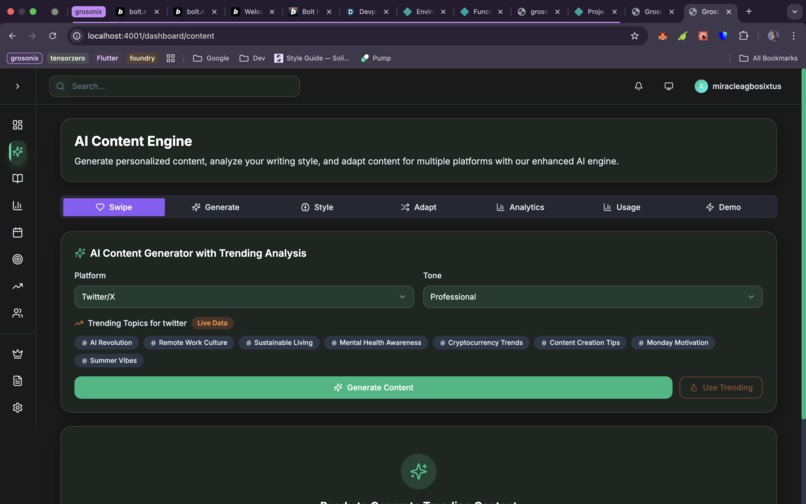
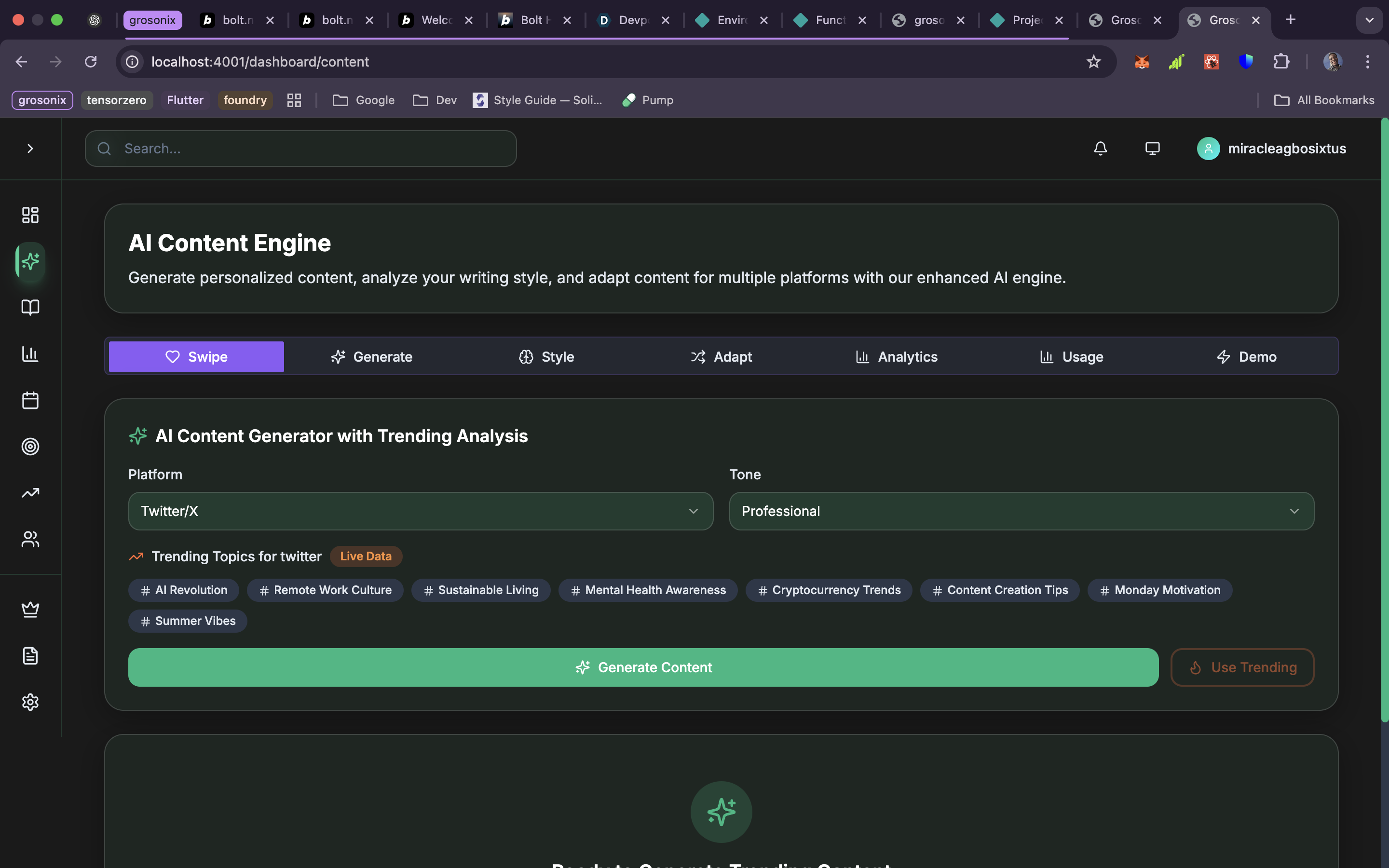
AI Content engine
-
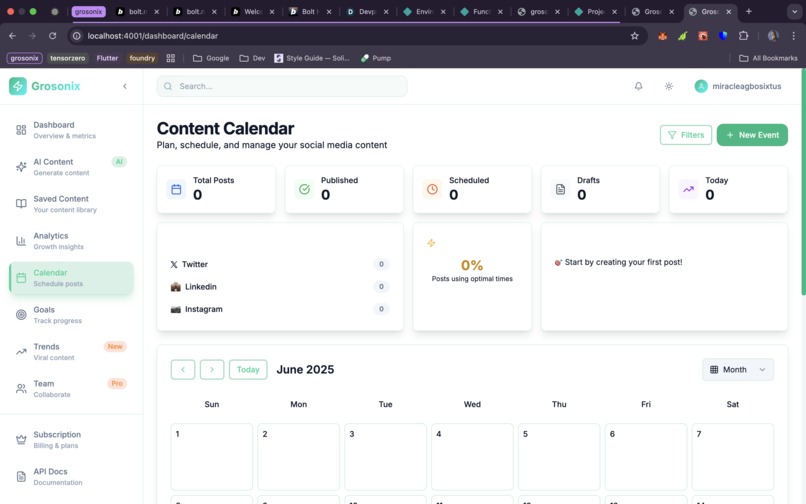
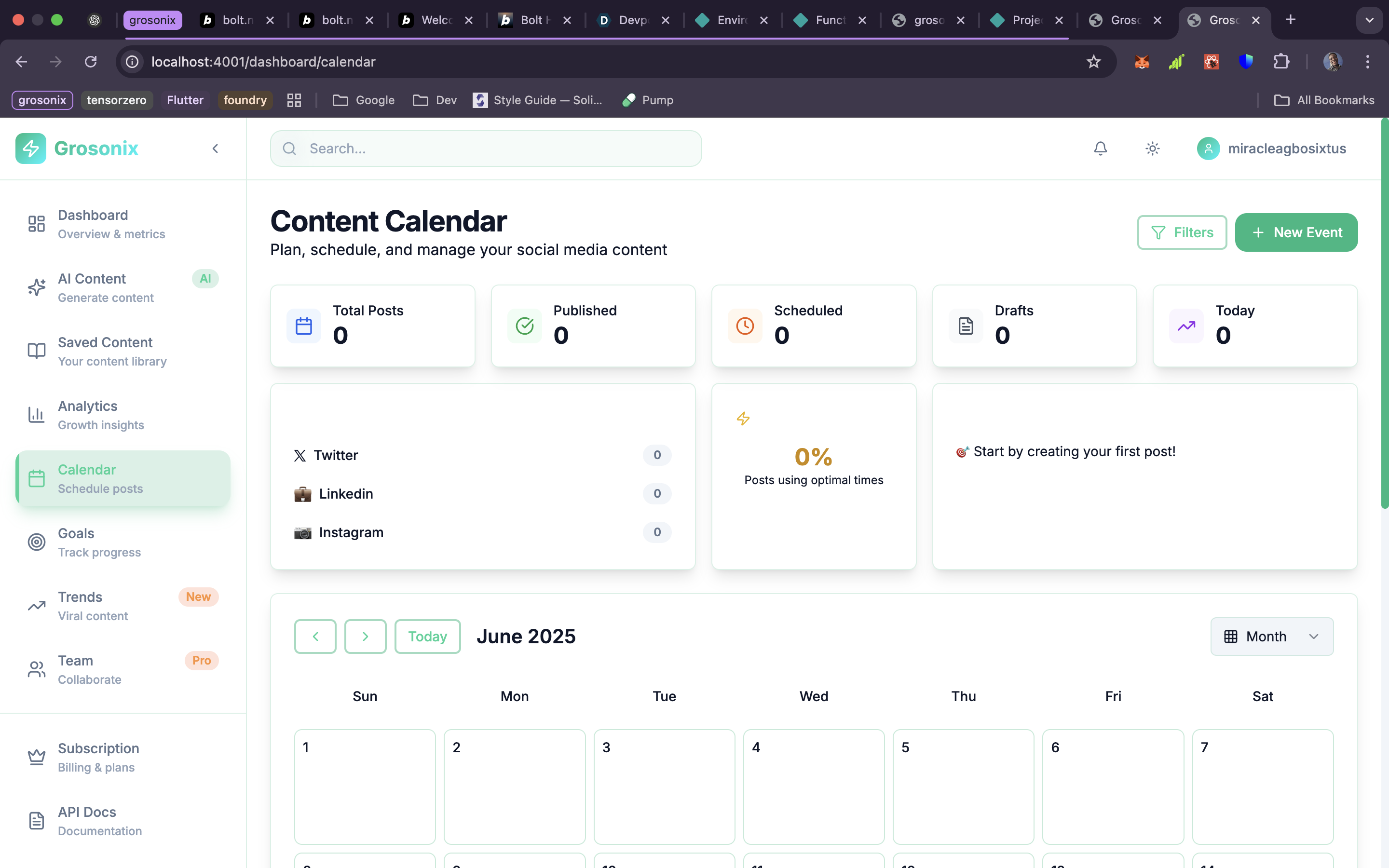
Content Calendar
-
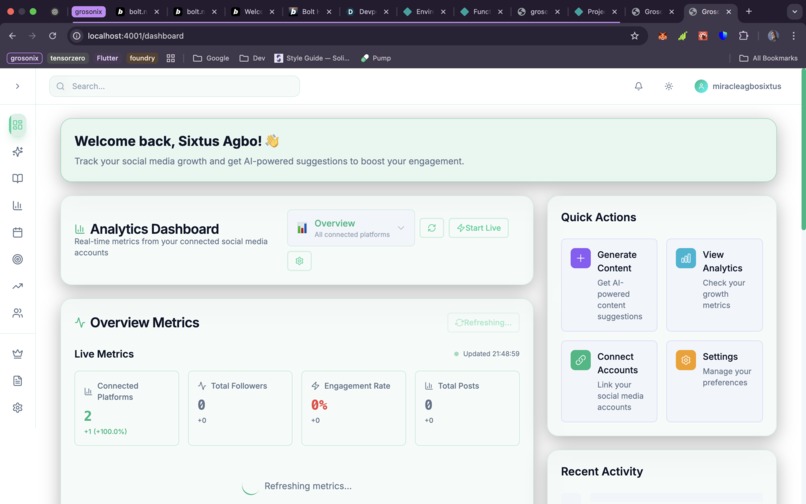
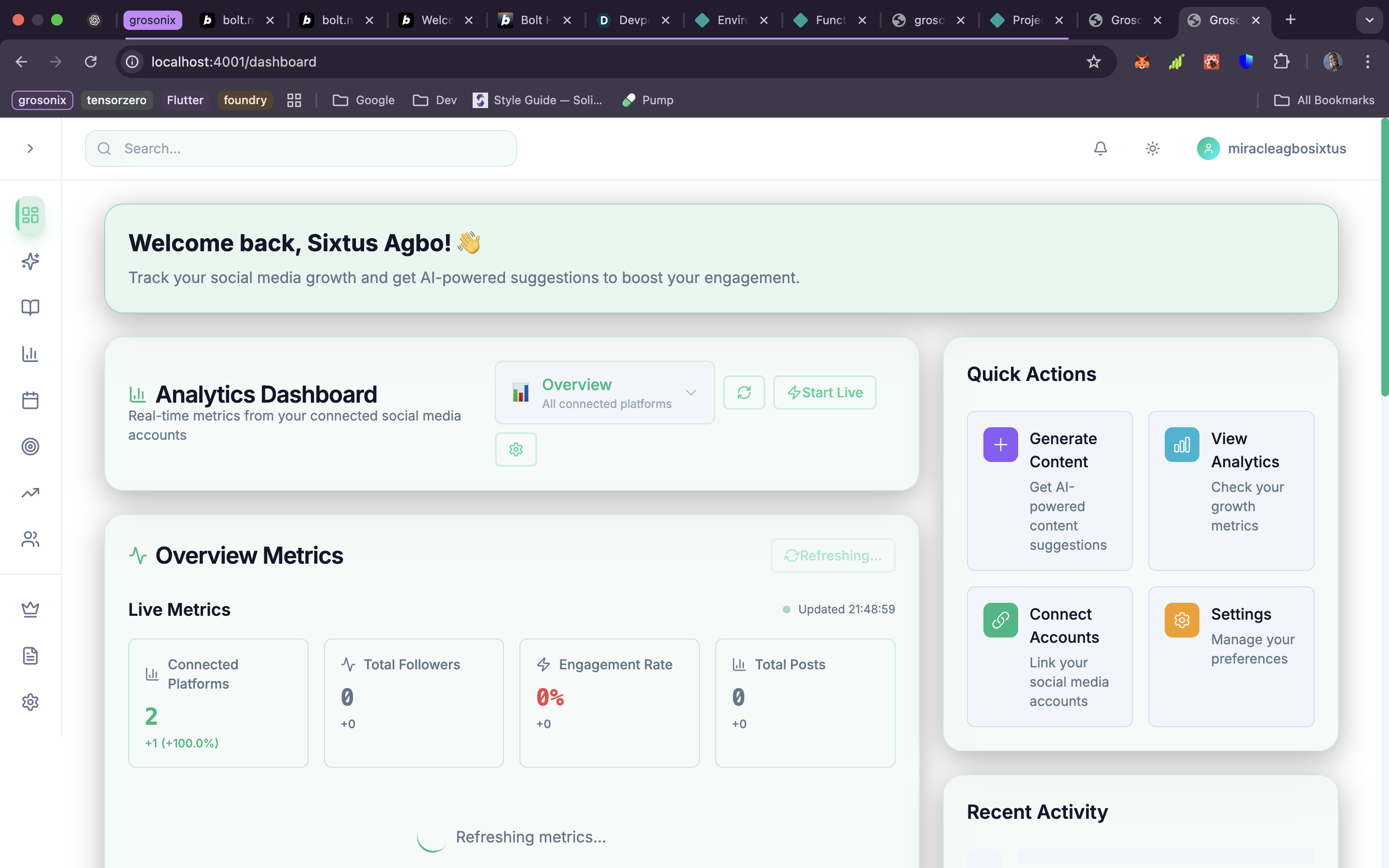
Dashboard home page
-
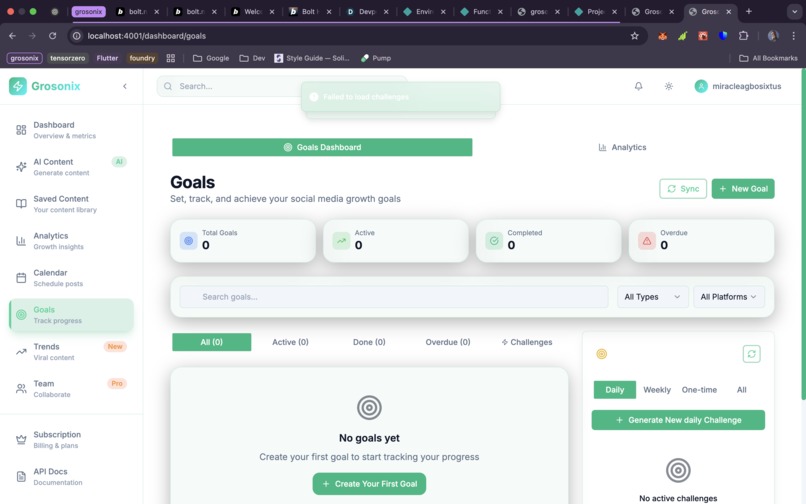
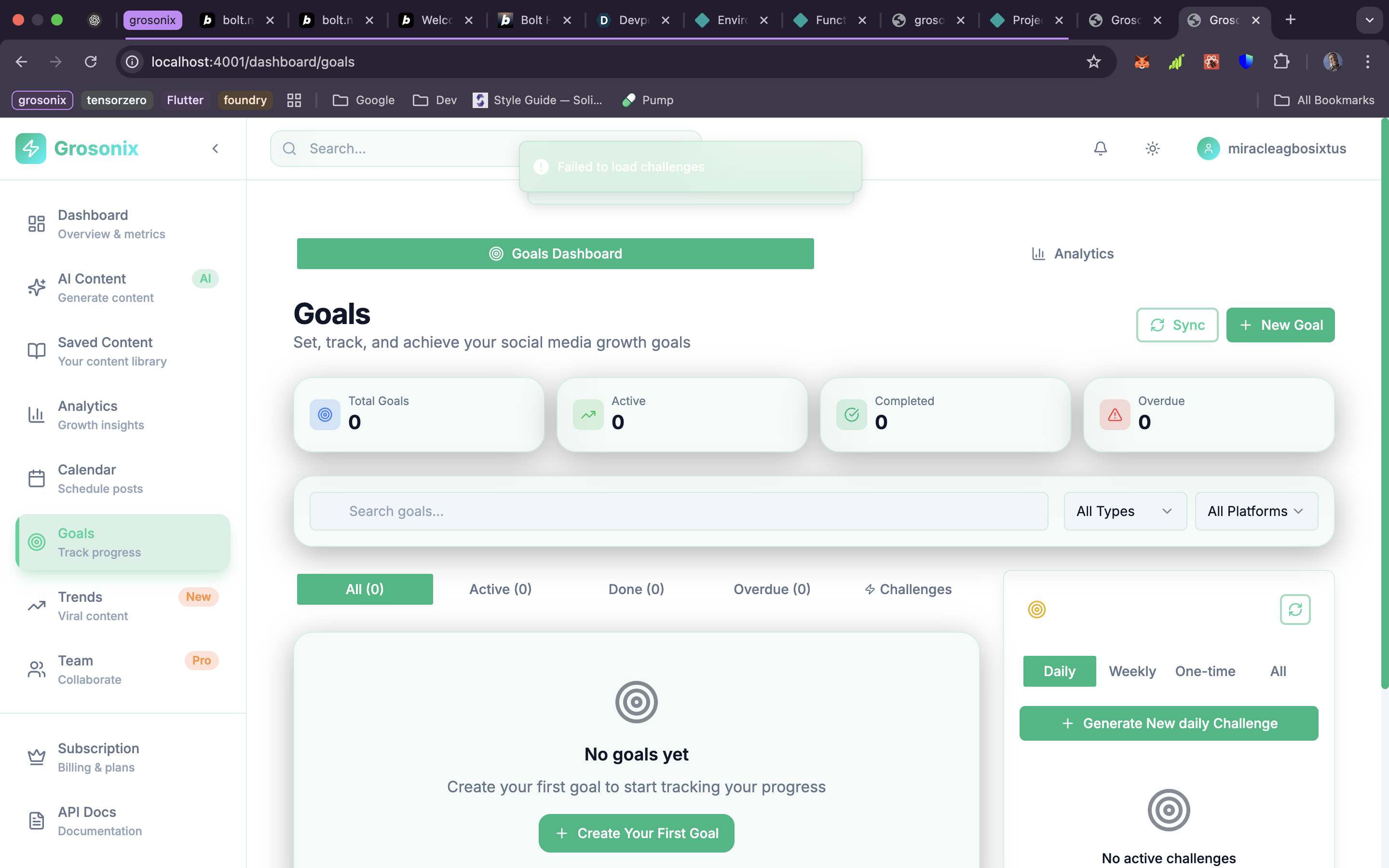
Goals
-
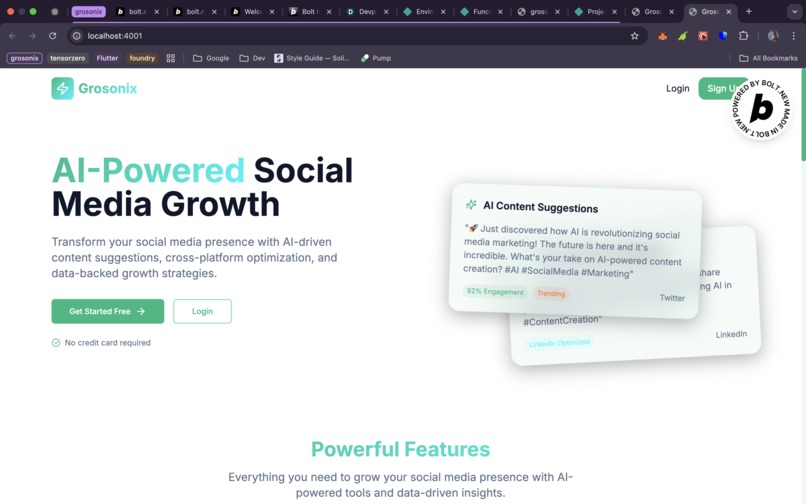
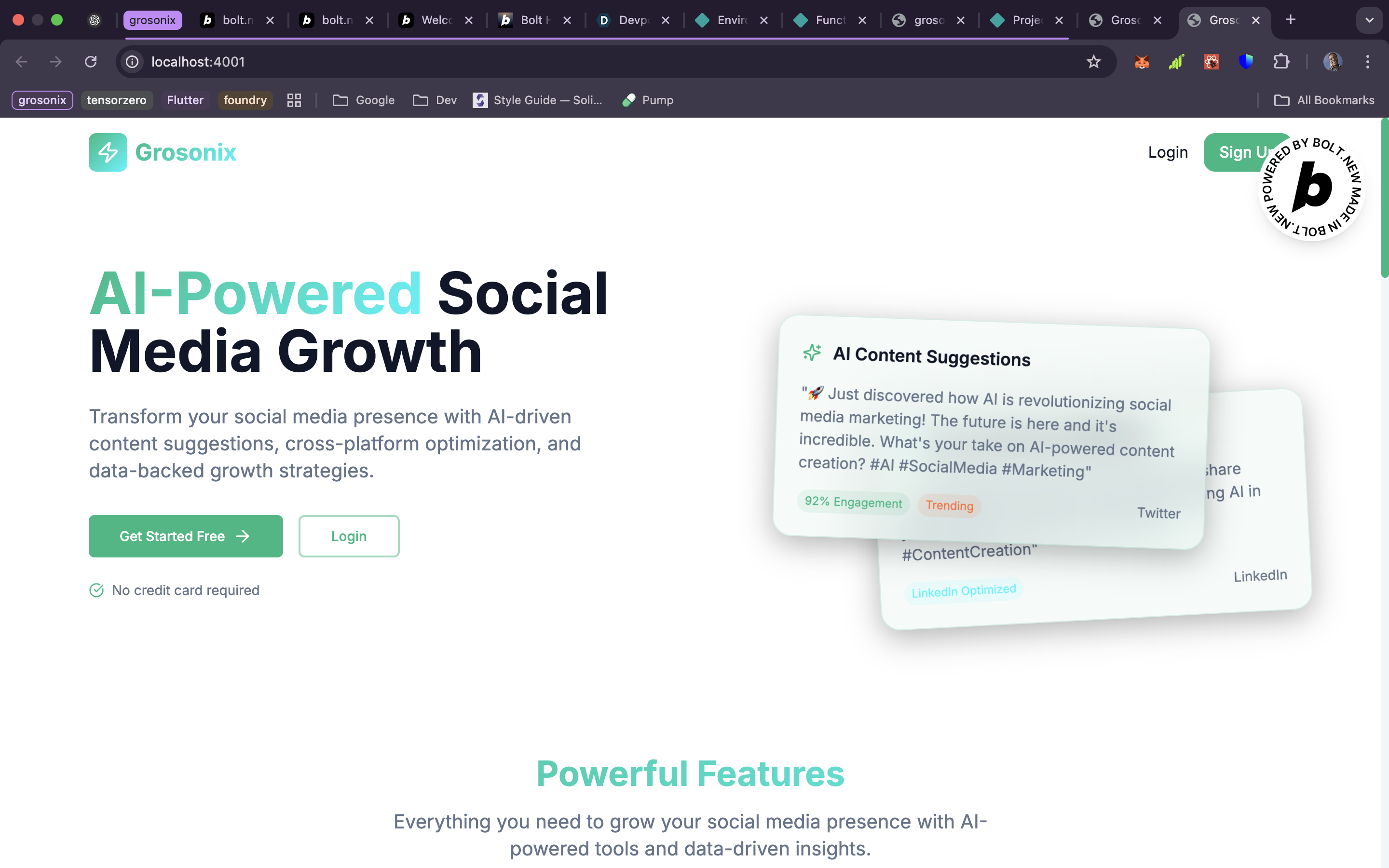
Landing page
Inspiration
The inspiration for Grosonix came from observing the struggles of content creators and small businesses trying to maintain a consistent, engaging presence across multiple social media platforms. Many creators spend hours crafting posts, only to see minimal engagement, while others go viral seemingly by accident.
The key insight was that successful social media growth isn't just about posting frequently—it's about understanding your unique voice, adapting content for each platform's algorithm, and timing your posts strategically. However, this level of optimization was previously only accessible to large brands with dedicated social media teams.
Our Vision: Democratize AI-powered social media optimization, making sophisticated growth strategies accessible to individual creators and small businesses through an intuitive, gamified interface.
What it does
Grosonix is an AI-driven social media growth platform that transforms how creators and businesses approach social media marketing:
- 🧠 AI Content Intelligence: Generates personalized content suggestions based on your unique voice and writing style
- 🔄 Cross-Platform Adaptation: Transforms a single post into optimized versions for Twitter, Instagram, and LinkedIn with platform-specific formatting
- 📊 Real-Time Growth Tracking: Monitors follower growth, engagement metrics, and performance analytics across all connected platforms
- ⏰ Smart Scheduling: Discovers optimal posting times and provides intelligent scheduling recommendations
- 🎮 Gamified Experience: Features progress bars, achievement badges, and growth streaks to keep users motivated
- 📱 Tinder-Style UI: Offers an addictive, swipeable interface for browsing and selecting AI-generated content recommendations
- 💰 Flexible Subscription Tiers: Provides Free, Pro, and Agency plans with usage-based quotas and premium features
How we built it
We chose a modern, scalable architecture that prioritizes developer experience and rapid iteration:
Frontend (Next.js 14) ↔ API Routes ↔ Supabase (Database) ↔ External APIs (OpenAI, Social Platforms)
Development Approach:
- MVP-First Strategy: Started with core AI content generation, then added analytics, scheduling, and gamification
- Component-Driven Development: Built a comprehensive design system with reusable UI components
- API-First Design: Designed RESTful APIs with comprehensive Swagger documentation
- Progressive Enhancement: Started with basic features, then added advanced AI capabilities
Key Technical Stack:
- Frontend: Next.js 14 with TypeScript, Tailwind CSS, and Framer Motion for animations
- Backend: Supabase for authentication, real-time database, and row-level security
- AI: OpenAI GPT-4 for content generation and style analysis
- Social APIs: Twitter API v2, Instagram Graph API, LinkedIn API
- Payments: RevenueCat and Stripe for subscription management
- Deployment: Netlify with static export for optimal performance
Challenges we ran into
1. AI Rate Limiting & Cost Management OpenAI API costs can escalate quickly with user growth. We implemented intelligent caching for similar content requests, built a sophisticated rate limiter with subscription tier enforcement, and added usage analytics to monitor costs.
2. Cross-Platform Content Adaptation Each social platform has different character limits, hashtag conventions, and audience expectations. We created a content adapter system that understands platform-specific rules while maintaining the user's unique voice.
3. Real-Time Analytics Performance Displaying live follower growth without overwhelming the database required implementing intelligent caching strategies, using Supabase real-time subscriptions, and building efficient database queries with proper indexing.
4. OAuth Integration Complexity Managing OAuth flows for multiple social platforms simultaneously was complex. We created a unified social authentication system with robust error handling and token refresh mechanisms.
5. Mobile-Responsive Gamification Creating an engaging, mobile-first interface required adopting a mobile-first design approach with Framer Motion animations and touch-friendly swipe gestures.
6. Subscription Management Building a flexible subscription system that handles trials, upgrades, and usage tracking required integrating RevenueCat with comprehensive quota management.
Accomplishments that we're proud of
- 🚀 Complete AI Content Engine: Successfully implemented GPT-4 integration with style analysis, cross-platform adaptation, and intelligent rate limiting
- 📱 Innovative UI/UX: Created a unique "Tinder-style" swipeable interface that dramatically increased user engagement with AI suggestions
- ⚡ Real-Time Performance: Built a responsive dashboard that updates user metrics in real-time while maintaining excellent performance
- 🔐 Robust Authentication: Implemented secure OAuth flows for multiple social platforms with comprehensive error handling
- 💰 Scalable Subscription System: Developed a flexible tier system with usage tracking that can easily accommodate new features
- 🎨 Modern Design System: Embraced glassmorphism with sophisticated dark/light theme support and smooth animations
- 📊 Comprehensive Analytics: Built detailed analytics tracking for user engagement, content performance, and subscription conversions
What we learned
Technical Learnings:
- AI Integration Complexity: Implementing GPT-4 for content generation required careful prompt engineering and rate limiting strategies
- Cross-Platform Optimization: Each social media platform has unique constraints that require specialized handling
- Real-time Analytics: Building responsive dashboards requires intelligent caching and efficient database design
- Authentication at Scale: Implementing secure OAuth flows for multiple platforms simultaneously is complex but achievable
Product Learnings:
- Gamification Psychology: Users respond strongly to progress bars, achievement badges, and growth streaks
- Freemium Balance: Finding the right balance between free features that provide value and premium features that drive conversions
- Mobile-First Design: The swipeable interface dramatically increased user engagement with AI suggestions
Business Learnings:
- Subscription Tiers: Users prefer clear, value-based pricing tiers rather than complex usage-based models
- Onboarding Flow: A guided setup process that connects social accounts and analyzes existing content is crucial for user activation
What's next for Grosonix
Immediate Roadmap (Next 30 Days):
- 📱 Mobile App Development: Extend the platform to iOS and Android with React Native
- 🔍 Advanced Analytics: Add competitor analysis and trend prediction features
- 🤖 Enhanced AI: Implement more sophisticated content optimization and A/B testing capabilities
Medium-term Goals (3-6 Months):
- 📅 Content Calendar: Full scheduling system with drag-and-drop interface and bulk operations
- 👥 Team Collaboration: Multi-user accounts for agencies with role-based permissions
- 📈 Advanced Reporting: Custom report generation and white-label analytics for agencies
- 🎯 Audience Insights: Deep demographic and psychographic analysis of followers
Long-term Vision (6-12 Months):
- 🌐 Platform Expansion: Add support for TikTok, YouTube, Pinterest, and emerging platforms
- 🤝 Integration Ecosystem: Connect with popular tools like Hootsuite, Buffer, and Canva
- 🧠 Predictive AI: Machine learning models that predict viral content with high accuracy
- 💼 Enterprise Features: Advanced security, compliance, and custom integrations for large organizations
Built With
- framer
- lucide-react
- nextjs
- radix-ui
- react
- supabase
- tailwindcss
- typescript


Log in or sign up for Devpost to join the conversation.