

Inspiration
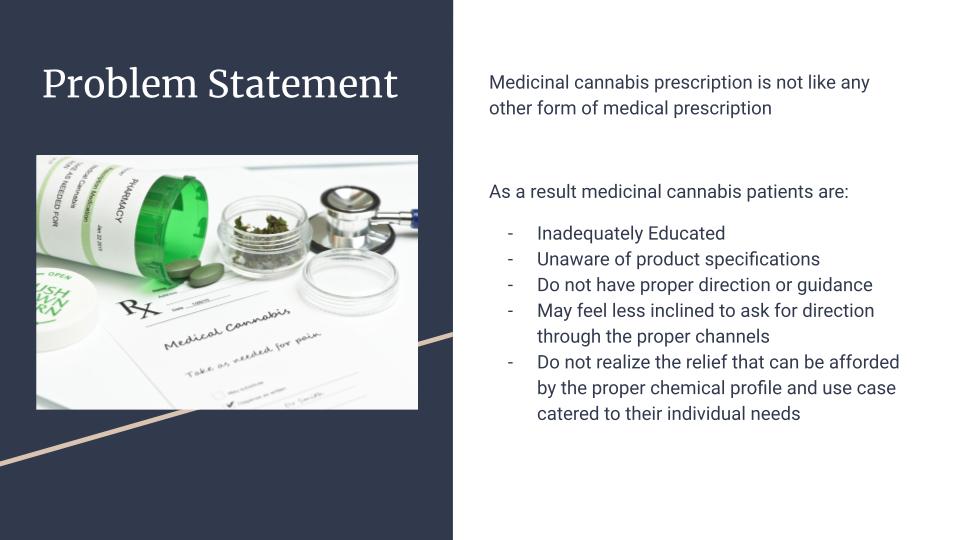
Medical Marijuana is a rapidly expanding industry as it is being used to treat anxiety, insomnia, and a variety of other ailments. However, the drug is largely misunderstood as information on proper terpene, cannabinoid, and strains is not widely accessible. Through the use of this platform, patients will be able to utilize the resource to its full potential.
What it does
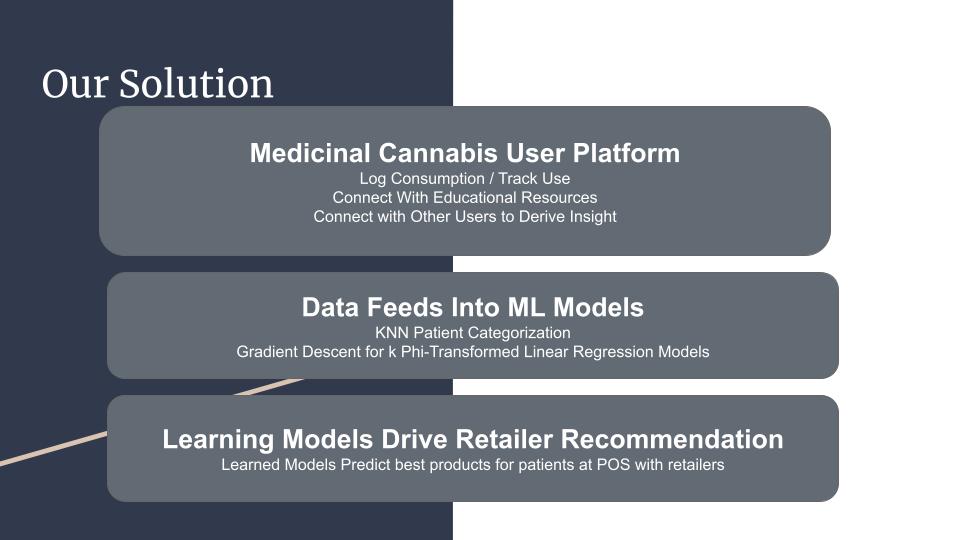
The platform we’ve created consists of two components: (1) Journaling app for medicinal cannabis users to track their experience with each product’s chemical makeup, with insight crowdsourced across the entire user group (2) An AI mechanism that uses this crowdsourced data to augment the retailer’s recommendation behind the counter with profiled information on a user’s desired chemicals and effects.
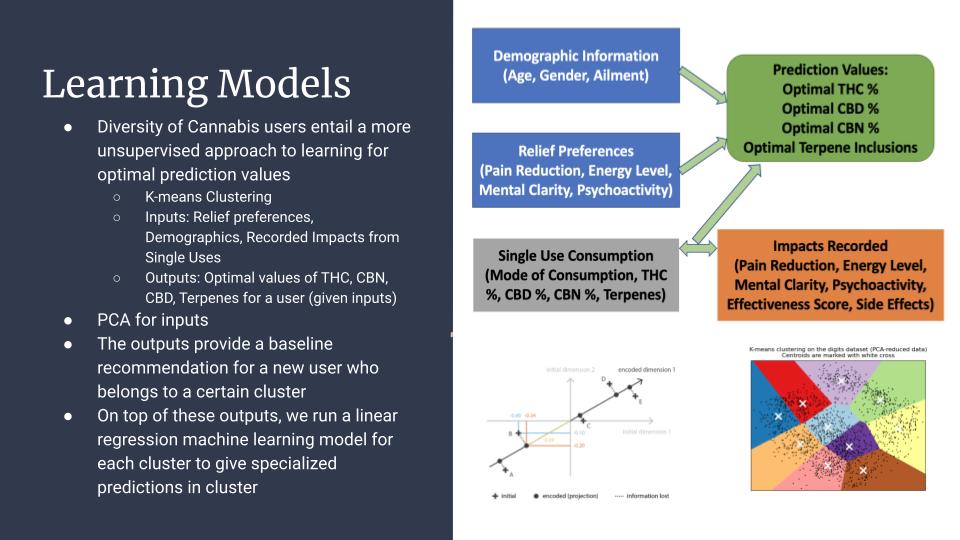
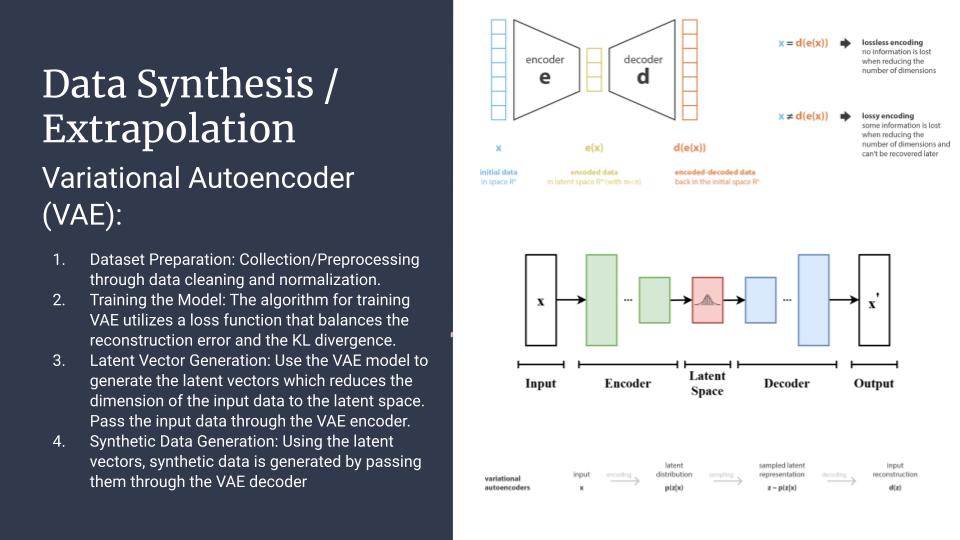
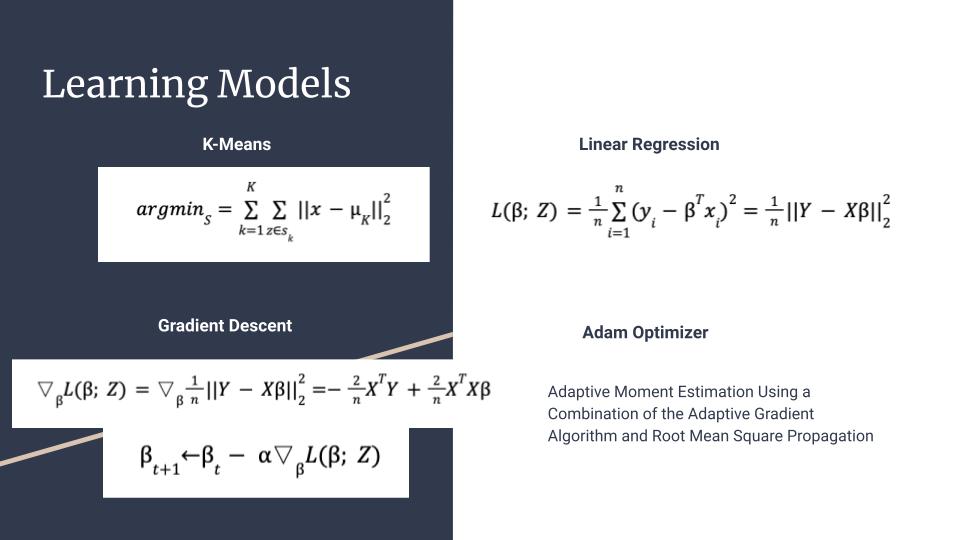
Noting a platform challenge in creating data inflow, we’ve designed a scheme to test boilerplate learning models on synthetic datasets we’ve generated based on limited survey input and current academic research gathered surrounding various ailments where certain chemical compounds have been shown as proven methods of relief. Our intention is to illustrate how the platform can facilitate insights at the patient and retailer level informed by synthetic taste profiles. On-platform, the patient will be able to journal a cannabis experience with a product-specific chemical mix through rating the impact of key relief factors. Providing easy routing to sources of truth on cannabis science and wellness is core to the value that will drive user interaction. ChatGPT is a conversational intelligence tool for direct Q&A, alongside content from Greenbridge Health to explain cannabinoids, terpenes, and other scientific cannabis concepts.
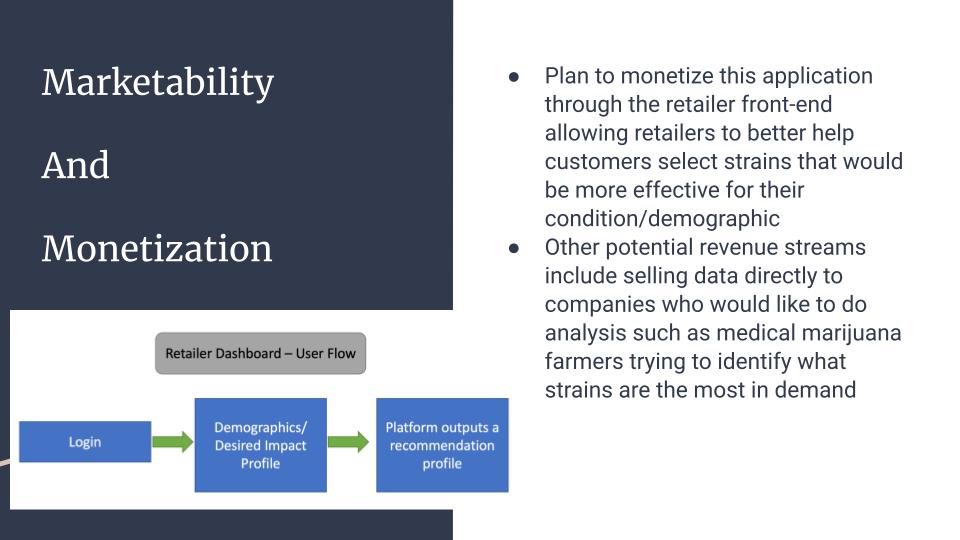
In addition, the recommendation system will be targeted towards retail dispensary owners as they are the primary point of sales for medical marijuana products and they do not have strong information/knowledge related to the correlation of certain strains’ chemical composition and their effects for treating a variety of illnesses. Based on some of the data and anecdotal experiences (from the surveys we sent out), there seems to be a correlation between chemical strain composition and the effectiveness/efficiency of treatment for certain diseases as well as interactions e.g. some terpenes create difficulties for people with migraines or they are more effective at treating inflammation. As of now, we have created a front-end to allow users to journal their usages, share their empirical ideas (i.e. what works for them) connected to a database backend. Our next steps for the project include building out a front end for the retailers to provide recommendations given a patient’s background as well as a tool for helping users to better calibrate what they are using.
How we built it
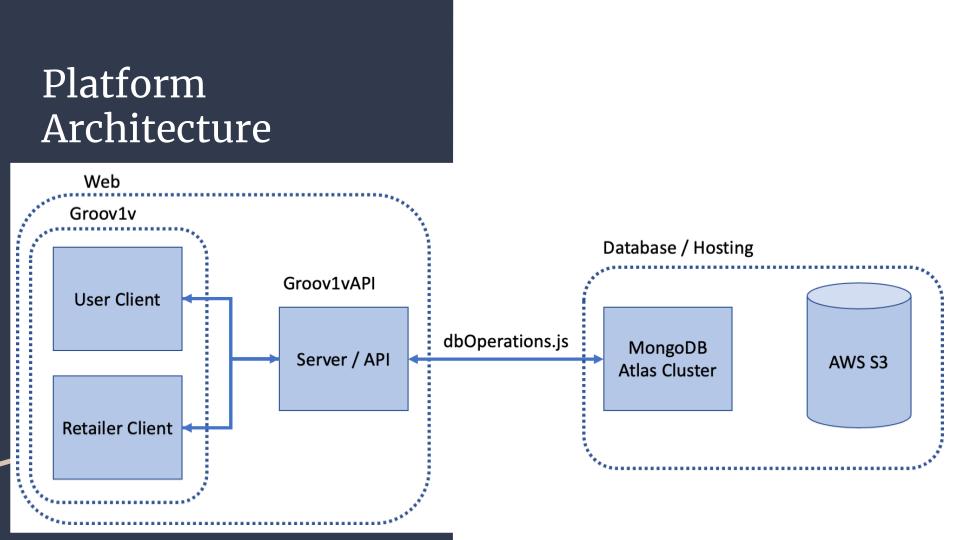
The web architecture for our platform was built using React for the client side front-end. The backend of our application is run through a server built in Node.js and Express with the backend database hosted on a MongoDB cluster with an AWS instance. The main libraries used for the creation of the front-end application were from @mui.icions-material and routing through react-router-dom from npm.js. The platform encapsulates several key functionalities that together create a functional interface for medicinal cannabis users to iteratively improve their treatment over time. The retailer platform, similar to the onboarding for the user-end flow, asks a few short demographic, ailment, and desired medicinal impact questions that a customer could answer in just a few minutes in store that then utilizes our model to yield a product recommendation. This recommendation provides a desired chemical profile for major cannabinoids including THC, CBD, CBN, terpenes, and total cannabinoid levels. The retailer user flow is such that they login, provide answers to demographic and impact for relief profile, and submit the responses and the platform yields a recommendation profile.
Data collected from this application communicates via a REST (Representational State Transfer) API we have developed specifically for this application use case. This REST API communicates with a REST Server that concurrently runs with the front-end application to handle HTTP requests over the internet. This server communication then facilitates data flow to a database hosted with MongoDB on AWS via a set of database operations that we have coded specifically for this application implementation. This allows for two-way dataflow and communication between the local web application and our database hosted on the backend, with proper permissions to ensure anonymity for requests from the retailer portal and standard permissions for requests from the user portal.
Challenges we ran into
Our biggest challenge was organization and proactivity. Due to the fact that we did not have a clear idea of what our product would be, it took us a while to make steps in the right direction. We had to figure out what type of worker each team member was, what motivated them, and what their interests were. After we figured out what each team members skill set was, whether it be PM, Software Development, or data analytics, we were able to make progress towards an end goal.
Accomplishments that we're proud of
When we began the project, we did not understand the market thoroughly and as a result we had to go through several iterations to build a useful tool. We started off as a basic user platform that would allow users to log symptoms and then output a strain response. We expanded into a multi-platform tool that serves as a social platform, a journaling tool, and a recommendation service all in one.
What we learned
While many technical skills were picked up along the way, the team was able to find their individual strengths in the project process. Individually, we were able to develop project management skills and rapid problem solving skills. Furthermore, we were able to figure out how to communicate in a manner that was productive and healthy despite all coming from different backgrounds.
What's next for Groov
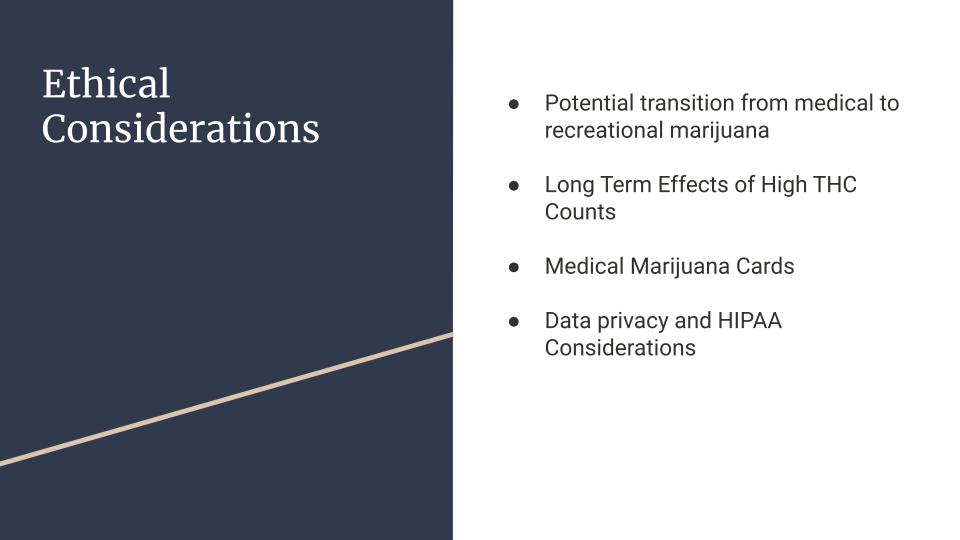
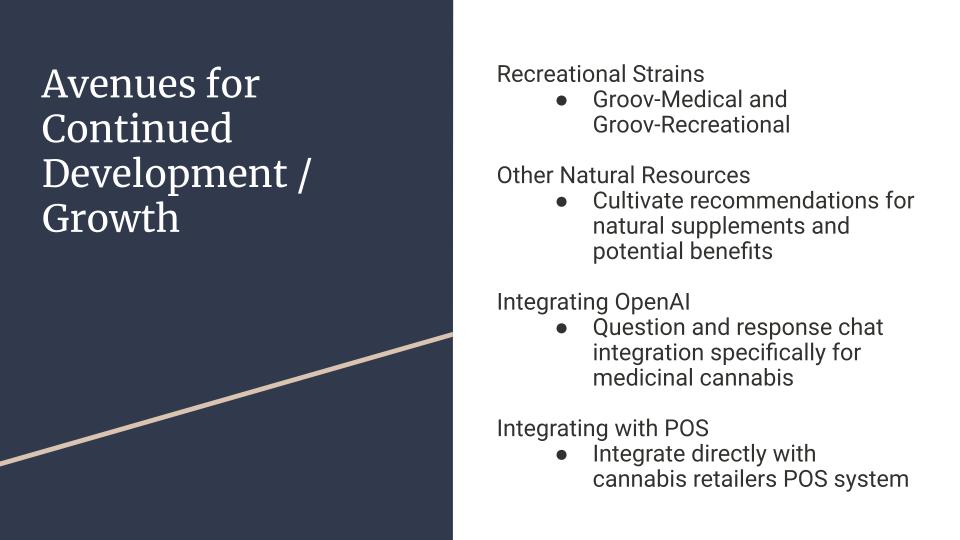
We plan to implement several features as we begin to expand our project. For one, we hope to introduce a recreational platform that will allow recreational marijuana users to utilize the drug in a safe and healthy manner, to avoid and mitigate any potential risk. This will also allow us to expand across state lines due to varying levels of legality across the United States. Furthermore, we will integrate OpenAI into the system with Chat and Response services to ensure each of our users are getting accurate and specified care. The team also hopes to introduce a Point of Sale system which will allow dispensary workers to connect directly to each patients profile to ensure all recommendations are accurately catered.

Log in or sign up for Devpost to join the conversation.