Inspiration
In many parts of Kenya and across Africa, reproductive health conditions such as ovarian cysts often go undiagnosed due to limited access to medical specialists, language barriers, and a lack of culturally aware health technology. GROOT – CystCare-AI was created to bridge these gaps by providing an intelligent, multilingual, and mobile-first healthcare platform that empowers both patients and healthcare providers. Our mission was to make reproductive health services more inclusive, accessible, and supportive — especially in underserved communities.
What it does
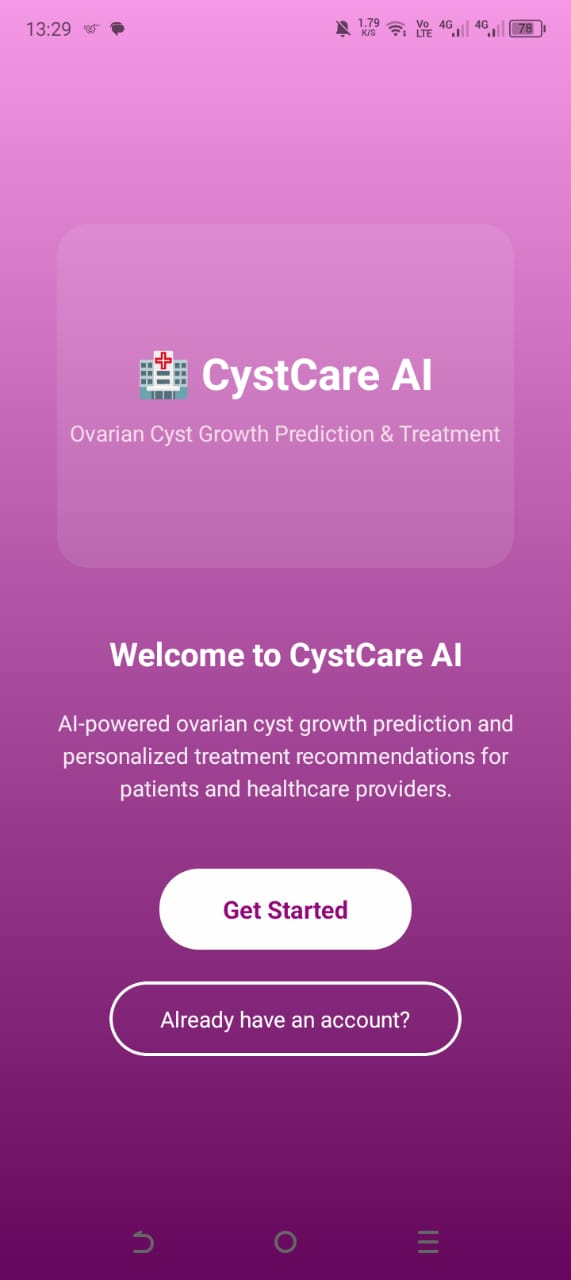
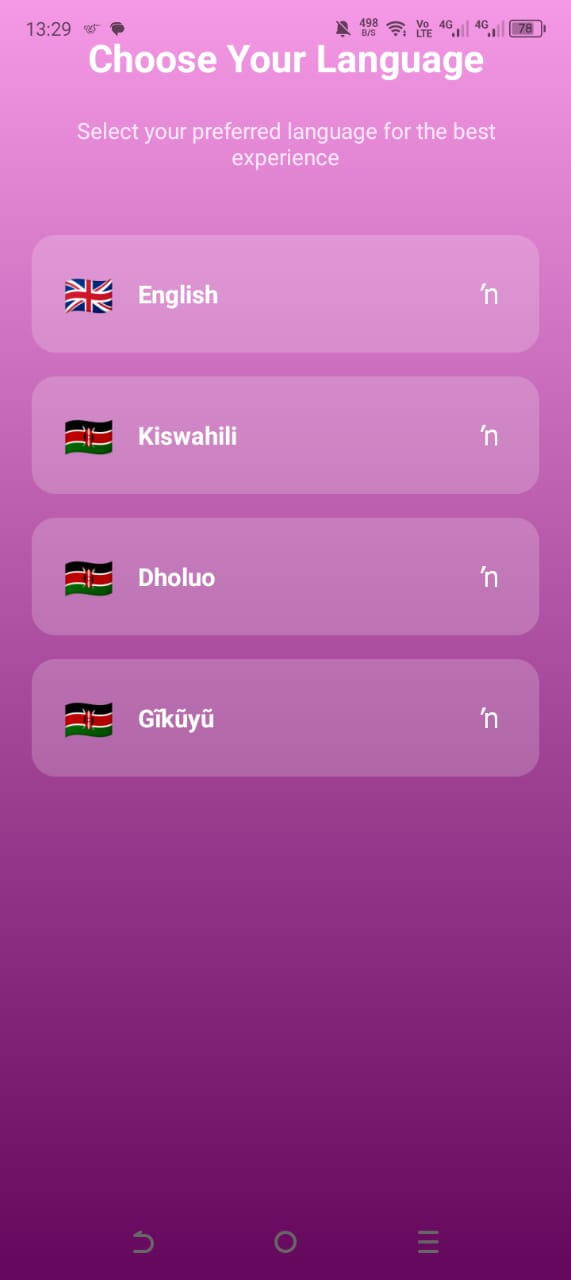
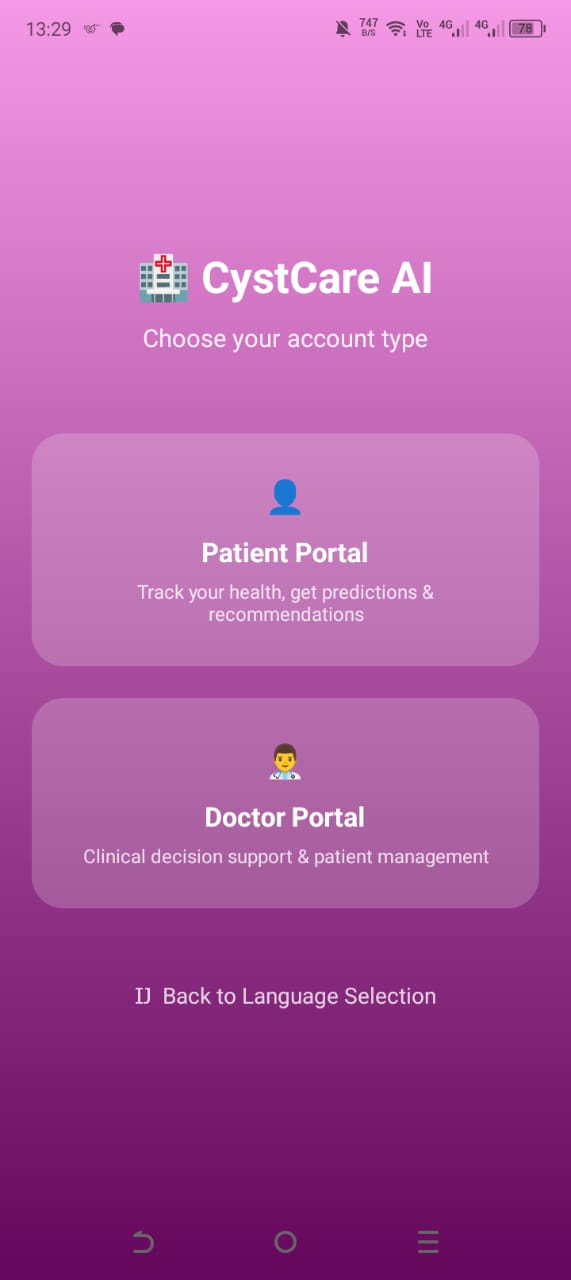
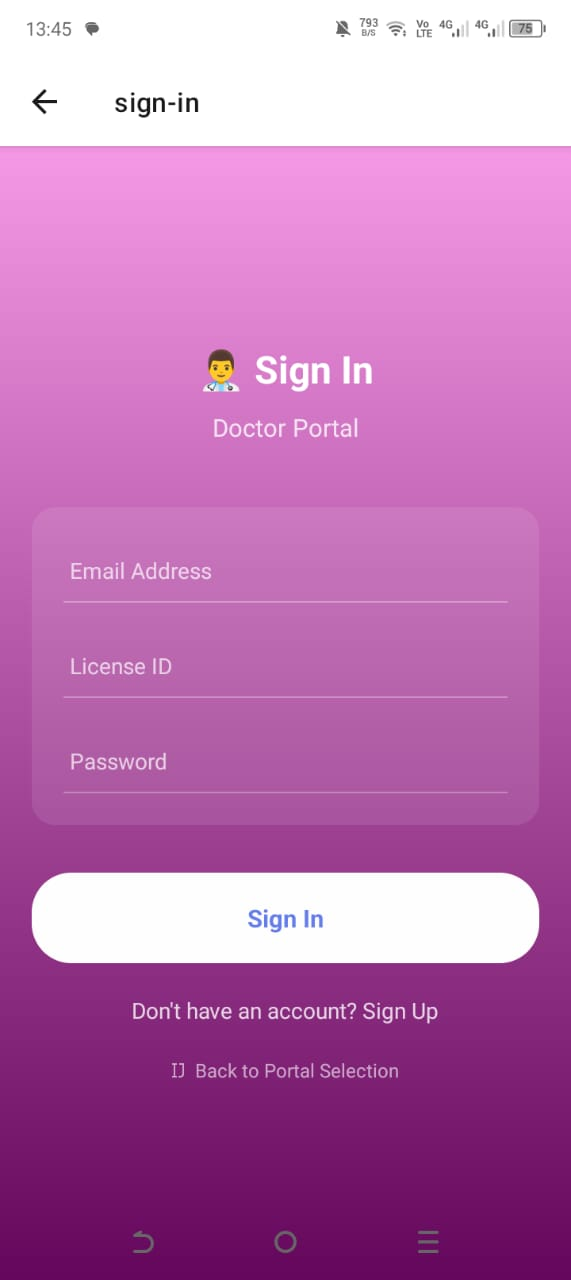
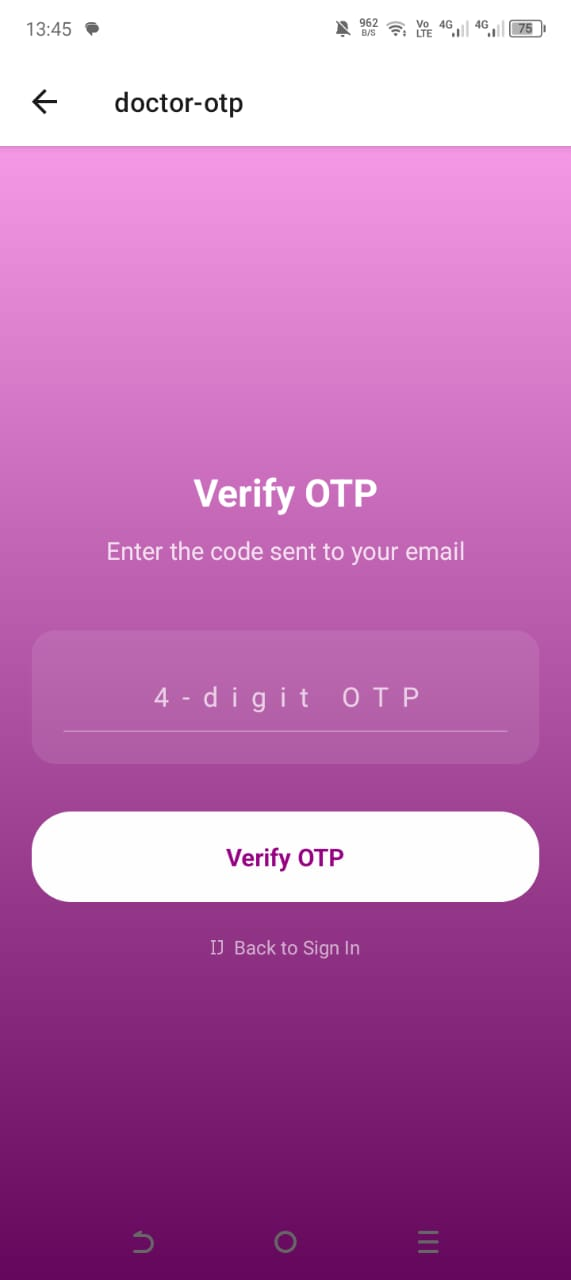
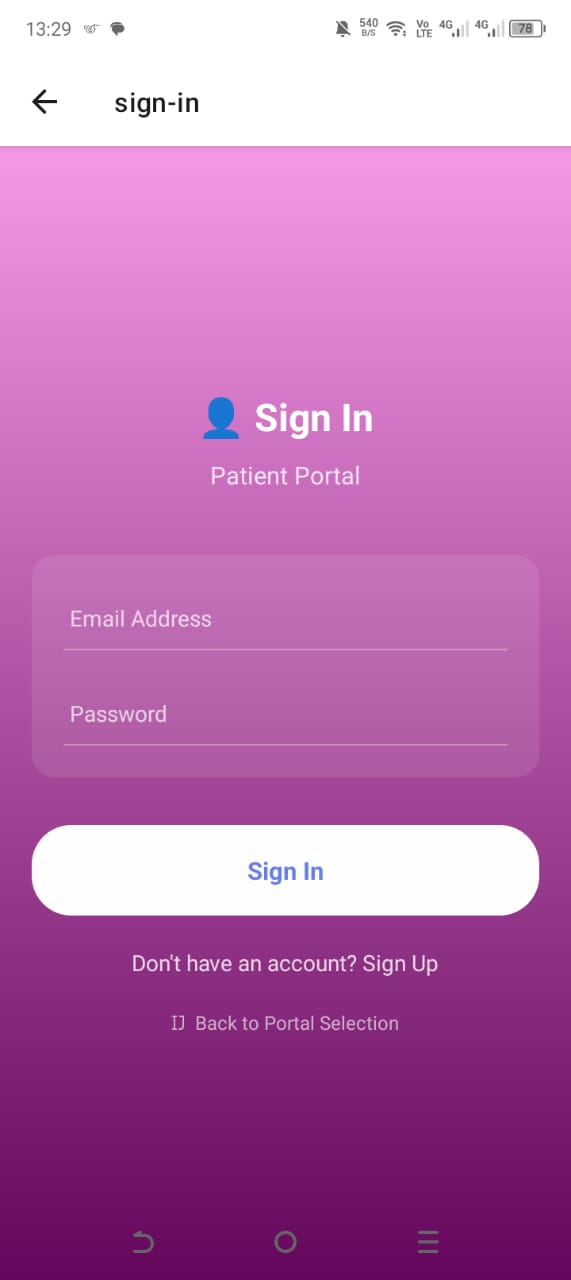
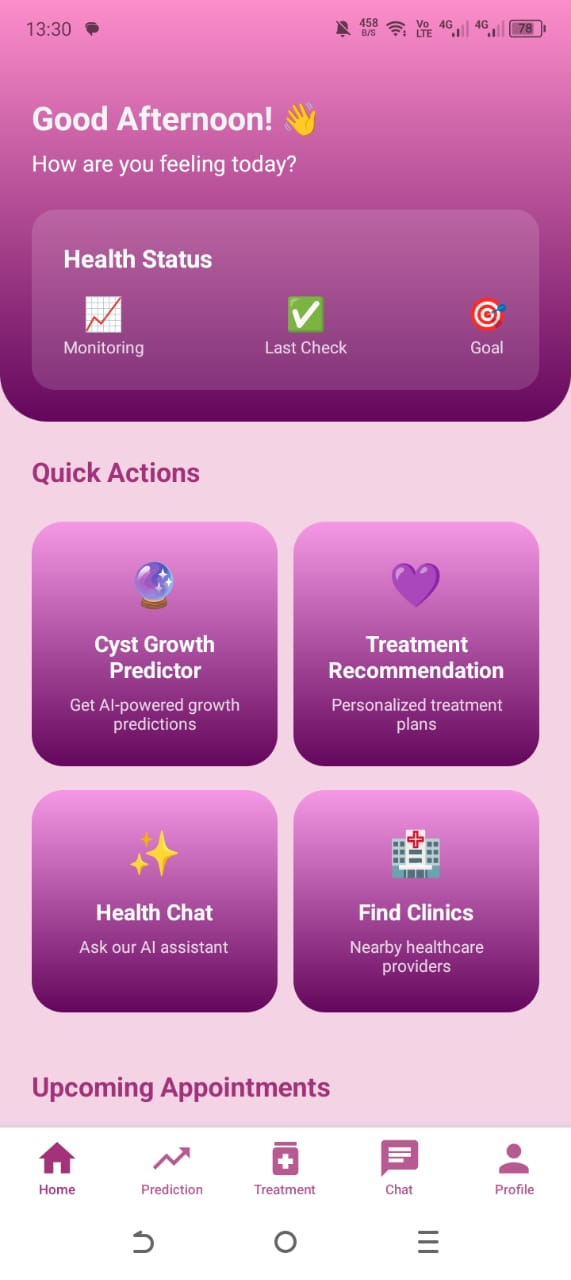
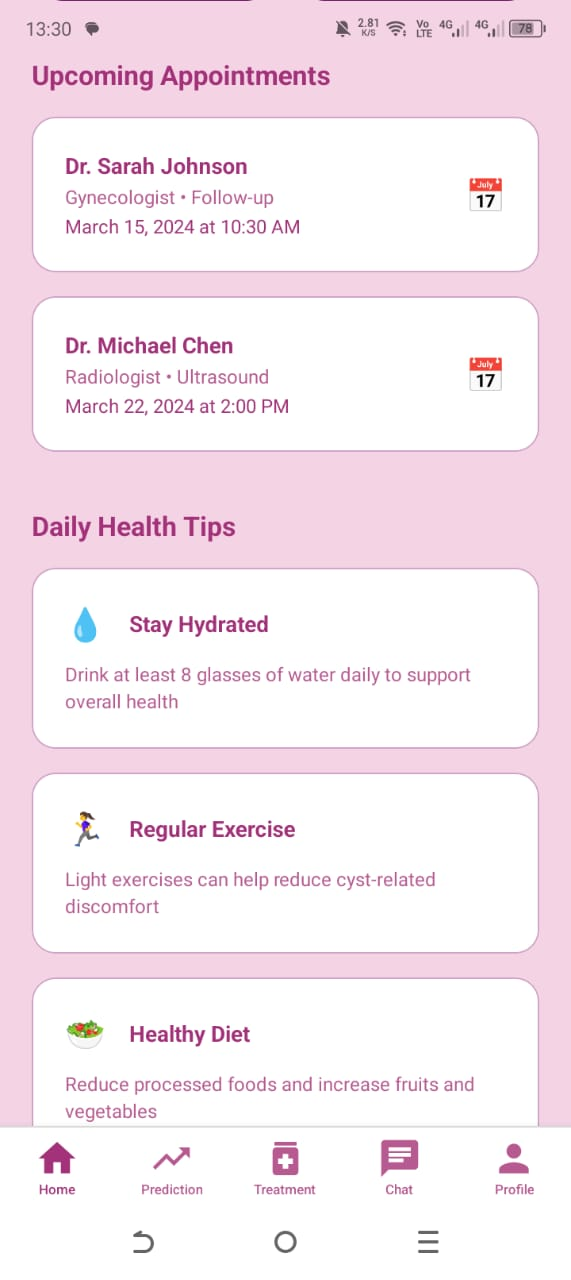
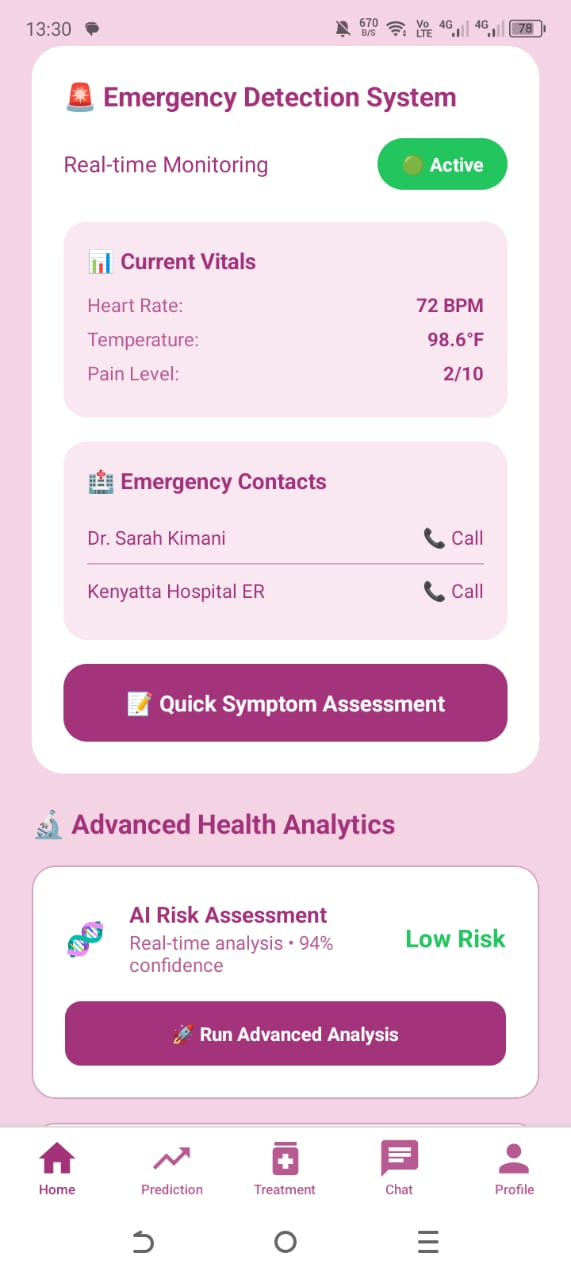
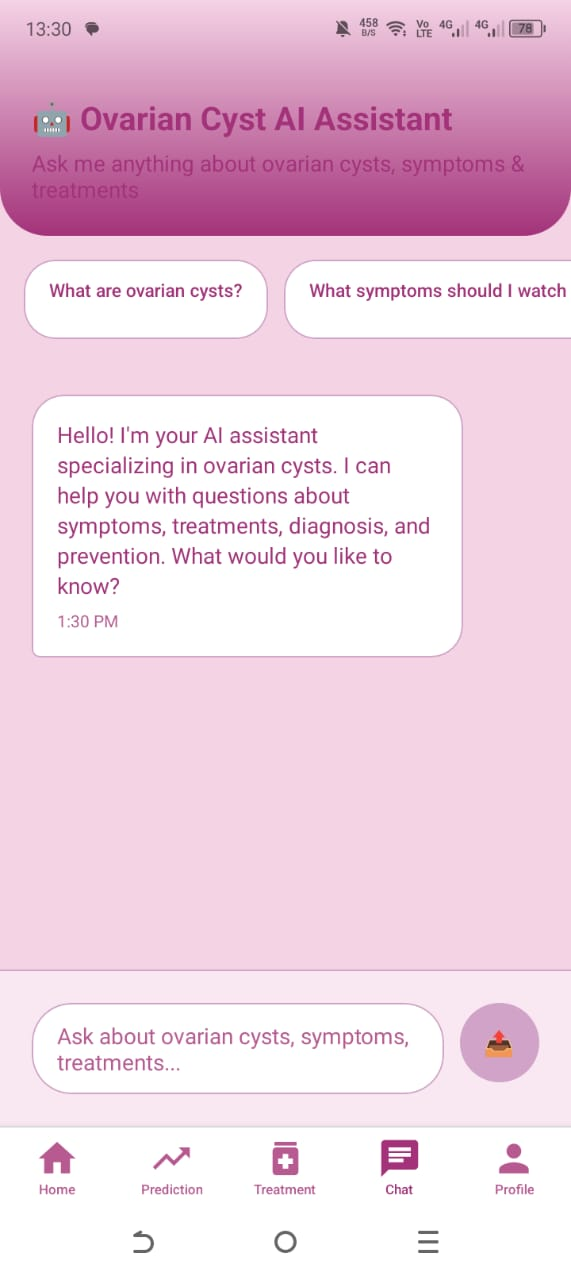
GROOT – CystCare-AI is a mobile-first, AI-powered platform that combines machine learning, location-based services, and multilingual communication to improve reproductive healthcare. It provides a secure portal for doctors that includes two-factor authentication, while patients can easily sign up using just an email and password — minimizing barriers to access. At its core, the application uses an XGBoost machine learning model to help doctors predict and classify ovarian cysts. Patients can view nearby clinics using integrated Google Maps, interact with a chatbot for questions about cysts, and pay for services via an M-Pesa redirect flow. The platform supports four languages — English, Swahili, Kikuyu, and Dholuo — allowing for inclusive care across diverse populations. Additionally, both patients and doctors can access visual analytics, and the entire application is optimized for both Android and iOS devices.
How we built it
On the backend, we used FastAPI to develop a lightweight yet powerful REST API that handles authentication, medical predictions, and secure endpoints. The core prediction logic is powered by an XGBoost model trained on ovarian cyst data. We used Poetry for dependency management and to maintain a clean virtual environment. Additional integrations include the Google Maps API for clinic discovery and M-Pesa APIs for processing mobile payments. To handle large model binaries efficiently, we employed Git LFS, and we secured the doctor portal using JWT and a two-step verification system.
The frontend was developed using React Native with TypeScript, which allowed us to create a seamless cross-platform experience for both Android and iOS. We used React Navigation for intuitive app flow, and Tailwind-like styling via NativeWind to achieve a clean, responsive UI. i18next was implemented to support dynamic language switching. We used Axios for API calls and integrated the Google Maps SDK for location features. A custom-built chat UI supports patient queries, and M-Pesa integration enables mobile payments directly within the app.
Challenges we ran into
One of the biggest challenges we faced was managing large virtual environments and machine learning models while working with Git, especially given GitHub’s file size limits. Setting up and testing multilingual support — particularly for underrepresented languages like Kikuyu and Dholuo — presented its own technical and UX challenges. We also encountered complexity when integrating multiple APIs (e.g., Google Maps, M-Pesa) into one fluid and mobile-friendly workflow. Security was a top priority, and implementing two-factor authentication for doctors without making patient onboarding cumbersome required thoughtful architectural design. Finally, training our model with relevant yet generalizable data proved to be a delicate balance.
Accomplishments that we're proud of
We’re proud to have developed a bilingual and culturally inclusive health platform that supports indigenous African languages. Seamlessly integrating AI predictions, location services, and mobile payments into a cohesive experience was a major technical milestone. We succeeded in designing two distinct user flows — one for patients, the other for doctors — while maintaining a consistent and user-friendly design. Our use of modern tools like Poetry and Git LFS helped us overcome complex development hurdles, and we built a clean, scalable architecture that we can confidently build on.
What we learned
This project taught us the intricacies of full-stack development in the healthtech domain — from secure authentication to AI model integration, and from real-time mapping to multilingual UI. We learned how to manage large ML assets effectively within a Git-based workflow and how to ensure our platform remains scalable and user-friendly across different devices and languages. Most importantly, we experienced firsthand how cross-functional collaboration — across backend, frontend, design, and AI — can solve real-world healthcare problems.
What's next for GROOT- CystCare-AI
Next, we plan to further enhance our chatbot by integrating a larger, more capable LLM to handle more nuanced health queries. We also aim to expand our model to cover additional reproductive health conditions and to partner with local clinics for real-world deployment and feedback. We're looking into enabling teleconsultations through video call integration and exploring partnerships with hospitals, NGOs, and government bodies to conduct pilot programs in rural and urban communities. Ultimately, our goal is to make GROOT – CystCare-AI a trusted, accessible companion in women’s reproductive health across Africa.
Built With
- fastapi
- github
- lfs)
- poetry
- pydantic
- python
- react-native
- typescript
- uvicorn
- validator
- xgboost


Log in or sign up for Devpost to join the conversation.