-
-
Grok Alma
Inspiration
The inspiration for Grok Alma came from observing how today's large language models (LLMs) like Grok are great at providing quick answers, but they often fall short in high-stakes situations where you need diverse perspectives, risk analysis, and ethical considerations. People manually prompt LLMs multiple times to simulate this, but it's tedious and inconsistent. As a student interested in AI and decision-making tools, I wanted to create a system that automates multi-angle reasoning, making it faster and more structured—like having a team of experts in your pocket. This idea was influenced by real-world applications in business strategy, policy, and ethics, where one-sided advice can lead to poor outcomes.
What it does
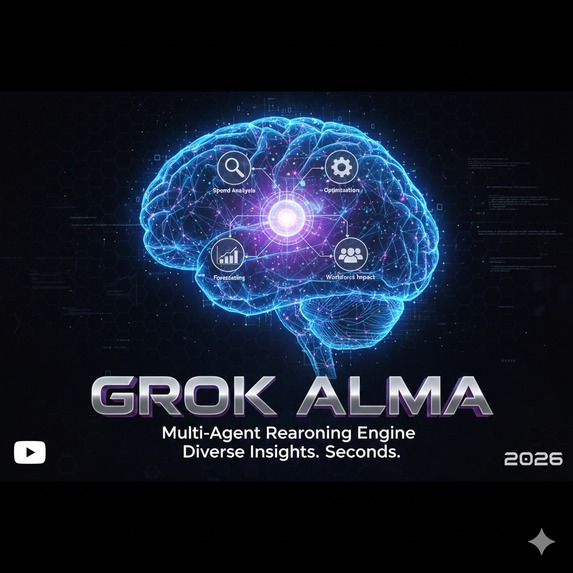
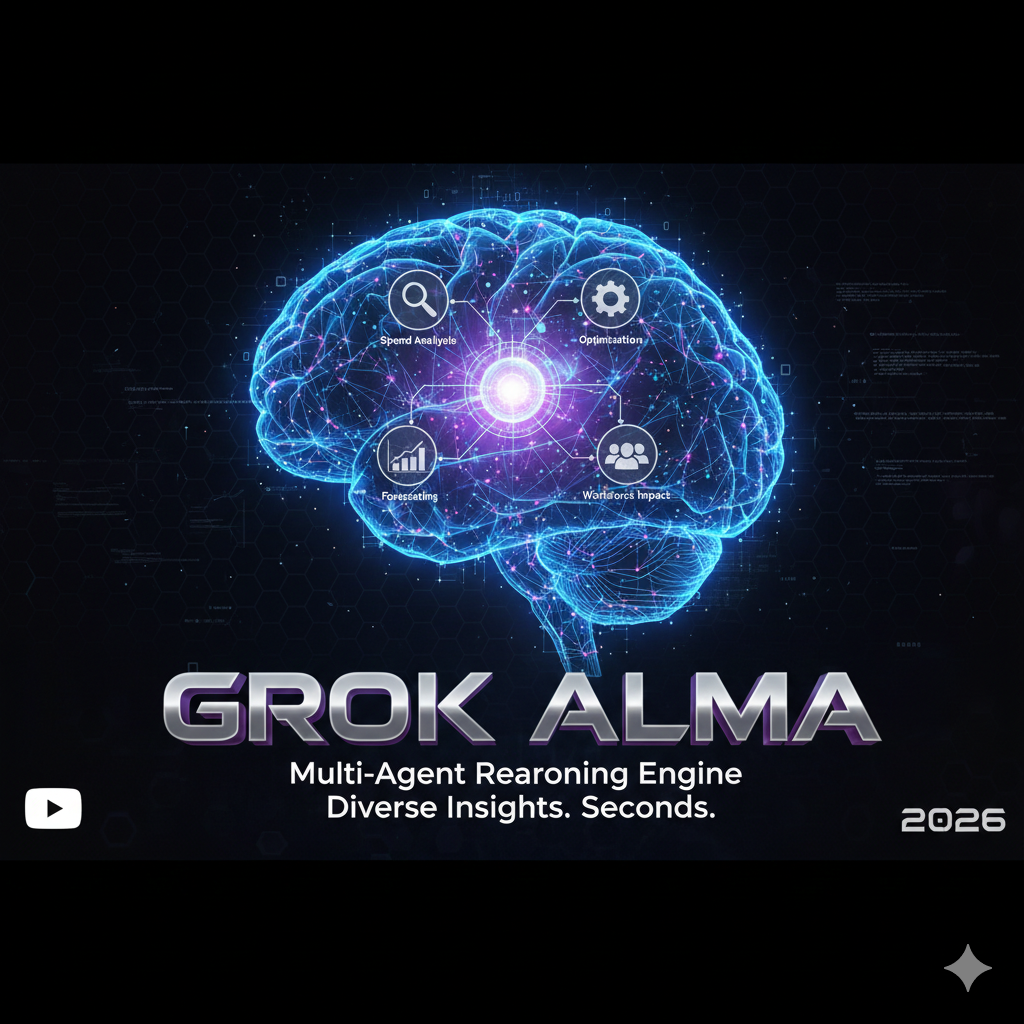
Grok Alma is a secure, multi-agent reasoning engine that helps users analyze complex, high-stakes scenarios by generating diverse expert insights in seconds. Users input a scenario, such as "How to reduce operational costs by 20%?" A master planning agent dynamically creates and launches specialized agents (e.g., Spend Analysis, Optimization, Forecasting, Workforce Impact) that run in parallel, each providing structured analysis from a unique angle using the Grok API. A moderator agent then synthesizes these outputs, highlighting tradeoffs, risks, and recommendations. Some agents can even interact with live websites for real-time data grounding. The app features a clean UI for input and viewing results, ensuring secure and low-latency performance.
How we built it
We built Grok Alma as a full-stack web app using JavaScript/TypeScript to ensure compatibility with platforms like Lovable (which doesn't support Python). For the frontend, we used Next.js with Tailwind CSS for a responsive, intuitive UI—including input forms, multi-panel displays for agent outputs, and a synthesis section with smooth animations and accessibility features. The backend runs on Node.js with Express.js, handling REST APIs for scenario submission and orchestration. We adapted LangChain.js for multi-agent flows, modeling agents as nodes in a directed graph executed concurrently with Promise.all for low latency. Grok API integration powers the reasoning, while Playwright enables browser-level actions for web interactions. We focused on seamless integration via Next.js API routes, added security like input validation, and tested with Jest and Cypress.
Challenges we ran into
One major challenge was adapting the original Python-based stack (like FastAPI and LangGraph) to JavaScript without losing functionality, as the target platform couldn't handle Python—this required rewriting orchestration logic in LangChain.js and ensuring parallel execution didn't cause race conditions. UI conflicts arose, like overlapping panels during dynamic rendering of agent outputs, which we fixed by refining Tailwind classes and using proper grid layouts. Integrating browser automation with Playwright was tricky for security and latency, especially handling headless mode without exposing sensitive data. Debugging concurrent API calls to Grok also led to rate-limiting issues, and ensuring the app's responsiveness on mobile added extra iterations for breakpoints.
Accomplishments that we're proud of
We're proud of creating a fully integrated, low-latency system that turns complex reasoning into an accessible tool—processing scenarios in under 10 seconds with parallel agents. Achieving a polished UI/UX with minimalistic design, dark/light modes, and ARIA compliance stands out, as it makes the app user-friendly for diverse audiences. Successfully implementing browser-grounded agents for real-time web interactions adds a dynamic edge beyond static LLMs. Overall, building a secure, scalable app from scratch as a student project, complete with tests and deployment readiness, feels like a big win in applying AI practically.
What we learned
We learned a ton about multi-agent AI systems, including how to orchestrate parallel tasks efficiently in JavaScript and adapt frameworks like LangChain across languages. Debugging UI issues taught us the importance of dev tools and responsive design principles in Tailwind. We gained insights into API security, like handling Grok keys and CORS, and the challenges of web automation without compromising privacy. On a broader level, this project reinforced how structured prompting can enhance LLM outputs for ethical, balanced decision-making, and it honed our skills in full-stack development, from planning to testing.
What's next for Grok Alma--MultiAgentReasoning
Next, we plan to expand agent capabilities with more domain-specific templates (e.g., for healthcare or legal scenarios) and integrate additional LLMs for hybrid reasoning. User customization, like letting people define their own agents, is a priority. We'll add persistence with a database for saving analyses and sharing features. Performance optimizations, such as caching common prompts and edge deployment on Vercel, will improve scalability. Finally, we're excited to open-source parts of it for community feedback and explore mobile apps or integrations with tools like Slack for real-time collaboration.

Log in or sign up for Devpost to join the conversation.