-
-
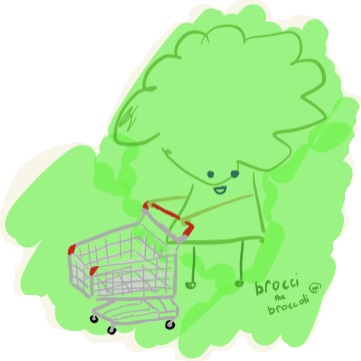
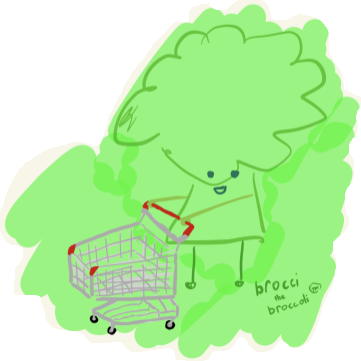
Our Mascot: Brocci the Broccoli
Inspiration
Many households over-buy grocery items, causing them to expire or go stale. Many items are also not used and are stored indefinitely or thrown away. Hence, we decided to create Grocey, a smart grocery list that gives an estimate of how much food you should be buying.
What it does
Grocey takes information that you provide such as number of family members, how many times you cook in a week, age, lifestyle, etc. to generate a grocery list with just the right amount of ingredients such that there is no wastage.
How we built it
We used HTML, CSS and JavaScript along with Bootstrap 4 and jQuery to create the website. For the backend, we intend to use Python and Django.
Challenges we ran into
Learning new technologies to help us create the software, especially in the backend where our engineer had to learn an entirely new framework.
Accomplishments that we're proud of
It was challenging to learn how to use a new platform for developing websites, and to combine the work produced by the various group members whom each have different backgrounds into something better.
What we learned
As beginners in the field, we learned how it is not always so straight-forward to apply the content we learn into a real project, especially in the context of joining software together from different languages.
What's next for Grocey
There are many features that Grocey can implement! For example, Grocey can adapt machine learning to track the eating habits of users to generate a more accurate grocery list. We also plan to make the application as a standalone, instead of it being web-based like the one we are currently working on.

Log in or sign up for Devpost to join the conversation.