
GrocerAI — Alexa+-Powered Conversational Shopping for an Intelligent Retail Ecosystem
Inspiration
Grocery retail is more than selecting products and paying at checkout. Customers need personalized recommendations, budget-aware shopping, and convenient assistance. Store managers must handle inventory, replenishment, congestion, and operational decisions, while security teams need to identify discrepancies without unnecessarily interrupting legitimate purchases.
We envisioned a connected retail ecosystem where AI can understand customer needs, coordinate store operations, respond to security scenarios, and learn from previous experiences.
This inspired GrocerAI, an AI-powered grocery retail intelligence platform that brings customer shopping, store operations, and security together through three specialized agents, a supervisory interface, and a shared learning layer.
For the Amazon Build, Ship, Shape hackathon, we are extending this vision with an Alexa+-style conversational shopping experience. Our goal is to make grocery shopping feel more natural and personalized while preserving the intelligence and connected workflows of the existing platform.
What It Does
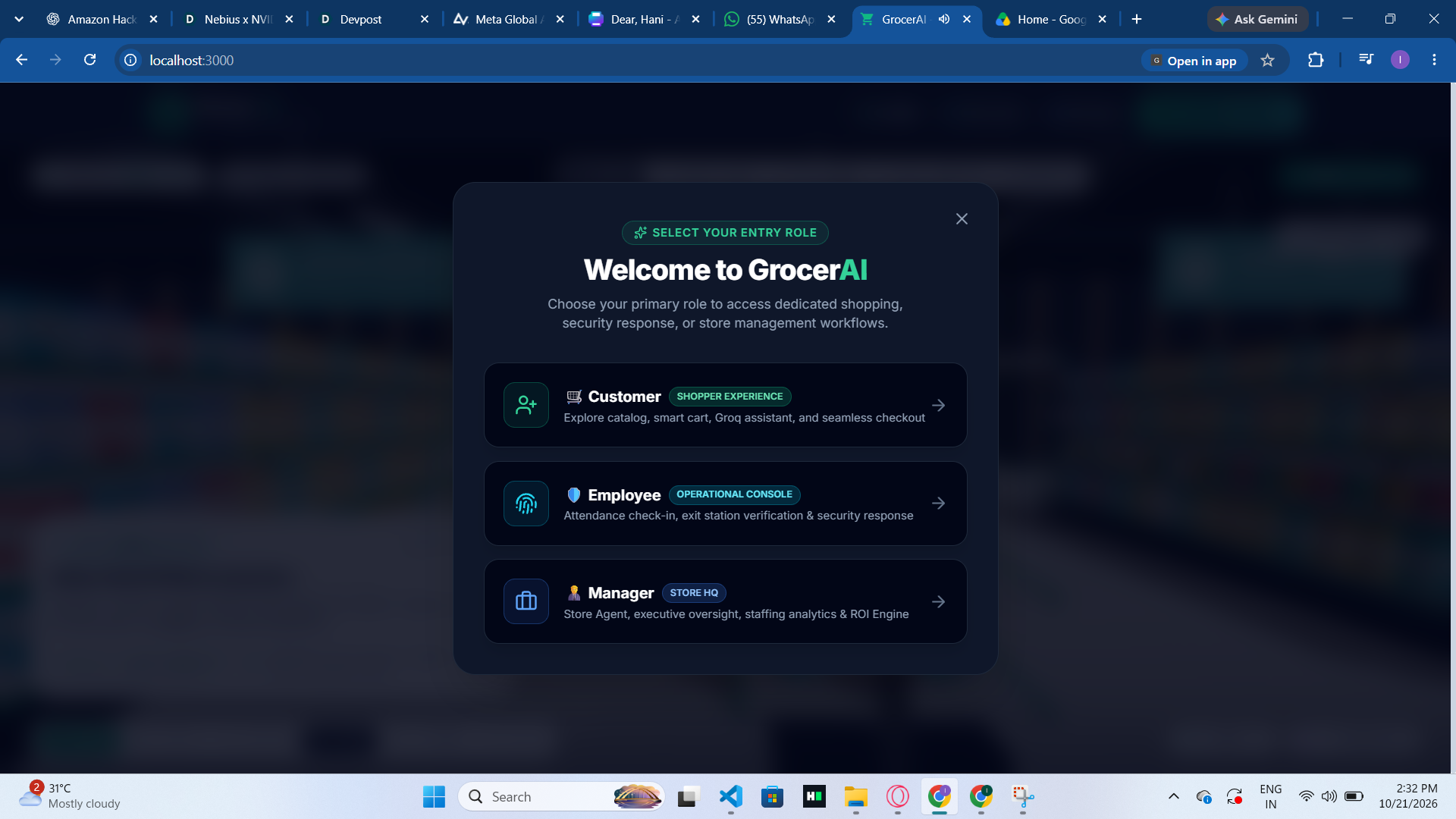
GrocerAI combines three specialized agents under one connected retail platform.
1. Customer Agent — Personalized Shopping
The Customer Agent helps customers discover products, manage their shopping journey, and make informed purchasing decisions.
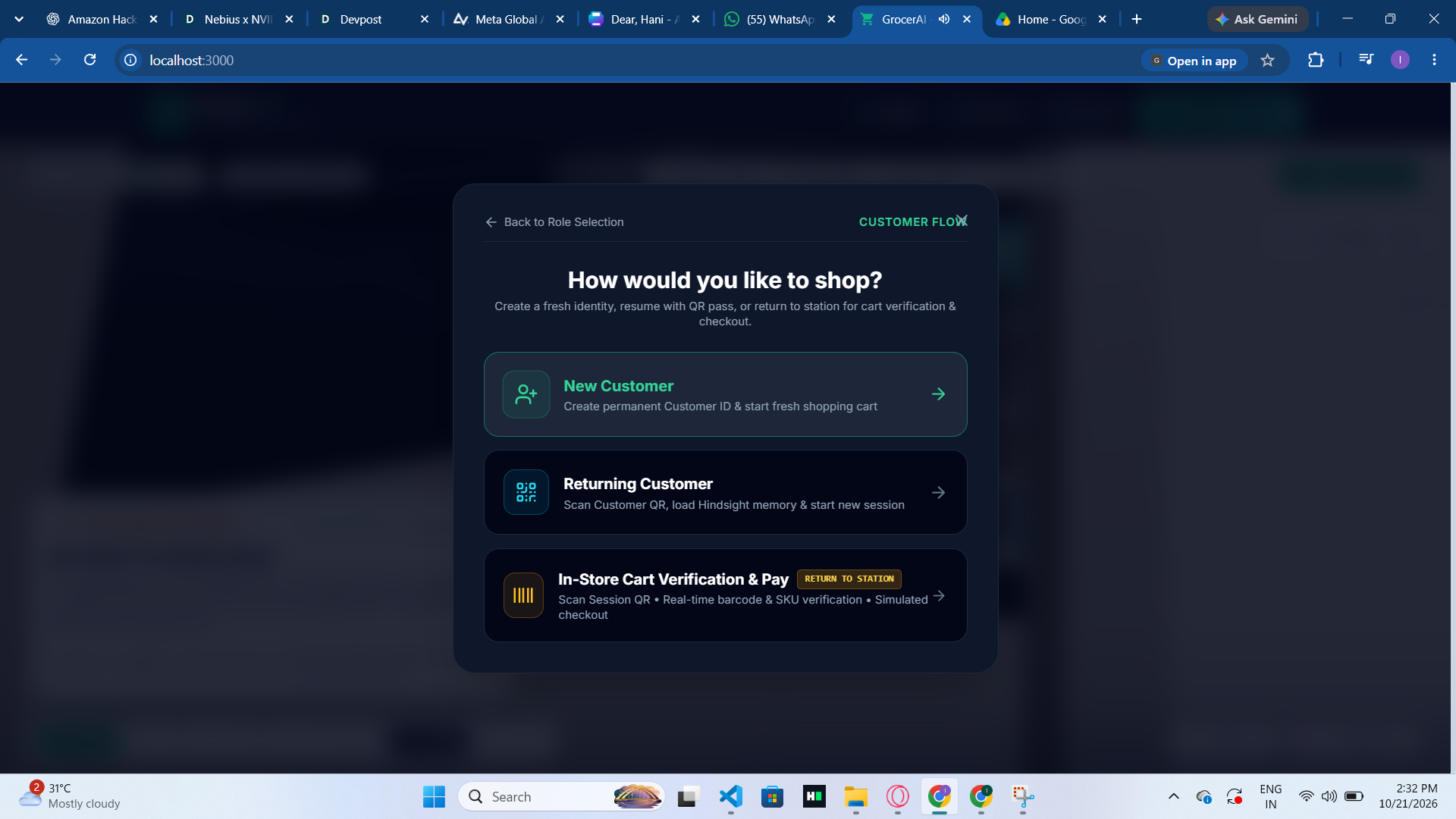
Its shopping workflows cover product discovery, personalized recommendations, budget-aware suggestions, product substitutions, repeat purchases, product-location assistance, and cart management.
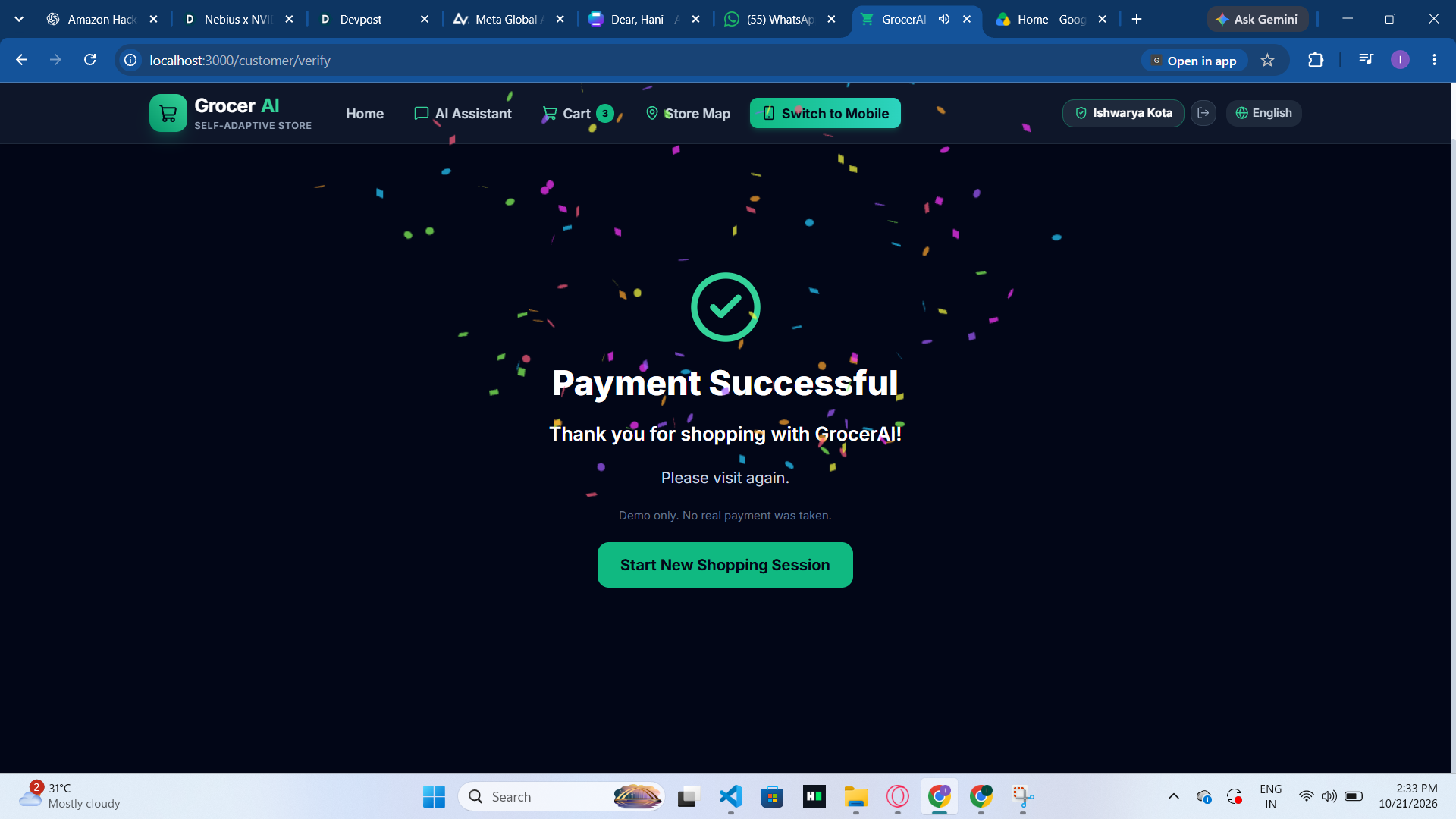
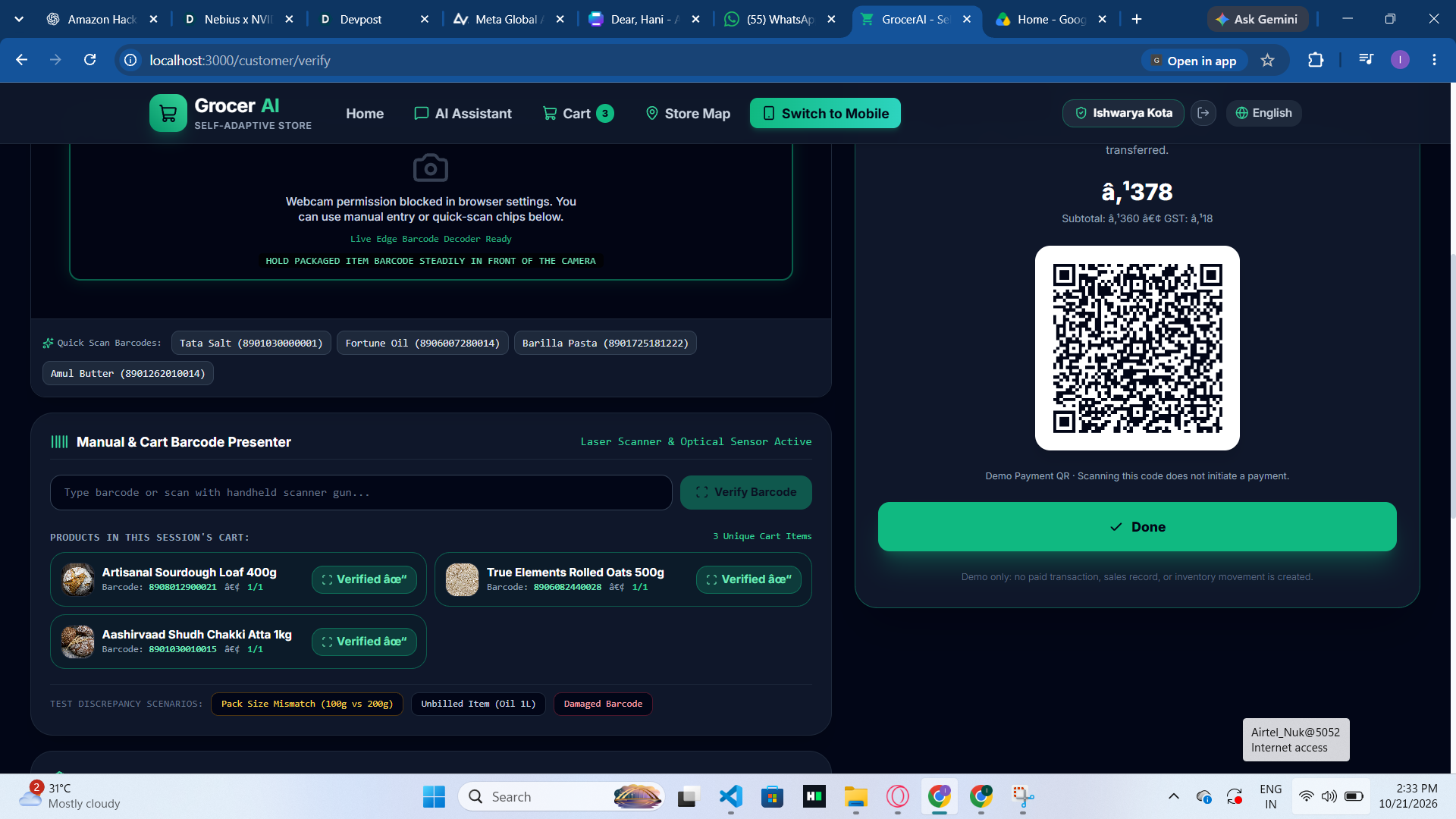
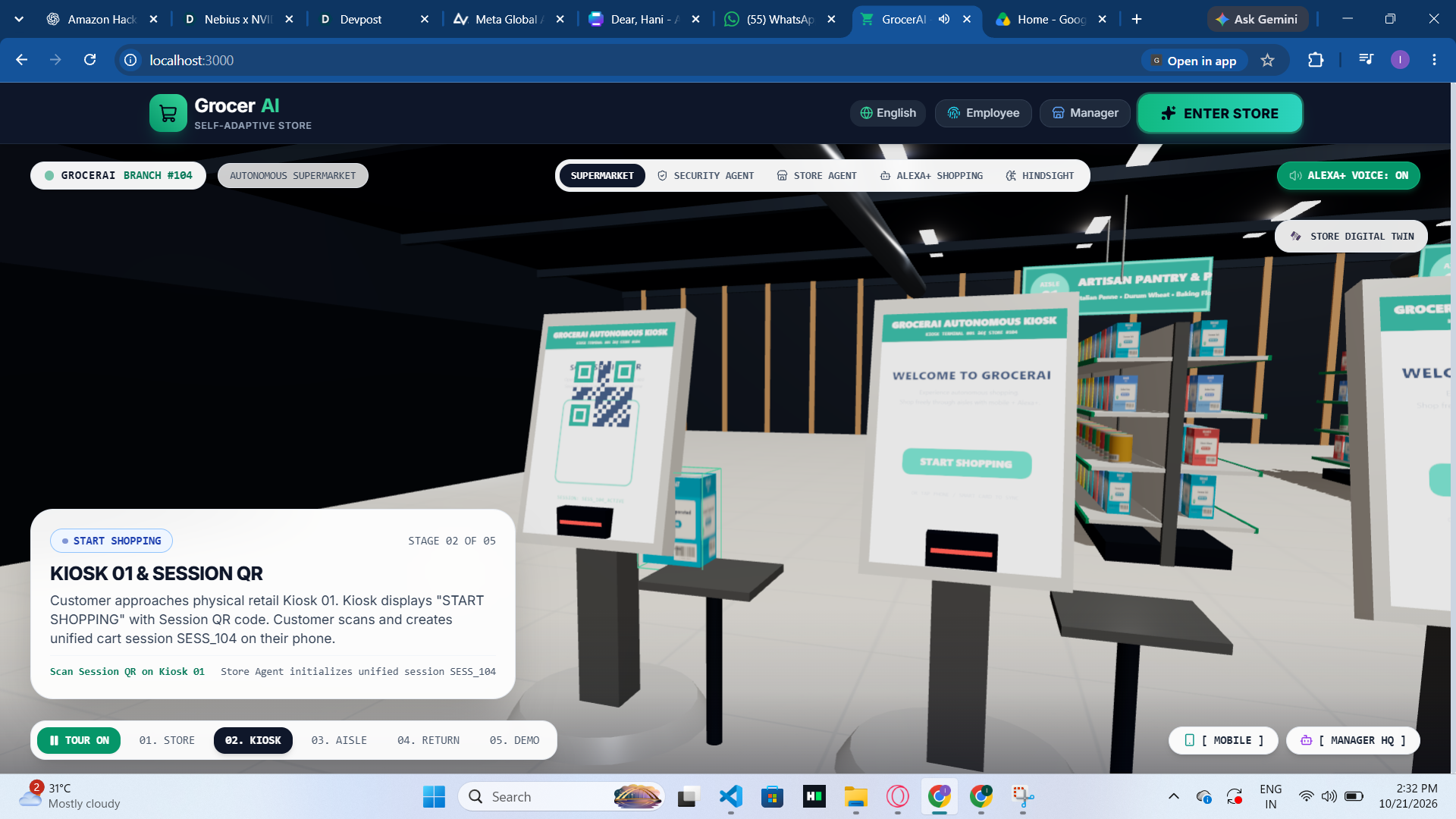
The platform also supports QR-based kiosk-to-mobile session handoff, allowing customers to continue their shopping journey on another device. Persistent shared-cart functionality is designed to keep shopping state synchronized rather than relying solely on browser-local data.
2. Alexa+-Style Conversational Shopping
For the Amazon hackathon, we are adapting the original JARVIS conversational direction into an Alexa+-style grocery shopping companion.
The intended experience lets customers express shopping needs naturally, discover relevant products, receive explanations for recommendations, and interact with their existing cart through conversational actions.
Example interactions include:
- Finding groceries within a specified budget.
- Recommending alternatives when a product is unavailable.
- Explaining why a product matches a customer's request.
- Adding or removing products from the shopping cart.
- Continuing a shopping session across kiosk and mobile interfaces.
The experience is designed as a simulation using GrocerAI's own application and integrations. It does not imply an official Alexa device, Alexa Skills Kit, or Amazon account integration unless such integration is separately implemented.
3. Store Agent — Operational Intelligence
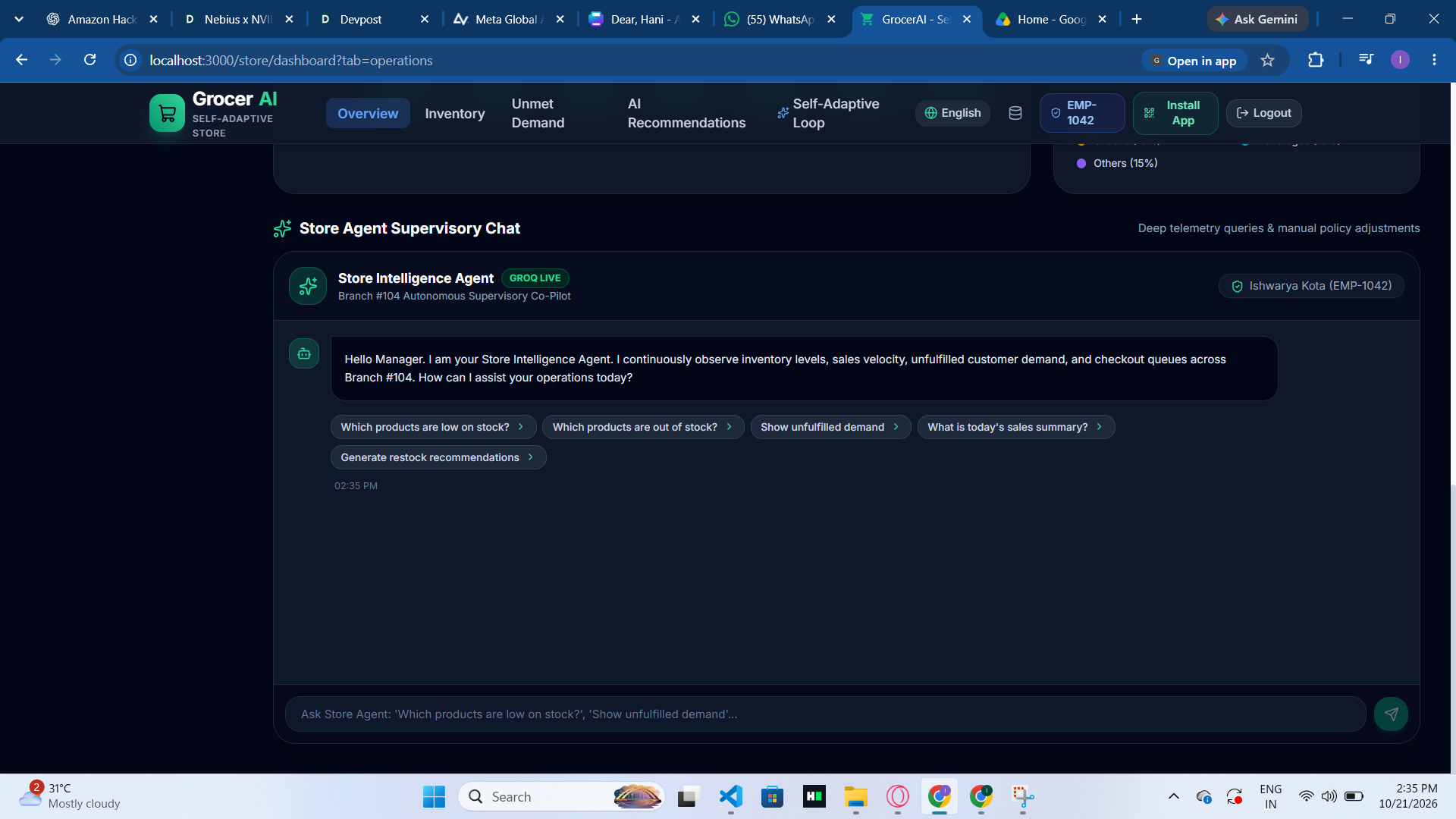
The Store Agent focuses on store-level decision support and operational scenarios.
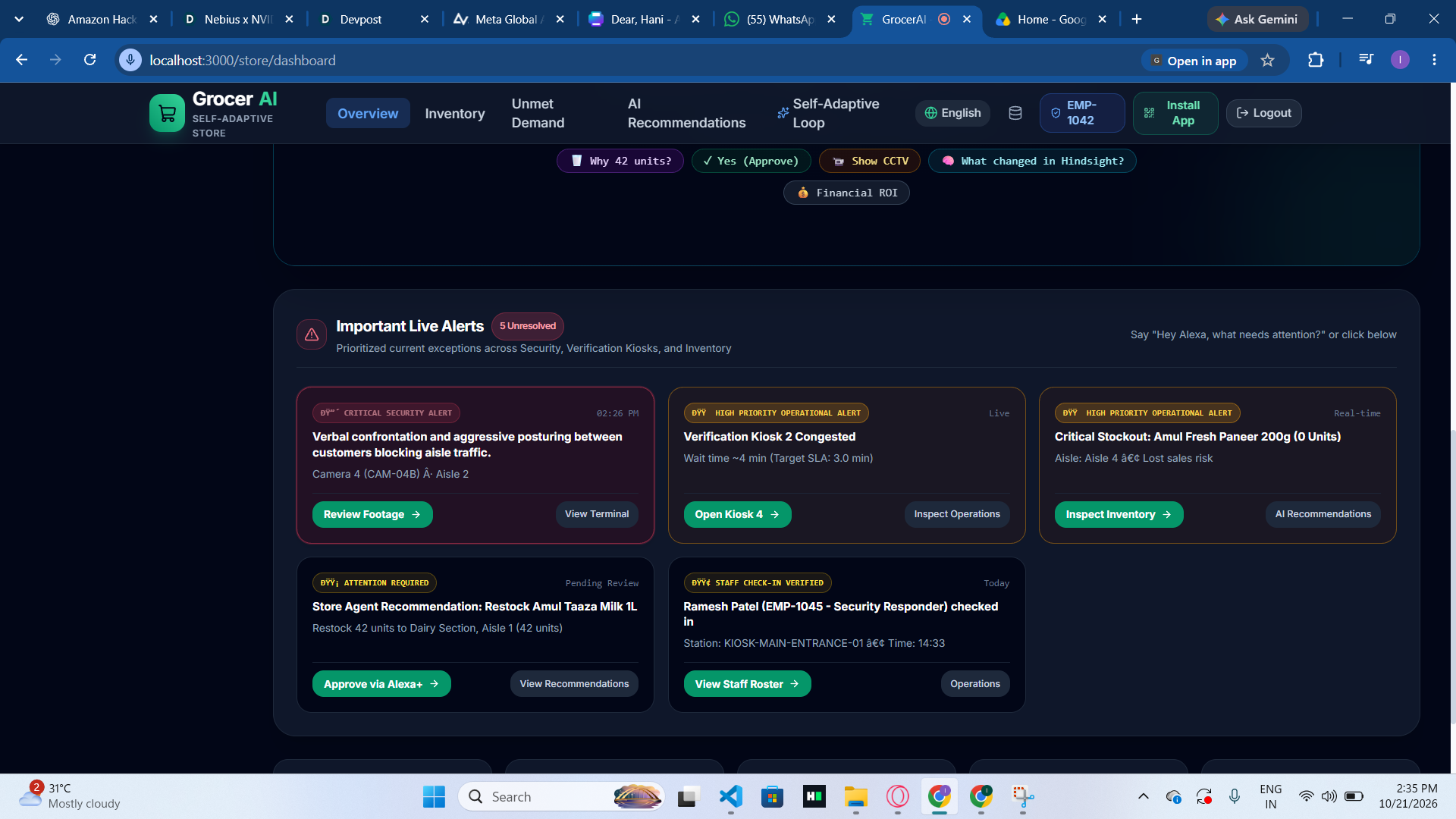
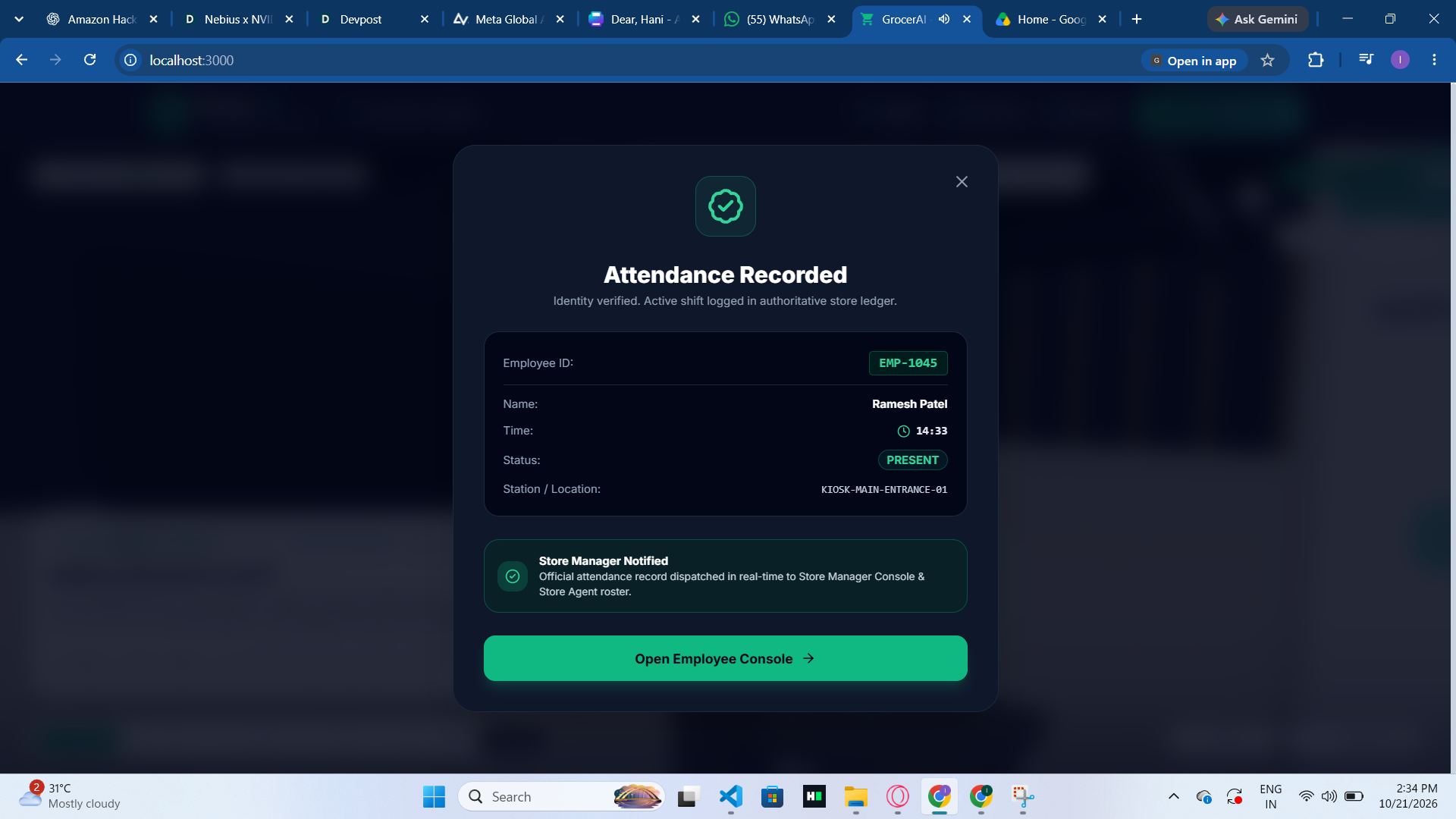
It covers stockouts, replenishment, product expiry, supplier issues, inventory discrepancies, congestion, queue management, staffing decisions, and unsuccessful operational actions.
The intended operational loop is to identify a situation, recall relevant context, evaluate possible responses, request authorization when required, execute an approved action, and assess the outcome.
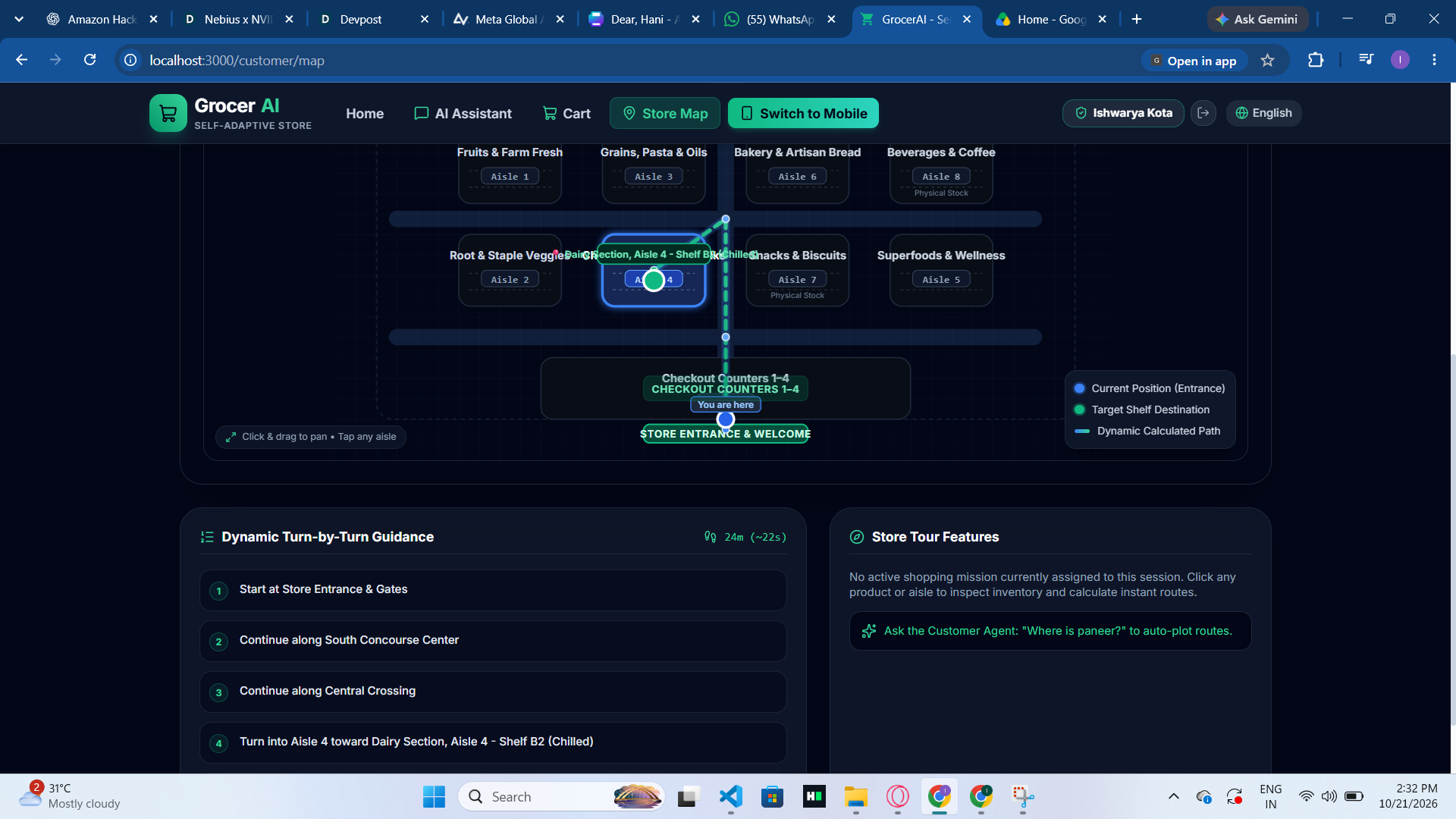
Store navigation, kiosk management, operational dashboards, and ROI-oriented analysis contribute to the broader vision of a store that can respond intelligently to changing conditions.
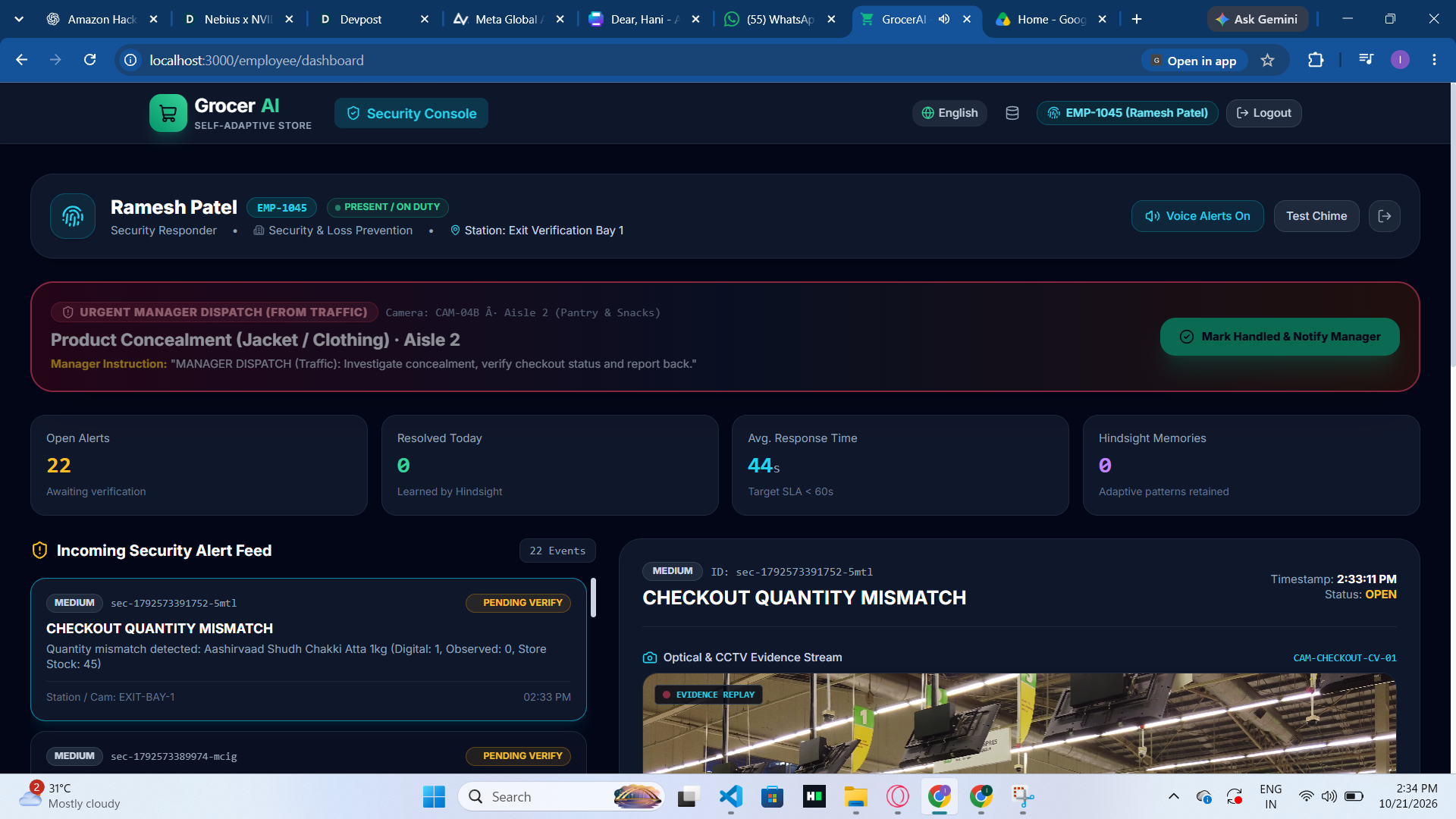
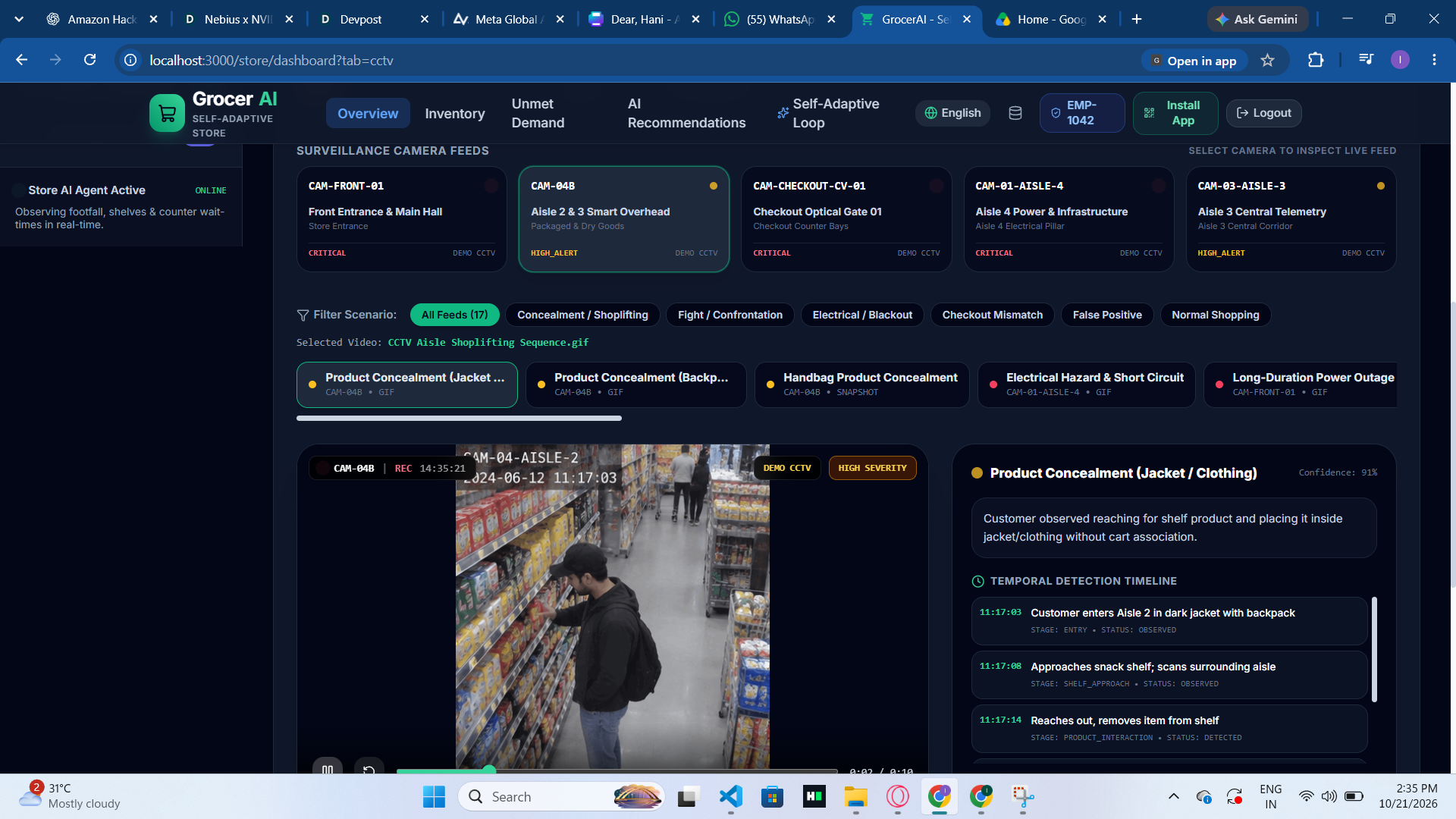
4. Security Agent — Context-Aware Retail Security
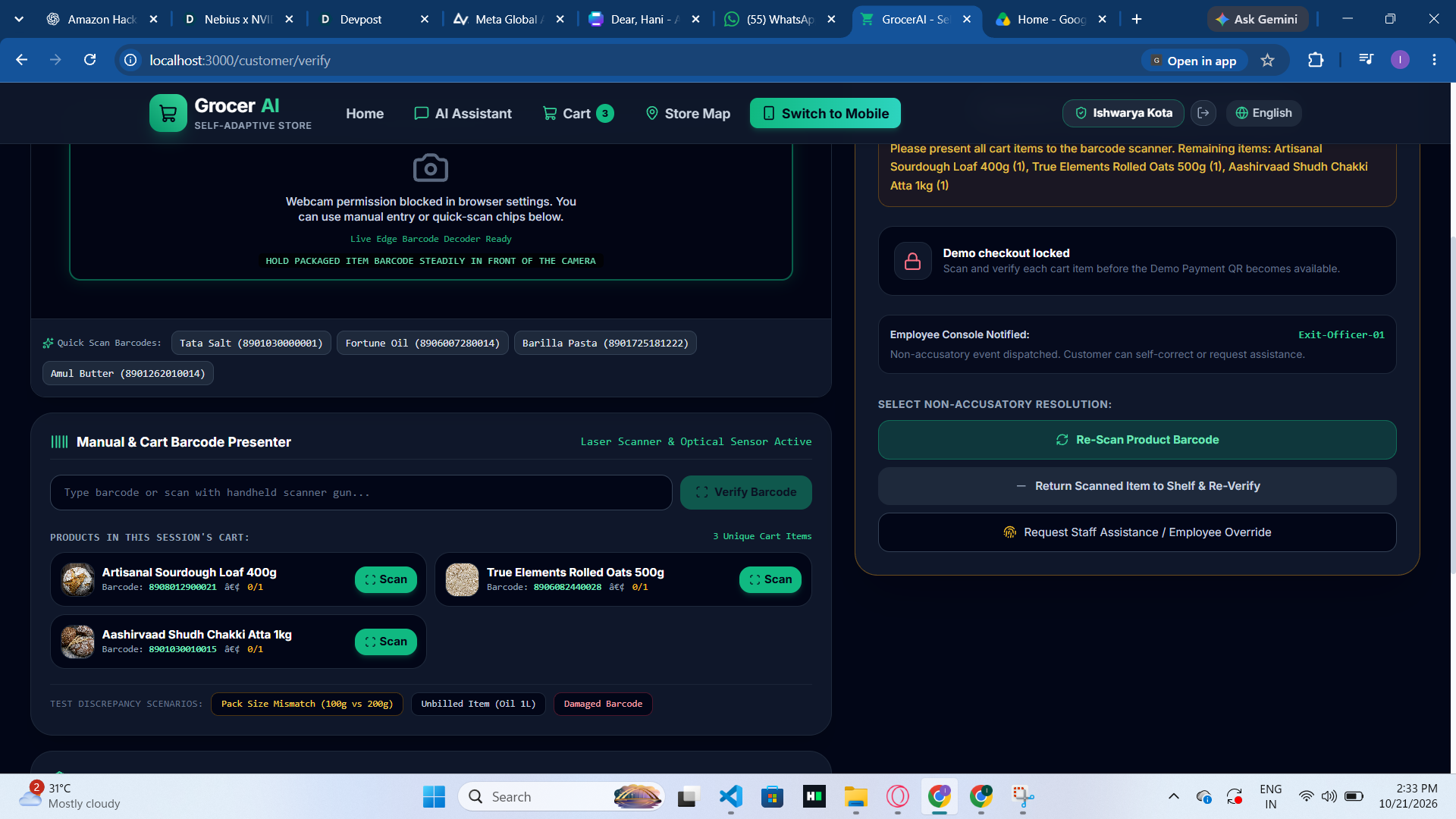
The Security Agent explores contextual loss prevention and transaction verification.
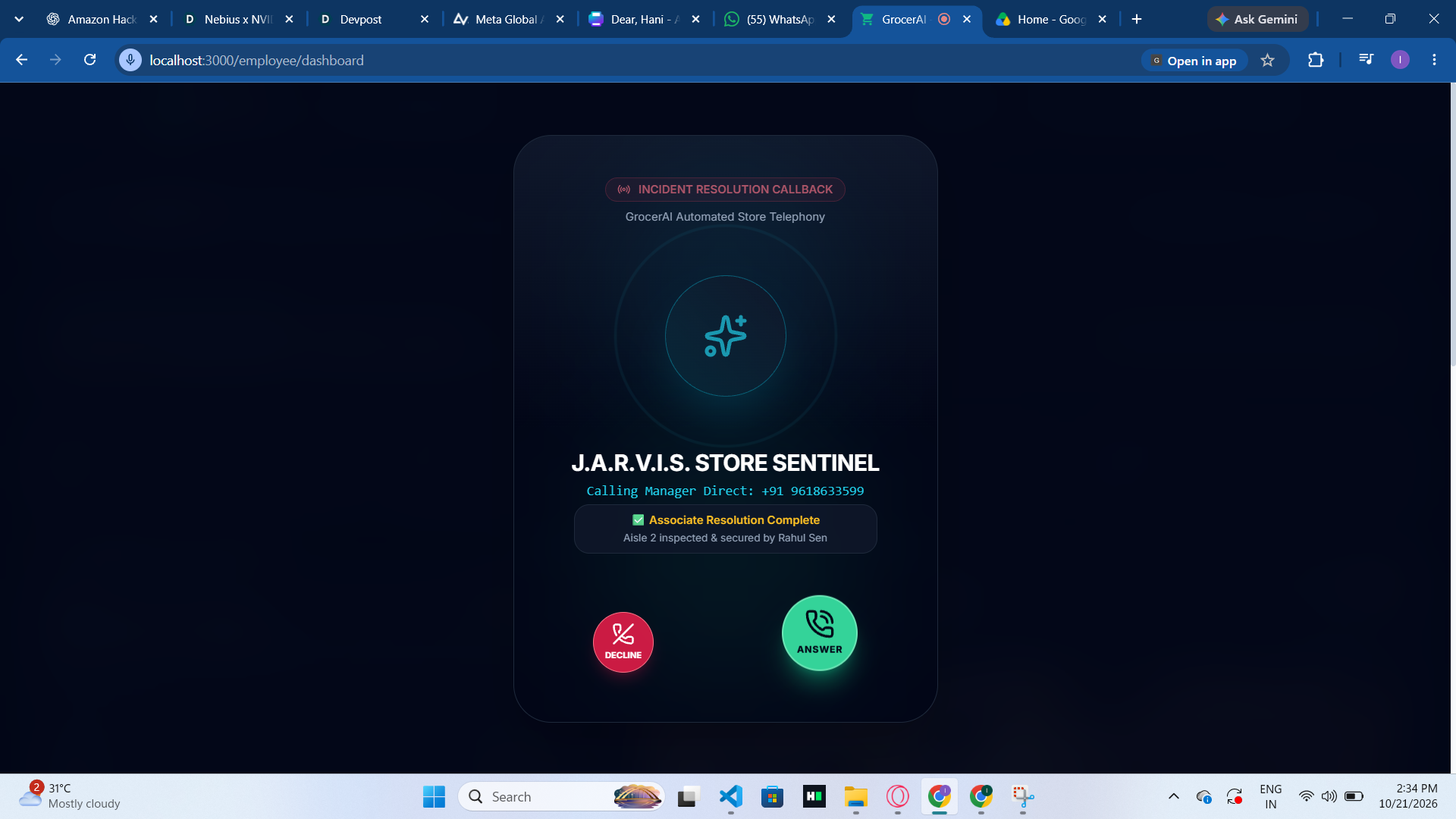
Its scenarios include false-positive alerts, SKU mismatches, barcode and pack-size discrepancies, quantity or weight mismatches, employee-assisted resolution, checkout recovery, and incident triage.
The aim is to combine transaction context with security signals so that ordinary errors can be resolved appropriately and suspicious situations can be escalated for review.
Camera-based verification and physical security hardware remain dependent on the availability and validation of the required integrations.
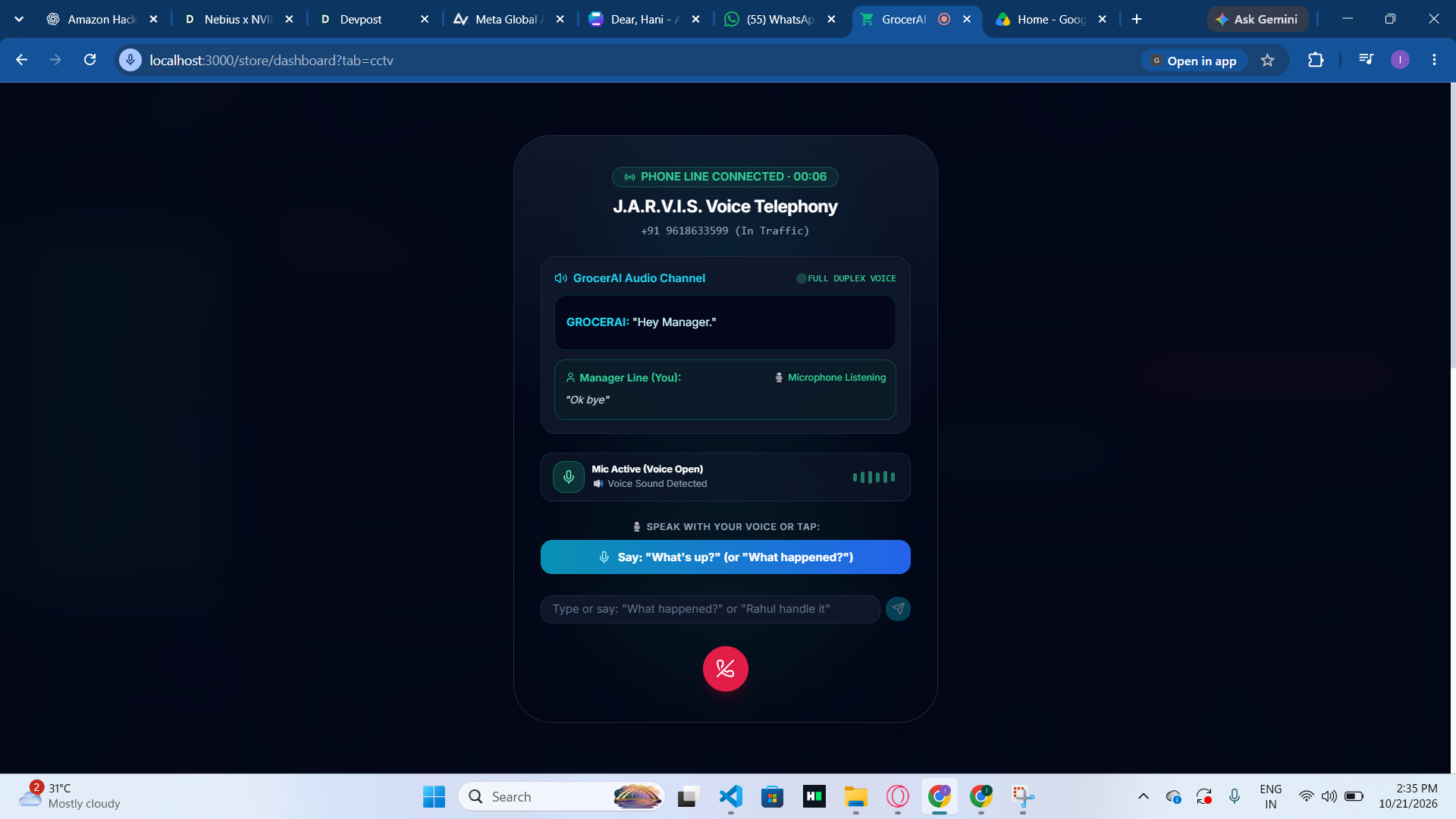
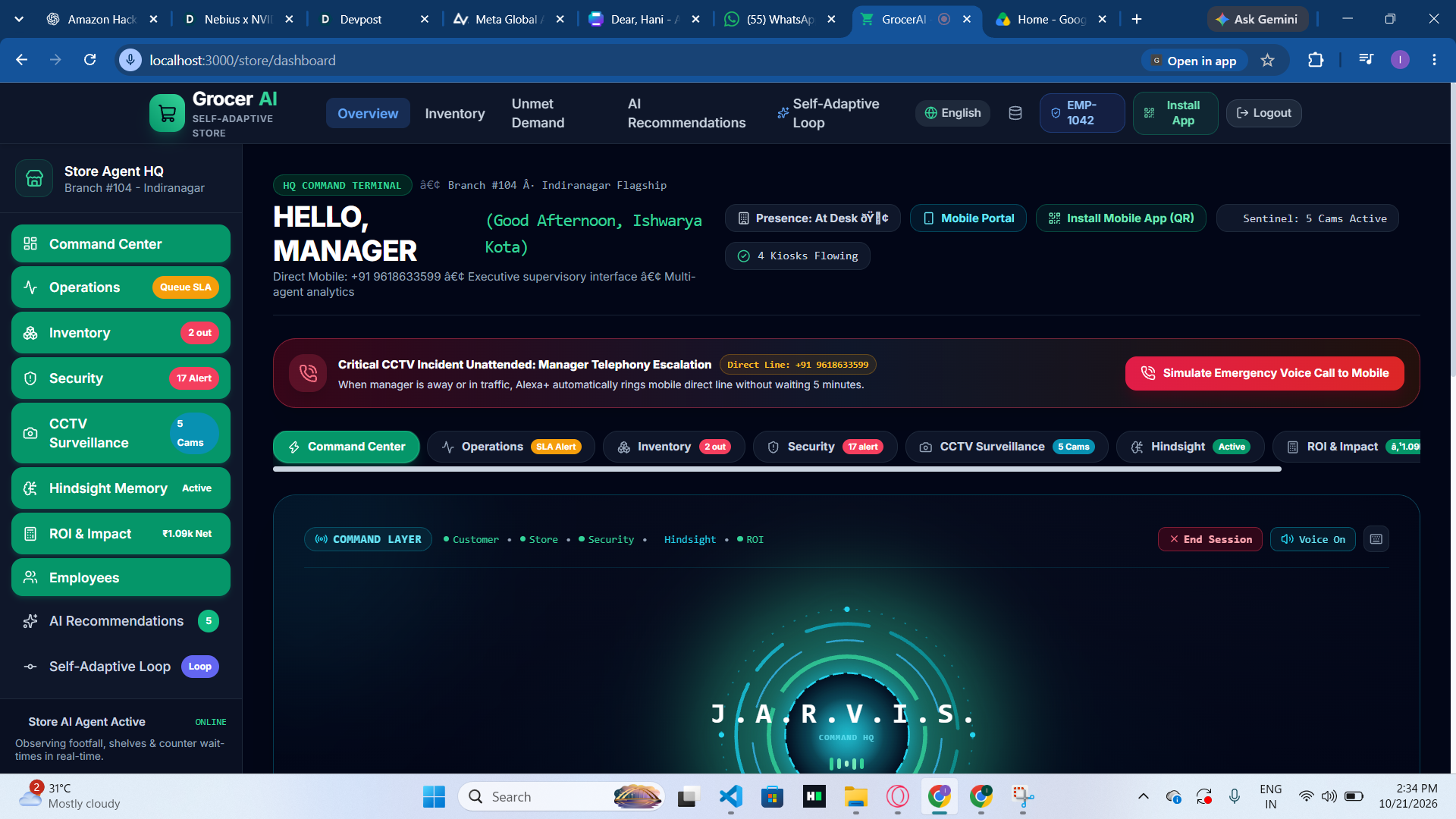
5. JARVIS — Supervisory Interface and Orchestration
In the original architecture, JARVIS serves as the supervisory interface connecting the manager experience with the Customer, Store, and Security agents. It is not a fourth specialized agent.
For the Amazon hackathon, we are moving the customer-facing conversational experience toward an Alexa+-style interaction model while retaining GrocerAI's broader retail intelligence vision.
Hindsight — Memory, Recall, and Reflection
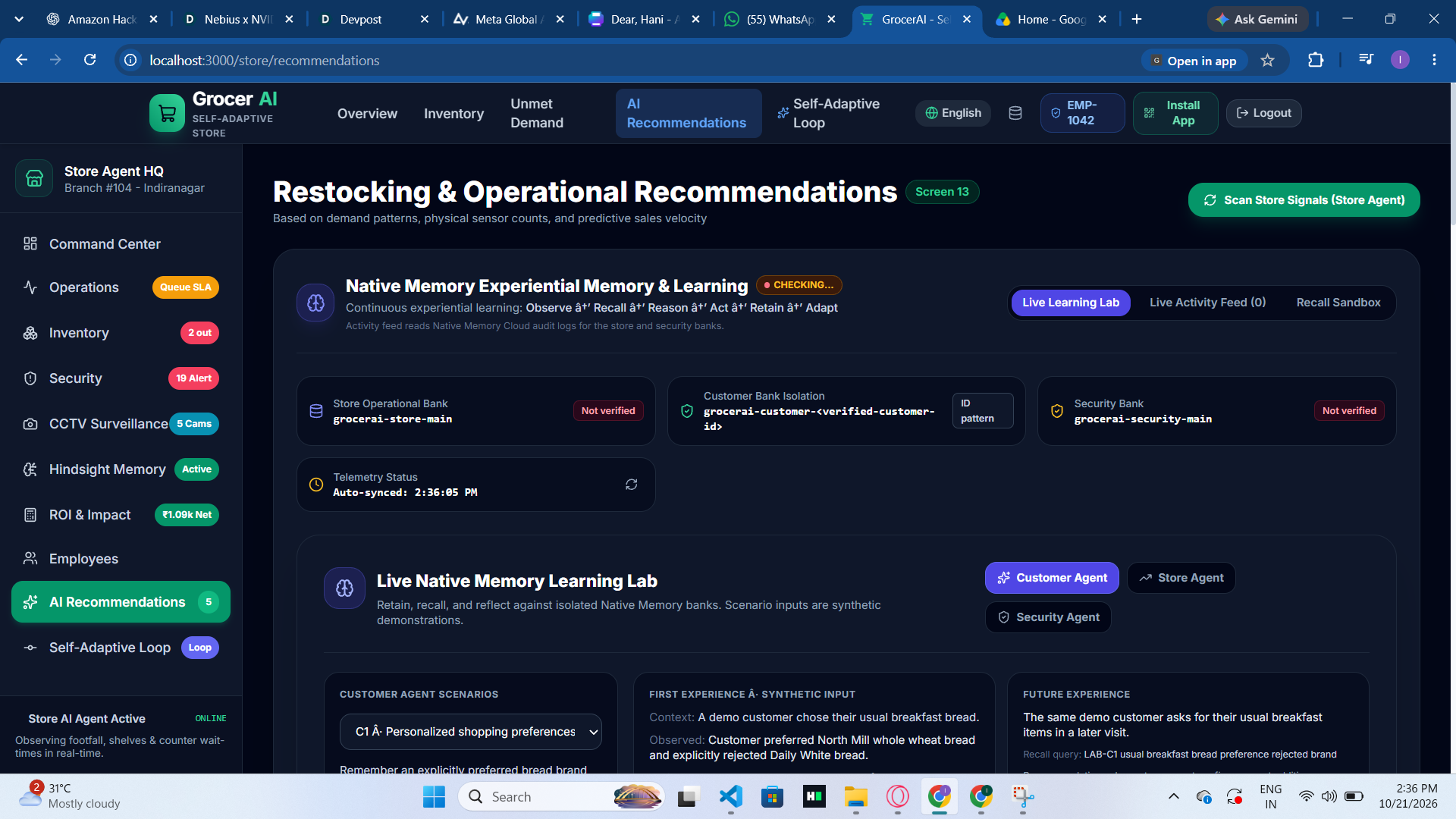
A key differentiator of GrocerAI is its Hindsight-based learning layer.
Rather than treating every interaction as an isolated request, the platform explores how prior context and outcomes can inform subsequent decisions.
We organized 21 scenario-based workflows across three domains:
- Customer: Seven scenarios involving preferences, budgets, substitutions, cart failures, repeat purchases, product locations, and mobile handoffs.
- Store: Seven scenarios involving stockouts, congestion, expiry, suppliers, inventory discrepancies, staffing, and unsuccessful actions.
- Security: Seven scenarios involving false positives, SKU mismatches, quantity or weight discrepancies, employee resolution, checkout recovery, and contextual incident triage.
The learning approach follows an observe–retain–recall–reflect–decide–act cycle, with outcomes providing context for future decisions.
Our objective is to make the agents more context-aware over time and to explore how memory can improve the consistency and quality of retail decisions.
How We Built It
GrocerAI uses a modular web architecture combining frontend interfaces, persistent backend services, shared shopping state, agent workflows, and external integrations.
Core technology stack
- Next.js 14, React, and TypeScript: Application interfaces and customer, store, and security experiences.
- Tailwind CSS: Styling and responsive user interfaces.
- Supabase and PostgreSQL: Persistent application data and shared shopping sessions.
- Supabase Realtime: Real-time updates where configured.
- HTTP polling fallback: Alternative update mechanisms for supported kiosk-control workflows.
- Hindsight: Memory, recall, and reflection for scenario-based learning.
- QR session flows: Kiosk-to-mobile shopping handoff.
- Server-backed cart synchronization: Persistent shared carts and revision checks designed to support consistent cross-device updates.
- Cashfree: Payment integration and demonstration workflows, subject to service configuration and approval.
- Resend: Email notification workflows, subject to provider configuration and usage limits.
- WhatsApp-related workflows: Communication capabilities where the relevant integration is configured.
Connected retail workflows
The platform brings together product discovery, shared-cart management, checkout, operational decision support, security scenarios, kiosk workflows, and manager-oriented insights.
We designed these components to reuse shared application data and preserve the existing shopping experience instead of rebuilding each workflow as a separate application.
Challenges We Ran Into
Cross-device synchronization
A kiosk and a mobile browser do not automatically share local state. We worked on persistent server-backed carts, shared sessions, revision checks, and real-time synchronization to reduce lost updates and inconsistent shopping experiences.
Multi-agent coordination
Customer assistance, store operations, and security require different responsibilities and levels of authorization. Connecting these domains required a modular architecture and a supervisory interface.
Making memory useful
Remembering information is not enough. The system must retrieve relevant context, use it in a decision, and connect that decision to its outcome. The 21 scenarios help structure this learning process.
External service dependencies
AI services, payment providers, messaging systems, and hardware integrations introduce configuration and availability constraints. We had to distinguish between application functionality and capabilities that depend on external services being accessible.
Balancing autonomy with oversight
Retail actions can affect payments, inventory, and customer experience. We therefore designed the broader system around contextual decisions, appropriate authorization, and verification rather than assuming every AI recommendation should be executed automatically.
Accomplishments We're Proud Of
We brought customer shopping, store operations, and security intelligence into one coherent retail platform.
Our work includes three specialized agent domains, 21 structured scenarios, Hindsight-based memory workflows, QR-based session handoff, persistent shared-cart synchronization work, kiosk-oriented workflows, and integrations for shopping, payments, and communications.
We are also extending the existing conversational experience toward an Alexa+-style shopping simulation without treating the conversational interface as a replacement for the underlying retail system.
What We Learned
We learned that useful AI systems need more than natural-language responses. They require reliable persistence, secure backend access, relevant context retrieval, observable actions, and mechanisms to verify outcomes.
We also learned that an effective multi-agent system depends on coordination between specialized responsibilities and that memory is most valuable when it can inform future decisions.
What's Next
Our next steps are to complete and validate the Alexa+-style conversational shopping interface, connect natural-language requests to reliable product and cart actions, strengthen cross-device synchronization, and improve the visibility of Hindsight-driven learning.
We also aim to deepen store operational workflows, improve security verification, and validate additional integrations with retail hardware and external services.
Our Vision
GrocerAI aims to transform grocery shopping from a collection of disconnected tasks into an intelligent, connected retail experience.
By combining conversational assistance, personalized shopping, operational intelligence, contextual security, and outcome-driven learning, we envision a platform that helps customers shop more conveniently, supports better-informed store decisions, and enables more responsive retail operations.
Built With
- agentic-ai
- ai-agents
- artificial-intelligence
- contextual-memory
- conversational-ai
- generative-ai
- groq
- large-language-models
- large-language-models-(llms)
- multi-agent-systems
- next.js
- personalization
- postgresql
- python
- rag
- recommendation-systems
- retrieval-augmented-generation-(rag)
- speech-recognition
- supabase
- tailwind-css
- text-to-speech
- typescript
- voice-ai

Log in or sign up for Devpost to join the conversation.