-
-
icon
-
-
-
-
-
-
App Screenshot
Inspiration
My partner and I play the number-grid puzzles you find in the newspaper. When our child was born, we spent long hours at the maternity ward, and those grids were how we passed the time between feedings. One grid a day in the paper wasn't enough.
We also wanted a version we could hand to family who had never played one: something clean, on the phone, with a path that teaches the game instead of dropping you straight into a hard grid. That became Grillix, a play on "grid" and "grill" and a nod to the warm, fire-and-ember look we gave it.
The project actually started with my partner, who isn't a developer. She had the idea, discovered opencode, and used the pipeline I'd set up for myself. Watching her get a v0 close to her own vision, quickly, and without writing code, is what convinced us both it was worth finishing.
What it does
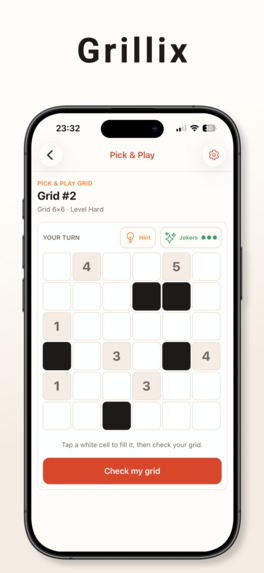
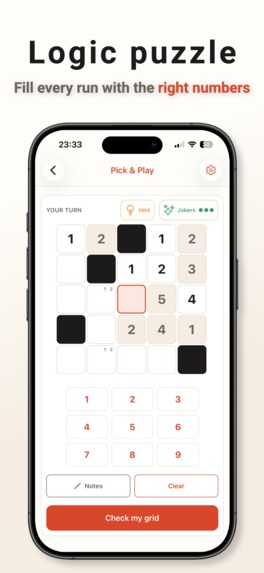
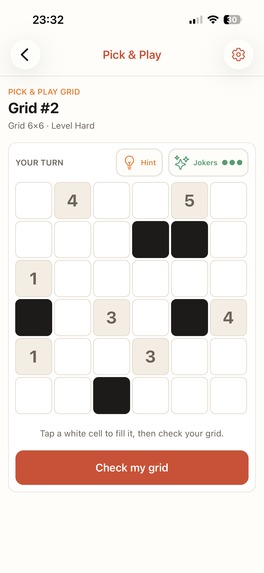
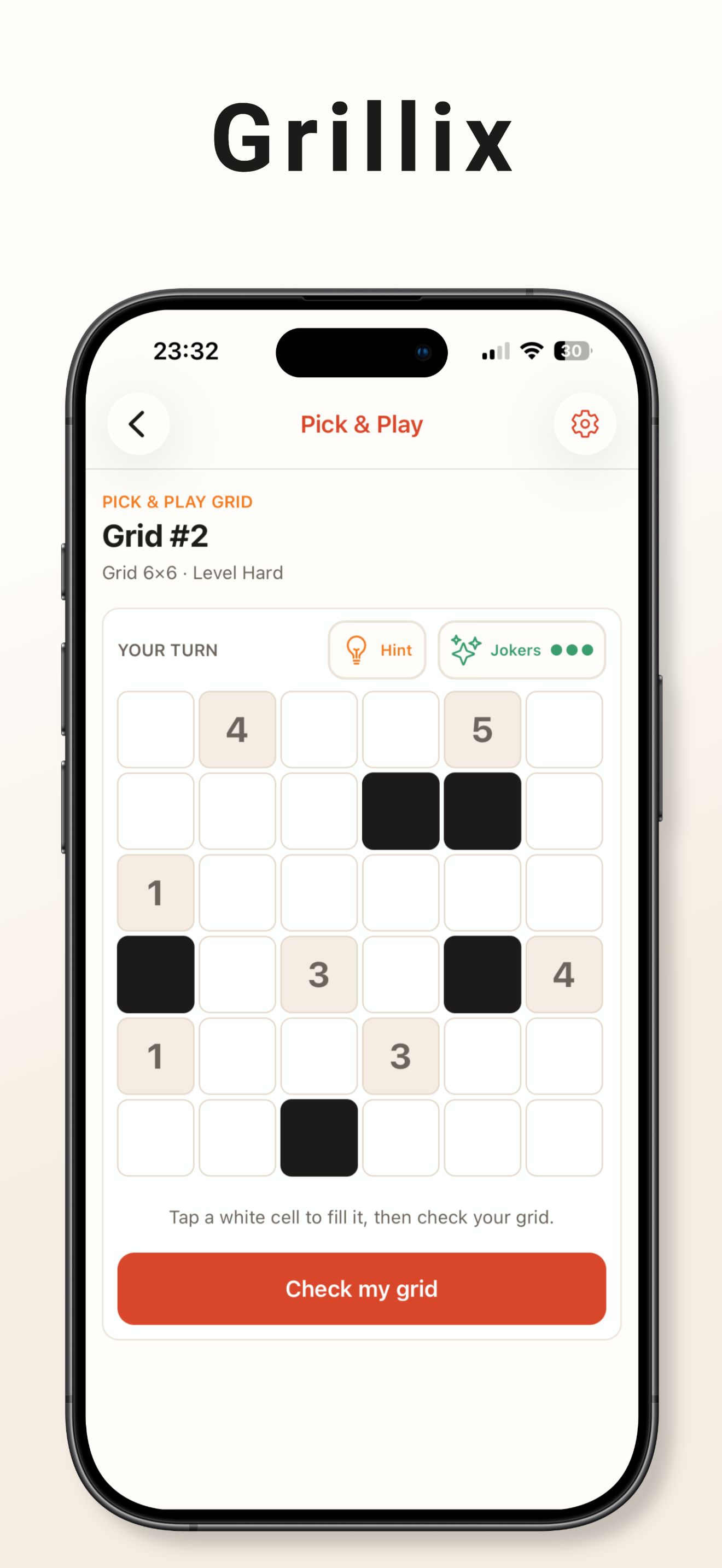
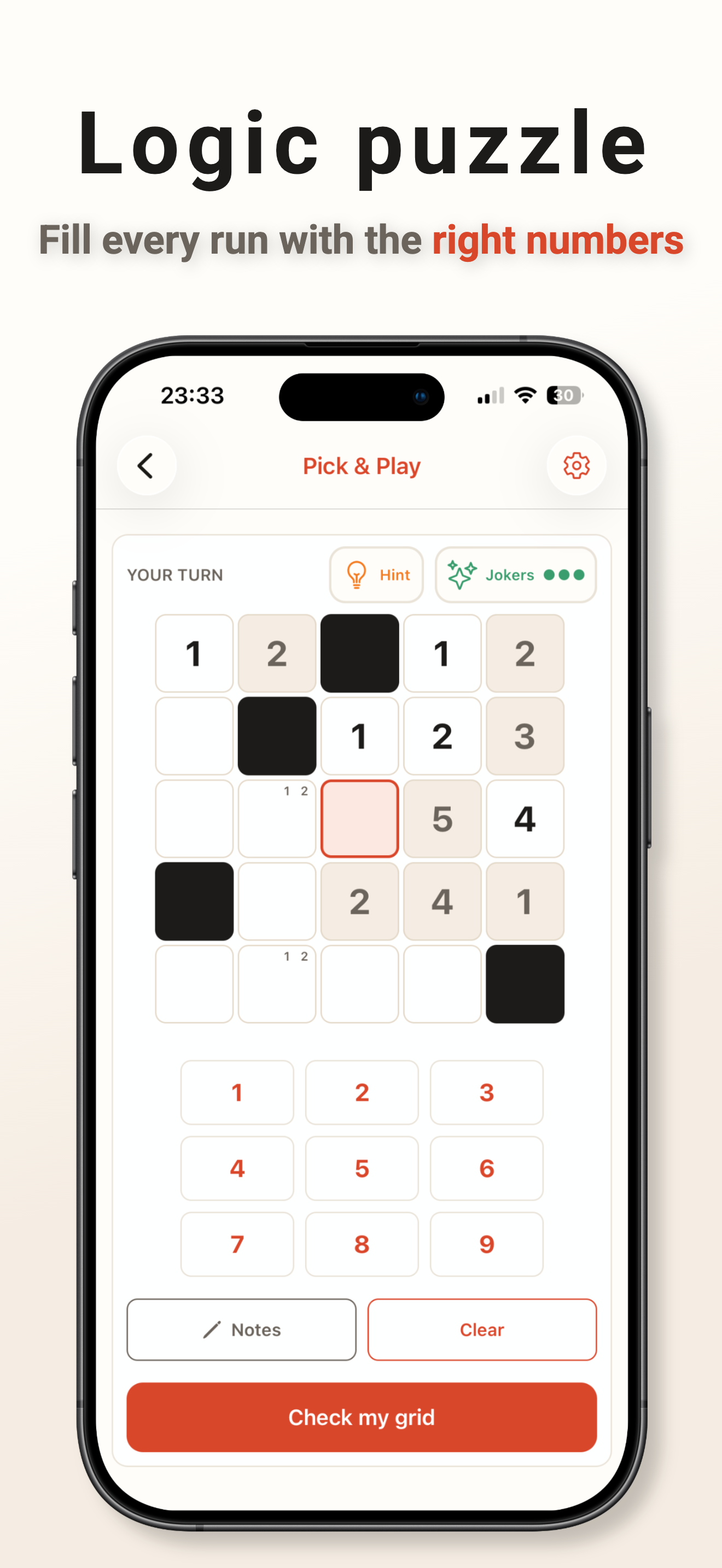
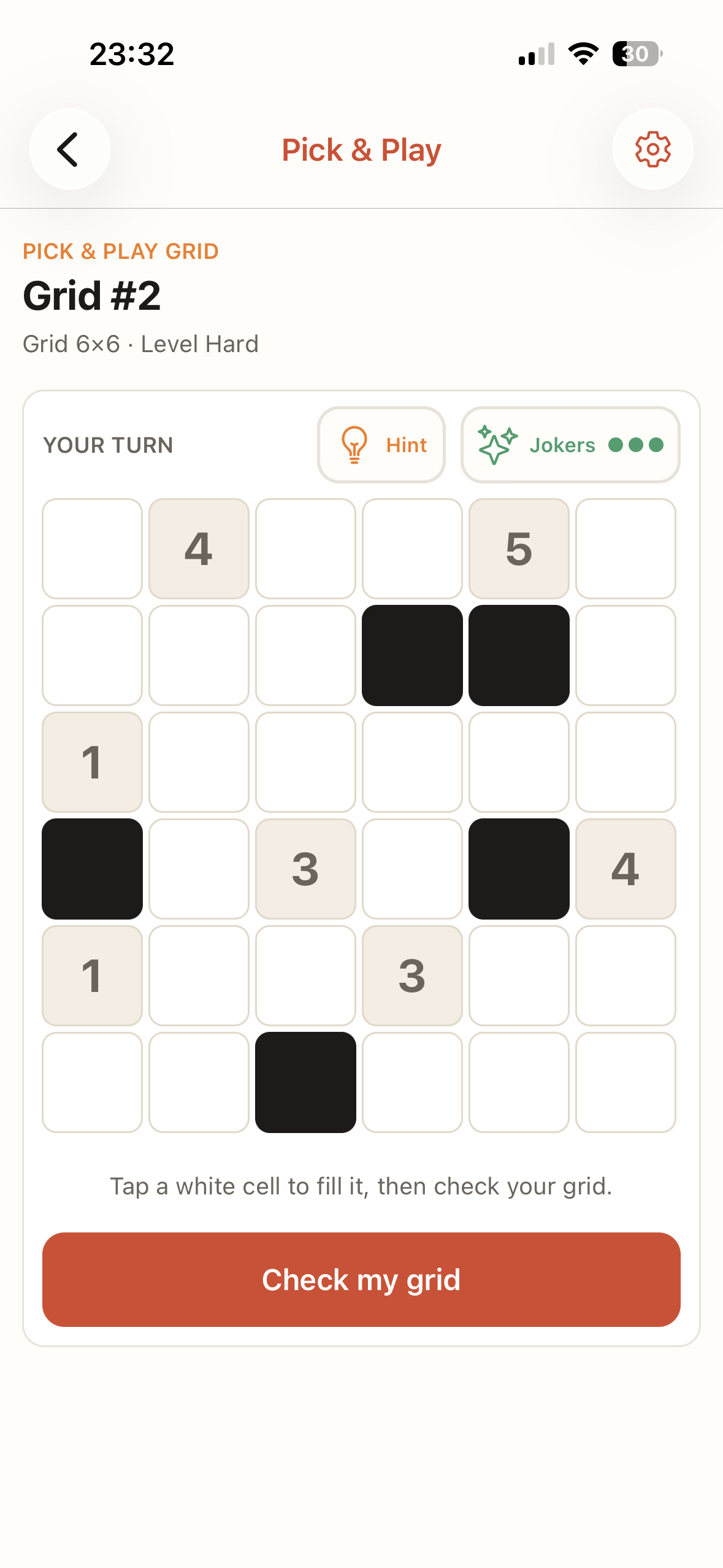
Grillix is a mobile take on the logic grid puzzle: in every run of cells between the black ones, you place the numbers 1 up to the length of that run, with no repeats. We built the rest of the app around helping you get better at it.
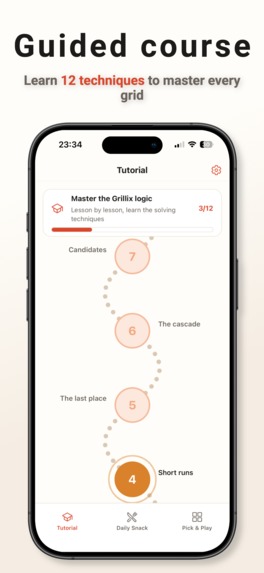
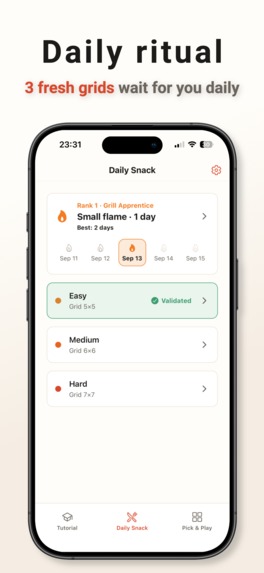
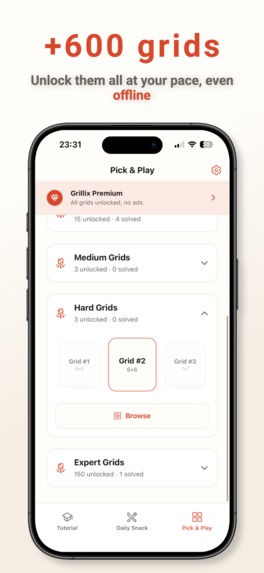
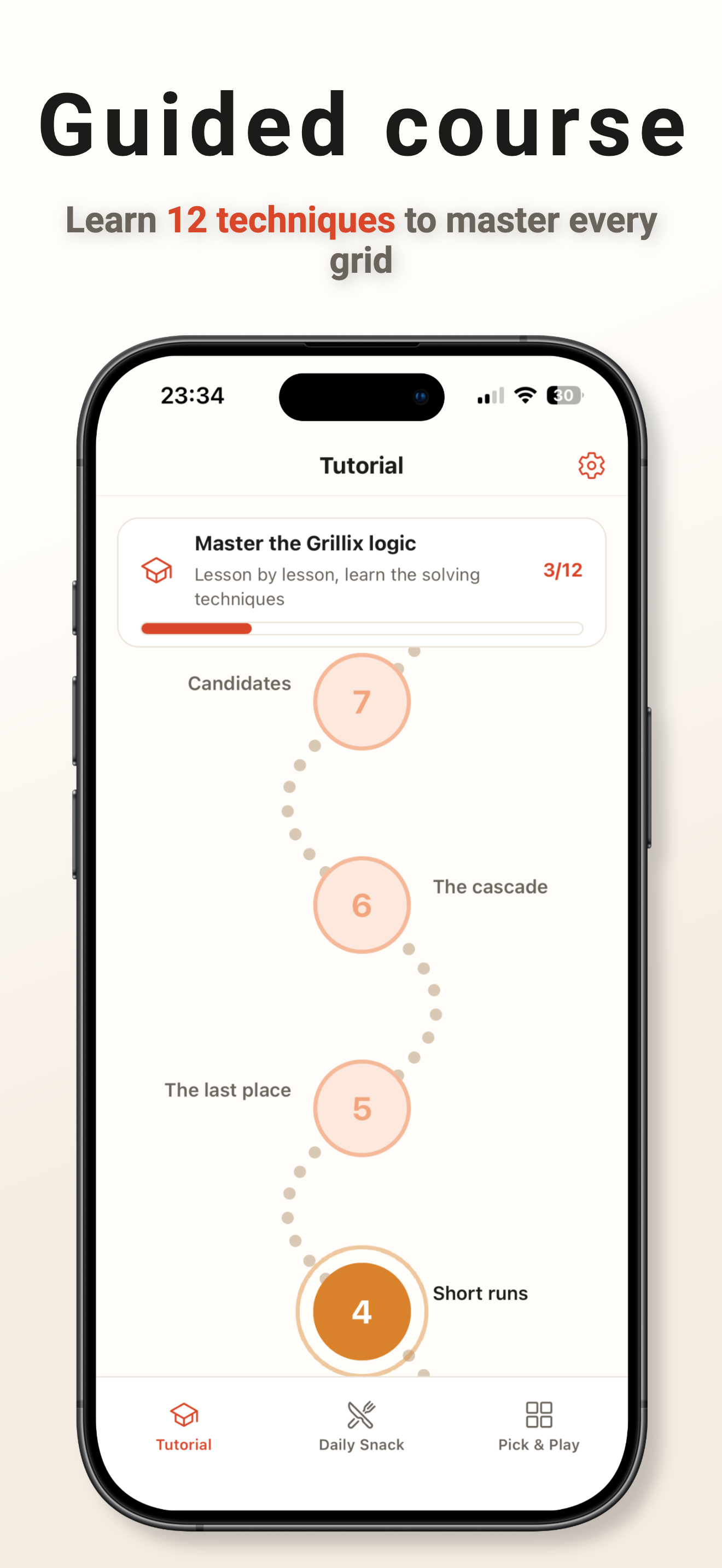
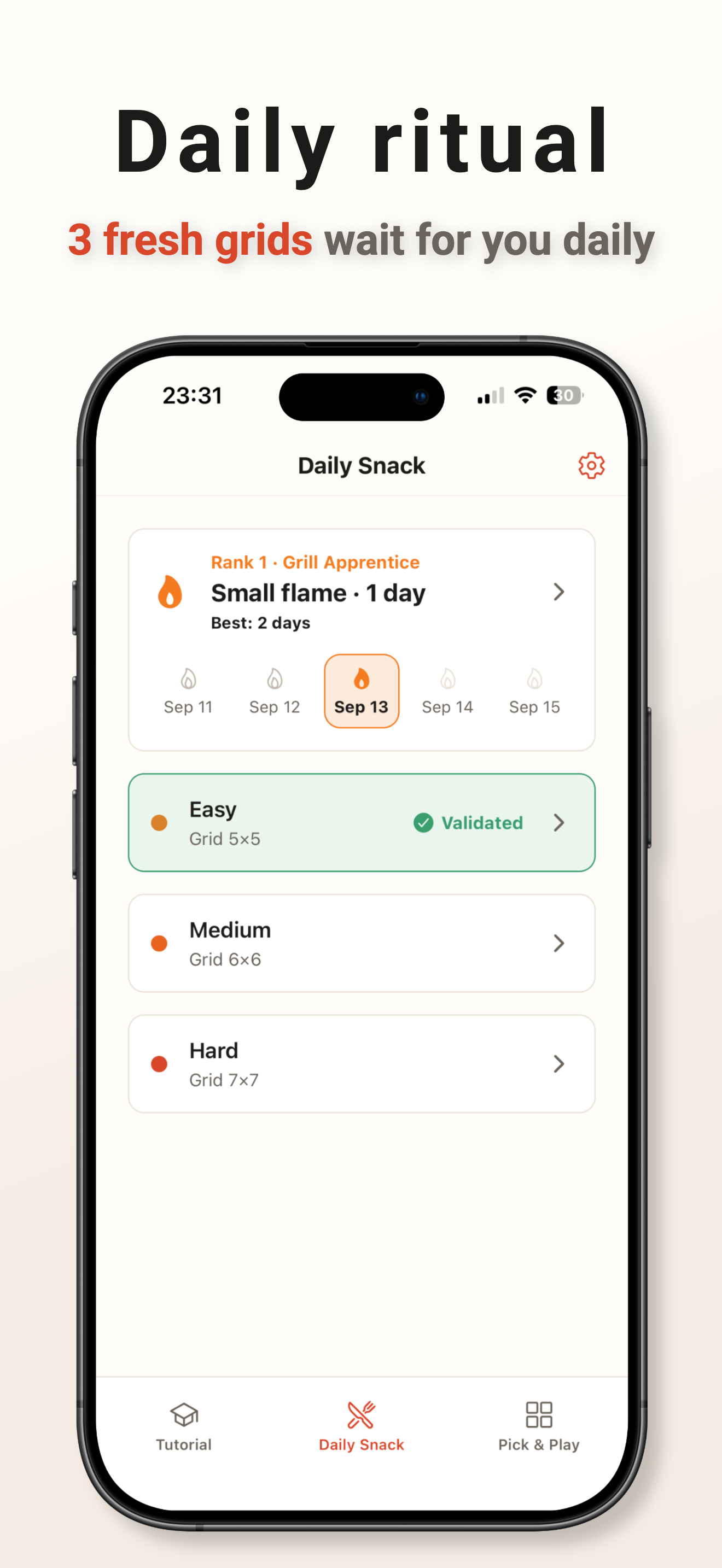
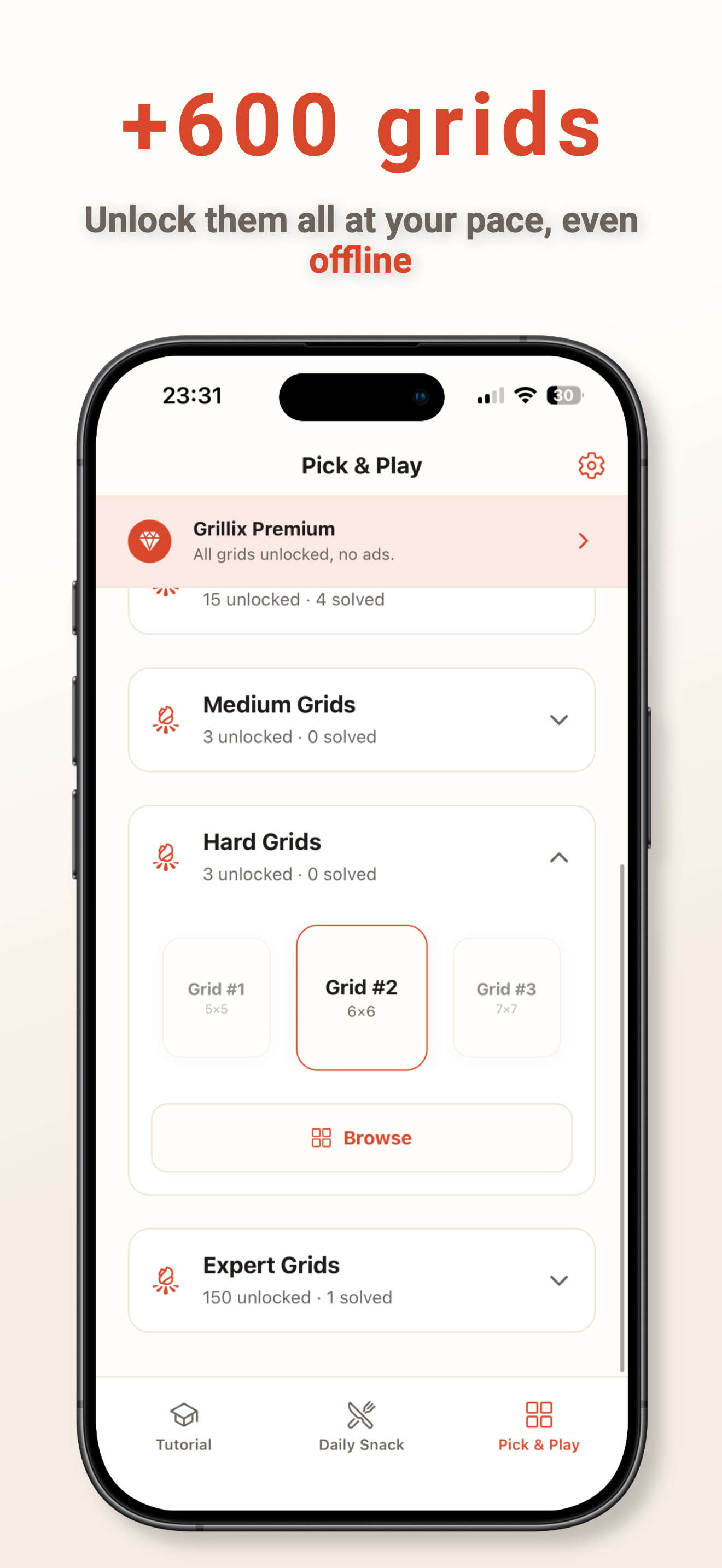
The Learning Path teaches 12 solving techniques, one lesson at a time, from the obvious moves to candidate eliminations. A free daily grid keeps the habit going, streaks reward regularity, and around 600 pick-and-play grids are there for when you want more. They don't unlock all at once: you earn them progressively by watching rewarded videos, or unlock the whole catalog with the premium purchase. The toughest are the 12×12 signature grids, unlocked as your streak grows. Hints explain the technique, not just the answer.
It plays fully offline, ships in five languages, and a single premium purchase removes the ads and unlocks unlimited hints.
How we built it
I did the code: Expo and React Native with TypeScript, expo-router, and SQLite on the device. There is no backend. That was on purpose. I wanted the maintenance cost to stay near zero, so I can ship it and then leave it alone, or improve it now and then without pressure. Making apps isn't my main job, it's a hobby.
The grids come from a build-time tool I wrote and kept out of the app bundle: a generator, a solver that checks the solution is unique, and a rater that grades difficulty from the toughest technique required, the estimated solving time, and how few clues are left. Daily grids are seeded from the date, so every player gets the same one without a server.
RevenueCat handles the one-time premium entitlement (with restore), and AdMob serves the interstitials and rewarded videos, all non-personalized. Ad revenue is reported through RevenueCat's ad tracker, so purchases and ad income land in the same place.
The app sits on app-factory, a personal set of skills and templates I put together to build consistent apps quickly. My partner used it to spin up the first version, which is how a non-developer reached a working v0.
Challenges we ran into
Shipping Grillix surfaced a few things I didn't expect.
- Apple review. The first submission came back under guideline 2.1, with a request for a device video and a lot of detail. It taught me how much of shipping happens off-code.
- Content quality. Generating 600 grids that are each unique and land on the intended difficulty took serious tuning. Too many clues and it's dull, too few and the rater can no longer guarantee the level.
- Android launch. Getting to production meant a closed test with 12 testers, on top of the usual console work.
- The platform grind. Apple, Play, AdMob, RevenueCat: each one has its own setup, its own jargon, and its own way of failing quietly. Integration bugs are hard to chase down, and some only appear on a production build, so you find them late.
Accomplishments that we're proud of
We shipped a finished app as a duo during parental leave, mostly between two bottle feeds. My partner had never built anything, and she got a v0 close to her vision using the factory I'd set up.
Grillix plays entirely offline, holds more than 600 generated and rated grids, and runs on iOS and Android, with Android now in closed testing. The look, sounds, and haptics are all ours, built around the fire-and-ember theme.
We kept privacy simple. Ads are non-personalized, there is no tracking, and no App Tracking Transparency prompt. Because there's no backend, running costs and maintenance are almost nothing.
What we learned
Content is a product in its own right. A puzzle app lives or dies on whether grid number 400 is still interesting, so the generator and the rater matter as much as the screens.
Integration bugs surface late, and several only on production builds. Purchases and ads can't be trusted until the app is out of the dev build.
Cutting the backend and the tracking removed a lot of complexity, and it suits an app I don't want to babysit.
app-factory did double duty: it let a non-developer start the project and let me move quickly without re-deciding the basics each time.
What's next for Grillix
- Test with the first players and fix what they run into.
- Publish on the Play Store.
- Promote it organically, with little or no paid ads, since the return on ad spend is hard to predict at this scale.
- Add more game modes: timed, a two-player mode on a shared phone, and a few other fun ones.
- Maybe push the visual atmosphere further, with more animation.
- Add support for more languages.
- Beyond that, we'll watch how players respond and follow what they actually want.
We're entering Grillix for the Grand Prize and the Best Game Award.
Built With
- expo.io
- opencode
- react-native
- typescript

Log in or sign up for Devpost to join the conversation.